Best hotels in Mantiqueira Mountains, Brazil | Visually Compare Top Stays Side-by-Side
Welcome to PressBeyond - a curated visual guide to design-driven hotels and the fastest way to compare them.
An Overview of the Boutique & Luxury Hotel Landscape in Mantiqueira Mountains, Brazil
Campos do Jordão sits at roughly 1,600 meters in the Serra da Mantiqueira, far enough from São Paulo's heat and density that it has long attracted Paulistanos seeking altitude and pine forests, but close enough, around three hours by car, to function as a weekend reflex for the city's upper-middle class. The town carries an unusual architectural identity for Brazil: a persistent, somewhat incongruous Alpine vernacular adopted in the early twentieth century, visible in the steep pitched roofs and timber-framed facades of the commercial center around Capivari. This borrowed idiom has aged into genuine local character, however strange its origins, and the mountains themselves, cold-washed and forested with araucária pines, lend the whole region a visual coherence that feels earned rather than designed.
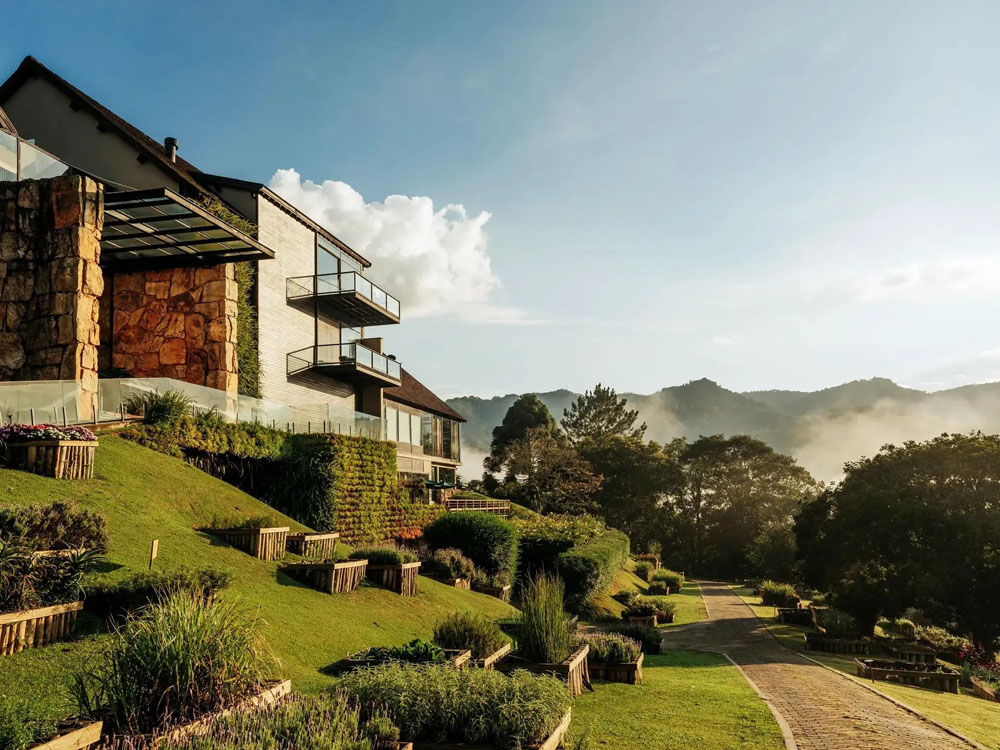
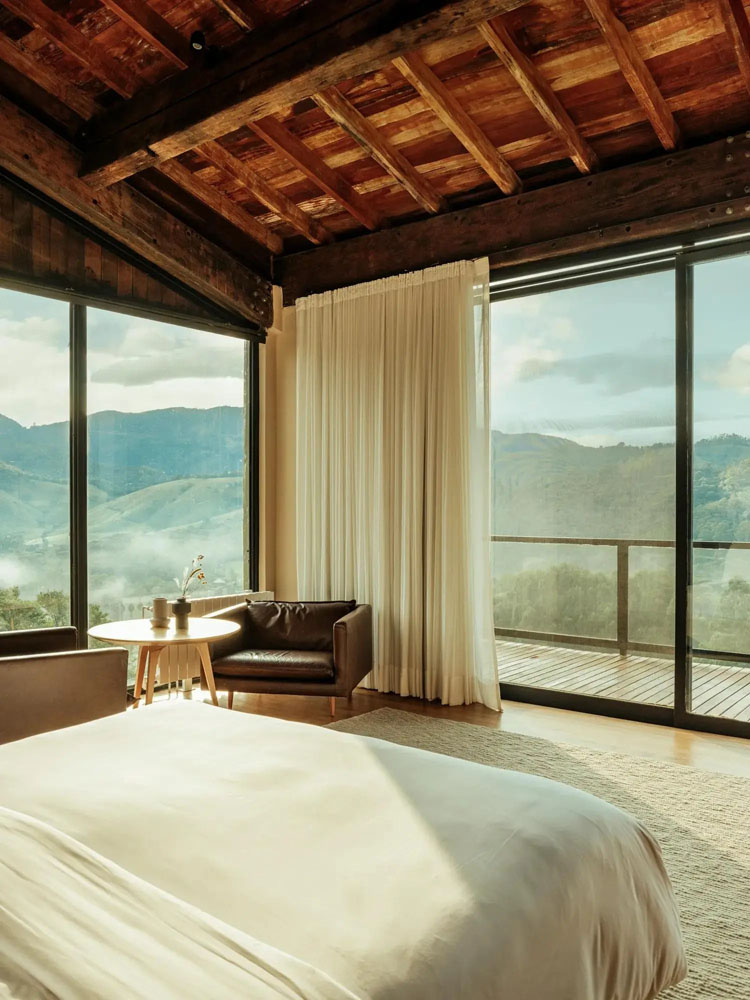
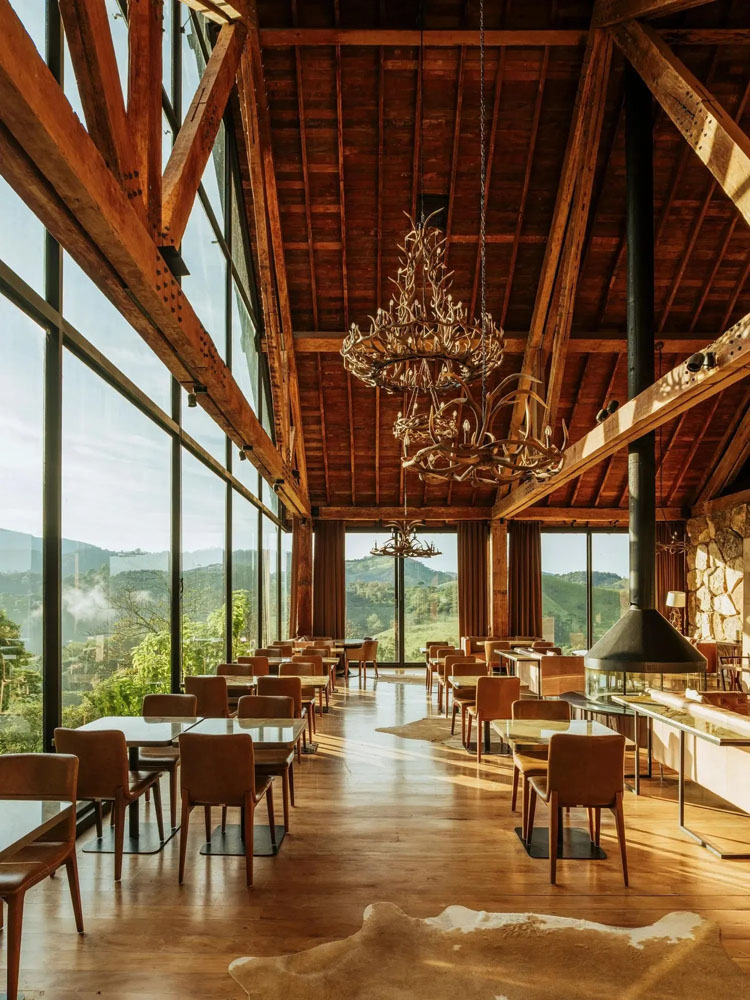
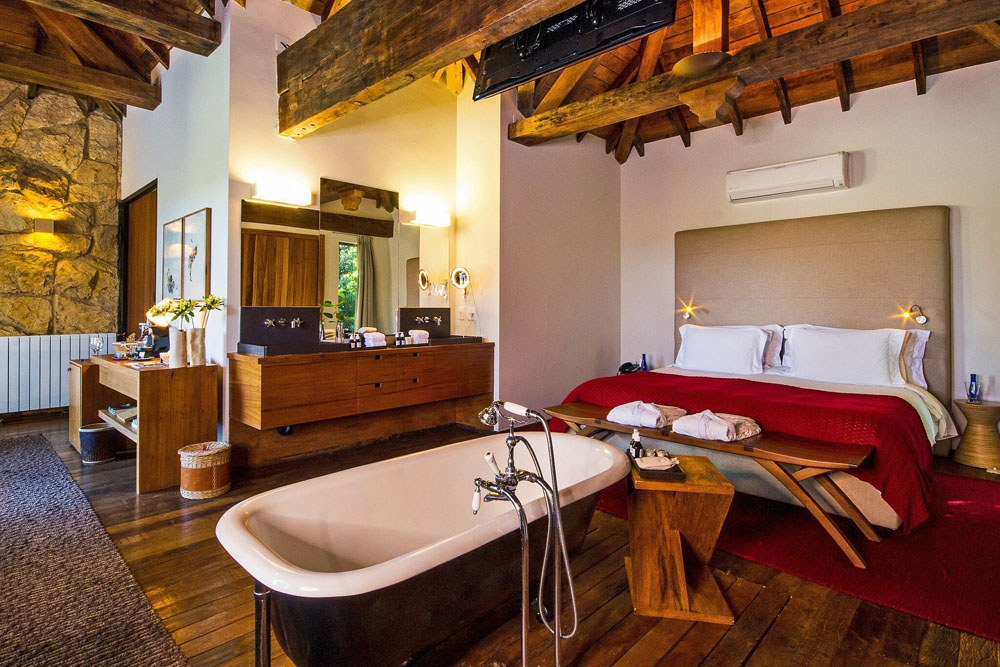
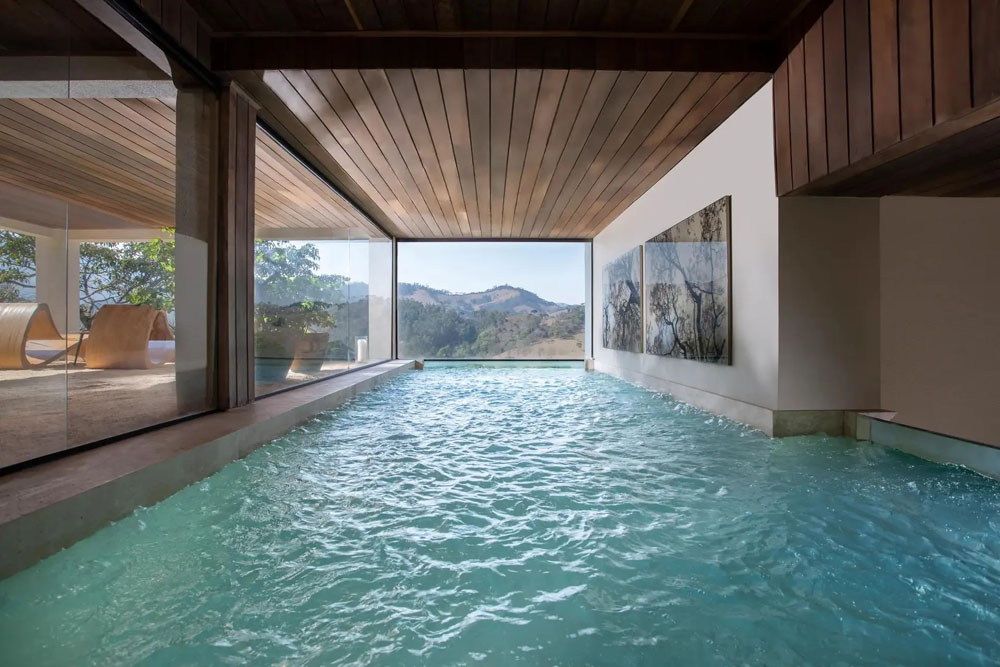
Botanique Hotel Experience, positioned in the hills above the town, operates at a remove from the Alpine pastiche below, which is precisely what makes it interesting. The property works with the topography rather than against it, distributing accommodations across the slope in a way that keeps each unit privately embedded in the landscape. The interiors draw on natural materials, stone and timber and local textiles, without tipping into the rustic-by-numbers aesthetic that so many mountain retreats rely on. The kitchen garden, orchards, and farm-to-table food program give the stay an agrarian texture that feels proportionate to the setting. At rates above $800 per night, Botanique is pitching itself at a traveler who wants full immersion in the elevation and forest, not a base camp for exploring town, and that distinction matters when deciding what kind of trip this is.
What the Mantiqueira Mountains offer, at their best, is a particular kind of Brazilian landscape that doesn't appear in the country's more-photographed coastal imaginary: cool, vertical, forested, quieter. Campos do Jordão in winter draws visitors for the classical music festival at the Auditório Claudio Santoro, a Modernist hall designed by Julio Neves in the 1970s, which brings the regional capital's cultural weight briefly into this mountain town. Outside of that season, the appeal is more elemental. Anyone whose instinct is to track how architecture responds to difficult terrain will find Botanique a genuinely considered answer to a genuinely demanding site.