Where

PressBeyond Logo

Best hotels in Dunhuang | A Curated Visual Guide to Top Stays

Welcome to PressBeyond, the ultimate curated visual guide for design-driven hotels! My name is Will Miller and this is my recommendation for the best boutique and luxury hotel in Dunhuang.

I am the founder of PressBeyond and I am an ultra-meticulous hotel curator who loves clean visuals. I have individually analyzed and tiered the hotel included in this guide based on a variety of criteria (architecture & design, location, brand & brand affiliation, existing reviews, and my own personal experiences), and importantly, I have hand-selected the leading imagery for this hotel to provide you with easily-digestible, yet detailed and complete, like-for-like, high-level visual profiles. I felt this summarization step was a critical missing piece across existing guides, blogs, and booking platforms. My aim is to make it easier for people to identify hotel environments that resonate with them, along with enabling them to visualize the types of social experiences that those environments help foster. My brain doesn't work when exposed to cluttered content, so my goal was to create the opposite.

Underneath this, we are also a full booking engine offering 5% Venmo cash back along with other exclusive perks. For all of you design-obsessed hotel enthusiasts out there, I hope this guide helps get you to where you see yourself!

An Overview of the Boutique & Luxury Hotel Landscape in Dunhuang

Dunhuang sits at the edge of two deserts — the Taklamakan to the west, the Gobi to the east — and that geographical extremity has always been its defining condition. For a thousand years it was a waystation, a place where caravans paused before the hardest crossings, where Buddhist pilgrims left offerings in the Mogao Caves cut into the cliffs south of the city. Those caves, with their layered frescoes spanning ten dynasties and their hand-carved niches housing painted statuary, constitute one of the most concentrated repositories of religious art on earth. The landscape around them — crescent dunes rising at Mingsha, the flat scrub of the Gobi stretching northward, the oasis green that makes habitation here possible at all — reads as genuinely otherworldly, the kind of place that makes architecture either redundant or essential depending on what it chooses to say. Jangala Dunhuang, positioned along the Southern Silk Road corridor near the desert edge, chooses to engage rather than impose. The property draws its visual language from the region's vernacular — rammed earth, warm ochres, the low horizontal profile that desert building demands — while operating at a level of spatial intention that places it closer to resort architecture than to any local tradition. It is the kind of property that treats its landscape as primary material: the quality of light at dusk over the dunes, the thermal logic of thick-walled construction, the silence that becomes its own amenity after dark. At six hundred and thirty dollars a night, it is unambiguously a splurge, but the calculation here is not purely about room count or service ratios — it is about having the right base from which to reach Mogao in the early morning, before the tour groups arrive, or to walk Mingsha at the hour when the sand actually sings. Dunhuang rewards travelers who come with some preparation. The Mogao Caves require advance booking and are managed with careful visitor limits, and the best experiences there — including access to the research conservation center — go to those who plan weeks ahead. But the town itself, small and navigable, offers enough: night markets, the remarkable Dunhuang Museum, the flat bright sky that makes every hour feel slightly outside of ordinary time. Jangala gives that experience a physical anchor — somewhere to return to that is designed with genuine attention to where it is.

Book with PB and get cash back
Jangala Dunhuang - Image 1
Jangala Dunhuang - Image 2
Jangala Dunhuang - Image 3
Jangala Dunhuang - Image 4
Jangala Dunhuang - Image 5

Jangala Dunhuang

Dunhuang • Southern Silk Road • SPLURGE

avg. $599 / night

Includes $32 / night in cash back

Cash back is redeemable via Virtual Visa, Venmo, or bank transfer starting 24-48 hours after check-out

Hilton Honors™ property

Jangala Dunhuang Design Editorial

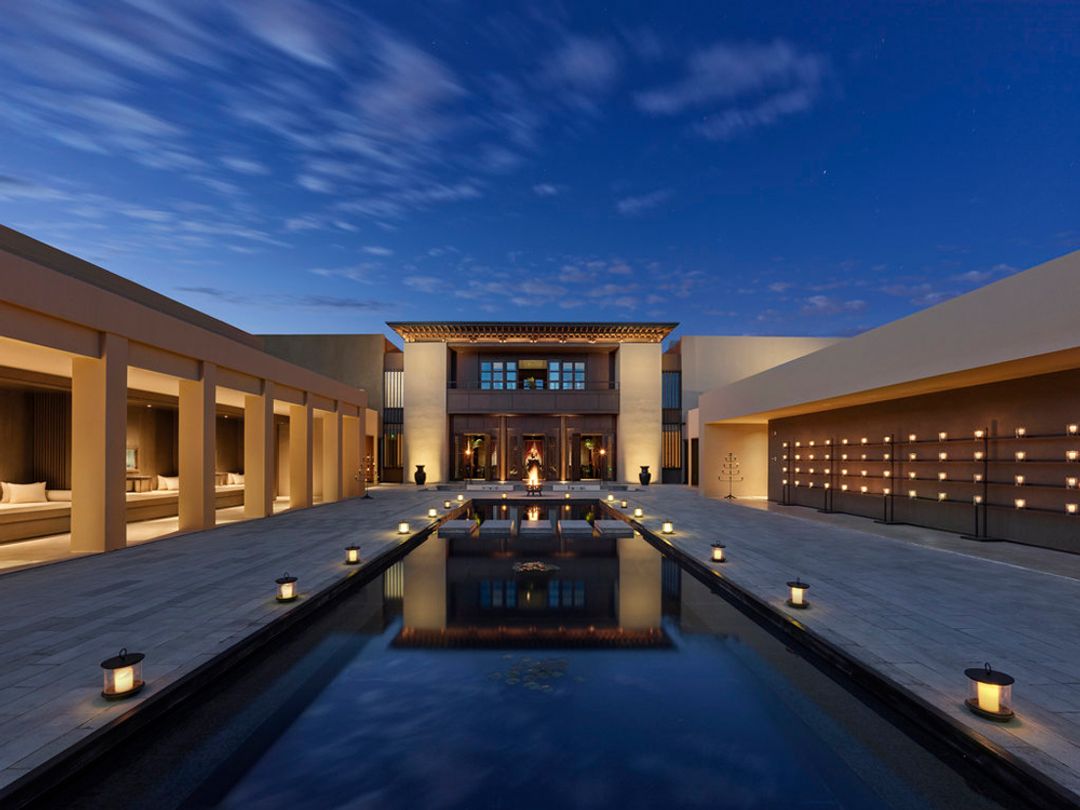
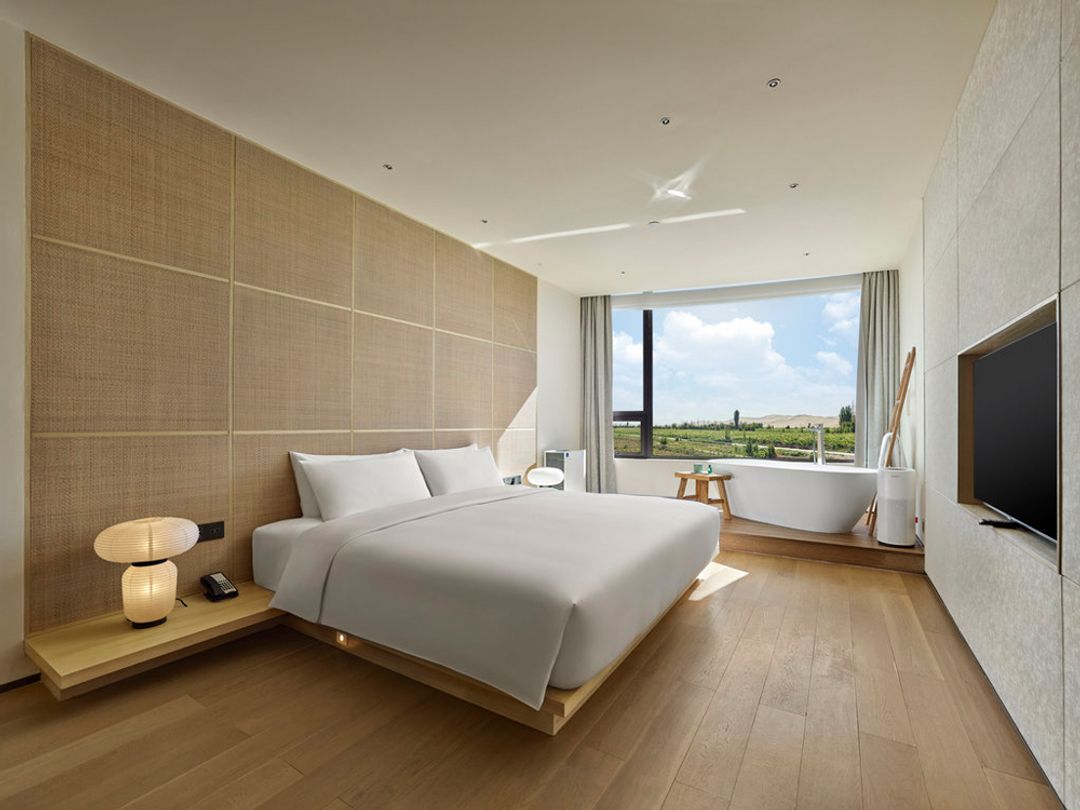
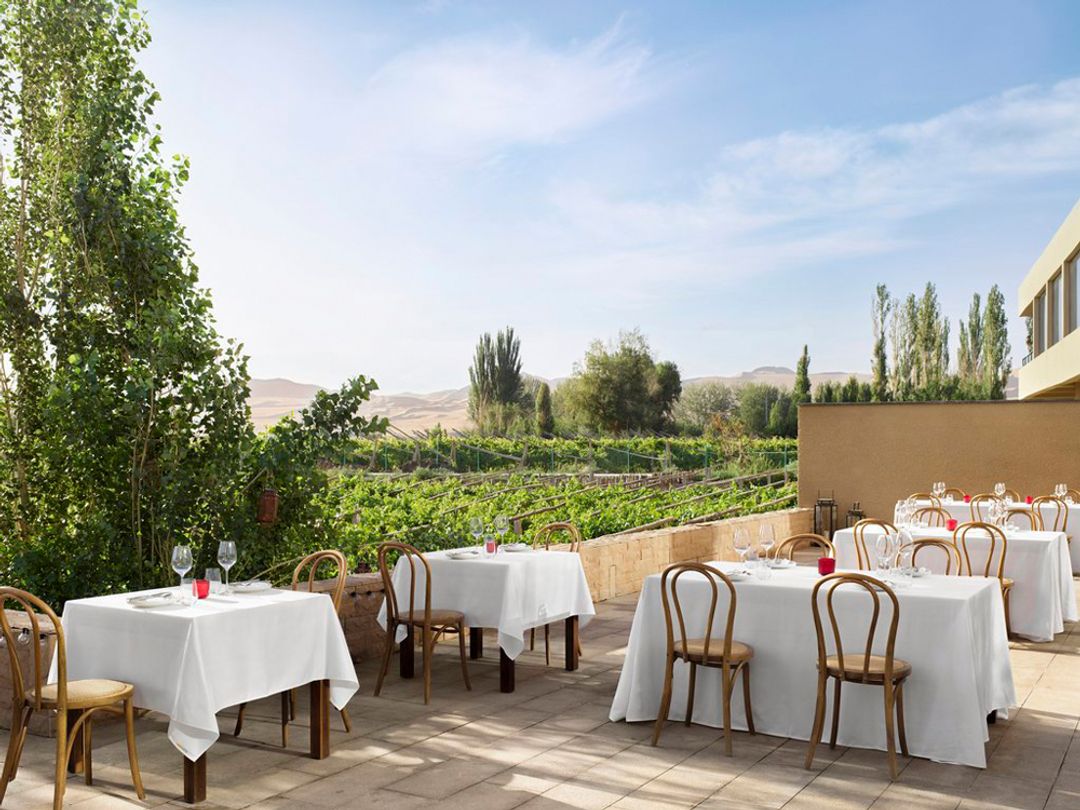
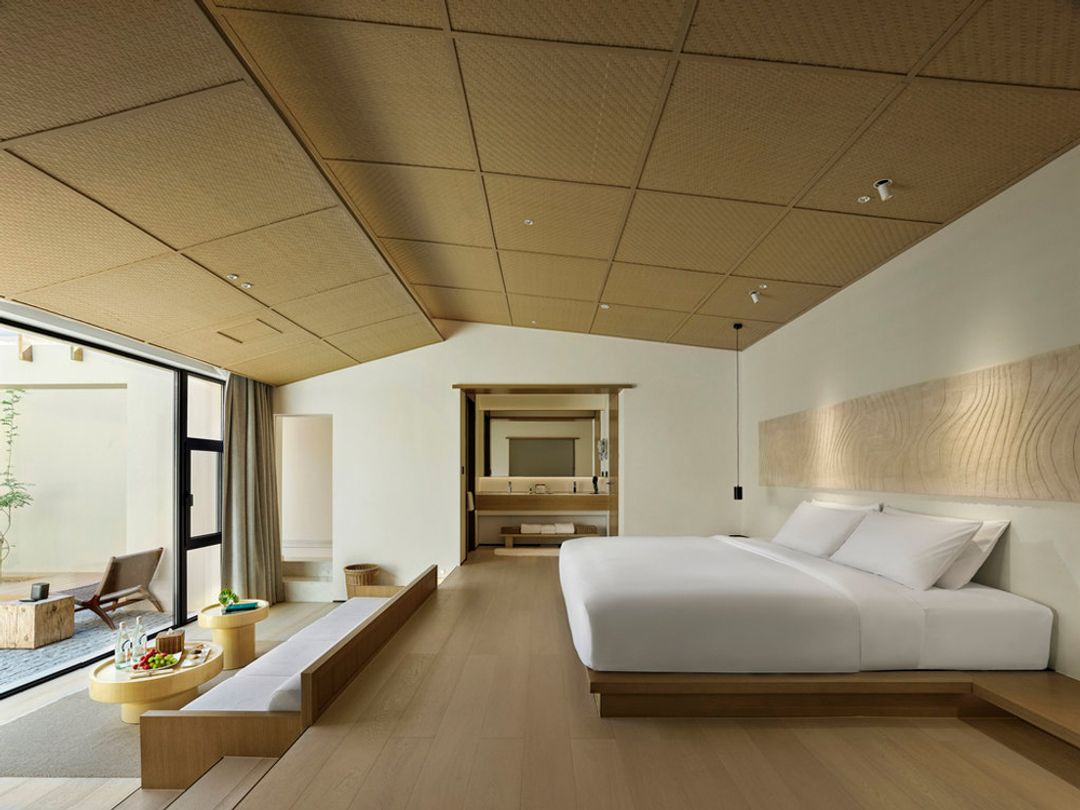
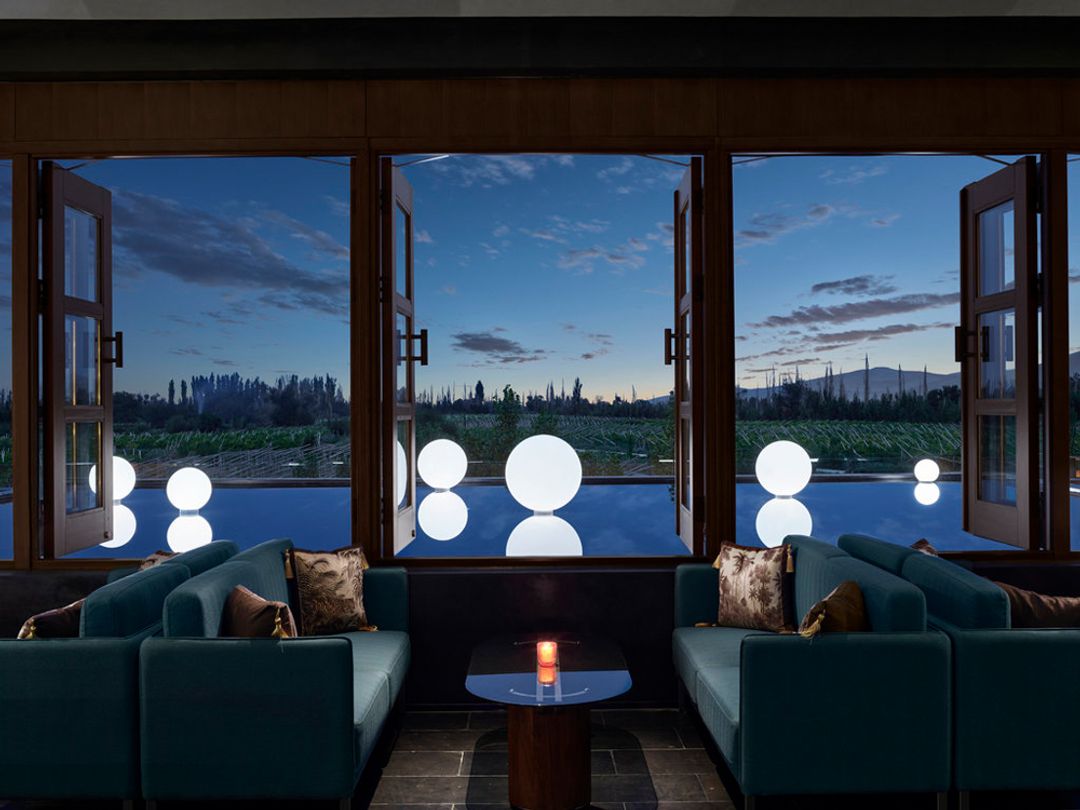
At the edge of the Gobi where the Mingsha dunes rise behind working vineyards planted along a surviving spur of the ancient Silk Road, Jangala Dunhuang constructs an argument that the desert itself is sufficient spectacle. The architecture draws on the rammed-earth and courtyard grammar of northwestern Chinese vernacular building — flat-roofed pavilions grouped around a long reflecting pool, colonnaded loggias stepping back from a central hall whose bracketed timber cornice nods to Tang dynasty structures — while the overall composition maintains a rigour closer to contemporary minimalism than to historical pastiche. The dusk image of that central courtyard, with lanterns lining the still water and a fire burning at the far threshold, captures how deliberately the design calibrates arrival as ceremony. Inside, the rooms divide into two registers: upper-floor guest rooms finished in pale oak, woven grass-cloth wall panels, and freestanding soaking baths positioned toward vineyard and dune views; and lower courtyard suites where the same pale timber extends to waved relief headboards and woven rattan ceiling panels that absorb sound as much as they decorate. The bar lounge, furnished in deep teal velvet with bronze-tasselled cushions and dark slate floors, opens through tall timber casements onto a pool where spherical globe lights float at dusk — a theatrical counterpoint to the rooms' restraint. The terrace restaurant, set with Thonet-style bentwood chairs against a backdrop of trellised vines and sand mountains beyond, makes the property's most persuasive case: that this particular landscape, once a way station between civilisations, remains worth stopping for.

Best hotels in Dunhuang | A Curated Visual Guide to Top Stays