Where

PressBeyond Logo

Best hotels in Puerto Jiménez | A Curated Visual Guide to Top Stays

Welcome to PressBeyond, the ultimate curated visual guide for design-driven hotels! My name is Will Miller and this is my recommendation for the best boutique and luxury hotel in Puerto Jiménez.

I am the founder of PressBeyond and I am an ultra-meticulous hotel curator who loves clean visuals. I have individually analyzed and tiered the hotel included in this guide based on a variety of criteria (architecture & design, location, brand & brand affiliation, existing reviews, and my own personal experiences), and importantly, I have hand-selected the leading imagery for this hotel to provide you with easily-digestible, yet detailed and complete, like-for-like, high-level visual profiles. I felt this summarization step was a critical missing piece across existing guides, blogs, and booking platforms. My aim is to make it easier for people to identify hotel environments that resonate with them, along with enabling them to visualize the types of social experiences that those environments help foster. My brain doesn't work when exposed to cluttered content, so my goal was to create the opposite.

Underneath this, we are also a full booking engine offering 5% Venmo cash back along with other exclusive perks. For all of you design-obsessed hotel enthusiasts out there, I hope this guide helps get you to where you see yourself!

An Overview of the Boutique & Luxury Hotel Landscape in Puerto Jiménez

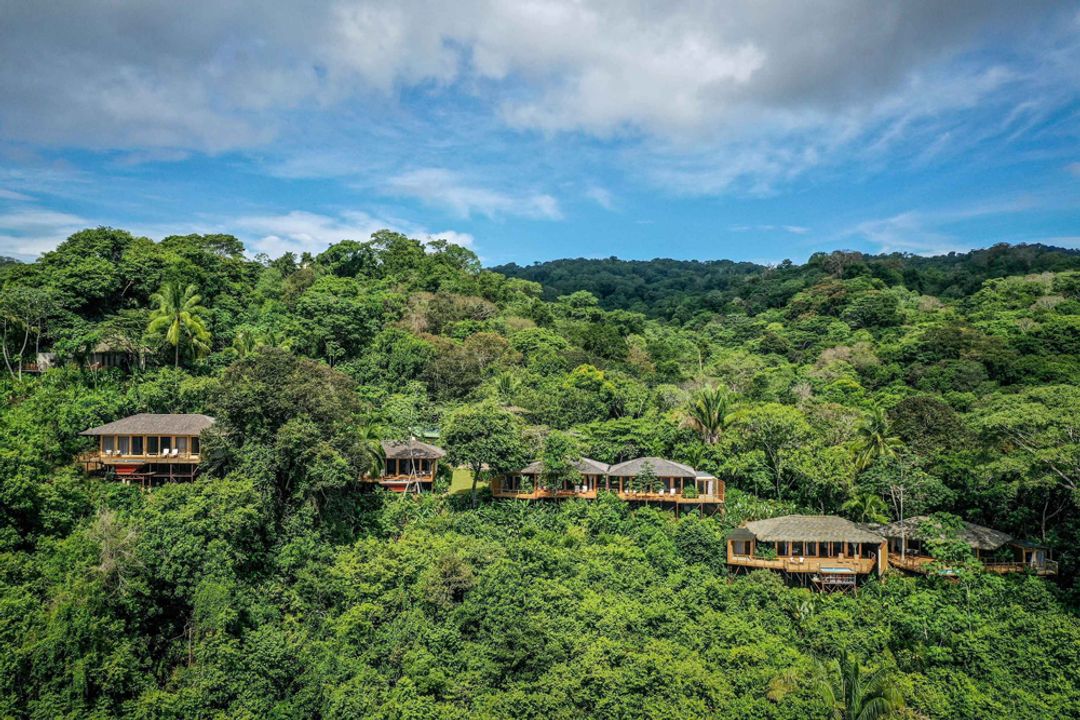
The Osa Peninsula receives less than one percent of Costa Rica's visitors, which tells you something useful before you've even looked at a map. Puerto Jiménez is the rough-edged gateway town on its eastern shore — a single unpaved main street, fishing boats pulled up alongside small ferries, the kind of place where the road ends and the rainforest begins without ceremony. What draws design-minded travelers here isn't the town itself but what lies south of it: the road to Cabo Matapalo, where the peninsula tapers toward Corcovado National Park and the land becomes genuinely wild in a way that most ecotourism destinations only approximate. Architecture in this part of the world has to answer to the ecosystem first. The construction vocabulary is thatched roof, open wall, hardwood deck — not as a stylistic gesture but as a practical response to humidity, heat, and the biological logic of a place that receives over five meters of rain annually. Lapa Rios Lodge, perched on a 1,000-acre private nature reserve at Cabo Matapalo, was built in 1993 by American owners Karen and John Lewis with a design approach rooted in minimal intervention: sixteen thatched bungalows set into the ridge above the Pacific and Golfo Dulce junction, connected by jungle paths rather than corridors, with interiors that use local hardwoods and hand-woven textiles without tipping into the folkloric. The main lodge's soaring rancho-style roof, open on all sides, functions more as a canopy than an enclosure — the boundary between building and forest is genuinely ambiguous, which is the point. Lapa Rios was an early model for what serious conservation-based lodging could look like, and it has aged well precisely because it never tried to insulate guests from the environment it was built to protect. The rate reflects what it costs to maintain thirty years of infrastructure in one of the most biodiverse and logistically demanding places on earth, and to do so while keeping a meaningful conservation commitment intact. For a traveler whose interest in design extends to the relationship between a building and its site — how a structure performs in extreme climate, how material choices age in tropical humidity, how spatial decisions shape the experience of a place rather than simply illustrating it — Cabo Matapalo offers something genuinely uncommon, and Lapa Rios remains the most considered reason to go.

Book with PB and get cash back
Lapa Rios Lodge - Image 1
Lapa Rios Lodge - Image 2
Lapa Rios Lodge - Image 3
Lapa Rios Lodge - Image 4
Lapa Rios Lodge - Image 5

Lapa Rios Lodge

Puerto Jiménez • Cabo Matapalo • OVER THE TOP

avg. $806 / night

Includes $42 / night in cash back

Cash back is redeemable via Virtual Visa, Venmo, or bank transfer starting 24-48 hours after check-out

Lapa Rios Lodge Design Editorial

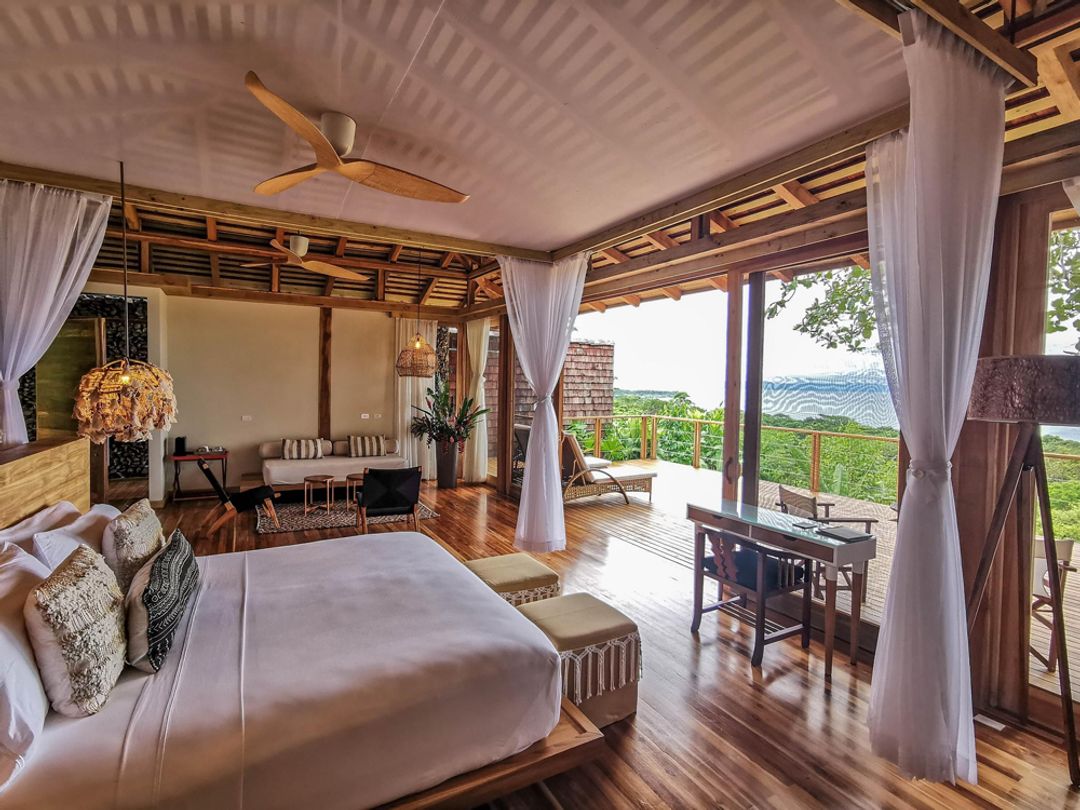
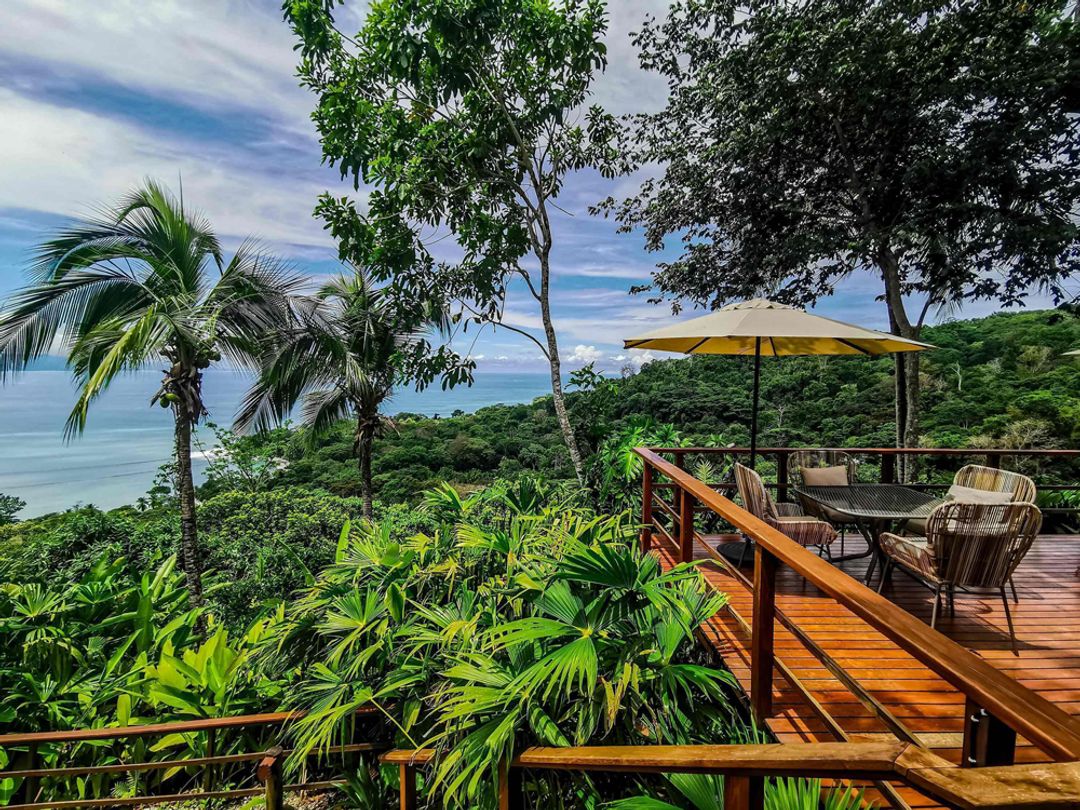
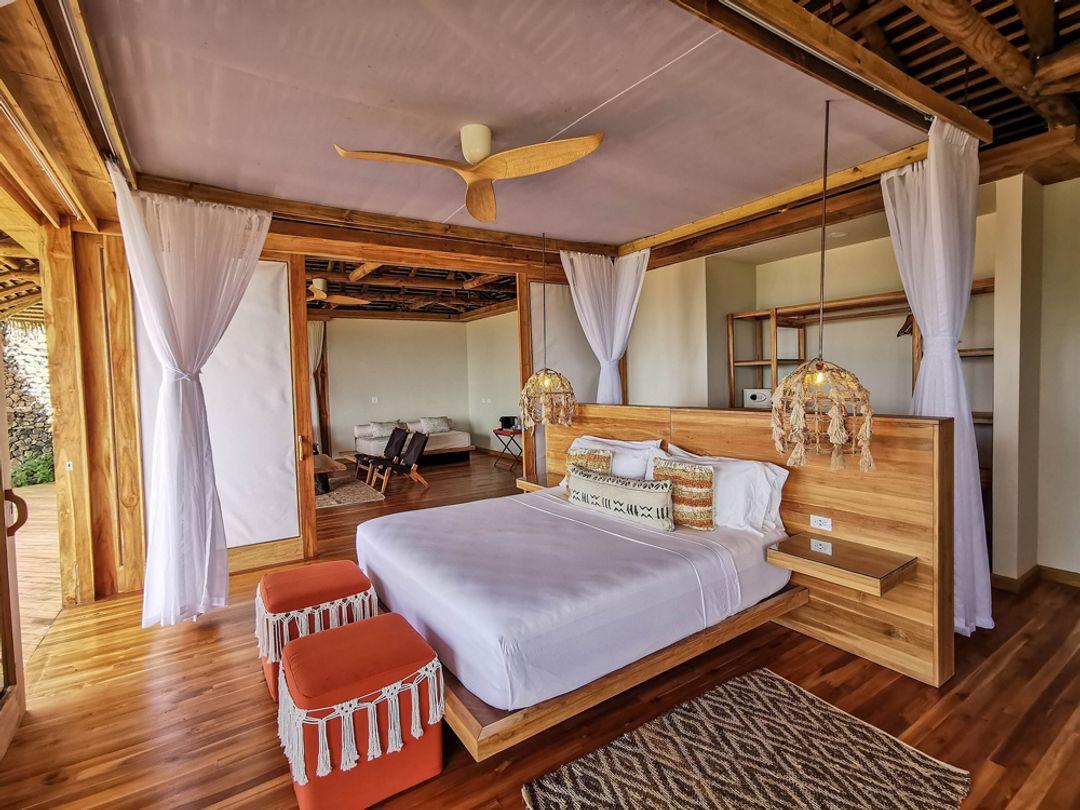
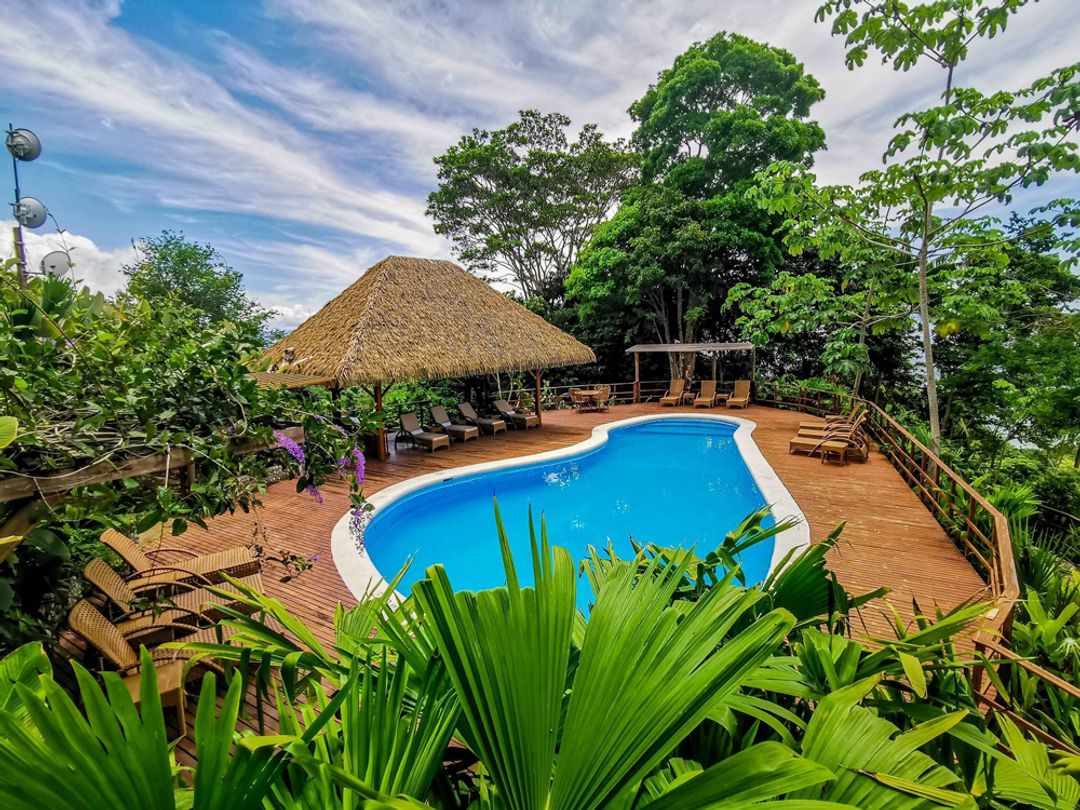
At the southern tip of Costa Rica's Osa Peninsula, where primary rainforest descends toward the Pacific through one of the most biodiverse corners of the planet, a collection of thatched bungalows clings to a steep ridge above Cabo Matapalo with a deliberate lightness that is the whole point. Lapa Rios Lodge was conceived in 1993 by American owners Karen and John Lewis as an early model of what would later be called regenerative tourism — the 1,000-acre private reserve surrounding the sixteen bungalows functioning as the property's primary architecture, with the built structures subordinate to it. Local craftsmen worked with sustainably harvested hardwoods and hand-woven palm thatch to produce buildings that carry the structural logic of vernacular Costa Rican construction rather than an imported tropical aesthetic. The interiors, visible in the images, follow that same hierarchy of material honesty — polished hardwood floors in deep amber tones, exposed timber roof frameworks, macramé pendant lights, and platform beds dressed in white linen with mud-cloth scatter cushions. Sheer white curtains on four-poster frames billow through open-sided pavilions whose walls dissolve toward wrap-around decks framing uninterrupted canopy views to the ocean. The kidney-shaped pool deck, surfaced in ipe hardwood and anchored by a palapa-roofed bar, sits at the ridge's highest cleared point, the jungle pressing in on three sides. Nothing here performs luxury through ornament; the forest does all the work.

Best hotels in Puerto Jiménez | A Curated Visual Guide to Top Stays