1/5

Six Senses Rome

Rome, Italy • Piazza di San Marcello • OVER THE TOP

avg. $1,395 / night

Includes $73 / night in cash back

Cash back is redeemable via Virtual Visa, Venmo, or bank transfer starting 24-48 hours after check-out

IHG® One Rewards property

Exclusive PressBeyond Benefits

Get to where you see yourself

Ultra-clean, global, hand-picked hotel curation & imagery designed to help you visualize enticing environments and the elevated social experiences they create

Cash back

5% cash back on all completed stays (redeemable via Virtual Visa, Venmo, or bank transfer starting 24-48 hours after check-out)

Credit card points

Credit and debit card charges are processed directly by the hotel (i.e. not PressBeyond), meaning that any travel-specific credit card points or incentives that you normally get as a cardholder for direct hotel bookings are preserved

Hotel loyalty points

Points accrual and status eligibility with major hotel loyalty programs: Marriott Bonvoy, Hilton Honors, World of Hyatt, and others

Free breakfast

Breakfast-included rate options available

Room upgrades

Complimentary room upgrades (subject to property availability)

Extend your stay

Early check-in and late check-out (subject to property availability)

Location

Loading map...

PB hotel design editorial

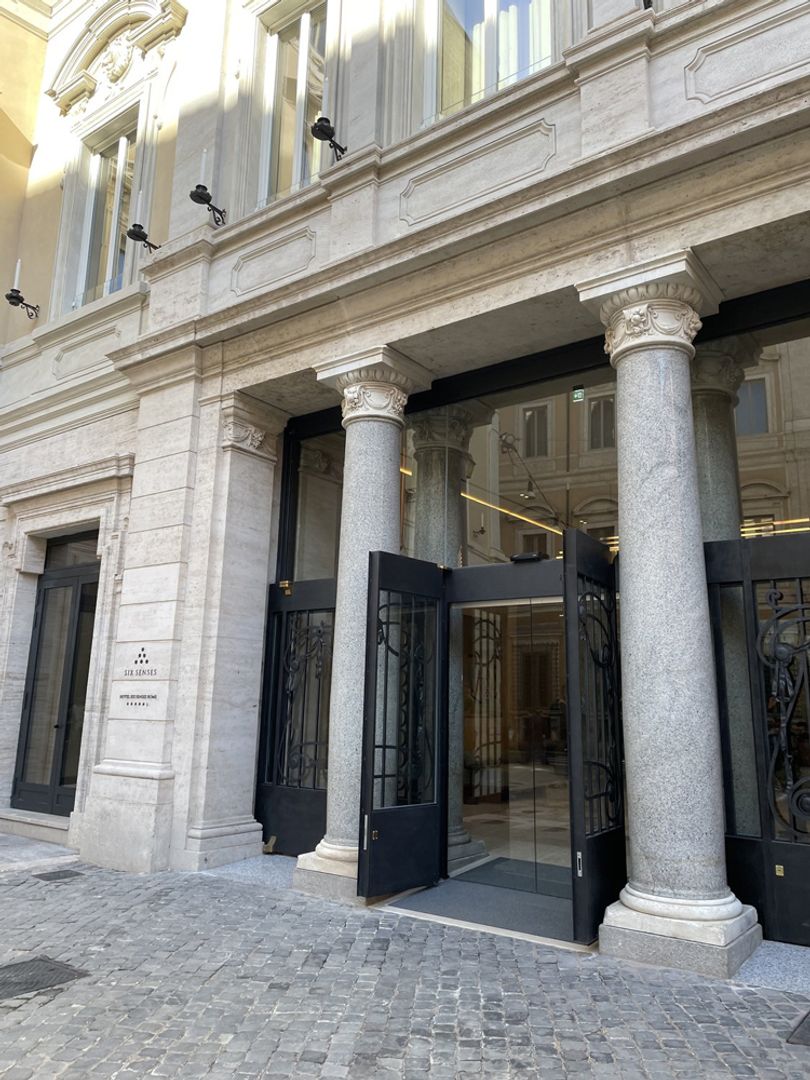
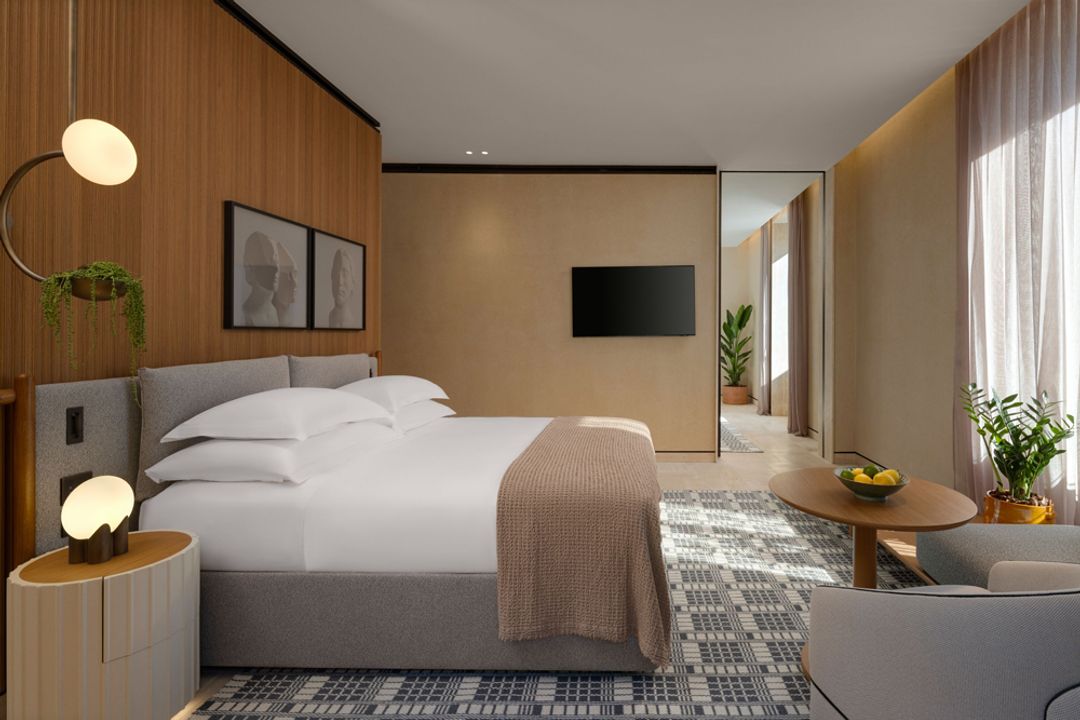
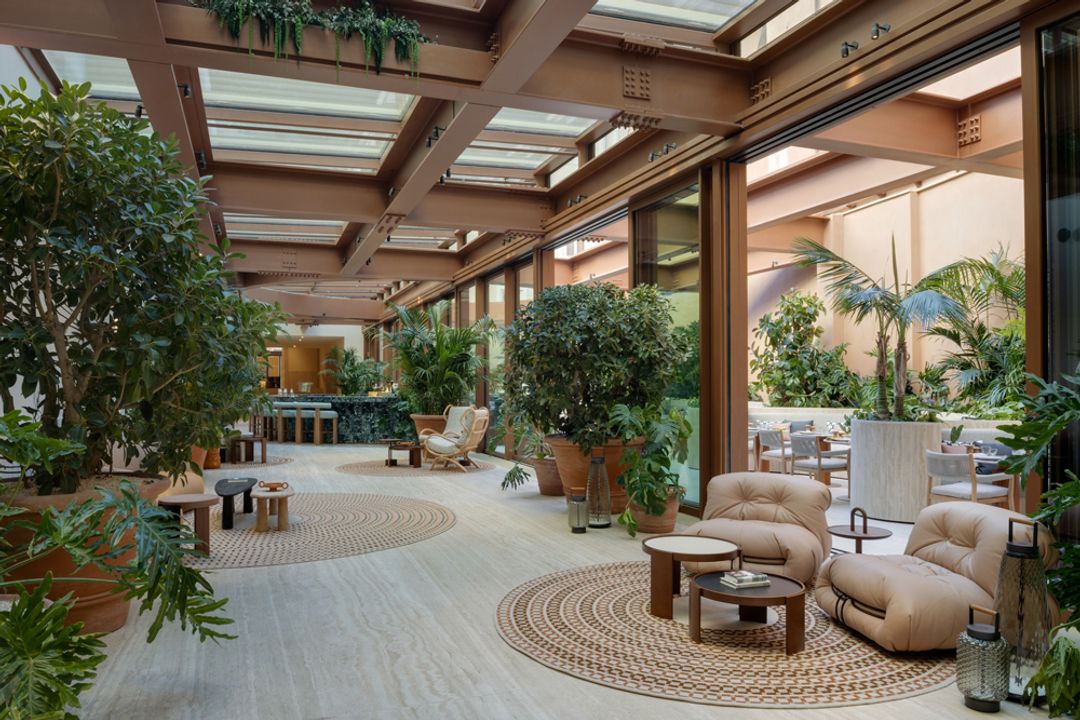
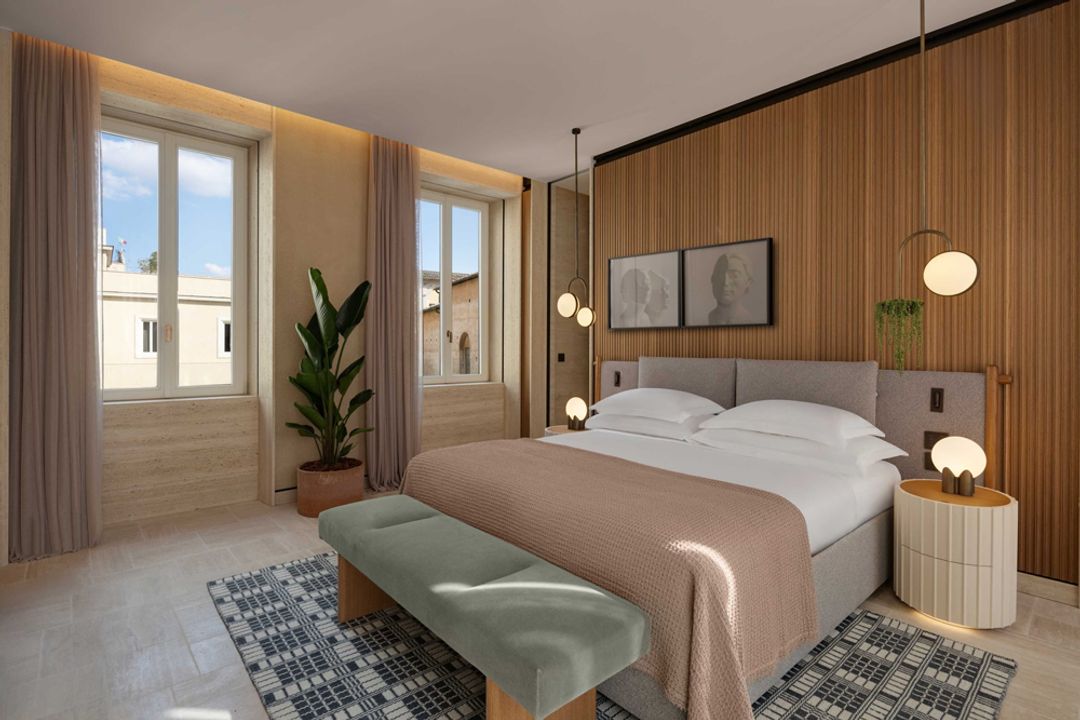
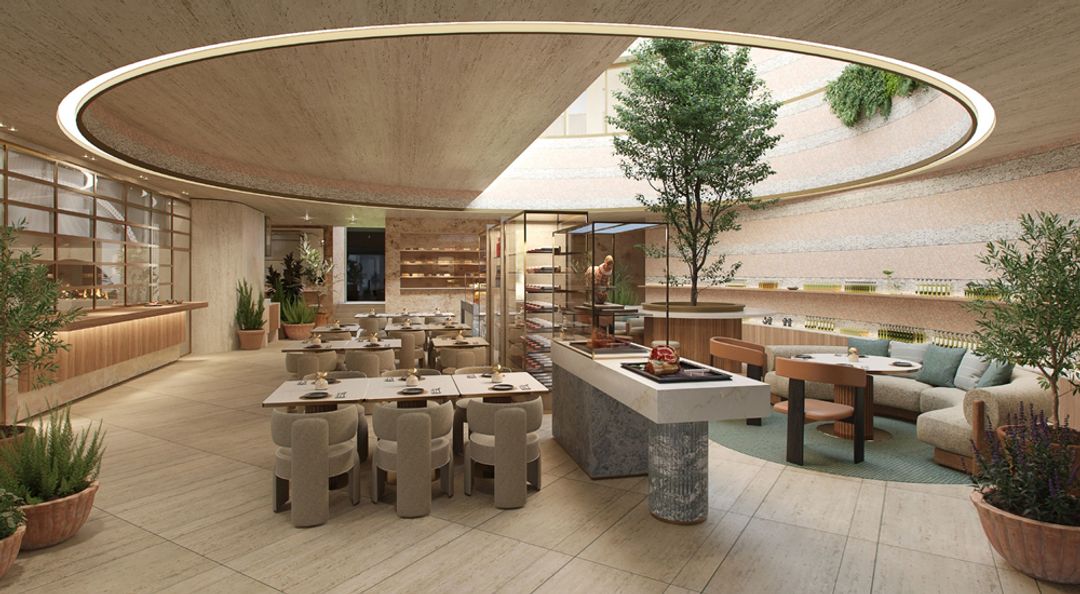
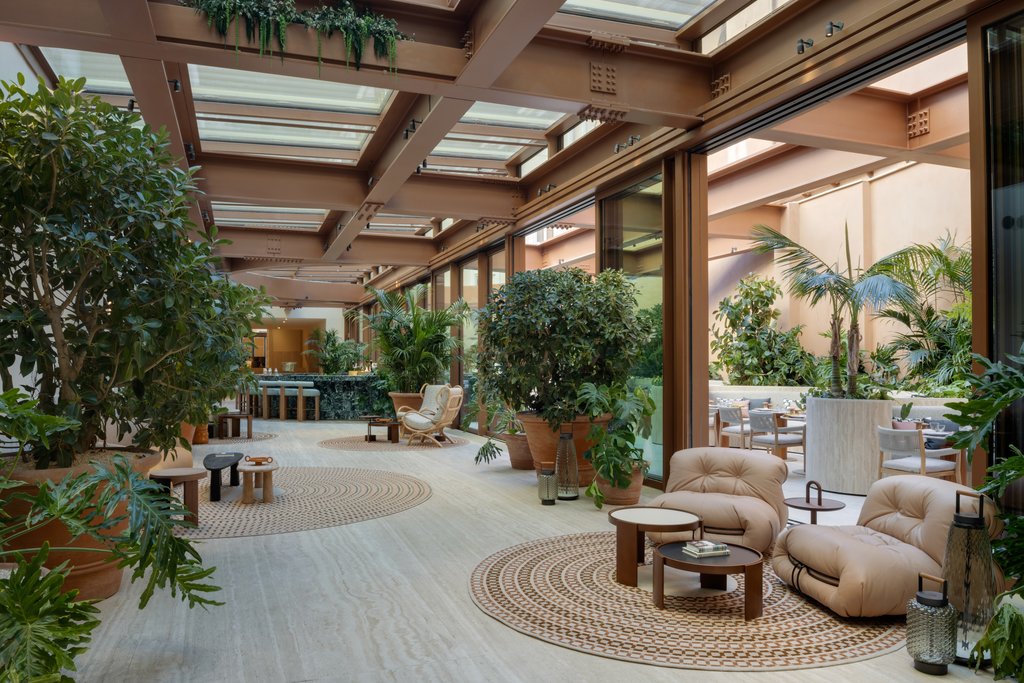
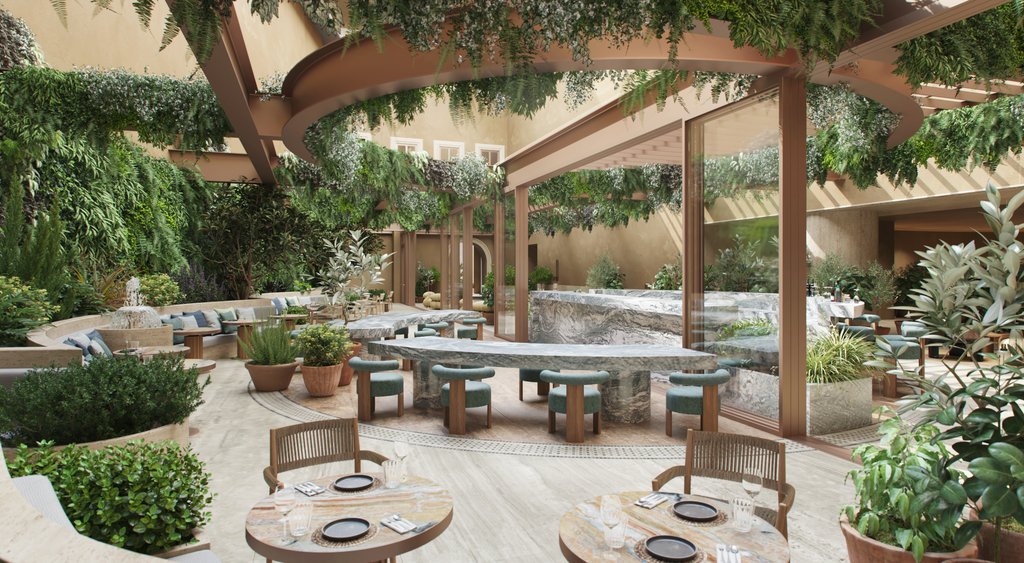
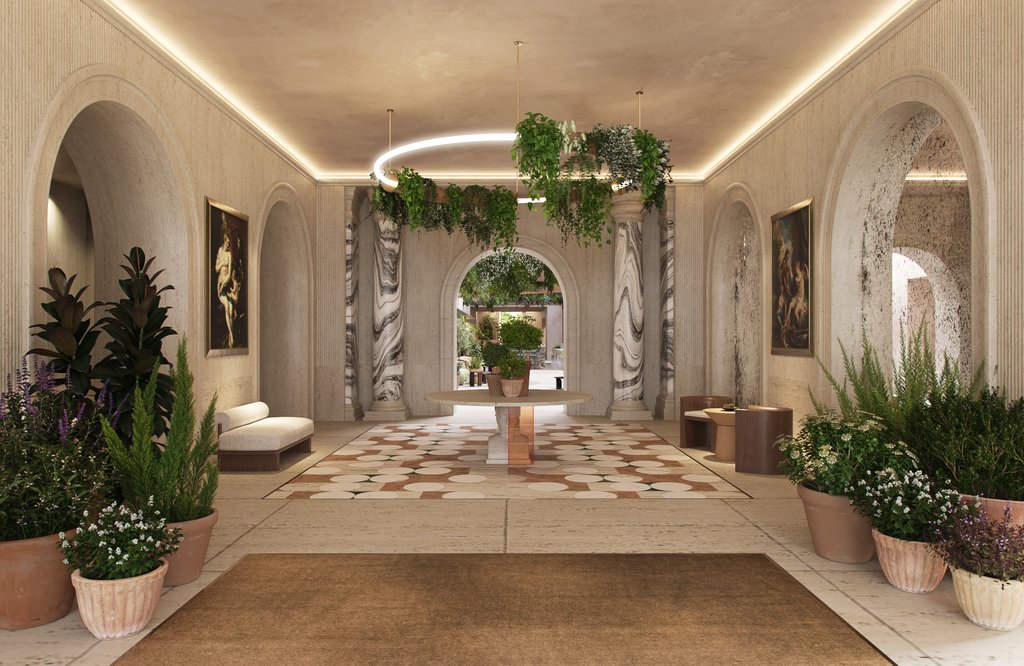
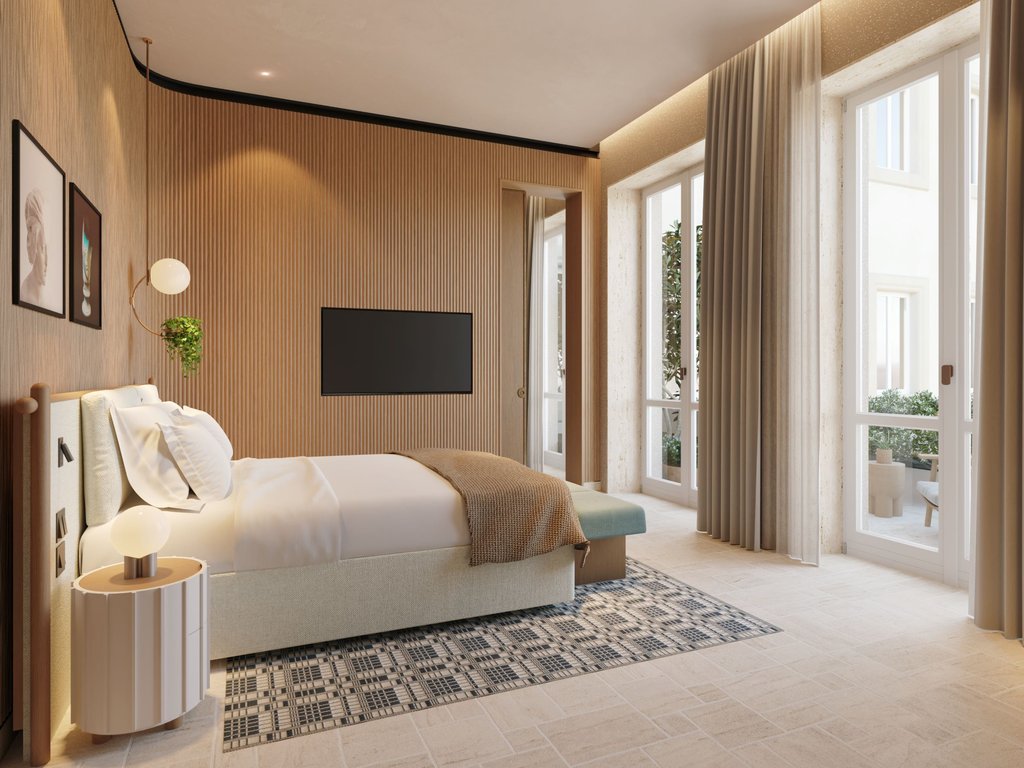
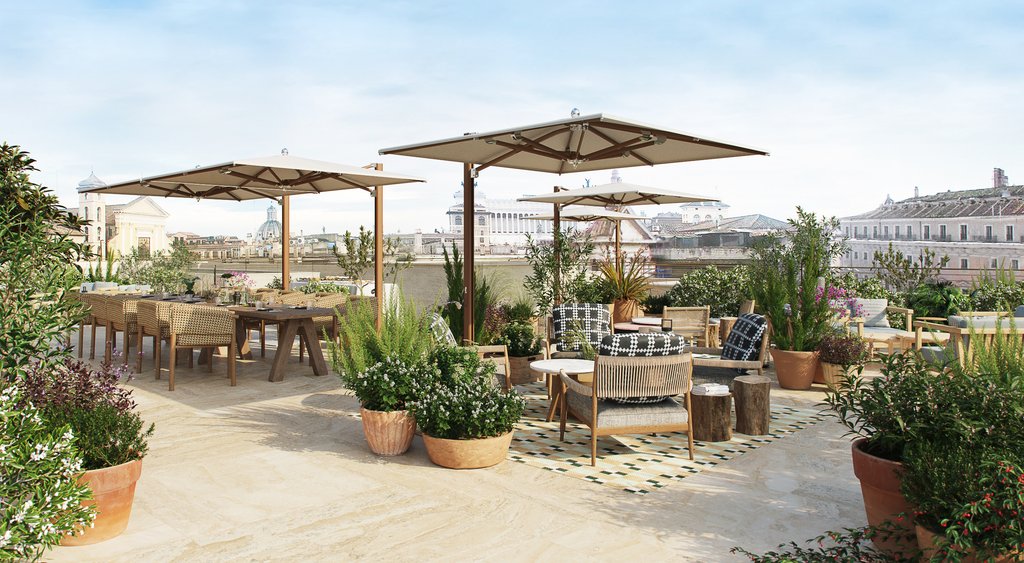
Palazzo Salviati Cesi Mellini, a seventeenth-century Roman palazzo steps from the Trevi Fountain on Piazza di San Marcello, presented Six Senses with one of the more charged briefs in recent European hotel history: how to introduce a brand built on biophilic wellness into a building of such dense historical gravity without either sanitising the architecture or turning it into a museum. The answer, developed by architect Patricia Anastassiadis, was to treat the palazzo's neoclassical facade — those fluted granite columns, the elaborate Corinthian capitals, the rusticated travertine base visible at the entrance — as a fixed condition, and to build something altogether quieter inside. The interiors pivot on a glass-roofed internal garden court, dense with terracotta-potted ficus, palms, and monstera arranged around circular jute rugs and low seating that includes what appear to be reissues of Mario Bellini's Camaleonda sofa. Guest rooms carry the same unhurried logic — vertical timber-slatted headboard walls in warm oak, fluted cylindrical nightstands in cream lacquer, globe pendant lights on brass armatures, and hand-laid geometric rugs grounding travertine floors. The palette throughout holds to sandy ochre, dusty rose, and soft sage, a sequence that keeps Roman afternoon light central rather than decorative. Across its 96 rooms and suites, Six Senses Rome makes the case that wellness hospitality, at its most assured, doesn't need to announce itself.

Travel notes

No travel notes provided yet.

About

Rome is a city everyone will visit at least once in their lifetime. The mix of history, heritage, art, tradition, culinary treasures, weather, laid-back attitude, authenticity, artisanal mastery, and zest for life make it the most desirable destination the world over. Six Senses Rome enjoys the most desirable location in Piazza di San Marcello, on Via del Corso, steps away from all major historical landmarks including the Trevi Fountain and Pantheon and within walking distance of the prominent luxury shopping streets of Via Condotti, Frattina, and Borgognona. Fiumicino Leonardo Da Vinci Airport is a 45-minute drive away.

Amenities

Internet

Kids Activities

Suites

Room service

Free Internet

Wheelchair Access

Restaurant

Bar/Lounge

Pets Allowed

Spa

Six Senses Rome Reviews

108 reviews

"We were very much looking forward to our spa experience at Six Senses Rome; however, we were unable to receive clear confirmation from the spa regarding an itemized receipt that separated the massage cost from the package price for insurance reimbursement. Communication was also slow, which made it difficult to resolve the matter in a timely way. Although we explained this requirement in detail, we did not obtain assurance that such documentation could be provided and ultimately decided to cancel our reservation and book with a different spa. For a property of this caliber, clearer and more responsive communication around standard documentation requests would be expected."

A Tripadvisor traveler review

Mar 01, 2026

"It would be hard to find a better luxury hotel than this one in Rome. Staff and management are amazing. Rooms are larger, spotlessly clean and very well decorated. Bar and kitchen staff took care of every need or request with a smile. Hotel is centrally located with several main attractions within an easy five minute walk. Our group had four different rooms and all were very impressed with the attention to detail each room offered. We would stay here again."

A Tripadvisor traveler review

Feb 22, 2026

"The atmosphere was clear almost immediately. Check-in was fast, warm, and personal. The building feels more like a private house than a hotel, calm and well balanced. Our room wasn’t large and the view was nothing special, but it was quiet, filled with natural light, and thoughtfully designed. What really stood out was the attention to detail. From the welcome in the room to the way amenities are handled, everything felt considered and personal, without ever being overdone. And a small, unexpected surprise along the way. Not everything was perfect, and we talk about that openly in the full review. But overall, this stay felt consistent, calm, and genuinely focused on how things feel rather than how they look."

A Tripadvisor traveler review

Jan 25, 2026

"Six Senses Rome occupies a position that most hotels in the world could only dream of. The building is a noble palace with a commanding façade on Via del Corso, one of Rome’s great urban arteries, framed by a beautiful Baroque church and facing Palazzo Pamphilj, home to one of the most extraordinary art collections ever assembled. The setting alone carries centuries of memory, power, beauty, and artistic ambition. Rome, here, is not a backdrop but a living presence. And yet, paradoxically, this is where the enchantment largely ends. The moment one steps inside, something essential is lost. The atmosphere shifts abruptly from Roman magnificence to what can only be described as a luxury hospital aesthetic: clinical, antiseptic, emotionally neutral. Every trace of the city’s sensuality, its stratified history, its warm patina of time, seems to have been deliberately erased. Instead of engaging in a dialogue with the genius loci, the design imposes a globalized, “Instagrammable” wellness minimalism that could exist anywhere without ever acknowledging that it is in Rome, the Eternal City. The architectural mistake lies precisely here. One cannot recreate Roman architecture—or Roman beauty—simply by covering everything in travertine. Travertine is indeed one of Rome’s defining materials, but in the city it lives through proportion, rhythm, shadow, ornament, imperfection, gold, chiaroscuro and time. Here, it is reduced to a sterile surface, emptied of narrative and meaning. Roman architecture is not a material choice; it is a cultural intelligence. And this project has profoundly misunderstood that. Whoever great archietct design this place has not understood Rome. The only element that genuinely recalls Rome’s architectural grandeur is the staircase, which briefly restores a sense of vertical drama and spatial memory. For a fleeting moment, one glimpses what this palace could have been had the architect chosen to listen to the building rather than overwrite it whit his-her ego. Unfortunately, that moment passes too quickly. The room itself was undeniably comfortable: quiet, technically efficient, well equipped. But comfort alone does not make a five-star experience, especially in a city like Rome. The décor was frankly awful—no charm, no beauty, no elegance. Nothing that speaks of classical culture, baroque imagination, or the warmth of Roman life. The food, by contrast, was quite good. Well executed, balanced, and enjoyable—one of the few aspects of the experience that met expectations and offered genuine pleasure. Service, too, was good: professional, attentive, and genuinely kind. The staff clearly do their best to compensate for what the architecture itself withholds. For travelers who do not care about fashionable, Instagram-ready contemporary settings but who travel precisely for the beauty, romance, and magic of an extraordinary city, this experience is deeply disappointing—especially coming from a brand like Six Senses. I have stayed in several Six Senses properties around the world (I especially loved Fort Barwara in Rajasthan and liked how Anuska Hempel redesigned their hotel in Singapore), and it is honestly difficult to believe that this could be the ugliest of them all. In my opinion reaching a true five-star level will be difficult. Atmosphere matters. Soul matters. Place matters. One is tempted to ask the architects for reimbursement, because their intervention has actively diminished what should have been an effortless triumph. When design erases identity rather than elevates it, luxury becomes hollow. Our solution was simple: we left. We moved to another hotel where Rome could once again be felt rather than neutralized—where classical beauty, warmth, and a sense of dolce vita replaced clinical abstraction. There, the city returned: smiles, elegance, proportion, humanity, antiquity, renaissance, baroque, eternity. Six Senses Rome may satisfy guests seeking a controlled, placeless wellness experience. But in a city as layered, emotional, and profoundly beautiful as Rome, this approach feels not merely misguided but almost offensive. What might appear refined elsewhere becomes here profoundly wrong—not because it lacks quality, but because it lacks soul. And in Rome, that absence is impossible to forgive."

A Tripadvisor traveler review

Jan 25, 2026

Guest photos

Guest photo
Guest photo
Guest photo
Guest photo
Guest photo

+58

Reviews and certain descriptive content powered by

Policies