Best hotels in Acapulco, Mexico | Visually Compare Top Stays Side-by-Side
Welcome to PressBeyond - a curated visual guide to design-driven hotels and the fastest way to compare them.
An Overview of the Boutique & Luxury Hotel Landscape in Acapulco, Mexico
Acapulco is a city that has always been about the cliff edge. The clavadistas of La Quebrada have been diving from a 35-meter rock face into the Pacific surge since the 1930s, and that image, of bodies launched into wild blue space, captures something essential about the place. This is a resort city built on spectacle and verticality, on the drama of land meeting ocean at violent angles. The bay itself, a nearly perfect crescent, gave mid-century Acapulco its golden geometry, and the hotels and villas that climbed its hillsides in the 1950s and 60s drew everyone from John Wayne to Maria Felix, transforming a Pacific port into Mexico's first international playground.
The city's geography divides itself into three distinct moods. The Costera Miguel Alemán, the long boulevard curving along the original bay, retains the bones of that mid-century moment, its older tower hotels and open-air restaurants carrying the faded romance of a different era of travel. Further around, Acapulco Diamante, the newer coastal corridor south of the city proper, developed from the 1990s onward with more room, more elevation, and a quieter relationship to the water. Punta Diamante, at the southern edge of this stretch, sits where the headland sharpens and the Pacific opens up without the containment of the bay. The light here is different, harder and more direct, and the plots are large enough to allow genuine architectural ambition.
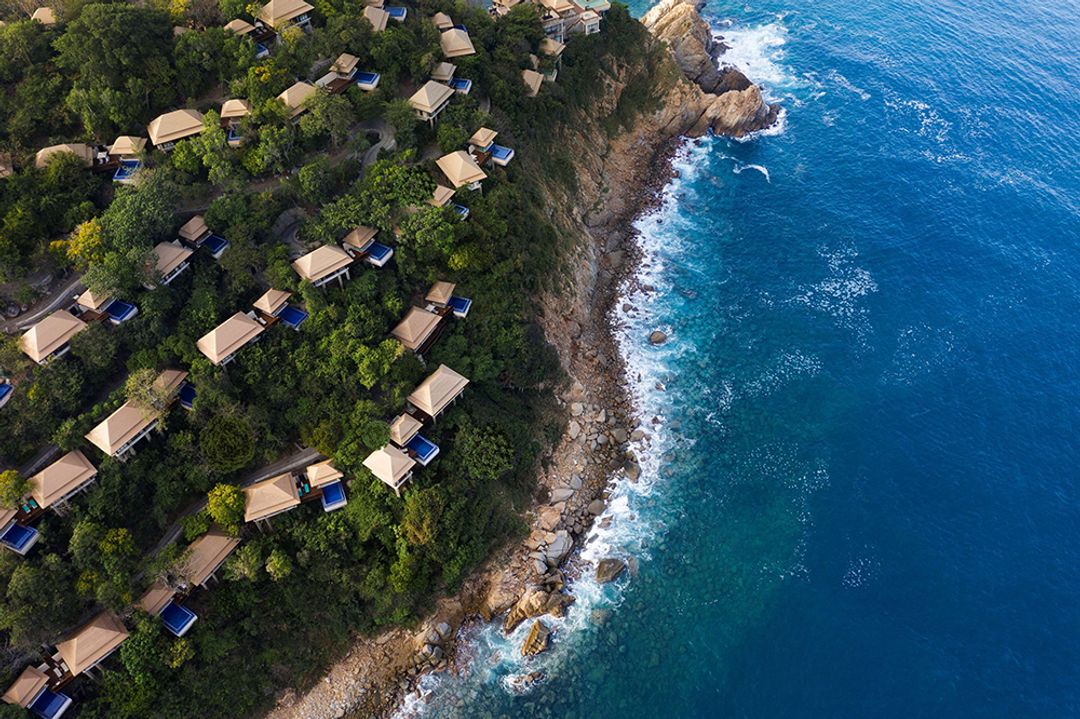
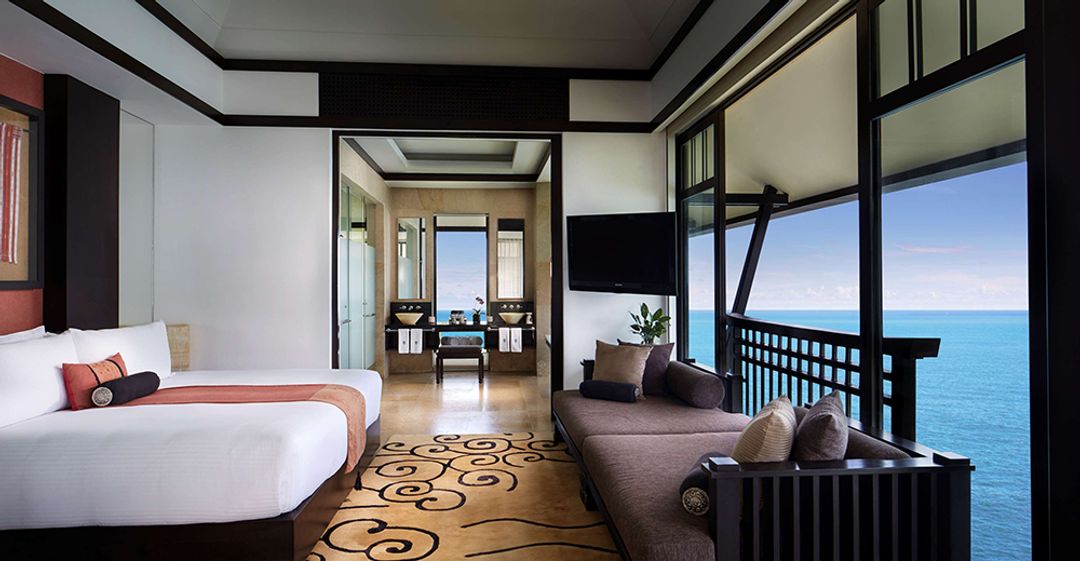
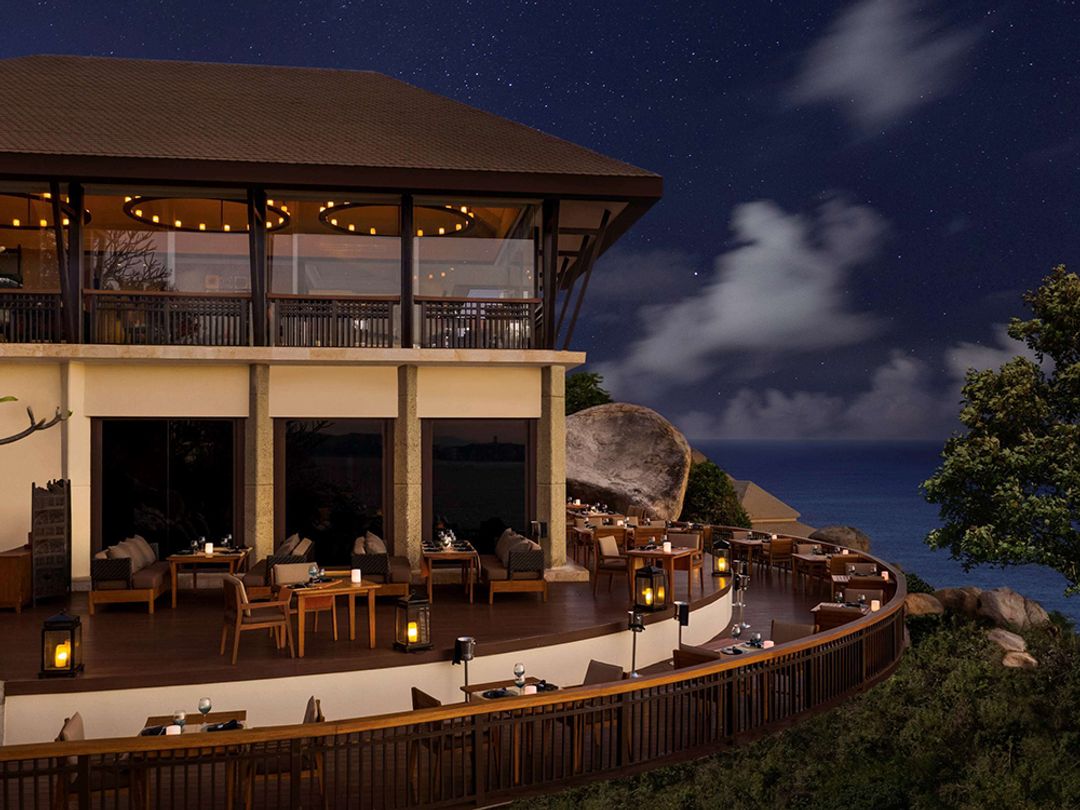
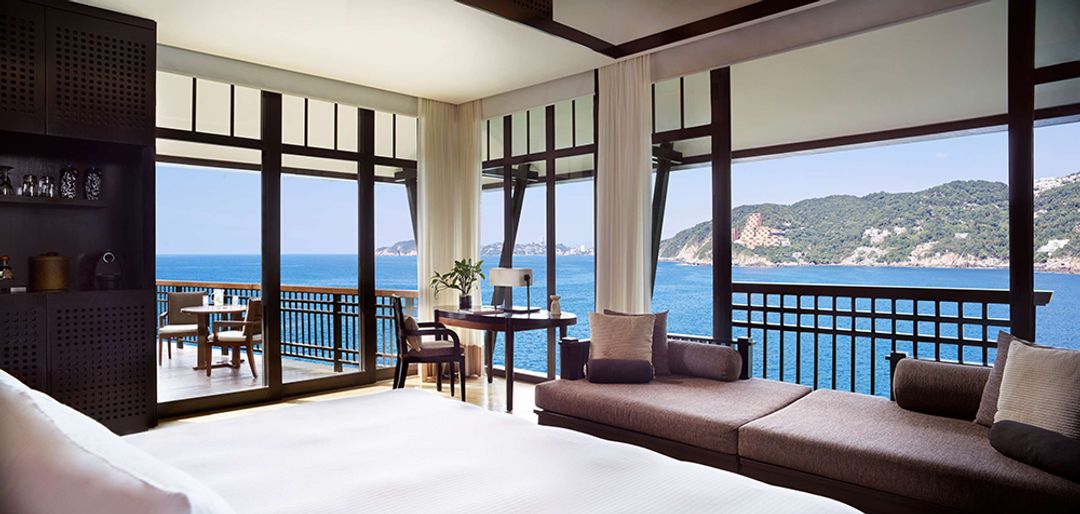
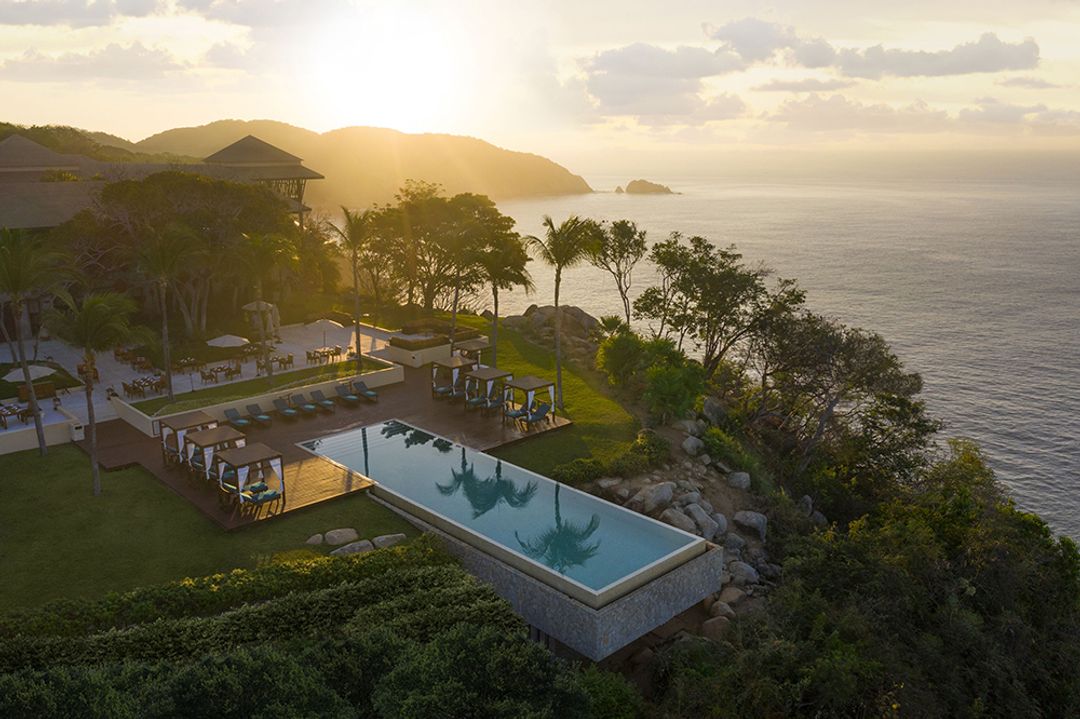
The Banyan Tree Cabo Marques sits on that headland in Punta Diamante, designed around the kind of steep terrain that most developers would have avoided. The property uses the hillside rather than flattening it, stepping its villas and pools down toward the ocean in a series of terraced levels that keep the horizon unobstructed from nearly every vantage. Banyan Tree, as a brand, has made its name in Southeast Asia working this way, placing architecture in service of topography rather than against it, and the Cabo Marques property carries that sensibility into the Mexican Pacific. For a traveler whose instinct is to notice how a building earns its site, this is the considered choice in a city where the site itself has always been the point.