Best hotels in Salalah | A Curated Visual Guide to Top Stays
Welcome to PressBeyond, the ultimate curated visual guide for design-driven hotels! My name is Will Miller and this is my recommendation for the best boutique and luxury hotel in Salalah.
I am the founder of PressBeyond and I am an ultra-meticulous hotel curator who loves clean visuals. I have individually analyzed and tiered the hotel included in this guide based on a variety of criteria (architecture & design, location, brand & brand affiliation, existing reviews, and my own personal experiences), and importantly, I have hand-selected the leading imagery for this hotel to provide you with easily-digestible, yet detailed and complete, like-for-like, high-level visual profiles. I felt this summarization step was a critical missing piece across existing guides, blogs, and booking platforms. My aim is to make it easier for people to identify hotel environments that resonate with them, along with enabling them to visualize the types of social experiences that those environments help foster. My brain doesn't work when exposed to cluttered content, so my goal was to create the opposite.
Underneath this, we are also a full booking engine offering 5% Venmo cash back along with other exclusive perks. For all of you design-obsessed hotel enthusiasts out there, I hope this guide helps get you to where you see yourself!
An Overview of the Boutique & Luxury Hotel Landscape in Salalah
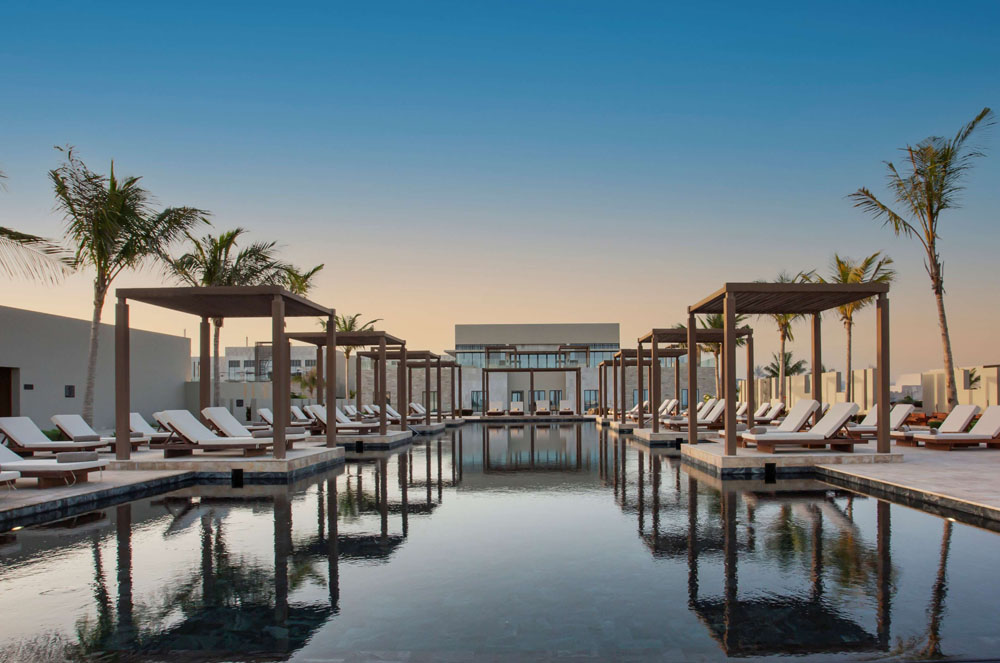
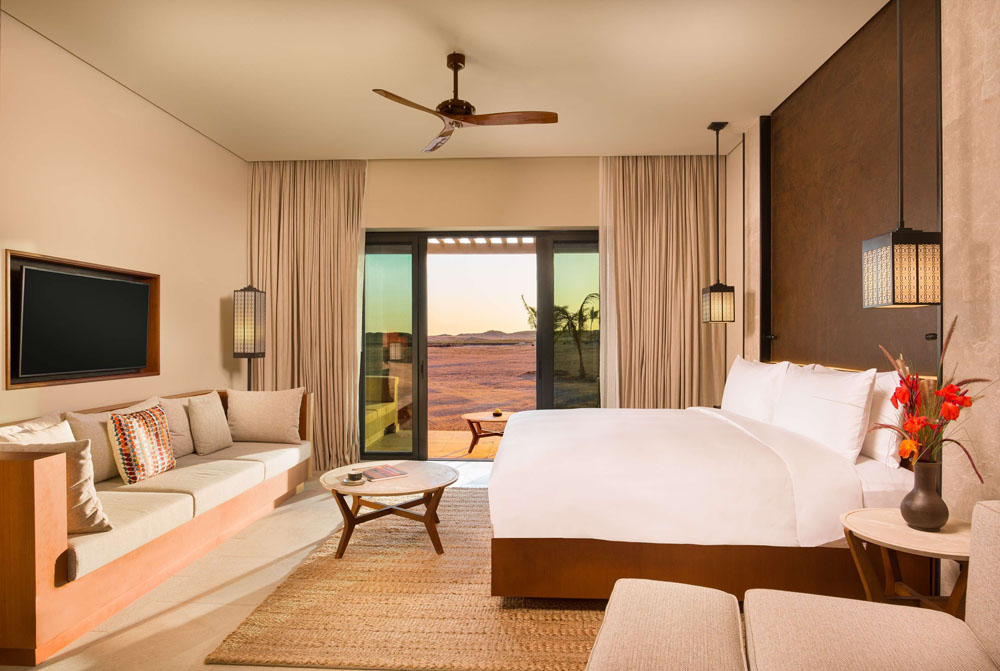
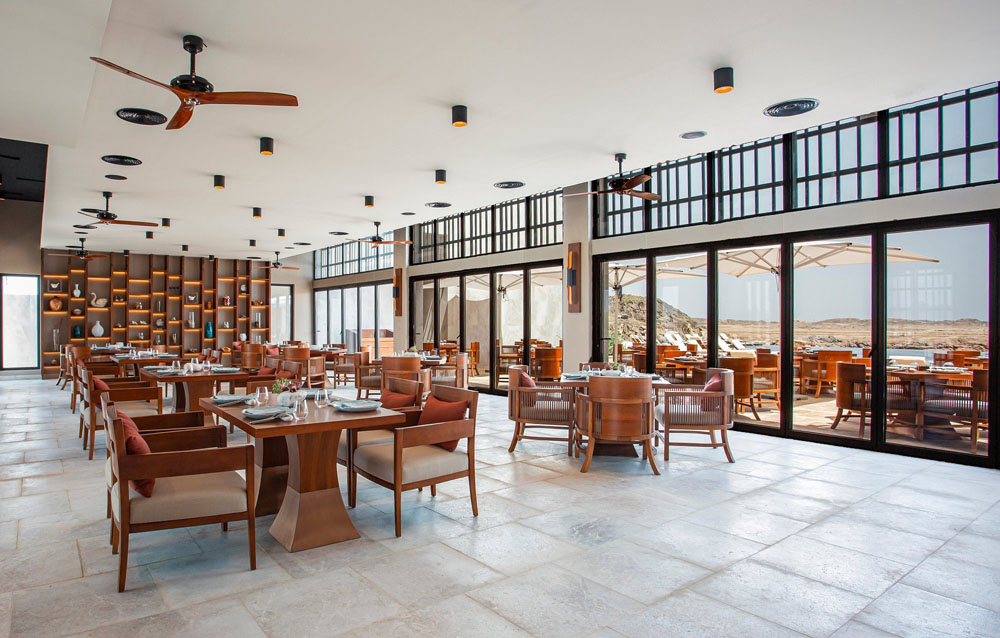
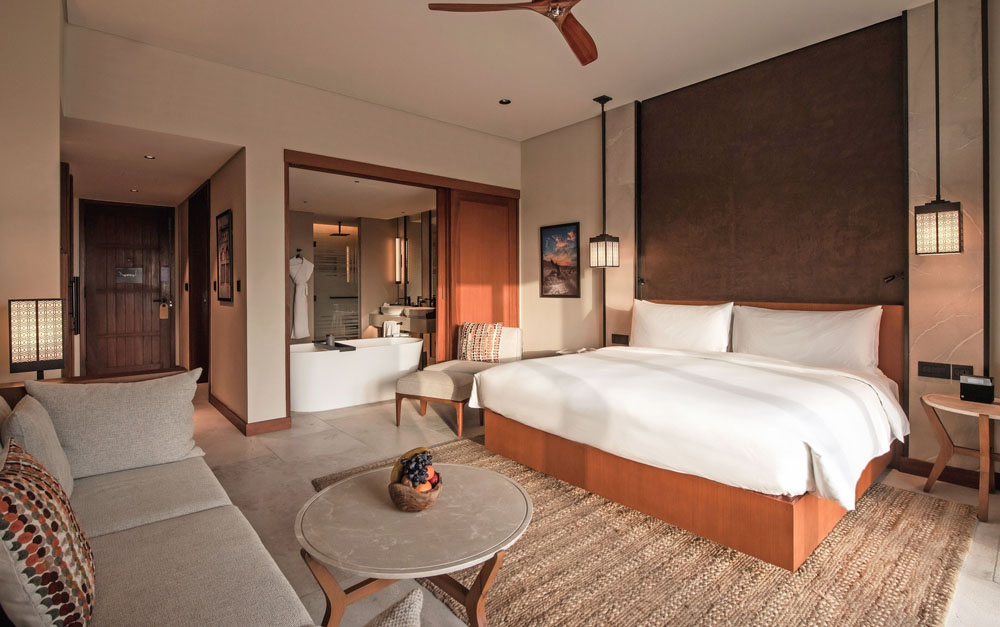
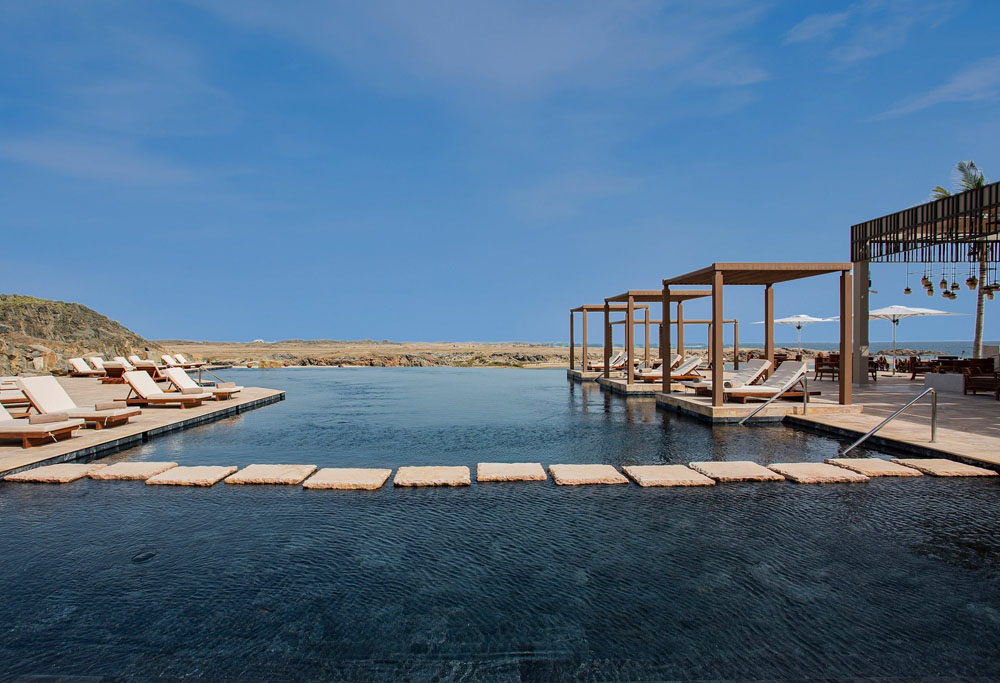
Salalah refuses to behave like the rest of Oman. While Muscat operates in sun-bleached limestone and the grand gestures of Gulf modernism, Salalah turns green every summer — genuinely, improbably green — when the khareef monsoon rolls in from the Arabian Sea between June and September and transforms the Dhofar coast into something closer to Kerala than the Arabian Peninsula. The landscape is the architecture here, in a sense that is rarely true elsewhere in the region: frankincense trees on the plateau above the city, wadis cutting toward a coastline of extraordinary geological drama, and fishing villages that have been doing the same thing for centuries without any particular interest in being discovered. Mirbat, roughly 70 kilometers east of Salalah along the coastal road, is one of those villages — a former trading port that once moved frankincense and horses along the same Indian Ocean routes that connected southern Arabia to East Africa and India. It is here that Alila Hinu Bay has established itself, with considerable architectural restraint, against a backdrop of rocky headland and open sea. Alila as a brand has always been serious about site — their properties in Bali, Jabal Akhdar, and the Hejaz mountains are defined by their relationship to landscape rather than their imposition upon it — and Hinu Bay continues that logic. The property works with the existing coastal topography, its palette drawn from the ochres and warm greys of the surrounding geology, and its scale kept low against the horizon. For a traveler arriving from a succession of lobbies designed to announce their own ambition, there is something genuinely clarifying about a place that points outward rather than inward. At roughly $260 a night, Alila Hinu Bay sits at the more considered end of what the Dhofar coast offers, and the price reflects both the remoteness and the quality of the intervention. The drive from Salalah takes you past the tomb of the Prophet Job — a pilgrimage site of unassuming power — and through terrain that shifts noticeably as you move east along the coast. Salalah itself has a relaxed, mid-century administrative quality to its center, with date palms lining wide streets built for a quieter era. The city is the practical base; Mirbat is the reason to come this far.