Best hotels in Mecca (Makkah) | A Curated Visual Guide to Top Stays
Welcome to PressBeyond, the ultimate curated visual guide for design-driven hotels! My name is Will Miller and this is my recommendation for the best boutique and luxury hotel in Mecca (Makkah).
I am the founder of PressBeyond and I am an ultra-meticulous hotel curator who loves clean visuals. I have individually analyzed and tiered the hotel included in this guide based on a variety of criteria (architecture & design, location, brand & brand affiliation, existing reviews, and my own personal experiences), and importantly, I have hand-selected the leading imagery for this hotel to provide you with easily-digestible, yet detailed and complete, like-for-like, high-level visual profiles. I felt this summarization step was a critical missing piece across existing guides, blogs, and booking platforms. My aim is to make it easier for people to identify hotel environments that resonate with them, along with enabling them to visualize the types of social experiences that those environments help foster. My brain doesn't work when exposed to cluttered content, so my goal was to create the opposite.
Underneath this, we are also a full booking engine offering 5% Venmo cash back along with other exclusive perks. For all of you design-obsessed hotel enthusiasts out there, I hope this guide helps get you to where you see yourself!
An Overview of the Boutique & Luxury Hotel Landscape in Mecca (Makkah)
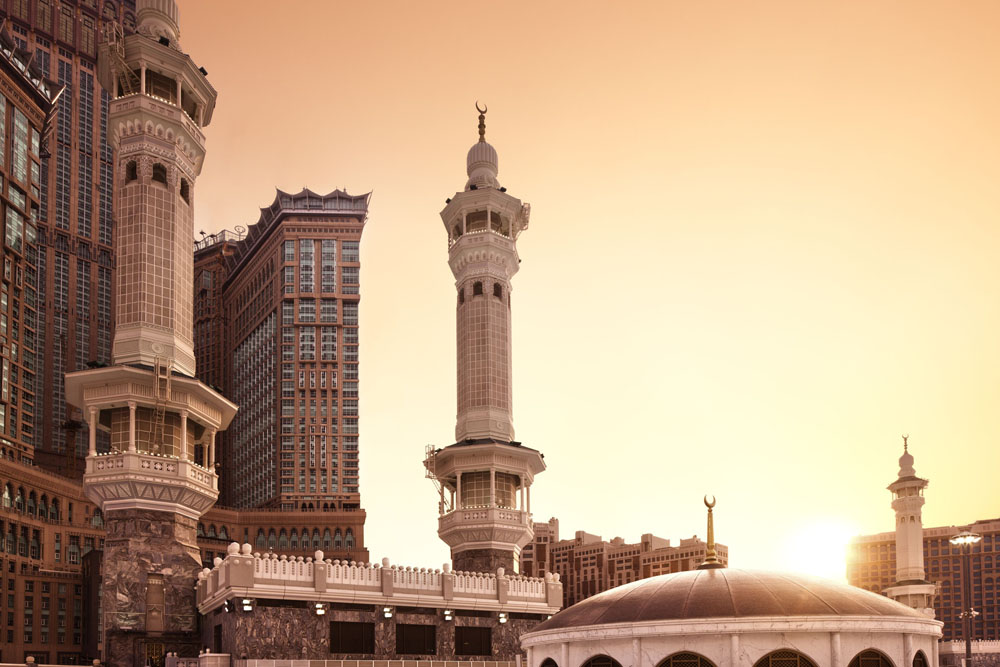
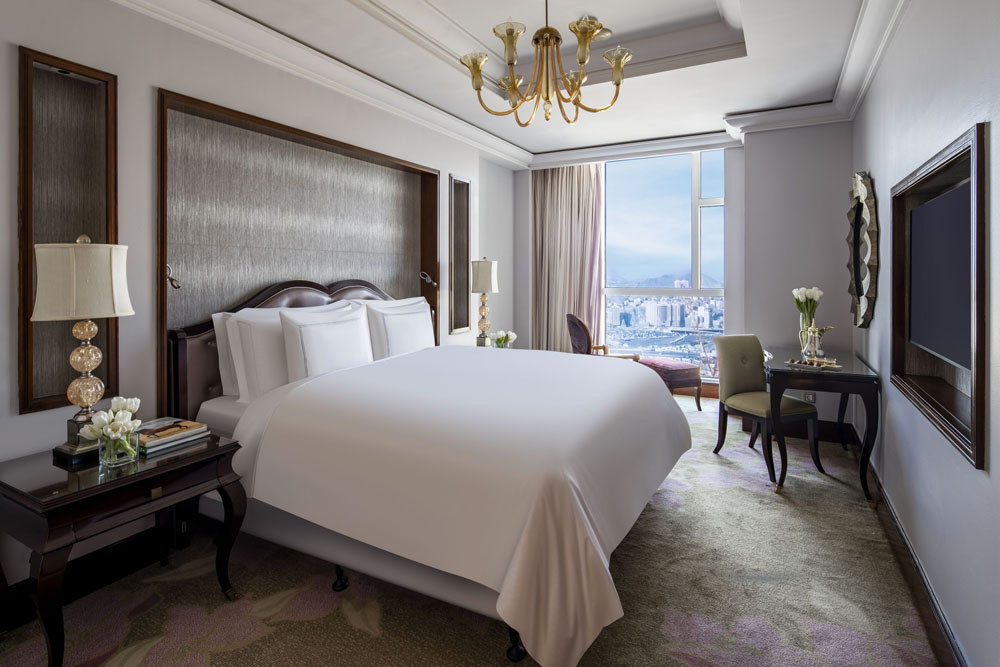
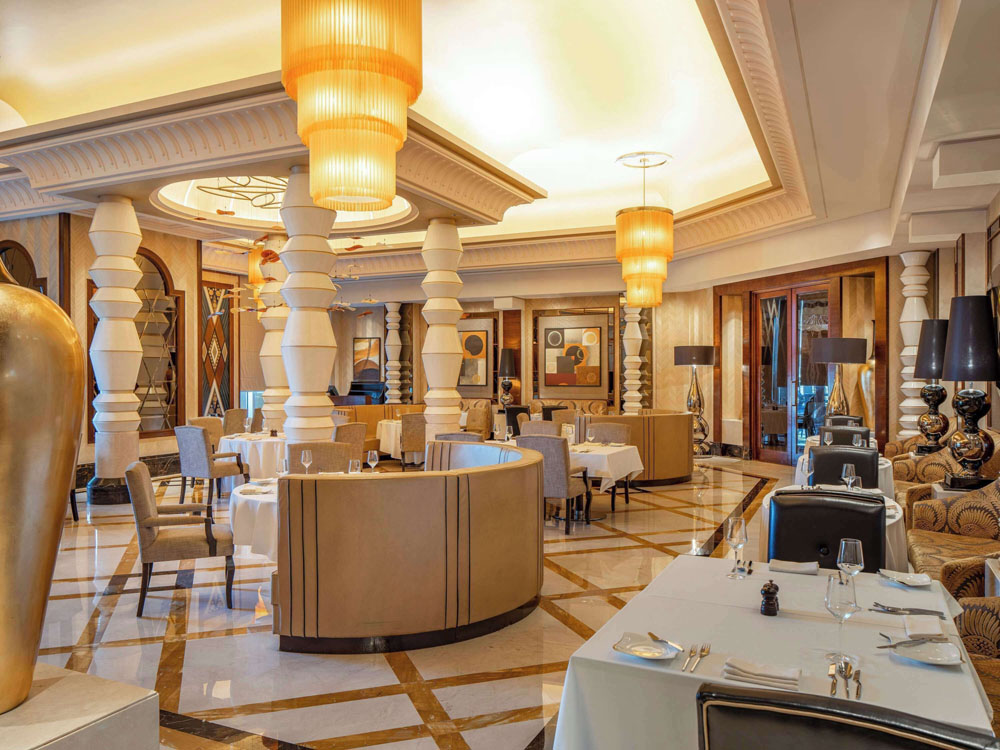
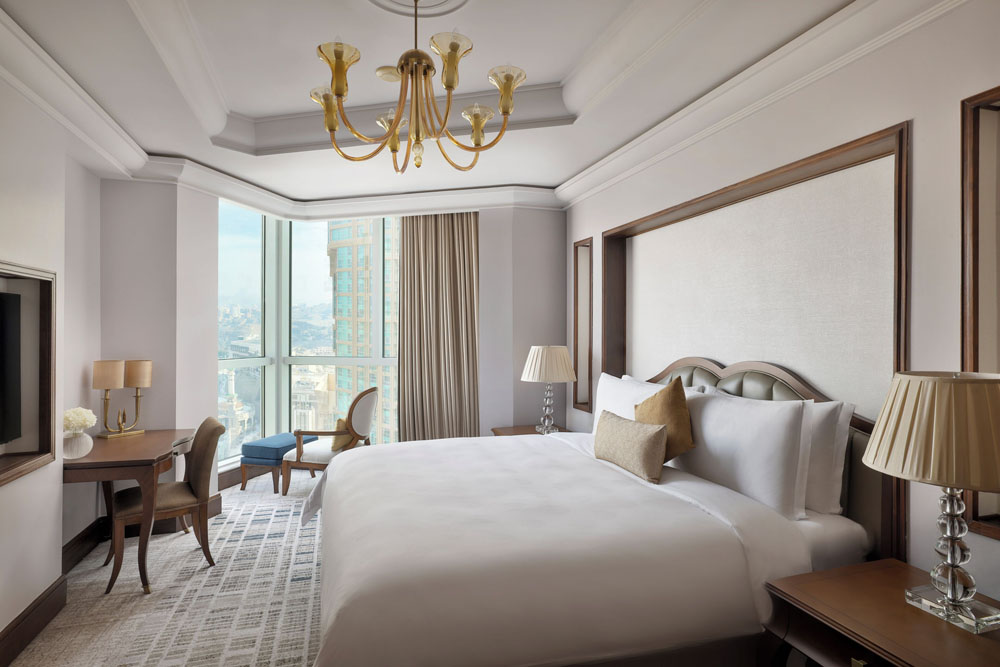
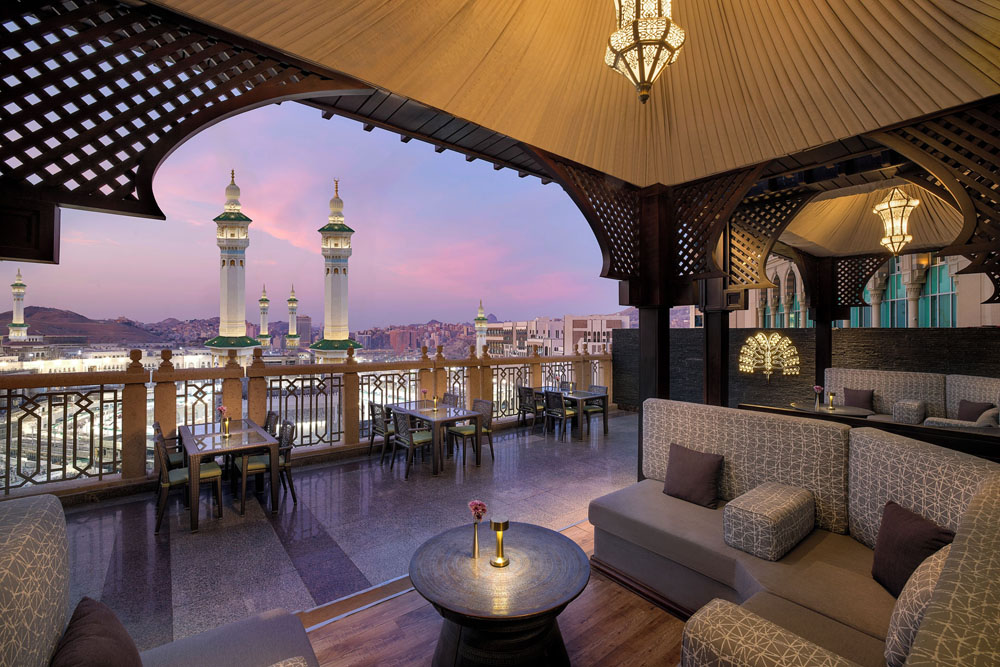
Mecca is one of the few places on earth where architecture must answer to something larger than itself. The city exists in permanent tension between the ancient and the monumental — the Masjid al-Haram and its surrounding precincts have drawn millions of pilgrims for centuries, and the built environment has responded, over the past two decades, with a scale of construction almost without parallel in contemporary urban development. The Abraj Al Bait Complex, completed in 2012 and rising directly adjacent to the Grand Mosque, is the physical expression of that ambition taken to its furthest point. The clock tower at its center stands among the tallest structures ever built, and the complex that surrounds it houses not just hotel rooms but the entire infrastructure of modern pilgrimage — prayer halls, shopping, dining, and accommodation engineered for arrival and departure at civilizational scale. Within that complex, the Raffles Makkah Palace occupies the upper floors with a considered restraint that sits in deliberate contrast to the tower's overwhelming exterior presence. Raffles has long understood how to inhabit inherited grandeur — Singapore, Paris, Istanbul — and in Mecca that instinct finds its most demanding test. The rooms and suites face directly onto the Masjid al-Haram, a spatial relationship that is simply unlike anything else in hotel design: the object of the entire journey visible from the bed, the call to prayer arriving not as ambient texture but as the organizing fact of each day. The interiors draw on a classical Arabic vocabulary without resorting to pastiche, with marble, carved plasterwork, and deep colors that register as serious rather than decorative. For the design-conscious traveler, Mecca offers something that has no equivalent elsewhere. The city is closed to non-Muslims, which means the entire question of staying here is inseparable from the question of why one is here at all — and that singularity shapes every architectural and experiential judgment. The Raffles Makkah Palace is not chosen against competitors or weighed against boutique alternatives in a neighboring district. It is chosen because it offers proximity and orientation of an order that only position can provide: a few minutes' walk to the Kaaba, a direct sightline from your window, and a level of material finish that allows the journey's significance to breathe without distraction. In a city where architecture serves devotion, the best room is always the one that keeps the Haram closest.