Where

PressBeyond Logo

Best hotels in Krabi | A Curated Visual Guide to Top Stays

Welcome to PressBeyond, the ultimate curated visual guide for design-driven hotels! My name is Will Miller and this is my recommendation for the best boutique and luxury hotel in Krabi.

I am the founder of PressBeyond and I am an ultra-meticulous hotel curator who loves clean visuals. I have individually analyzed and tiered the hotel included in this guide based on a variety of criteria (architecture & design, location, brand & brand affiliation, existing reviews, and my own personal experiences), and importantly, I have hand-selected the leading imagery for this hotel to provide you with easily-digestible, yet detailed and complete, like-for-like, high-level visual profiles. I felt this summarization step was a critical missing piece across existing guides, blogs, and booking platforms. My aim is to make it easier for people to identify hotel environments that resonate with them, along with enabling them to visualize the types of social experiences that those environments help foster. My brain doesn't work when exposed to cluttered content, so my goal was to create the opposite.

Underneath this, we are also a full booking engine offering 5% Venmo cash back along with other exclusive perks. For all of you design-obsessed hotel enthusiasts out there, I hope this guide helps get you to where you see yourself!

An Overview of the Boutique & Luxury Hotel Landscape in Krabi

Krabi is not a city that announces itself through architecture. It earns its hold on you through geology — the karst limestone formations that erupt from the Andaman Sea along its coastline are among the most dramatic landforms in Southeast Asia, and any serious attempt at hospitality design here has to contend with that fact. Building in the shadow of those cliffs, or within sight of Phang Nga Bay's scattered islands, is an exercise in knowing when to yield. The vernacular tradition along this stretch of the Thai coast draws on open-air pavilions, teak detailing, and a studied permeability between interior and exterior that acknowledges the climate rather than fighting it. What distinguishes the best contemporary properties from the merely adequate is whether they understand that relationship or simply exploit the view. Tubkaek Beach, a quieter stretch of coastline north of Ao Nang and well removed from the backpacker density of Railay, is where the Ritz-Carlton Reserve brand planted its most considered Southeast Asian outpost. Phulay Bay opened in 2011 and remains one of the more architecturally coherent properties in the region — its low-slung pavilions and private pool villas draw directly from southern Thai residential typology, with peaked rooflines and colonnaded walkways that resist the temptation toward generic resort modernism. The Reserve tier within the Ritz-Carlton portfolio operates at a different register than the main brand, with smaller guest counts and a higher degree of site-specificity in the design program. Here, that translates to landscaping that works with the coastal topography rather than flattening it, and interior material choices — dark timbers, natural stone, handwoven textiles — that feel native to the province rather than imported from a global luxury template. Krabi rewards travelers who are genuinely interested in landscape as much as design, and Phulay Bay positions itself at that intersection deliberately. The approach by longtail boat from certain angles, with the karst formations rising behind the property, makes the case for the location more convincingly than any interior gesture could. For a design-conscious traveler, the question in Krabi is rarely which hotel — it is whether the destination itself, in its raw geographic extravagance, is what you actually came for. Phulay Bay is the considered answer to that question on this stretch of coast.

Book with PB and get cash back
Phulay Bay, a Ritz-Carlton Reserve - Image 1
Phulay Bay, a Ritz-Carlton Reserve - Image 2
Phulay Bay, a Ritz-Carlton Reserve - Image 3
Phulay Bay, a Ritz-Carlton Reserve - Image 4
Phulay Bay, a Ritz-Carlton Reserve - Image 5

Phulay Bay, a Ritz-Carlton Reserve

Krabi • Tubkaek Beach • SPLURGE

avg. $603 / night

Includes $32 / night in cash back

Cash back is redeemable via Virtual Visa, Venmo, or bank transfer starting 24-48 hours after check-out

Marriott Bonvoy® property

Phulay Bay, a Ritz-Carlton Reserve Design Editorial

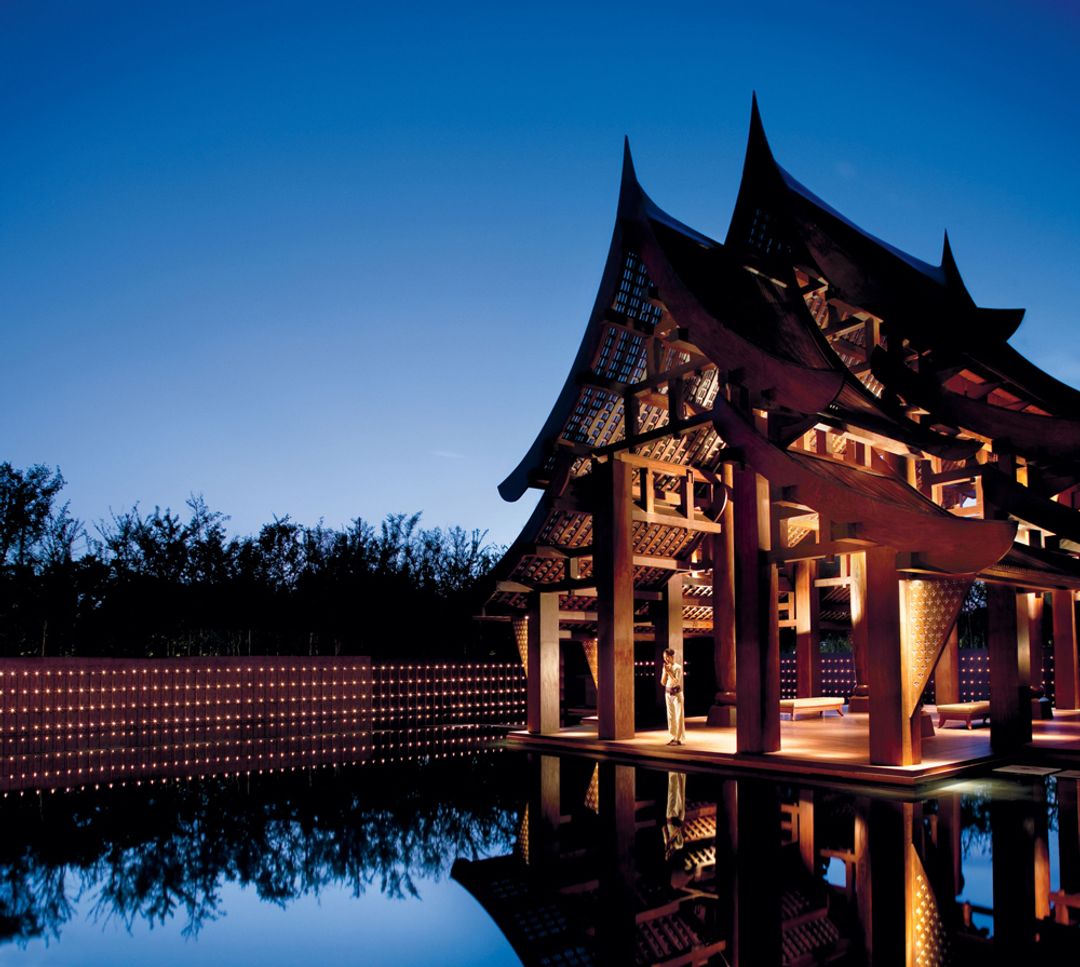
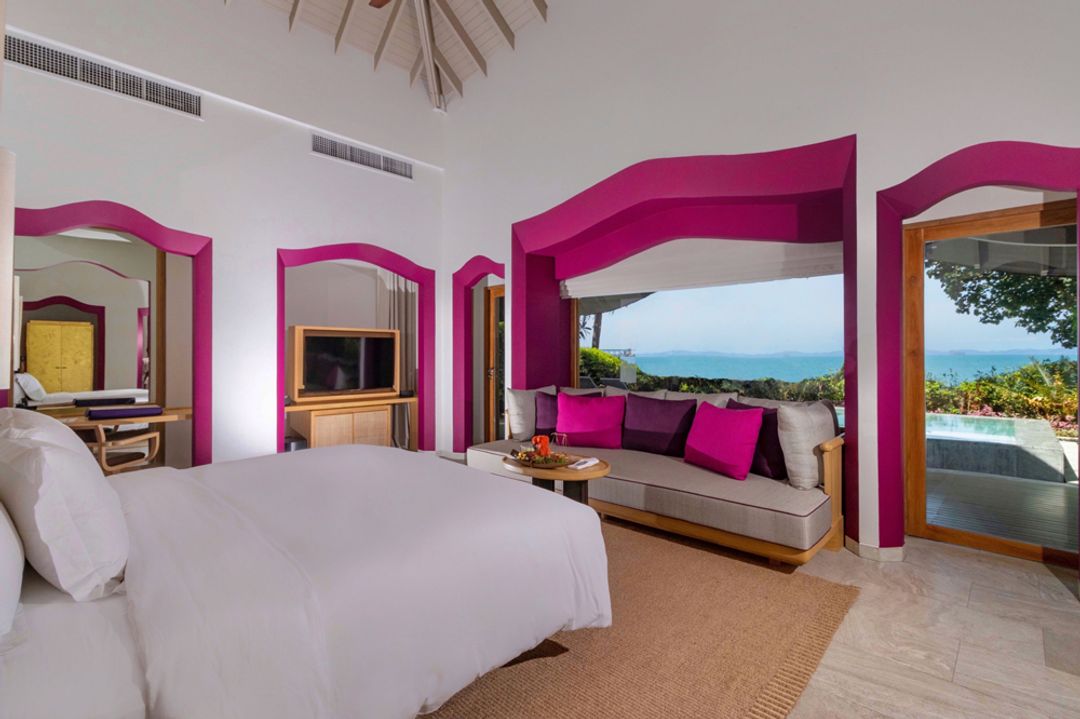
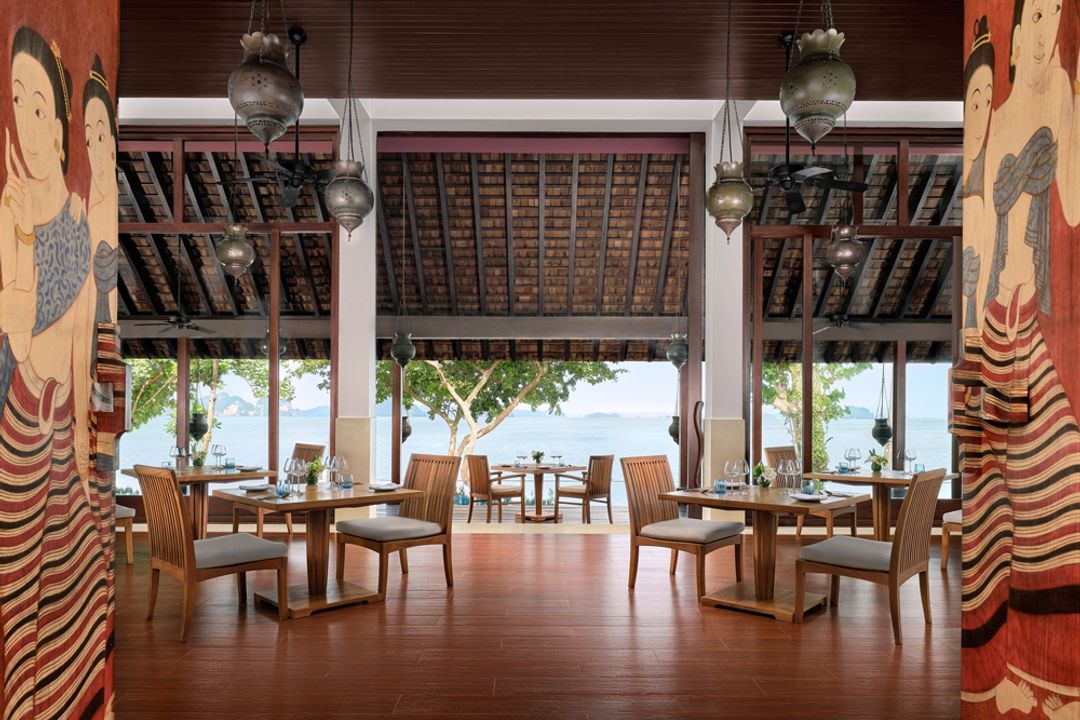
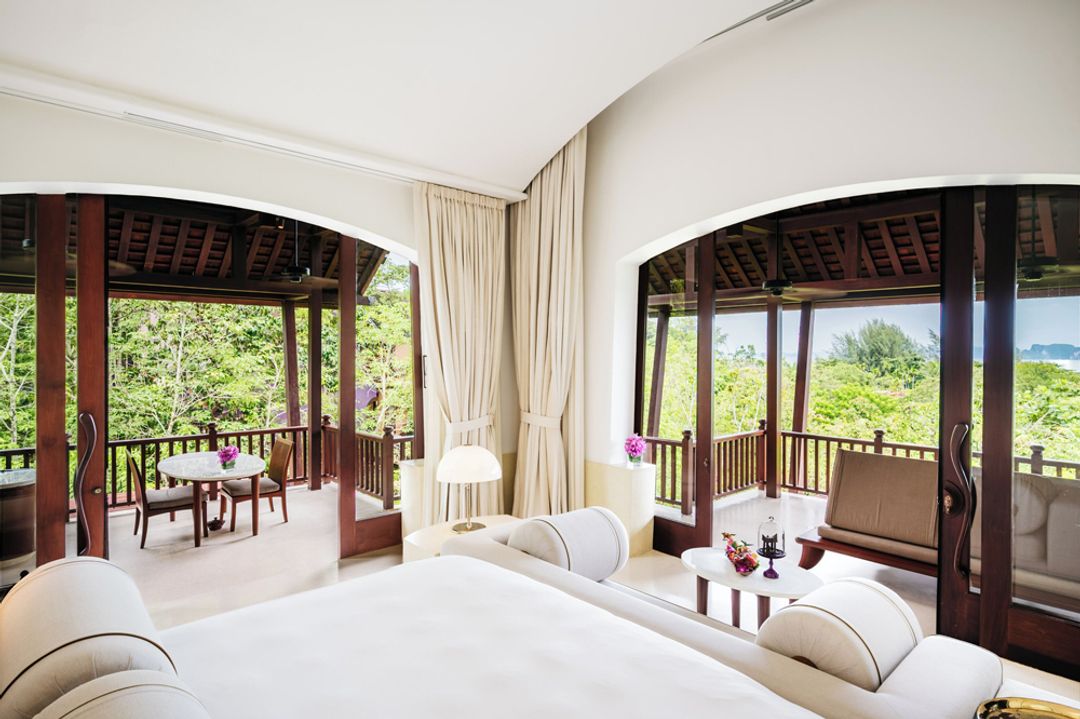
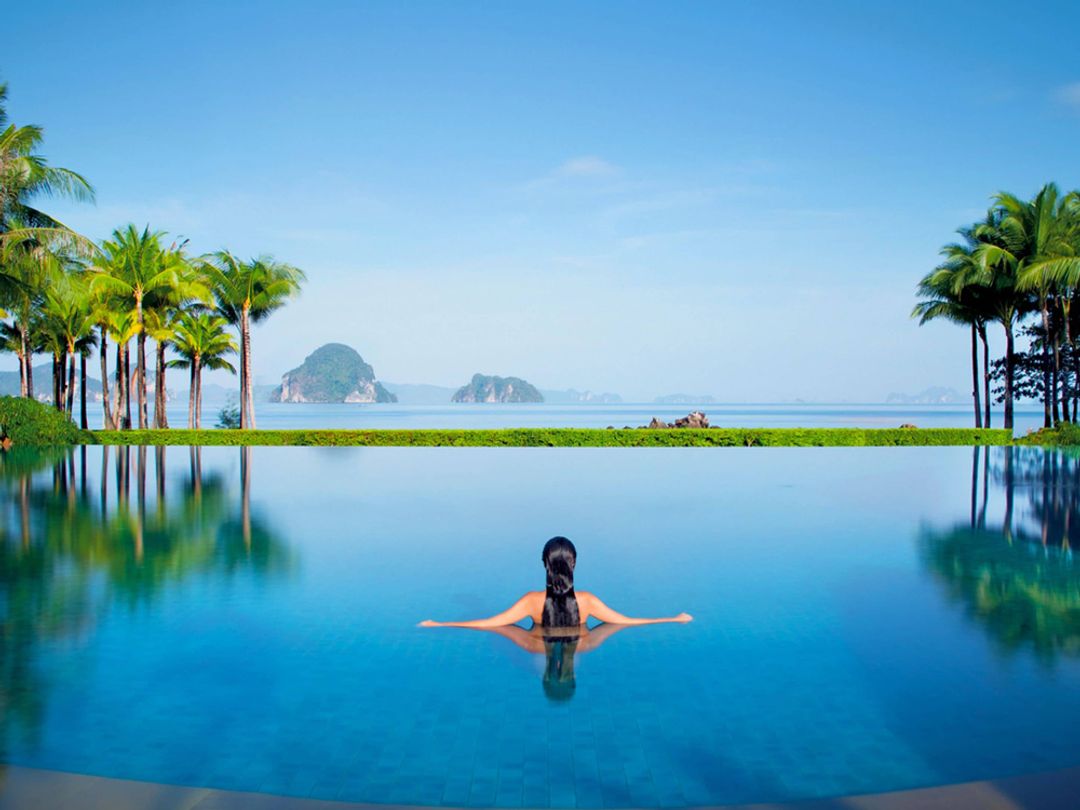
Against the limestone karst formations of Phang Nga Bay, where jagged peaks rise from the Andaman Sea like shards of an ancient world, the opening pavilion of Phulay Bay, A Ritz-Carlton Reserve announces itself at dusk as something closer to sacred architecture than resort hospitality. The multi-tiered roofline — dark hardwood bracketing sweeping upward in layered Thai temple form, its undersides packed with carved and gilded detail — mirrors itself in the still reflection pool below, a doubling that transforms the arrival into something almost ceremonial. Opened in 2010 on Tubkaek Beach in Krabi province, the property spreads across 15 acres with 54 pavilions and villas, each positioned to hold the view of the karsts across the bay. The interior language moves between registers. Guest pavilions finished in ivory plaster open through arched dark-timber doorframes onto private terraces canopied by secondary sala roofs, the rooms themselves spare enough — cream upholstery, limestone floors, rattan matting — to keep the landscape in focus. Where one category of villa breaks from this restraint, hot magenta arches frame the sleeping and sitting zones in bold contrast against white walls, a chromatic choice that snaps the tropical palette into something unexpectedly contemporary. The restaurant columns are wrapped floor-to-ceiling with classical Thai mural figures in deep reds and ochres, hand-painted textile patterns giving the dining hall a weight that the teak ceiling and open-sided sea views then dissolve. The infinity pool, aligned precisely with the karst silhouettes across the water, frames the property's deepest design ambition: that the landscape itself is the architecture.