Best hotels in Adirondack Mountains | Visually Compare Top Stays Side-by-Side
Welcome to PressBeyond - a curated visual guide to design-driven hotels and the fastest way to compare them.
An Overview of the Boutique & Luxury Hotel Landscape in Adirondack Mountains
The Adirondacks have their own architectural vernacular, and it is specific enough to resist easy imitation. The great camps built here from the 1870s onward — by the Vanderbilts, the Rockefellers, and their circles — established a grammar of peeled-log construction, fieldstone hearths, bark-covered surfaces, and hand-forged ironwork that was simultaneously rugged and deliberate. This was not rusticity by accident but wilderness living organized around aesthetic intention, a tradition that produced buildings which felt wholly of their place: the surrounding spruce forests, the cold glacial lakes, the granite outcroppings that punctuate the landscape across six million acres of protected state park. That design lineage still shapes what good hospitality looks like up here, and properties that ignore it tend to feel adrift.
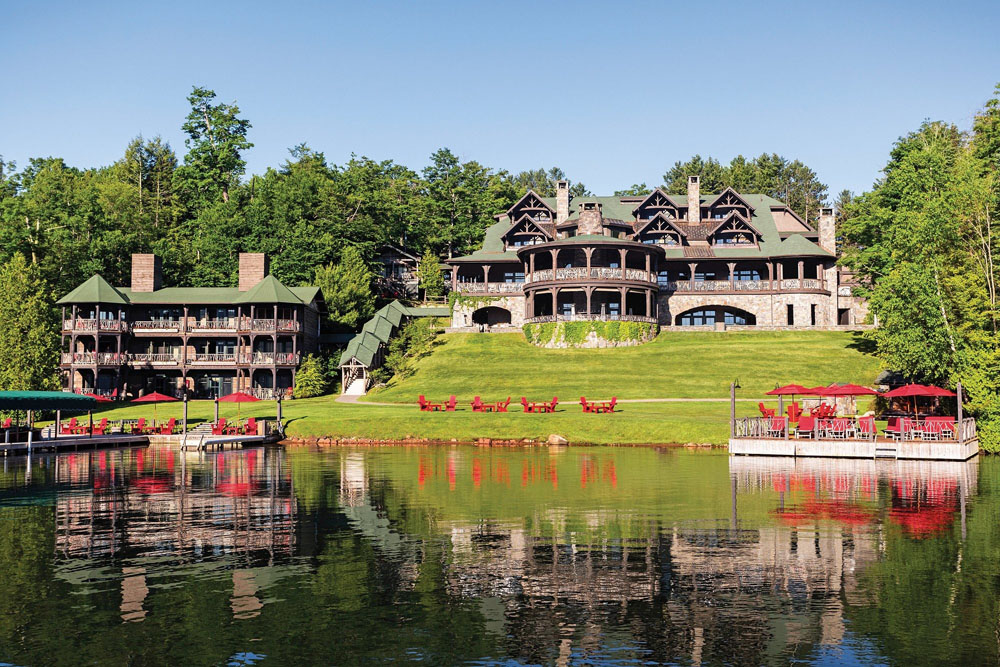
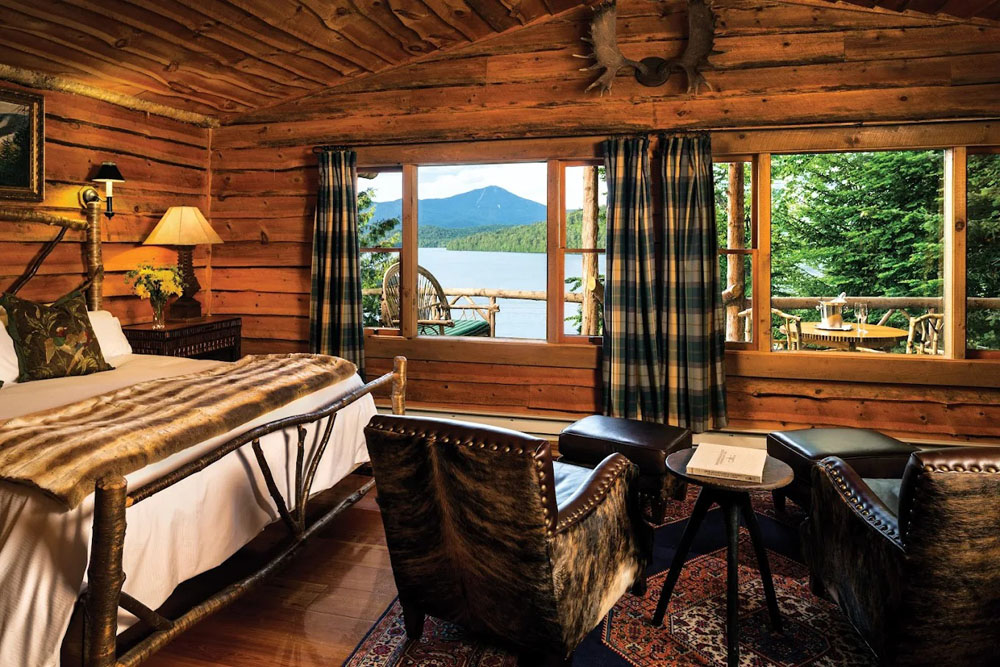
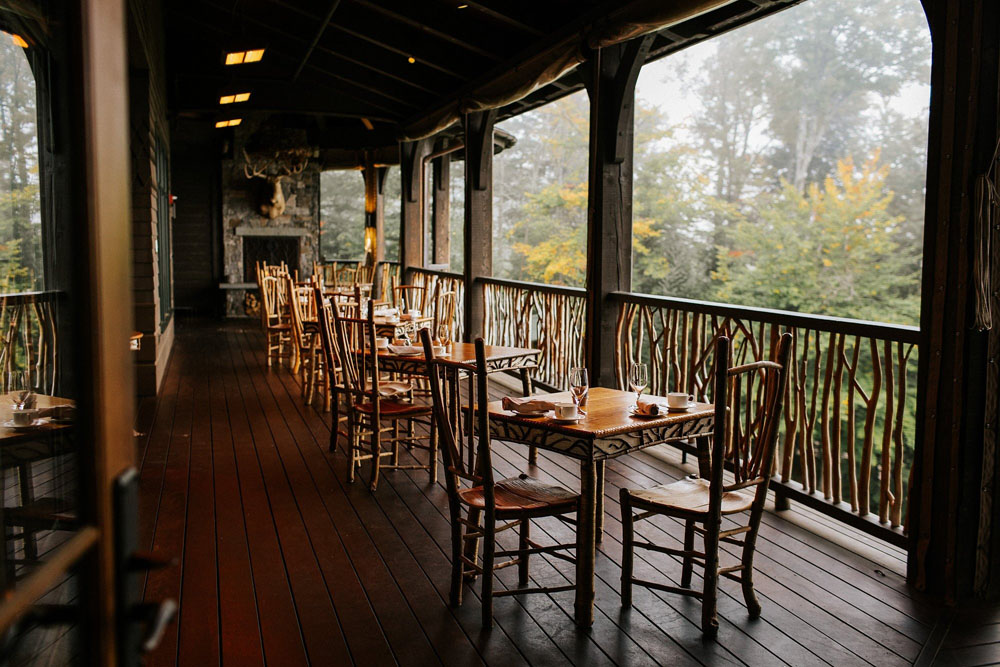
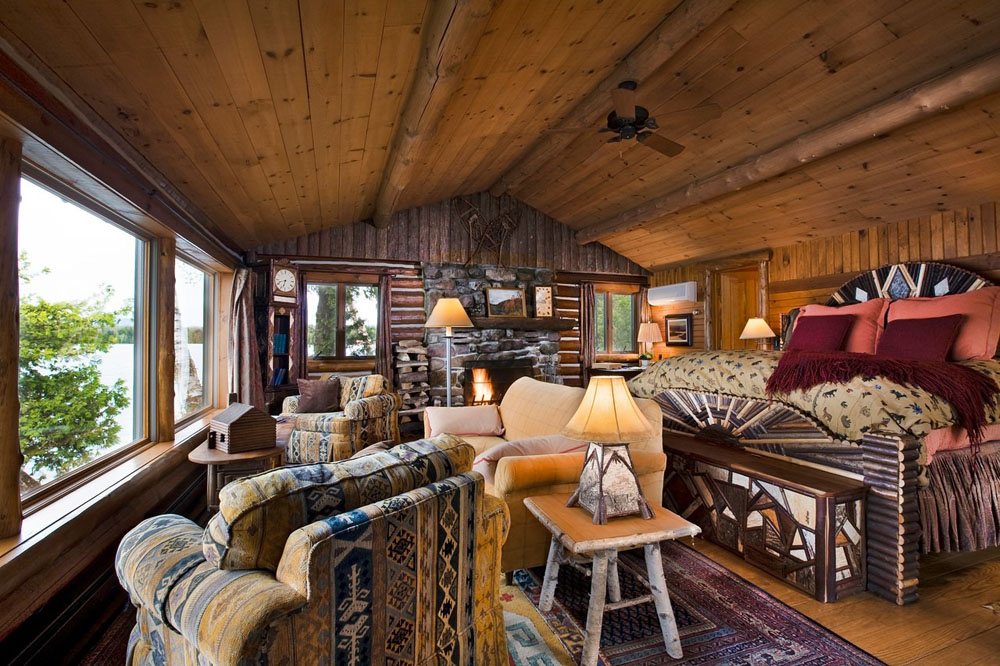
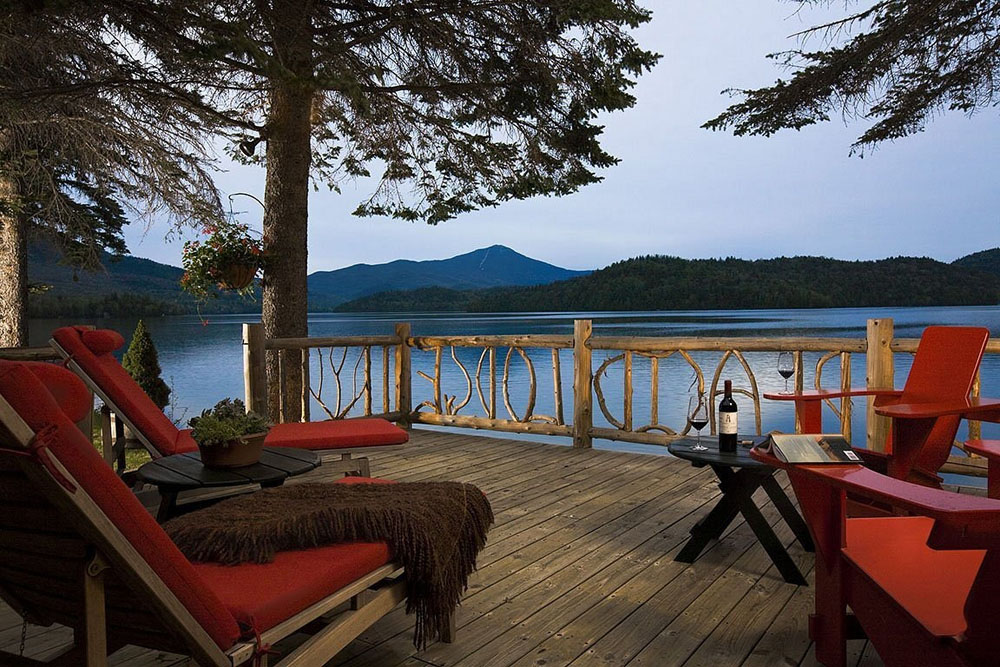
Lake Placid itself sits at roughly 1,800 feet, surrounded by High Peaks wilderness and the Olympic history of 1932 and 1980 — the bobsled runs are still active, the ski jumps still visible from town. It is a small, serious place with an odd combination of athletic infrastructure and genuine remoteness. Lake Placid Lodge occupies a forested point on the lake's western shore, and it earns its position not by spectacle but by fidelity. The main lodge was destroyed by fire in 2005 and rebuilt with careful attention to the great camp tradition: hand-hewn log construction, stone fireplaces scaled to the rooms rather than to a lobby crowd, Adirondack-made furniture, and interiors where the material palette — birch, leather, wool — reads as inherited rather than curated. The cabins that extend from the main structure reinforce this quality; they are private without being isolated, and they sit close enough to the water that the lake becomes a presence rather than a view.
What makes Lake Placid Lodge worth the rate is the coherence of its proposition. It does not hedge toward a broader audience or soften its edges for guests who might prefer something more conventionally polished. The dining is serious, the fire in the common room is real, and the surrounding landscape exerts the kind of pressure on daily rhythm that only genuine wilderness produces. For a design-conscious traveler who takes architecture seriously as a form of cultural argument, staying here is less about amenity and more about inhabiting a tradition that happens to be exceptionally well preserved.