Best hotels in Canyon Point, Utah | Visually Compare Top Stays Side-by-Side
Welcome to PressBeyond - a curated visual guide to design-driven hotels and the fastest way to compare them.
An Overview of the Boutique & Luxury Hotel Landscape in Canyon Point, Utah
The Colorado Plateau does not ease you in. Driving toward Canyon Point from the nearest highway, the landscape shifts register without warning: sandstone formations in bands of ochre, rust, and pale cream rise from the desert floor, carved by water and wind over millions of years into forms that seem to belong to a different geological epoch entirely. There are no towns here in any conventional sense, no commercial strips, no historic districts to anchor a visitor's bearings. What exists is the land itself, enormous and indifferent, and the occasional structure brave or foolish enough to sit within it.
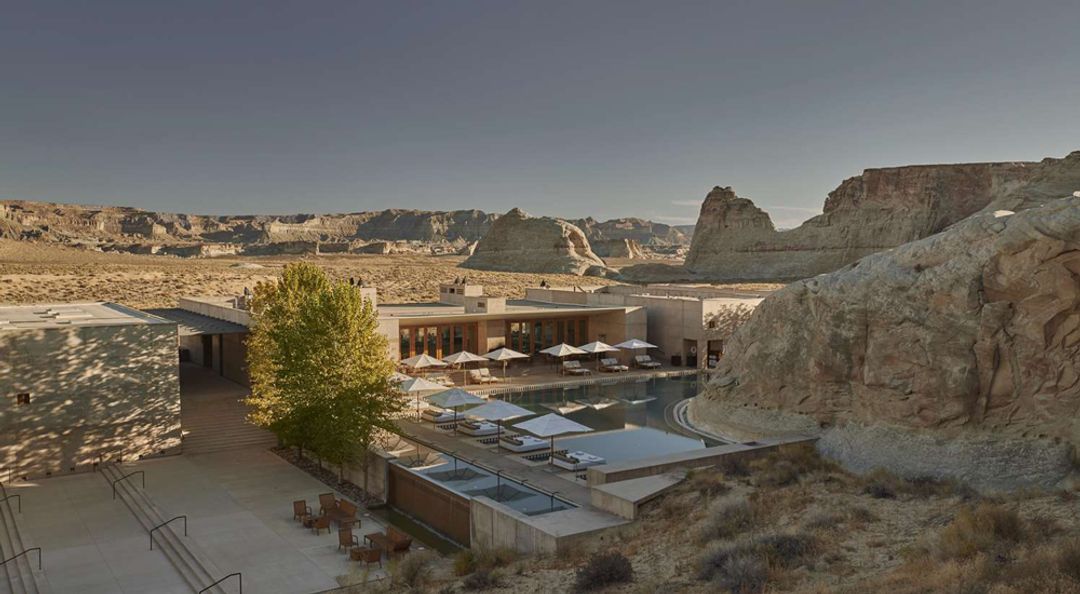
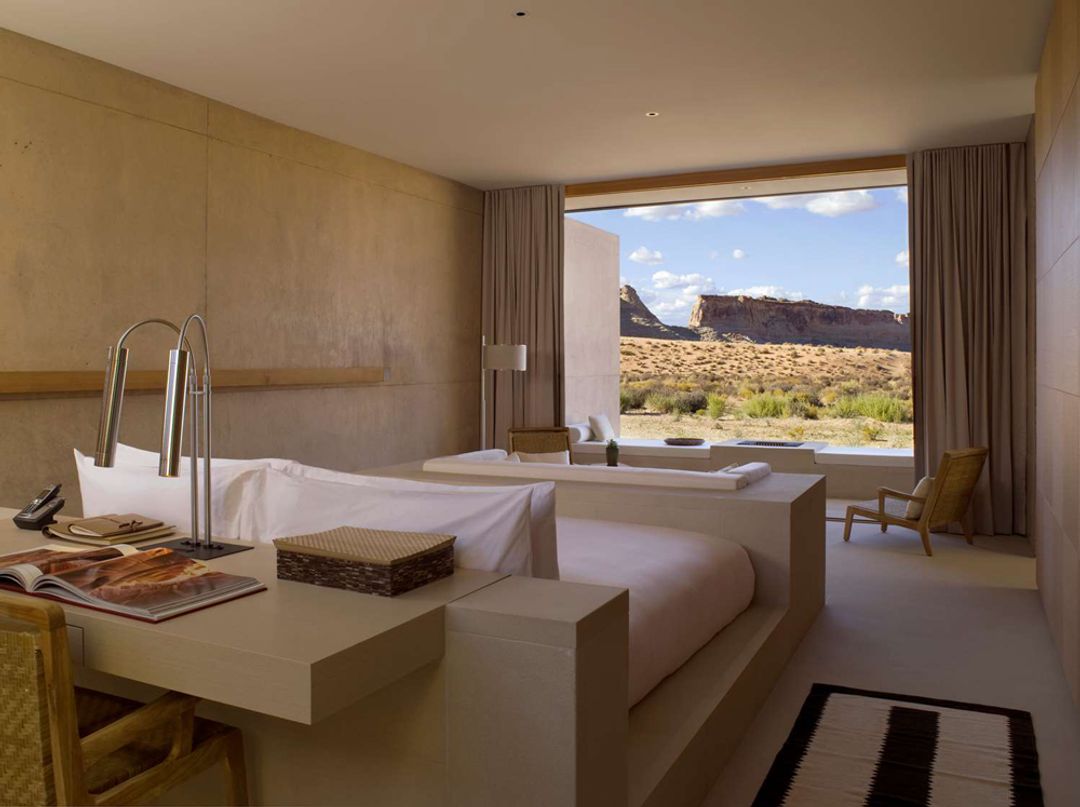
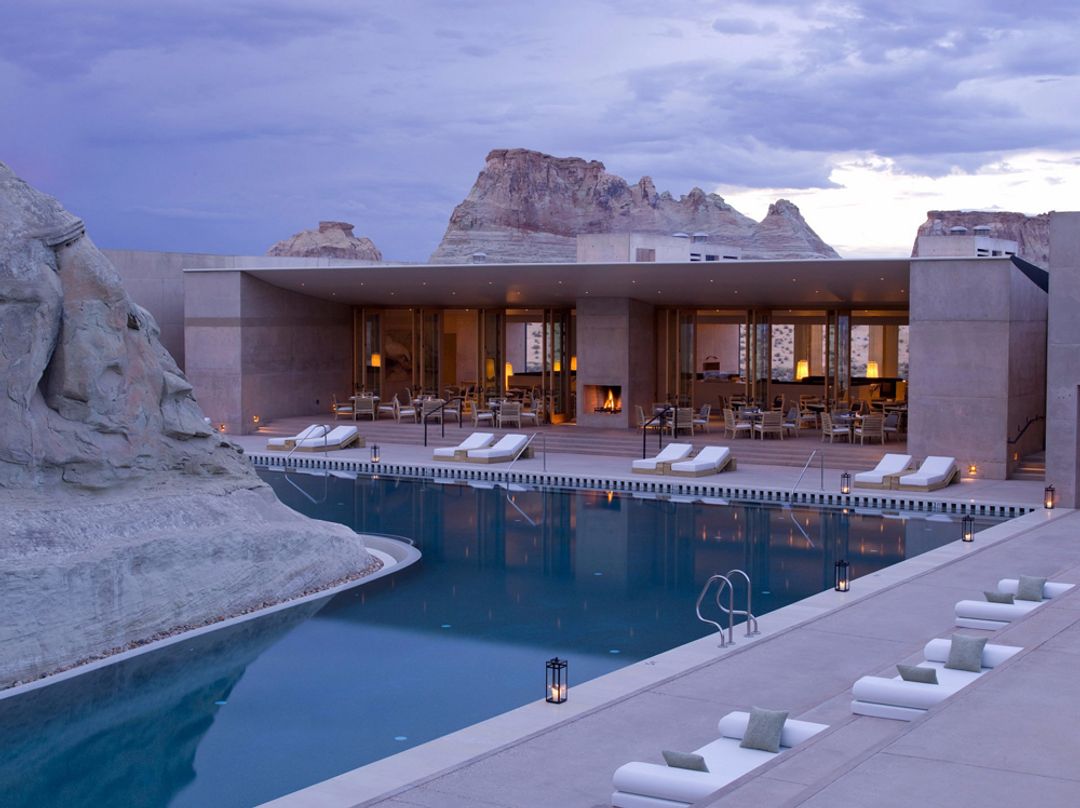
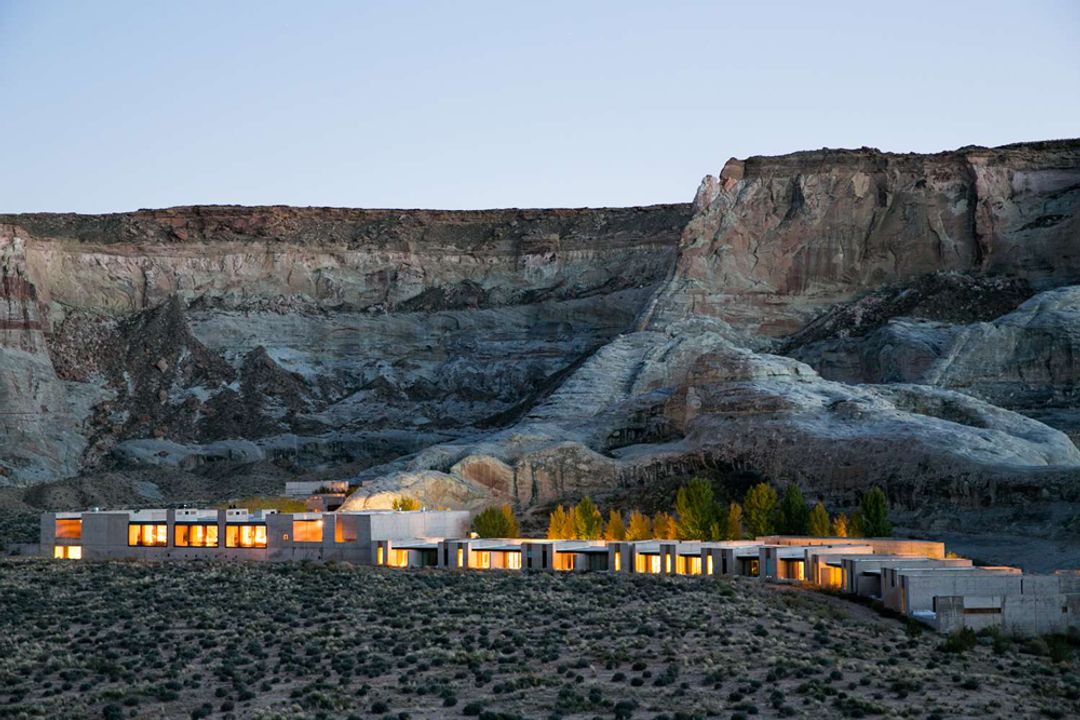
Amangiri is neither brave nor foolish. Completed in 2009 and designed by Marwan Al-Sayed, Wendell Burnette, and Rick Joy, the resort occupies a shallow canyon bowl in the Utah desert near the Arizona border, and it earns its place through submission rather than assertion. The low-slung concrete pavilions follow the contours of the terrain rather than imposing on them, and the palette, raw concrete, pale stone, and desert-bleached timber, reads as a continuation of the geological strata surrounding it. A central swimming pool wraps around an existing rock formation that the architects chose to preserve rather than remove, which says everything about the sensibility at work here. Interiors by Clodagh are spare without being austere, full of natural light and long horizontal sight lines that keep the surrounding canyon in perpetual frame. The scale is intimate for an Aman property, around 34 suites, which keeps the desert's silence intact rather than paving over it with the ambient noise of a larger resort operation.
For a traveler whose instinct is to notice materials and to understand how a building sits in its site, Amangiri offers something that has become genuinely rare in contemporary hospitality: architecture that required an actual position to be taken. The remote location, roughly 25 miles from Page, Arizona, and accessible only by car, is not incidental to the experience but central to it. The Navajo Nation surrounds much of this territory, and the region carries layers of Indigenous history that give the landscape a weight beyond the merely scenic. Staying here is not about proximity to attractions but about sustained attention to one extraordinary place. That is a different proposition than most hotels make, and in this case the place is more than sufficient to sustain it.