Best hotels in Sihanoukville, Cambodia | A Curated Visual Guide to Top Stays
Welcome to PressBeyond, the ultimate curated visual guide for design-driven hotels! My name is Will Miller and this is my recommendation for the best boutique and luxury hotel in Sihanoukville, Cambodia.
I am the founder of PressBeyond and I am an ultra-meticulous hotel curator who loves clean visuals. I have individually analyzed and tiered the hotel included in this guide based on a variety of criteria (architecture & design, location, brand & brand affiliation, existing reviews, and my own personal experiences), and importantly, I have hand-selected the leading imagery for this hotel to provide you with easily-digestible, yet detailed and complete, like-for-like, high-level visual profiles. I felt this summarization step was a critical missing piece across existing guides, blogs, and booking platforms. My aim is to make it easier for people to identify hotel environments that resonate with them, along with enabling them to visualize the types of social experiences that those environments help foster. My brain doesn't work when exposed to cluttered content, so my goal was to create the opposite.
Underneath this, we are also a full booking engine offering 5% Venmo cash back along with other exclusive perks. For all of you design-obsessed hotel enthusiasts out there, I hope this guide helps get you to where you see yourself!
An Overview of the Boutique & Luxury Hotel Landscape in Sihanoukville, Cambodia
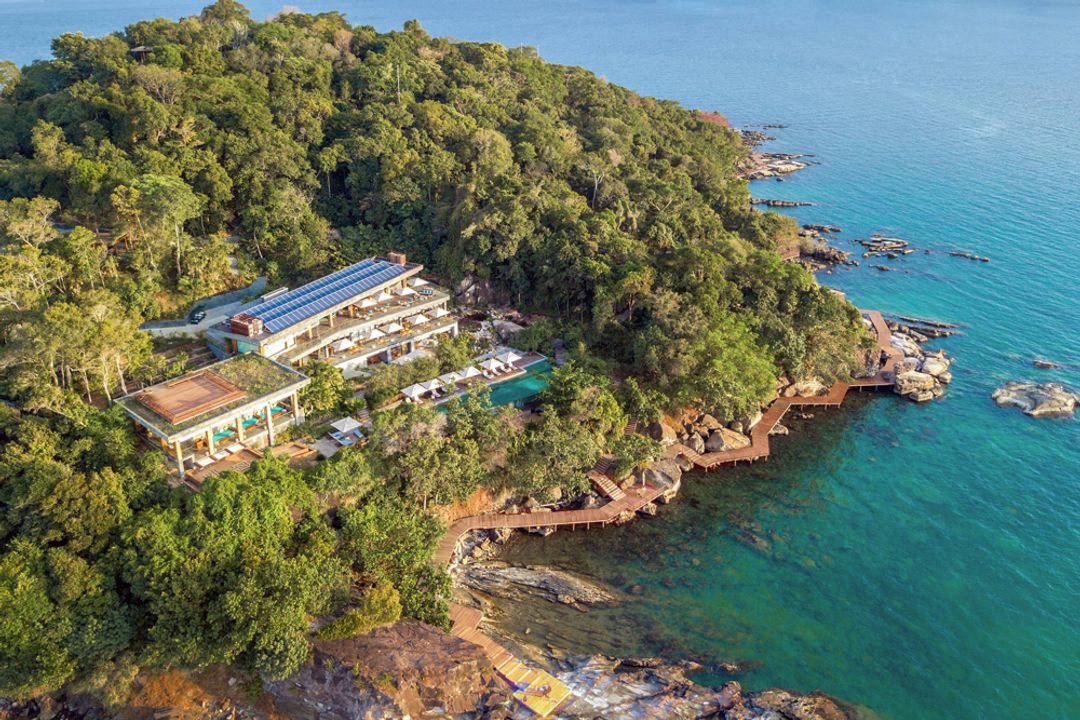
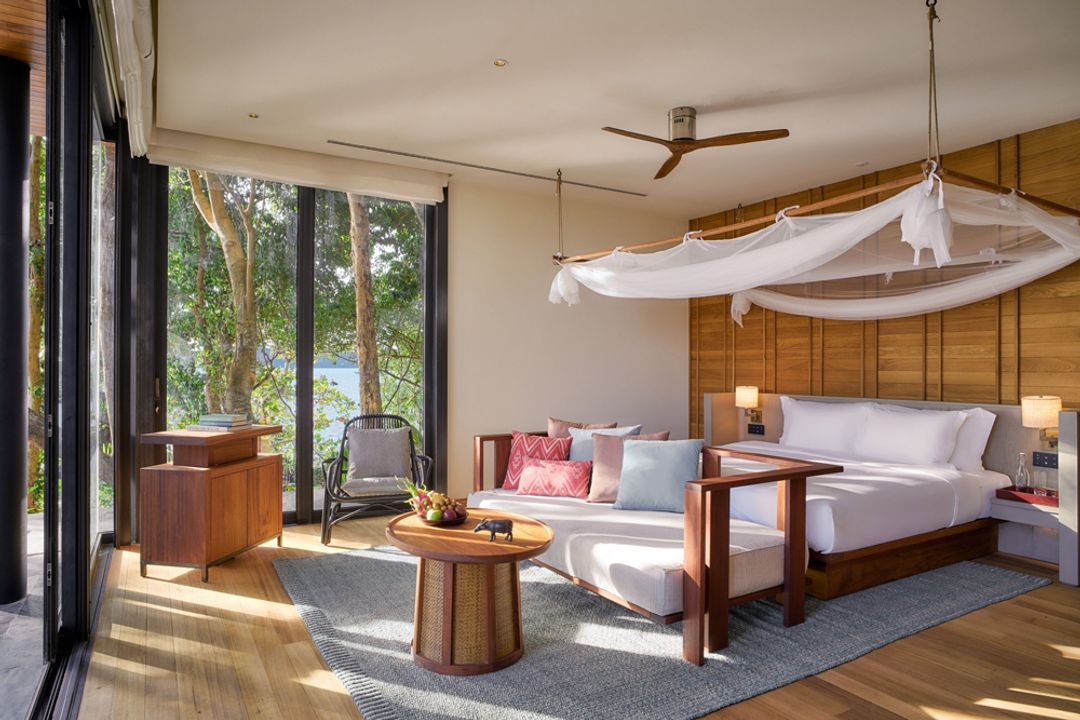
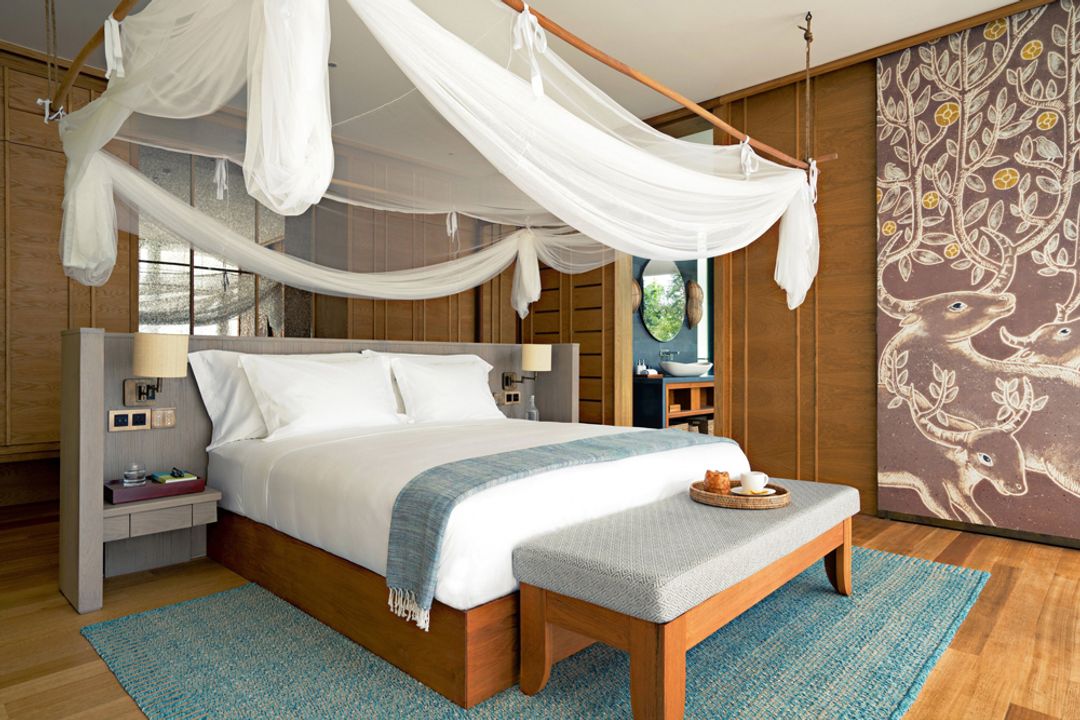
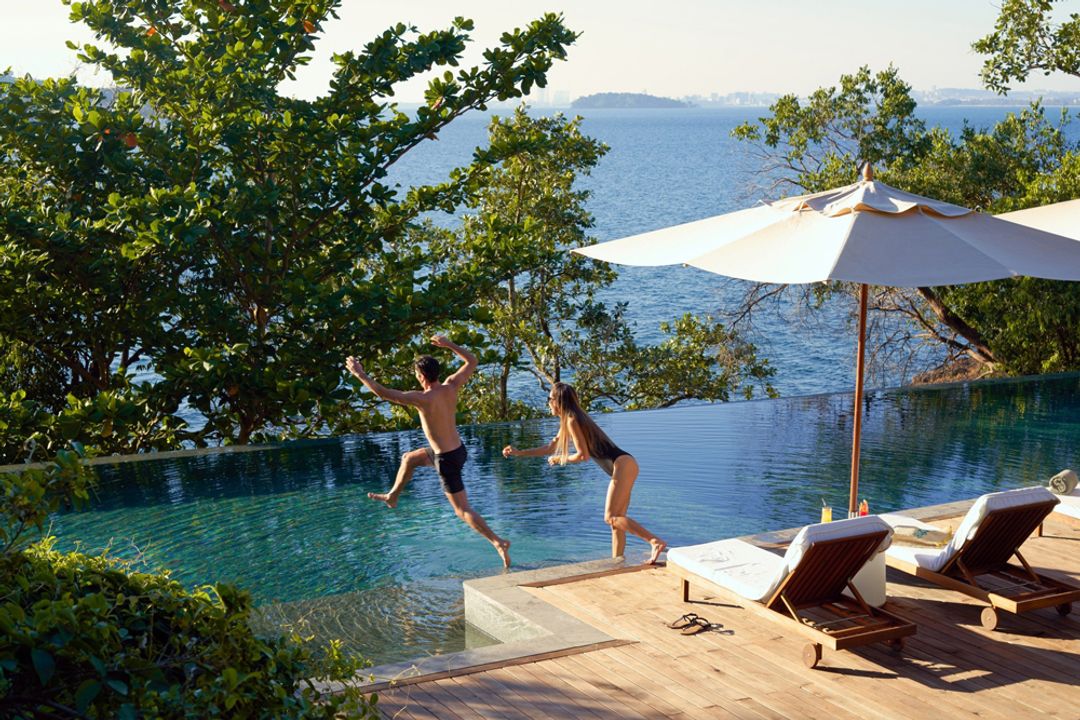
Sihanoukville itself is not the draw. The mainland port city — once a modest, breezy Cambodian beach town — spent the better part of the late 2010s under a construction frenzy driven by Chinese casino investment, which left behind a skyline of unfinished concrete towers and a coastal strip that lost whatever languor it once had. What remains compelling about this corner of the Gulf of Thailand is not the city but the water around it, and more specifically the islands it frames: Koh Rong, Koh Rong Sanloem, and the smaller, quieter Krabey, each sitting offshore in that particular blue-green that the Gulf manages on clear mornings. Krabey Island is where the architectural argument for this region gets made most precisely. Six Senses Krabey Island occupies the entirety of the 16-hectare island, accessible only by a short private boat transfer from the mainland, and the design works with that isolation rather than importing a generic resort grammar onto it. The property follows Six Senses' established commitment to vernacular sensitivity — low-lying pool villas use natural materials and reference Khmer architectural principles without tipping into pastiche. Thatched rooflines, open-sided pavilions, and a palette drawn from the surrounding vegetation keep the built environment from asserting itself too aggressively over the landscape. The water villas extend directly over a protected bay. For a brand that has executed this approach across the Indian Ocean and Southeast Asia for years, Krabey represents one of the stronger applications of the formula — partly because the island itself is genuinely undeveloped, so there is no surrounding noise to edit out. The honest case for coming here is narrow but real: if you are willing to accept that Sihanoukville proper is best treated as a transit point rather than a destination, and that the experience lives entirely on the island, Six Senses Krabey Island delivers a considered, unhurried encounter with a stretch of Cambodian coastline that has largely avoided the overdevelopment that claimed the mainland. It is not a complicated design story — there is no architectural pedigree to excavate, no named starchitect attached — but the restraint is its own kind of editorial position, and in this context, restraint is the more difficult achievement.