Where

PressBeyond Logo

Best hotels in Québec City | A Curated Visual Guide to Top Stays

Welcome to PressBeyond, the ultimate curated visual guide for design-driven hotels! My name is Will Miller and these are my recommendations for the best boutique and luxury hotels in Québec City.

I am the founder of PressBeyond and I am an ultra-meticulous hotel curator who loves clean visuals. I have individually analyzed and tiered each hotel included in this guide based on a variety of criteria (architecture & design, location, brand & brand affiliation, existing reviews, and my own personal experiences), and importantly, I have hand-selected the leading imagery for each hotel to provide you with easily-digestible, yet detailed and complete, like-for-like, high-level visual profiles. I felt this summarization step was a critical missing piece across existing guides, blogs, and booking platforms. My aim is to make it easier for people to identify hotel environments that resonate with them, along with enabling them to visualize the types of social experiences that those environments help foster. My brain doesn't work when exposed to cluttered content, so my goal was to create the opposite.

Underneath this, we are also a full booking engine offering 5% Venmo cash back along with other exclusive perks. For all of you design-obsessed hotel enthusiasts out there, I hope this guide helps get you to where you see yourself!

An Overview of the Boutique & Luxury Hotel Landscape in Québec City

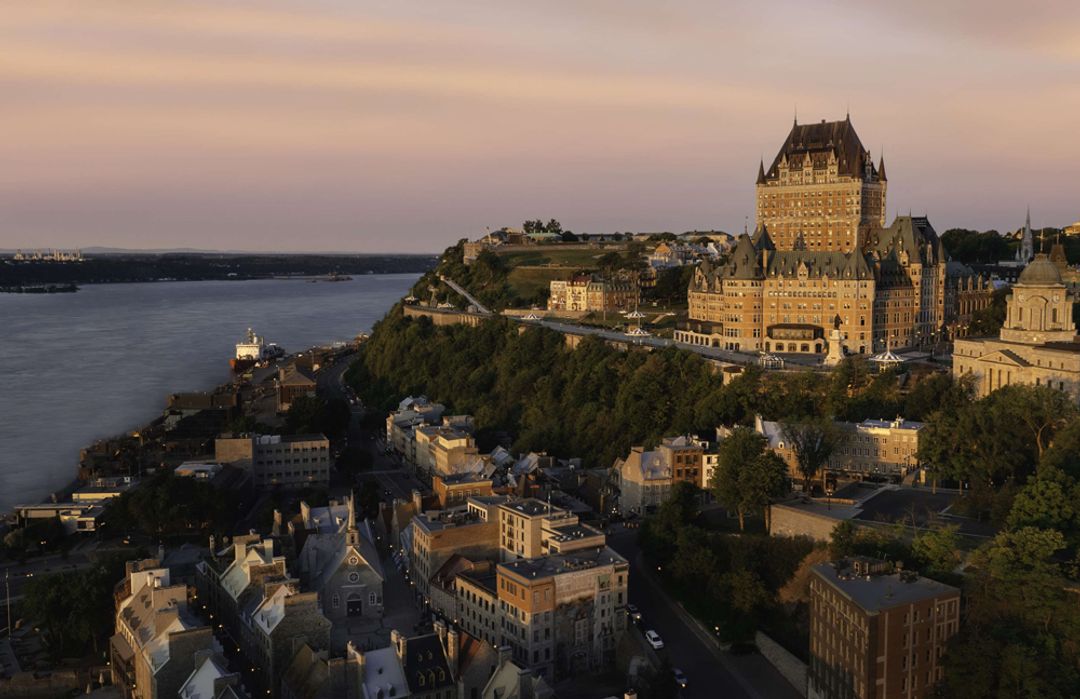
Château Frontenac is one of those buildings that has become so reproduced — on postcards, wine labels, the backs of playing cards — that first seeing it in person still manages to surprise. Designed by Bruce Price and completed in 1893 for the Canadian Pacific Railway, the turreted copper-roofed mass rising above the St. Lawrence on Cap Diamant is not a fantasy of a medieval fortress; it is a genuinely strange architectural object, a château style pushed to a scale that feels almost hallucinatory in the context of a North American city. The Fairmont Le Château Frontenac that operates inside it today occupies that tension carefully — the property sits within Old Québec's UNESCO-designated walls, which means its presence is inseparable from the city's own self-image. Rooms vary considerably depending on which tower they occupy, and the historical fabric is respected rather than reimagined. At $881 a night on average, you are paying partly for the building itself, and that is not an unreasonable proposition. The alternative sits a short walk downhill, in the Old Port district where the city loosens its grip on its own mythology. Hotel Le Germain Québec is part of the Germain Hotels group, a Montreal-born hospitality company with a consistent design sensibility across its portfolio — calm materiality, considered lighting, furniture that reads as contemporary without straining after novelty. In Québec City the property occupies a converted building whose bones have been absorbed into an interior that prioritizes texture and quiet over period drama. At $233 a night it represents a genuinely different way of reading the city: staying here, you are more likely to find yourself among people who live and work in Québec than among those who have come specifically to be inside its fortified historic core. What these two properties reveal, between them, is a city with a strong gravitational center — the Upper Town, the Plains of Abraham, the Dufferin Terrace — and a slowly expanding sense of itself in the neighborhoods below the escarpment. For a traveler with design priorities, the Germain offers the more considered contemporary interior; for anyone drawn to the specific weight of nineteenth-century institutional architecture, or to the experience of sleeping inside a building that is genuinely part of a city's foundational narrative, Frontenac remains its own argument.

Book with PB and get cash back
Fairmont Le Château Frontenac - Image 1
Fairmont Le Château Frontenac - Image 2
Fairmont Le Château Frontenac - Image 3
Fairmont Le Château Frontenac - Image 4
Fairmont Le Château Frontenac - Image 5

Fairmont Le Château Frontenac

Québec City • Old Québec • OVER THE TOP

avg. $837 / night

Includes $44 / night in cash back

Cash back is redeemable via Virtual Visa, Venmo, or bank transfer starting 24-48 hours after check-out

ALL - Accor property

Fairmont Le Château Frontenac Design Editorial

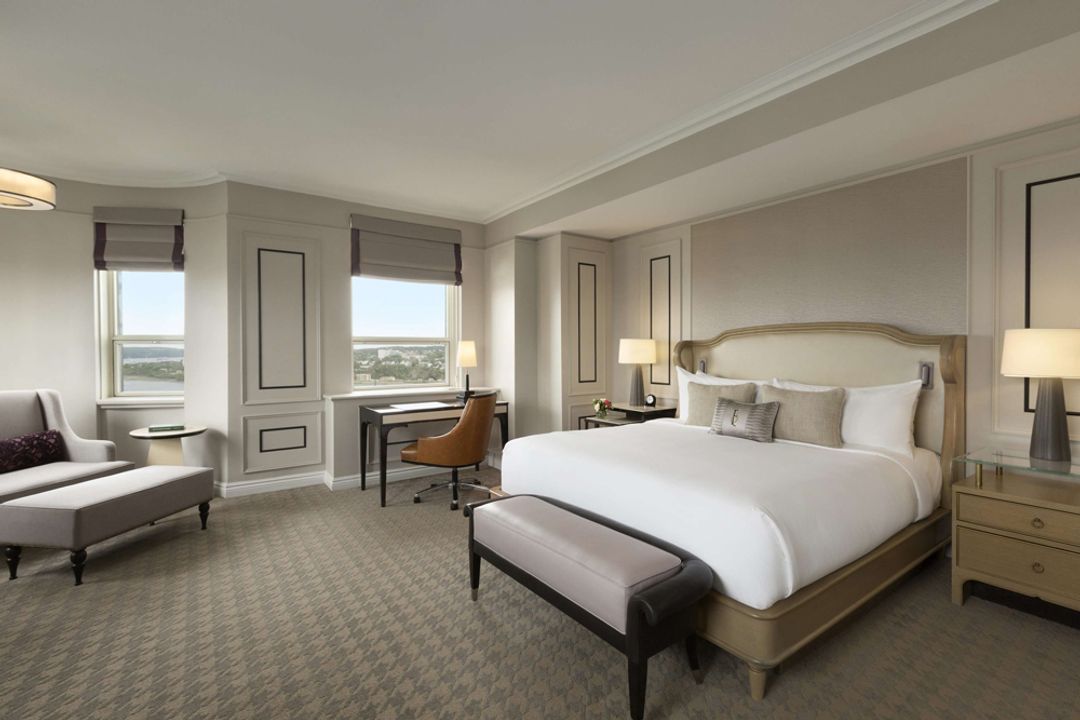
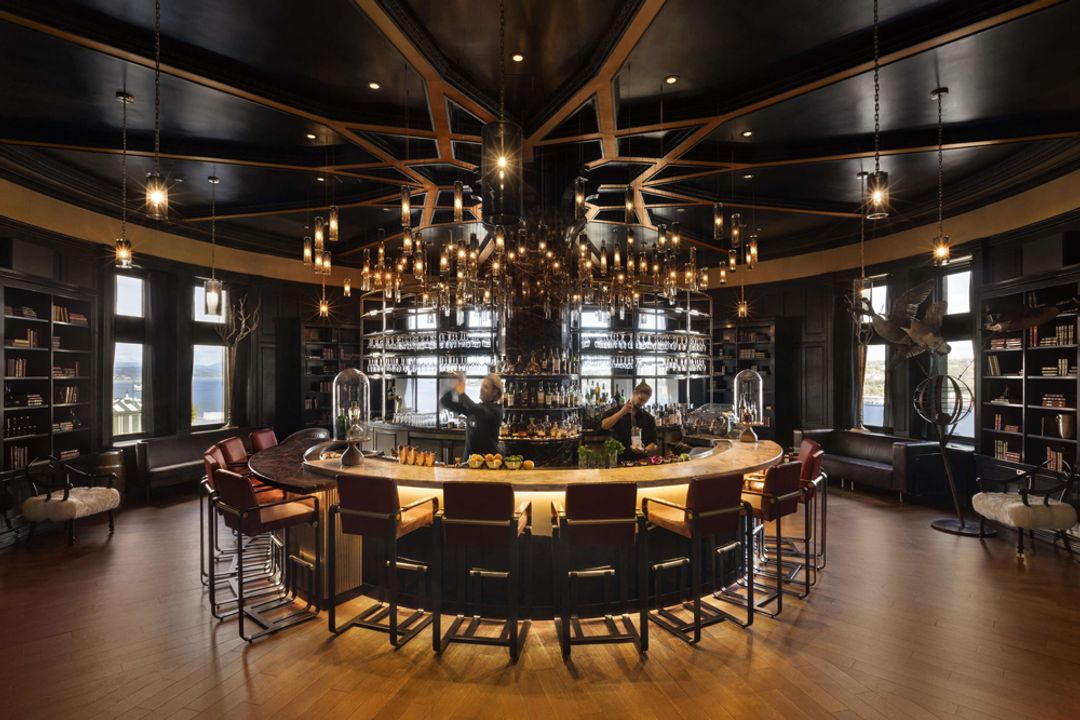
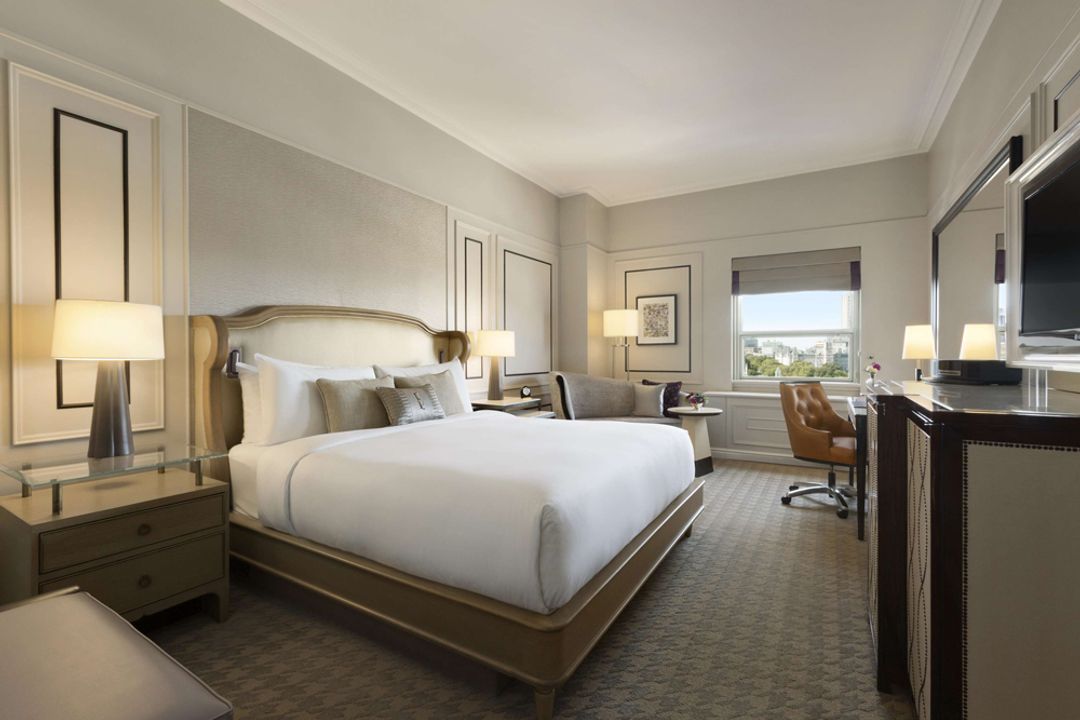
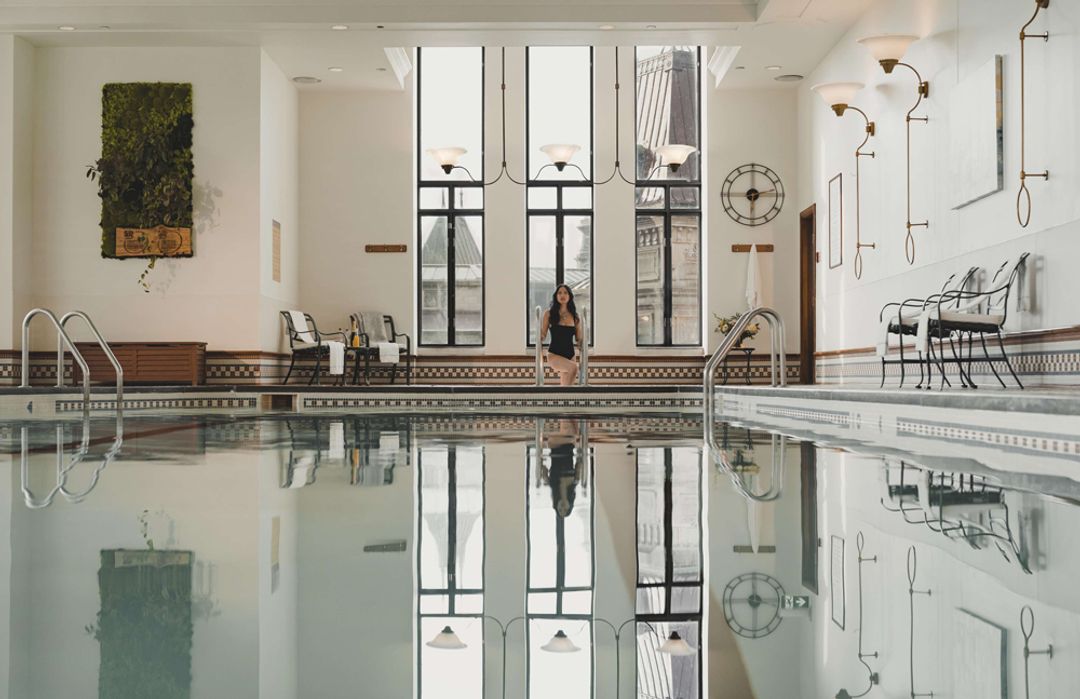
Perched on Cap Diamant above the St. Lawrence River, the copper-roofed silhouette that defines Quebec City's skyline was designed by New York architect Bruce Price and completed in 1893 as the centrepiece of Canadian Pacific Railway's grand hotel network. Fairmont Le Château Frontenac takes its name from the seventeenth-century French governor Louis de Buade, Count of Frontenac, and its architectural language from the Scottish Baronial and French Renaissance traditions — cylindrical towers capped with steep conical roofs, rusticated stonework in warm grey limestone, and dormer windows punching through pitched slate surfaces in a massing that has been expanded across several additions without losing its feudal coherence. The building now runs to 611 rooms across eighteen floors, its profile so thoroughly embedded in the urban imagination that UNESCO designated Old Quebec a World Heritage Site in 1985, with the château as its defining landmark. Inside, a renovation completed around 2014 brought the guest rooms into a quietly refined register — upholstered headboards in champagne linen, taupe houndstooth carpeting, tufted leather desk chairs, and panelled walls painted in warm greige, the windows framing the river or the fortifications depending on orientation. The 1608 Bar, visible in the images, strikes a deliberately dramatic counterpoint: lacquered black coffered ceilings with gilded ribs, a circular bar counter in brass and dark wood, pendant clusters of amber glass, and library shelving lining the curved walls — closer in atmosphere to a Victorian cabinet of curiosities than a hotel bar. The indoor pool, lit through tall steel-framed windows overlooking the château's own rooflines, completes a property that wears more than a century of accumulated history with considerable ease.

Book with PB and get cash back
Hôtel Le Germain Québec - Image 1
Hôtel Le Germain Québec - Image 2
Hôtel Le Germain Québec - Image 3
Hôtel Le Germain Québec - Image 4
Hôtel Le Germain Québec - Image 5

Hôtel Le Germain Québec

Québec City • Old Port • OPTIMIZE

avg. $221 / night

Includes $12 / night in cash back

Cash back is redeemable via Virtual Visa, Venmo, or bank transfer starting 24-48 hours after check-out

Hôtel Le Germain Québec Design Editorial

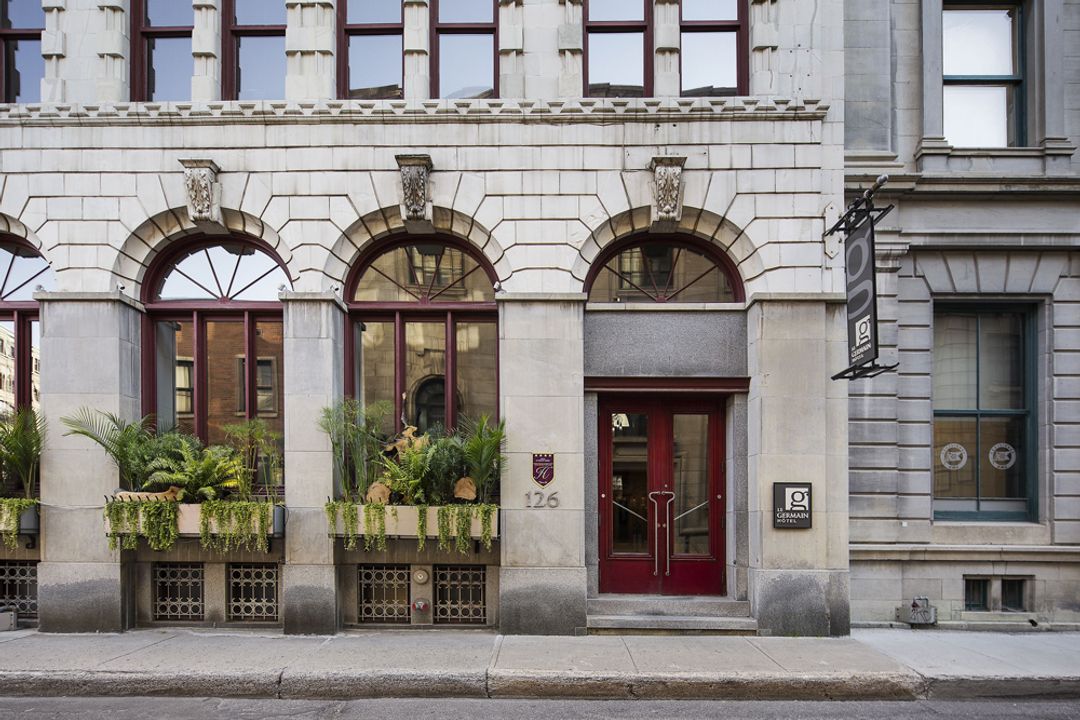
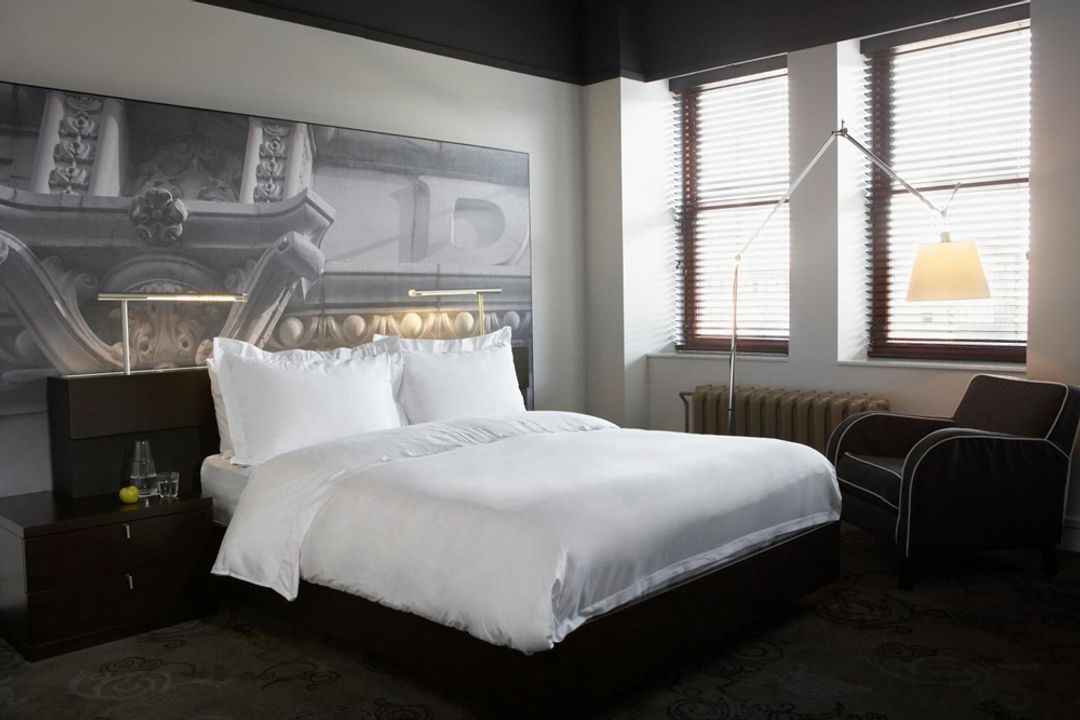
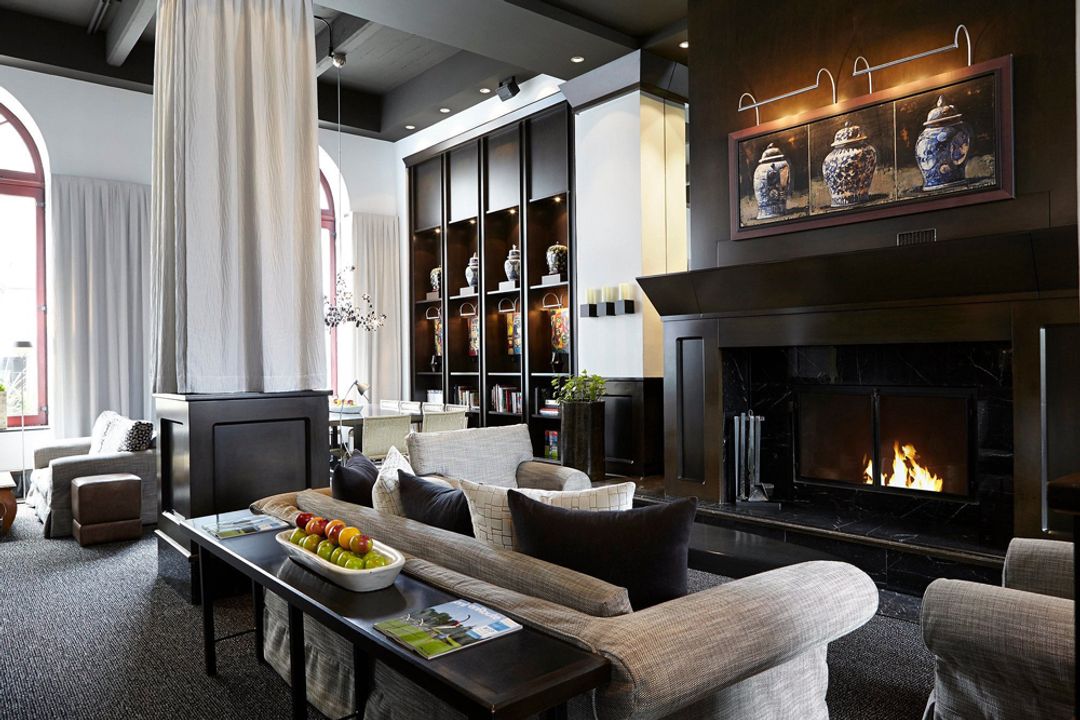
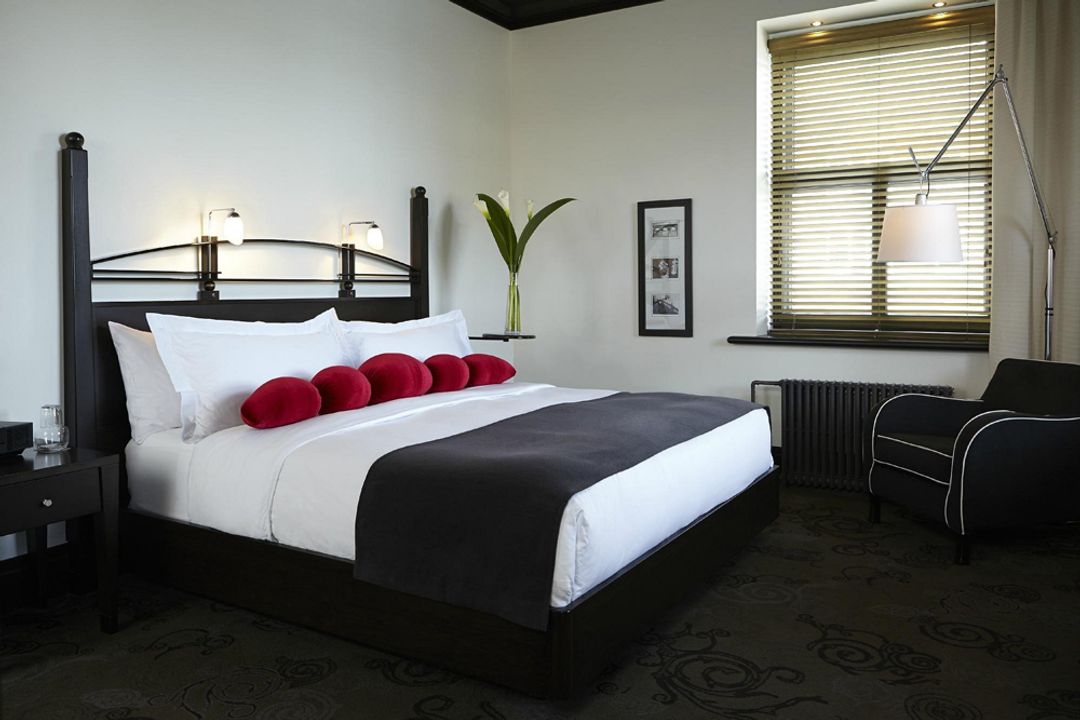
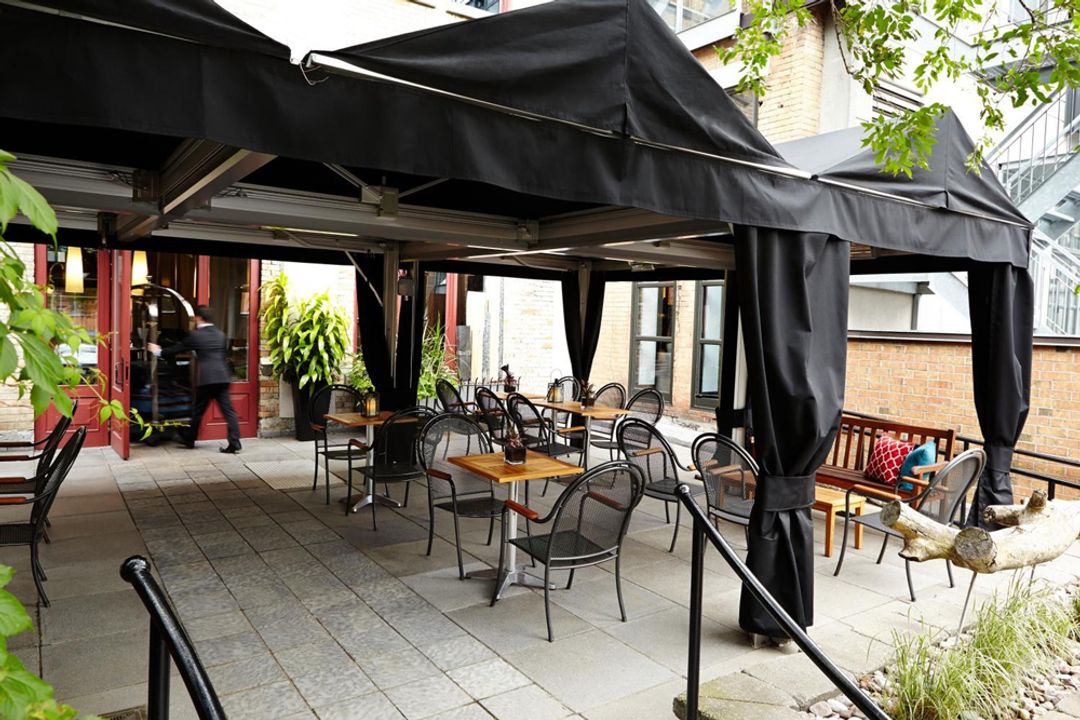
At 126 Rue Saint-Pierre in Old Quebec's Lower Town, a late-nineteenth-century limestone commercial building — arched ground-floor windows, corbelled cornice, the kind of Beaux-Arts mercantile confidence that once lined every prosperous Canadian port — was converted into Hotel Le Germain Québec by the Lemay architecture firm, bringing the Germain Group's characteristically understated urban sensibility into one of North America's most historically charged streetscapes. The facade, visible in the images with its crimson-framed arched windows and dense window-box plantings spilling onto the sidewalk, holds its period authority while the signage stays quietly contemporary — a tension the Germains have always managed well across their portfolio. Inside, the 60-room property carries the atmosphere of a well-appointed private library rather than a conventional hotel. The lobby lounge deploys dark-lacquered millwork shelving, a black marble fireplace surround, and linen-slipcovered sofas in a palette of charcoal, putty, and warm white — punctuated by blue-and-white ceramic ginger jars that add a note of collected specificity. Guest rooms shift between two registers: some feature oversized black-and-white photographic murals of the building's own architectural ornament mounted above low platform beds, while others adopt tall four-poster frames in ebonized wood with crimson bolster cushions. Throughout, Artemide Tolomeo floor lamps appear beside tufted leather chairs — precise, functional objects that anchor the rooms without competing with the building's own age.