Where

PressBeyond Logo

Best hotels in Harbin | A Curated Visual Guide to Top Stays

Welcome to PressBeyond, the ultimate curated visual guide for design-driven hotels! My name is Will Miller and this is my recommendation for the best boutique and luxury hotel in Harbin.

I am the founder of PressBeyond and I am an ultra-meticulous hotel curator who loves clean visuals. I have individually analyzed and tiered the hotel included in this guide based on a variety of criteria (architecture & design, location, brand & brand affiliation, existing reviews, and my own personal experiences), and importantly, I have hand-selected the leading imagery for this hotel to provide you with easily-digestible, yet detailed and complete, like-for-like, high-level visual profiles. I felt this summarization step was a critical missing piece across existing guides, blogs, and booking platforms. My aim is to make it easier for people to identify hotel environments that resonate with them, along with enabling them to visualize the types of social experiences that those environments help foster. My brain doesn't work when exposed to cluttered content, so my goal was to create the opposite.

Underneath this, we are also a full booking engine offering 5% Venmo cash back along with other exclusive perks. For all of you design-obsessed hotel enthusiasts out there, I hope this guide helps get you to where you see yourself!

An Overview of the Boutique & Luxury Hotel Landscape in Harbin

Harbin is the only major Chinese city where Russian imperial architecture isn't a footnote but a structural condition of the place. The Central Street — Zhongyang Dajie — runs for nearly a kilometer of cobblestone laid in 1924, flanked by Art Nouveau and Baroque facades that were built when the city was essentially a Russian colonial outpost organized around the Chinese Eastern Railway. That history gives Harbin a visual grammar unlike anywhere else in northeastern China: ornate cupolas beside Soviet-era blocks beside the rapid-fire glass towers that have risen since the 2000s. Winter makes it stranger still. Temperatures drop to minus thirty, the Songhua River freezes solid, and the annual Ice and Snow Festival fills entire fields with illuminated sculptures carved from river ice. The city is cold in a way that concentrates the architecture rather than diffusing it. The Ritz-Carlton Harbin, positioned within the R&F Tower development, is the considered choice for a design-conscious traveler who wants proximity to both the city's historical grain and its contemporary ambitions. The R&F Tower places it in a part of the city where new construction has been done at scale, and the Ritz-Carlton's interior language here tends toward the warm materiality and refined restraint that the brand has deployed effectively in markets where the surrounding city runs cool and monumental. It is a property that earns its keep through execution — service consistency, spatial quality, the kind of thermal comfort that matters acutely when you return from an evening of watching ice lanterns at minus twenty-five. What Harbin rewards is the traveler willing to walk. Zhongyang Dajie is genuinely worth the sustained attention of an architect or a design editor — the flood of Russian Revival buildings includes the former Moderne Hotel, now repurposed, and the old Harbin train station area carries traces of the city's railway-industrial past that no amount of development has entirely erased. The Ritz-Carlton's location makes it a practical base for covering this ground without sacrificing comfort, and in a city where winter conditions are serious rather than atmospheric, that balance matters. Harbin is not a city that softens itself for visitors, which is precisely what makes staying here feel like an actual encounter with a place.

Book with PB and get cash back
The Ritz-Carlton, Harbin - Image 1
The Ritz-Carlton, Harbin - Image 2
The Ritz-Carlton, Harbin - Image 3
The Ritz-Carlton, Harbin - Image 4
The Ritz-Carlton, Harbin - Image 5

The Ritz-Carlton, Harbin

Harbin • Harbin R&F Tower • OPTIMIZE

avg. $167 / night

Includes $9 / night in cash back

Cash back is redeemable via Virtual Visa, Venmo, or bank transfer starting 24-48 hours after check-out

Marriott Bonvoy® property

The Ritz-Carlton, Harbin Design Editorial

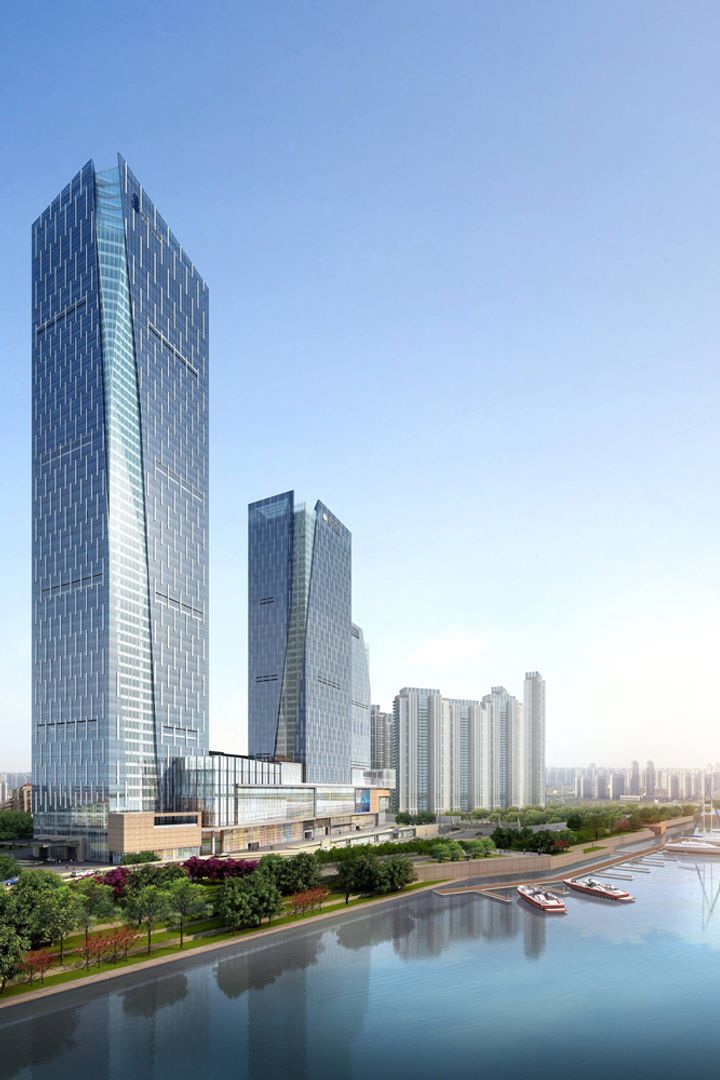
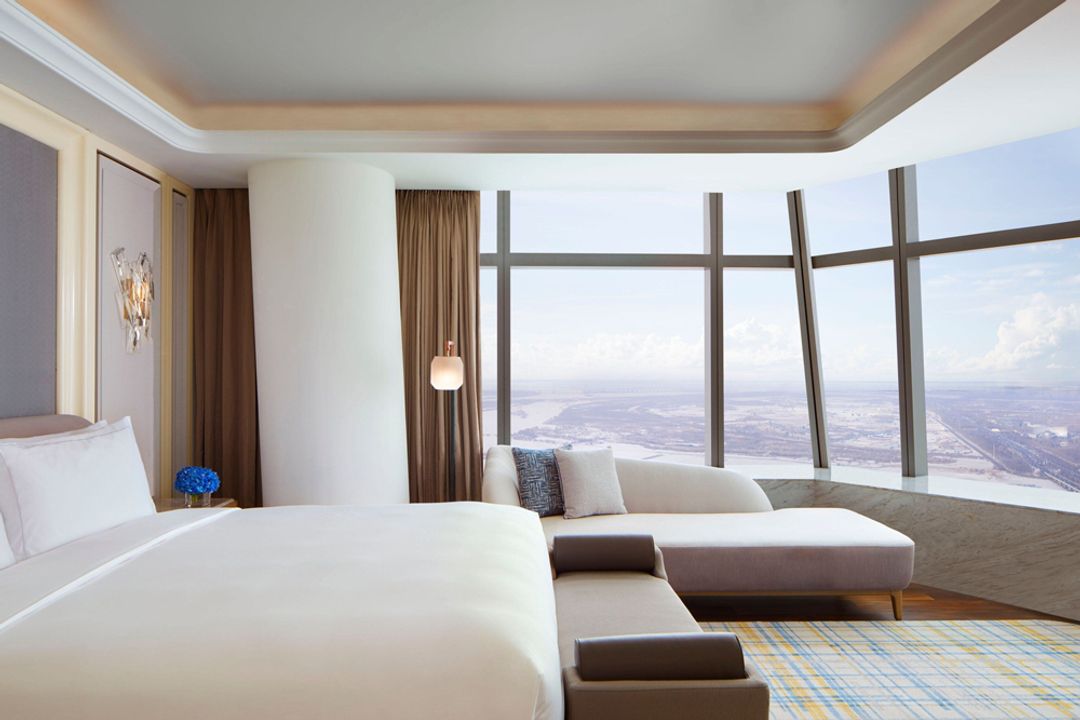
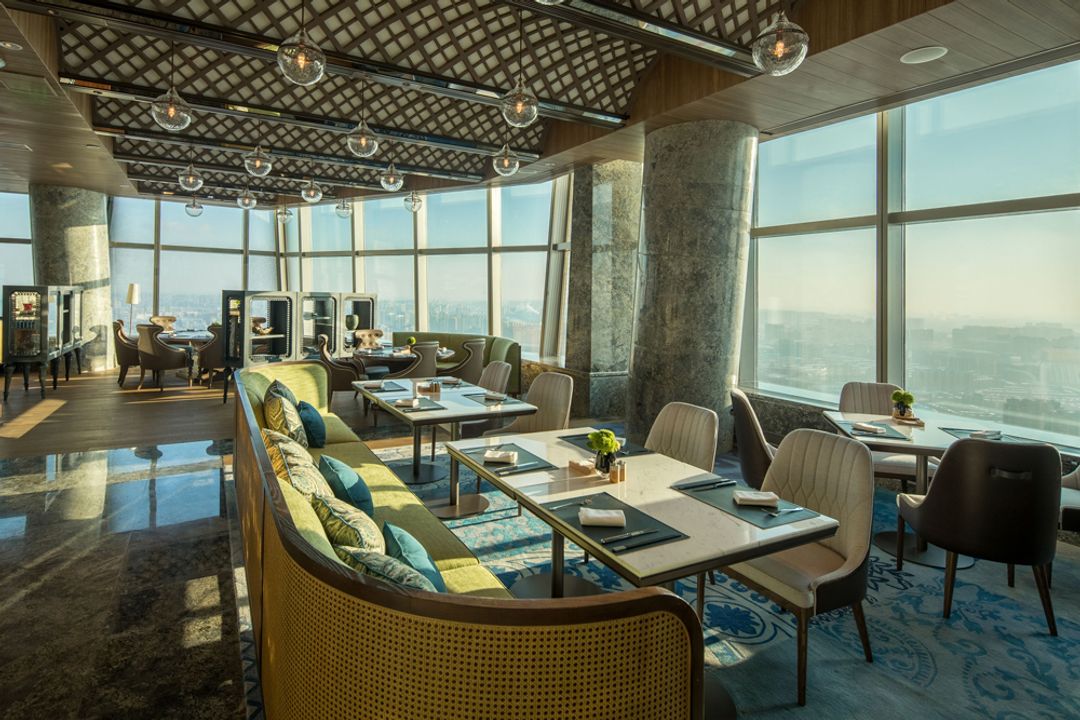
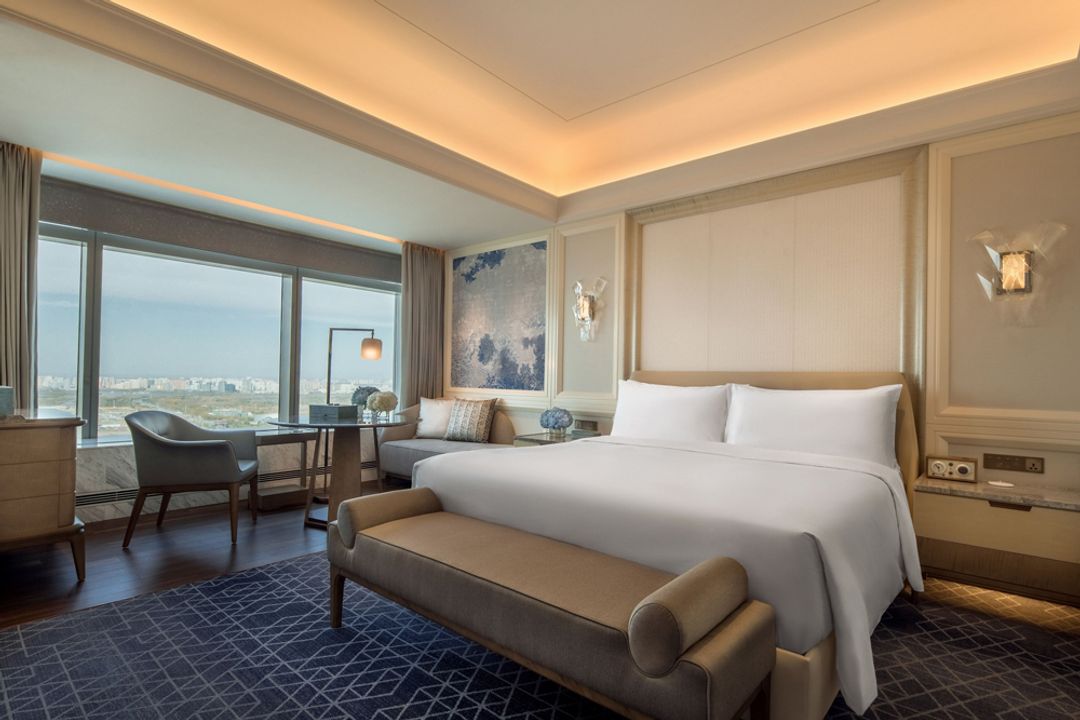
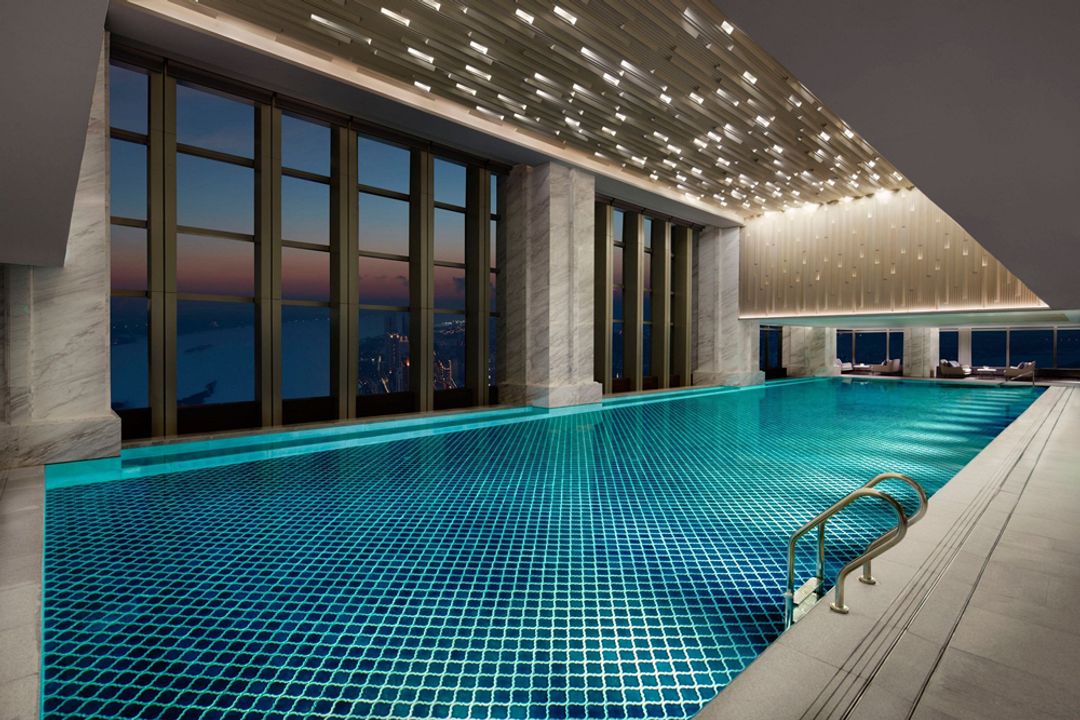
Pitched against the frozen geometry of Harbin's Songhua River waterfront, the tapering glass tower that houses The Ritz-Carlton Harbin rises some 60 floors above the R&F mixed-use development, its angled curtain wall facets catching the particular flat light of northeast China in a way that shifts the building's apparent mass depending on season and hour. The tower's profile — a chamfered prow of blue-grey glazing stepping back as it climbs — gives the hotel its most persuasive argument: every guest floor commands unobstructed river views across a city defined by its Russian imperial heritage and its extraordinary winters. Inside, the interiors navigate the familiar Ritz-Carlton calibration between classical grandeur and contemporary restraint, here inflected with cool northern tones. Guest rooms pair deep-stained timber floors with lacquered cream panelling, sculptural crystal wall sconces, and geometric navy rugs that carry the palette of the river indoors. Abstract ink-wash canvases above the beds draw a quiet line to Chinese artistic tradition without leaning on obvious ornament. The upper-floor dining room wraps cane-backed banquettes in chartreuse velvet against floor-to-ceiling glass, latticed timber ceiling panels filtering the horizon light into something almost domestic. Most arresting of all is the high-floor lap pool, its turquoise mosaic tiles glowing beneath a slatted luminous ceiling, white marble columns framing floor-to-ceiling windows through which Harbin's dusk skyline unfolds — a space that makes altitude feel genuinely elemental rather than merely vertical.

Best hotels in Harbin | A Curated Visual Guide to Top Stays