Where

PressBeyond Logo

Best hotels in Tibet | A Curated Visual Guide to Top Stays

Welcome to PressBeyond, the ultimate curated visual guide for design-driven hotels! My name is Will Miller and this is my recommendation for the best boutique and luxury hotel in Tibet.

I am the founder of PressBeyond and I am an ultra-meticulous hotel curator who loves clean visuals. I have individually analyzed and tiered the hotel included in this guide based on a variety of criteria (architecture & design, location, brand & brand affiliation, existing reviews, and my own personal experiences), and importantly, I have hand-selected the leading imagery for this hotel to provide you with easily-digestible, yet detailed and complete, like-for-like, high-level visual profiles. I felt this summarization step was a critical missing piece across existing guides, blogs, and booking platforms. My aim is to make it easier for people to identify hotel environments that resonate with them, along with enabling them to visualize the types of social experiences that those environments help foster. My brain doesn't work when exposed to cluttered content, so my goal was to create the opposite.

Underneath this, we are also a full booking engine offering 5% Venmo cash back along with other exclusive perks. For all of you design-obsessed hotel enthusiasts out there, I hope this guide helps get you to where you see yourself!

An Overview of the Boutique & Luxury Hotel Landscape in Tibet

Lhasa sits at 3,650 meters above sea level, and altitude has shaped everything here — the density of the light, the whitewashed mass of Tibetan architecture, the way buildings seem to breathe against a sky that is closer and more saturated than anywhere else on earth. The city's built fabric is genuinely unlike anywhere in China or Central Asia: rammed earth and stone, deep-set windows trimmed in dark wood, walls that taper slightly inward as they rise. The Potala Palace, which has dominated the Lhasa skyline since the 17th century, established an architectural grammar that still inflects the city — monumental verticality, compressed mass, the interplay of red and white as load-bearing color. For a design-conscious traveler, the experience of Lhasa is less about a curated contemporary scene than about confronting a building tradition that arrived at its forms through altitude, material constraint, and devotion rather than aesthetic theory. Against that backdrop, the St. Regis Lhasa Resort in the central city makes a considered case for how international hospitality can acknowledge rather than override local architectural language. The property draws on the vocabulary of traditional Tibetan construction — the characteristic tapering walls, the dark timber detailing, the courtyard logic — while operating at a level of material finish that reads clearly as contemporary. The interiors work through restraint rather than spectacle, with warm stone surfaces, hand-woven textiles, and spatial proportions that feel calibrated to the particular quality of Tibetan light rather than imported wholesale from a design brief written elsewhere. At an average nightly rate of around two hundred dollars, it represents serious value for a high-quality property in a destination where genuinely well-executed accommodation remains rare. The honest caveat for any traveler considering Lhasa is that the destination itself demands more preparation than the hotel — Tibet Autonomous Region requires a specific travel permit in addition to the standard Chinese visa, and the altitude requires acclimatization time that should be factored into any itinerary. But these are conditions of the place, not obstacles to it. The St. Regis Lhasa is positioned well for access to both the Barkhor district and the Potala, which means a guest can move between the city's most architecturally resonant spaces on foot. In a place where the built environment carries this much accumulated meaning, proximity to it is the point.

Book with PB and get cash back
The St. Regis Lhasa Resort - Image 1
The St. Regis Lhasa Resort - Image 2
The St. Regis Lhasa Resort - Image 3
The St. Regis Lhasa Resort - Image 4
The St. Regis Lhasa Resort - Image 5

The St. Regis Lhasa Resort

Tibet • Lhasa • OPTIMIZE

avg. $191 / night

Includes $10 / night in cash back

Cash back is redeemable via Virtual Visa, Venmo, or bank transfer starting 24-48 hours after check-out

Marriott Bonvoy® property

The St. Regis Lhasa Resort Design Editorial

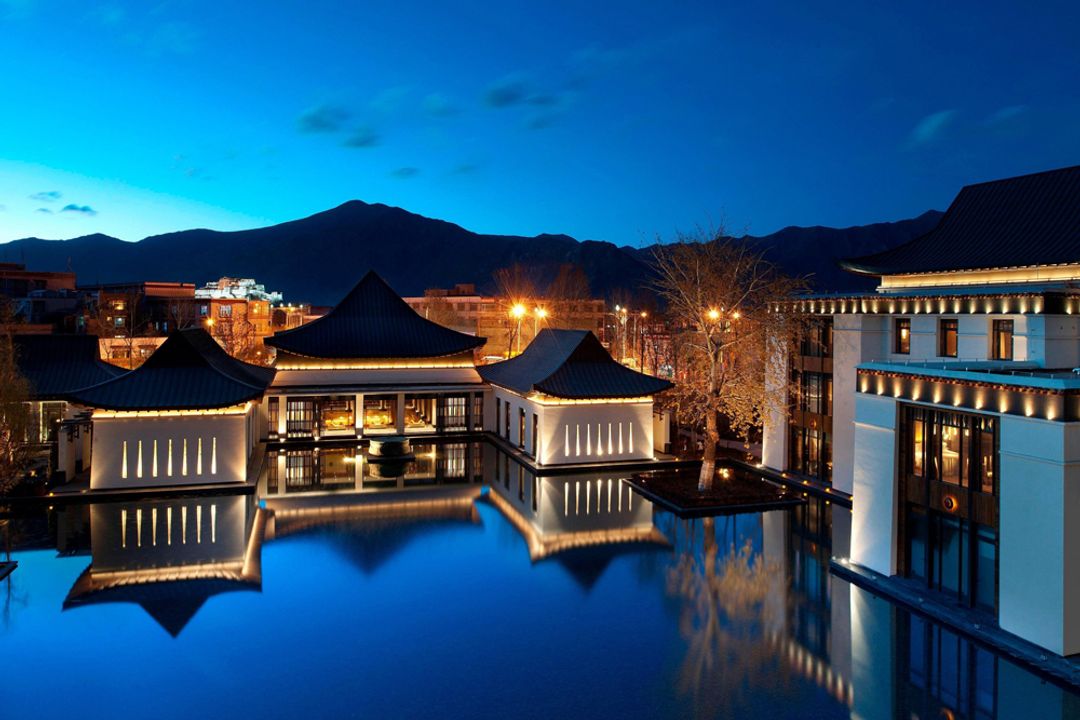
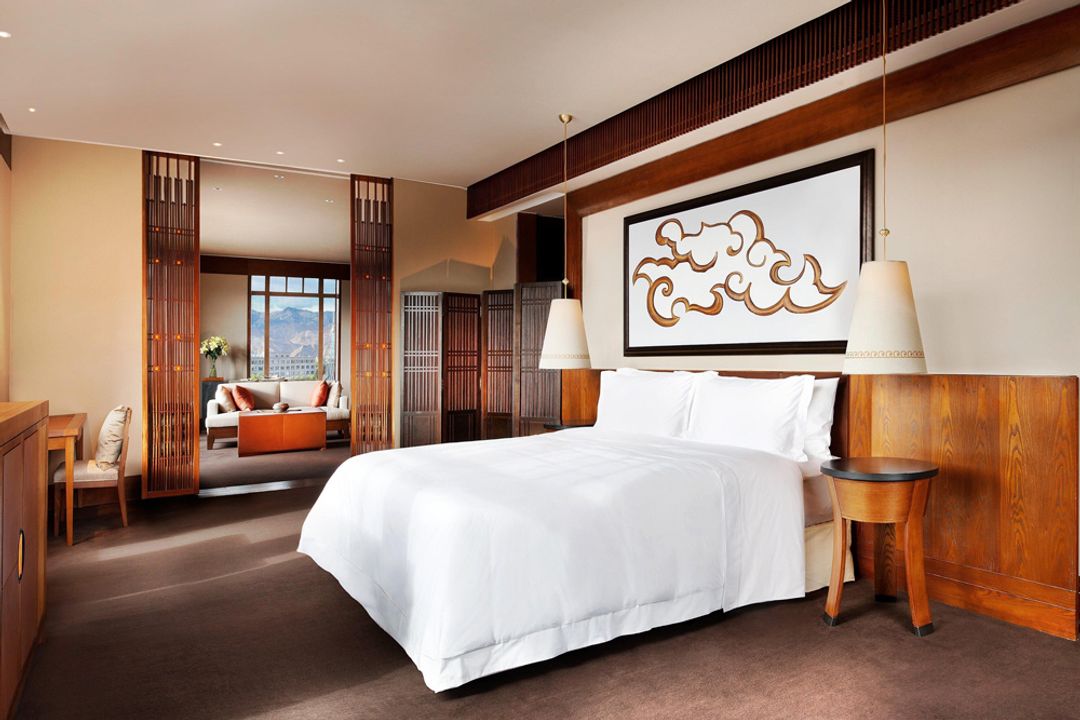
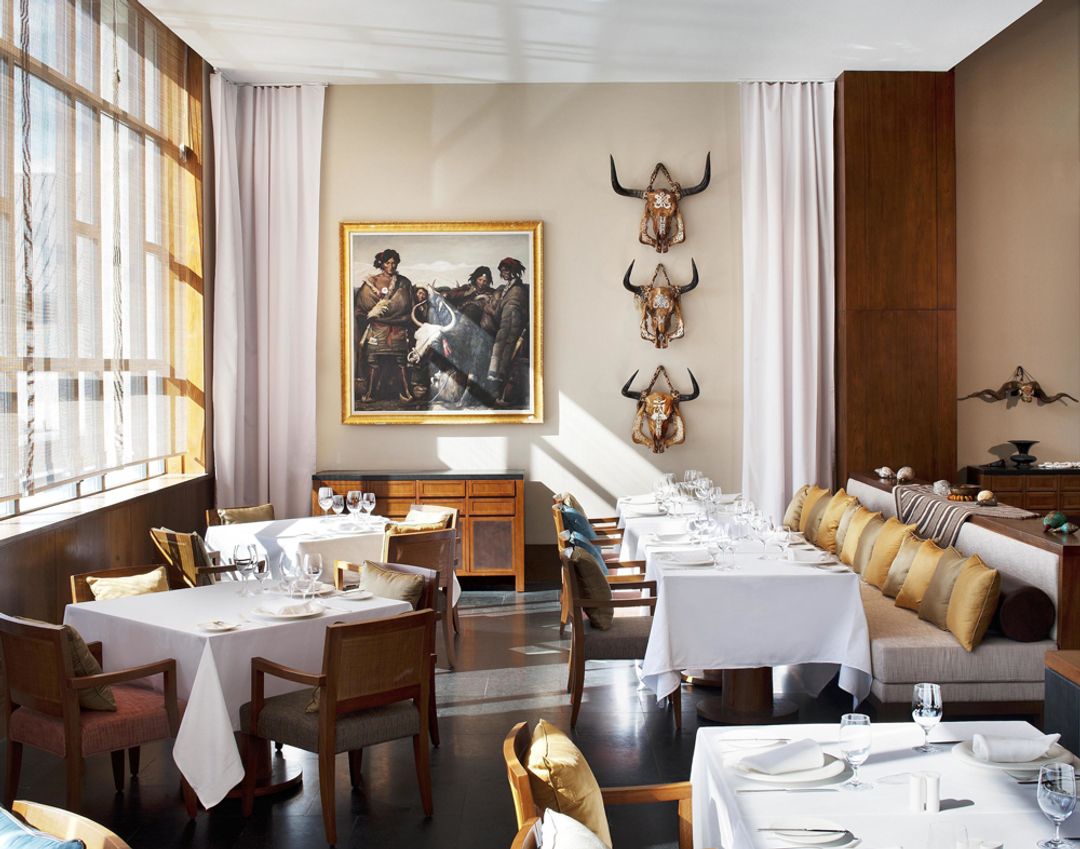
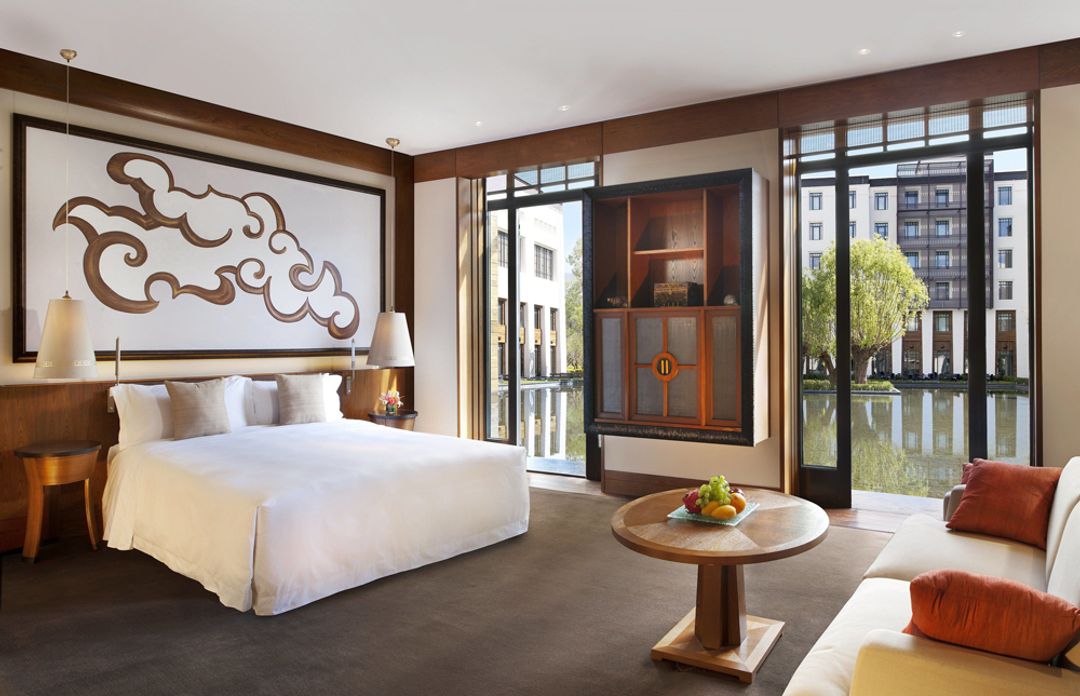
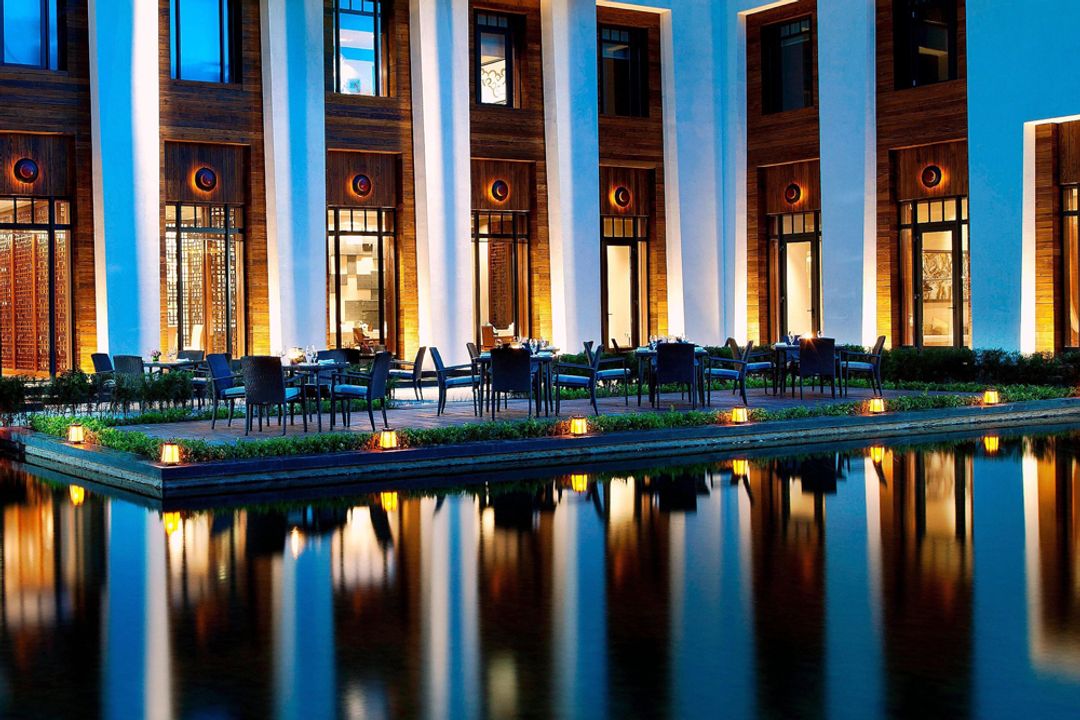
At 3,650 metres above sea level, in the shadow of the Potala Palace, designing a luxury hotel that could hold its own against one of the world's most charged sacred landscapes was never going to be a modest undertaking. The St. Regis Lhasa Resort, which opened in 2010, met that challenge through architectural deference — low-rise pavilions built in whitewashed render with deep-bracketed rooflines drawn from traditional Tibetan monastic architecture, their dark-tiled pitched roofs stepping across a series of still reflecting pools that mirror the Himalayan sky at dusk. The massing deliberately avoids any gesture that might compete with the Potala's silhouette visible from the upper floors, choosing horizontal spread over vertical ambition. Inside, the interiors translate the same vocabulary into warm timber — mahogany-toned woodwork panelling bedroom walls and latticed screens dividing sleeping from living areas, while carved cloud motifs rendered in relief against pale headboard panels pull directly from classical Tibetan decorative language. The 162 rooms and suites carry a palette of tobacco, saffron, and cream, grounded by close-pile carpeting and round-pedestalled side tables in figured timber. In the restaurant, gilded-frame paintings of Tibetan nomadic life hang beside a vertical arrangement of yak skulls decorated in the regional style — an anthropological seriousness that keeps the cultural references from sliding into pastiche. The terrace dining platform, cantilevered over a reflecting pool between tall white pilasters clad in dark timber, carries the monastic geometry outward into the night.

Best hotels in Tibet | A Curated Visual Guide to Top Stays