Best hotels in Champagne, France | Visually Compare Top Stays Side-by-Side
Welcome to PressBeyond - a curated visual guide to design-driven hotels and the fastest way to compare them.
An Overview of the Boutique & Luxury Hotel Landscape in Champagne, France
The Champagne region asks something different of a traveler than most wine destinations do. Rather than a single city with a walkable center, it offers a landscape, the Montagne de Reims and its surrounding villages rising from a chalk plateau that has been carved into over centuries to produce the cellars, known locally as crayères, where millions of bottles age in near-darkness. The great houses of Reims and Épernay anchor the commercial story, but the more revealing territory lies along the slopes between them, where vineyards run down toward the Marne Valley in configurations that haven't changed significantly since the eighteenth century. The architecture of the villages is modest and purposeful, stone and render in cream and grey, with the occasional maison de champagne announcing itself with more confidence. What makes this landscape worth staying in, rather than passing through on a day trip from Paris, is the particular quality of the light on the vines in early morning and at dusk, and the sense that the terrain itself is the primary subject.
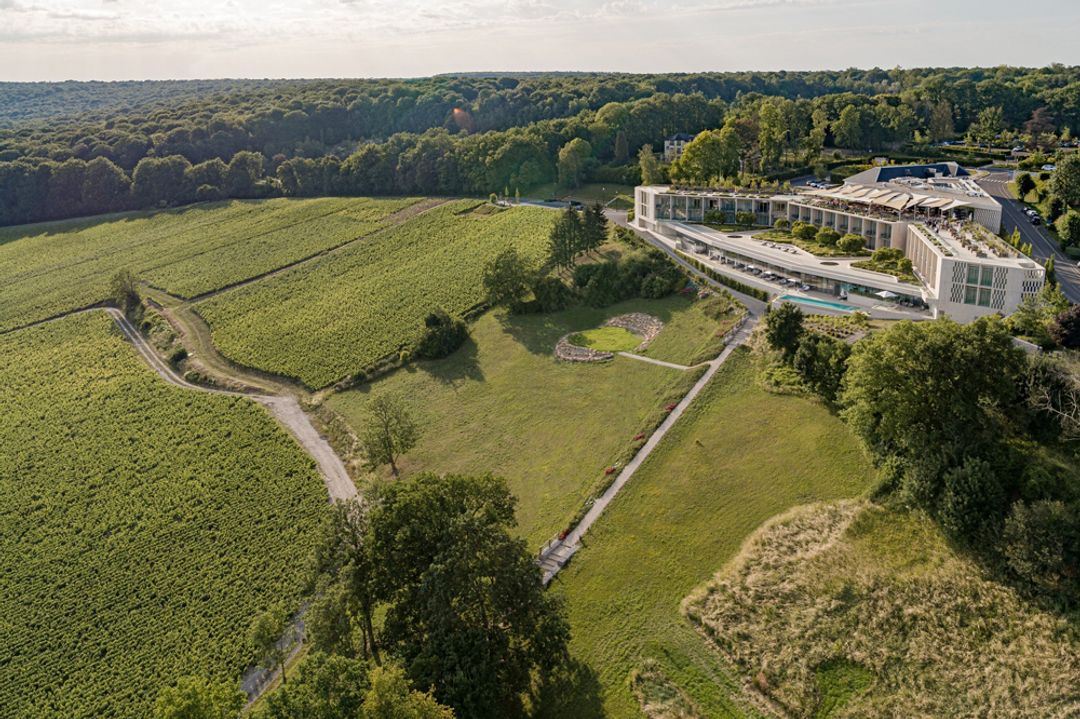
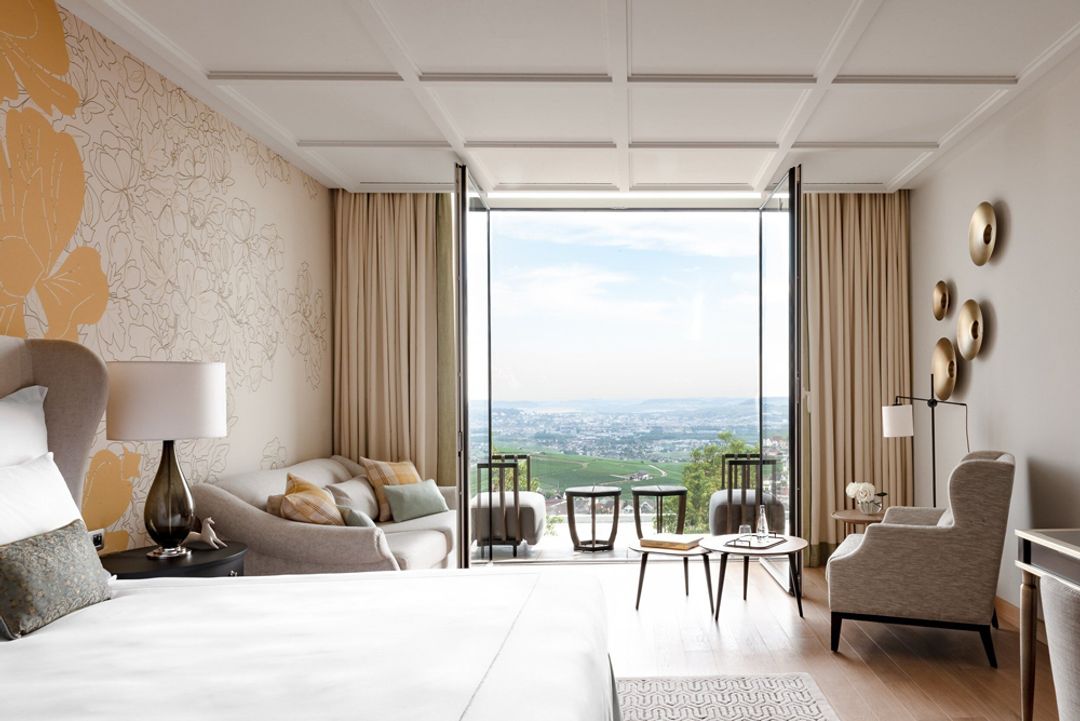
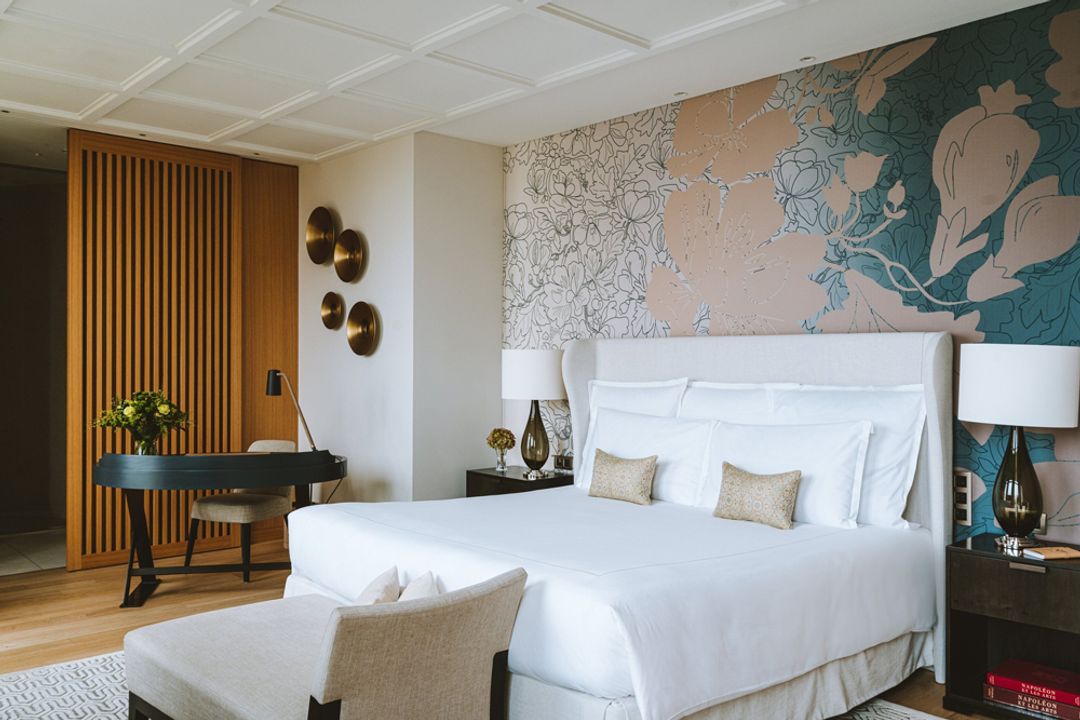
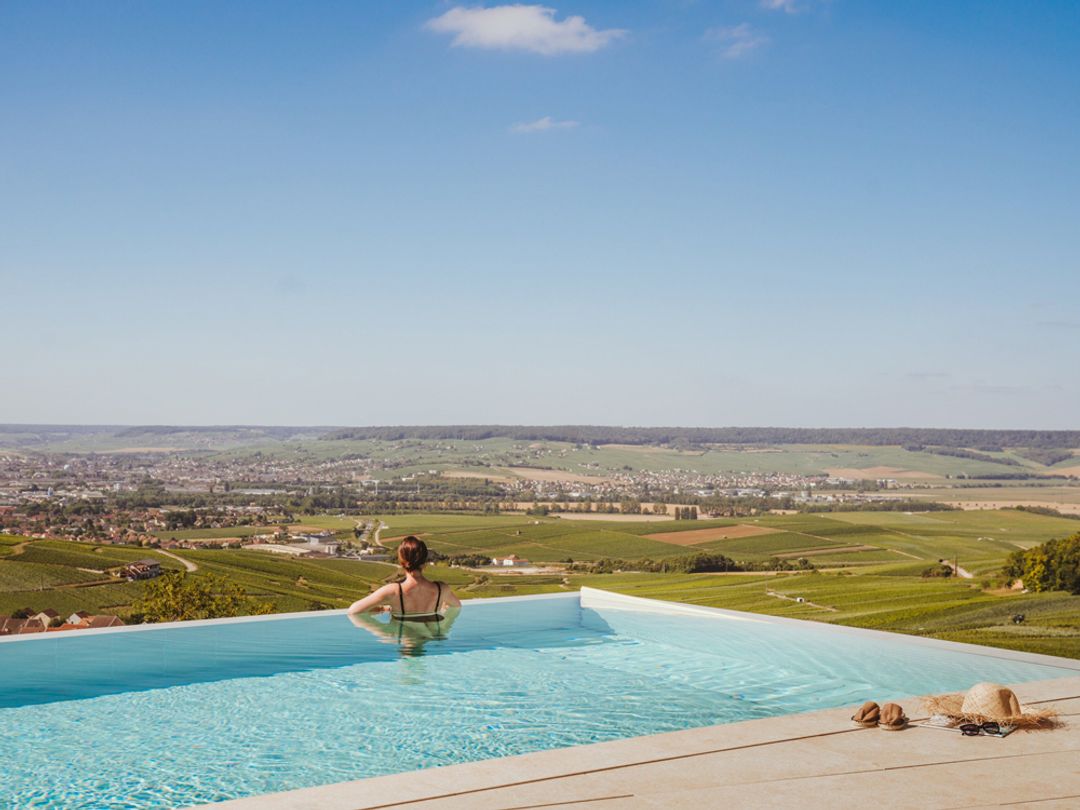
The Royal Champagne Hotel & Spa, set above the village of Champillon with a direct view down toward Épernay and the valley below, is the considered answer to where to base yourself. The property has existed in various forms since the eighteenth century, when it served as a coaching inn on the royal road, but its current incarnation, following a substantial renovation completed in 2018, reads as something more contemporary. The architecture draws the long horizontal of the main building into the slope of the hill, with rooms and suites stepping down through the terraced vineyard in a series of low pavilions. The palette is deliberately restrained, limestone and oak and linen, materials that don't compete with the panorama but allow it to register as the actual feature of each room. The spa sits at the lowest point of the property, nearly embedded in the hillside.
What the Royal Champagne gets right is the understanding that the view from Champillon is among the most coherent expressions of why this region matters. Standing above a working premier cru vineyard and looking south toward Épernay, the traveler sees the production and the landscape as a single thing, not a museum version of either. The hotel doesn't offer much in the way of urban programming, which is precisely the point. Reims is forty minutes away for cathedral visits and a proper look at the Art Deco reconstruction of the city center. Everything else is here, on the hill.