Best hotels in Dehradun, India | Visually Compare Top Stays Side-by-Side
Welcome to PressBeyond - a curated visual guide to design-driven hotels and the fastest way to compare them.
An Overview of the Boutique & Luxury Hotel Landscape in Dehradun, India
Dehradun sits at an elevation that softens the Himalayan approach, a valley town where colonial-era survey offices and forest research institutes stand alongside bazaars and military academies in an arrangement that feels more botanical garden than city plan. The British chose it partly for its climate, partly for its cedars, and the legacy of that pragmatic affection persists in wide roads, old deodar canopies, and a civic architecture that borrowed freely from the hill station playbook without ever fully committing to it. Most travelers pass through Dehradun on the way to Mussoorie or Rishikesh, treating it as a transit node rather than a destination. That instinct is understandable, and for anyone whose interests run to buildings, materials, or the more considered register of contemporary Indian hospitality, also worth reconsidering.
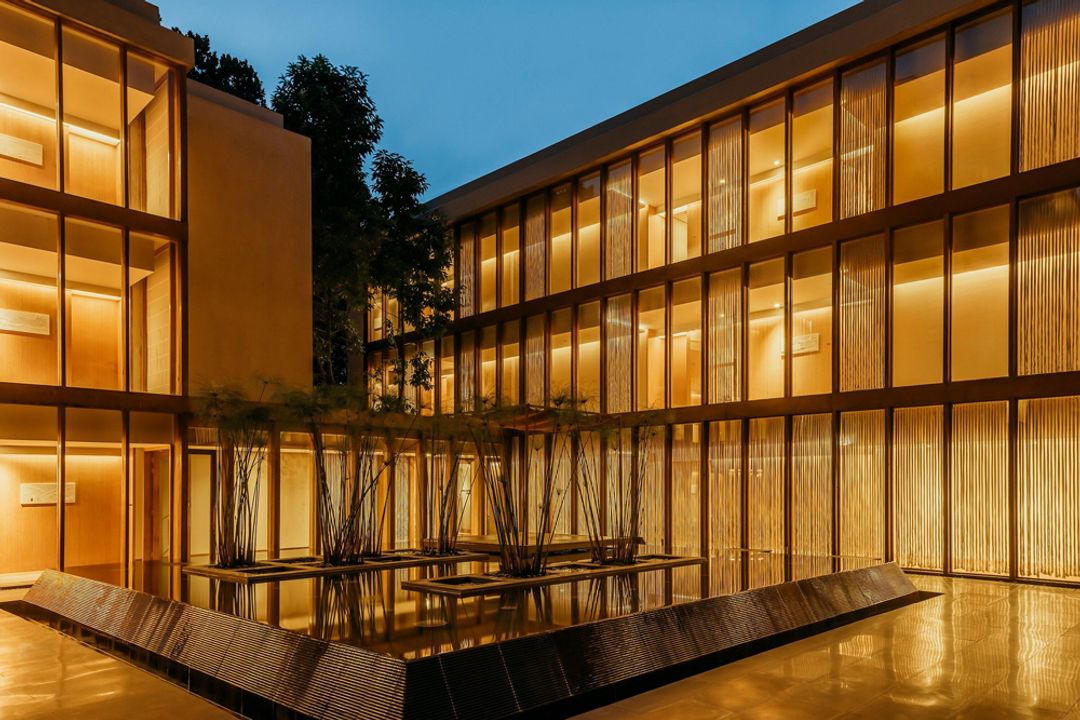
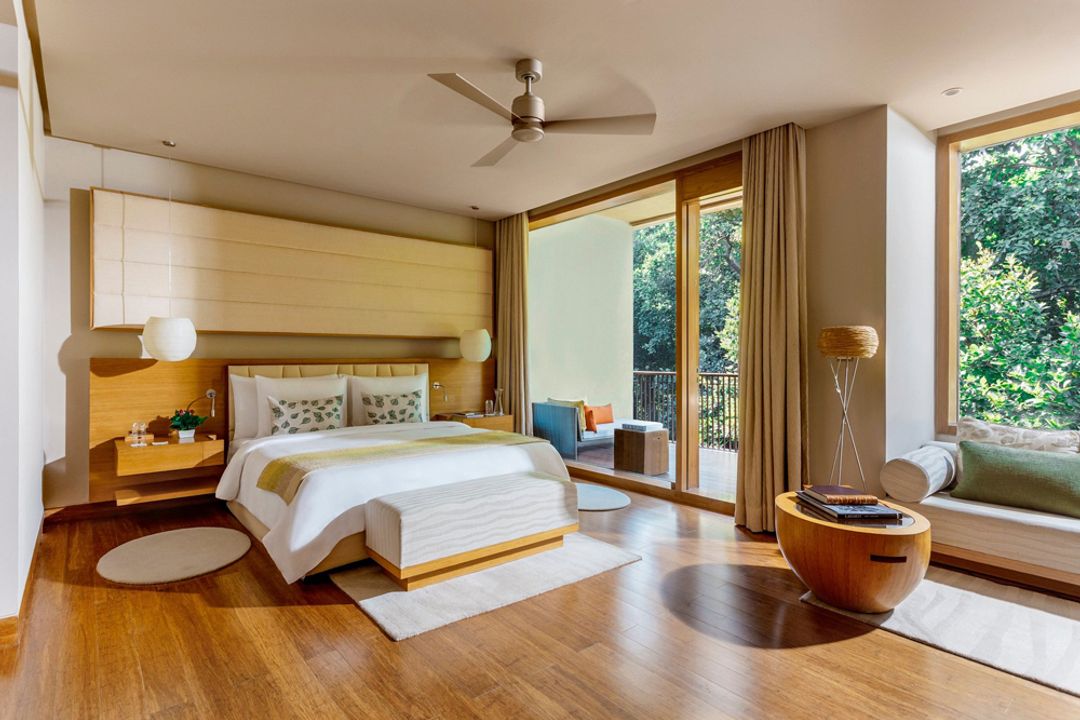
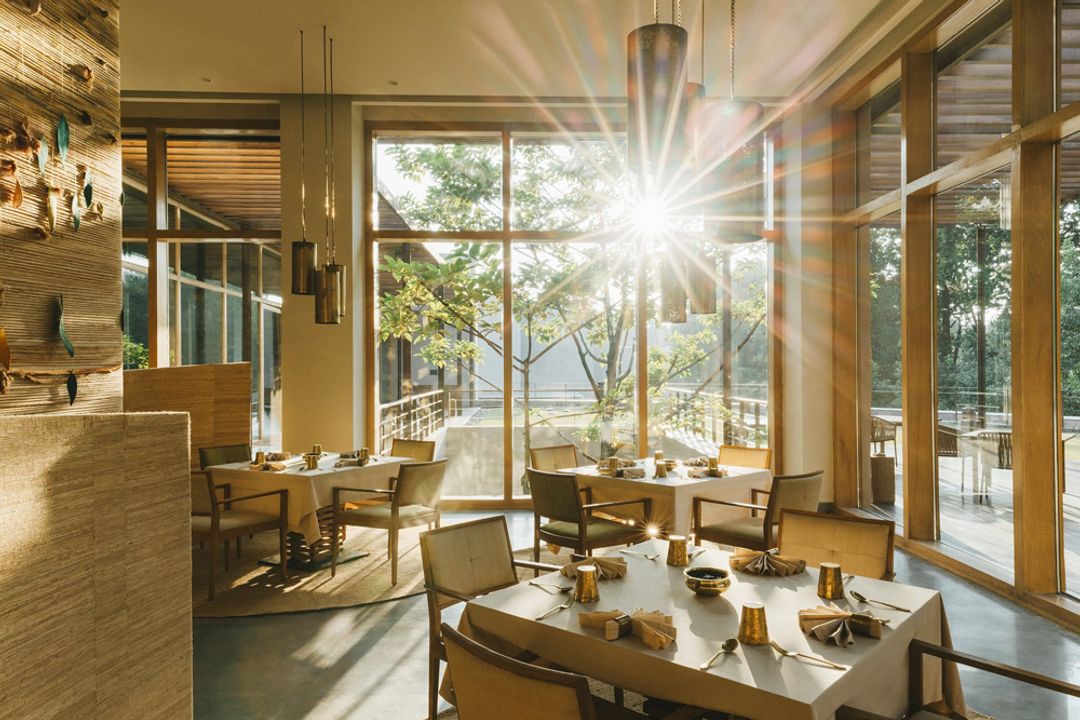
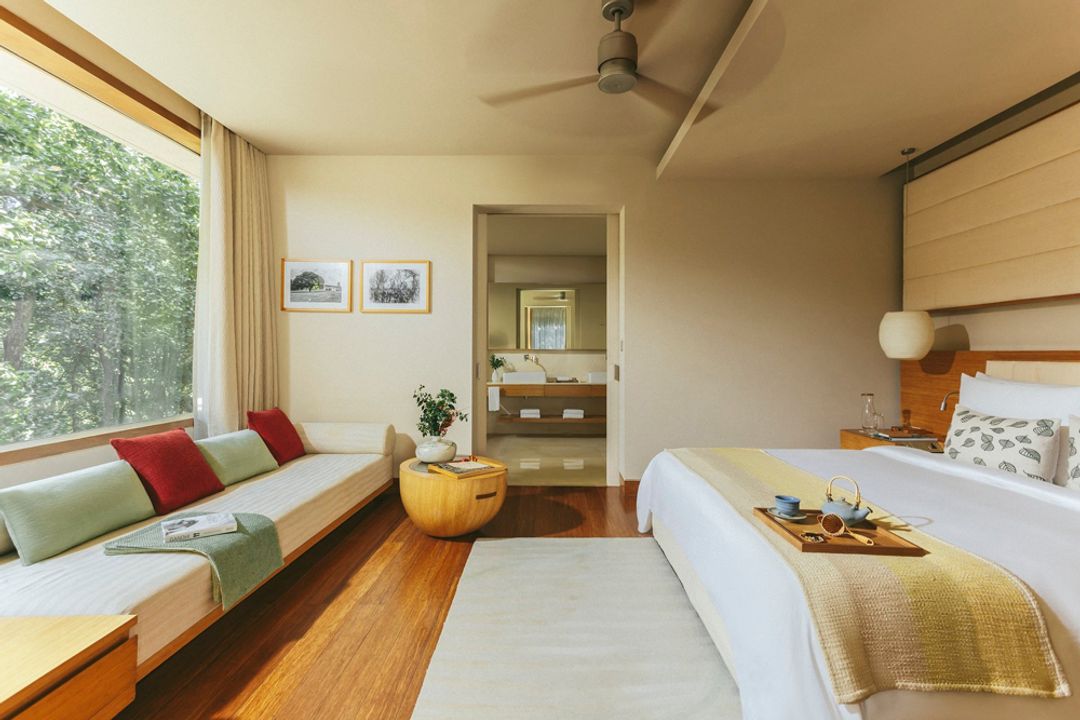
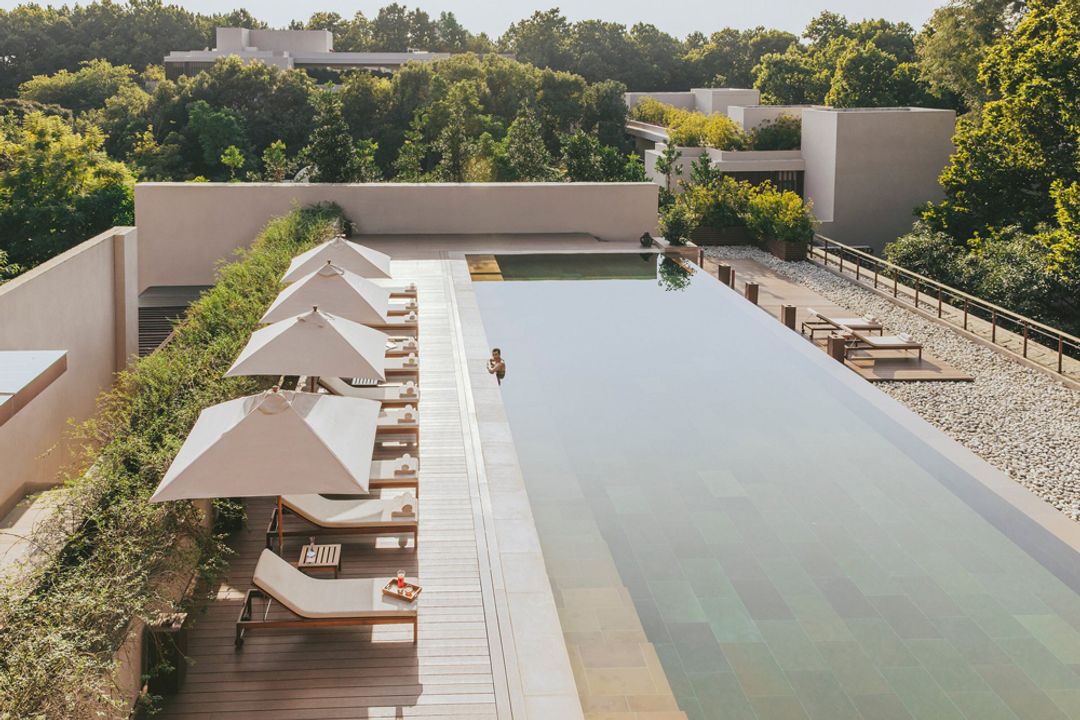
The reason to reconsider is Malsi, a quiet forested zone at the city's northern edge where the land starts tilting toward the Shivalik hills. Six Senses Vana occupies a 21-acre estate here, conceived not as a resort in the conventional sense but as something closer to a residential retreat campus. The design draws on Ananda-style Ayurvedic principles, but the architecture reaches further, incorporating proportions and material choices rooted in ancient Indian building traditions, pale stone, water courts, deep verandas, and a spatial sequencing that moves guests gradually inward and downward in tempo. The palette is deliberate and restrained, ivory and warm grey against manicured lawns and mature trees, with interiors that favor handcrafted textiles and local craft over decorative ambition. The overall effect is one of considered removal from the ordinary, which is precisely what the setting at Malsi enables.
At six hundred and thirty dollars a night, Six Senses Vana positions itself firmly in the territory of transformative travel, and it earns that position through the specificity of its program and the coherence of its design intention rather than through scale or spectacle. Dehradun itself offers little in the way of competitive hospitality at this level, which means anyone drawn to this part of Uttarakhand is effectively choosing a destination built around a single property. That is, in practice, exactly what Vana invites: a stay long enough to justify the journey, in a place calibrated entirely around the quality of stillness it can produce.