Best hotels in Yogyakarta, Indonesia | A Curated Visual Guide to Top Stays
Welcome to PressBeyond, the ultimate curated visual guide for design-driven hotels! My name is Will Miller and this is my recommendation for the best boutique and luxury hotel in Yogyakarta, Indonesia.
I am the founder of PressBeyond and I am an ultra-meticulous hotel curator who loves clean visuals. I have individually analyzed and tiered the hotel included in this guide based on a variety of criteria (architecture & design, location, brand & brand affiliation, existing reviews, and my own personal experiences), and importantly, I have hand-selected the leading imagery for this hotel to provide you with easily-digestible, yet detailed and complete, like-for-like, high-level visual profiles. I felt this summarization step was a critical missing piece across existing guides, blogs, and booking platforms. My aim is to make it easier for people to identify hotel environments that resonate with them, along with enabling them to visualize the types of social experiences that those environments help foster. My brain doesn't work when exposed to cluttered content, so my goal was to create the opposite.
Underneath this, we are also a full booking engine offering 5% Venmo cash back along with other exclusive perks. For all of you design-obsessed hotel enthusiasts out there, I hope this guide helps get you to where you see yourself!
An Overview of the Boutique & Luxury Hotel Landscape in Yogyakarta, Indonesia
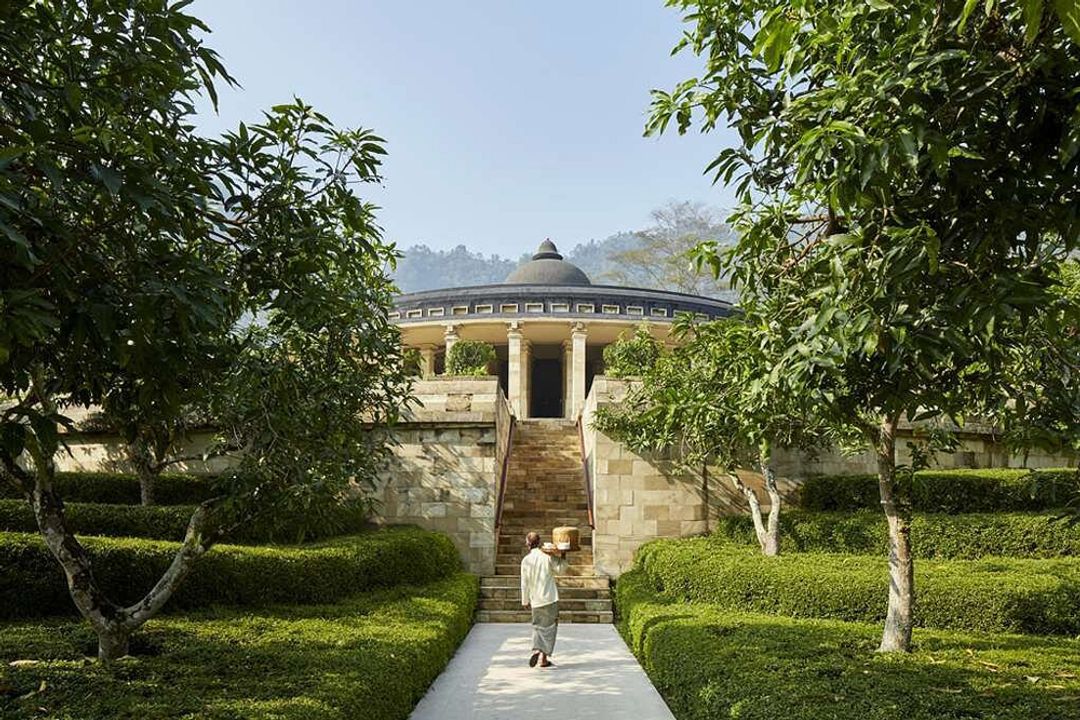
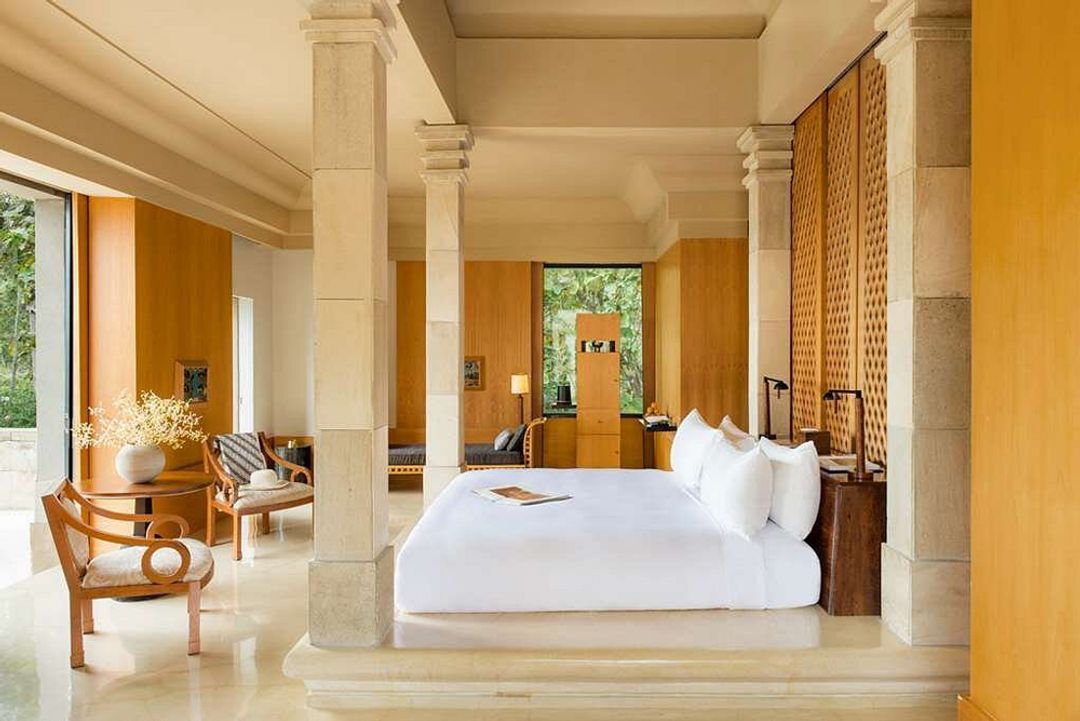
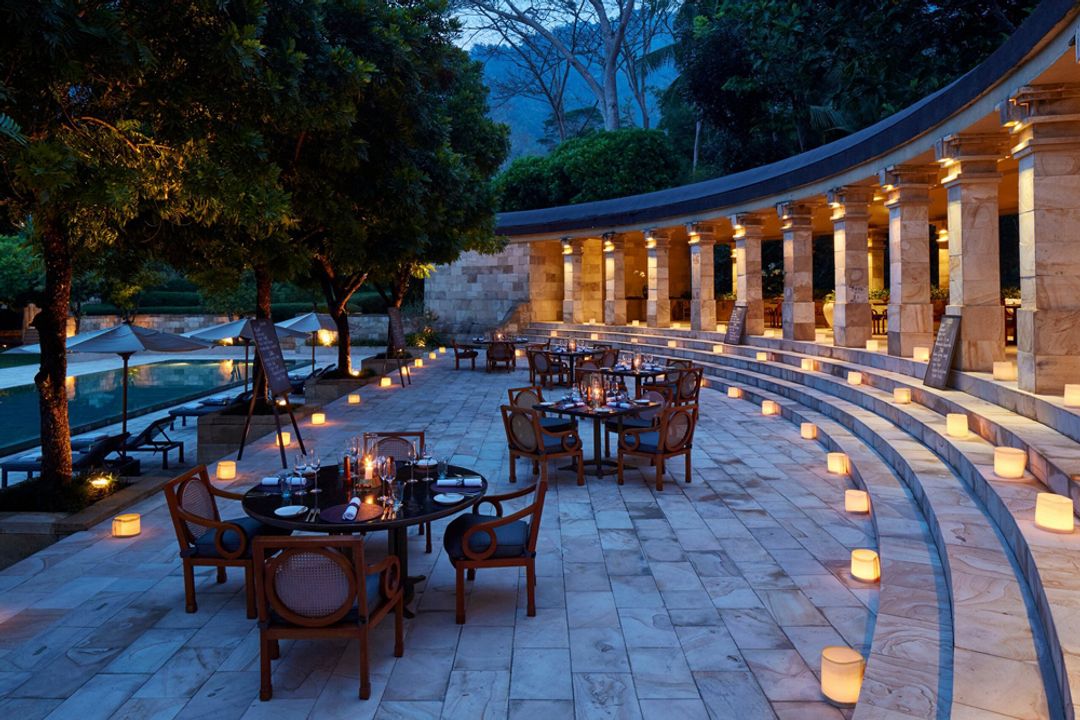
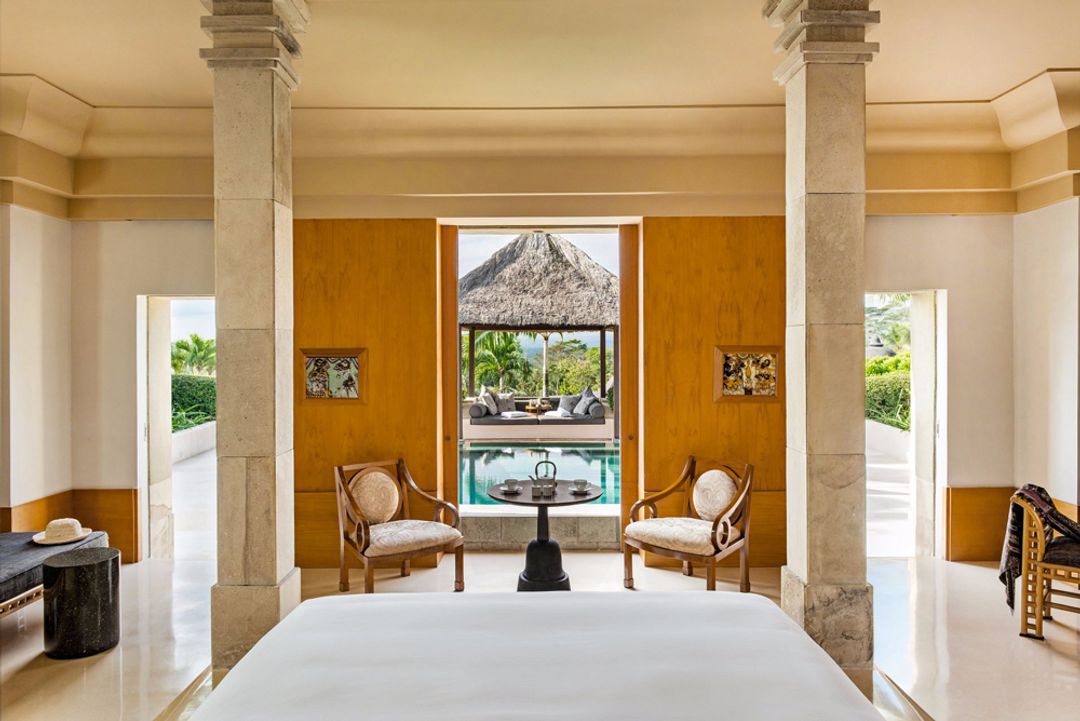
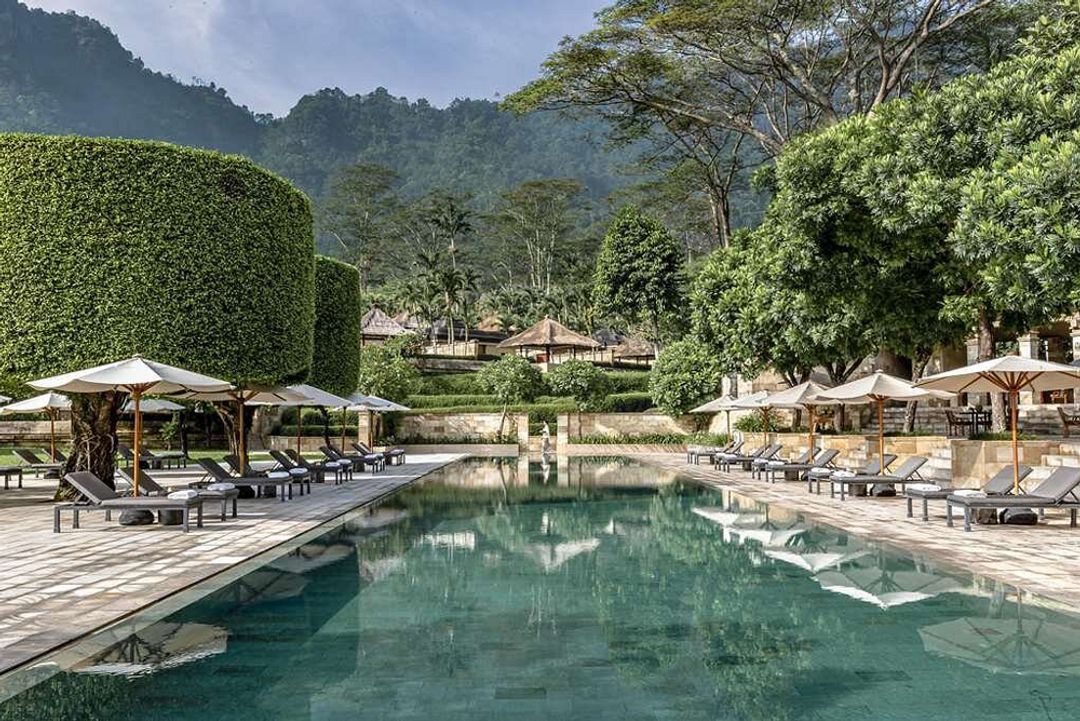
The volcanic plain stretching between Yogyakarta and the Kedu Valley holds one of the densest concentrations of ancient architecture anywhere on earth. Borobudur, the ninth-century Mahayana Buddhist monument, rises from the surrounding teak forests in a form so geometrically disciplined — nine stacked platforms, 504 Buddha figures, 2,672 relief panels — that it reads less as a ruin than as a proposition about how stone and landscape might think together. This is the context in which Amanjiwo was conceived, and it matters enormously to understanding what the property is doing. Amanjiwo opened in 1992, designed by Ed Tuttle, the American architect whose long collaboration with Adrian Zecha's Aman brand produced some of the most carefully sited resort architecture of the late twentieth century. Here, Tuttle drew directly from Borobudur's formal vocabulary: the central rotunda echoes the monument's upper terraces, the suite compounds radiate outward in a geometry that mirrors the mandala plan of the original complex, and the palette of grey volcanic stone, terracotta, and raw plaster refuses the tropical lushness that characterizes most resort design in Indonesia. The building does not compete with Borobudur — it defers to it, pointedly, while maintaining a formal authority of its own. At roughly thirty-six suites, the scale remains intimate enough that the landscape always reads as primary. Sunrise views across the rice paddies toward the monument's silhouette have a quality that no interior, however considered, could equal. The broader Yogyakarta region rewards time beyond the resort. The kraton — the walled sultanate palace complex at the city's core — and the Hindu temples at Prambanan, dating to the same ninth-century flowering that produced Borobudur, give the area an architectural density that makes it genuinely unlike anywhere else in Southeast Asia. Yogyakarta itself remains an active center for Javanese craft: batik workshops, silver studios, and wayang puppet makers operate in the lanes around the kraton with a continuity that feels less curated than simply ongoing. Amanjiwo's position in Magelang, roughly forty minutes northwest of the city, places a guest at the quieter, more rural end of this geography — close enough to Yogyakarta for a day's exploration, far enough that the silence and the fields remain the dominant condition. For a traveler whose interests are architectural and cultural rather than resort-oriented in any conventional sense, that positioning is precisely the point.