Best hotels in Umbria, Italy | Visually Compare Top Stays Side-by-Side
Welcome to PressBeyond - a curated visual guide to design-driven hotels and the fastest way to compare them.
An Overview of the Boutique & Luxury Hotel Landscape in Umbria, Italy
Umbria sits at the center of the Italian peninsula without quite belonging to the rhythms of anywhere else. It has no coastline, no major industrial history, and no single dominant city to orient itself around. What it has instead are hilltowns in various states of medieval preservation, valleys of worked agricultural land, and a quality of light that painters have been describing for centuries and that still catches travelers off guard. Perugia, Spoleto, Orvieto, Assisi, Todi: each occupies its ridge or promontory with a certain self-contained authority, connected by roads that drop and climb through oak forest and olive groves. The architecture here was not designed so much as accumulated, layer by layer, Etruscan foundations giving way to Roman civic structures, then Romanesque churches, then Renaissance facades applied to earlier stone. The result is buildings that read not as single authored objects but as long conversations between materials and centuries.
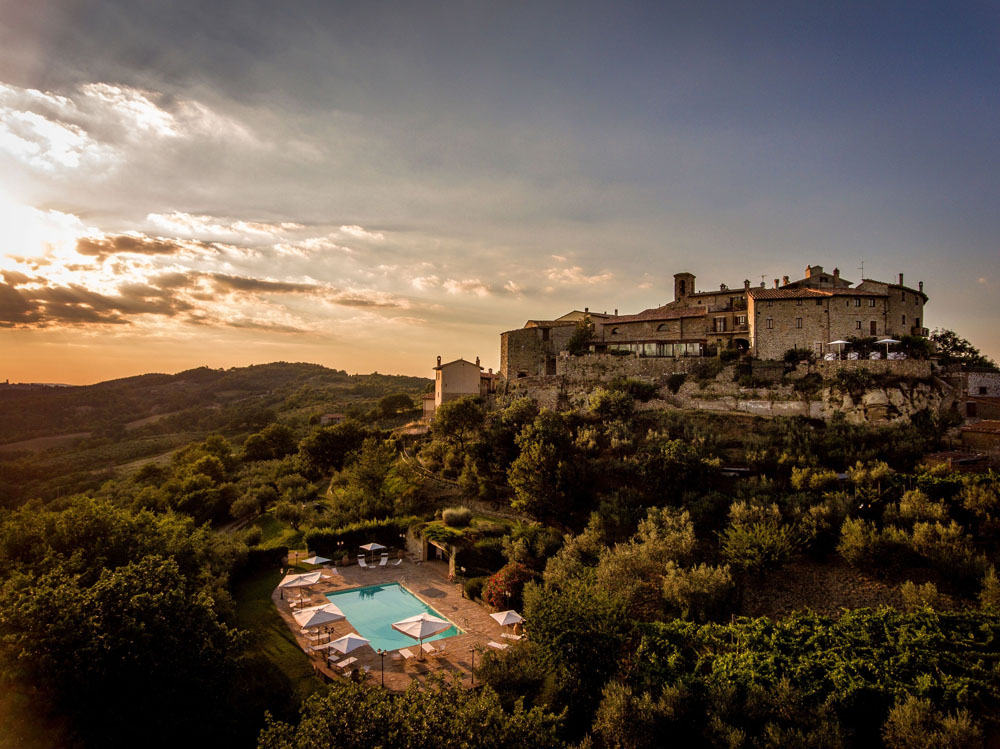
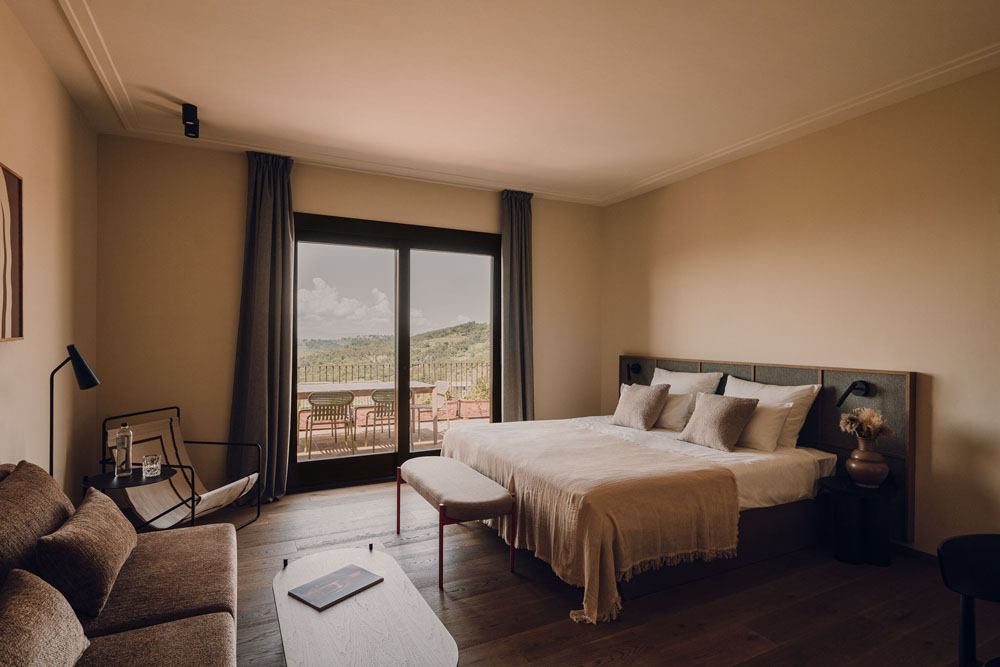
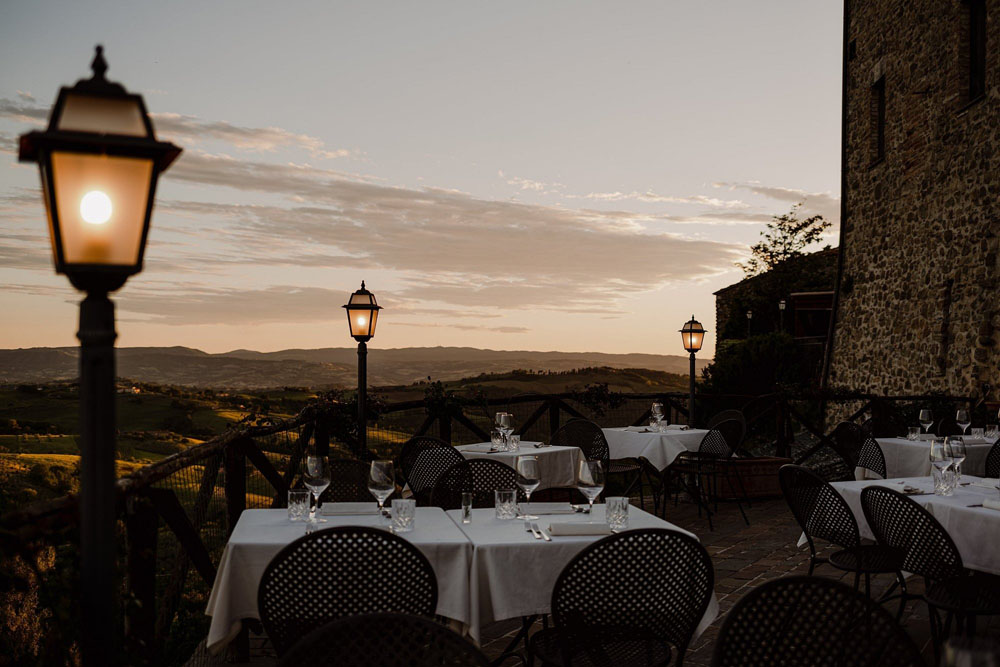
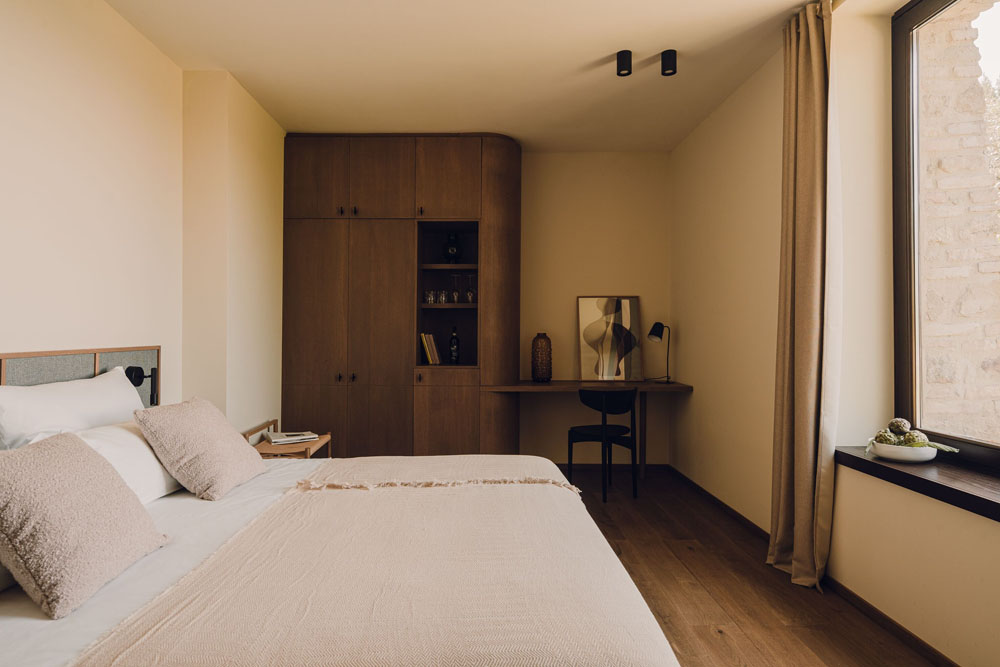
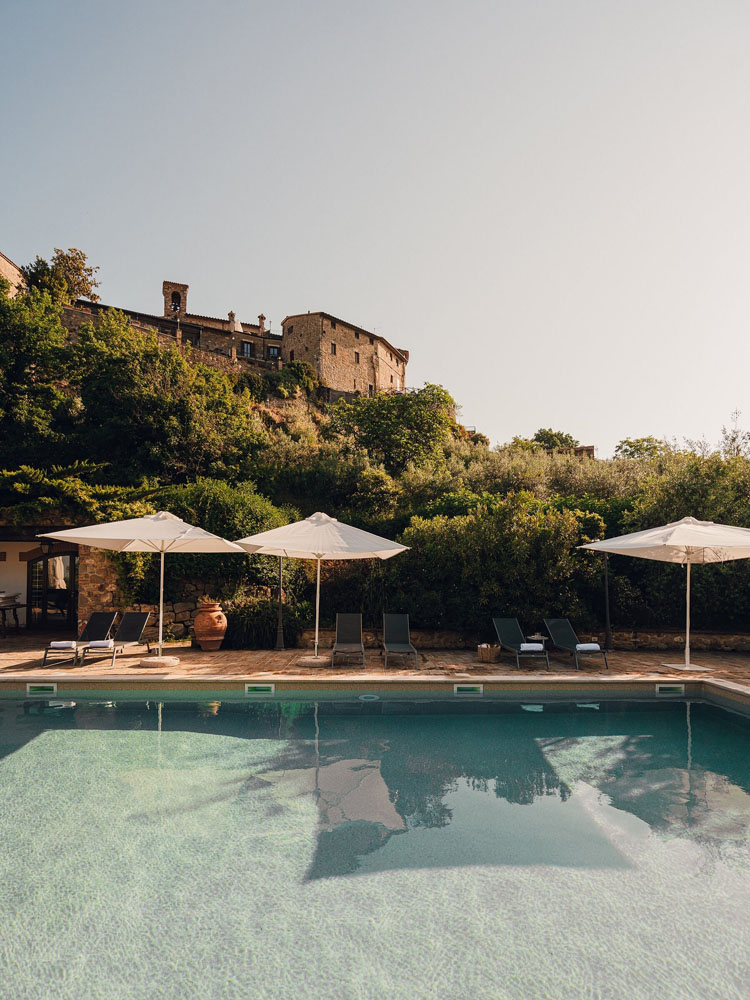
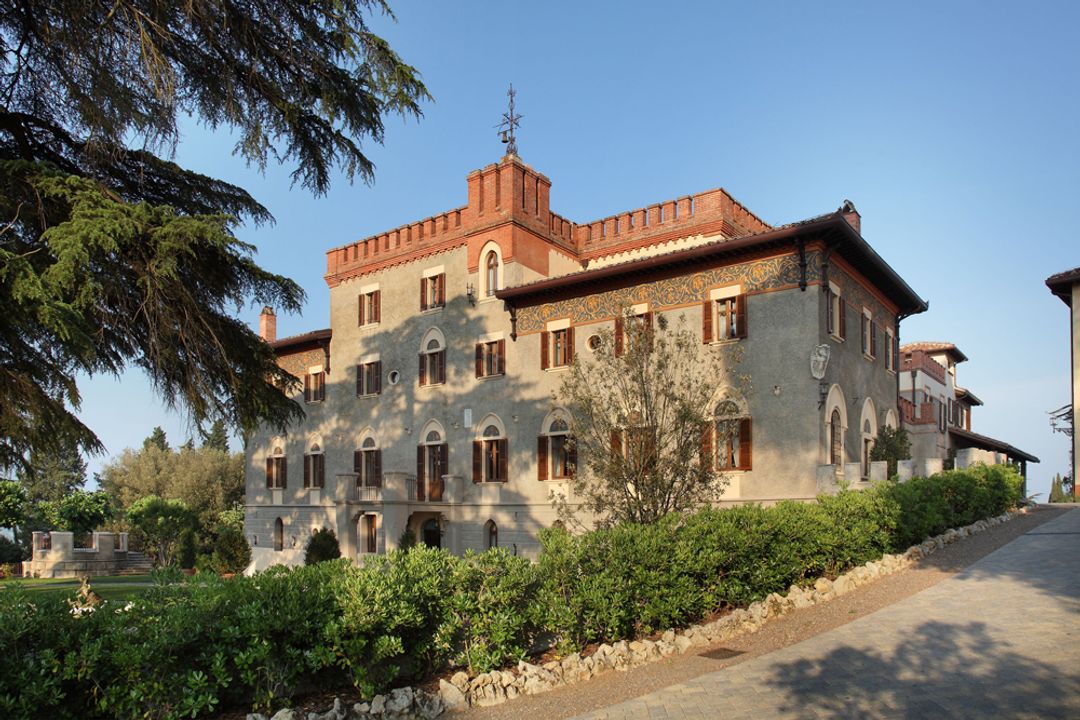
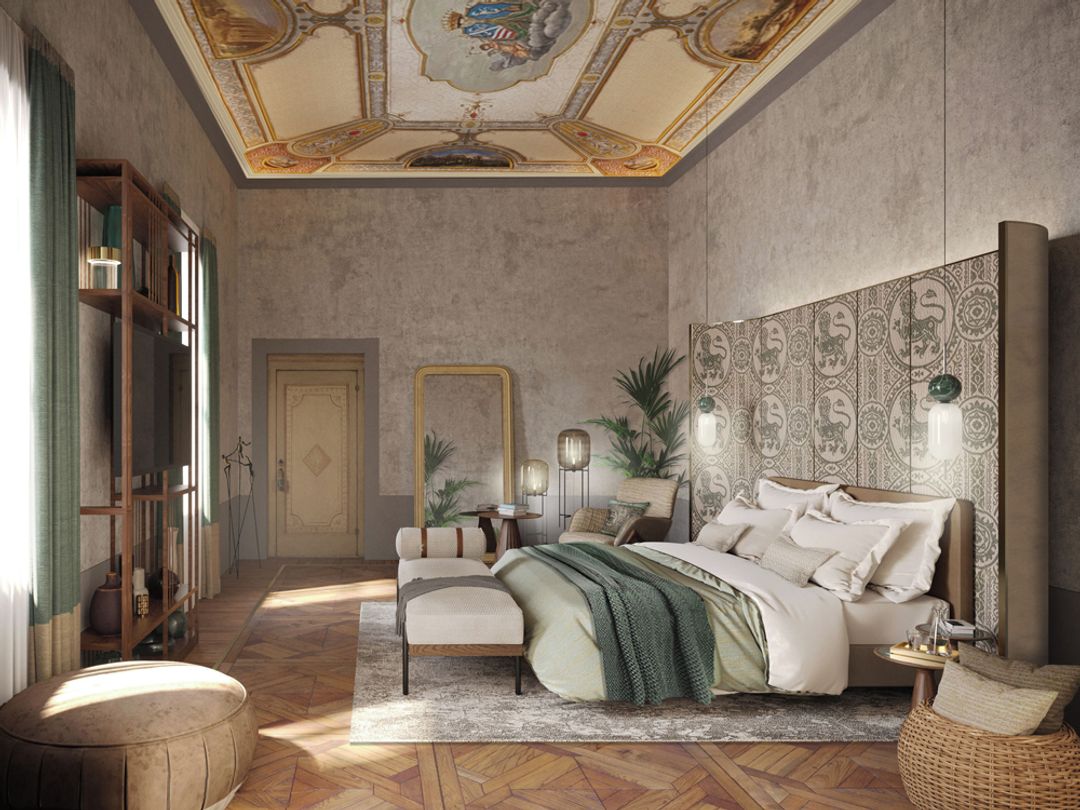
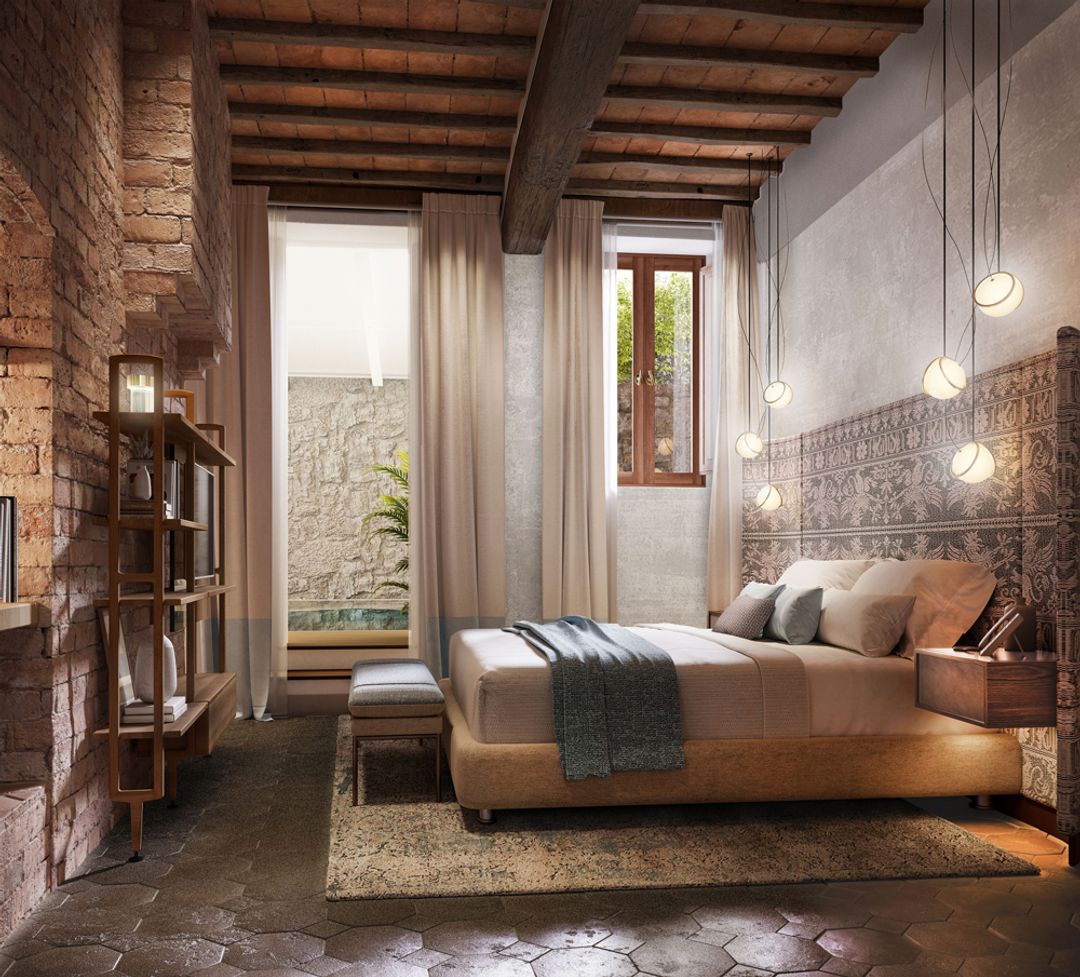
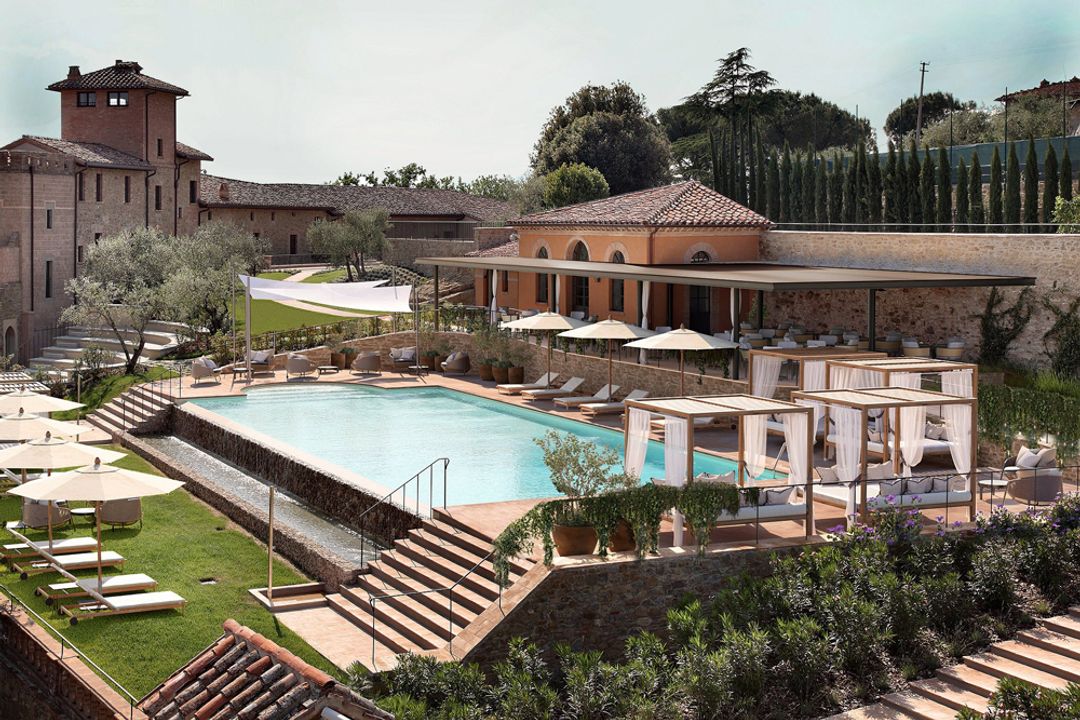
The countryside between the towns is where the region's most persuasive case for staying gets made, and it is here that Borgo dei Conti Resort operates, set in the hills outside Perugia on a property that draws its character from the converted borgo form: a cluster of stone buildings, originally agricultural and residential, reworked into a coherent resort without abandoning the spatial density and material weight that defines the type. The architecture retains the rough travertine and terracotta of the original structures while interior spaces have been calibrated for contemporary comfort, a balance that the best Umbrian conversions manage and the worst sacrifice in either direction. The setting itself does considerable work: the position above the valley, the cypress-lined approaches, the views toward Perugia that recall the landscape backgrounds in quattrocento Umbrian painting, specifically the kind of atmospheric distance that Perugino made his signature before Raphael carried the tradition further.
For a traveler whose interest in Italy runs deeper than the urban monument circuit, Umbria rewards sustained attention in ways that Tuscany, more trafficked and more legible to outside expectations, sometimes cannot. Staying at Borgo dei Conti gives a base with enough geographical access to move between Perugia's Galleria Nazionale dell'Umbria, with its concentrated holdings of Perugino and Pinturicchio, and the quieter hilltowns that most visitors to central Italy never reach. The property is the specific rather than the incidental reason to come to this part of the region.