Where

PressBeyond Logo

Best hotels in Izu, Japan | Visually Compare Top Stays Side-by-Side

Welcome to PressBeyond - a curated visual guide to design-driven hotels and the fastest way to compare them. My name is Will Miller and this is my recommendation for the best boutique and luxury hotel in Izu, Japan.

An Overview of the Boutique & Luxury Hotel Landscape in Izu, Japan

The Izu Peninsula pushes south from Shizuoka into the Pacific with a geological stubbornness that has kept it insulated from the pace of the mainland — hot springs forcing up through volcanic rock, cedar forests descending toward narrow river valleys, and a coast that alternates between sheer cliff and quiet fishing harbor. This is terrain that rewards slowness. Shuzenji, the peninsula's most historically rooted onsen town, sits inland along the Katsura River, its bathhouses and wooden inn facades largely unchanged in atmosphere since the Kamakura period. The novelist Natsume Soseki came here to convalesce in 1910 and nearly died; Kawabata wrote about similar places. What draws people to this part of Japan has always been less about arrival than about duration — the idea of staying long enough that the mineral water and the forest quiet do something to you. Asaba sits within Shuzenji and belongs to a lineage of Japanese inn-making — the ryokan tradition — that is concerned above all with the arrangement of time and material experience. The property occupies a historic compound that has been in the same family for centuries, and its noh theater stage, set over a koi pond in the garden, is one of the more quietly extraordinary architectural gestures in Japanese hospitality. Performances still take place there, which means that guests encounter the building not as a decorative artifact but as a living structure with a specific cultural purpose. The interiors follow the logic of refined wabi aesthetics — exposed timber, tatami, the careful placement of light and shadow — without tipping into the austerity that can make lesser properties feel ascetic rather than calming. At this price point, which places Asaba among Japan's most expensive inns, the value proposition is entirely about depth of experience: kaiseki meals built around seasonal ingredients, private baths, and a sense of formal care that extends to every detail of how a room is entered and left. For the traveler who moves slowly and notices materials, Izu offers a specific kind of reward — the sensation that landscape and architecture have arrived at an agreement over centuries. Shuzenji is not a town that asks to be photographed and moved on from. Asaba, as its most considered expression of place-bound hospitality, is the right reason to come here, and to stay longer than you planned.

Book with PB and get cash back
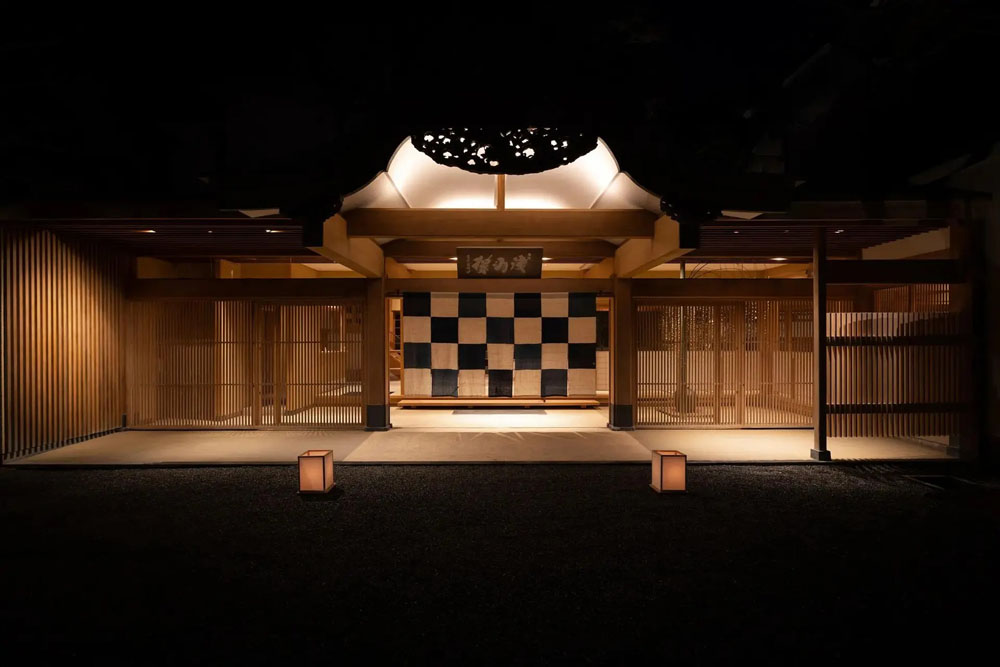
Exterior view of Asaba — full building facade, street-level angle, PressBeyond hotel series
Exterior view · Asaba · PressBeyond hotel series
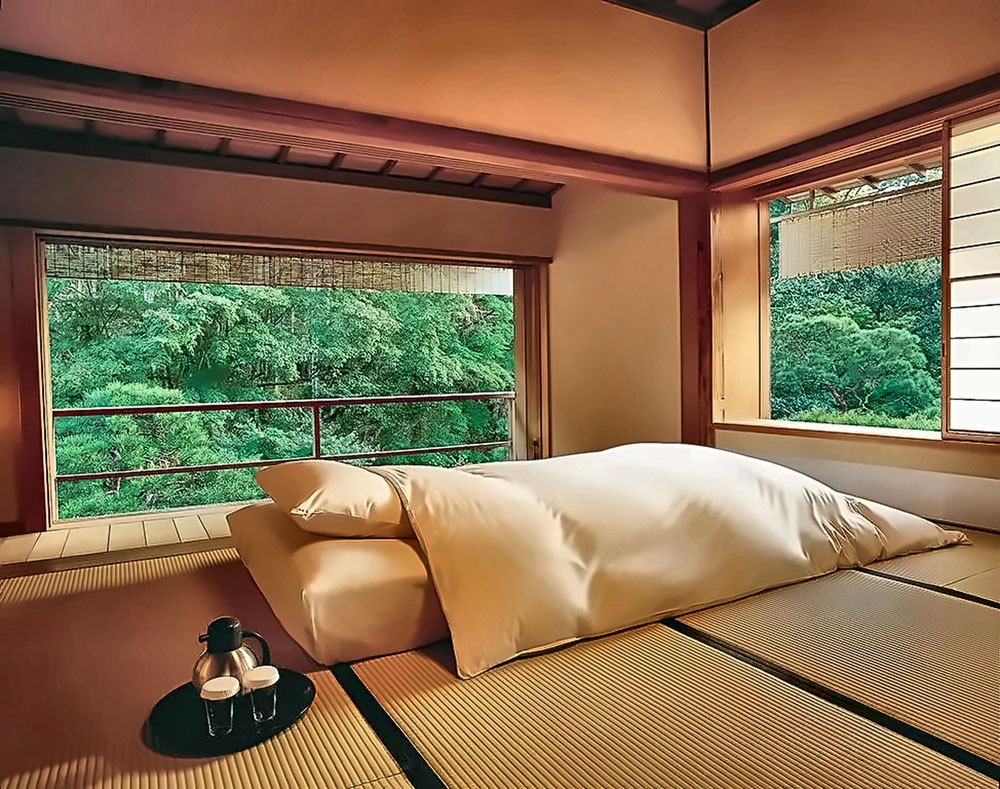
Primary guest room at Asaba — full-room view, natural lighting, clear sightlines, PressBeyond standard
Primary guest room · Asaba · PressBeyond hotel series
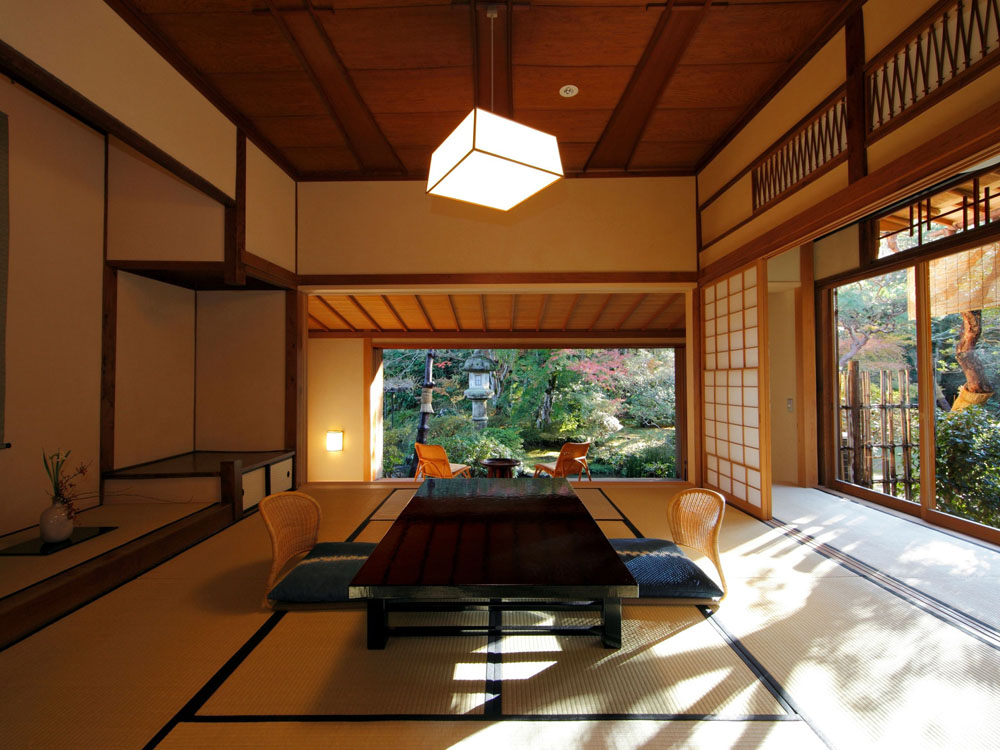
Common area at Asaba — lobby or lounge, non-duplicative with secondary social space, PressBeyond
Common area · Asaba · PressBeyond hotel series
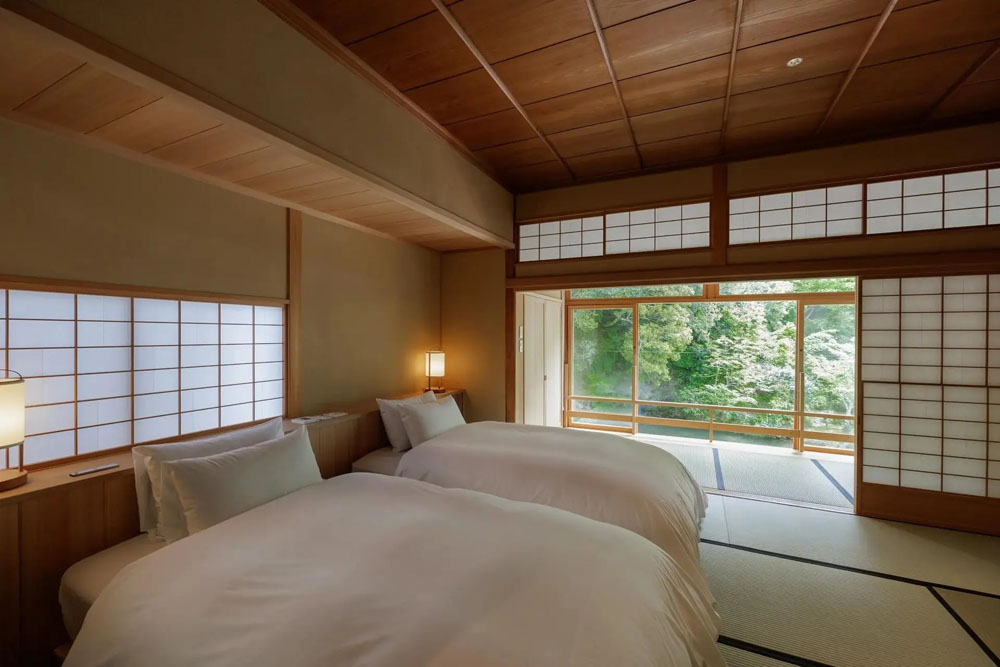
Secondary guest room at Asaba — distinct layout from primary bedroom, PressBeyond hotel image sequence
Secondary guest room · Asaba · PressBeyond hotel series
Lounge and social space at Asaba — distinct bar, dining, or terrace area, PressBeyond hotel series
Lounge and social space · Asaba · PressBeyond hotel series

Asaba

Izu, Japan • Shuzenji • OVER THE TOP

avg. $2,660 / night

Includes $140 / night in cash back

Cash back is redeemable via Virtual Visa, Venmo, or bank transfer starting 24-48 hours after check-out

Asaba Design Editorial

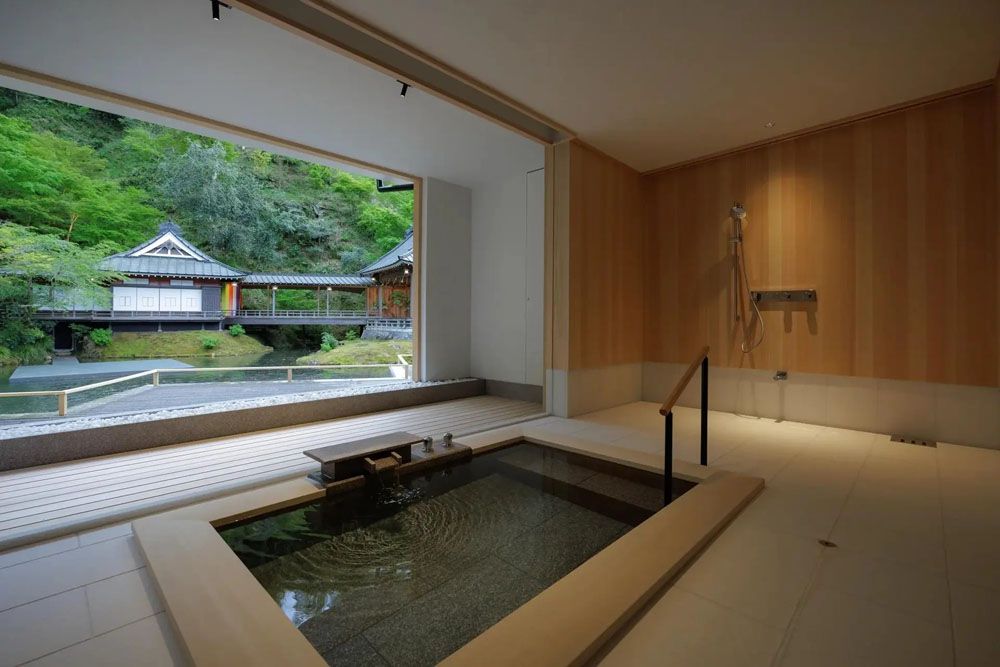
Somewhere in the forested hills above Shuzenji, a sixteenth-century family inn has been receiving guests since 1484 — longer than most European dynasties have held their thrones. Asaba Ryokan's most arresting feature is not its age, though, but a historic Noh stage relocated from Tokyo during the Meiji period and set above a 2,000-square-metre pond at the property's heart. The stage, named Gekkeiden, gives the compound the feeling of a private cultural institution as much as a place to sleep: cedar-roofed, its painted bridge extending over still water, it frames every view from the eleven guest rooms and the independent Villa Tenko that surround it. Inside, the rooms show how confidently the ryokan wears its dual inheritance. Tatami floors and shoji screens in pale timber provide the structural calm of the traditional Japanese interior, while low lacquered tables, woven rattan chairs, and a spare hexagonal pendant lantern drawn from mid-century sensibility introduce a quieter modernism — one that sits beside the classical forms without disrupting them. Futon laid directly on the woven grass, dense canopies of maple and cedar pressing against wide picture windows, a hinoki-lined bath chamber opening toward the pond and the distant roof of Gekkeiden: this is a property where the accumulated decisions of five centuries have, against reasonable odds, produced something coherent and extraordinarily alive.

Best hotels in Izu, Japan | A Curated Visual Guide to Top Stays