Best hotels in Kaga, Japan | Visually Compare Top Stays Side-by-Side
Welcome to PressBeyond - a curated visual guide to design-driven hotels and the fastest way to compare them. My name is Will Miller and this is my recommendation for the best boutique and luxury hotel in Kaga, Japan.
An Overview of the Boutique & Luxury Hotel Landscape in Kaga, Japan
Kaga sits in Ishikawa Prefecture at a remove from the cultural machinery of Kanazawa, its larger neighbor to the north, and that distance is part of what makes it worth the journey. The city's identity is threaded through its onsen towns — Yamashiro, Yamanaka, Katayamazu, Kakusenkei — each a distinct thermal district with its own character and its own relationship to the surrounding cedar and bamboo forest. Yamashiro Onsen, the most architecturally considered of them, developed during the Meiji and Taisho eras into a ryokan town where traditional craft and material culture — lacquerware, Kutani porcelain, silk textiles — were embedded into the built environment rather than displayed alongside it. The result is a place where the quality of a sliding screen or the grain of a hinoki bath still carries the weight of genuine regional tradition, not curated nostalgia. Beniya Mukayu is the specific reason to come to Yamashiro Onsen, and it earns that claim through restraint rather than spectacle. The ryokan was designed by Shin Ohori of General Design, who brought a contemporary architectural sobriety to a building type that can easily tip into decorative excess. Each of the thirty-eight rooms opens onto private garden views, and the material palette — stone, unfinished wood, washi, water — is consistent enough to read as a single composed idea rather than a collection of traditional gestures. The onsen baths draw from Yamashiro's sodium chloride springs, and the kaiseki cuisine is grounded in the seasonal produce of the Kaga plain and the seafood of the nearby Noto coast. What Beniya Mukayu offers is not a departure from the ryokan form but a distillation of it: the same slow rhythms, the same attentiveness to the guest's movement through a day, but with a spatial clarity that a traveler drawn to architecture will find quietly extraordinary. Kaga rewards those willing to move at the pace the onsen towns were built for. Yamanaka Onsen, a short drive through the gorge, has its own austere charm and a long history tied to lacquer craft. But Yamashiro is where the accommodation rises to meet the setting with real ambition, and Beniya Mukayu is the clearest expression of what contemporary Japanese hospitality design looks like when it trusts its own traditions enough to edit them.


Beniya Mukayu
Kaga, Japan • Yamashiro Onsen • SPLURGE
avg. $538 / night
Includes $28 / night in cash back
Cash back is redeemable via Virtual Visa, Venmo, or bank transfer starting 24-48 hours after check-out
Beniya Mukayu Design Editorial
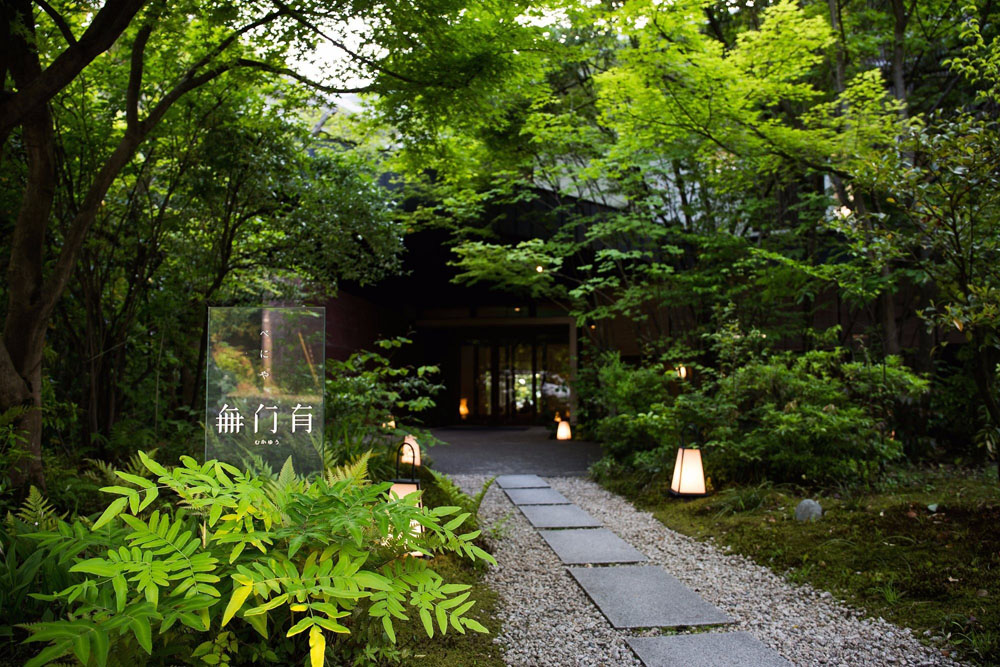
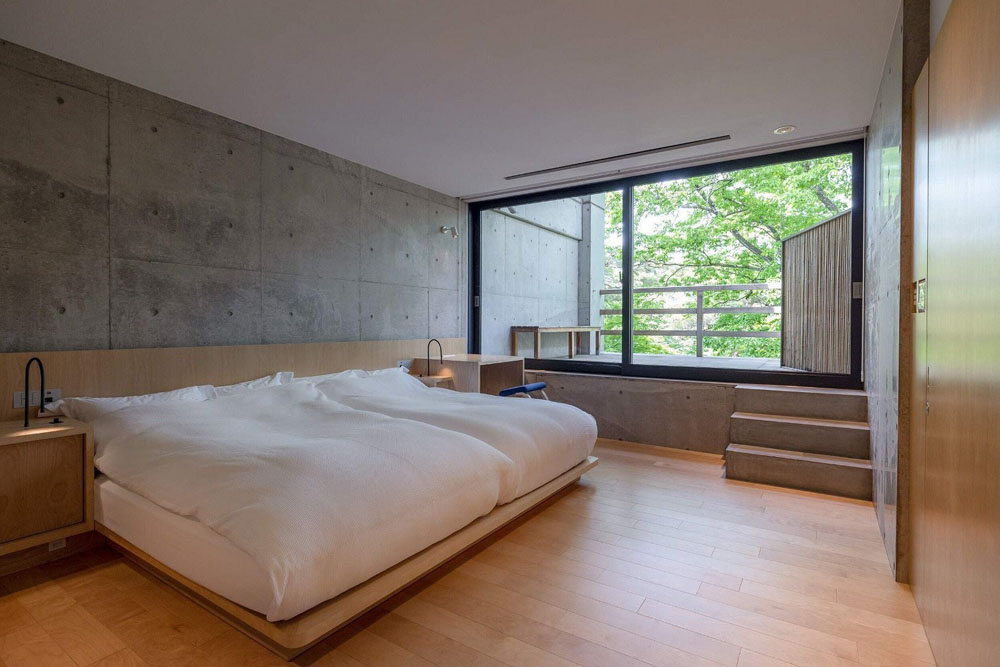
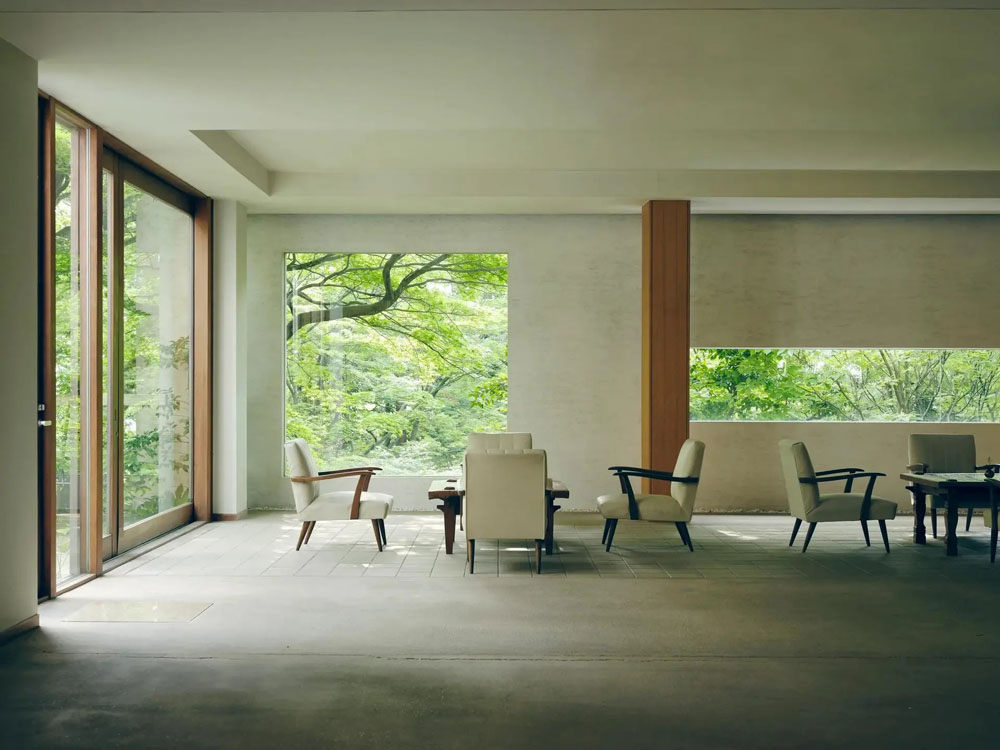
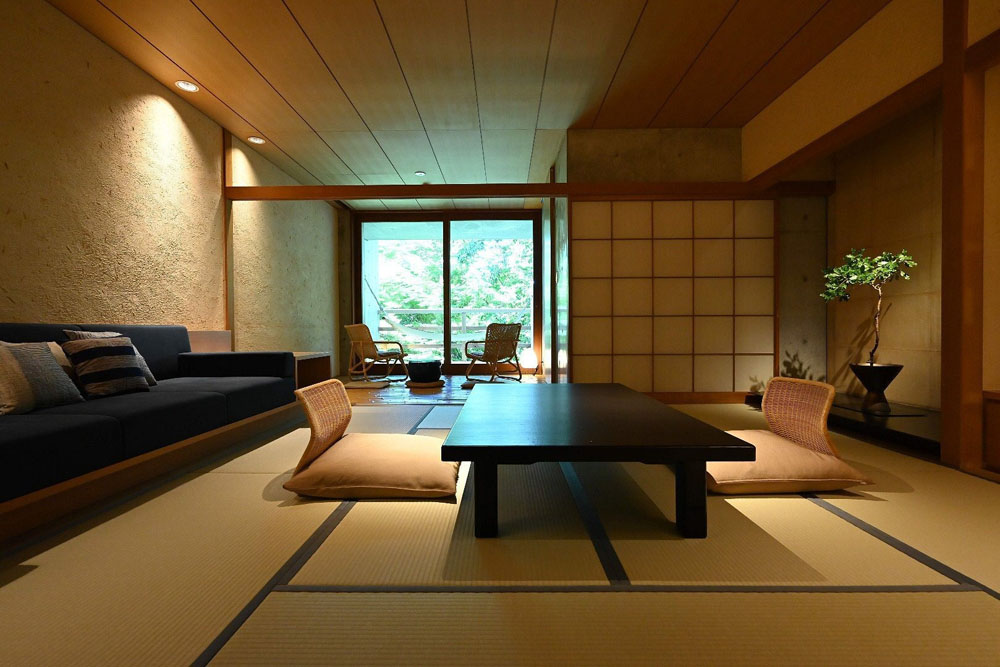
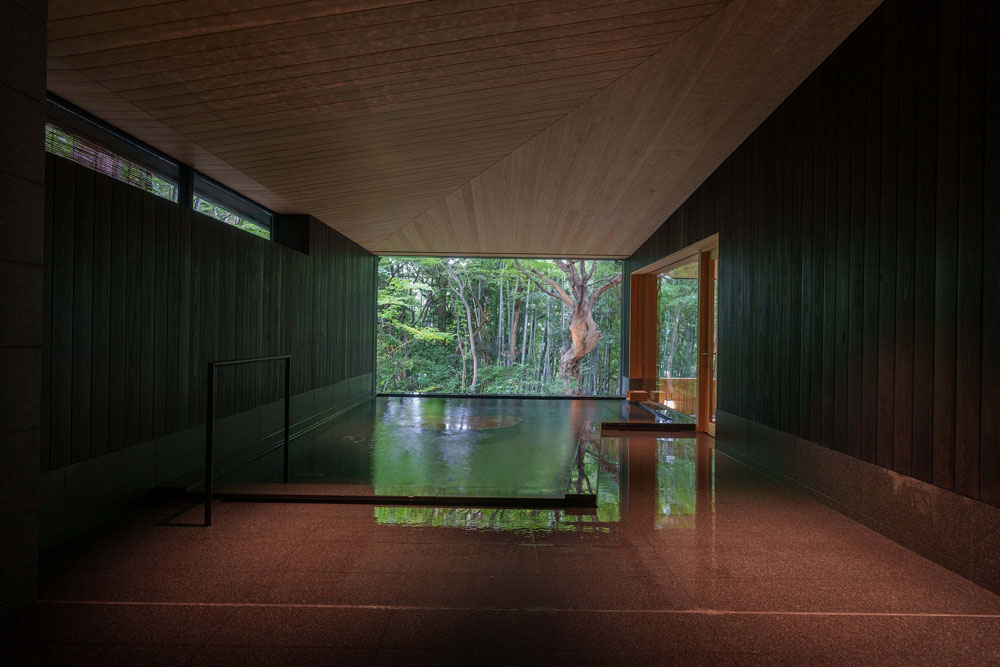
Perched on Yakushiyama — Healing Buddha's Mountain — above the ancient hot spring town of Yamashiro Onsen in Kaga, Beniya Mukayu began as a traditional inn in 1928 and has spent the past three decades becoming something quietly extraordinary. The transformation is the work of architect Kiyoshi Sey Takeyama of AMORPHE, who began reshaping the property in 1996, and designer Kenya Hara, whose philosophy of emptiness and white runs through every surface. Board-formed concrete walls meet pale maple floors in the guestrooms, where a full-height window frames the forest canopy and steps down to a private open-air hot spring bath set flush with the ground. The lounge presents a different kind of severity: polished concrete floors, floor-to-ceiling glazing dissolved entirely into the surrounding zelkova and maple, and a scatter of mid-century armchairs in off-white linen that suggest a curator's eye more than a decorator's hand. The 16 rooms hold both registers of the property's history without forcing a resolution. Tatami suites with shoji screens, lacquered low tables, and textured earthen plaster walls carry the warmth of the older inn, while the newer concrete volumes push the material palette toward something closer to contemporary Japanese art architecture. The communal onsen bath, lined in dark-veined stone with a cedar ceiling angled above a single panoramic window, frames one old forest tree with the precision of a hanging scroll. The whole property moves at the pace the mountain sets.