Best hotels in Moroccan Desert | A Curated Visual Guide to Top Stays
Welcome to PressBeyond, the ultimate curated visual guide for design-driven hotels! My name is Will Miller and this is my recommendation for the best boutique and luxury hotel in Moroccan Desert.
I am the founder of PressBeyond and I am an ultra-meticulous hotel curator who loves clean visuals. I have individually analyzed and tiered the hotel included in this guide based on a variety of criteria (architecture & design, location, brand & brand affiliation, existing reviews, and my own personal experiences), and importantly, I have hand-selected the leading imagery for this hotel to provide you with easily-digestible, yet detailed and complete, like-for-like, high-level visual profiles. I felt this summarization step was a critical missing piece across existing guides, blogs, and booking platforms. My aim is to make it easier for people to identify hotel environments that resonate with them, along with enabling them to visualize the types of social experiences that those environments help foster. My brain doesn't work when exposed to cluttered content, so my goal was to create the opposite.
Underneath this, we are also a full booking engine offering 5% Venmo cash back along with other exclusive perks. For all of you design-obsessed hotel enthusiasts out there, I hope this guide helps get you to where you see yourself!
An Overview of the Boutique & Luxury Hotel Landscape in Moroccan Desert
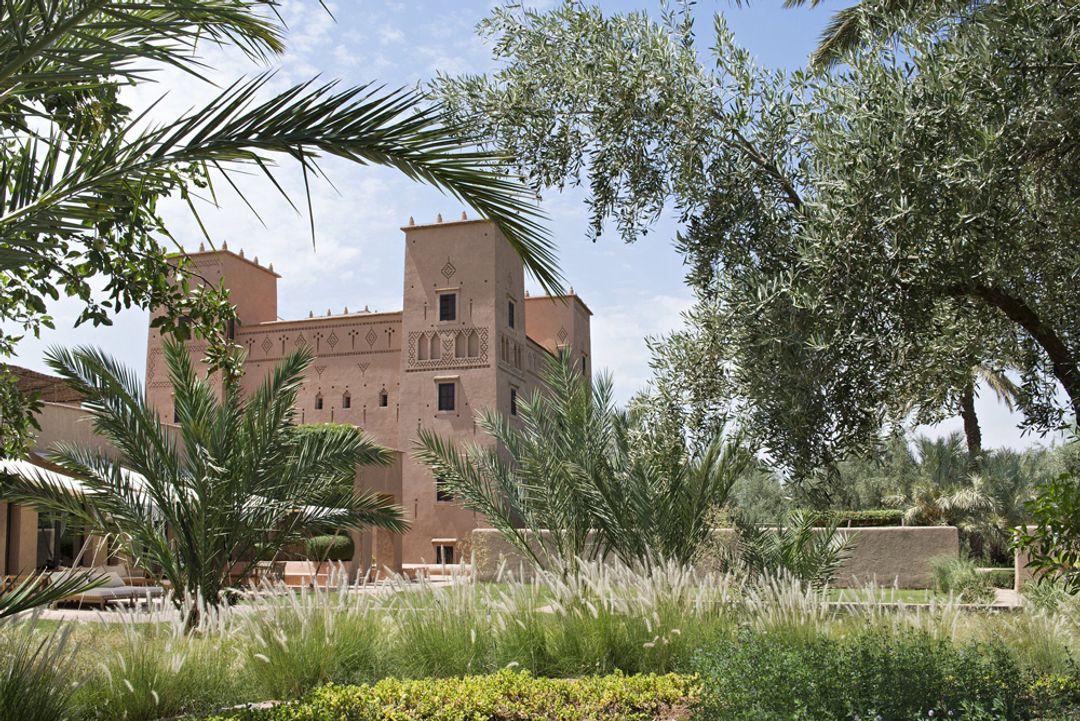
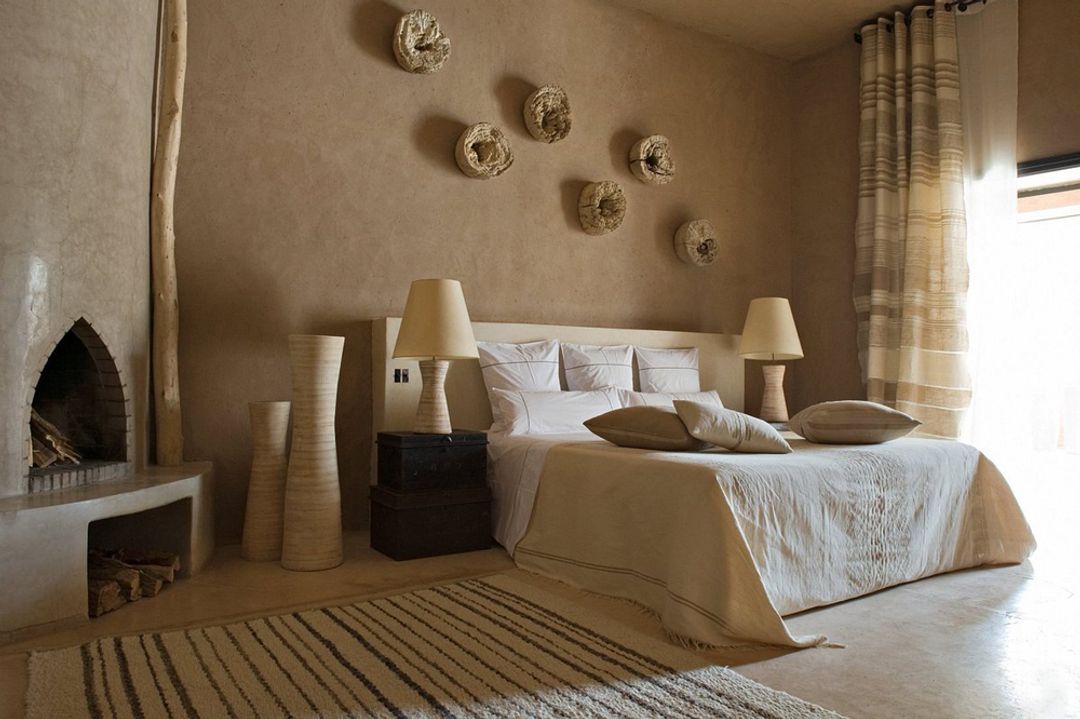
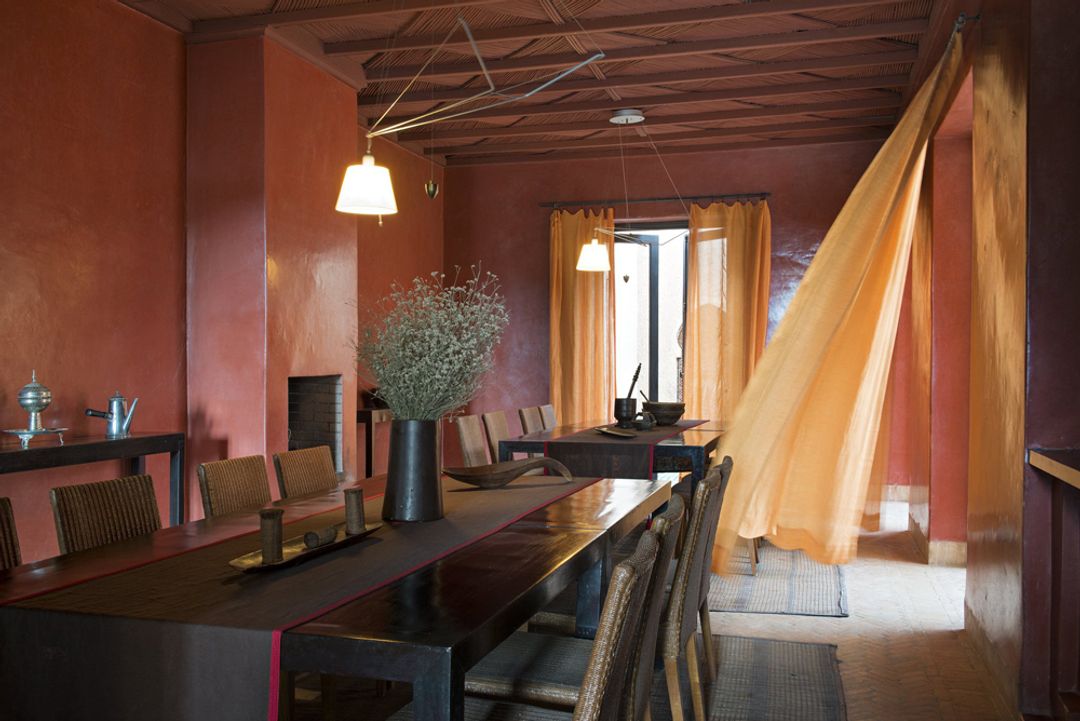
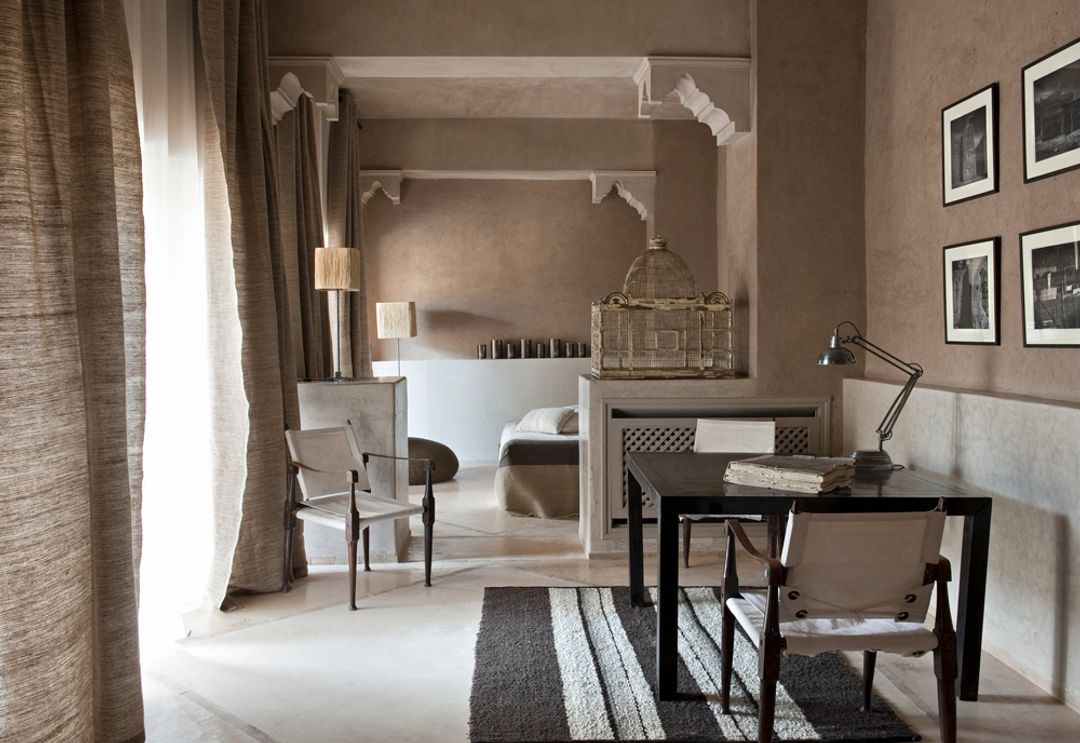
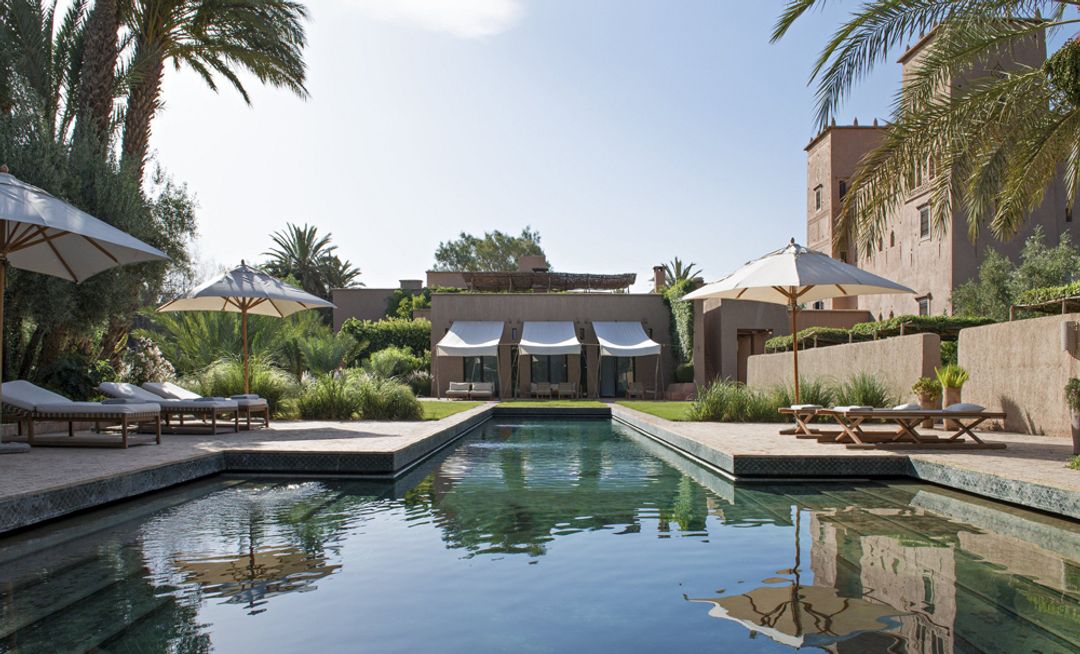
The Drâa Valley does something particular to architecture. The light here — bleached and relentless by noon, amber and almost tactile by late afternoon — strips back pretension and rewards honesty of material. Pisé walls built from the same earth they rise out of, kasbahs that dissolve into the landscape at a distance, the geometry of a palm oasis drawing a hard green line through ochre stone: this is not a setting that tolerates the imported or the decorative. The built environment of southern Morocco, concentrated along the road between Ouarzazate and Zagora, is among the most coherent in all of North Africa — not because it was designed, but because the desert imposed its own discipline across centuries. Dar Ahlam, set in a restored kasbah outside Ouarzazate, works with this logic rather than against it. The property is deliberately remote and deliberately intimate — a small number of suites housed within thick-walled structures that maintain a genuine temperature differential from the midday heat, furnished in a register that respects Moroccan craft traditions without tipping into the theatrical ethnic pastiche that plagues lesser desert retreats. Lanterns, hand-knotted textiles, carved plasterwork: the vocabulary is familiar, but the editorial control is precise. What distinguishes Dar Ahlam is the quality of its spatial sequencing — the way a courtyard gives onto a garden, which gives onto the palmeraie, which gives onto nothing but open horizon. There is no separation between the property and the landscape that surrounds it, which is the correct ambition for a place like this. Ouarzazate itself occupies an interesting position as a threshold: the last town of any size before the roads thin and the Sahara proper begins. It has a working film-industry infrastructure and the Aït Benhaddou ksar within easy reach, which gives any stay here a dimension beyond pure escapism. But the reason a design-conscious traveler stays in this part of Morocco is not culture or history in the conventional sense — it is the rarer experience of being somewhere where the built environment was never separated from the natural one, and where a well-restored kasbah like Dar Ahlam can function as both shelter and argument. The argument being that the most considered hospitality in a place this severe is simply the one that gets out of the desert's way.