Best hotels in Tangier | A Curated Visual Guide to Top Stays
Welcome to PressBeyond, the ultimate curated visual guide for design-driven hotels! My name is Will Miller and this is my recommendation for the best boutique and luxury hotel in Tangier.
I am the founder of PressBeyond and I am an ultra-meticulous hotel curator who loves clean visuals. I have individually analyzed and tiered the hotel included in this guide based on a variety of criteria (architecture & design, location, brand & brand affiliation, existing reviews, and my own personal experiences), and importantly, I have hand-selected the leading imagery for this hotel to provide you with easily-digestible, yet detailed and complete, like-for-like, high-level visual profiles. I felt this summarization step was a critical missing piece across existing guides, blogs, and booking platforms. My aim is to make it easier for people to identify hotel environments that resonate with them, along with enabling them to visualize the types of social experiences that those environments help foster. My brain doesn't work when exposed to cluttered content, so my goal was to create the opposite.
Underneath this, we are also a full booking engine offering 5% Venmo cash back along with other exclusive perks. For all of you design-obsessed hotel enthusiasts out there, I hope this guide helps get you to where you see yourself!
An Overview of the Boutique & Luxury Hotel Landscape in Tangier
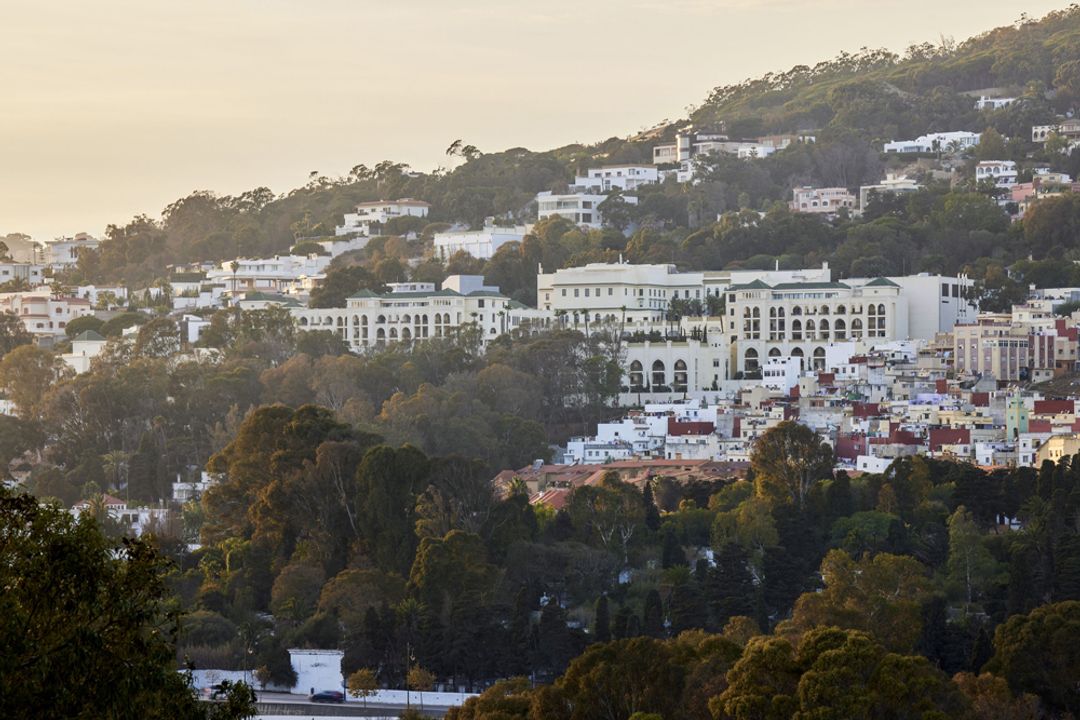
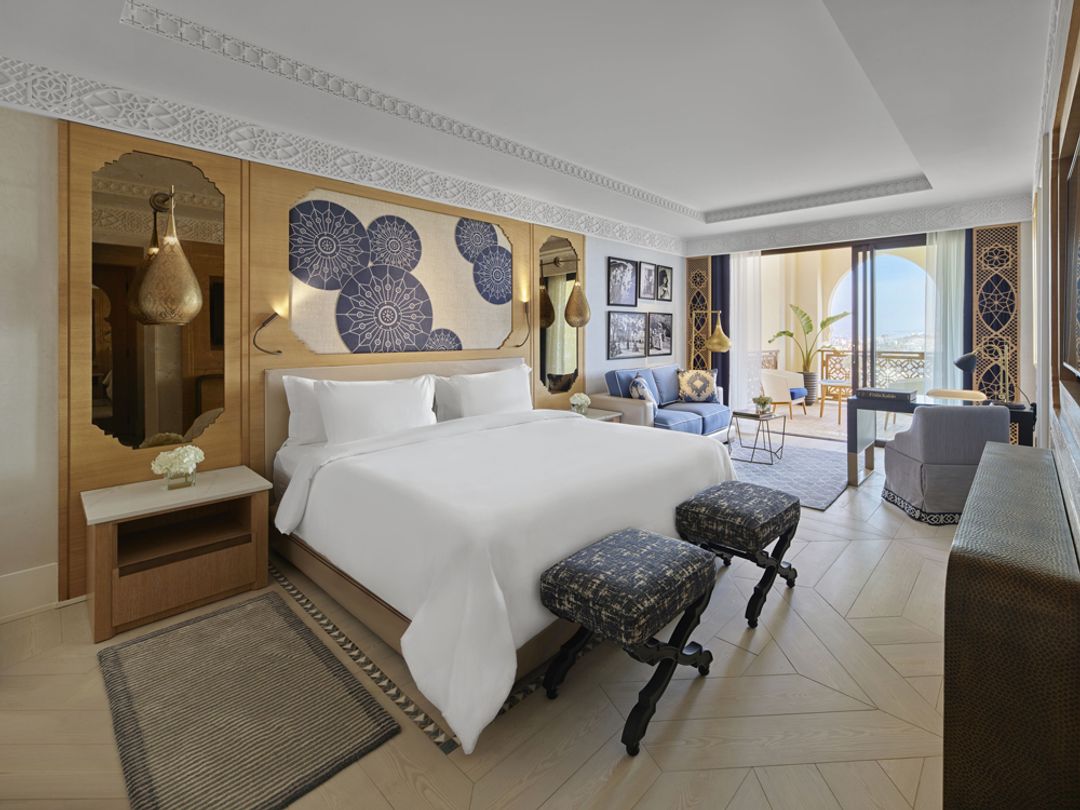
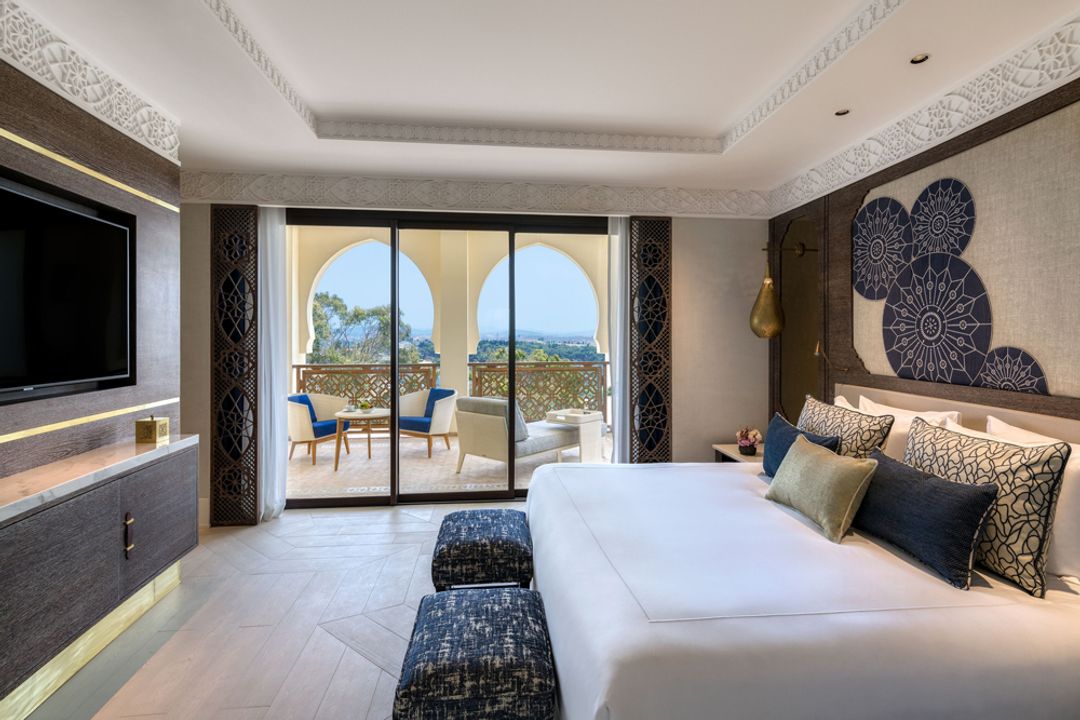
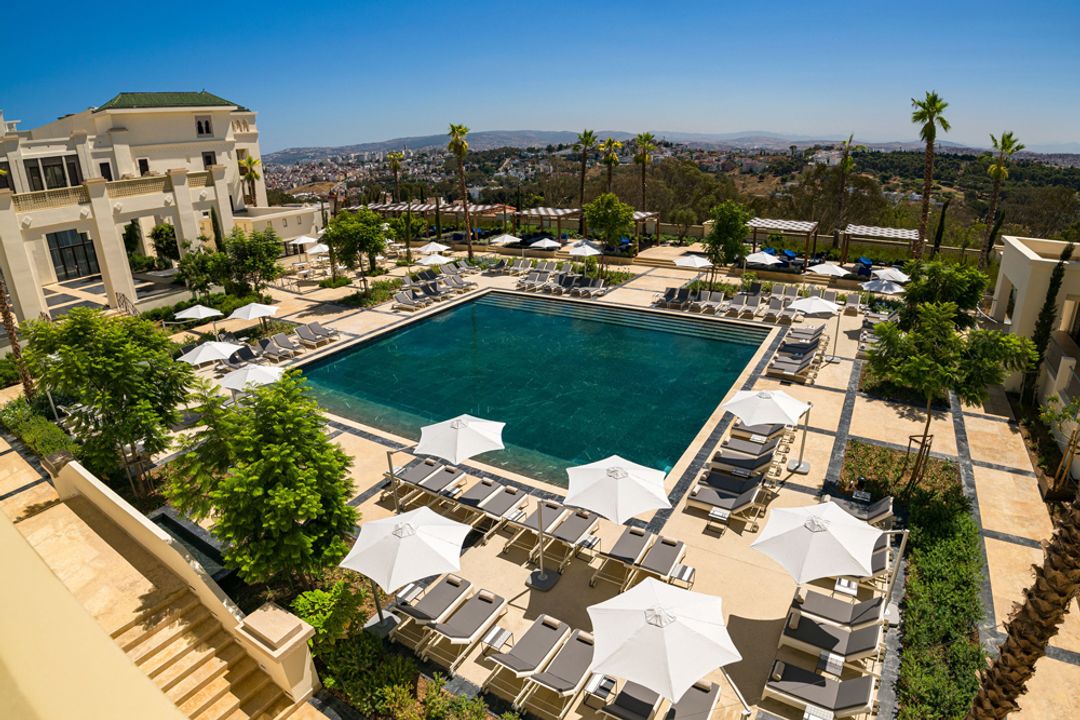
Tangier has always been a city that resists easy categorization — neither fully European nor fully Moroccan, neither quite Mediterranean nor Atlantic, but something stranger and more interesting than either. The whitewashed geometry of the medina climbs toward the kasbah in tight, vertiginous lanes, while the Ville Nouvelle below it carries the wide boulevards and ornamental facades left by the decades of international administration, when Spain, France, Britain, and others all held competing claims on the place. That layered colonial ambiguity produced an architectural atmosphere unlike anywhere else in North Africa — a city where Moorish tilework and Art Deco ironwork and Spanish ecclesiastical stone all coexist within a few hundred meters of each other, and where the light off the Strait of Gibraltar gives everything a particular luminous clarity. The outer hills above and beyond the city center represent something else again. Here, set against forested grounds that look down toward the strait and across to the Spanish coast on clear days, the Fairmont Tazi Palace occupies a position that feels genuinely removed from the city's compressed, historically dense core. The property itself is housed in a former royal residence — a building with real architectural weight and a formal grandeur that the Fairmont renovation has worked to preserve rather than override. Interiors reference Moroccan decorative traditions with enough discipline to avoid pastiche: zellige tilework, carved cedar ceilings, and proportioned courtyards that organize space in the manner of traditional palatial architecture rather than replicating its surface features. For a traveler whose first instinct is to stay inside the medina walls, the Tazi Palace makes a genuine counter-argument — one grounded in scale, quiet, and the specific pleasure of looking at a city from above it. Tangier rewards the traveler who understands it as a place in motion. The recent decade has brought renewed investment to the port district and the Corniche, and the city's long literary associations — with Paul Bowles, Brion Gysin, the whole expatriate mythology of the International Zone years — have given way to something more locally driven and less romantically freighted. Staying at the Fairmont Tazi Palace offers one version of engagement with the city: unhurried, positioned, oriented toward the horizon. From there, the medina, the souk at the Grand Socco, and the kasbah are each close enough to reach deliberately rather than stumble into, which for Tangier is exactly the right posture.