Best hotels in Al Hajar Mountains, Oman | Visually Compare Top Stays Side-by-Side
Welcome to PressBeyond - a curated visual guide to design-driven hotels and the fastest way to compare them.
An Overview of the Boutique & Luxury Hotel Landscape in Al Hajar Mountains, Oman
The Al Hajar Mountains run like a spine through the interior of Oman, reaching elevations above 3,000 meters in the Jabal Akhdar range, the Green Mountain whose name points to something improbable: a plateau where roses, pomegranates, and apricots grow in terraced gardens carved from rose-red rock. This is not a landscape that accommodates architecture easily. The villages here, built in traditional Omani stone and mud-brick, cling to ridgelines and cliff edges with a pragmatism that looks, from a distance, indistinguishable from the geology itself. Whatever is built in this terrain has to reckon with that precedent.
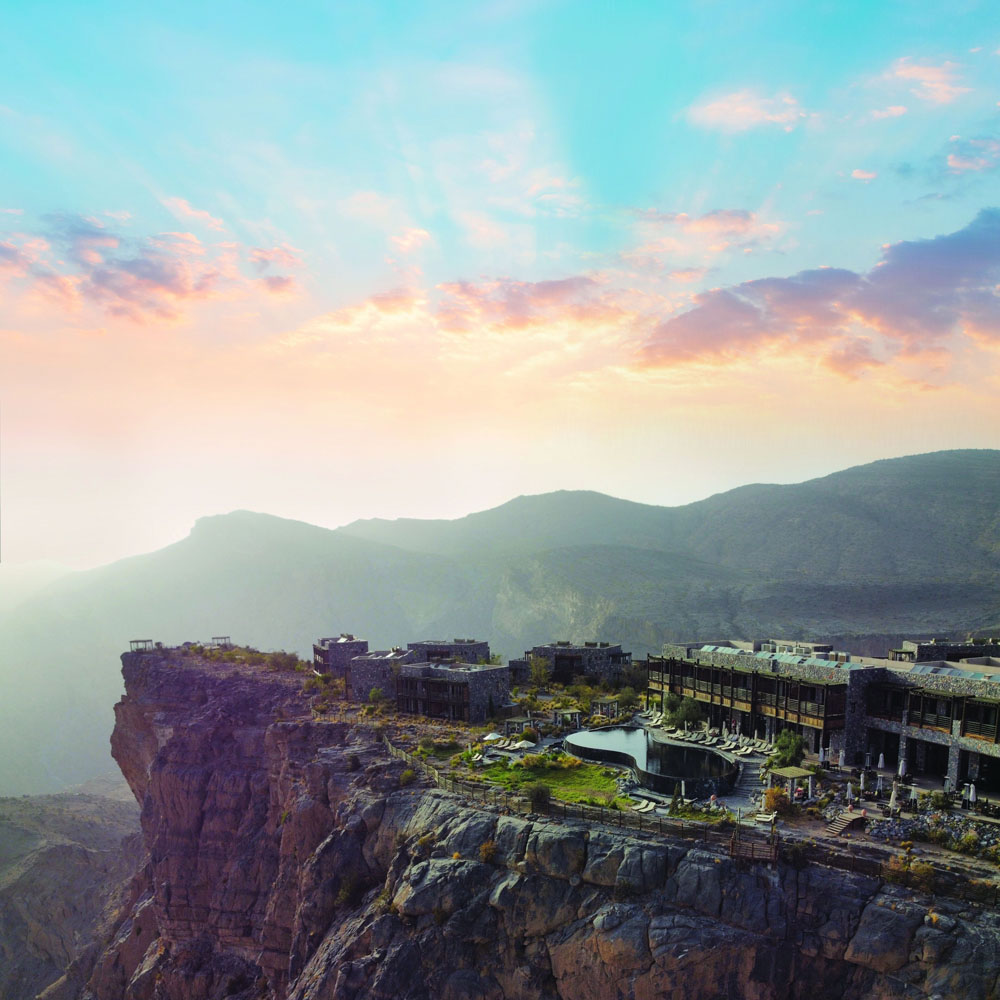
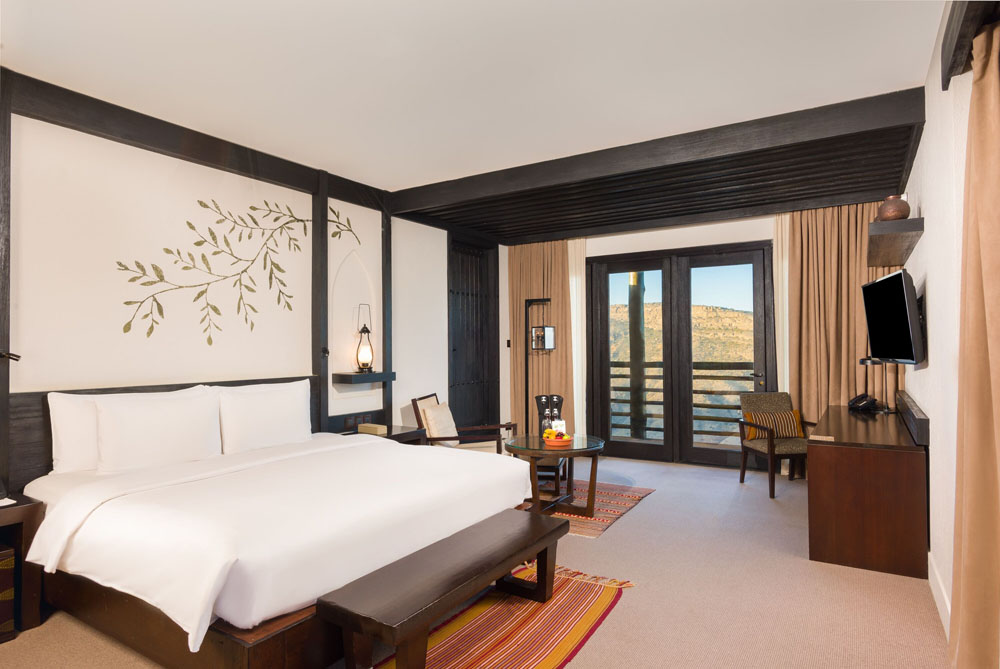
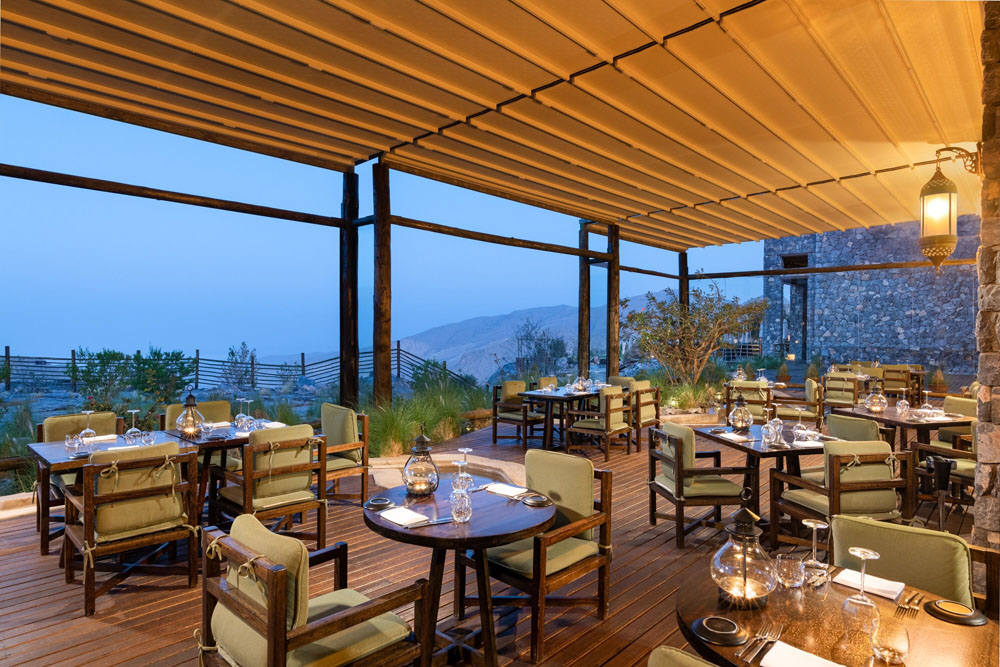
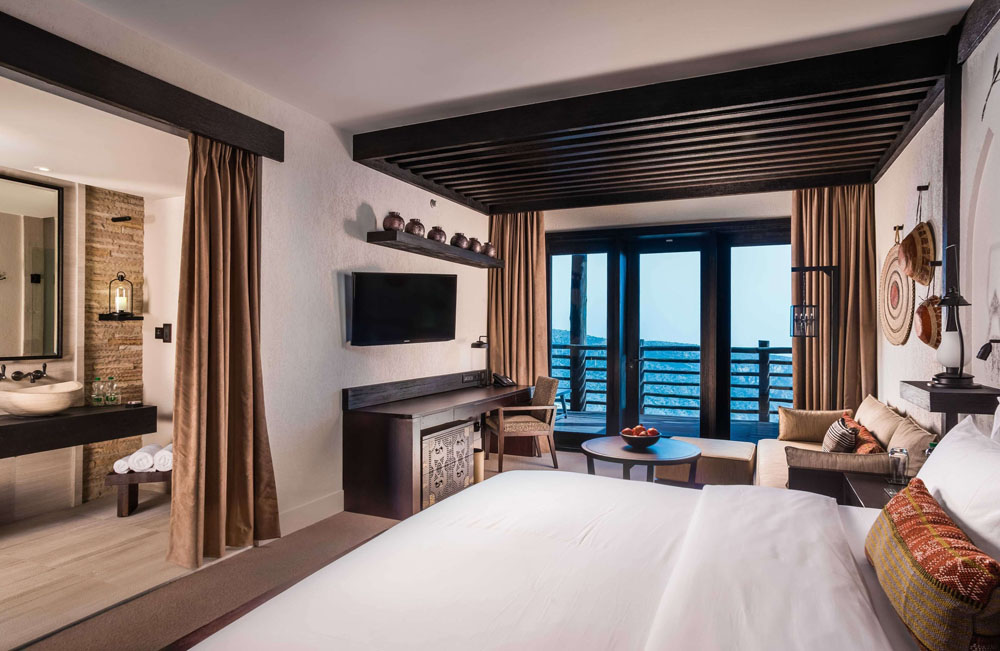
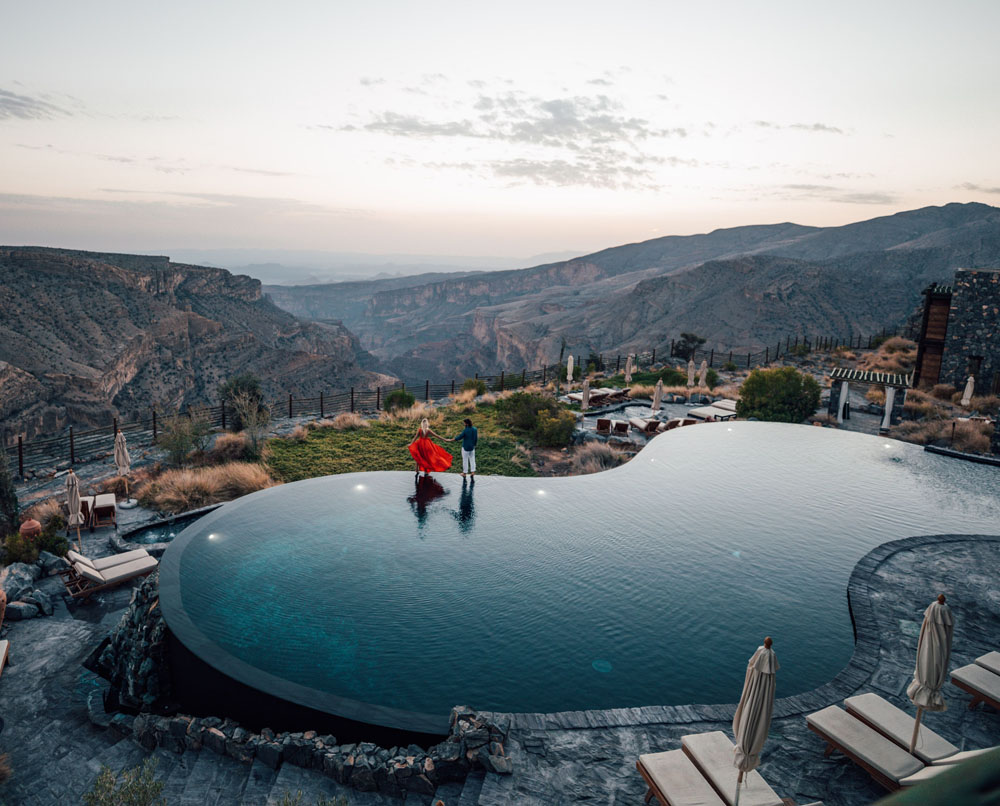
Alila Jabal Akhdar, perched at roughly 2,000 meters on a cliff edge above Wadi Ghul, one of the deepest canyons in the Arabian Peninsula, takes that reckoning seriously. The property was designed to read as an extension of the plateau rather than an imposition on it, working in local stone and pale rendered surfaces that absorb and reflect the particular quality of high-altitude light found nowhere else in the Gulf region. The infinity pools and terrace edges dissolve into vertiginous drops over the canyon below, so that the boundary between built structure and open air becomes genuinely disorienting in the best possible sense. Rooms and suites occupy low-slung pavilion forms that keep the mountain skyline intact rather than competing with it. The interiors draw from Omani craft traditions without the heavy-handed regional pastiche that afflicts lesser properties in the region: hand-woven textiles, locally sourced stone, restrained material choices that let the views carry the emotional weight.
What makes Alila Jabal Akhdar worth the considerable journey, and the considerable rate, is precisely that it cannot be replicated anywhere more convenient. The mountain air at this elevation is cool even in summer, the rose gardens of the nearby village of Al Ain are harvested at dawn in season, and the silence at night is total. For anyone whose idea of travel involves arriving somewhere that has genuinely required effort, and whose first instinct upon entering a room is to read how a building has positioned itself against its site, the Alila delivers a specific and hard-won experience. There are no comparable alternatives here. That scarcity is, in itself, part of what the place offers.