Best hotels in Nambiti Game Reserve, South Africa | Visually Compare Top Stays Side-by-Side
Welcome to PressBeyond - a curated visual guide to design-driven hotels and the fastest way to compare them.
An Overview of the Boutique & Luxury Hotel Landscape in Nambiti Game Reserve, South Africa
Nambiti Private Game Reserve sits in the KwaZulu-Natal midlands, roughly forty kilometers from Ladysmith, on a plateau that rolls through thornveld and rocky outcrops at an elevation that keeps nights cool and mornings sharp with mist. This is not the flat, cinematic savanna of the Kruger or the Limpopo; the terrain here is broken and dimensional, the kind of landscape that rewards architecture willing to work with topography rather than smooth it over. The reserve covers around twenty-three thousand hectares and remains malaria-free, a detail that shapes the kind of traveler it draws. Families and first-time safari visitors come partly for that reason, but the landscape itself, with its ridgelines, seasonal grasses, and long sightlines toward the Drakensberg foothills, would justify the journey regardless.
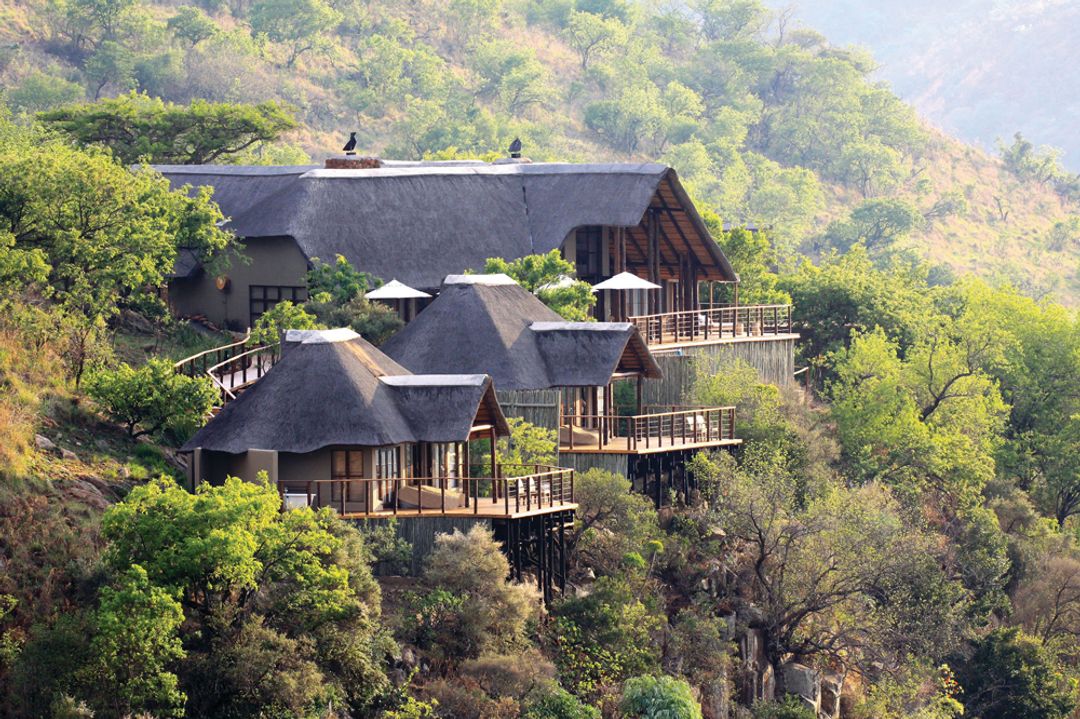
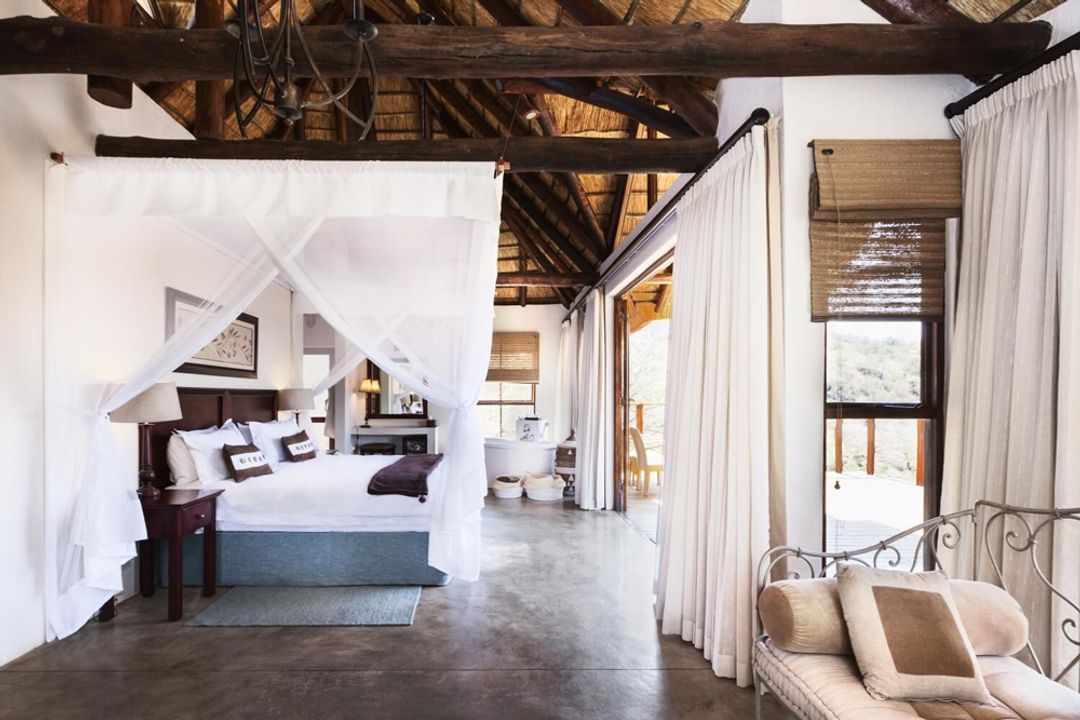
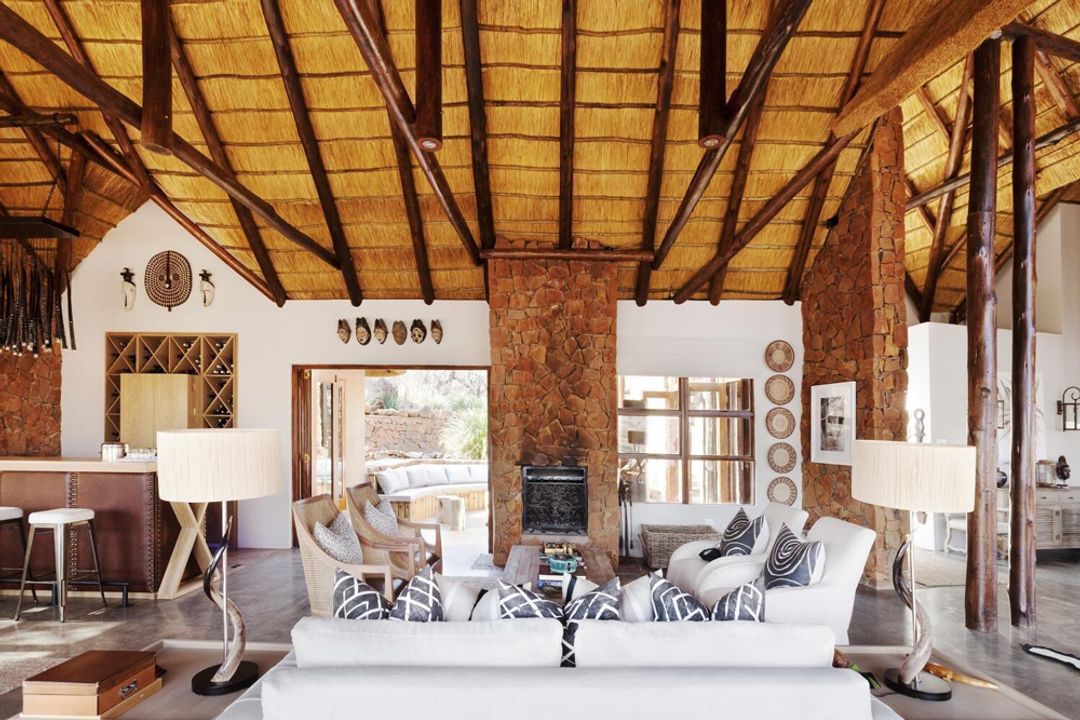
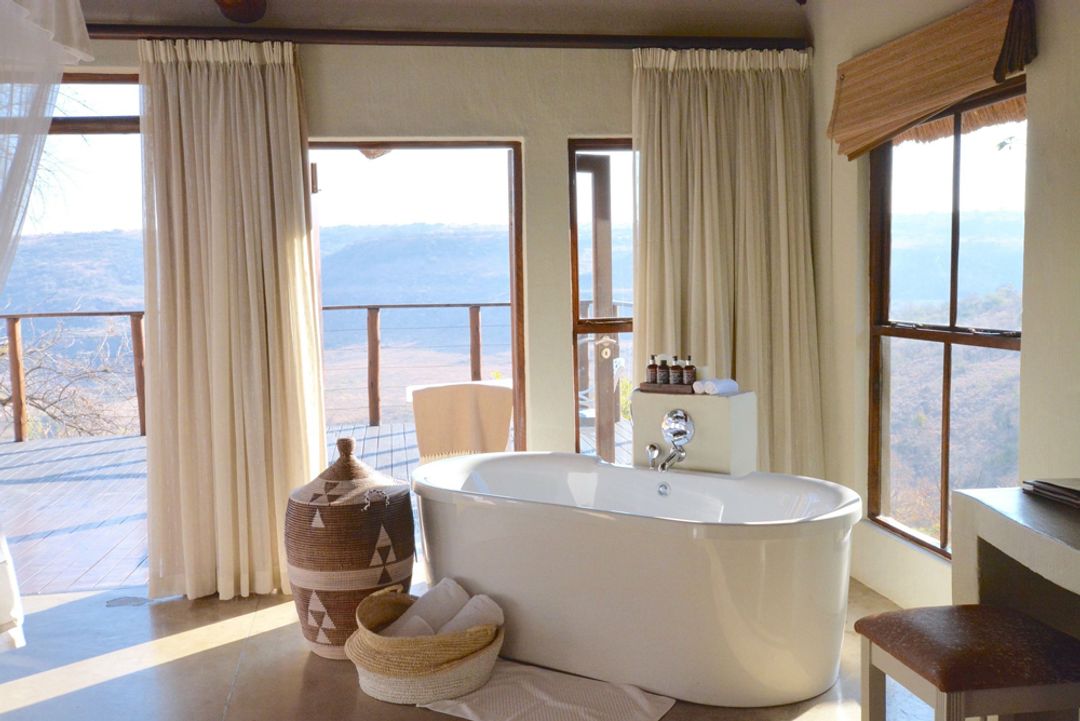
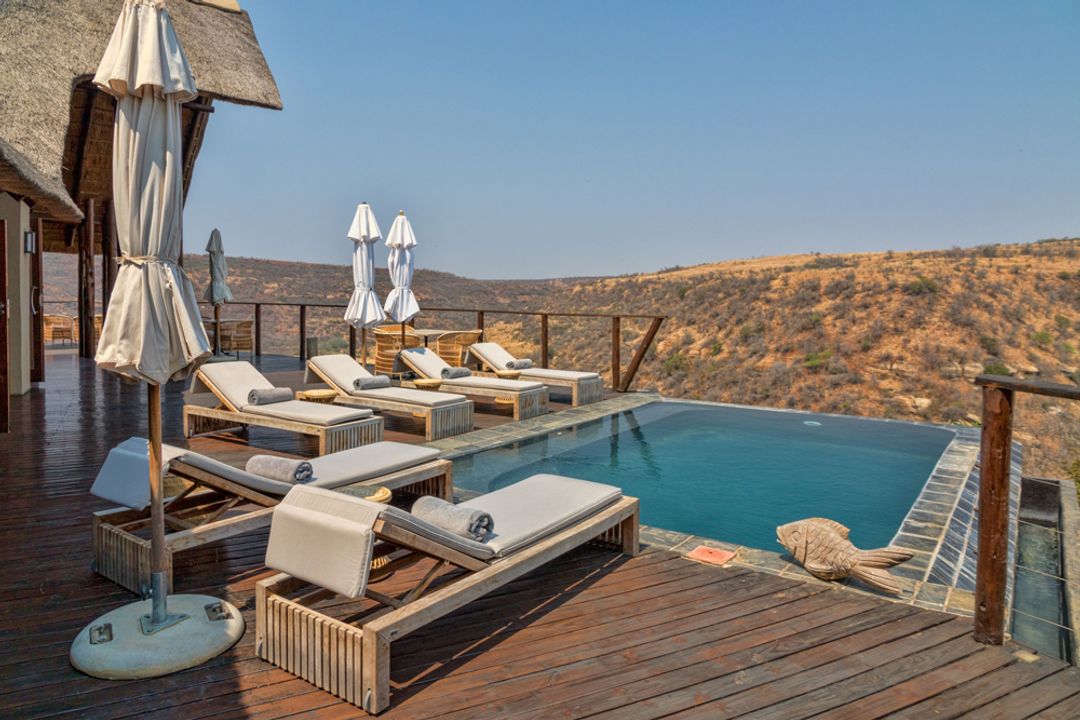
Esiweni Luxury Safari Lodge is the single property on this platform from Nambiti, and its position on the reserve's high ground is inseparable from everything the design achieves. The lodge is built into a ridgeline, using the natural fall of the land to create a series of split-level viewing decks and suites that feel embedded in the hillside rather than placed on top of it. Stone, timber, and canvas are the primary materials, handled with enough restraint that the palette reads as a continuation of the surrounding rock and scrub rather than a decorative gesture toward it. Each suite is oriented to face the reserve's open plains, and the private plunge pools are positioned to extend that view outward rather than fold attention back toward the accommodation itself. The main lodge areas, including the open-sided lounge and dining deck, function as framed observation platforms as much as social spaces, which is the correct instinct for a site this geographically generous.
At a rate around twelve hundred dollars per night, Esiweni is priced at the upper tier of the South African private reserve market, and it earns that position through spatial generosity and site sensitivity rather than through accumulation of amenity. Travelers who read buildings and landscapes carefully will notice that the lodge's scale is relatively intimate, with a small number of suites, which keeps the experience specific and grounded rather than resort-scaled. Nambiti's wildlife density is high for a private reserve of its size, with the Big Five present, and Esiweni's elevated position means game movement across the plains below is often visible directly from the suite. The reserve and the lodge feel genuinely calibrated to each other.