Best hotels in Andalusia, Spain | Visually Compare Top Stays Side-by-Side
Welcome to PressBeyond - a curated visual guide to design-driven hotels and the fastest way to compare them.
An Overview of the Boutique & Luxury Hotel Landscape in Andalusia, Spain
Andalusia is a region that builds in white. Across the provinces of Granada, Málaga, Sevilla, and Córdoba, the architectural vernacular is remarkably consistent: lime-washed walls, terracotta roof planes, interior courtyards that hold shade and the sound of water, horseshoe arches carrying the memory of eight centuries of Moorish occupation. The landscape itself is theatrical — the Sierra Nevada to the east, the Guadalquivir valley opening westward, the olive groves that pattern the hills of Jaén in long silvery rows. What makes Andalusia genuinely distinct from other regions of southern Europe is the degree to which its architecture has absorbed cultural collision and made something coherent from it. Roman, Visigothic, Islamic, and Christian building traditions layered over centuries have produced a material culture that reads as singular rather than eclectic.
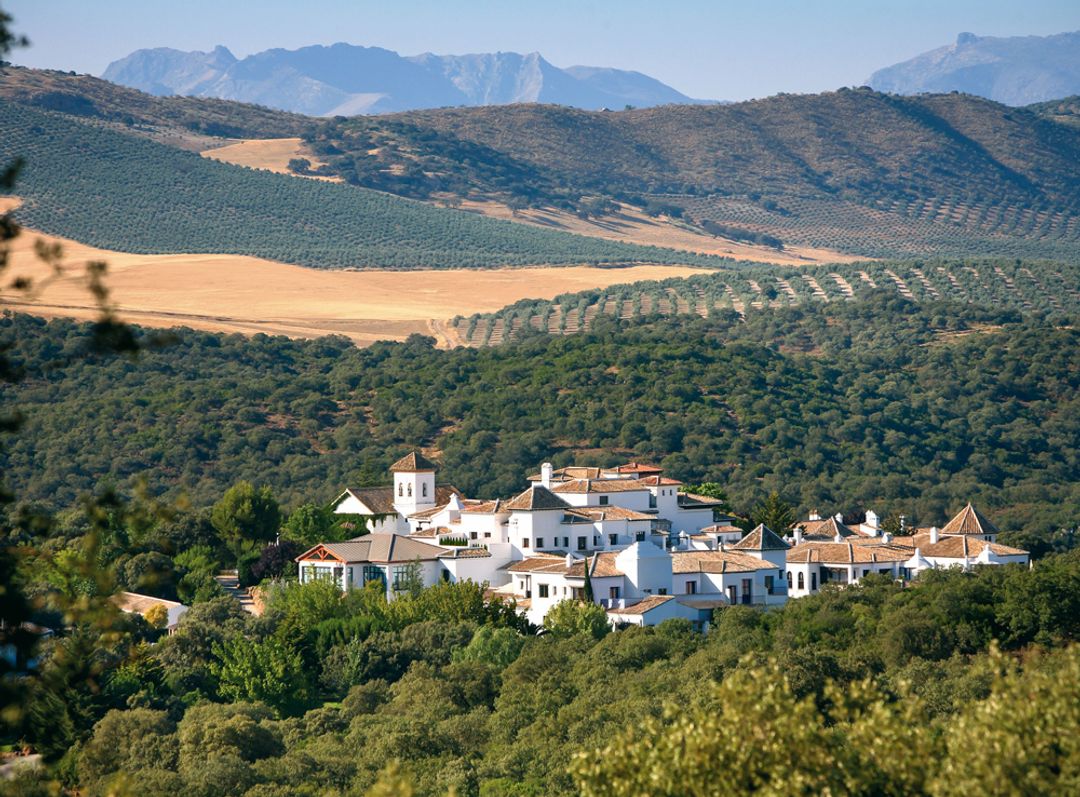
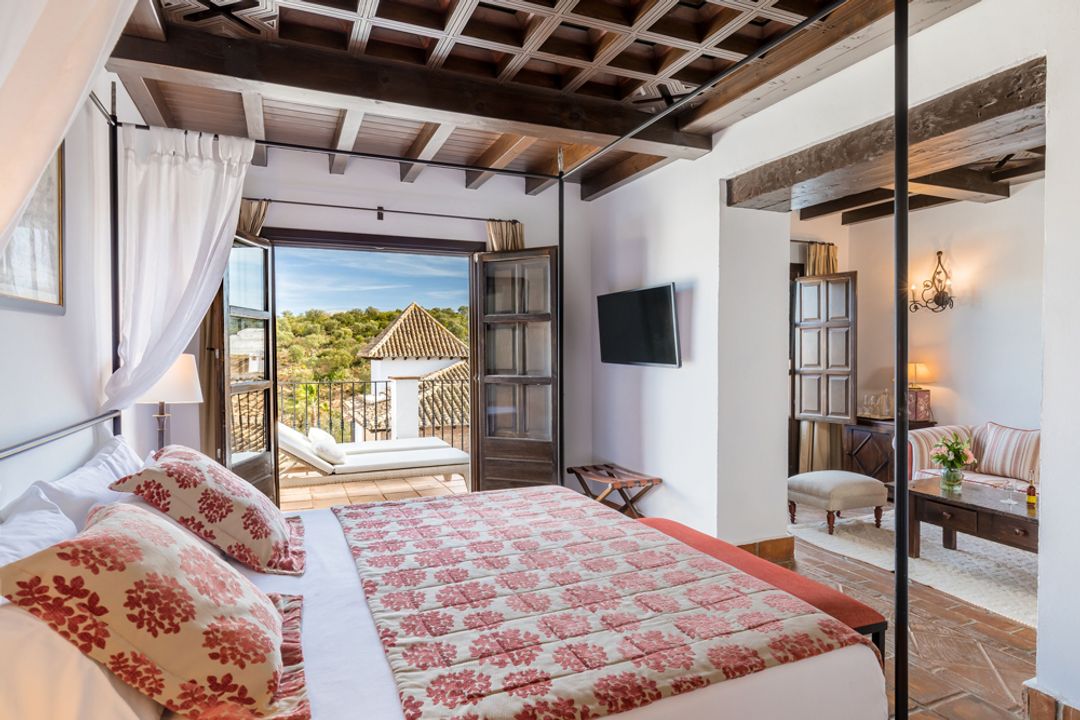
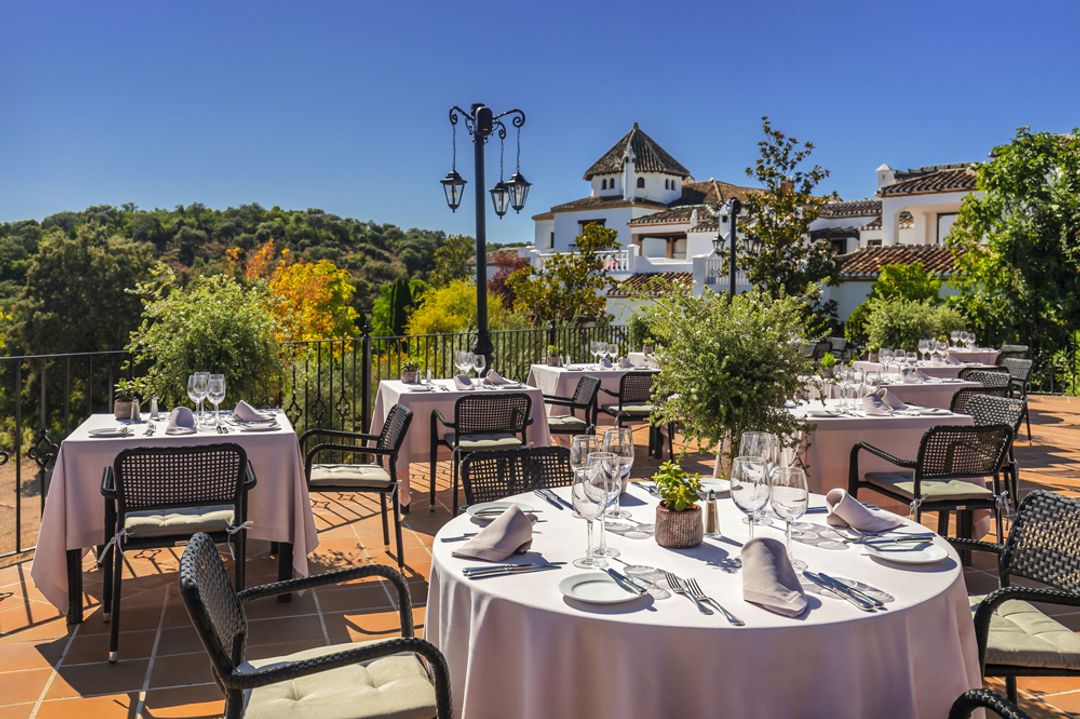
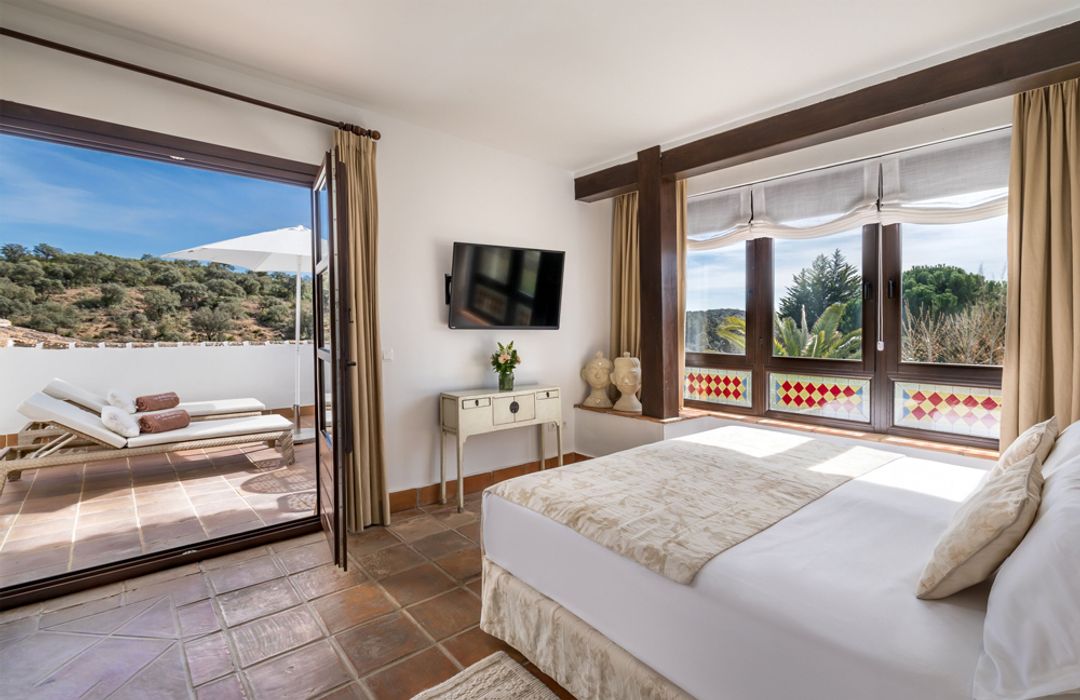
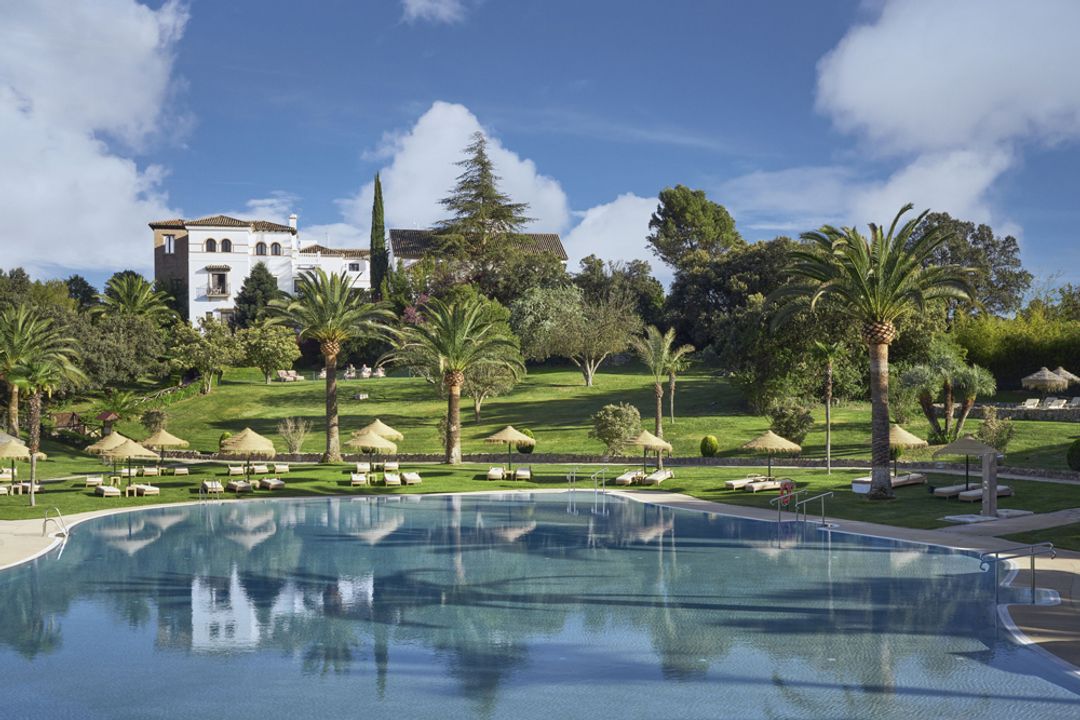
In the rural interior, away from the historic cities, the architecture turns quieter and more agricultural, responding to the land rather than to any urban grid. It is here, in the rolling countryside near Loja, roughly midway between Granada and Málaga, that La Bobadilla a Royal Hideaway Hotel sits on its own estate of some 350 hectares. The property was built to evoke the form of an Andalusian village rather than a single monolithic structure, with whitewashed buildings grouped around patios, bell towers, and arcaded passages that create a sequence of outdoor and sheltered spaces as you move through the complex. The result is less a resort in the conventional sense than a composed landscape where the architecture and the terrain are worked together — the swimming pools and gardens stepping down the hillside, the interiors drawing on traditional tilework, coffered ceilings, and wrought ironwork. It is the kind of place that rewards a traveler inclined to notice how a building sits on its site.
La Bobadilla has positioned itself for some years as one of the region's serious rural retreats, occupying the splurge tier with an average rate around 350 dollars a night that reflects both its isolation and its ambition. For anyone planning a circuit through Andalusia, the property makes a convincing case for a night or two away from the historic urban centers, offering a version of the region's architectural identity at a slower pace, with the Sierra de Loja visible on the horizon and little around it but olive groves and open country.