Best hotels in Catalonia, Spain | Visually Compare Top Stays Side-by-Side
Welcome to PressBeyond - a curated visual guide to design-driven hotels and the fastest way to compare them.
An Overview of the Boutique & Luxury Hotel Landscape in Catalonia, Spain
Catalonia's interior is easy to overlook when Barcelona is this close. The coast, the Gaudí pilgrimage, the Penedès vineyards — these are the obvious draws, and most travelers move between them without pausing to consider what lies further north, where the pre-Pyrenean landscape folds into something older and quieter. The comarca of Solsonès sits in this in-between territory: limestone ridges, medieval villages, forests of holm oak and pine, and a way of building in stone that has changed remarkably little across centuries. The architecture here is Romanesque by default, not by restoration, and the land reads accordingly — dry-stacked walls, barrel vaults, heavy thresholds worn smooth by centuries of use.
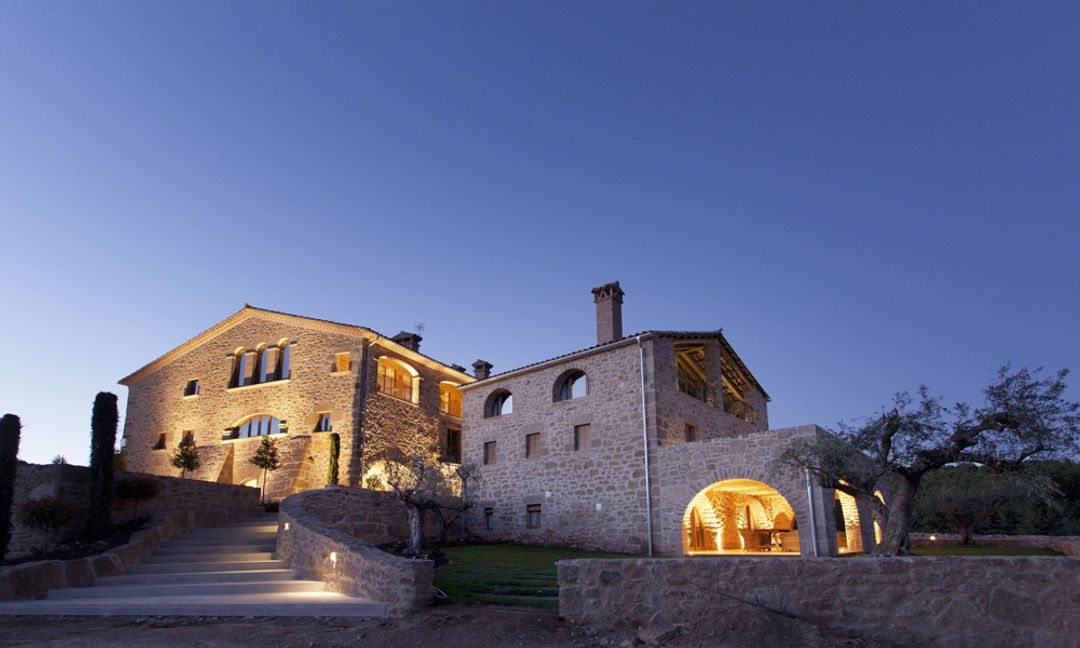
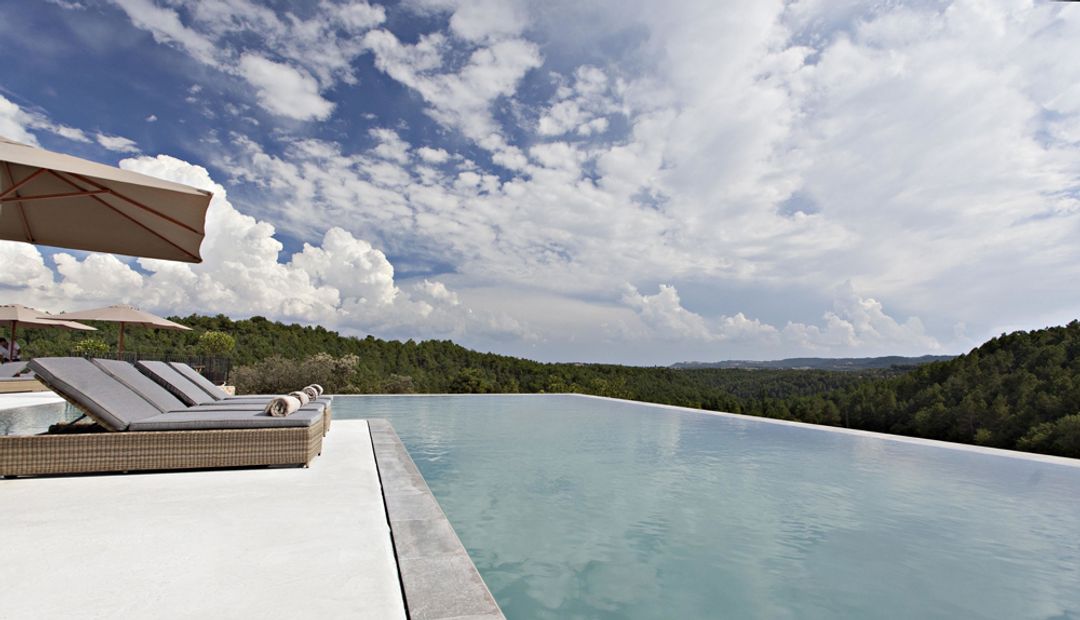
La Vella Farga, in the village of Lladurs, occupies an eleventh-century iron forge and mill complex that has been converted with unusual restraint. The intervention respects the structural character of the original building rather than polishing it into boutique anonymity: exposed stone, thick masonry walls, the particular darkness of a building that was designed to work rather than to be admired. The property sits within a working agricultural estate, which means the grounds extend into the landscape rather than being manicured into a postcard version of rural Catalonia. There is a pool, but the context here is decidedly that of the Catalan interior at its most unperformed — the mountains of the Serra de Busa visible on the horizon, the village itself barely a hamlet.
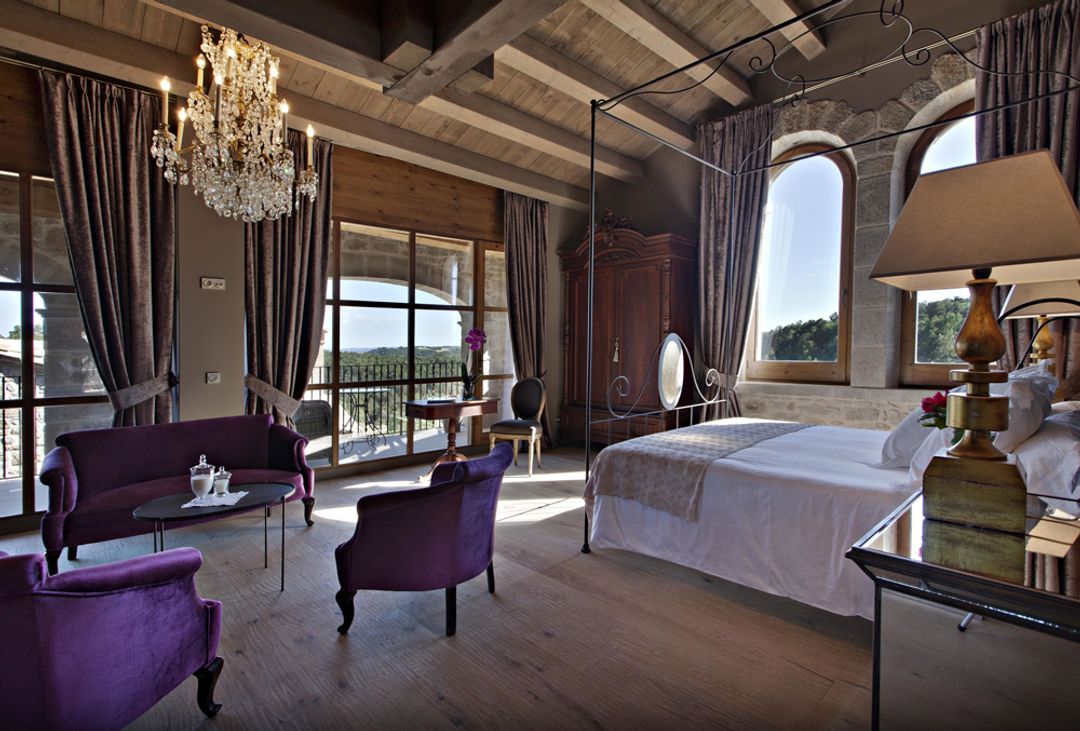
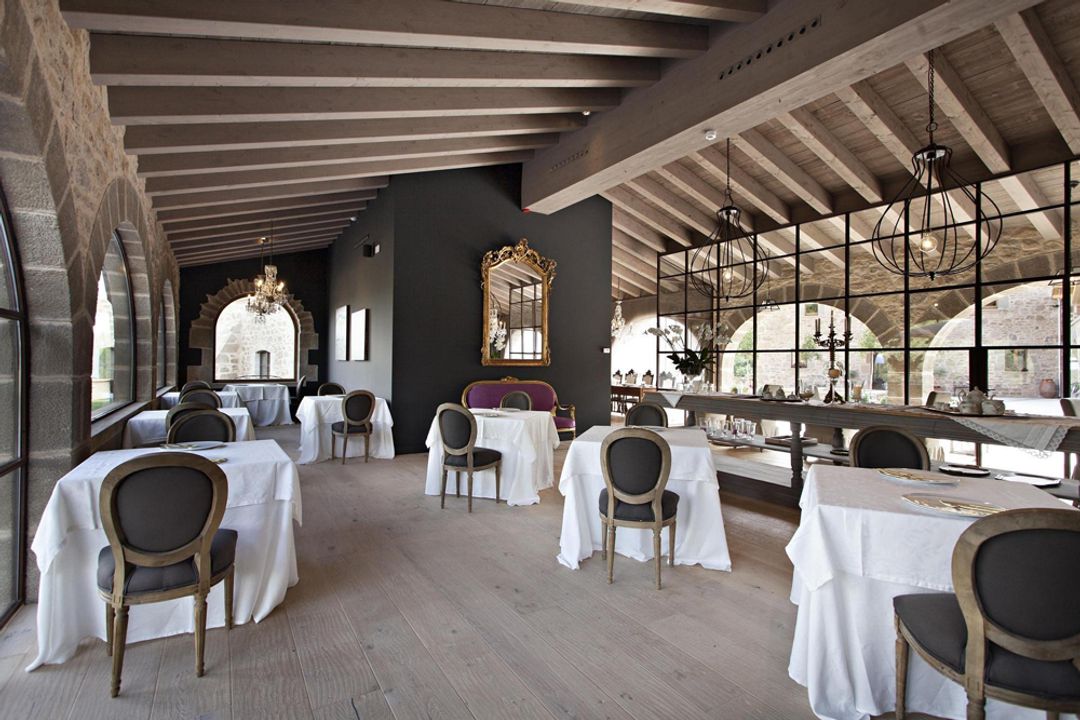
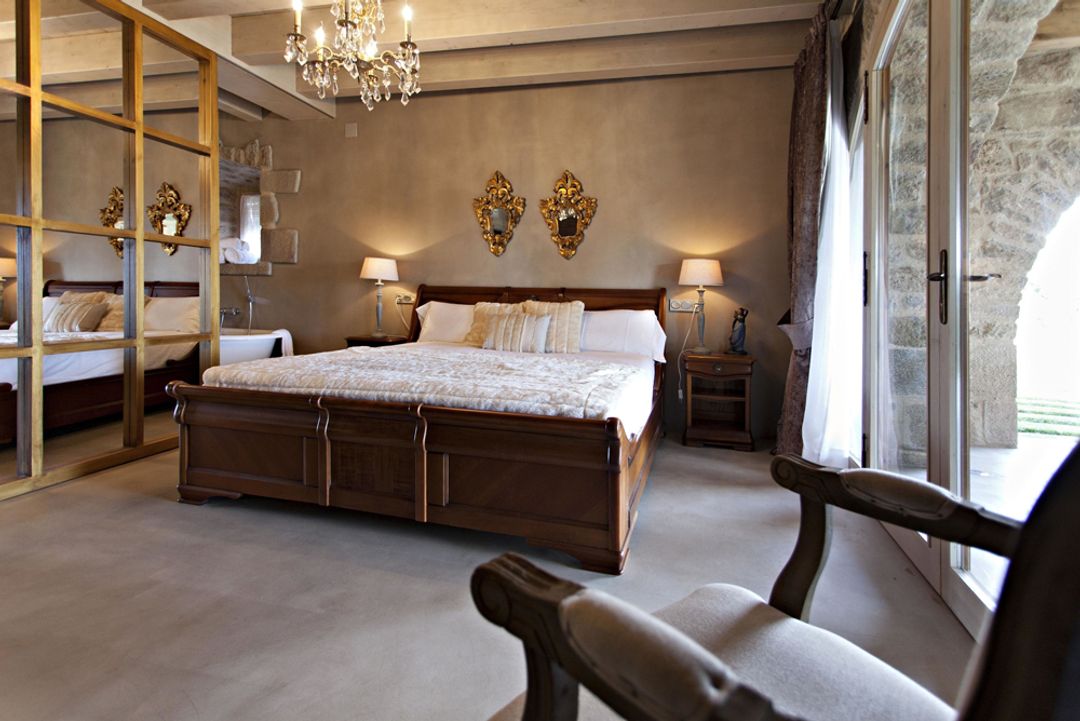
For anyone willing to leave the coast and spend a night in the Catalan interior proper, La Vella Farga offers something genuinely uncommon: a building with a legible past that hasn't been translated into comfort at the expense of character. The price point, around $309 per night, positions it at the higher end for this kind of rural property, but the exchange is a place of real architectural weight. Catalonia has no shortage of converted masias and rural hotels, many of them competent and pleasant and more or less interchangeable. What makes La Vella Farga different is specificity — a forge is not a farmhouse, and the building knows it. The overhead volumes, the industrial memory embedded in the stonework, the way the property sits on the land rather than being arranged on it, all of this gives the experience a seriousness that the average agriturismo cannot manufacture.