Best hotels in Matarraña, Spain | Visually Compare Top Stays Side-by-Side
Welcome to PressBeyond - a curated visual guide to design-driven hotels and the fastest way to compare them.
An Overview of the Boutique & Luxury Hotel Landscape in Matarraña, Spain
The Matarraña is one of those corners of inland Spain that rewards the traveler who arrived not knowing quite what to expect. Straddling the southeastern edge of Aragon, where the Ebro tributaries cut through limestone ridges thick with almond and olive groves, the comarca reads as a series of medieval hill villages that time and depopulation have left almost intact. The stone here has a particular quality: pale, honey-colored, and warm even in winter light, it gives the villages of Valderrobres, Beceite, Cretas, and Monroyo an architectural coherence that no single planner ever imposed. The streets are narrow and steep, the buildings dense, the churches Romanesque or late Gothic and almost always larger than the settlements around them seem to warrant. There are no major cities pulling focus. The point of the Matarraña is the land itself, and everything a visitor comes to do, whether walking the river gorges near Beceite, eating wild mushrooms sourced from the sierra, or simply sitting still somewhere very quiet, flows from paying attention to that fact.
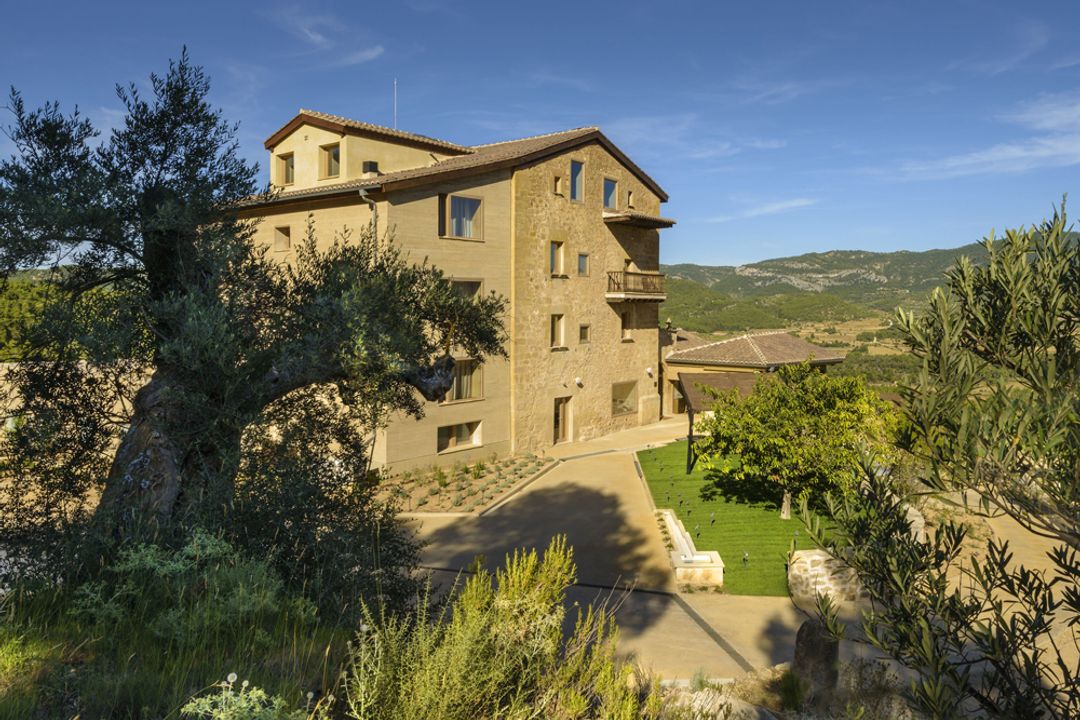
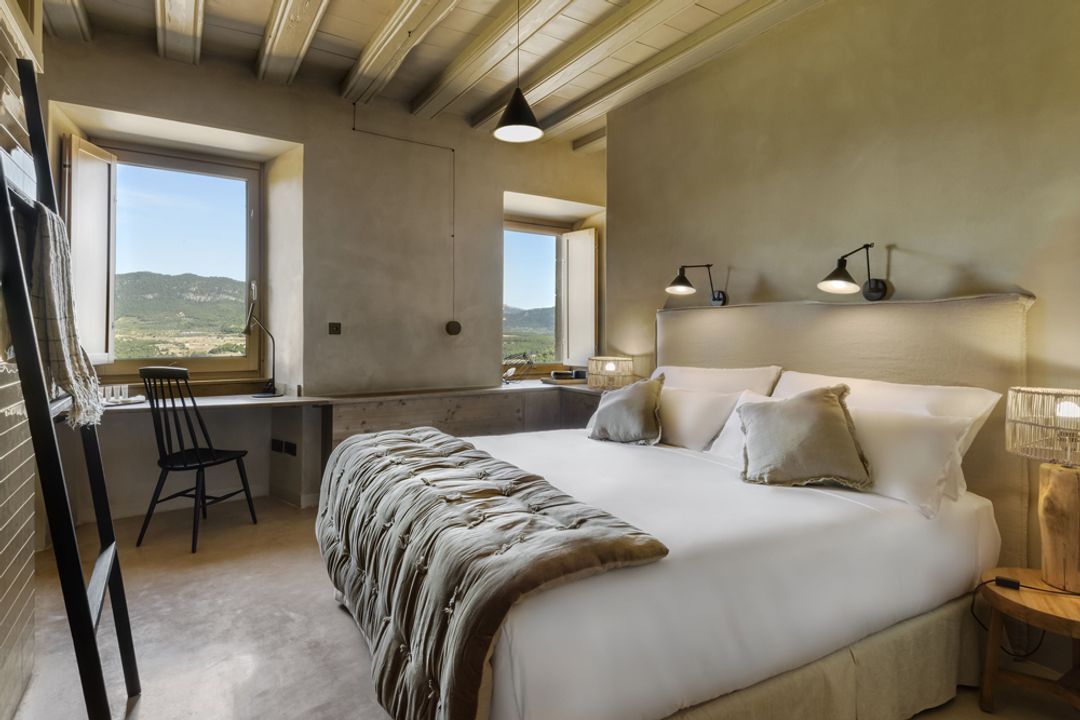
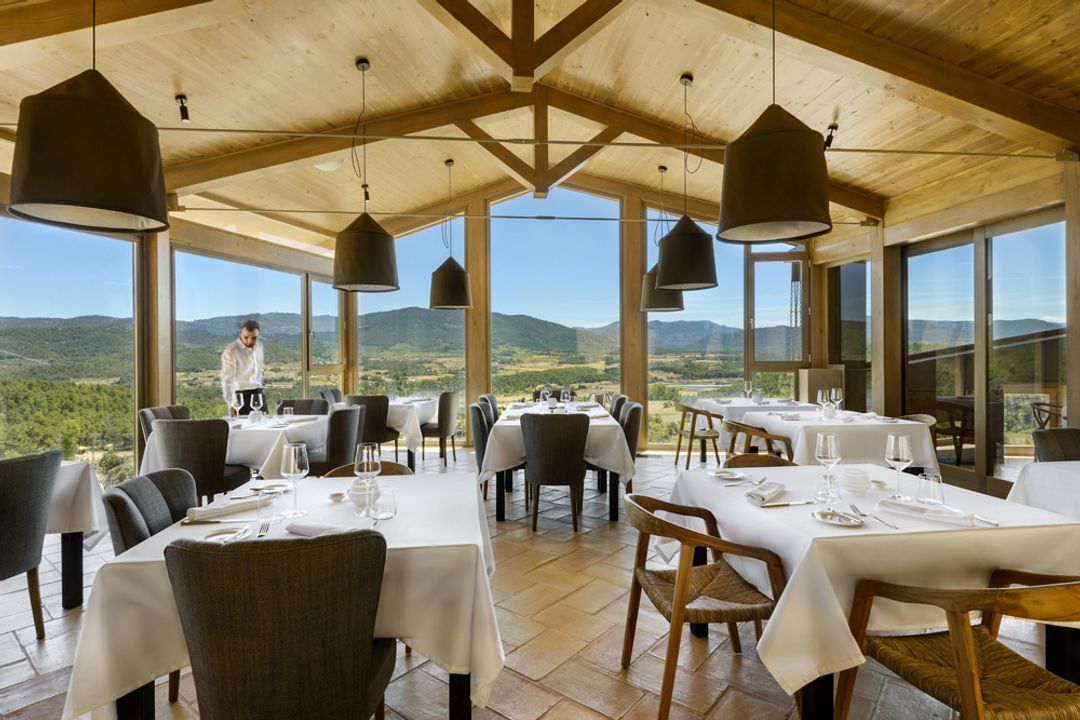
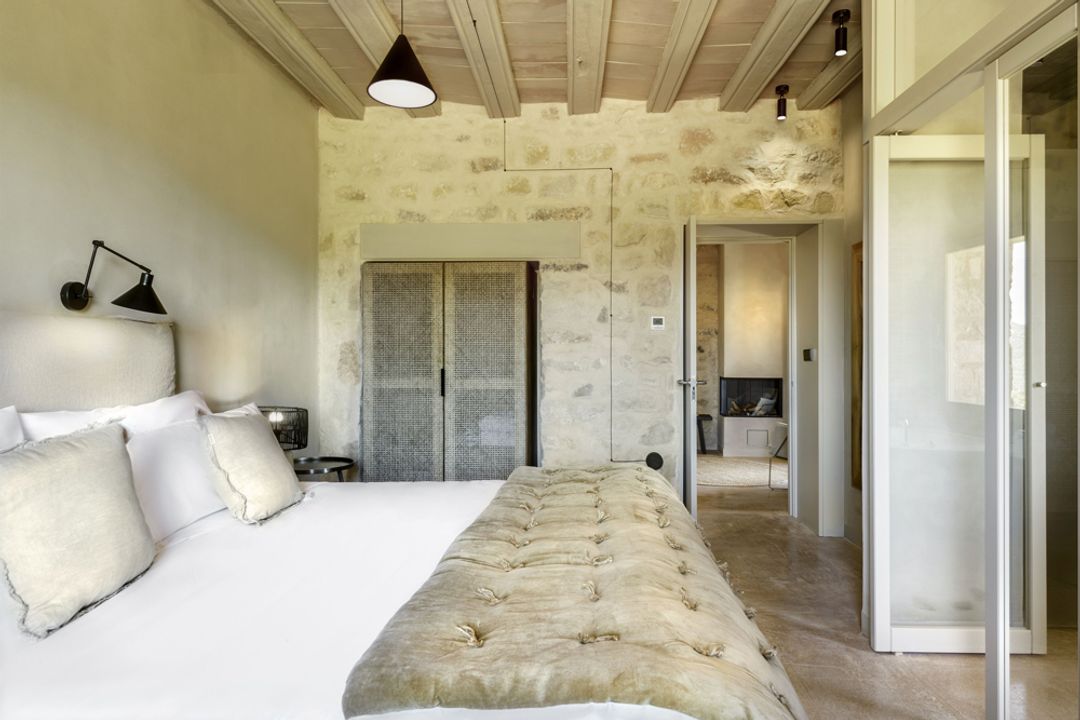
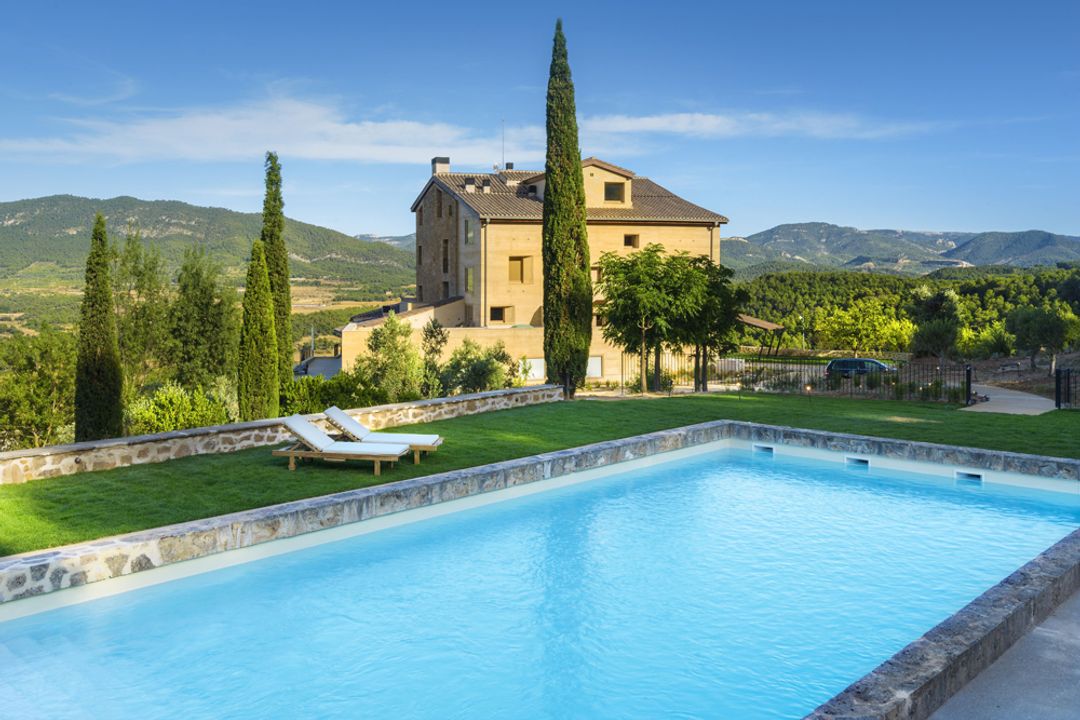
Torre del Marqués, in Monroyo, is the one property on this platform for the region, and it justifies its inclusion with a combination of historical specificity and genuine restraint. The hotel occupies a medieval tower house of considerable age, set within a walled estate that includes vineyards producing wine under the Terra Alta and Matarraña designations. The architecture has been handled carefully: the original masonry, thick-walled and small-windowed as fortified rural building required, has been preserved as the dominant material register throughout, with the interventions in furnishing and finish kept subordinate to what was already there. The result is a property that feels embedded in the landscape rather than placed upon it.
At 312 dollars a night it positions itself as a serious splurge for a comarca where budget accommodation is the norm, but the price buys something that is not simply comfort. It buys proximity to the rhythms of a working agricultural estate, stillness of a kind that is genuinely difficult to find in European travel right now, and a building that has absorbed several centuries of occupation before you arrived. Travelers who want their lodging to carry some historical weight, rather than simply reference it decoratively, will find that Torre del Marqués makes a case through material fact alone.