Best hotels in Oakland, California | Visually Compare Top Stays Side-by-Side
Welcome to PressBeyond - a curated visual guide to design-driven hotels and the fastest way to compare them.
An Overview of the Boutique & Luxury Hotel Landscape in Oakland, California
Oakland is a city that rewards close attention. Its architectural character is layered in ways that surprise even frequent visitors: Craftsman bungalows climbing the foothills, Art Deco commercial blocks along Broadway that would hold their own in any American downtown, and a waterfront industrial district that has been slowly, unevenly, absorbing the creative pressures of a Bay Area priced beyond most people's reach. The city sits in the shadow of San Francisco's mythology but has its own material coherence, rooted in the early twentieth century prosperity that funded its civic buildings, its parks, and the residential hillside neighborhoods where the Berkeley and Oakland borders blur into a single landscape of eucalyptus, canyon views, and shingled houses.
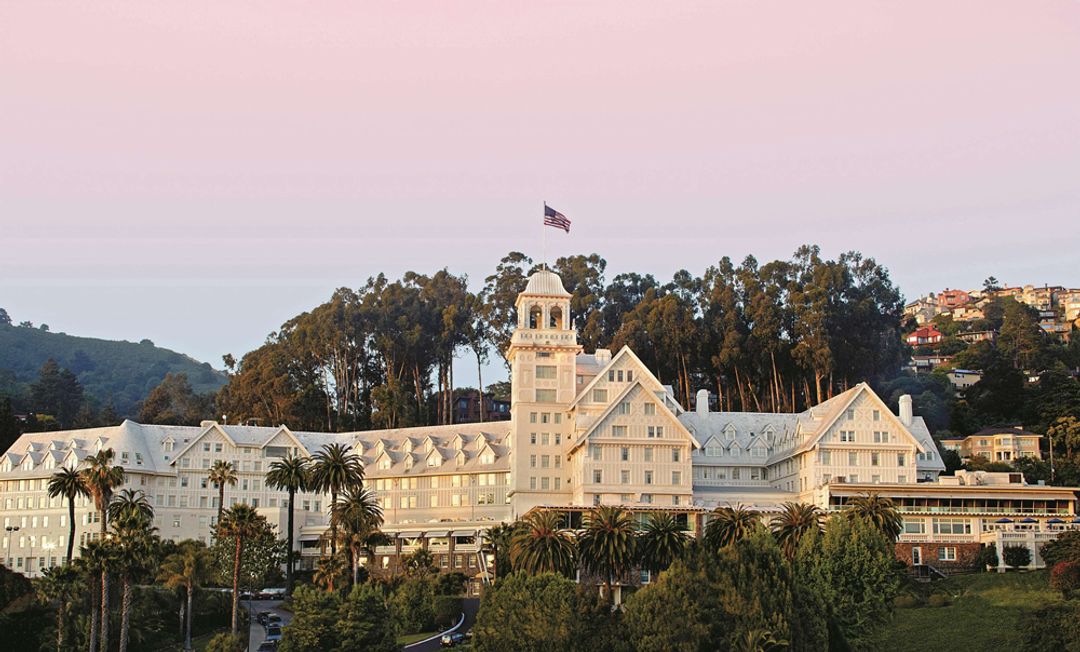
That border territory is precisely where the Claremont Resort and Club sits. The property is a Berkeley address technically, though it has always functioned as the presiding landmark of the Oakland Hills, its white-painted bulk visible from much of the East Bay flatlands below. The building dates to 1915, a Mission Revival confection that was designed with the ambitions of a resort hotel serving a still-nascent Bay Area leisure class, and it has accumulated additions, renovations, and reinventions across more than a century without entirely losing its period character. The setting does the heaviest work: the hotel is positioned against the hills with tennis courts, a spa, and pools arranged across sloping grounds, and the views west toward San Francisco Bay are as geographically clarifying as anything the region offers. Staying here means trading the density of either San Francisco or downtown Oakland for something that feels closer to a country house hotel, insulated by topography and scale.
For the traveler who wants proximity to Oakland's actual texture, the Claremont is a base rather than an immersion. The BART station nearby makes the journey into downtown Oakland straightforward, and the city's more interesting precincts, the Temescal's converted storefronts, the Grand Lake neighborhood around the Fox and Grand theaters, the Jack London Square waterfront with its complicated industrial history, are all accessible within twenty minutes. What the Claremont offers is perspective, literally and figuratively: a vantage point on a city that is still working out what it wants to be, and a place to return to when the working out gets loud.