Best hotels in Ojai Valley, California | Visually Compare Top Stays Side-by-Side
Welcome to PressBeyond - a curated visual guide to design-driven hotels and the fastest way to compare them.
An Overview of the Boutique & Luxury Hotel Landscape in Ojai Valley, California
Ojai sits in a narrow east-west valley about ninety miles north of Los Angeles, sheltered by the Topatopa Mountains and oriented so that the afternoon light falls at an angle that painters and photographers have been chasing for over a century. The town's pink moment, as locals call the alpenglow that settles on the mountains at dusk, is not a promotional invention but a genuine atmospheric phenomenon produced by the valley's unusual alignment. That quality of light, combined with Ojai's Spanish Colonial Revival streetscape, much of it rebuilt after a 1917 fire under the direction of glass magnate Edward Drummond Libbey, gives the place a visual coherence rare in Southern California. The arcade-fronted shops along Ojai Avenue, the post office tower modeled on a Moorish campanile, the bowl-shaped topography that keeps the valley self-contained: all of it produces a sense of arrival that the surrounding region rarely delivers.
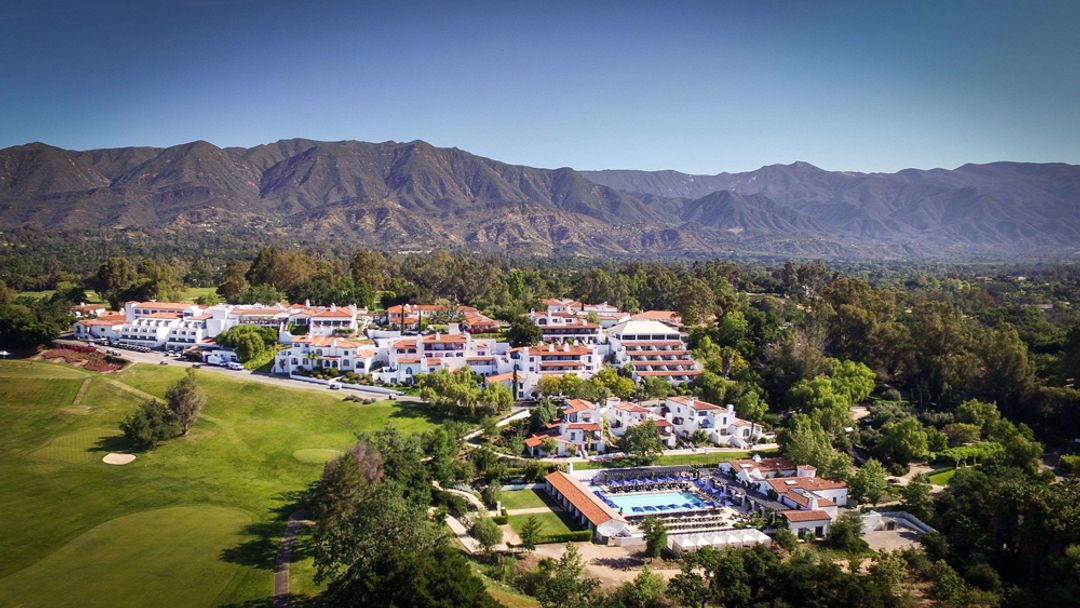
The Ojai Valley Inn sits on a hillock at the western end of town and has occupied that ground since 1923, when Wallace Neff, then still establishing the vocabulary of California ranch architecture, designed the original clubhouse around a golf course carved into the oak-studded terrain. Neff's Spanish Colonial idiom was never decorative pastiche here; the thick-walled adobe-style construction, the clay tile roofs, and the deep overhanging eaves were practical responses to a climate that alternates between fierce summer heat and cool, marine-influenced evenings. The property has expanded considerably since then and now covers over 200 acres, with a spa facility that draws considerably from the valley's citrus-farming and agricultural heritage in its treatments and materials. The design across the compound reads as accumulated rather than imposed, which is the right approach for a site with this much history attached to it.
For anyone whose instinct is to notice how a building earns its place in a landscape, rather than sits on top of it, the Inn presents a case worth studying. The grounds include working gardens, a working farm, artist studios, and an equestrian center, all of which reinforce the sense that this is a working estate that happens to accommodate guests, rather than a resort that has borrowed agricultural aesthetics as decoration. Ojai itself rewards slow movement: the town is small enough to walk, the surrounding trails accessible without a guide, and the valley quiet enough that the absence of ambient urban noise registers as a presence of its own.