Where

PressBeyond Logo

Best hotels in Cam Ranh, Vietnam | A Curated Visual Guide to Top Stays

Welcome to PressBeyond, the ultimate curated visual guide for design-driven hotels! My name is Will Miller and these are my recommendations for the best boutique and luxury hotels in Cam Ranh, Vietnam.

I am the founder of PressBeyond and I am an ultra-meticulous hotel curator who loves clean visuals. I have individually analyzed and tiered each hotel included in this guide based on a variety of criteria (architecture & design, location, brand & brand affiliation, existing reviews, and my own personal experiences), and importantly, I have hand-selected the leading imagery for each hotel to provide you with easily-digestible, yet detailed and complete, like-for-like, high-level visual profiles. I felt this summarization step was a critical missing piece across existing guides, blogs, and booking platforms. My aim is to make it easier for people to identify hotel environments that resonate with them, along with enabling them to visualize the types of social experiences that those environments help foster. My brain doesn't work when exposed to cluttered content, so my goal was to create the opposite.

Underneath this, we are also a full booking engine offering 5% Venmo cash back along with other exclusive perks. For all of you design-obsessed hotel enthusiasts out there, I hope this guide helps get you to where you see yourself!

An Overview of the Boutique & Luxury Hotel Landscape in Cam Ranh, Vietnam

The South China Sea coast between Cam Ranh and Ninh Thuận province is one of the few stretches of Southeast Asian coastline where the landscape itself has dictated the terms of hospitality rather than the other way around. Rocky granite outcroppings, near-inaccessible bays, and a semi-arid hinterland that blurs into scrub and dune — this is not the lush tropics of Phu Quoc or Ha Long. What's here instead is something rawer, and the two properties that have chosen to build in this territory have done so with a seriousness of intent that matches the place. Six Senses Ninh Van Bay occupies a bay accessible only by boat from Ninh Hoa, north of Cam Ranh, and that logistical friction is essentially the design. The resort's villas climb a forested hillside above the water, built from natural materials — stone, timber, thatch — that read as deliberate roughness rather than rusticity performed for tourist comfort. Six Senses as a brand has long committed to an ecological design philosophy that sits somewhere between architecture and land management, and Ninh Van Bay is one of its more convincing executions. The arrival by speedboat, the absence of roads, the sense that the bay has simply been inhabited rather than developed — these are effects that take genuine restraint to achieve. Amanoi, positioned within the Núi Chúa National Park near Vinh Hy Bay to the south, works at a different register entirely. Designed by Jean-Michel Gathy of Denniston Architects — the firm responsible for several of Aman's most architecturally coherent properties — Amanoi sits on a hillside above a protected marine area with pavilion architecture that draws on Vietnamese temple geometry without quoting it literally. The stone and timber volumes are austere, almost monastic, and the material palette aligns so closely with the surrounding scrubland and grey-pink rock that the resort occasionally seems to dissolve into the topography. At over a thousand dollars a night, Amanoi is priced as much for its sense of absolute removal as for its finishes. Between these two properties, the case being made — quietly, without much fanfare — is that this coastline rewards a specific kind of traveler: one willing to be somewhere genuinely difficult to reach, and willing to let the landscape run the encounter.

Book with PB and get cash back
Six Senses Ninh Van Bay - Image 1
Six Senses Ninh Van Bay - Image 2
Six Senses Ninh Van Bay - Image 3
Six Senses Ninh Van Bay - Image 4
Six Senses Ninh Van Bay - Image 5

Six Senses Ninh Van Bay

Cam Ranh, Vietnam • Ninh Van Bay • OVER THE TOP

avg. $783 / night

Includes $41 / night in cash back

Cash back is redeemable via Virtual Visa, Venmo, or bank transfer starting 24-48 hours after check-out

IHG® One Rewards property

Six Senses Ninh Van Bay Design Editorial

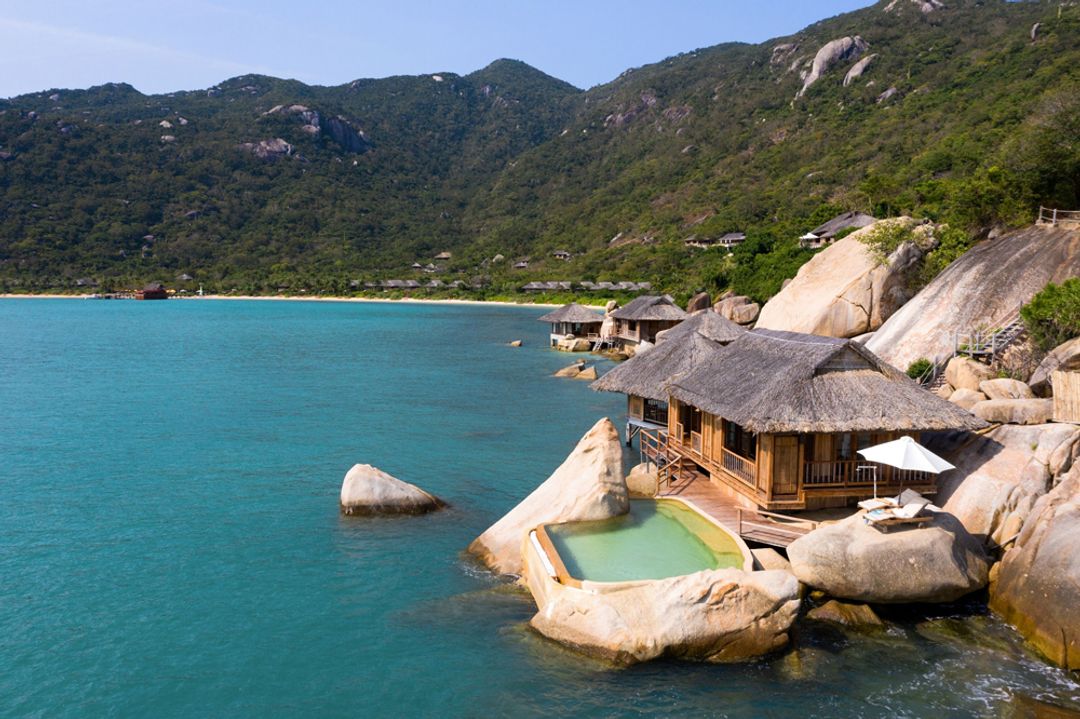
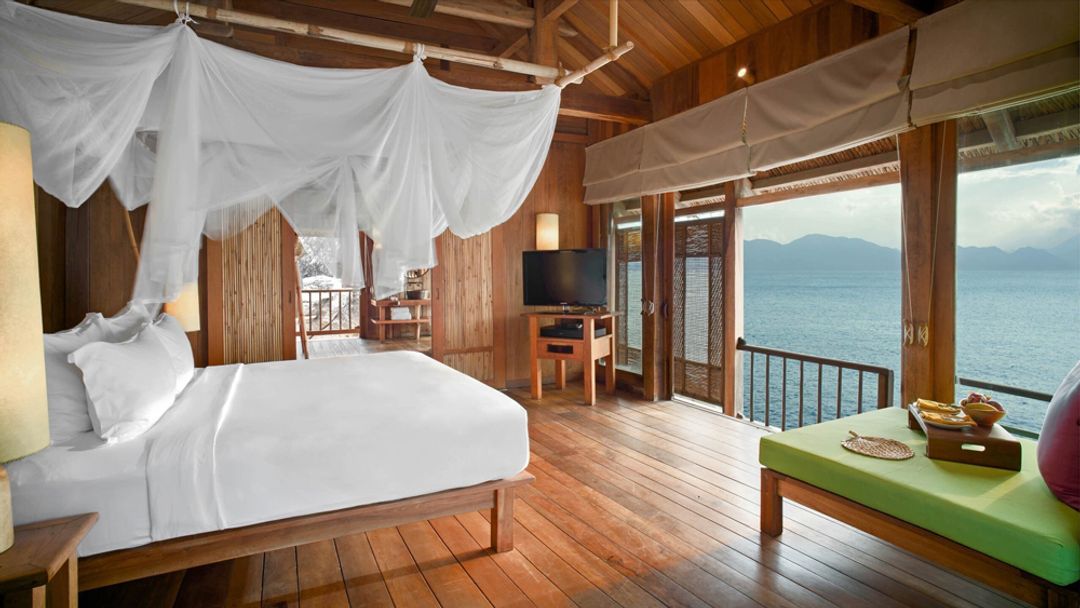
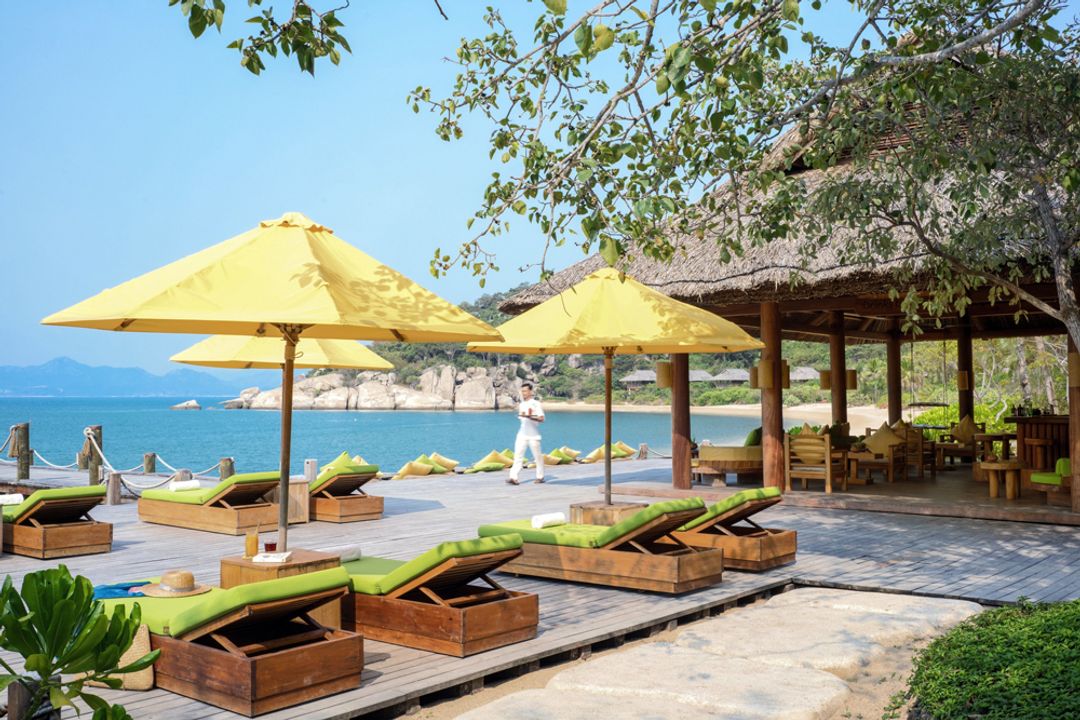
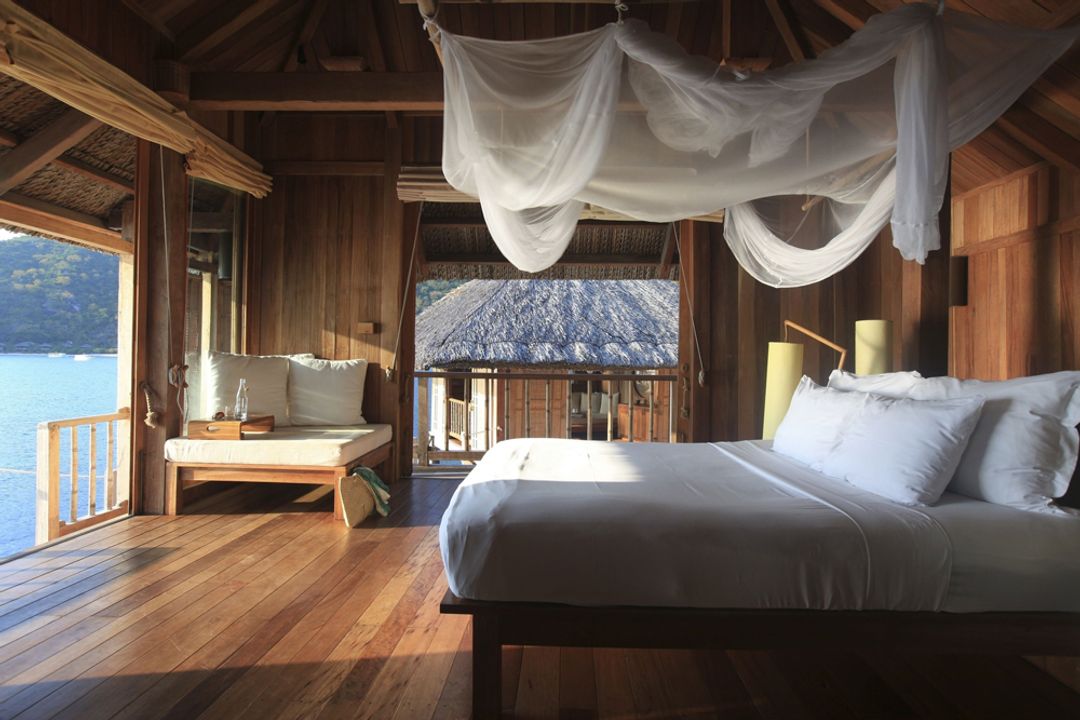
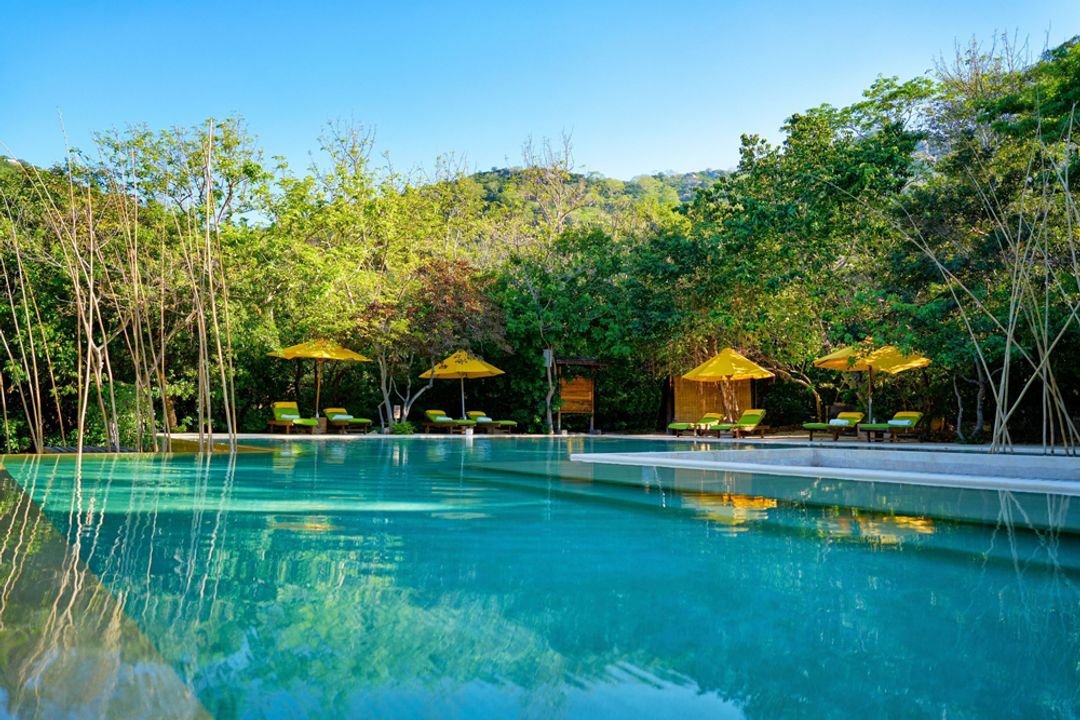
Wedged between the South China Sea and a granite-bouldered hillside accessible only by boat, the site that Six Senses Ninh Van Bay has inhabited since 2006 presented its designers with a constraint that became the resort's defining characteristic: nothing could be built without working around the landscape rather than against it. The result is a collection of 58 villas distributed across four terrain types — beachfront, hillside, water-edge, and the boulder villas whose plunge pools are carved directly into the rock faces visible from the bay — each structure raised on timber stilts and finished in thatch, reclaimed hardwood, and hand-split bamboo cladding that draws on vernacular Vietnamese fishing village construction without reducing it to pastiche. Inside, the atmosphere is closer to a well-loved boathouse than a managed resort experience. Wide-plank tropical hardwood floors run continuously from bedroom to open deck, canopied beds hang with sheer white mosquito nets suspended from bamboo ceiling frames, and the furniture — low teak daybeds with chartreuse cushions, woven rattan side tables — keeps the palette earthy and the visual weight close to the ground. The overwater spa and the main beach pavilion, visible in the images with their characteristic yellow parasols and teak sun loungers, share the same commitment to open-sided construction, allowing the forested hillside and the turquoise bay to function as the primary decorative gesture throughout the property.

Book with PB and get cash back
Amanoi - Image 1
Amanoi - Image 2
Amanoi - Image 3
Amanoi - Image 4
Amanoi - Image 5

Amanoi

Cam Ranh, Vietnam • Vinh Hy • OVER THE TOP

avg. $1,034 / night

Includes $54 / night in cash back

Cash back is redeemable via Virtual Visa, Venmo, or bank transfer starting 24-48 hours after check-out

Amanoi Design Editorial

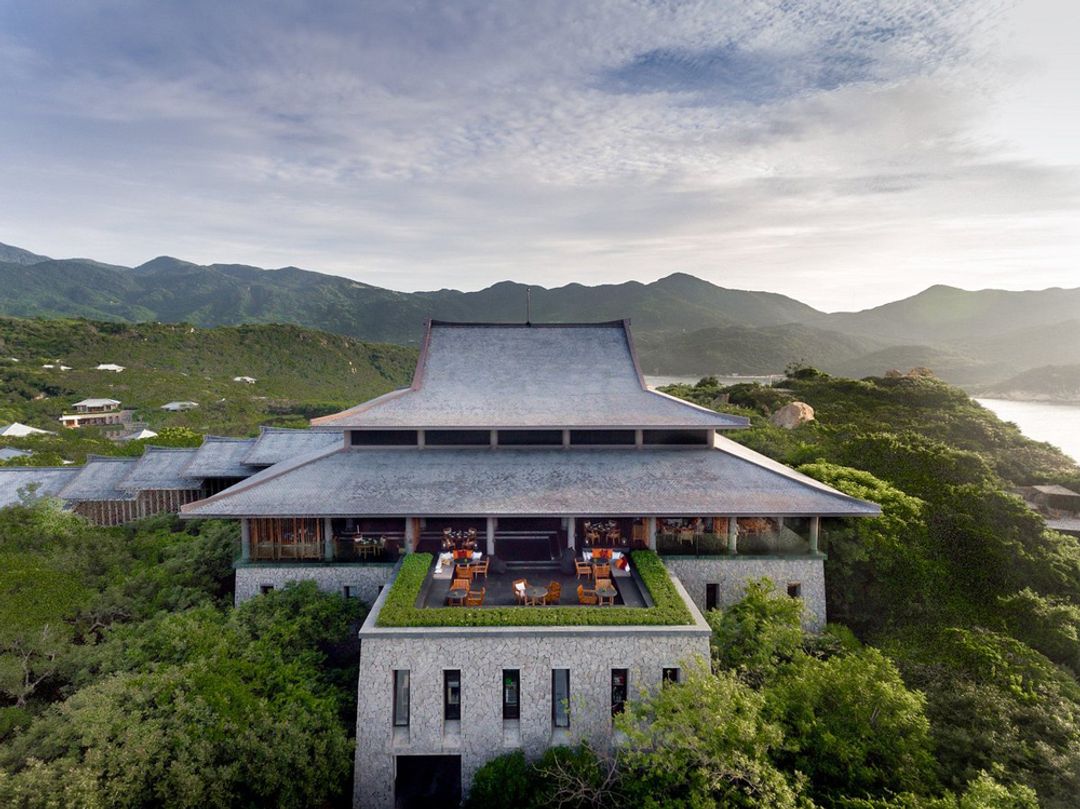
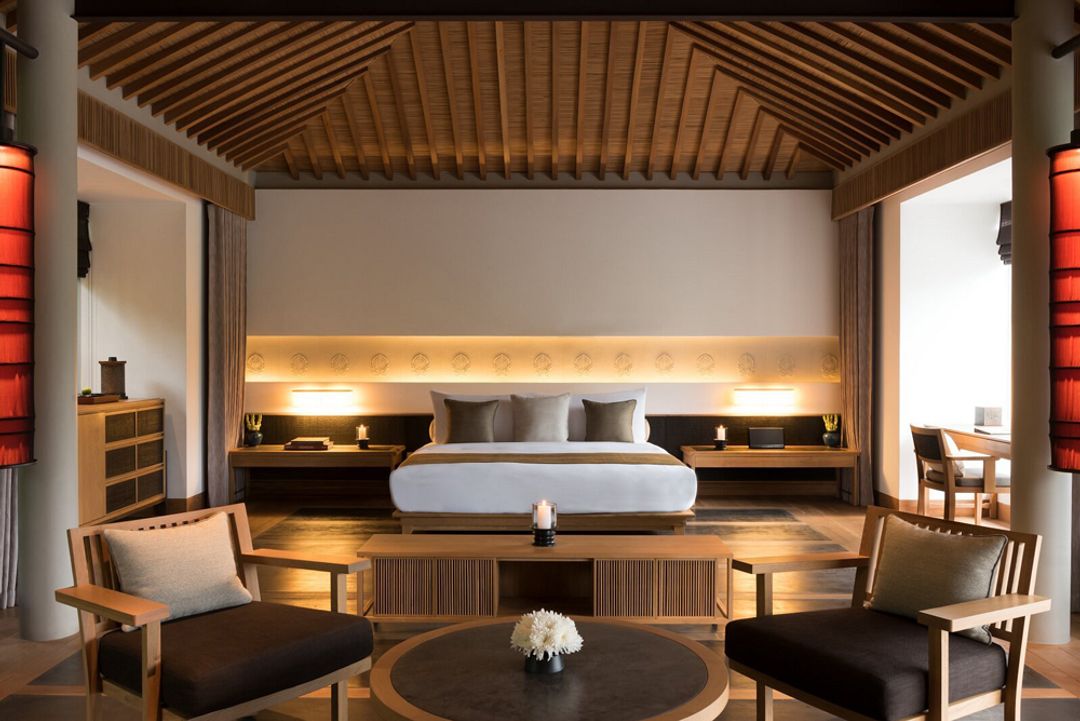
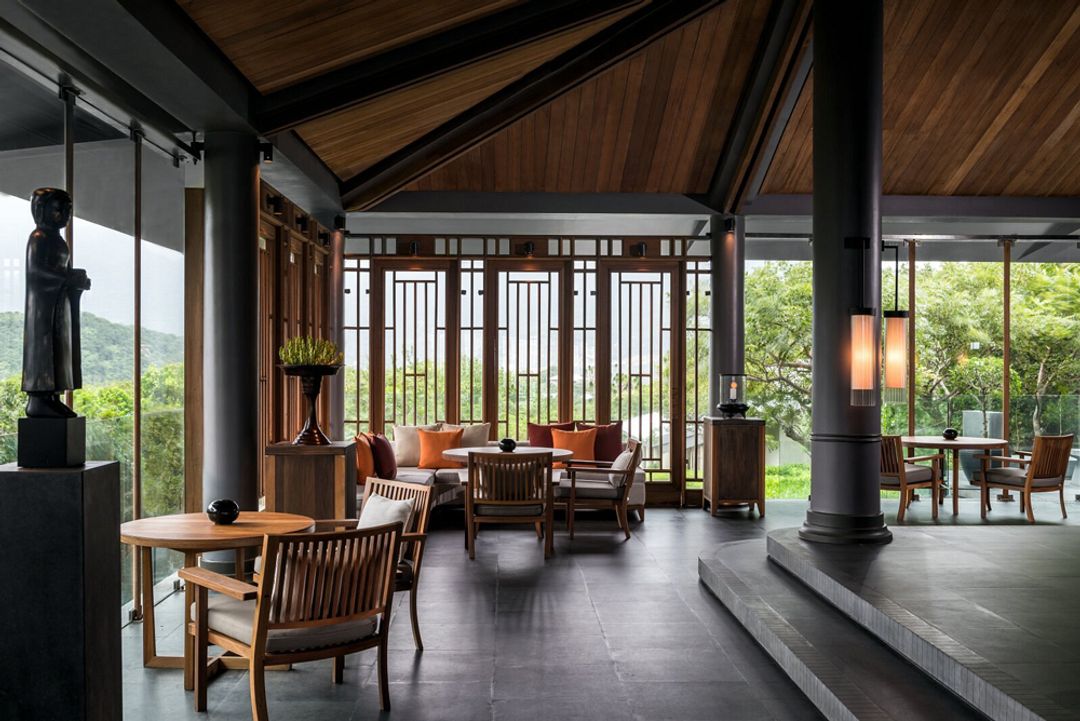
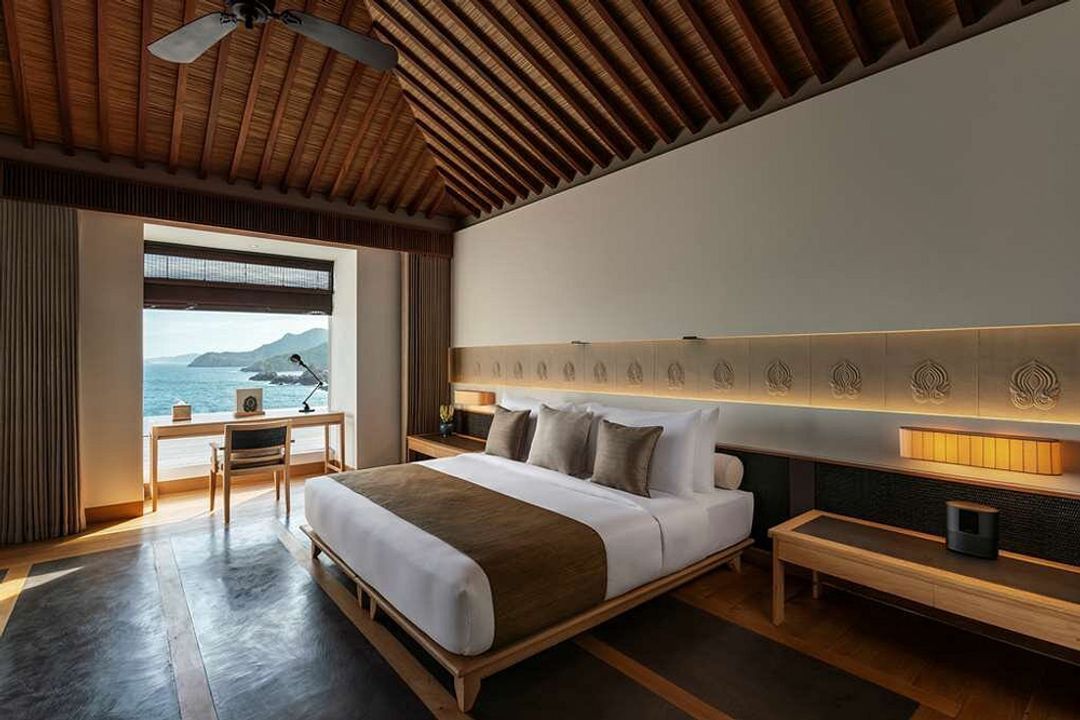
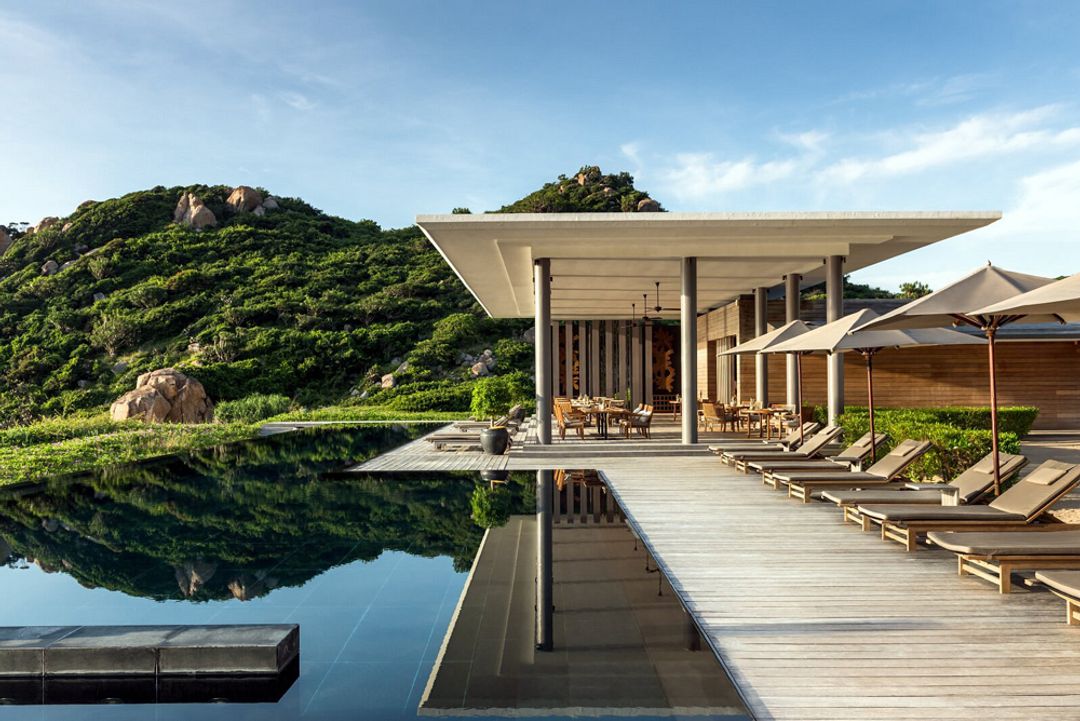
Pressed into the granite headlands of Núi Chúa National Park above Vietnam's South China Sea coast, where wind-scoured boulders and dry forest meet an almost Mediterranean clarity of light, Amanoi translates the Aman Group's founding logic — radical seclusion, architectural restraint, landscape as the dominant material — into its most topographically dramatic setting yet. Jean-Michel Gathy of Denniston Architects, who has shaped much of the Aman estate across Asia, gave the 36-villa property its signature pavilion language: deeply pitched slate roofs drawn from Vietnamese temple vernacular, rough-cut stone walls that appear to grow directly from the hillside, and open colonnaded structures that dissolve the boundary between interior and the jungle canopy pressing in on all sides. Inside, the interiors sustain the same discipline. Woven rattan ceilings slope above low-platform beds in bleached timber, the headboards carrying bas-relief motifs that reference Cham decorative tradition. Teak slatback chairs and circular side tables furnish the guest pavilions with a quietness that sits closer to a Japanese ryokan than to conventional resort hospitality. The public areas — open-sided loggias with dark slate floors, teak-framed screen walls, and bronze figurative sculpture placed like punctuation marks — carry the same unhurried register. At the beach club, a dark-bottomed infinity pool mirrors granite outcrops rising behind, a flat concrete canopy on slender columns framing the view in a gesture that owes as much to Mies as to Indochina.

Best hotels in Cam Ranh, Vietnam | A Curated Visual Guide to Top Stays