Best hotels in Agra, India | Visually Compare Top Stays Side-by-Side
Welcome to PressBeyond - a curated visual guide to design-driven hotels and the fastest way to compare them.
An Overview of the Boutique & Luxury Hotel Landscape in Agra, India
Agra is a city that exists, in the traveler's imagination, almost entirely as a single monument. The Taj Mahal does not merely dominate the skyline; it colonizes the vocabulary of every building that comes near it, and the two hotels on this platform have each staked out a different position in response to that pressure.
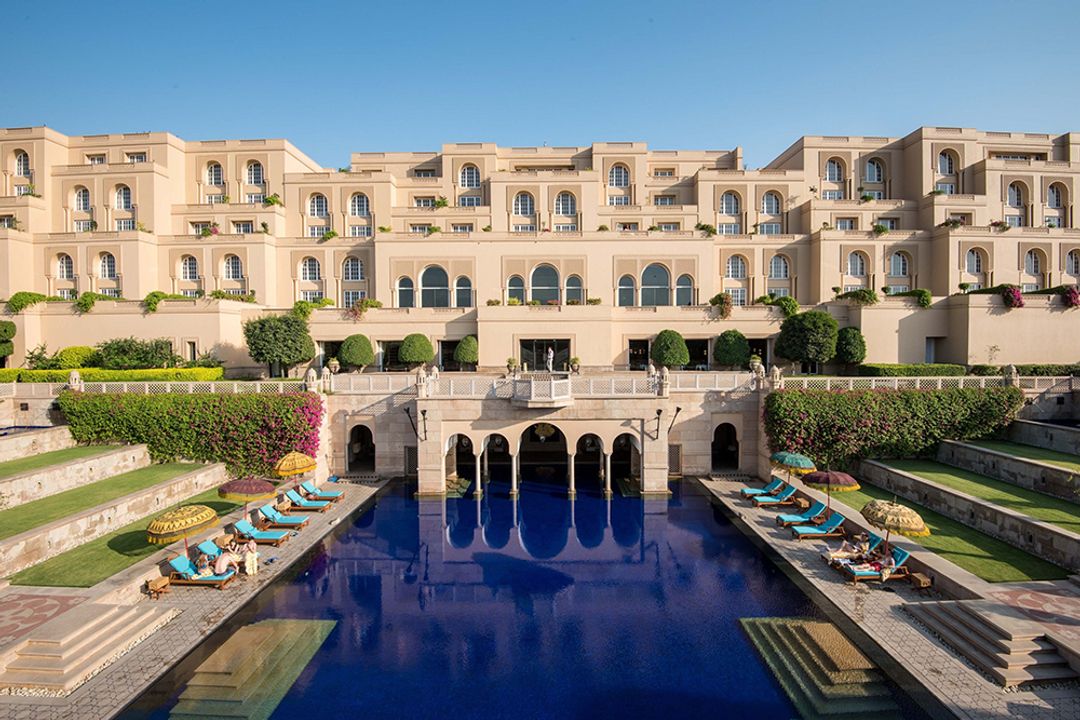
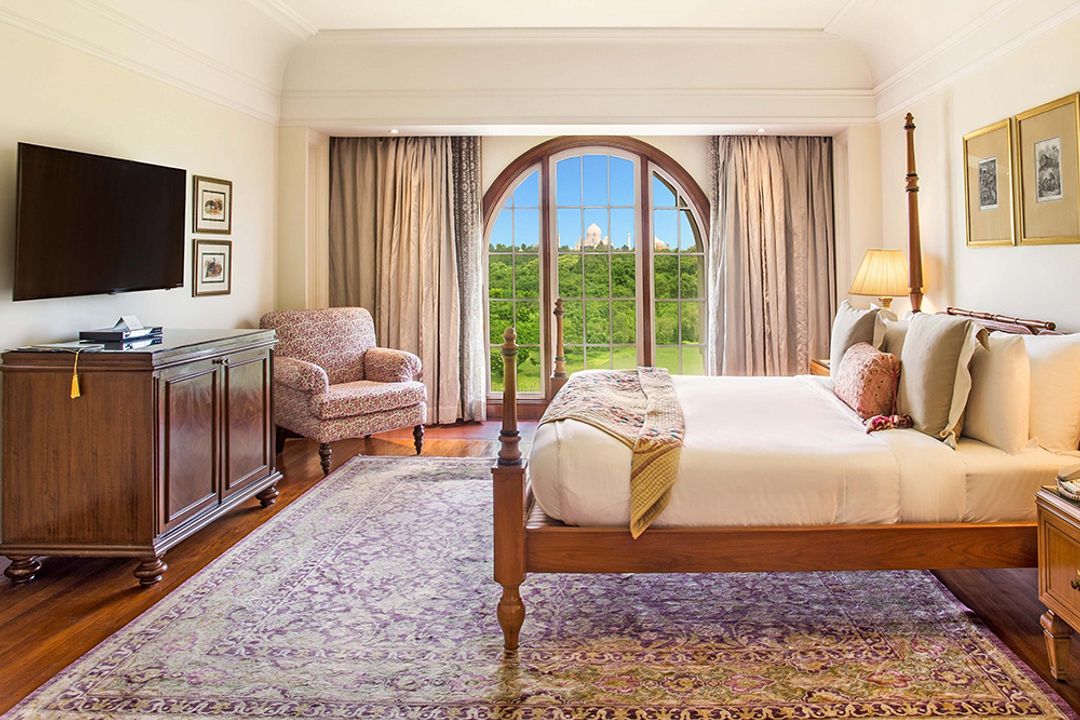
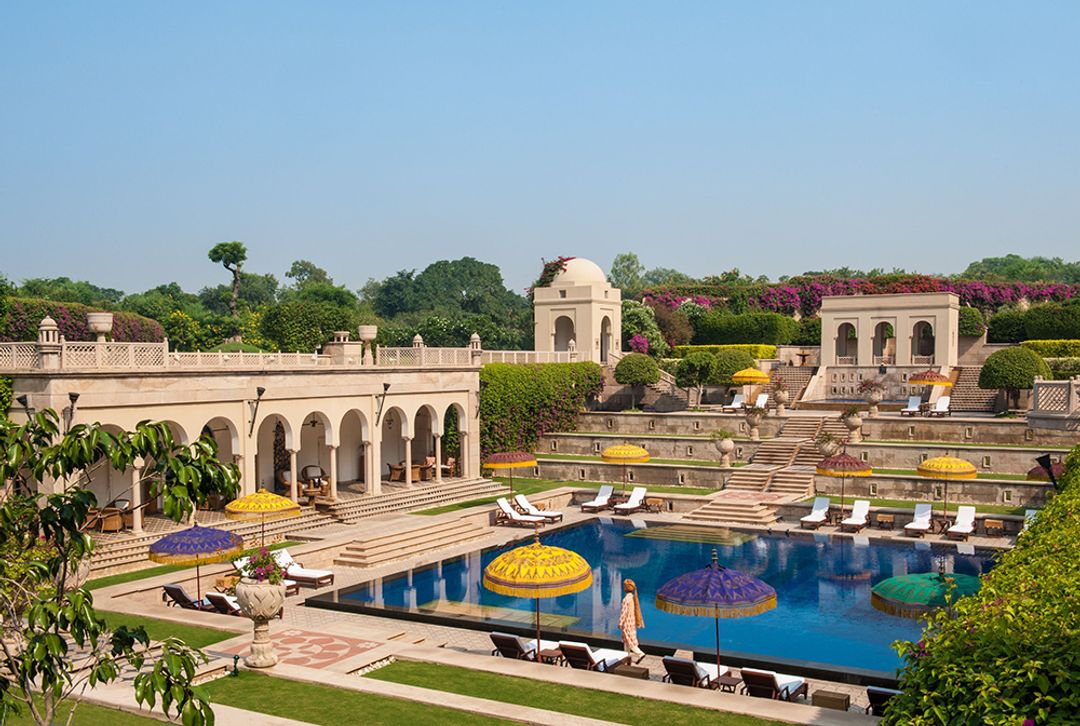
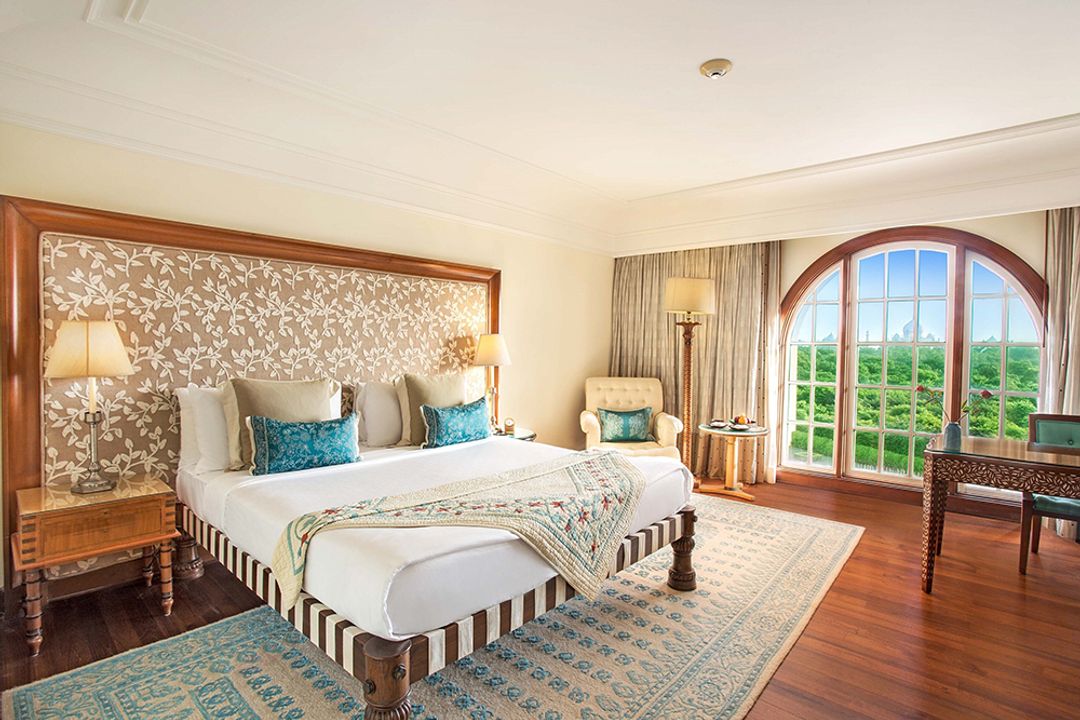
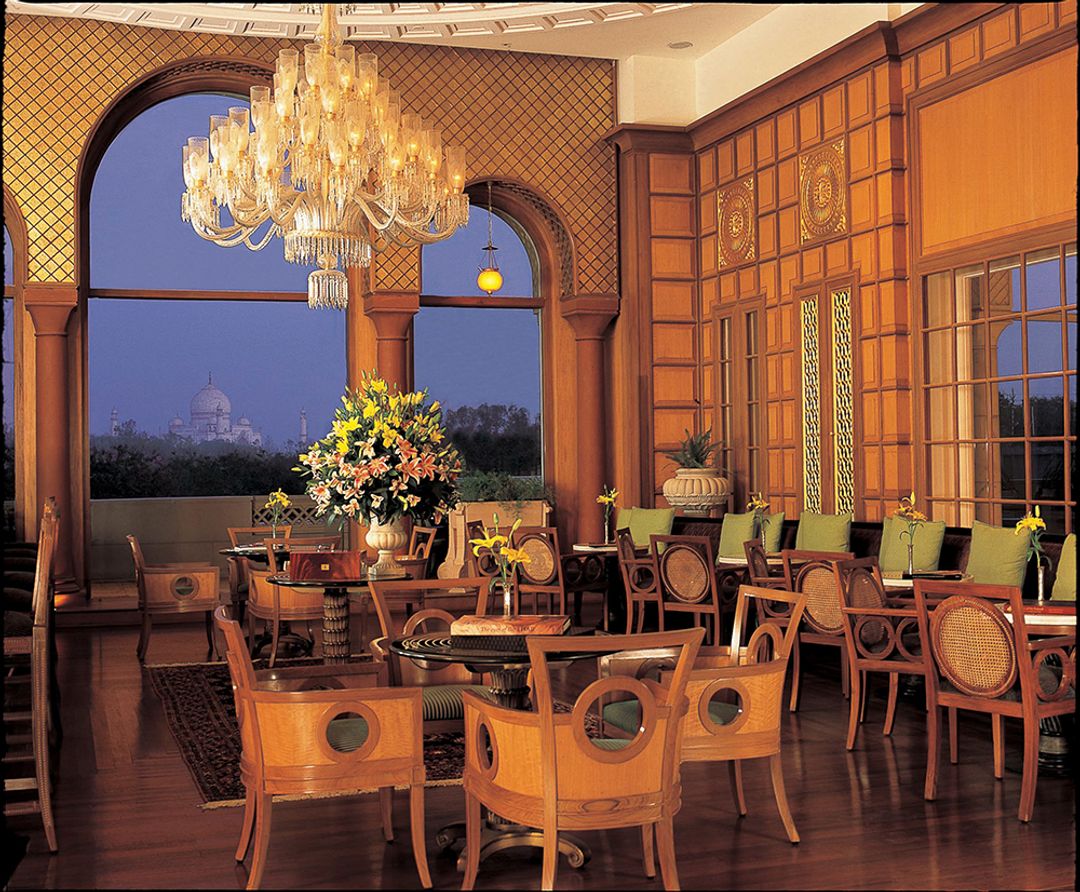
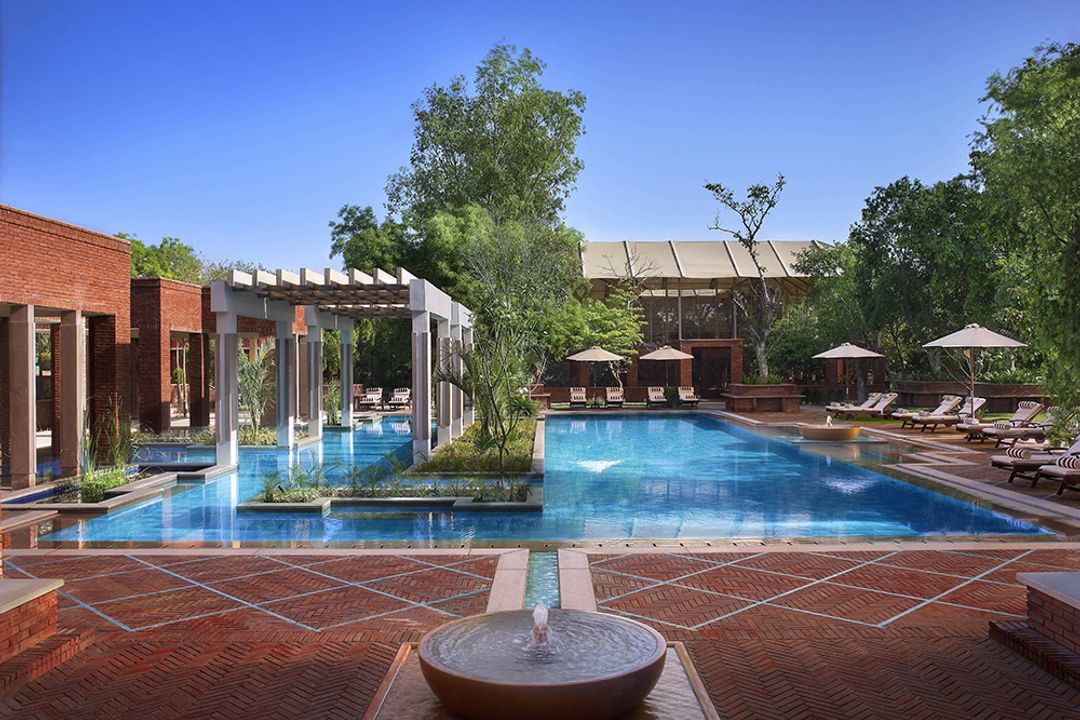
The Oberoi Amarvilas, positioned on the East Gate approach, makes the most direct possible wager: every room faces the Taj, and the architecture, conceived by Raj Rewal Associates and completed in 2001, deploys Mughal sandstone screens, water channels, and pavilions in a contemporary idiom that defers to its neighbor without mimicking it. The effect is deliberate and self-aware. Fountains run along the sight lines. The terraces are oriented so that the marble dome is never far from the peripheral vision of anyone seated or standing. Amarvilas does not compete with what it overlooks; it stages itself around the view, and the design is honest about that transaction. At around $400 a night, it is among the most expensive hotel experiences in India, and the reasoning is almost entirely about proximity and that particular piece of theater.
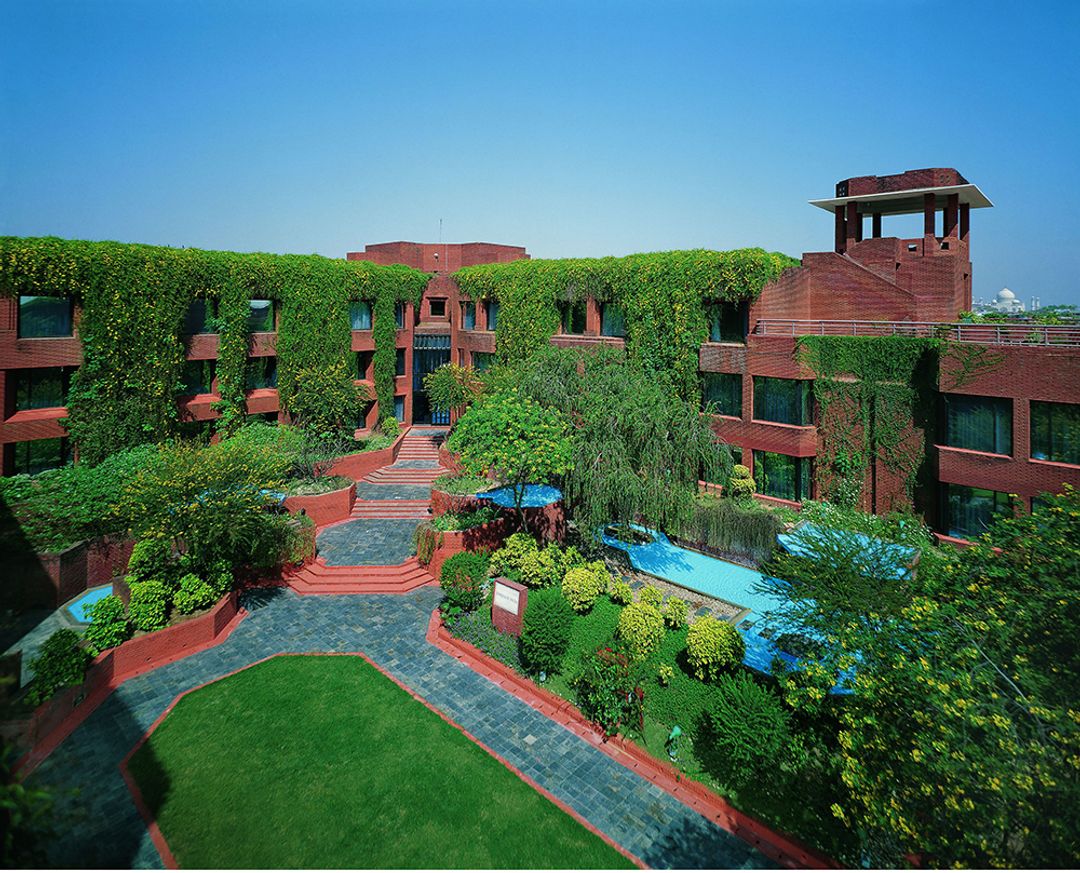
The ITC Mughal, set back in the Taj Ganj neighborhood, operates on a different footing entirely. Designed by Ramesh Khosla and completed in 1976, it is a genuine piece of late modernist Indian hospitality architecture, sprawling across landscaped Mughal garden terraces that reference the Char Bagh tradition of quadrilinear waterscapes. The scale is resort-like and the grounds cover considerable acreage. At roughly $90 a night, it occupies the optimize tier and offers something Amarvilas does not: immersion in a piece of architectural history that has its own ambitions. The Taj is visible from parts of the property, but the ITC Mughal was never conceived as a viewing platform. It was conceived as a place with its own spatial presence, its own planting, its own sense of ceremony arriving from a different, more civic era of Indian hotel-building. For the traveler who reads buildings as carefully as itineraries, the ITC Mughal is the more intellectually interesting choice. For anyone who has come to Agra specifically to sit within eyeline of the Taj at first light, Amarvilas remains the answer that justifies the premium.