Where

PressBeyond Logo

Best hotels in Piedmont | A Curated Visual Guide to Top Stays

Welcome to PressBeyond, the ultimate curated visual guide for design-driven hotels! My name is Will Miller and these are my recommendations for the best boutique and luxury hotels in Piedmont.

I am the founder of PressBeyond and I am an ultra-meticulous hotel curator who loves clean visuals. I have individually analyzed and tiered each hotel included in this guide based on a variety of criteria (architecture & design, location, brand & brand affiliation, existing reviews, and my own personal experiences), and importantly, I have hand-selected the leading imagery for each hotel to provide you with easily-digestible, yet detailed and complete, like-for-like, high-level visual profiles. I felt this summarization step was a critical missing piece across existing guides, blogs, and booking platforms. My aim is to make it easier for people to identify hotel environments that resonate with them, along with enabling them to visualize the types of social experiences that those environments help foster. My brain doesn't work when exposed to cluttered content, so my goal was to create the opposite.

Underneath this, we are also a full booking engine offering 5% Venmo cash back along with other exclusive perks. For all of you design-obsessed hotel enthusiasts out there, I hope this guide helps get you to where you see yourself!

An Overview of the Boutique & Luxury Hotel Landscape in Piedmont

The Langhe and Monferrato hills do not announce themselves. There are no dramatic alpine moments, no obvious monuments to organize a journey around — just a slow accumulation of vine rows, pale stone, and medieval towers that appear and disappear as the road bends. It is a landscape built for deliberate travel, and the three properties on this list understand that instinctively. Each occupies a converted historic structure, and each takes its design cues from agrarian architecture rather than from any imported idea of Italian grandeur. Relais San Maurizio, set in a former 17th-century convent above Santo Stefano Belbo in the Alta Langa, is perhaps the most composed of the three. The building's monastic bones — thick walls, vaulted ceilings, a cloister courtyard — have been preserved and furnished with a restraint that feels earned rather than calculated. The effect is cool and serious in the best sense: you feel the weight of the structure around you. Casa di Langa, positioned in the rolling vine country of the Langhe proper, takes a different approach. Designed with a contemporary agricultural aesthetic that draws on local materials — raw plaster, timber, natural stone — it sits closer to the new generation of estate architecture emerging in wine country, where the cantina and the guesthouse are conceived as a single project. The interiors read more deliberately modern without losing their grounding in place. Villa La Madonna, in Monastero Bormida to the northeast in the Monferrato, occupies a medieval monastery complex above a river bend. Of the three, it leans most fully into its historical fabric, with the monastery's communal spaces — chapels, loggias, garden terraces — forming the structural logic of the guest experience. What connects these properties is not aesthetic uniformity but a shared conviction that the building itself is the destination, not a backdrop to it. This is a corner of Italy where gastronomy and landscape have long outpaced architecture in the international imagination, but these three conversions suggest that the built environment here deserves equal attention. For a traveler arriving from Turin or Milan, they represent not simply places to sleep between wine appointments, but a genuine argument for slow, material travel in a region that rewards exactly that.

Book with PB and get cash back
Relais San Maurizio - Image 1
Relais San Maurizio - Image 2
Relais San Maurizio - Image 3
Relais San Maurizio - Image 4
Relais San Maurizio - Image 5

Relais San Maurizio

Piedmont • Santo Stefano Belbo • SPLURGE

avg. $486 / night

Includes $26 / night in cash back

Cash back is redeemable via Virtual Visa, Venmo, or bank transfer starting 24-48 hours after check-out

LHW Leaders Club property

Relais San Maurizio Design Editorial

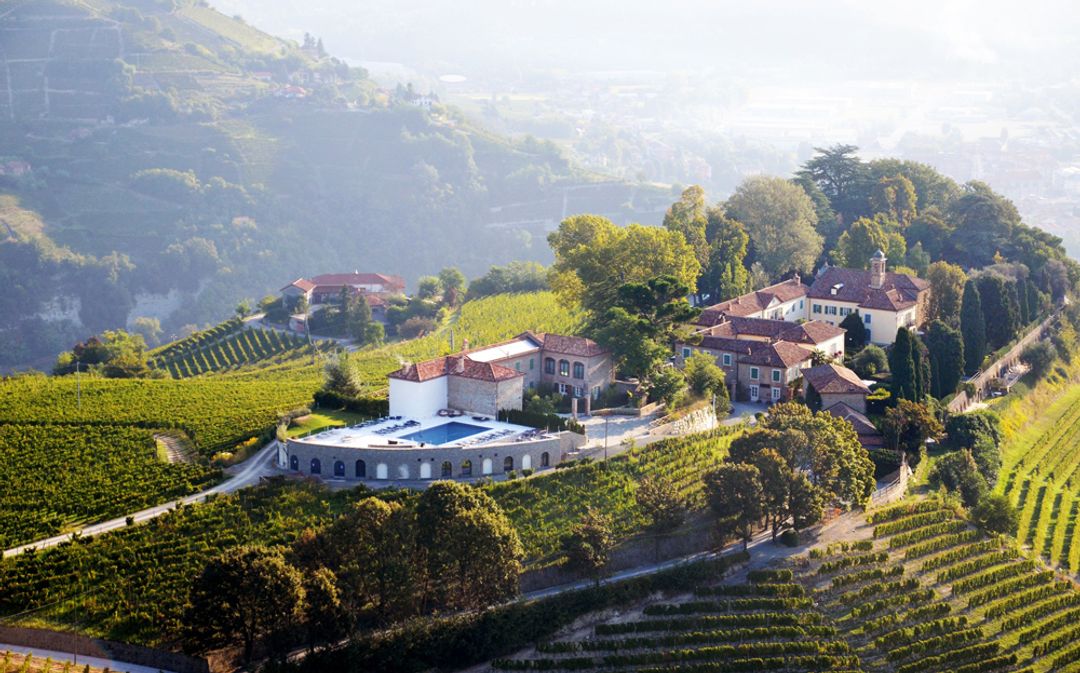
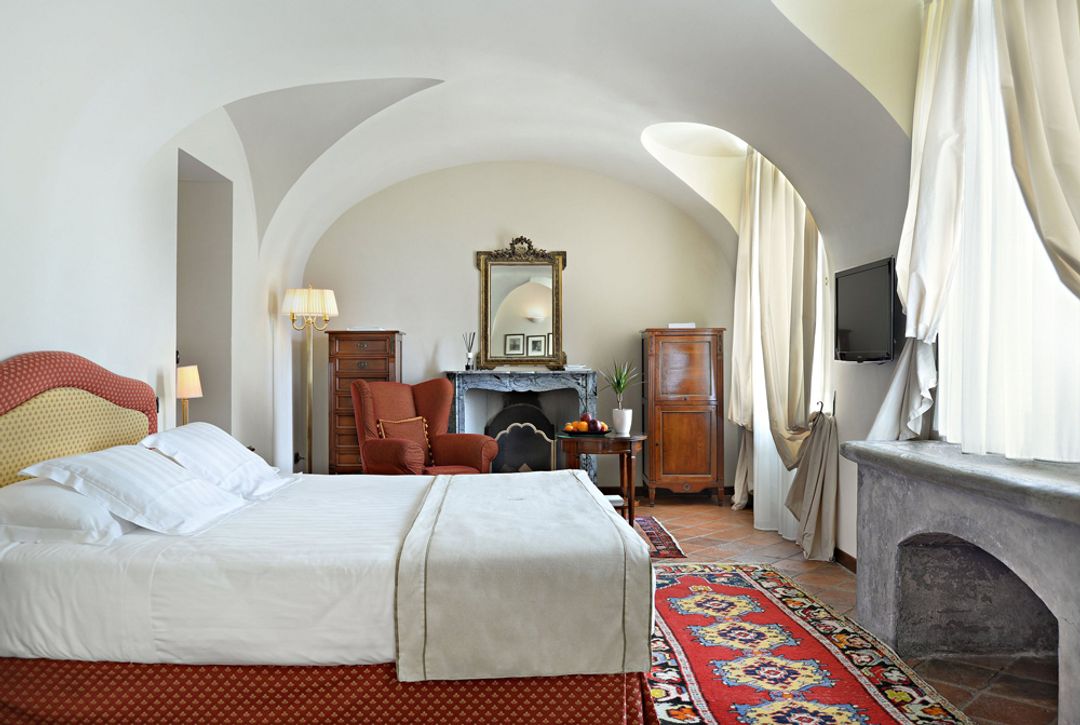
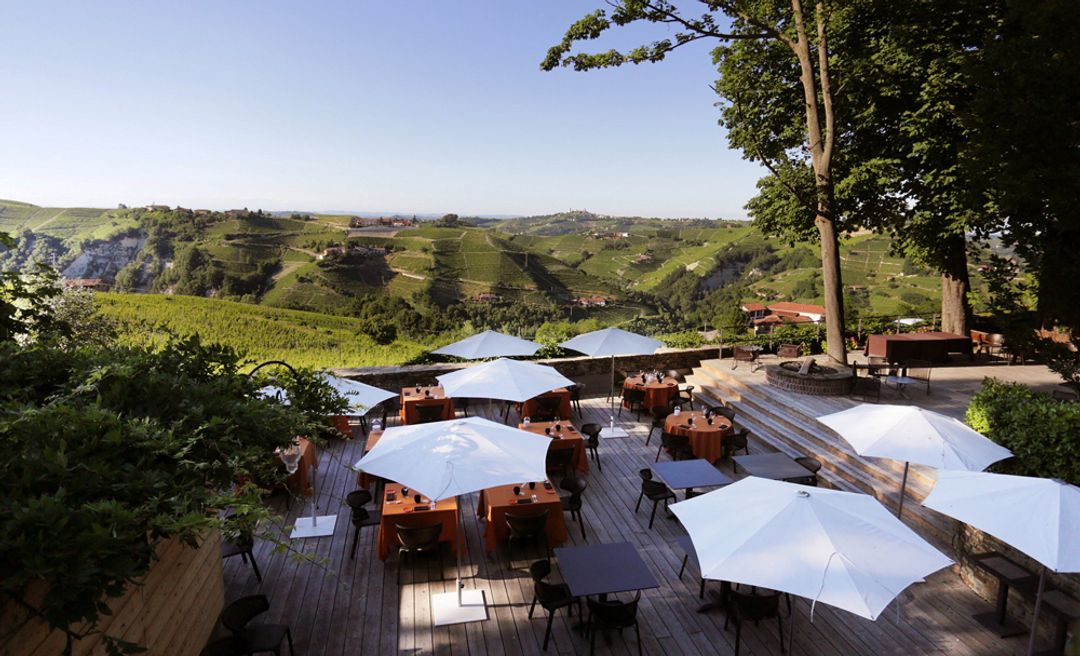
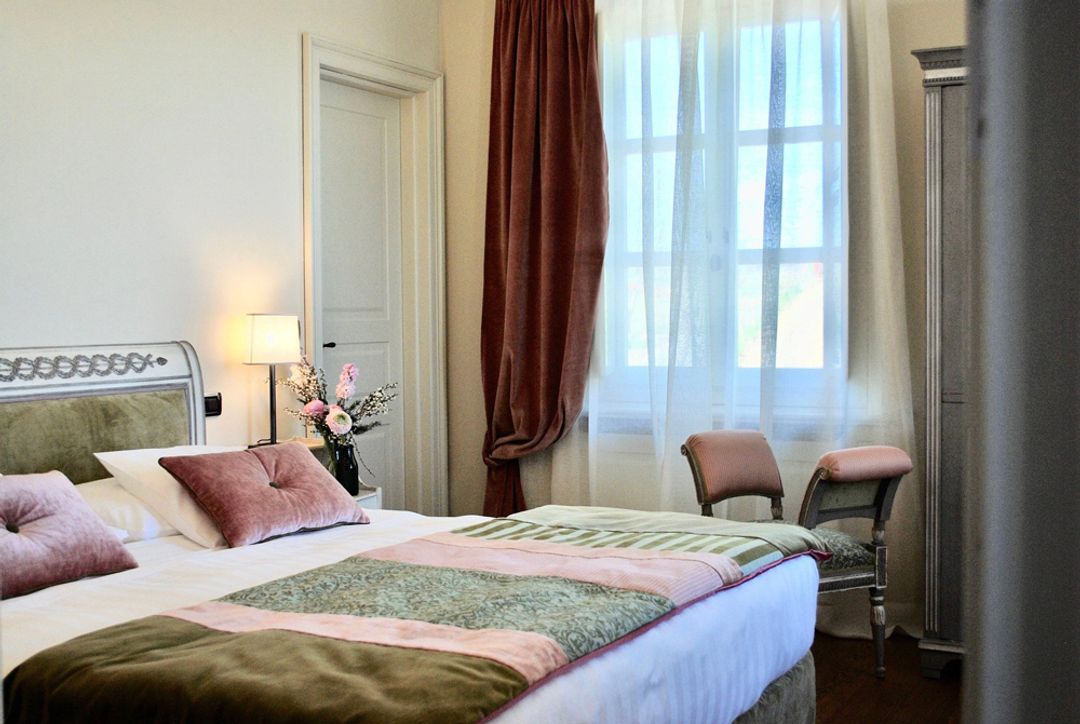
Carved into the Langhe hillside above Santo Stefano Belbo, the seventeenth-century monastery that became Relais San Maurizio is so thoroughly enveloped by Moscato and Barolo vines that the aerial view makes the buildings seem less like architecture and more like a natural outcropping of the landscape. The conversion preserved the monastic bones — barrel-vaulted ceilings, terracotta floors, stone fireplaces in blackened marble — while layering in the domestic warmth of a Piedmontese country house. Guest rooms across the complex's several interconnected buildings range from vaulted chambers furnished with gilded mirrors, Persian kilims, and wingback armchairs in burnt sienna to lighter, neoclassical-style rooms with grey-painted carved headboards, velvet cushions in blush and sage, and tall draped windows looking out over the vine rows. The elliptical pool pavilion visible from above — an arched arcade in painted render that sits low against the slope — is the one contemporary gesture on the property, its mosaic-tiled basin framed by woven daybed loungers and dark rattan sun chairs against an uninterrupted Langhe panorama. The dining terrace extends from the main house on a timber deck, orange-clothed tables shaded by white cantilever umbrellas, the undulating vineyard hills of the UNESCO-listed Langhe-Monferrato-Roero landscape rolling to the horizon in every direction. The effect is closer to a working estate that receives guests than a hotel that has dressed itself in rural costume.

Book with PB and get cash back
Casa di Langa - Image 1
Casa di Langa - Image 2
Casa di Langa - Image 3
Casa di Langa - Image 4
Casa di Langa - Image 5

Casa di Langa

Piedmont • Langhe • SPLURGE

avg. $486 / night

Includes $26 / night in cash back

Cash back is redeemable via Virtual Visa, Venmo, or bank transfer starting 24-48 hours after check-out

I Prefer property

Casa di Langa Design Editorial

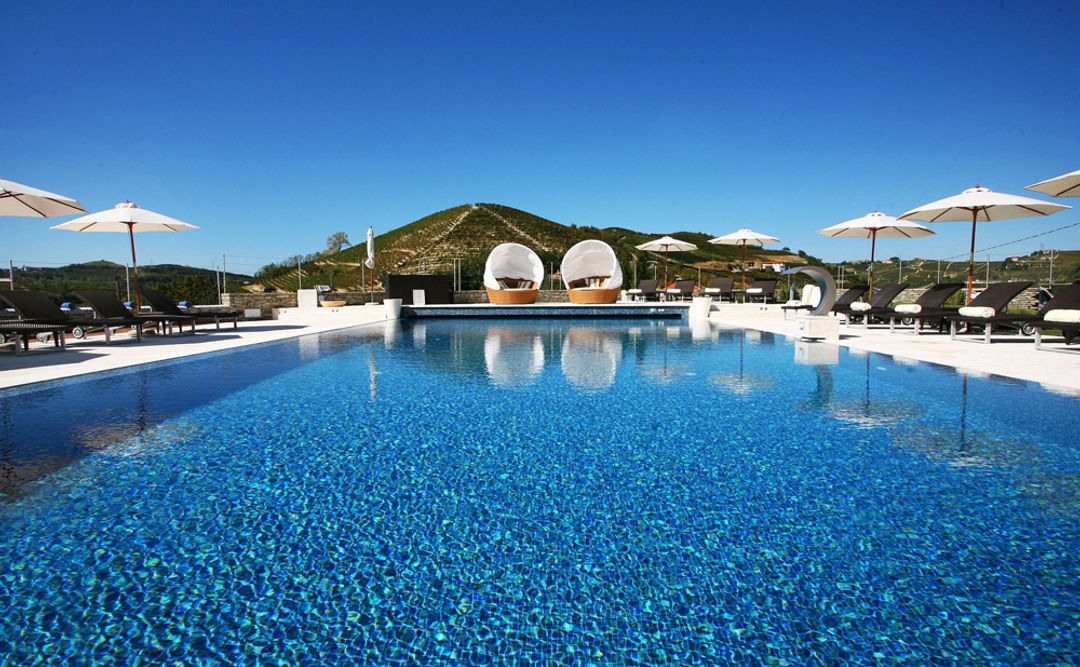
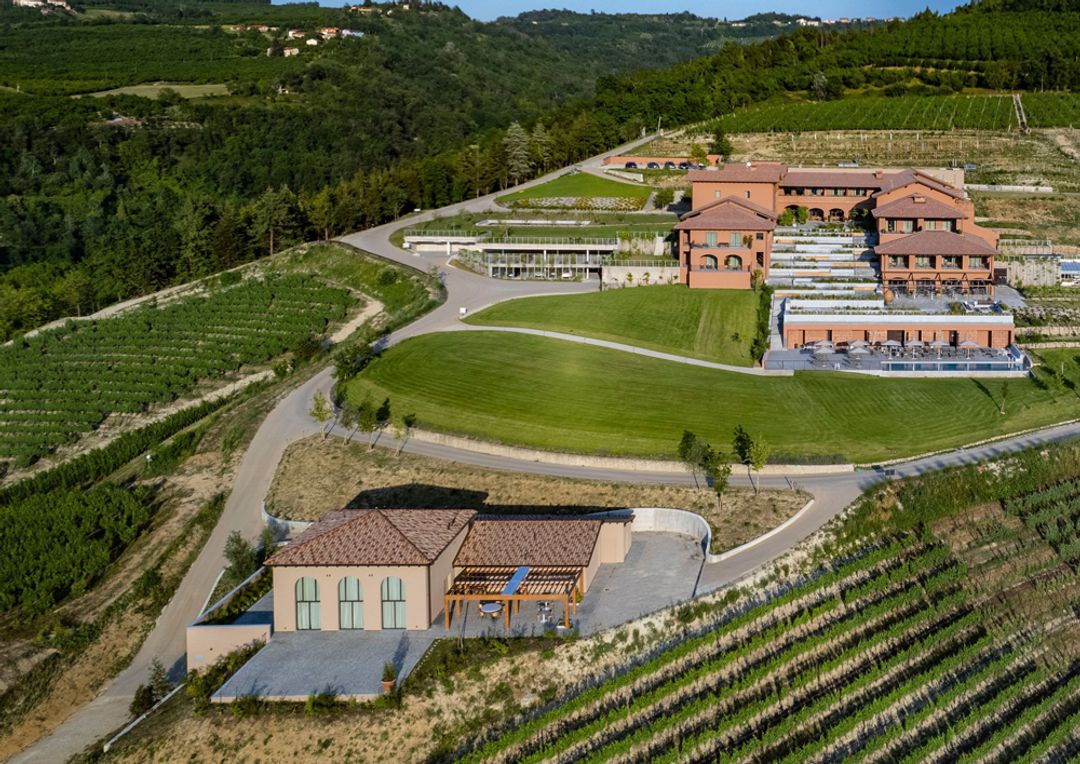
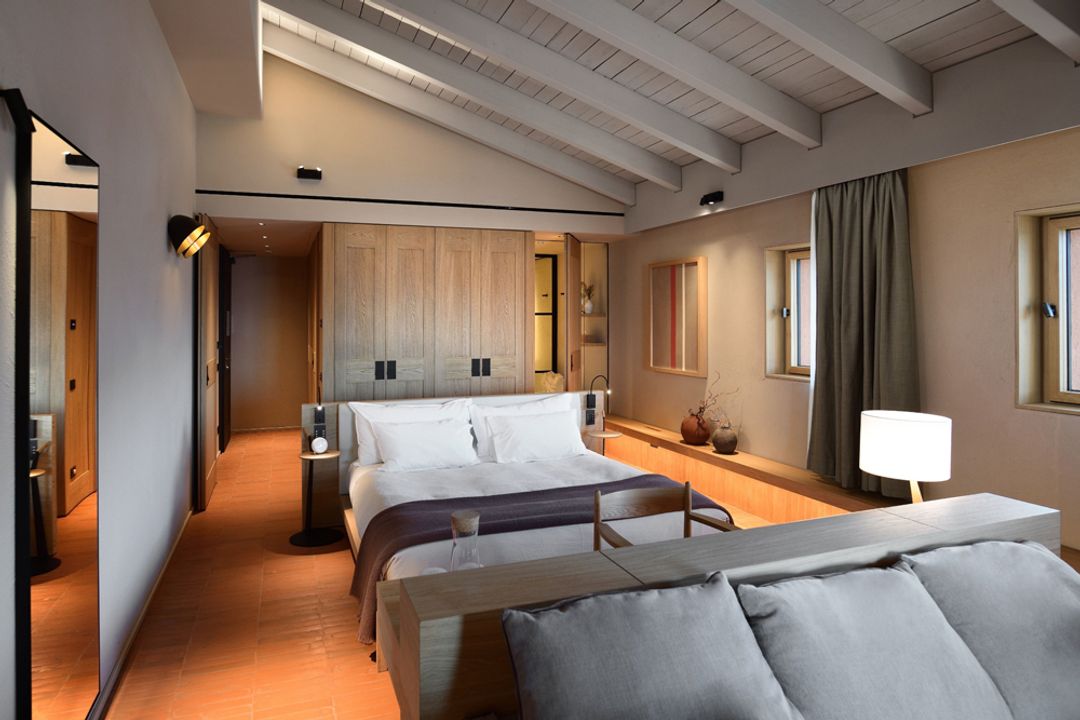
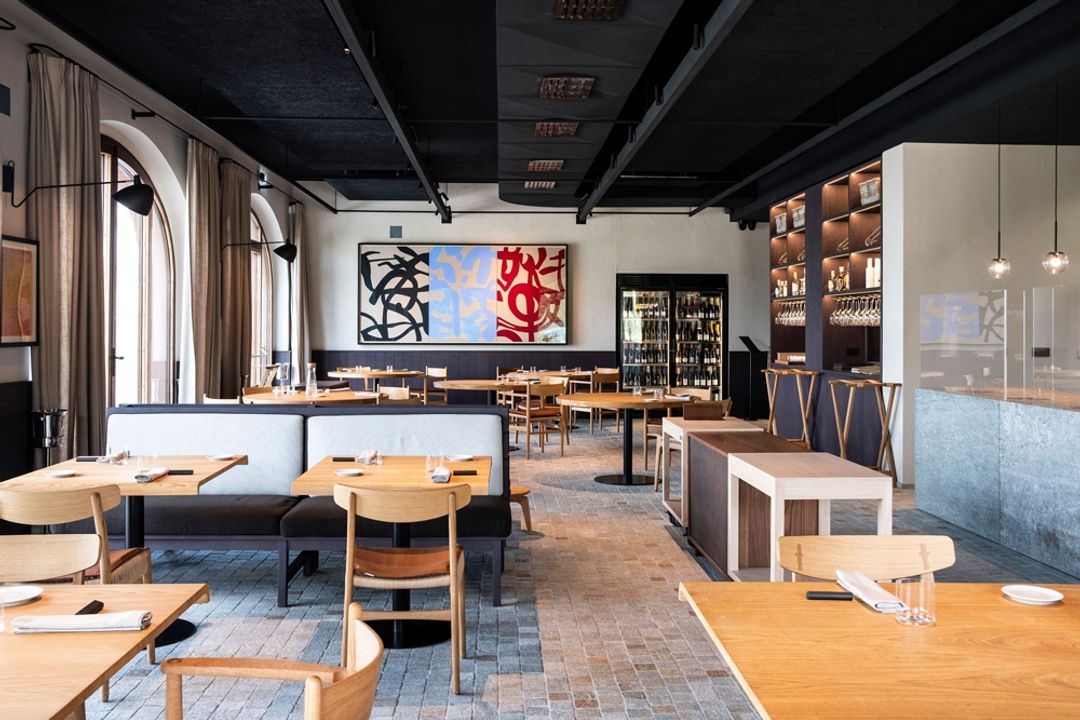
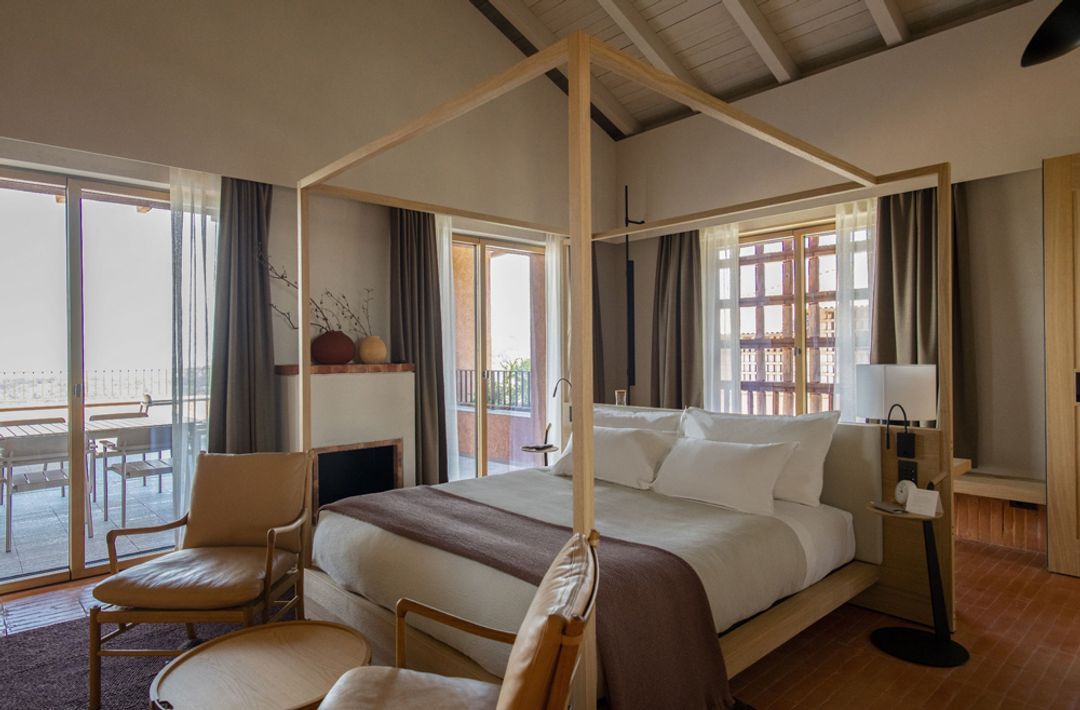
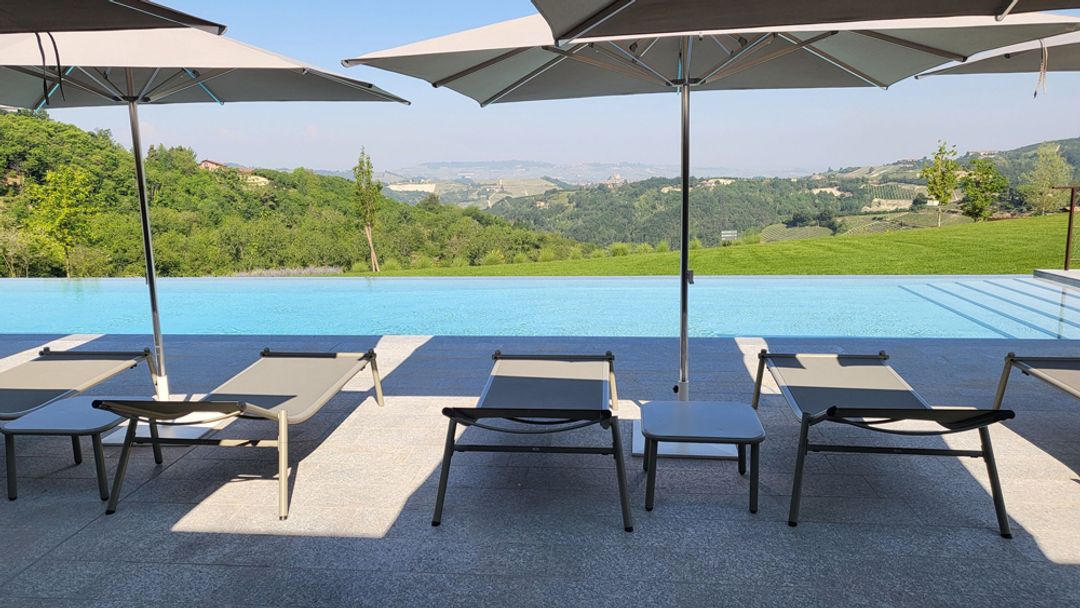
Somewhere between a working estate and a considered act of architecture, the hillside compound that became Casa di Langa was designed by Milan-based GaS Studio around a C-shaped plan drawn from the traditional Piedmontese cascina — the horseshoe farmstead form that has shaped this landscape for centuries. Opened in 2021, the 39-room property sits on 42 hectares of vineyards and hazelnut groves in Cerretto Langhe, its terraced piazza stepping down the slope in layers of locally quarried Luserna stone, recycled terracotta, and raw earth plaster. The gesture is quietly radical: adaptive reuse applied not to a crumbling palazzo but to an unfinished structure, pulled into coherence through material honesty and a plan that frames the rolling Langhe hills like a painting you keep returning to. Inside, Parisotto + Formenton Architetti translated that same restraint into rooms where bleached oak joinery, terracotta tile floors, and painted beam ceilings carry the warmth of the land without resorting to rustic pastiche. Four-poster beds in pale ash sit against generous windows opening onto the vineyard panorama; the restaurant sets a lacquered black ceiling against arched stone openings and bold contemporary canvases, creating an unexpected tension between the agricultural and the urban. The infinity pool extends the horizon in a single clean line, the Langhe dissolving into haze beyond. The whole property moves like a carefully edited sentence — nothing extraneous, nothing missing.

Book with PB and get cash back
Villa La Madonna - Image 1
Villa La Madonna - Image 2
Villa La Madonna - Image 3
Villa La Madonna - Image 4
Villa La Madonna - Image 5

Villa La Madonna

Piedmont • Monastero Bormida • SPLURGE

avg. $506 / night

Includes $27 / night in cash back

Cash back is redeemable via Virtual Visa, Venmo, or bank transfer starting 24-48 hours after check-out

Hilton Honors™ property

Villa La Madonna Design Editorial

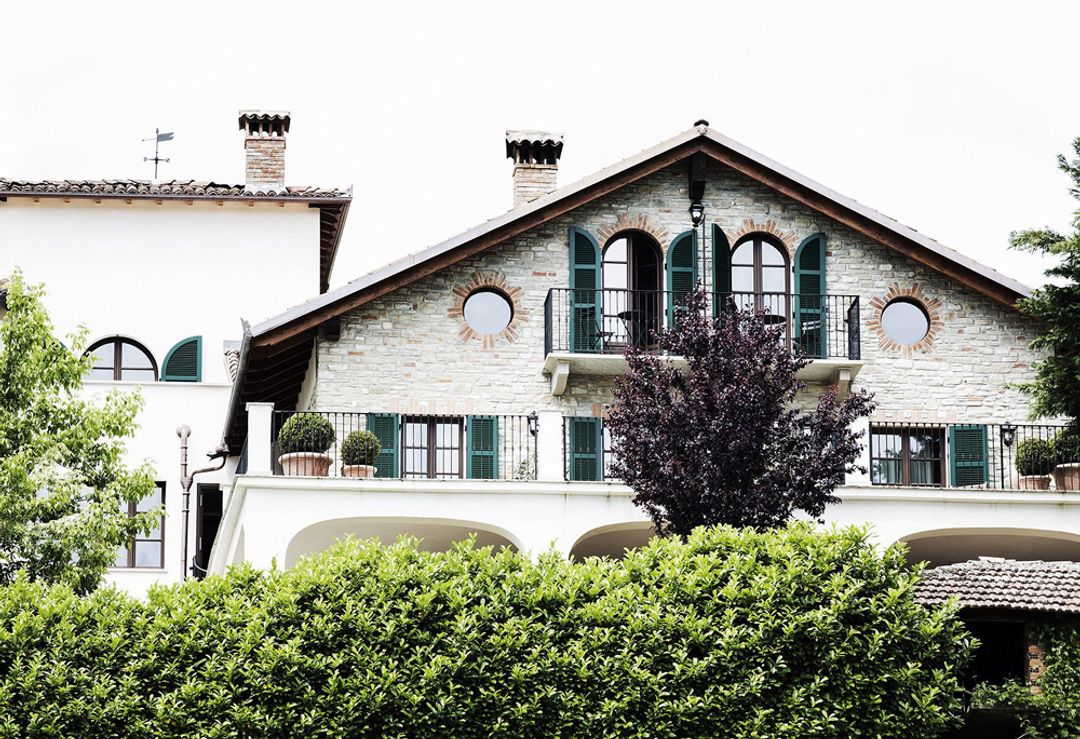
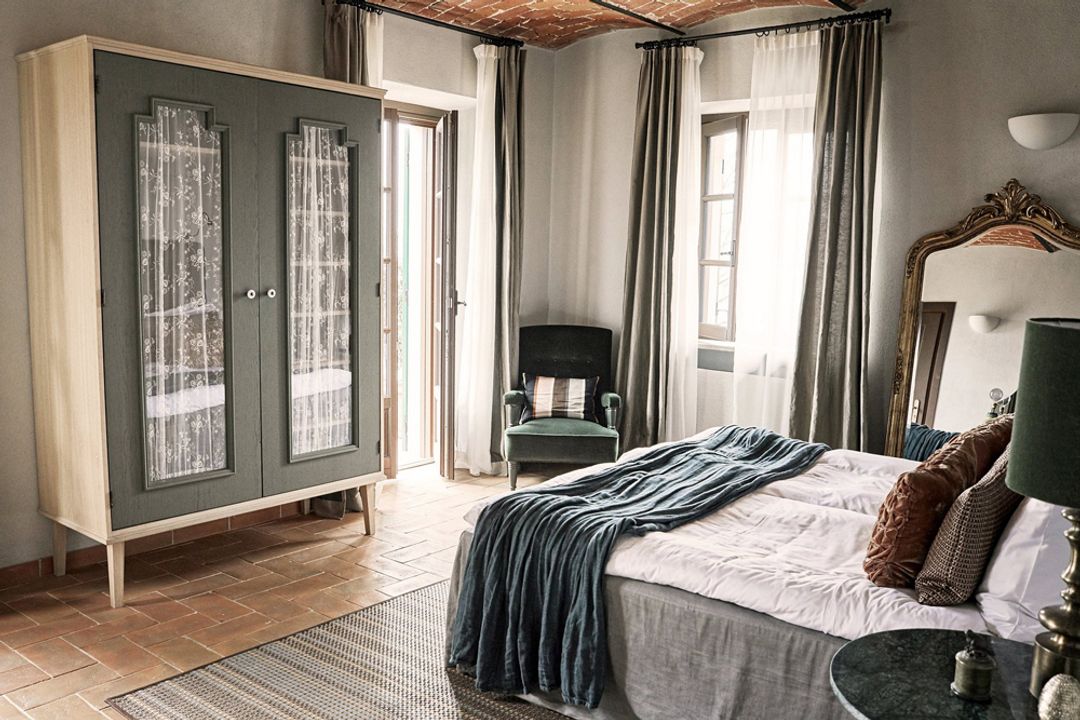
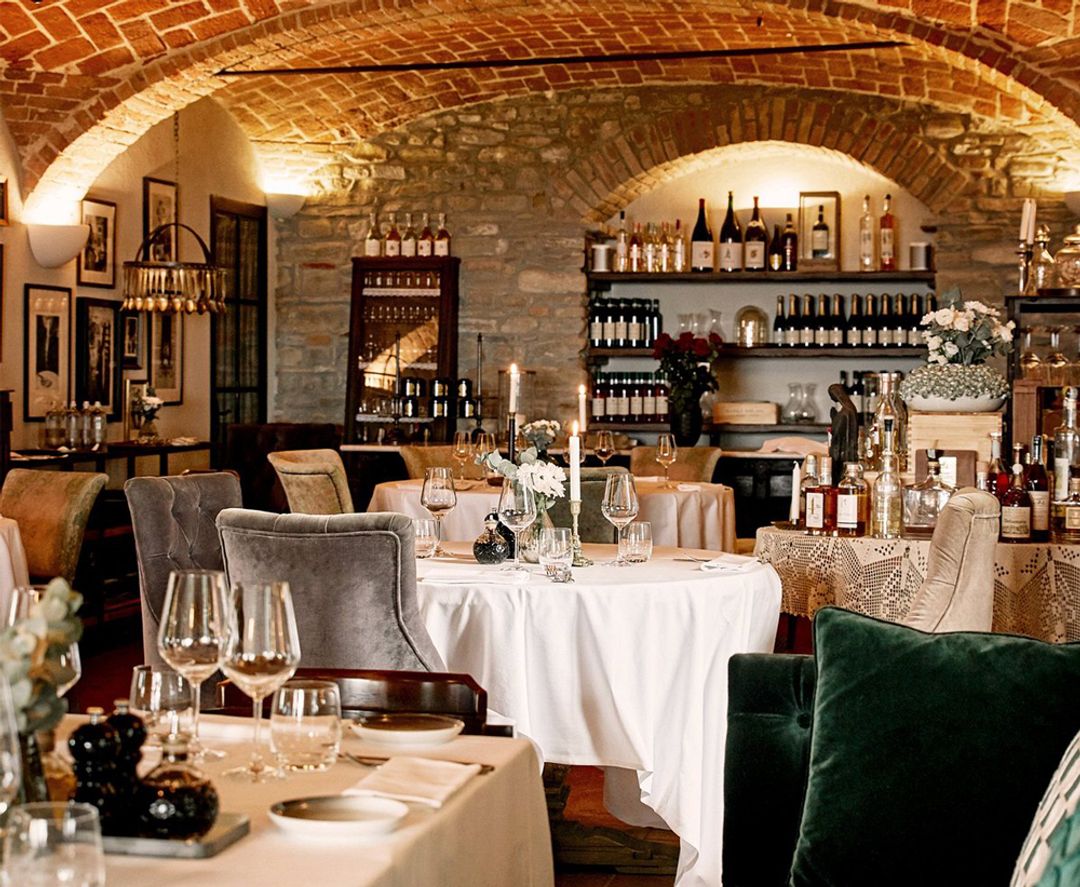
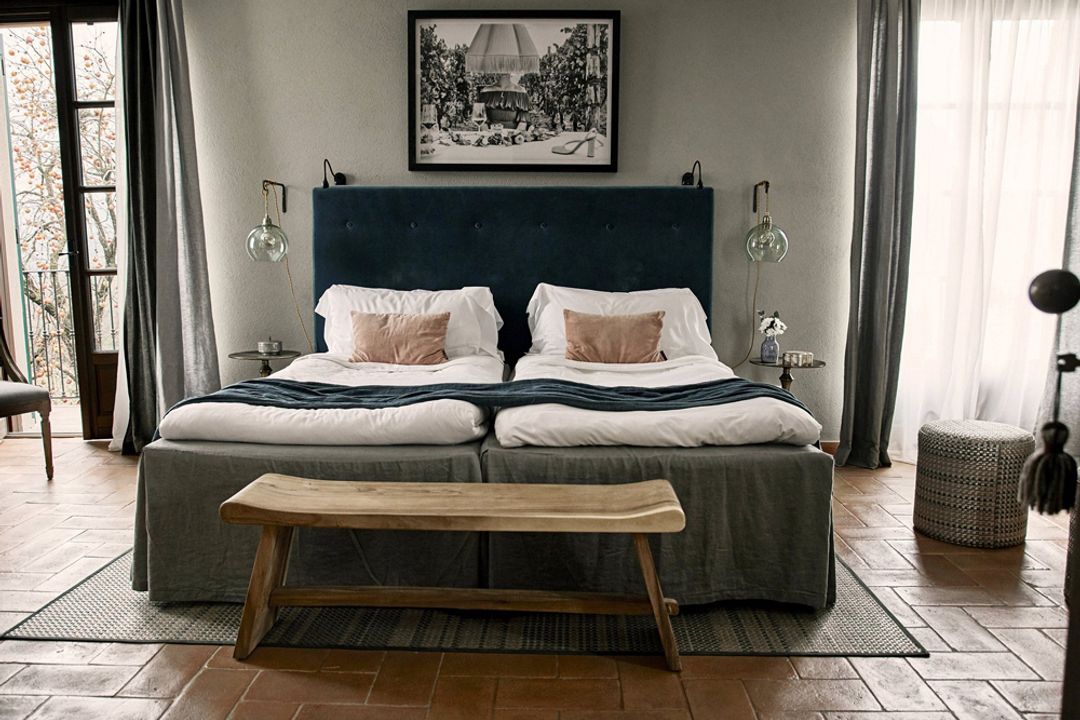
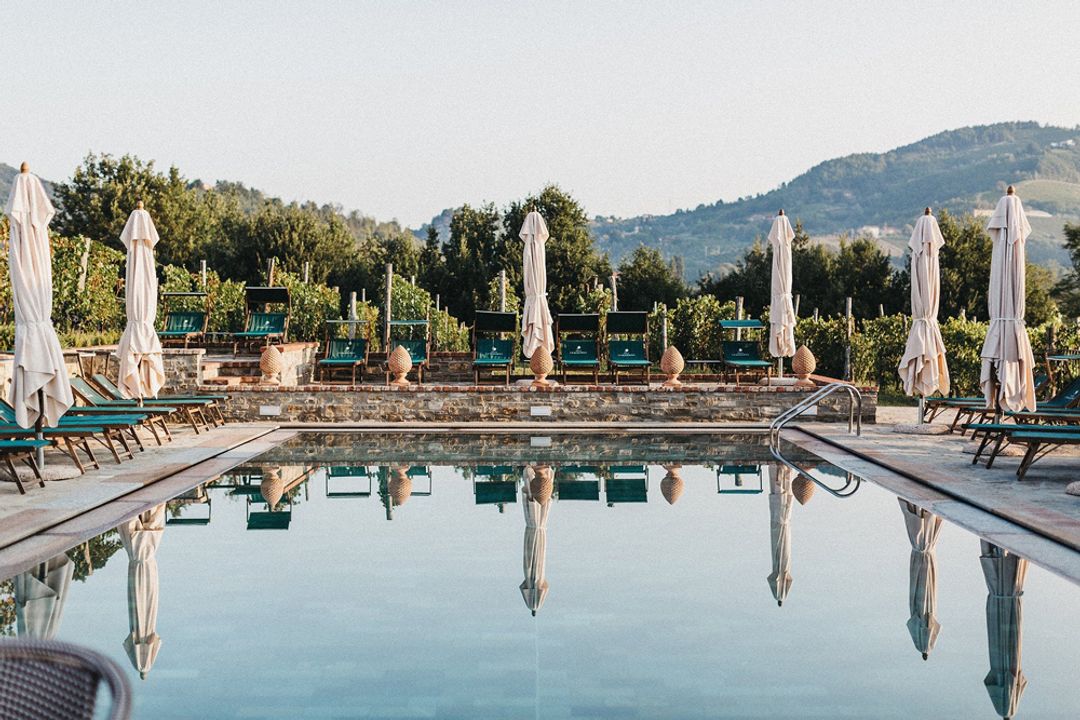
Monastero Bormida sits in the Langa Astigiana, a fold of Piedmont that most visitors bypass on their way to Barolo or Alba — which is precisely what gives Villa La Madonna its particular character. The property is built around a medieval stone farmhouse complex whose origins predate the hotel by several centuries, the rough-hewn local stone facade, round oculus windows with their distinctive terracotta brick surrounds, and steeply pitched timber-framed roof all surviving largely intact. Green-shuttered casement windows and wrought-iron balustrade railings pull the building into a northern Italian vernacular that sits somewhere between Lombard farmhouse and minor nobility's retreat. Inside, the interiors strike a balance between the building's rustic bones and a quietly considered contemporary comfort. Terracotta floor tiles — the herringbone and square-set variety visible throughout the rooms — anchor the palette, while the guest rooms layer sage-painted armoires with lace-panelled doors, tufted velvet headboards in deep teal, aged gilt mirrors, and linen drape in grey and warm white. The restaurant works hardest of all the spaces, its barrel-vaulted brick ceiling and rough stone walls providing an atmosphere that no amount of styling could manufacture; velvet wing chairs in forest green and dove grey pull up to white-clothed tables beneath a brass candelabra chandelier. The pool terrace, edged in stone and terracotta urns, opens directly onto the surrounding vineyard slopes — a reminder that here, the landscape has always been the point.