Best hotels in Ras Al Khaimah, United Arab Emirates | Visually Compare Top Stays Side-by-Side
Welcome to PressBeyond - a curated visual guide to design-driven hotels and the fastest way to compare them.
An Overview of the Boutique & Luxury Hotel Landscape in Ras Al Khaimah, United Arab Emirates
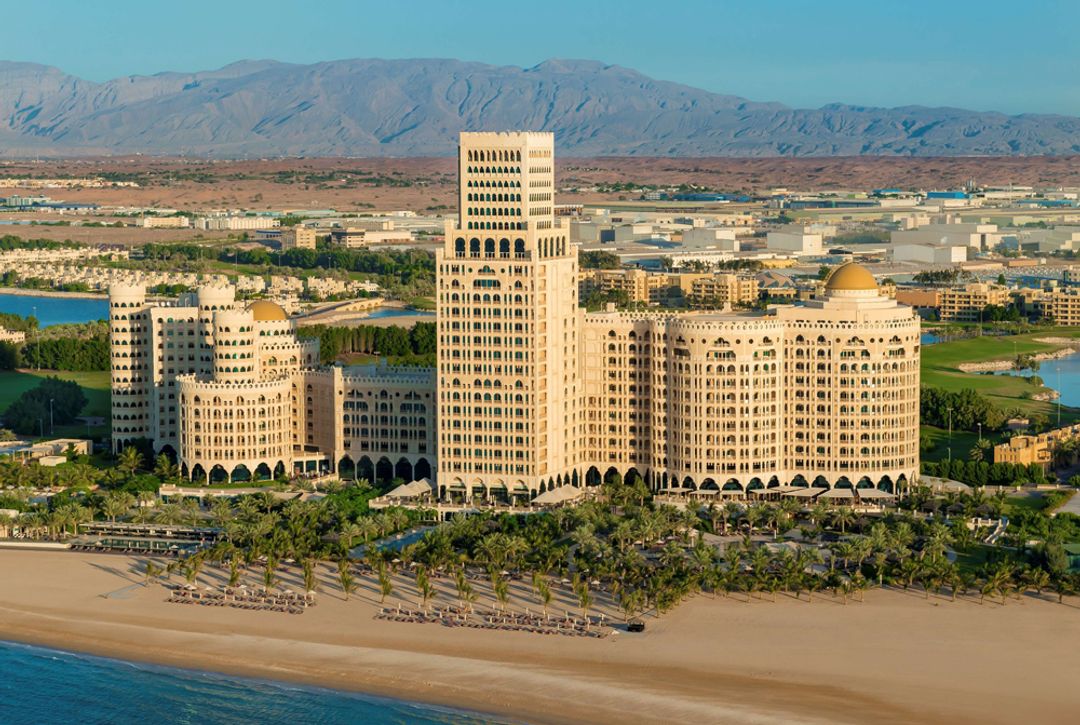
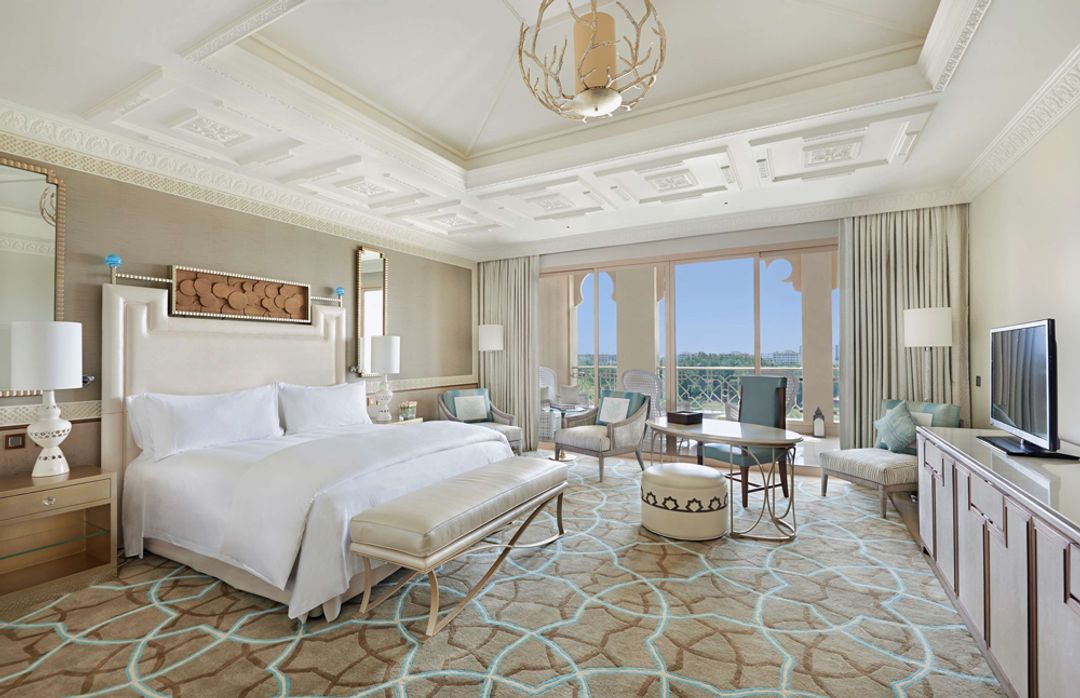
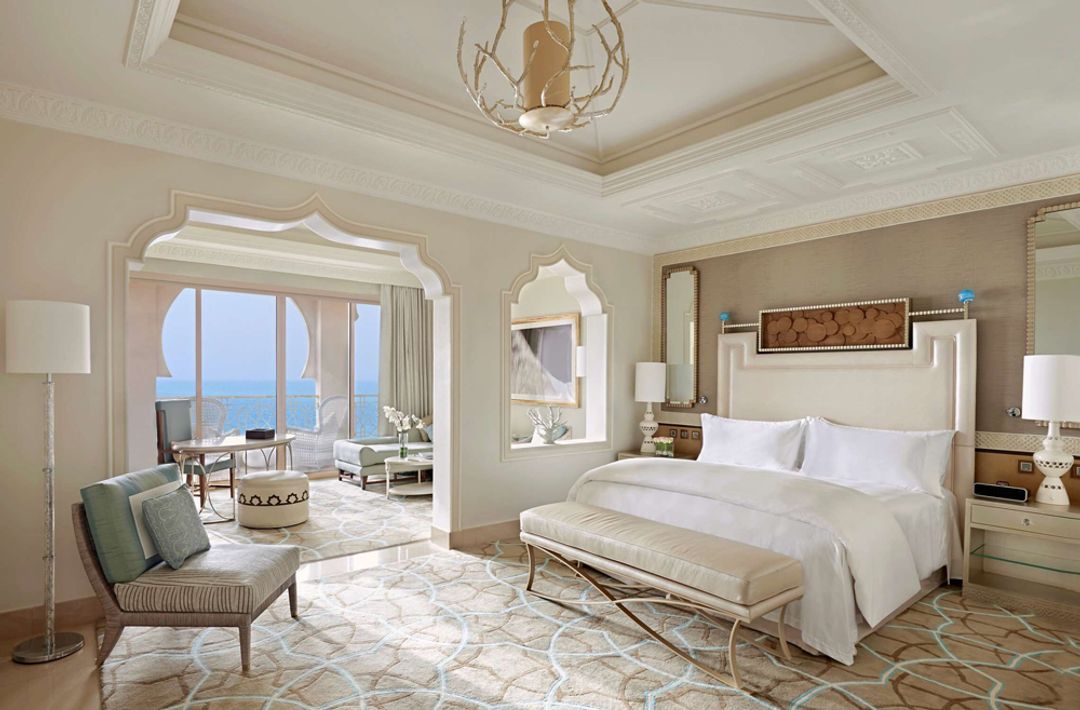
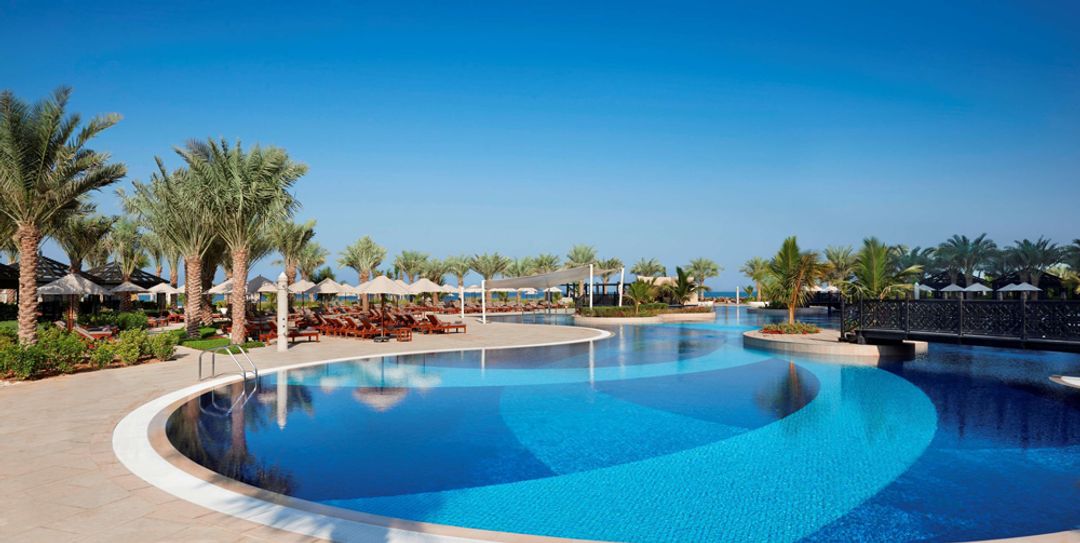
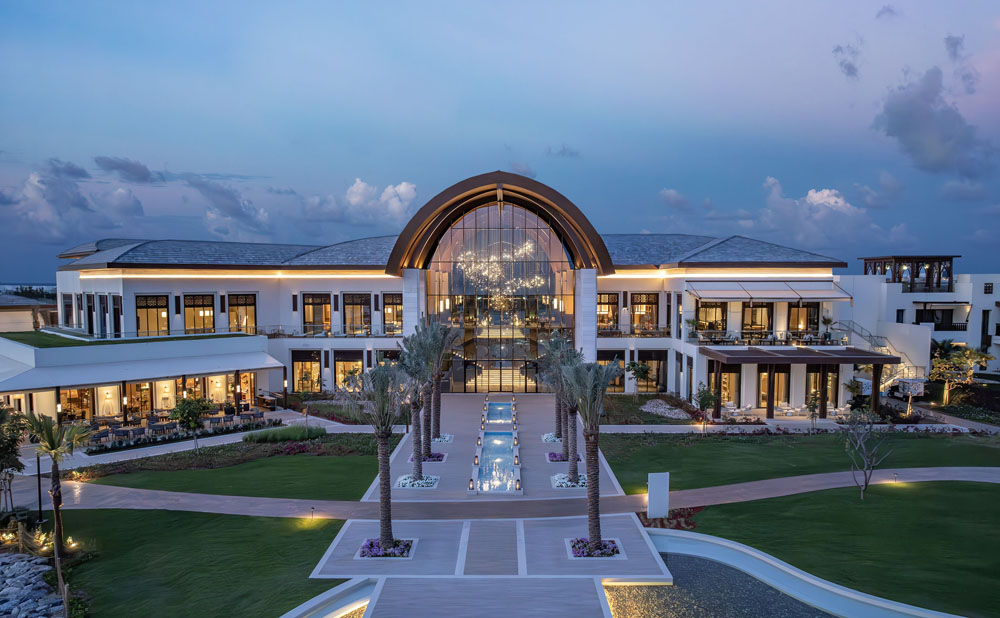
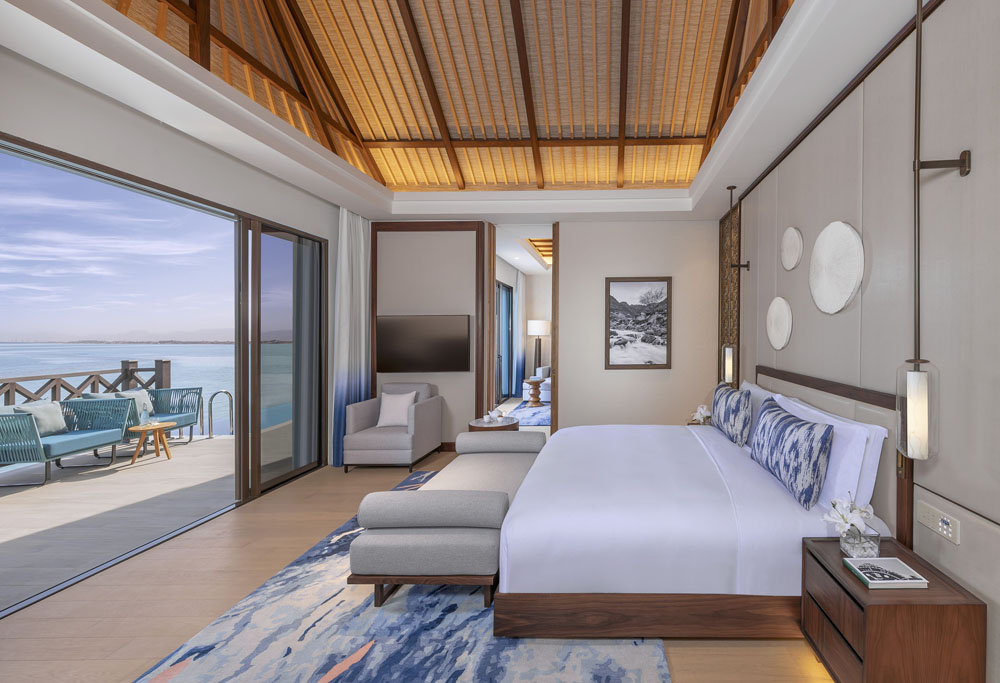
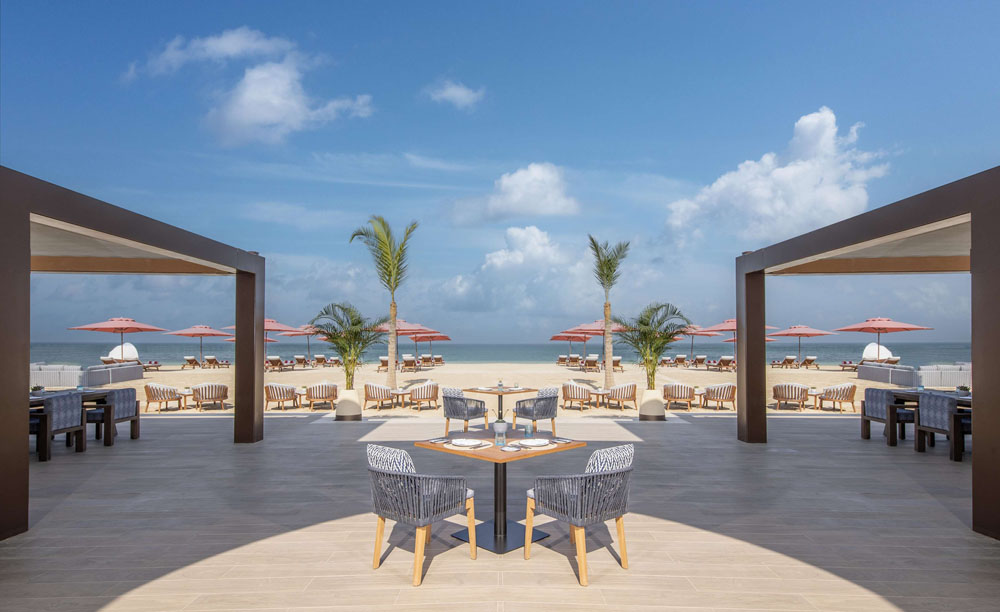
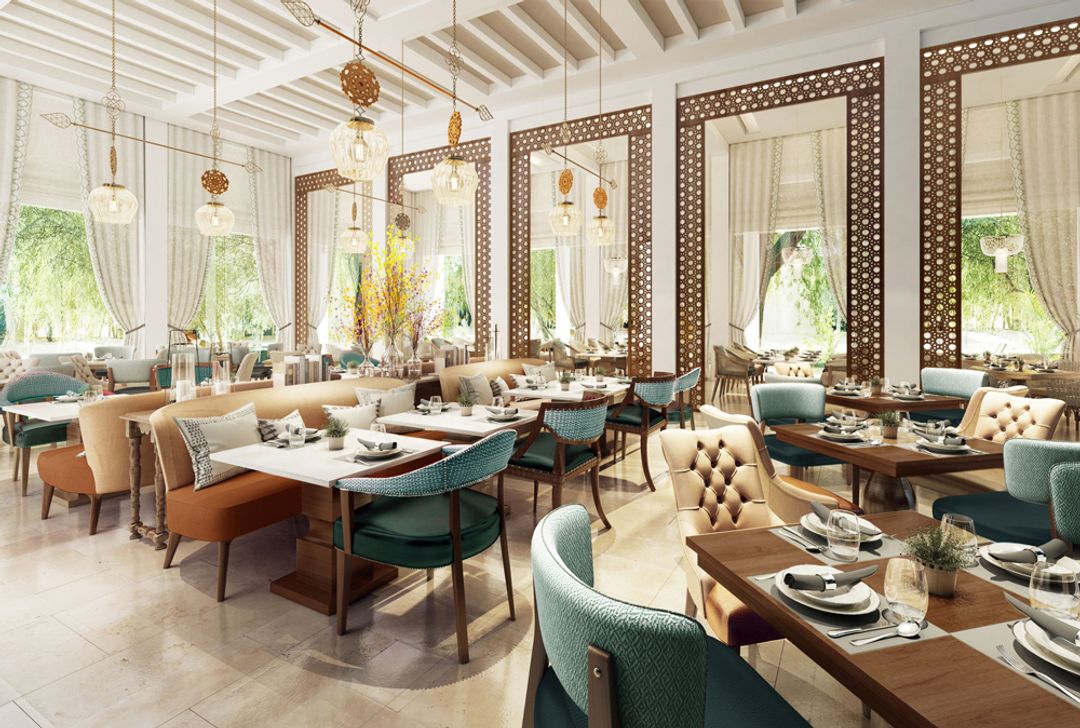
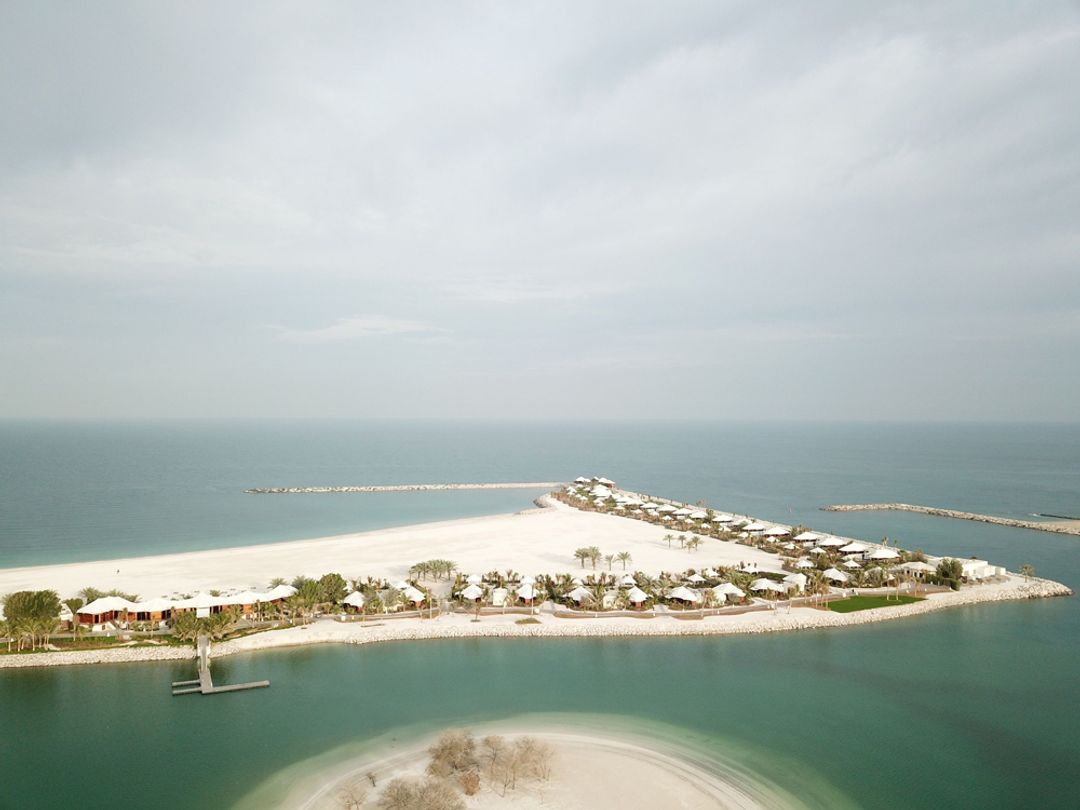
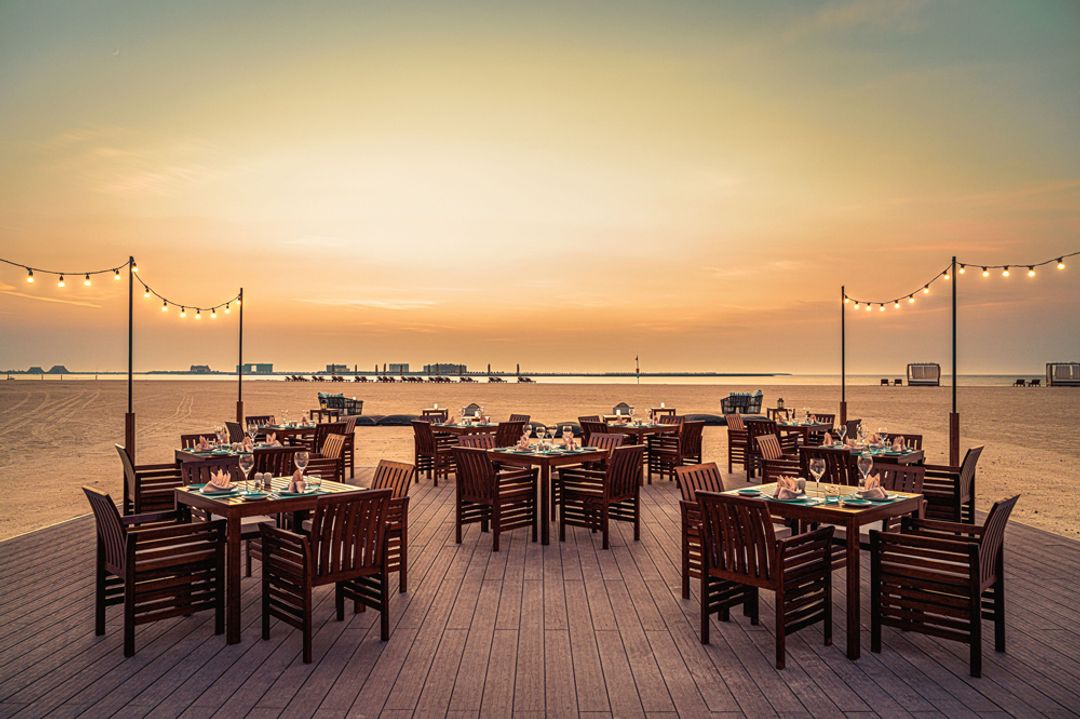
Ras Al Khaimah occupies the northernmost tip of the UAE, where the Hajar Mountains descend toward the Arabian Gulf and the desert opens into gravel plains and mangrove-fringed coastline. The emirate has avoided the vertical ambition that defines Dubai and Abu Dhabi, building instead outward across terrain that genuinely varies, and its hotels follow that geography rather than imposing on it. Al Hamra, a planned coastal community south of the city center, is where the largest concentration of resort infrastructure has landed. The Waldorf Astoria Ras Al Khaimah sits here, its neo-Andalusian palace architecture rendered in warm stone and arranged around a central lagoon, the visual vocabulary owing more to Moorish revival than to any contemporary design movement. At the higher end of the same neighborhood, the Ritz-Carlton Al Hamra Beach works a similar coastal register with greater restraint, addressing the Gulf directly and offering a more stripped-back experience of the shoreline.
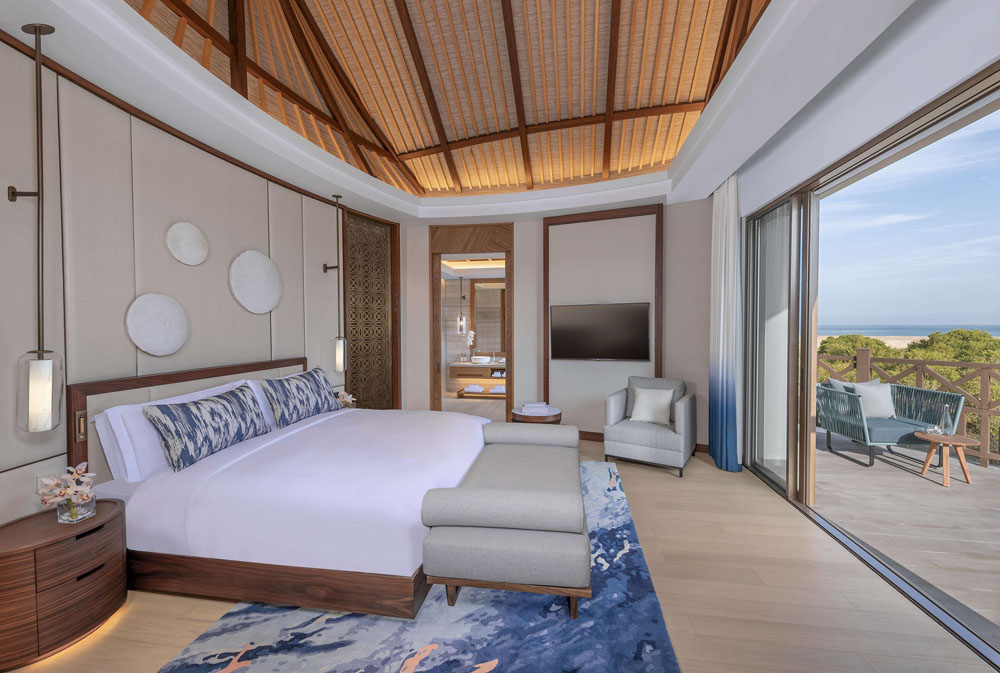
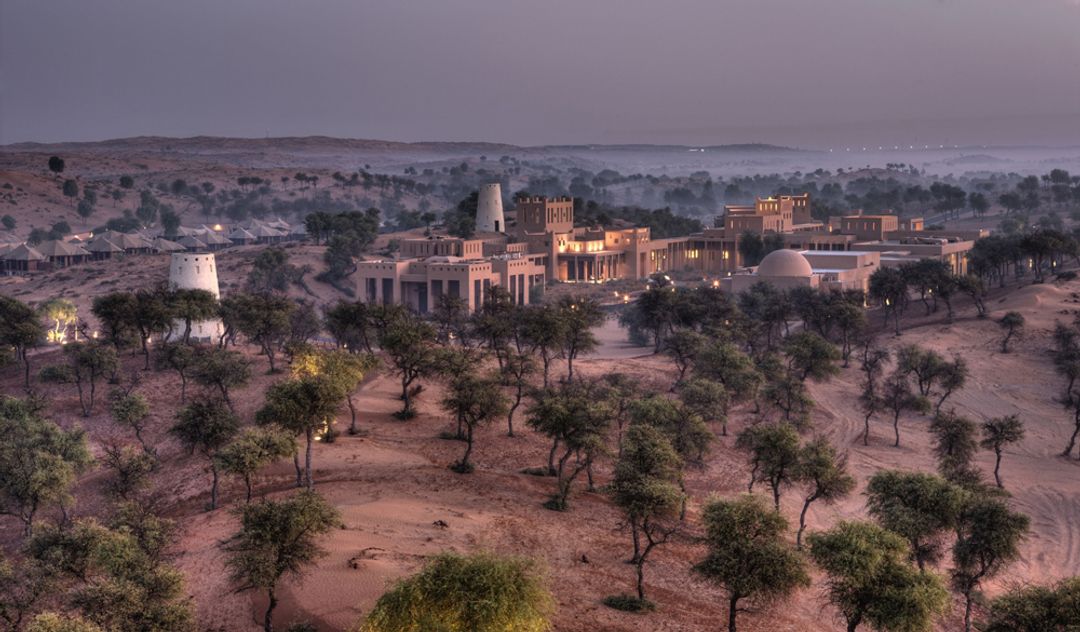
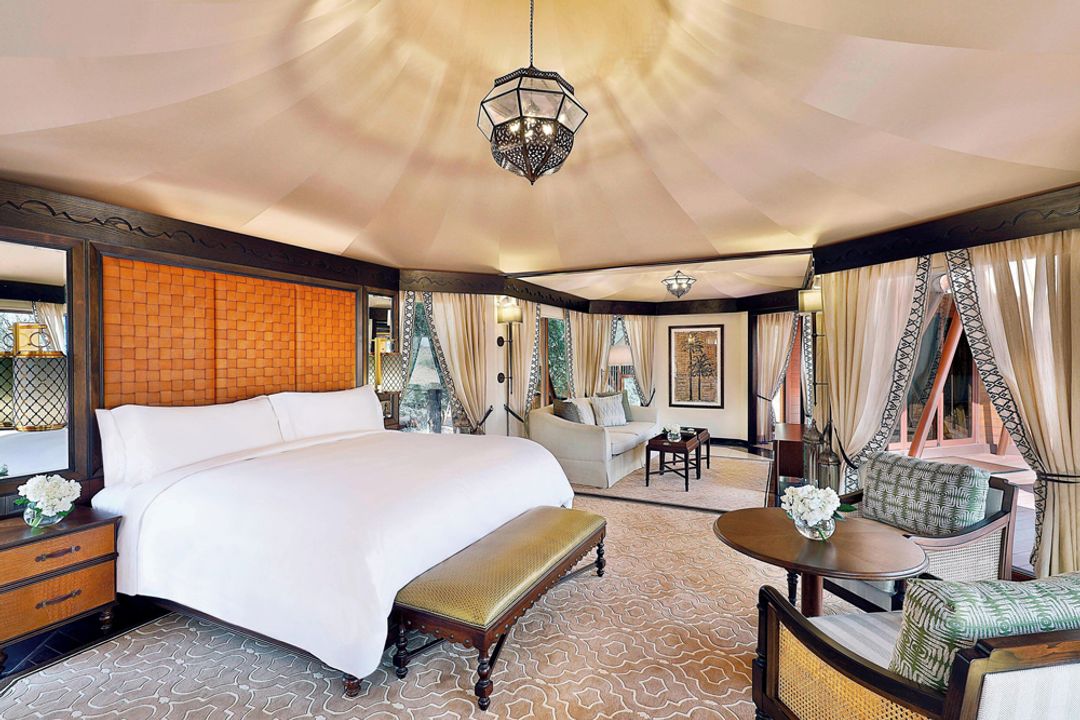
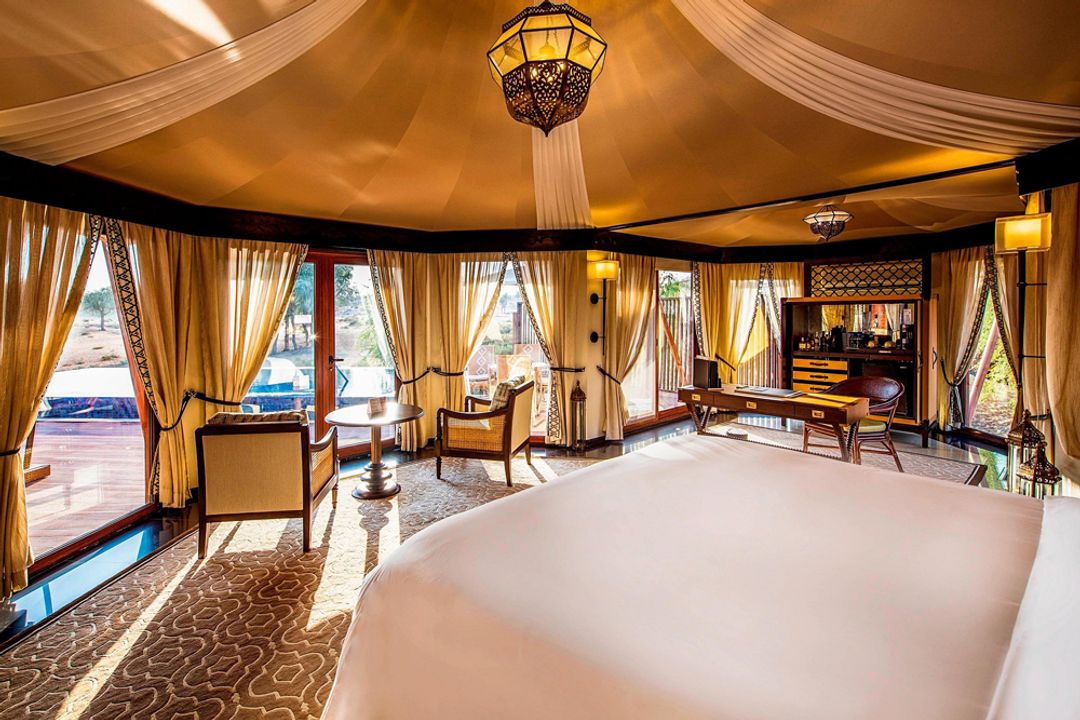
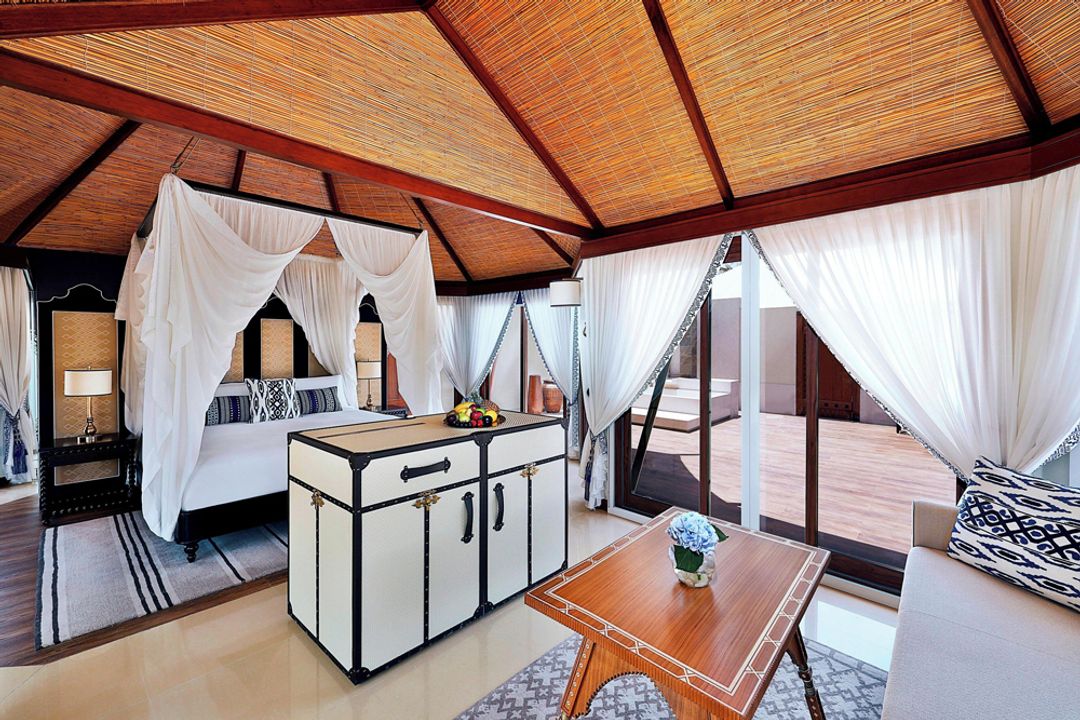
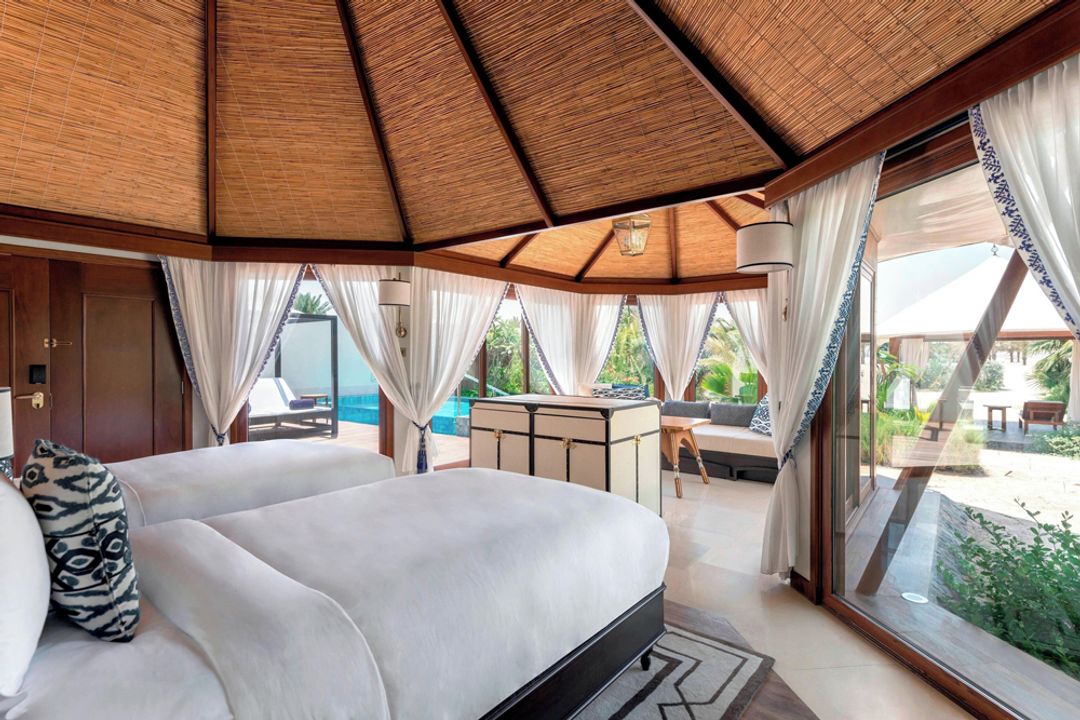
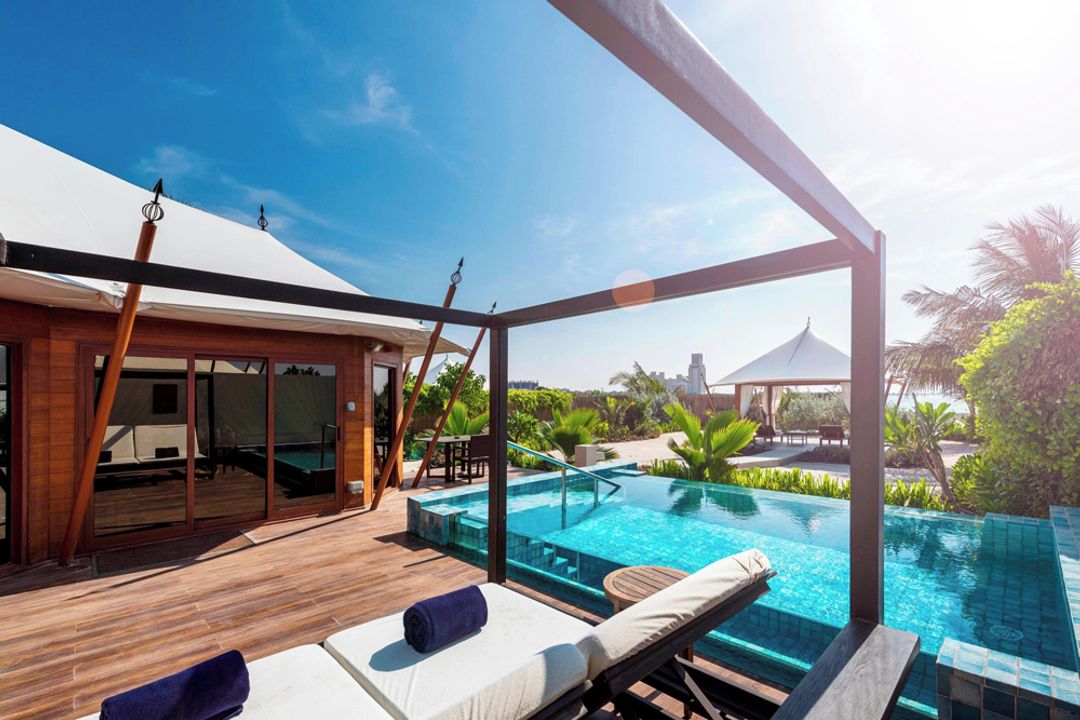
The more compelling design territory lies inland. Al Wadi Desert, a nature reserve roughly twenty minutes from the coast, is where the Ritz-Carlton Al Wadi Desert sits within a protected landscape of red dunes and native ghaf trees. The resort is low-slung and horizontal, its villas and walkways hugging the terrain rather than breaking its silhouette. Materials run to local stone, rammed earth tones, and rough timber, and the rooms open onto private pools facing undeveloped desert in every direction. For a traveler who reads architecture as a form of environmental positioning, this property makes the clearest case for what RAK can offer that its southern neighbors cannot, which is space and quiet with genuine ecological weight behind them.
Mina Al Arab, a waterfront development on the northern edge of the city, introduces a third register entirely. The Anantara Mina Ras Al Khaimah Resort here is positioned within a mangrove sanctuary, its architecture lower and more relaxed than the Al Hamra properties, oriented toward birdwatching terrain and kayak channels rather than beach clubs. The rate differential between Anantara and the two Ritz-Carlton properties is meaningful, and for anyone whose priority is natural landscape over resort amenity, that saving carries no corresponding loss of atmosphere. What RAK offers across these three clusters is genuine variety of setting compressed into a small emirate, with each zone asking something slightly different of the visitor willing to choose carefully.