Where

PressBeyond Logo

Best hotels in Jaipur | A Curated Visual Guide to Top Stays

Welcome to PressBeyond, the ultimate curated visual guide for design-driven hotels! My name is Will Miller and these are my recommendations for the best boutique and luxury hotels in Jaipur.

I am the founder of PressBeyond and I am an ultra-meticulous hotel curator who loves clean visuals. I have individually analyzed and tiered each hotel included in this guide based on a variety of criteria (architecture & design, location, brand & brand affiliation, existing reviews, and my own personal experiences), and importantly, I have hand-selected the leading imagery for each hotel to provide you with easily-digestible, yet detailed and complete, like-for-like, high-level visual profiles. I felt this summarization step was a critical missing piece across existing guides, blogs, and booking platforms. My aim is to make it easier for people to identify hotel environments that resonate with them, along with enabling them to visualize the types of social experiences that those environments help foster. My brain doesn't work when exposed to cluttered content, so my goal was to create the opposite.

Underneath this, we are also a full booking engine offering 5% Venmo cash back along with other exclusive perks. For all of you design-obsessed hotel enthusiasts out there, I hope this guide helps get you to where you see yourself!

An Overview of the Boutique & Luxury Hotel Landscape in Jaipur

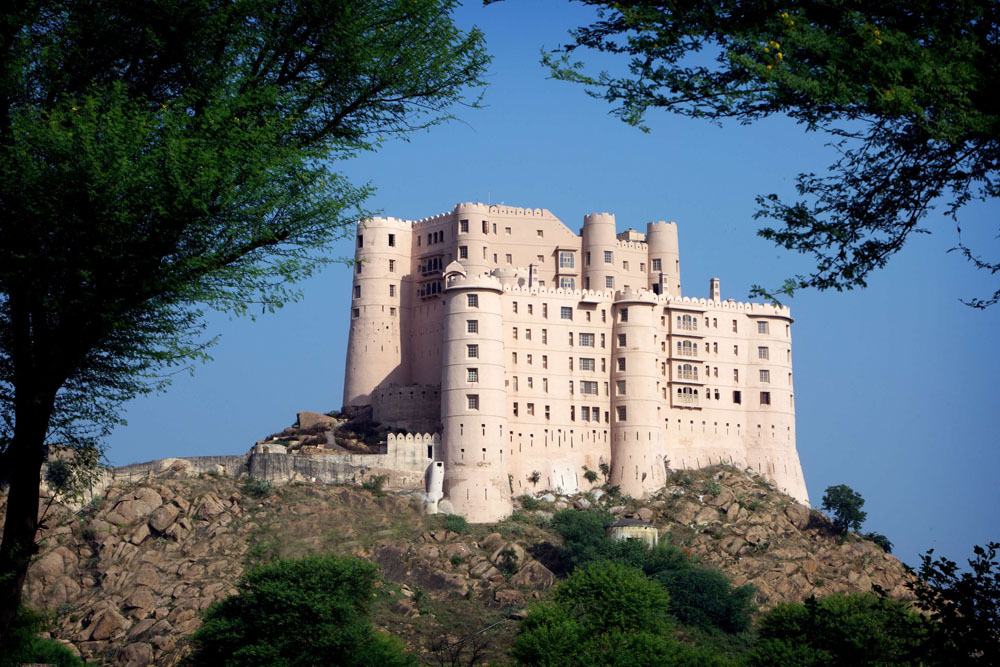
Jaipur was built in 1727 to a grid — one of the subcontinent's earliest planned cities, its pink-sandstone streetscape laid out by Vidyadhar Bhattacharya under Maharaja Jai Singh II. That civic ambition never really left. The city's best hotels are not urban retreats so much as acts of architectural self-assertion, each one staking a claim to a particular relationship with Rajput heritage. The most direct expression of this is Rambagh Palace in the Rambagh district, a former royal hunting lodge converted by the Taj group that holds a specific kind of faded grandeur — the polo grounds, the elaborately gardened grounds, the rooms that feel genuinely inhabited by history rather than dressed for it. Nearby in Civil Lines, Jai Mahal Palace offers a more restrained colonial-era proposition, the 18th-century building set within eighteen acres of Mughal gardens, its moderate pricing making it an intelligent base for travelers more interested in the city itself than in their hotel. The contemporary design ambition in Jaipur tends to concentrate on its outskirts. At Kukas, north of the city, both the Fairmont and the Raffles have staked large footprints — the latter particularly notable for its interiors, which draw on Jaipur's textile and craft traditions with enough specificity to feel earned rather than decorative. Further into the terrain surrounding the city, Alila Fort Bishangarh in Bishangarh Village is among the more architecturally serious propositions in the portfolio: a 230-year-old hilltop fort sensitively converted by Zaha Hadid Architects' collaborator Abhishek Poddar, integrating new interventions into rubble-stone ramparts with real material intelligence. The Oberoi Rajvilas in Luniawas works differently — a purpose-built resort rather than a conversion, its walled compound of villas and tents organized around a restored 18th-century Shiva temple, and executed with the tightly controlled aesthetic that defines Oberoi's better properties. For those willing to move beyond the Pink City entirely, the two most compelling properties on this list sit at considerable distance. Amanbagh near Bhangarh — three hours out, deep in the Aravalli hills — is a closed-campus resort of pink-marble pavilions that feels more like a Mughal pleasure garden than a hotel, its remoteness entirely the point. Six Senses Fort Barwara at Chauth Ka Barwara, a 14th-century fort conversion developed over nearly a decade, is the more historically layered of the two, its two palaces and stepped tanks restored with an attentiveness to material continuity that most heritage projects only approximate.

Book with PB and get cash back
Alila Fort Bishangarh - Image 1
Alila Fort Bishangarh - Image 2
Alila Fort Bishangarh - Image 3
Alila Fort Bishangarh - Image 4
Alila Fort Bishangarh - Image 5

Alila Fort Bishangarh

Jaipur • Bishangarh Village • SPLURGE

avg. $295 / night

Includes $16 / night in cash back

Cash back is redeemable via Virtual Visa, Venmo, or bank transfer starting 24-48 hours after check-out

World of Hyatt property

Alila Fort Bishangarh Design Editorial

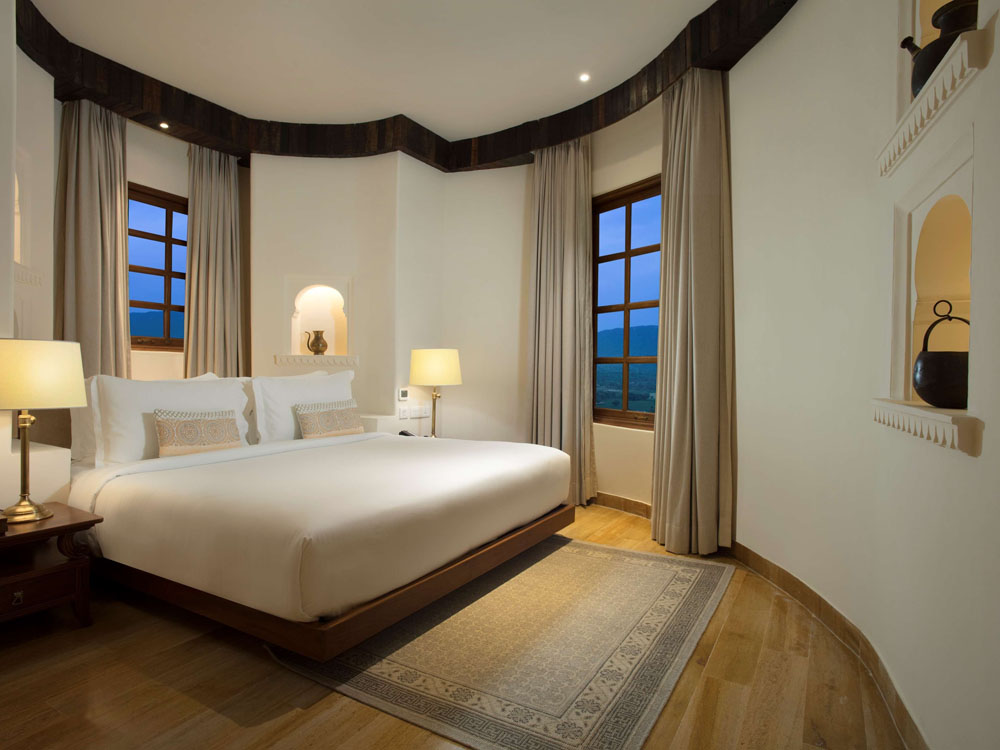
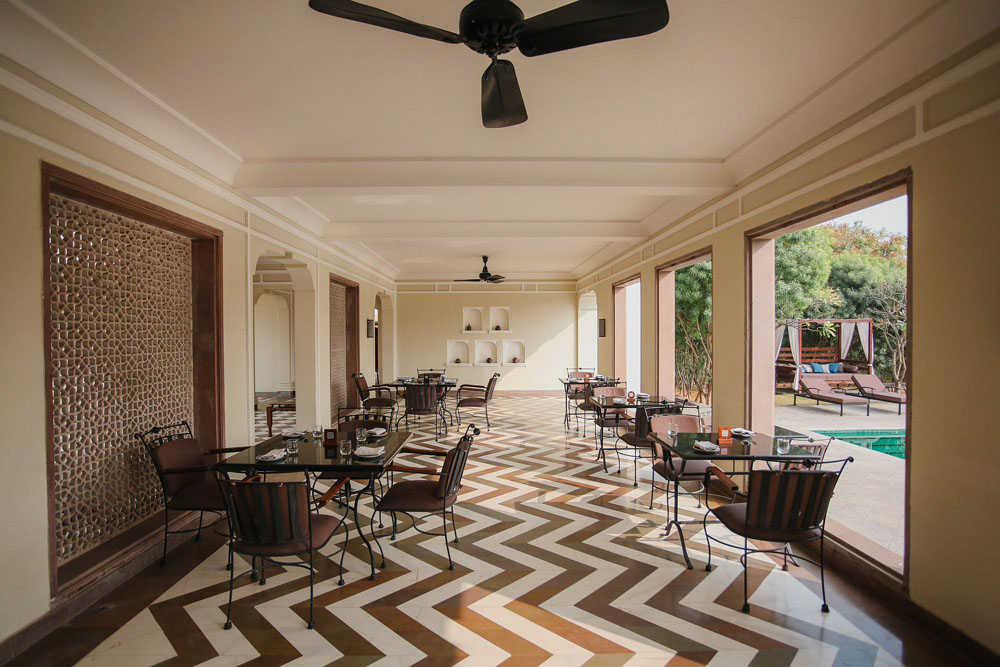
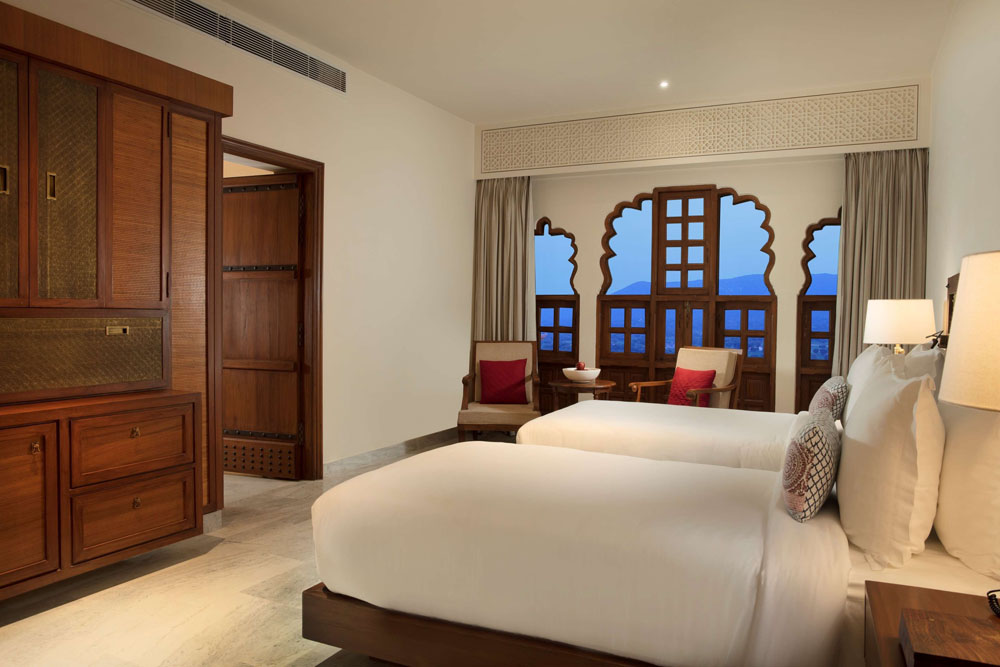
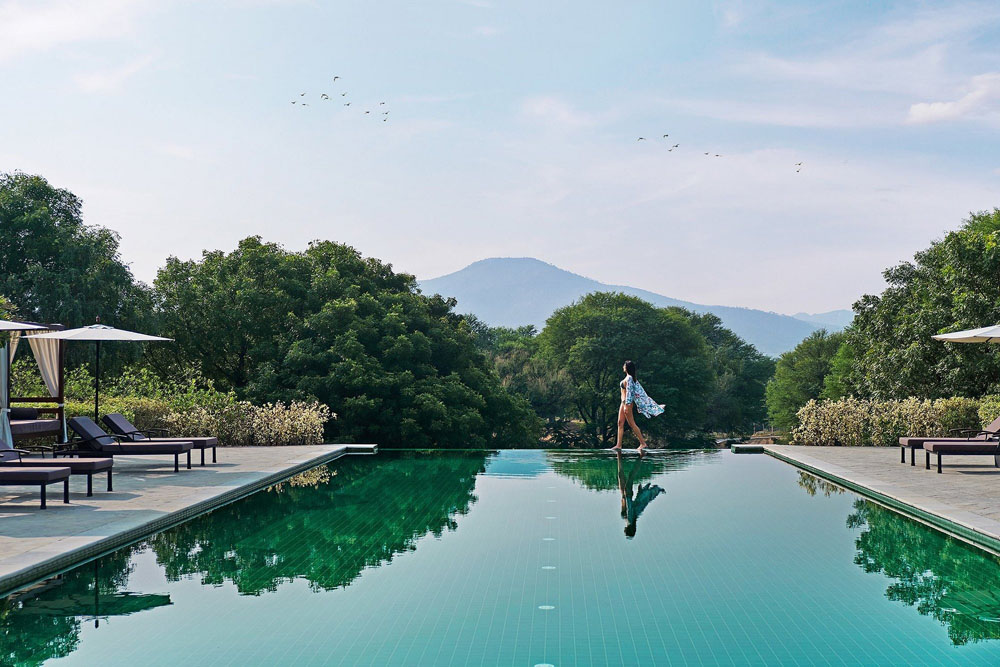
Crowning a granite outcrop above Bishangarh village some 45 kilometres from Jaipur, a 230-year-old Rajput hill fort was transformed into Alila Fort Bishangarh after a meticulous decade-long restoration completed in 2015 — one of the more ambitious adaptive reuse projects in recent Indian hospitality. The fort's pale rose-gold sandstone bastions and cylindrical corner towers, visible for miles across the Aravalli scrubland, set the terms for everything that followed: the architecture demanded that the interior meet it on its own historical ground rather than impose a contemporary overlay. The 59-room property threads that needle with considerable intelligence. Tower suites are fitted into the rounded bastions themselves, their curved walls wrapped in warm timber floors and topped with dark wood cornices that follow the masonry's arc — the result closer to inhabiting a ruin than staying in a renovation. Arched jharokha windows with intricately carved teak frames frame the Aravalli range at dusk, while flat-roofed rooms deploy jaali screens and recessed niches to keep the vernacular grammar intact. The restaurant's chevron-patterned marble floor introduces a graphic modernity against the traditional bracketed arches, and the infinity pool, set on a lower terrace and edged in local stone, dissolves into a treeline backed by blue-grey hills — a view that makes the fort's elevation feel earned rather than theatrical.

Book with PB and get cash back
Fairmont Jaipur - Image 1
Fairmont Jaipur - Image 2
Fairmont Jaipur - Image 3
Fairmont Jaipur - Image 4
Fairmont Jaipur - Image 5

Fairmont Jaipur

Jaipur • Kukas • SPLURGE

avg. $308 / night

Includes $16 / night in cash back

Cash back is redeemable via Virtual Visa, Venmo, or bank transfer starting 24-48 hours after check-out

ALL - Accor property

Fairmont Jaipur Design Editorial

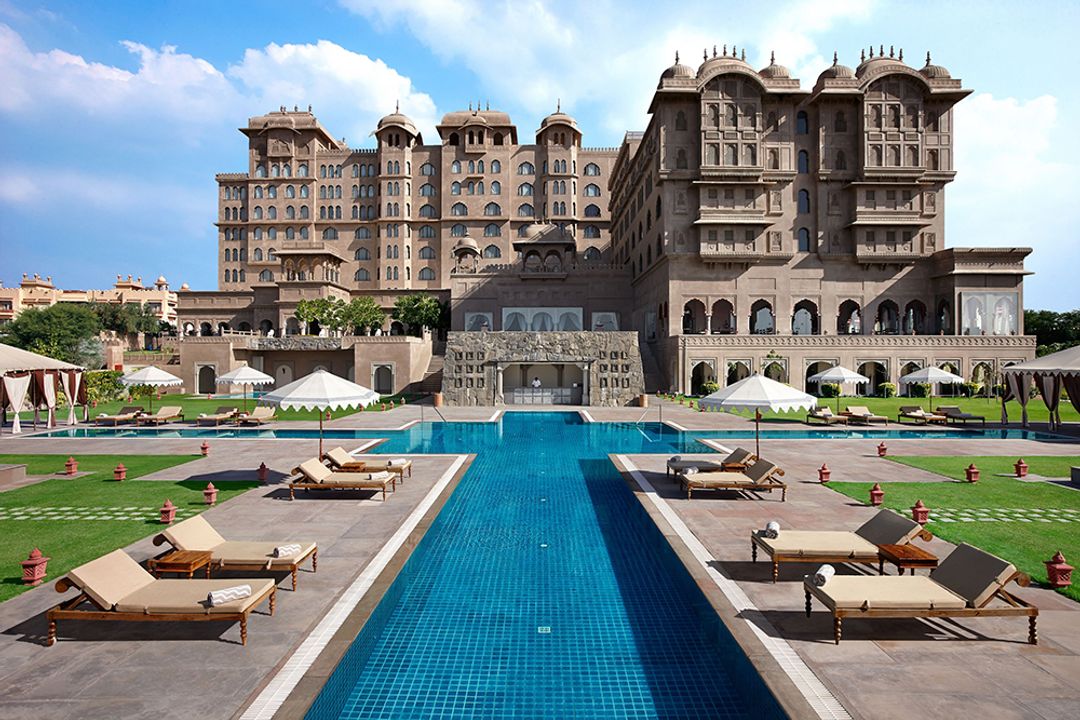
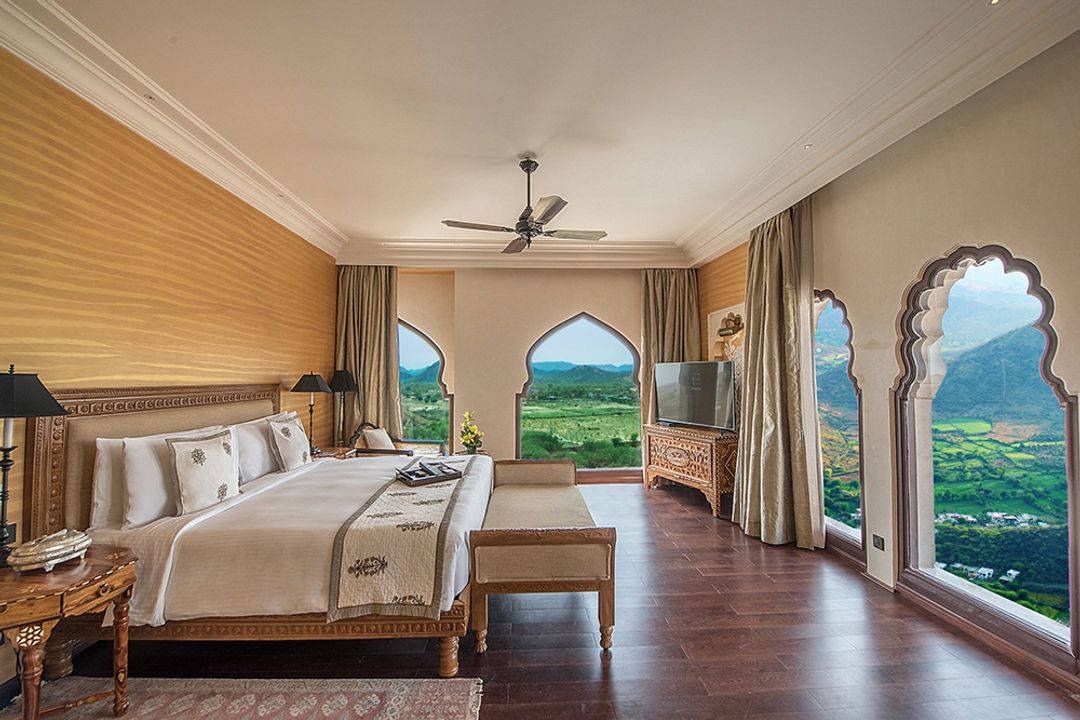
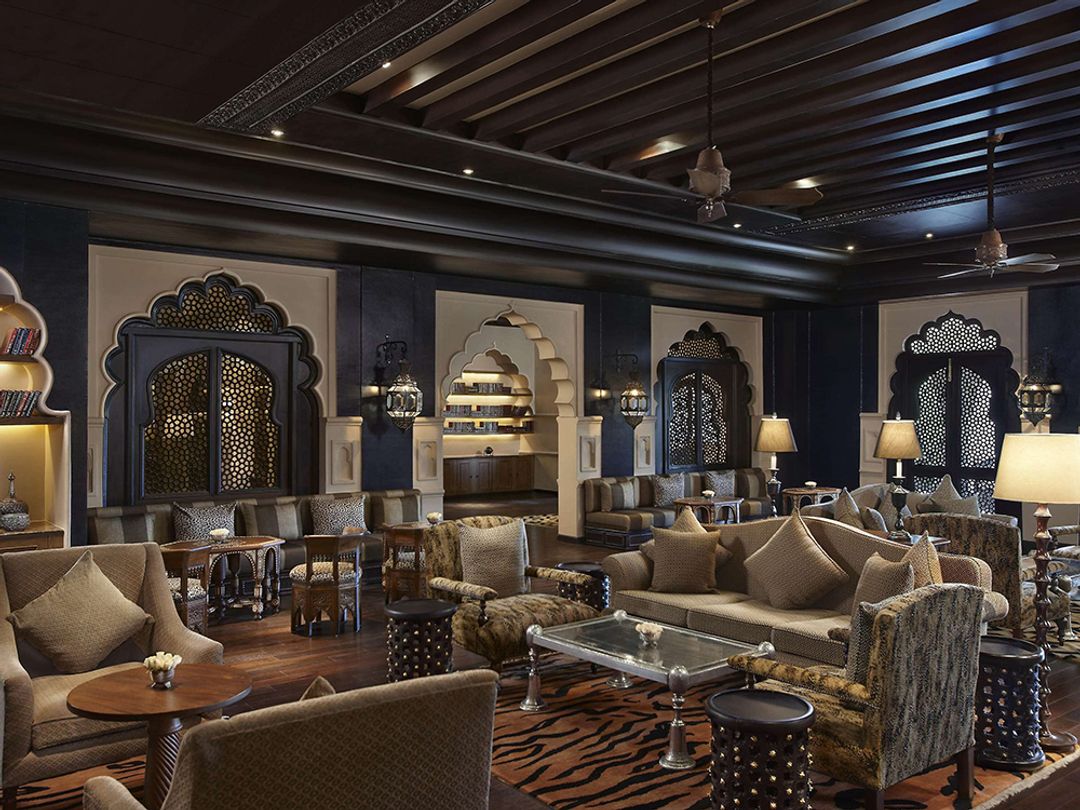
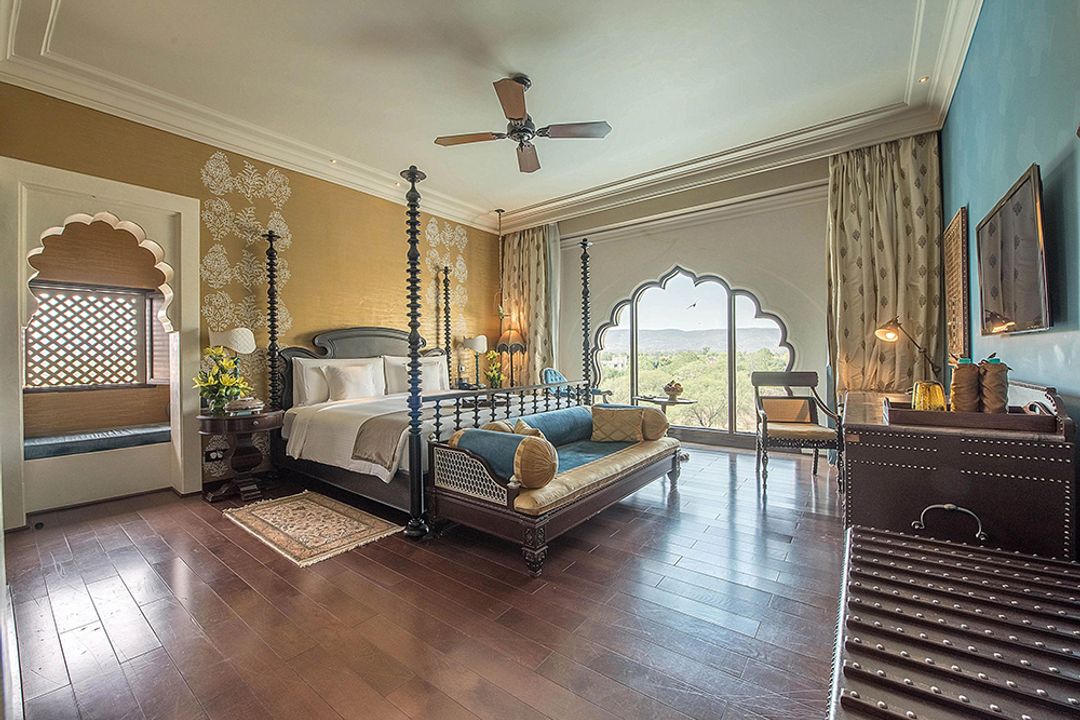
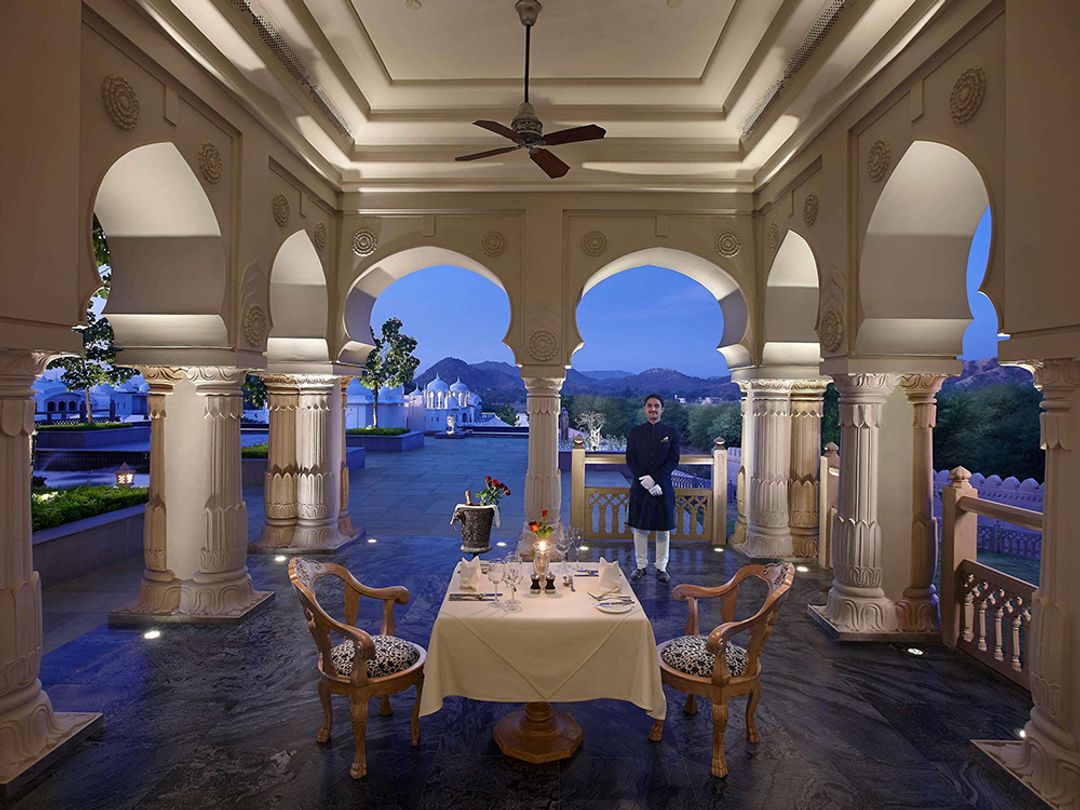
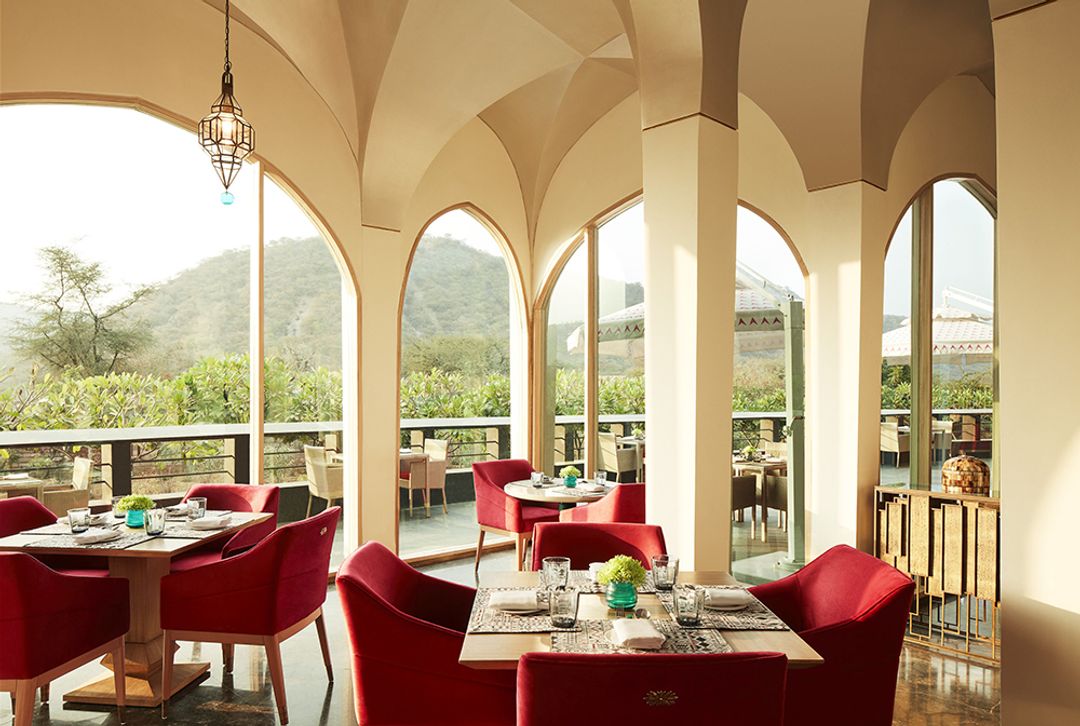
Rajasthan sandstone rises in chhatris, cusped arches, and jharokha balconies across a facade that announces the Fairmont Jaipur as a piece of new-build palace architecture executed with genuine craft ambition rather than superficial pastiche. Opened in 2012 on the Kukas highway north of the city, the property was conceived as a contemporary interpretation of the Rajput-Mughal idiom — the warm honey-coloured stone, the layered skyline of domed pavilions, and the colonnaded terraces all drawn from the vocabulary of the great havelis and forts of the region. The pool courtyard, visible in the exterior image, deploys a long reflecting tank flanked by manicured lawns and timber sun loungers, the stone screen behind it carved with figurative friezes that anchor the water axis to the building's massing in a manner closer to formal Mughal garden planning than resort-hotel convention. Inside, the 245 rooms and suites carry the material language through consistently: dark-stained timber flooring, carved four-poster beds with bobbin-turned posts, arched windows framed in white plasterwork that frame the Aravalli hills beyond. The bar and lounge deepens the palette considerably — navy walls, ebonised beam ceilings, brass-inlaid jali screens, and tiger-print upholstery giving the space an atmosphere of a maharaja's private durbar. The open-air dining terrace, framed by fluted marble columns and horseshoe arches in white marble, looks out across the city's roofscape at dusk, the Aravallis darkening behind it.

Book with PB and get cash back
The Oberoi Rajvilas - Image 1
The Oberoi Rajvilas - Image 2
The Oberoi Rajvilas - Image 3
The Oberoi Rajvilas - Image 4
The Oberoi Rajvilas - Image 5

The Oberoi Rajvilas

Jaipur • Luniawas • SPLURGE

avg. $410 / night

Includes $22 / night in cash back

Cash back is redeemable via Virtual Visa, Venmo, or bank transfer starting 24-48 hours after check-out

The Oberoi Rajvilas Design Editorial

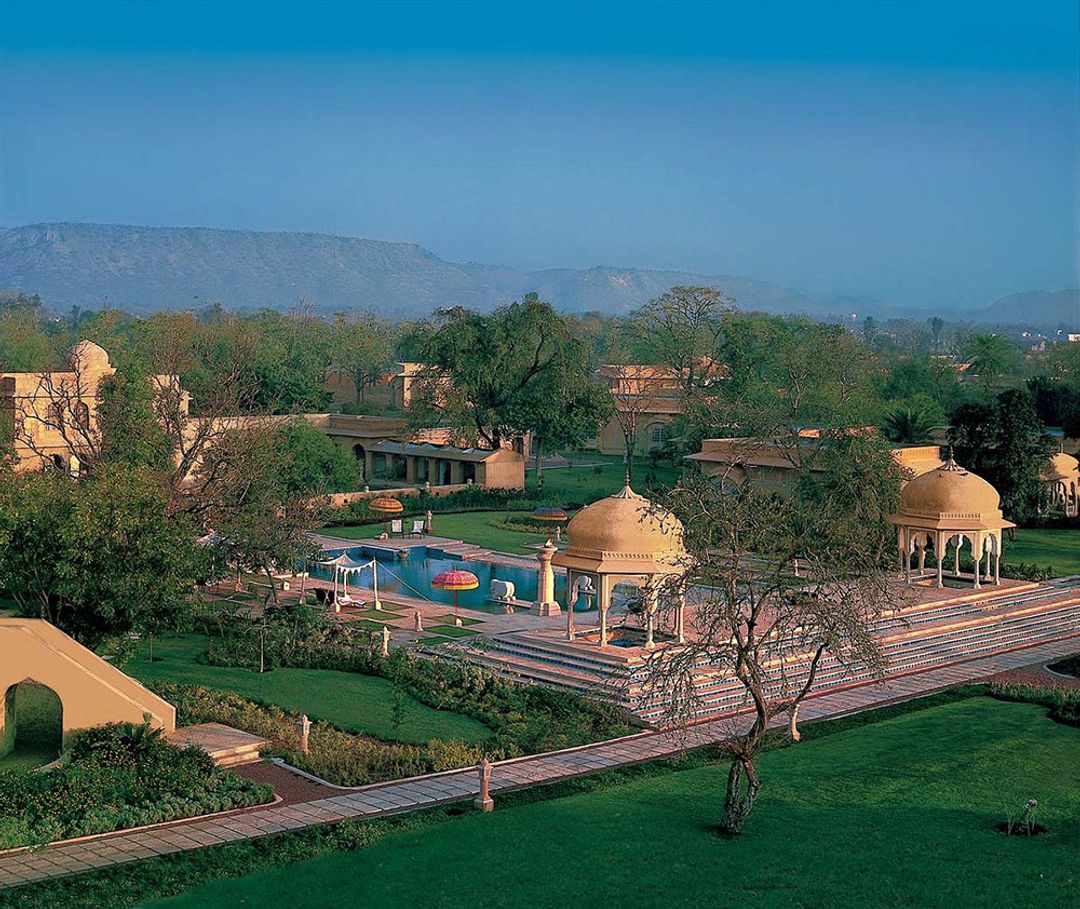
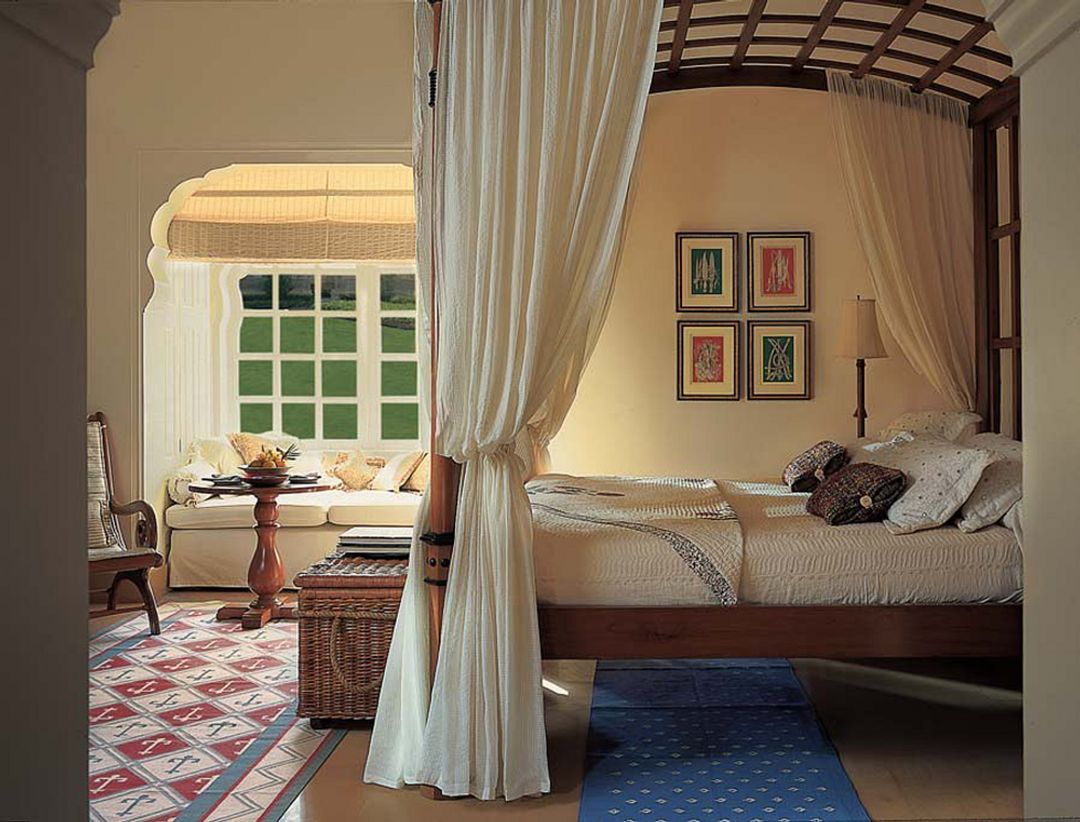
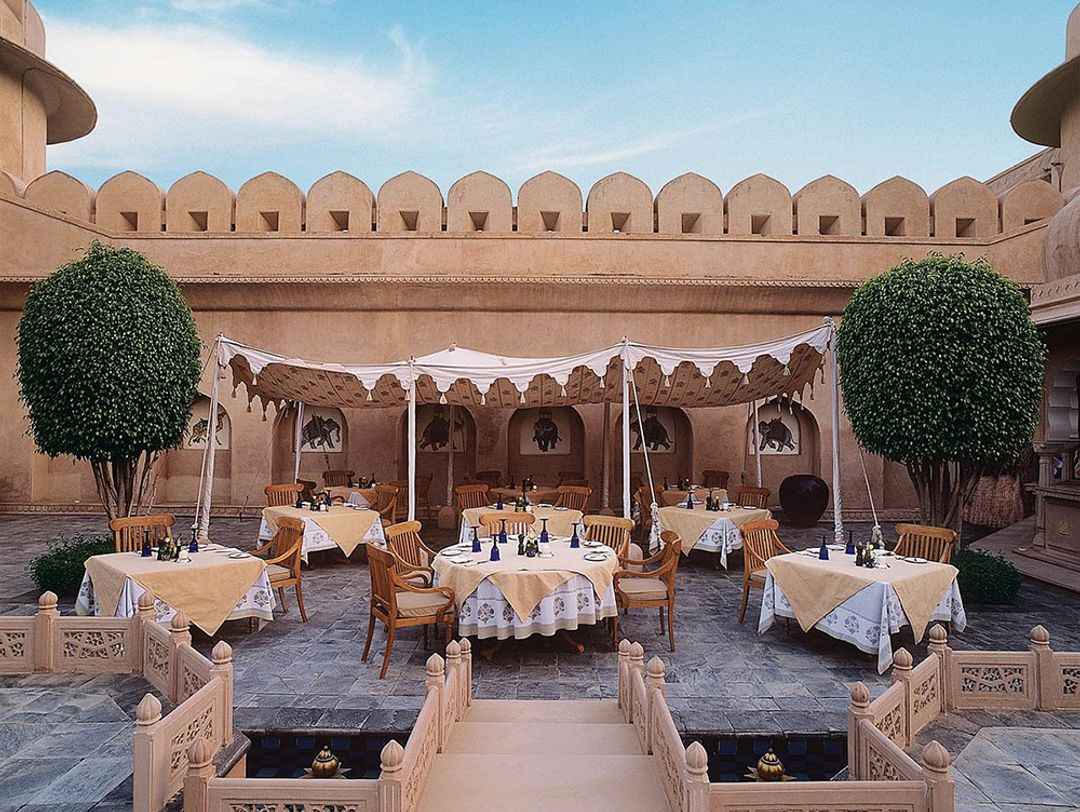
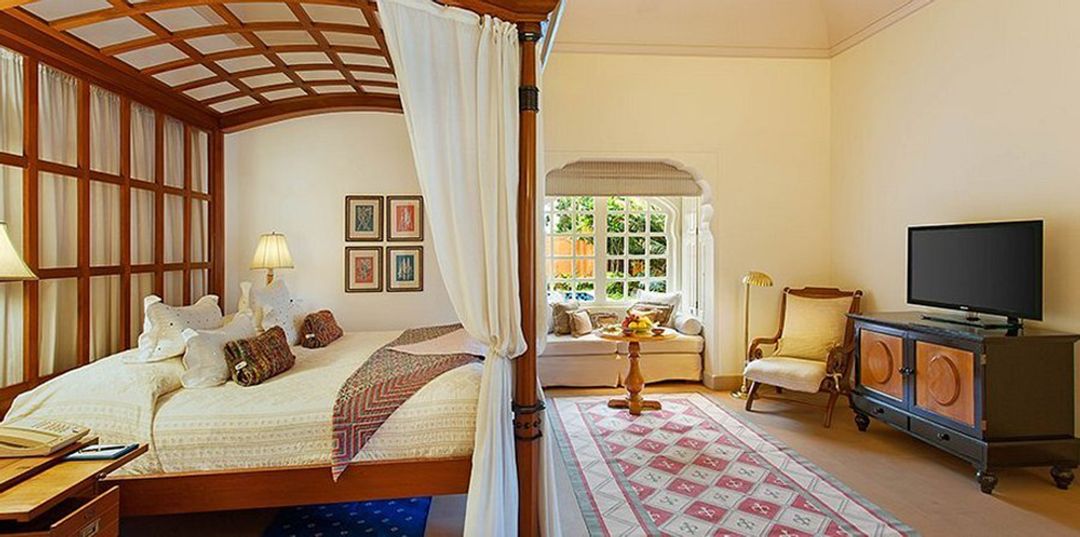
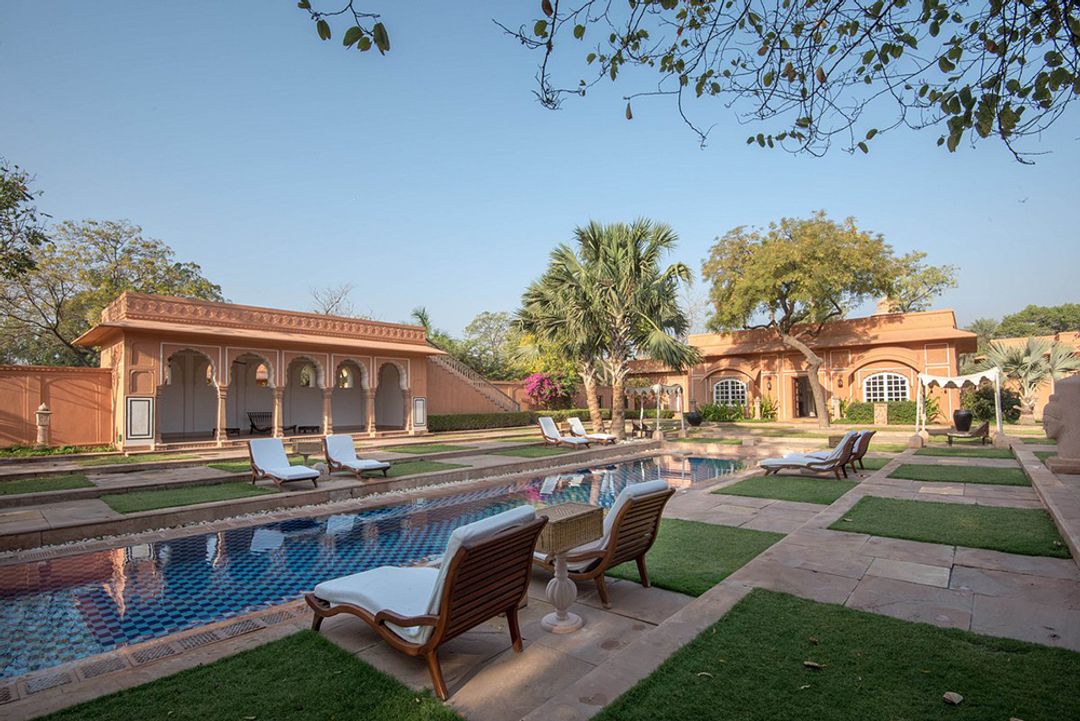
Spread across 32 acres of landscaped grounds on the outskirts of Jaipur, where the Aravalli hills rise in a blue haze beyond the tree canopy, a purpose-built Rajput encampment conceived entirely from scratch presents a more considered proposition than conversion: can new construction genuinely carry the weight of a 300-year-old architectural tradition? At The Oberoi Rajvilas, opened in 1997 and designed by architect Nimish Patel of Abhikram, the answer is largely yes. Domed chattris in warm Jaipur sandstone and painted plaster cluster around a 250-year-old Shiva temple at the property's heart, their ochre and terracotta surfaces absorbing the Rajasthan light in ways that no amount of clever aging could fake. The pool pavilion's colonnaded arcade, visible in the images, draws directly from Mughal garden architecture, its arched bays framing teak sunloungers and a mosaic-tiled lap pool set into clipped lawn panels. Interiors, developed under Oberoi's own design team, sustain the register established outside. Four-poster beds carry barrel-vaulted teakwood canopies latticed in a geometric grid — a detail borrowed from zenana screens — with sheer muslin curtains pooling on dhurrie-covered stone floors patterned in traditional Rajasthani red and ivory. A window seat beneath each trefoil-arched window, upholstered in white, anchors the room's calmer domestic note. The open-air dining courtyard, walled in crenellated honey-coloured stone and shaded by a hand-painted shamiana tent with elephant motifs, gives the property its most atmospheric moment — dinner served as if within a royal fort, the sky above the only ceiling.

Book with PB and get cash back
Raffles Jaipur - Image 1
Raffles Jaipur - Image 2
Raffles Jaipur - Image 3
Raffles Jaipur - Image 4
Raffles Jaipur - Image 5

Raffles Jaipur

Jaipur • Kukas • SPLURGE

avg. $442 / night

Includes $23 / night in cash back

Cash back is redeemable via Virtual Visa, Venmo, or bank transfer starting 24-48 hours after check-out

ALL - Accor property

Raffles Jaipur Design Editorial

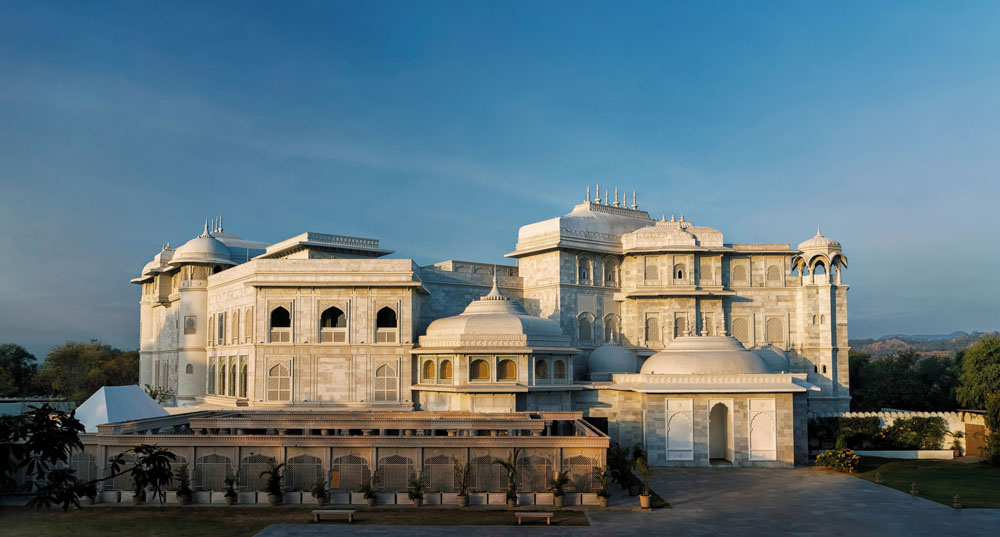
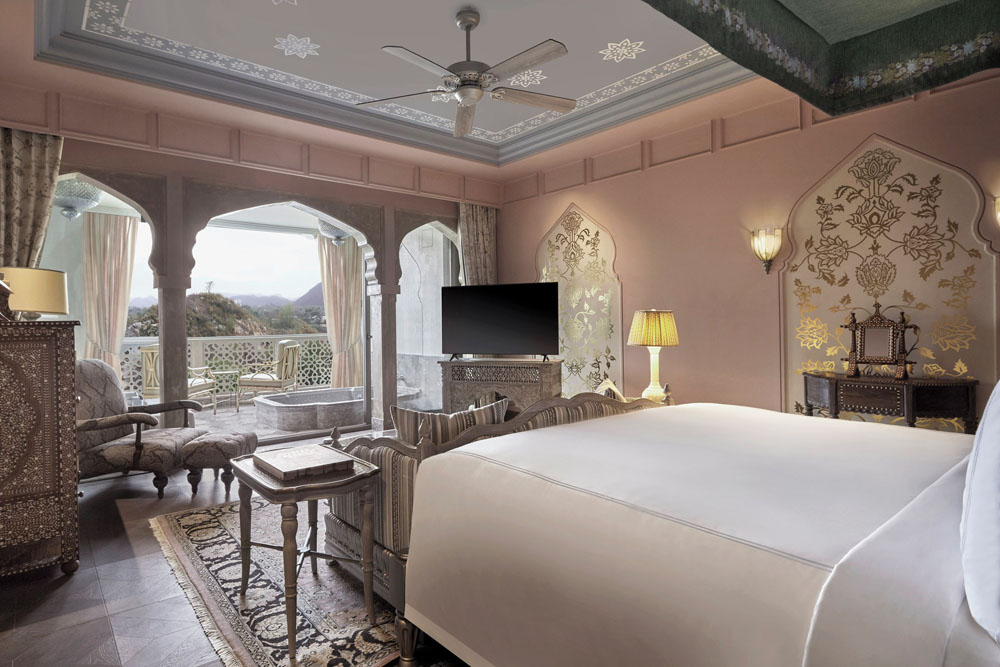
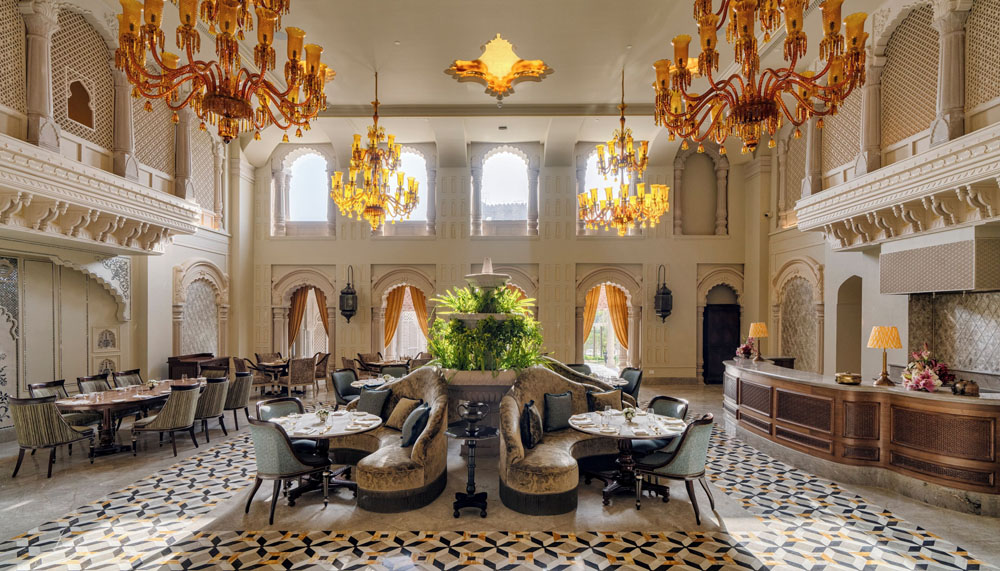
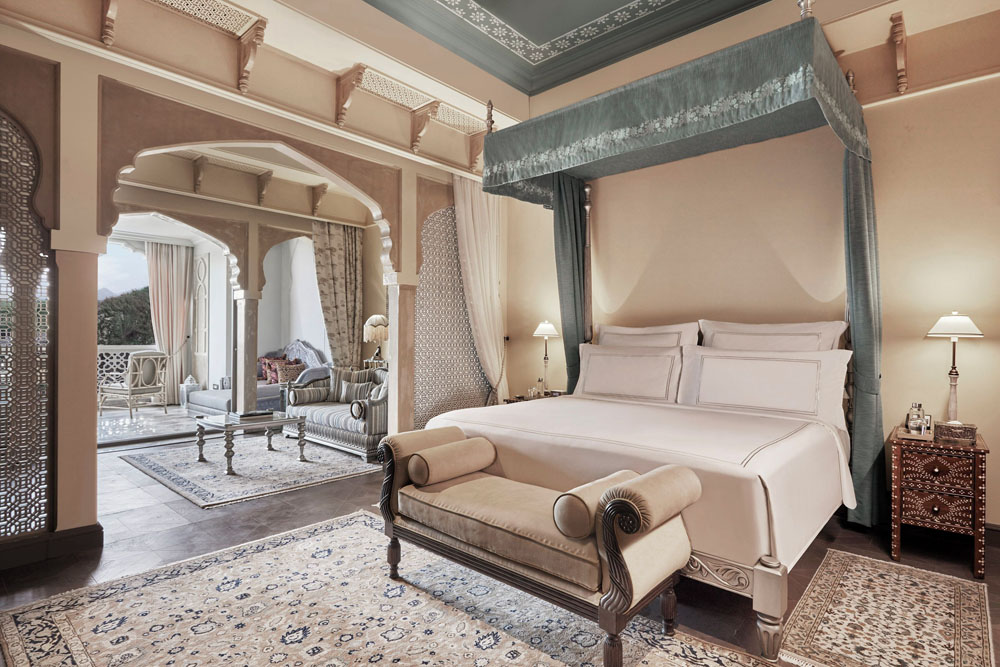
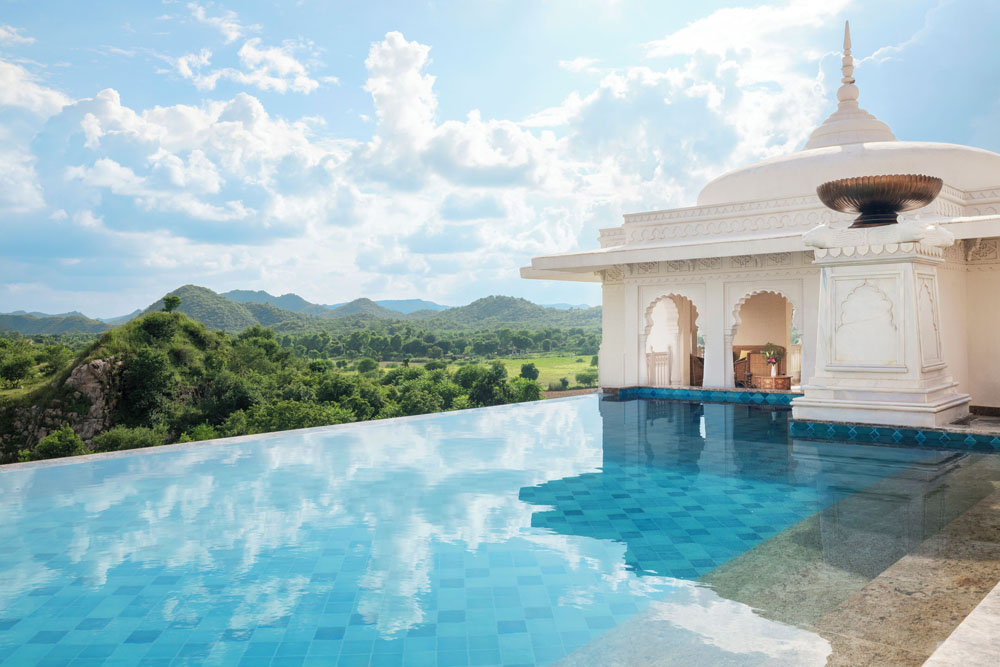
White Makrana marble — the same stone that gives the Taj Mahal its luminous skin — was the primary material chosen for the palace complex that became Raffles Jaipur, a purpose-built property on the outskirts of Kukas that was conceived from the ground up to evoke the idiom of Rajput royal architecture rather than adapt an existing structure. The massing in the exterior image confirms the ambition: domed chhatris, cusped arches, jali screens, and tiered pavilions rise in a composition that draws on the vocabulary of Shekhawati havelis and Mughal garden palaces simultaneously, the whole surface catching the low Rajasthani sun with the quality of carved ivory. Inside, the double-height all-day dining room reveals the scale the architects were working at — amber Murano-style glass chandeliers suspended from an elaborately carved plaster ceiling, geometric inlaid marble floors in black, gold, and cream, and a central planting feature anchoring a room that might otherwise overwhelm. Guest rooms carry the same layered sensibility: four-poster beds draped in celadon silk, mother-of-pearl inlaid side tables, hand-painted gold botanical motifs on blush-washed walls, and cusped marble columns framing private balconies over the Aravalli hills. The infinity pool, edged in teal mosaic and anchored by a white marble pavilion, extends the architectural language into the landscape, the hills beyond completing a panorama that no historic palace could have arranged more deliberately.

Book with PB and get cash back
Six Senses Fort Barwara - Image 1
Six Senses Fort Barwara - Image 2
Six Senses Fort Barwara - Image 3
Six Senses Fort Barwara - Image 4
Six Senses Fort Barwara - Image 5

Six Senses Fort Barwara

Jaipur • Chauth Ka Barwara • SPLURGE

avg. $494 / night

Includes $26 / night in cash back

Cash back is redeemable via Virtual Visa, Venmo, or bank transfer starting 24-48 hours after check-out

IHG® One Rewards property

Six Senses Fort Barwara Design Editorial

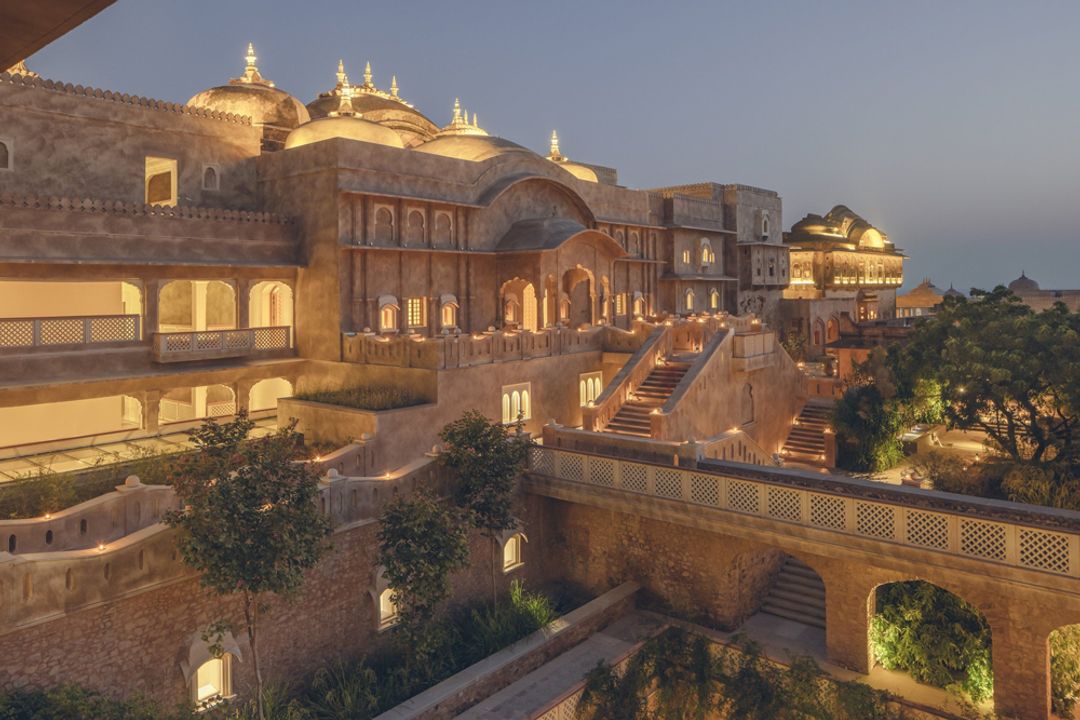
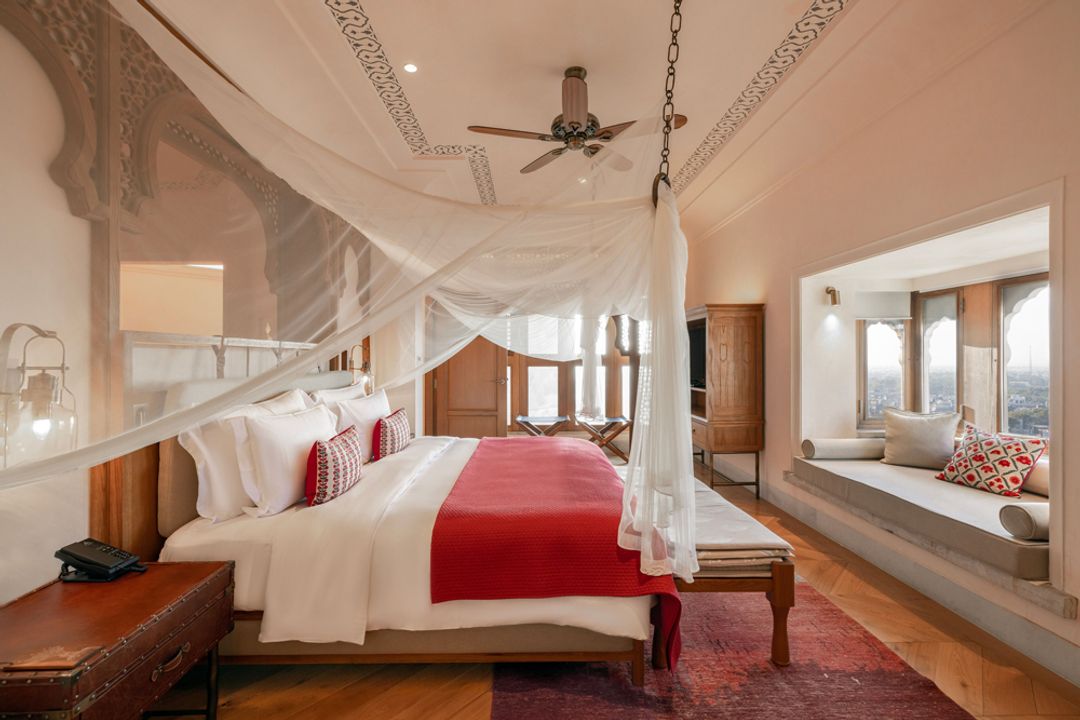
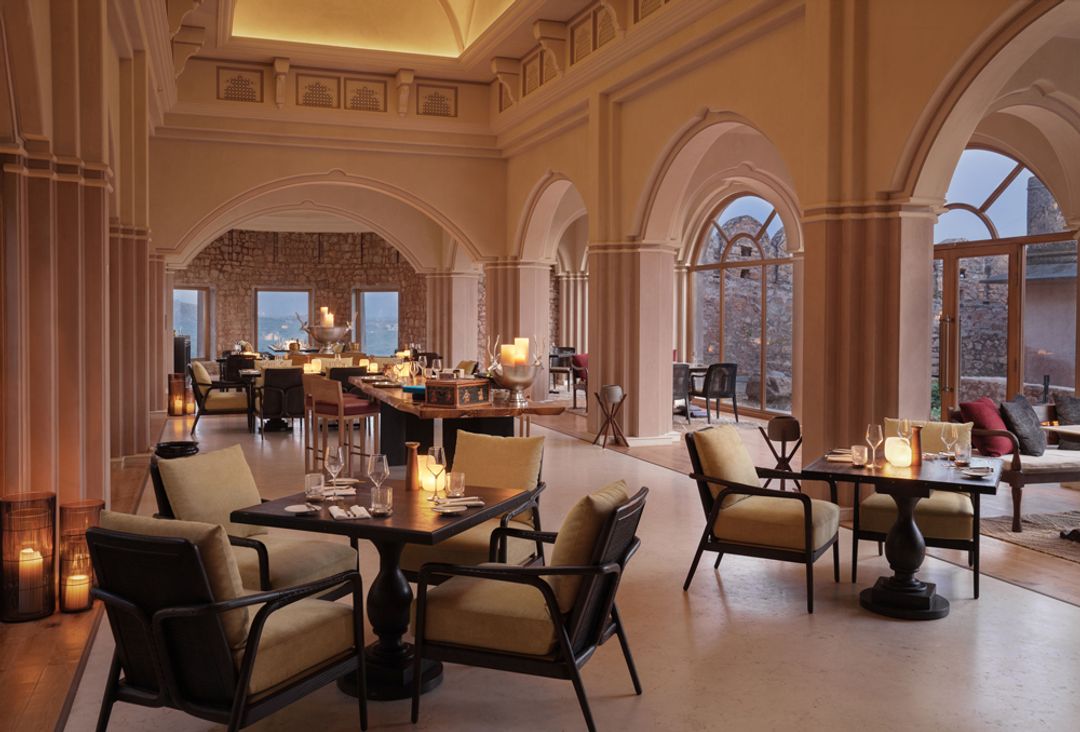
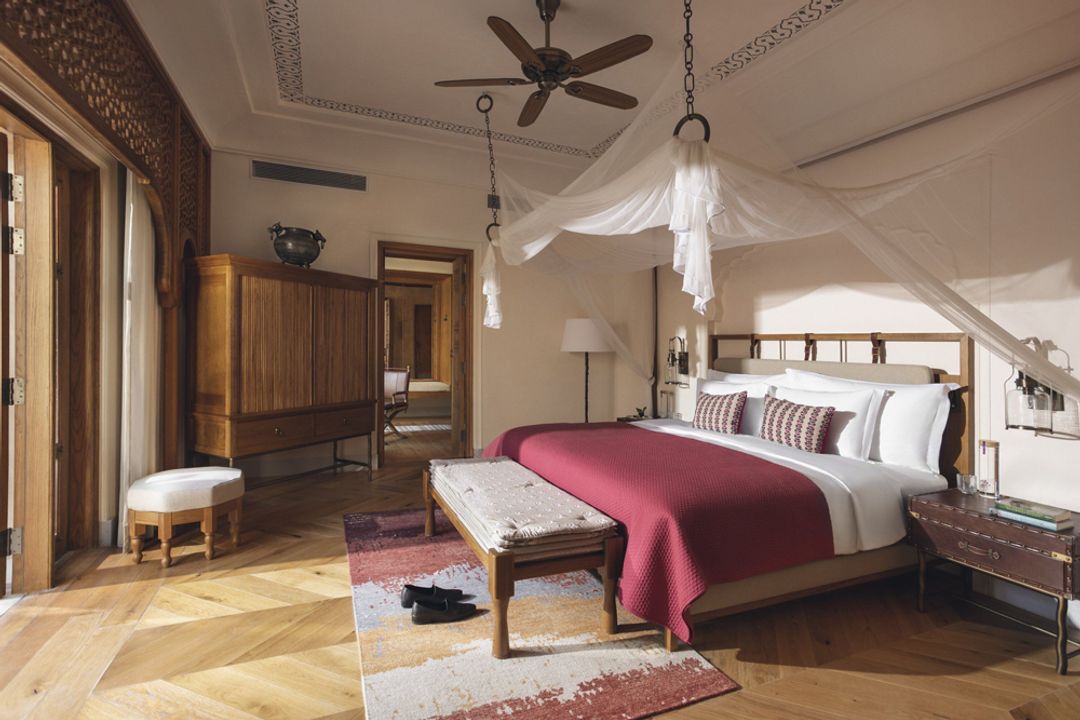
Fourteen centuries of Rajput history preceded Six Senses Fort Barwara by some margin — the fort complex at Chauth Ka Barwara, roughly 80 kilometres south of Jaipur, dates to the 10th century and spent most of its existence as a working stronghold before a decade-long restoration transformed it into one of India's most considered heritage hotel conversions. The project, completed in 2021, involved painstaking reconstruction of collapsed ramparts, domed chhatris, and intricately carved sandstone jali screens, all carried out using traditional Rajasthani craft techniques and local pink-gold stone that gives the compound its warm, amber-lit character — visible in the exterior images here, where gilded domes catch the last of the evening light against a deepening sky. The 48 suites and villas are distributed across the fort's various wings and courtyards, their interiors combining wide-plank timber floors in a herringbone lay, iron four-poster beds draped in gauze canopies, and carved teak armoires with the more tactile vocabulary of Rajasthani craft — ikat-embroidered cushions, antique-finish campaign trunks used as bedside tables, hand-knotted rugs in crimson and ochre. The dining spaces work with the fort's original arched arcade structure, double-height pointed arches framing views over the ancient walls while candlelit tables on polished limestone floors keep the atmosphere closer to a private haveli than a hotel restaurant. The long reflection pool anchored in the central courtyard, flanked by colonnade and mature trees, holds the compound together spatially.

Book with PB and get cash back
Amanbagh - Image 1
Amanbagh - Image 2
Amanbagh - Image 3
Amanbagh - Image 4
Amanbagh - Image 5

Amanbagh

Jaipur • Bhangarh • OVER THE TOP

avg. $962 / night

Includes $51 / night in cash back

Cash back is redeemable via Virtual Visa, Venmo, or bank transfer starting 24-48 hours after check-out

Amanbagh Design Editorial

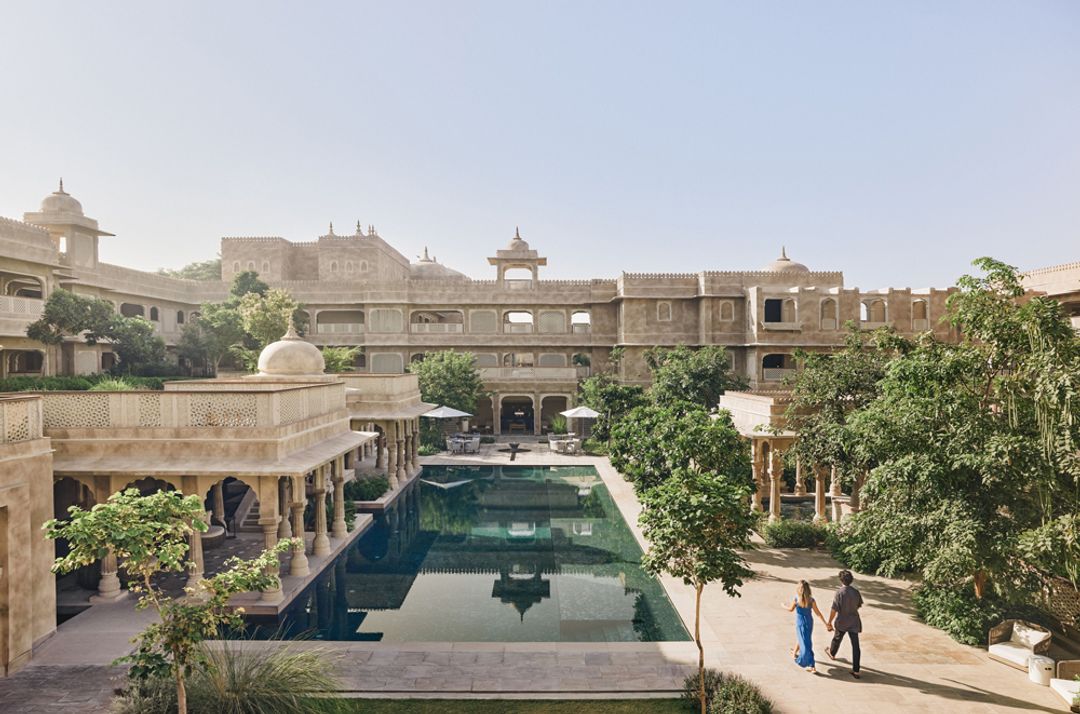
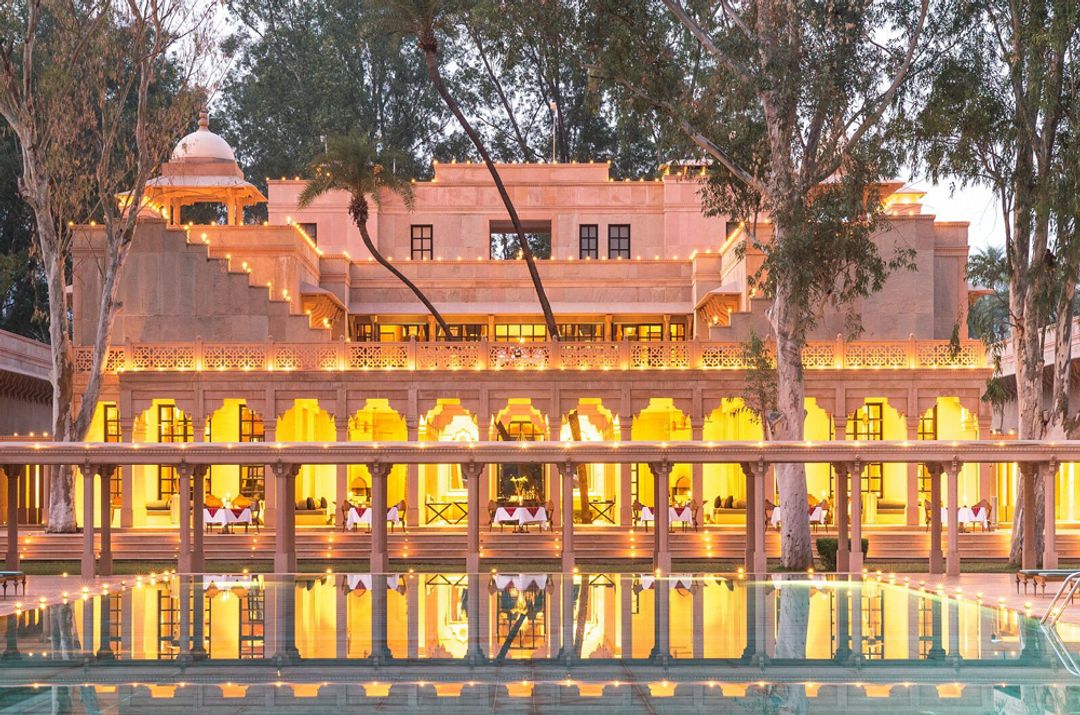
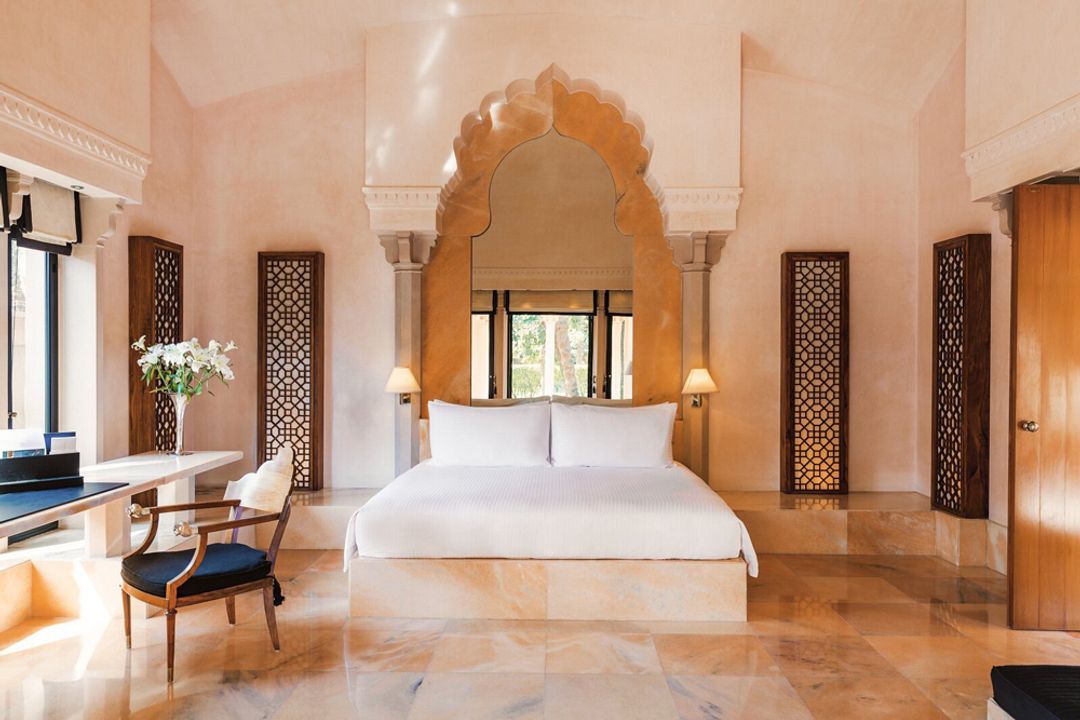
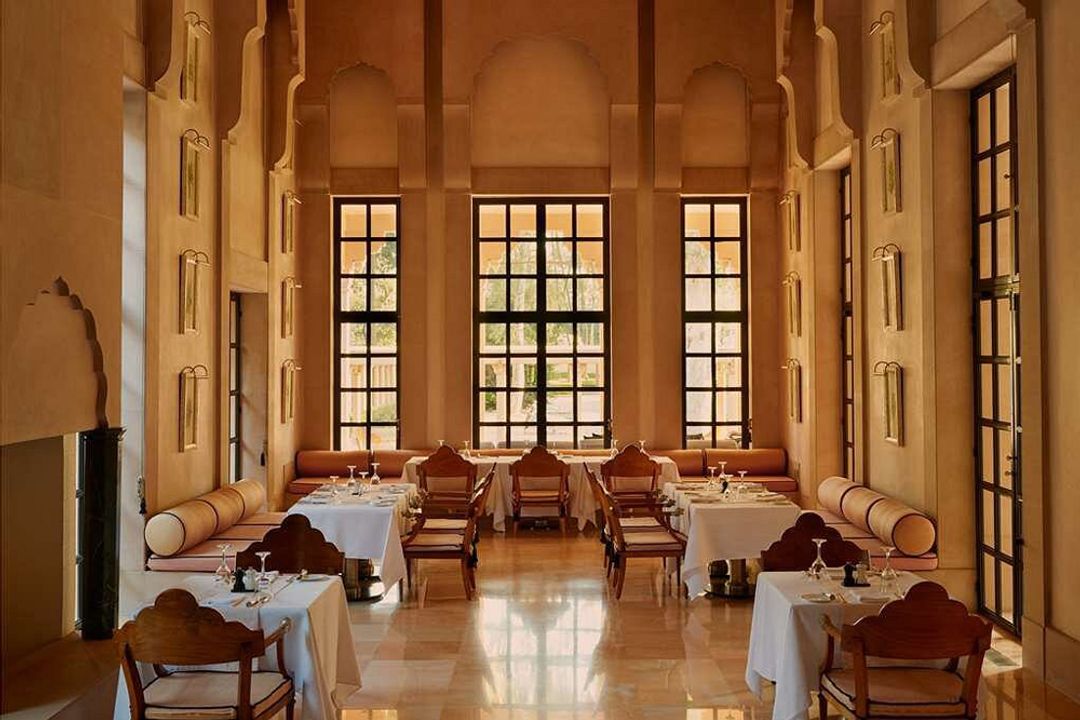
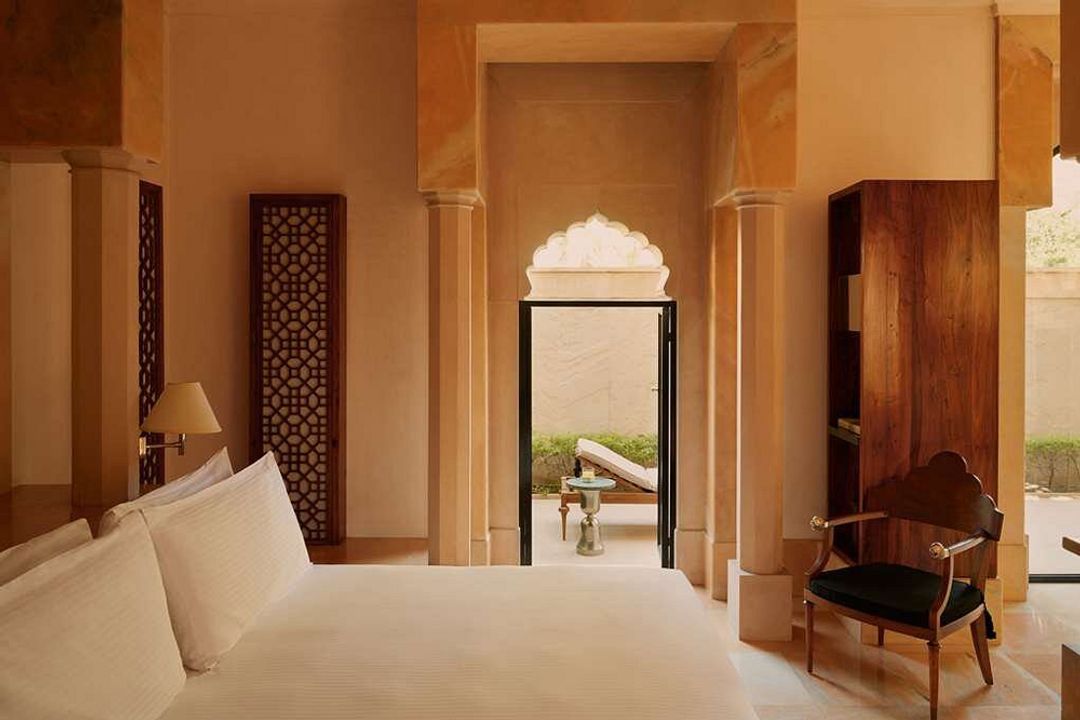
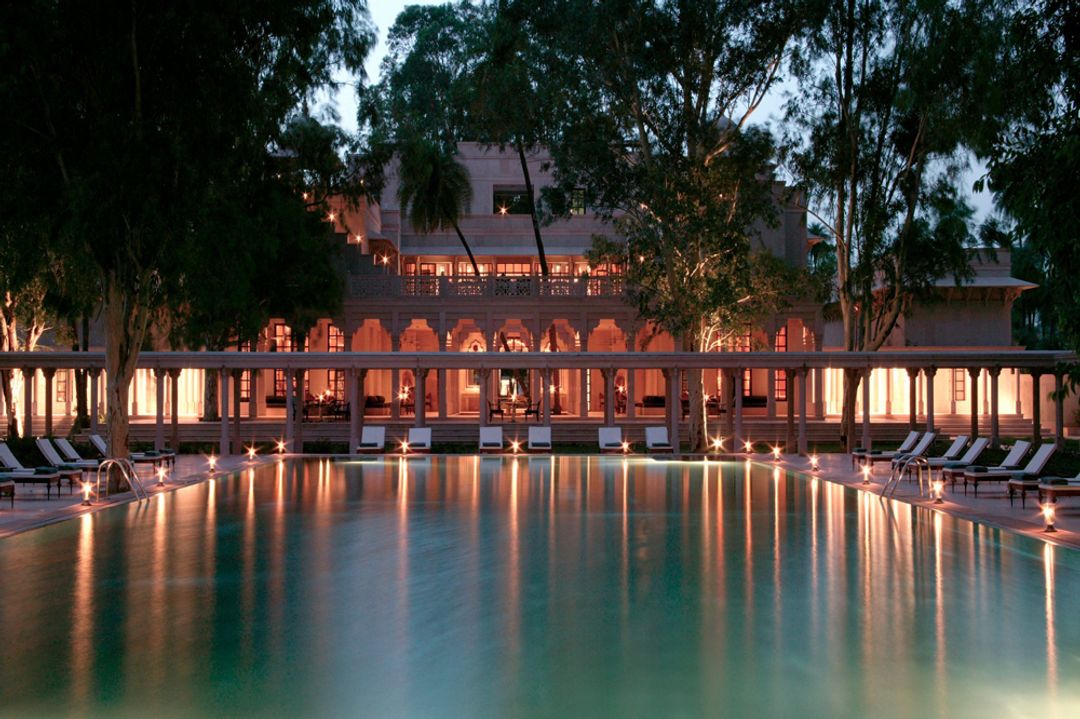
At the edge of the Sariska Tiger Reserve in Rajasthan, where eucalyptus groves shade the approach to the ancient ghost town of Bhangarh, Amanbagh was conceived as a Mughal garden retreat rather than a converted palace — purpose-built from scratch in 2005 to feel as though it had always been there. Kerry Hill Architects designed the property around a formal pool and colonnade that, lit at dusk, mirrors the warm blush of local Dholpur sandstone in the still water below. The architecture draws from the chhatri-crowned pavilion tradition of Rajput palace building: scalloped arches, pierced stone jali screens, stepped terraces, and a low horizontal profile that defers to the surrounding tree canopy rather than asserting itself against it. Inside the 40 haveli suites and pool pavilions, the palette maintains that same restraint — polished marble floors the colour of pale sand, hand-carved ogee arches framing the bed as a baldachin in stone, dark teak joinery set against walls finished in warm lime plaster. The dining room achieves a particular quality of light: tall steel-framed windows drawing the garden inside a double-height hall where leather-cushioned banquettes line the perimeter and brass sconces punctuate the rendered walls. Each guest suite opens through a cusped arch to a private walled courtyard, so that the relationship between interior and exterior remains in constant, quiet conversation — which was, after all, the foundational logic of every Mughal garden that Hill's design so carefully invokes.

Book with PB and get cash back
Jai Mahal Palace - Image 1
Jai Mahal Palace - Image 2
Jai Mahal Palace - Image 3
Jai Mahal Palace - Image 4
Jai Mahal Palace - Image 5

Jai Mahal Palace

Jaipur • Civil Lines • OPTIMIZE

avg. $169 / night

Includes $9 / night in cash back

Cash back is redeemable via Virtual Visa, Venmo, or bank transfer starting 24-48 hours after check-out

Jai Mahal Palace Design Editorial

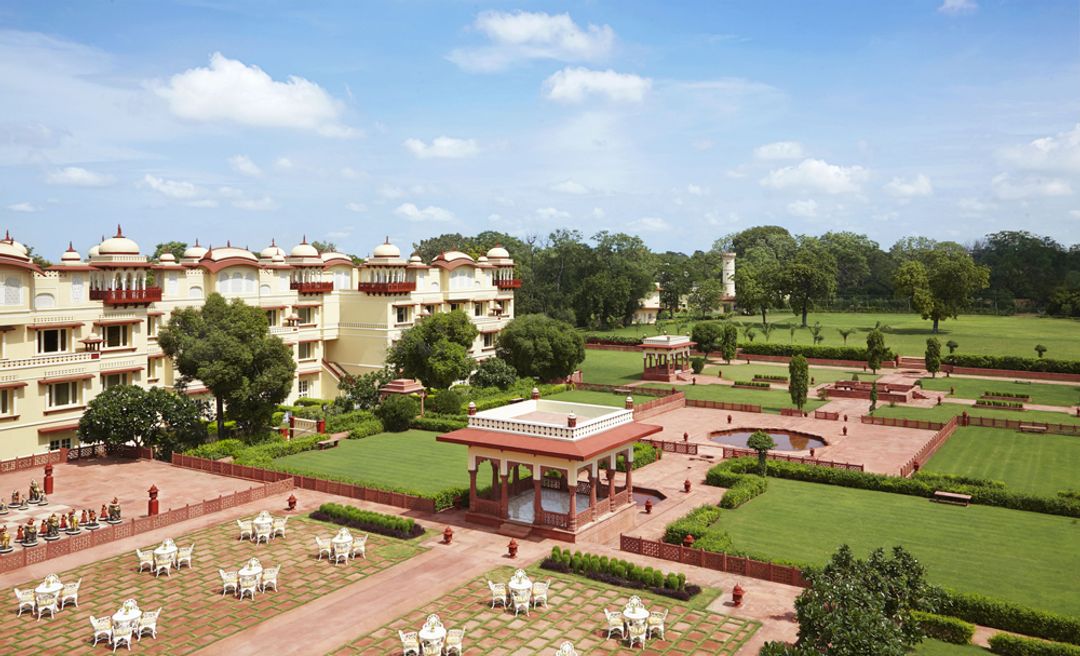
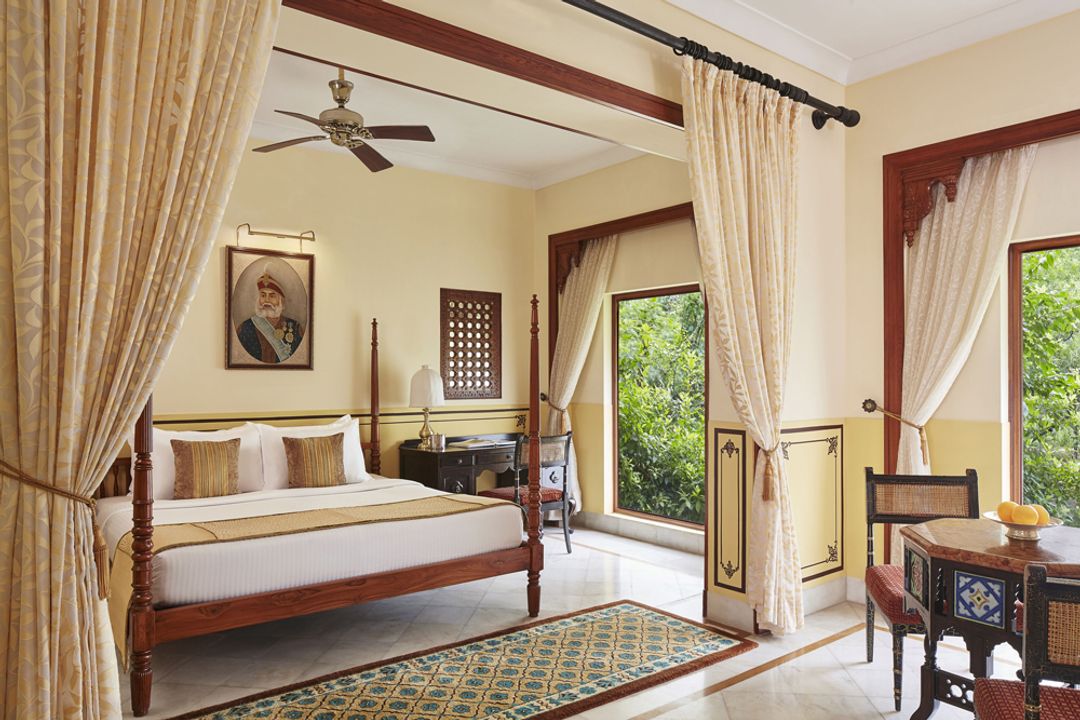
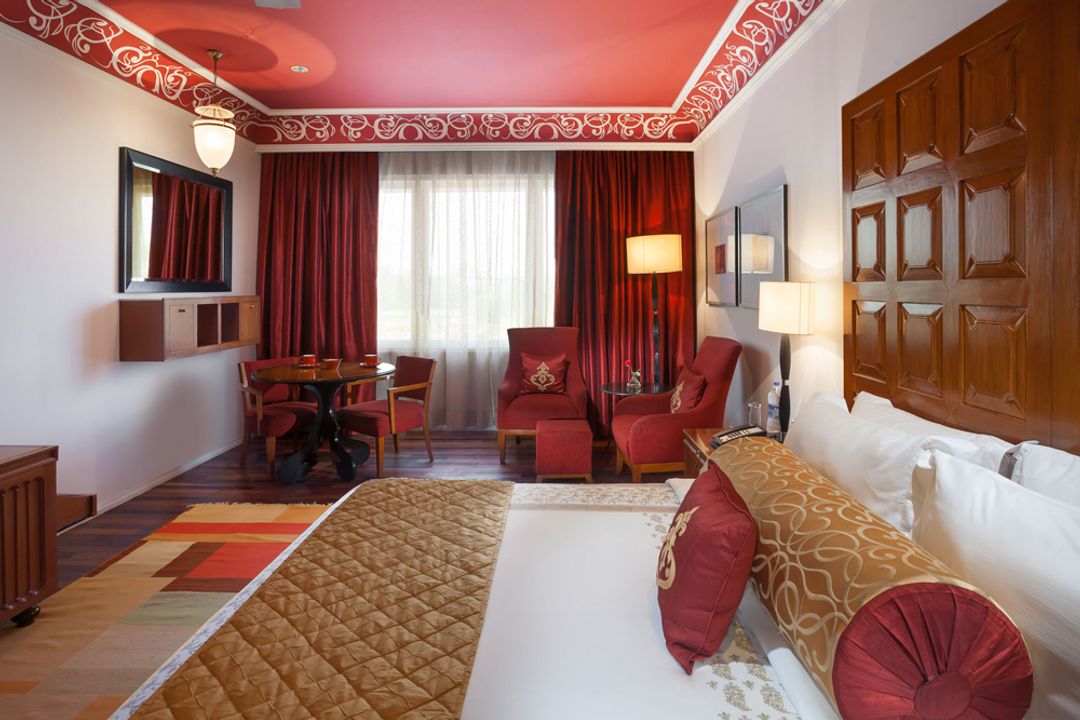
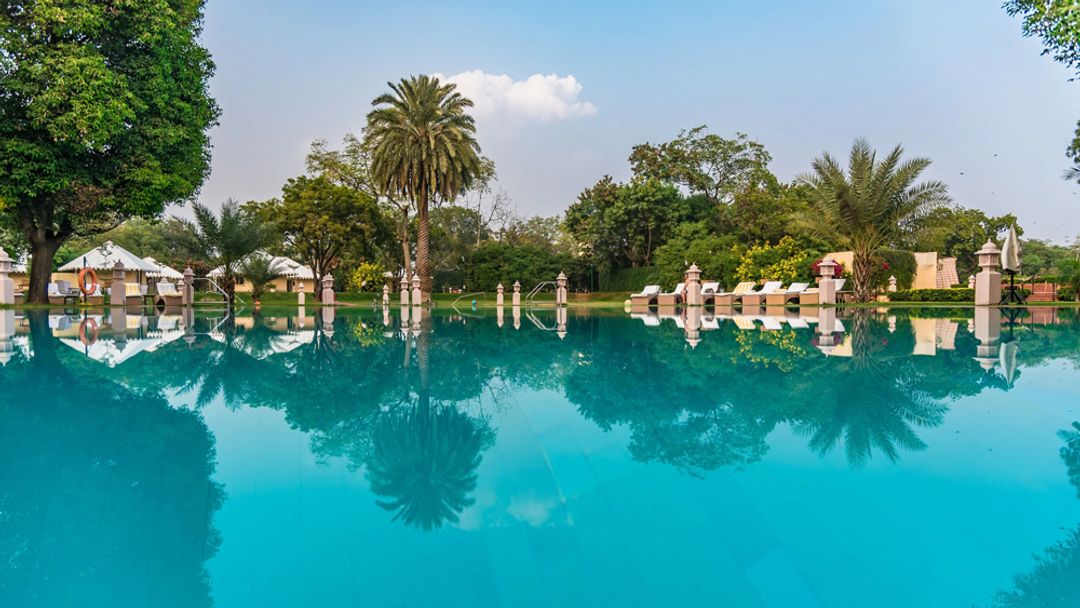
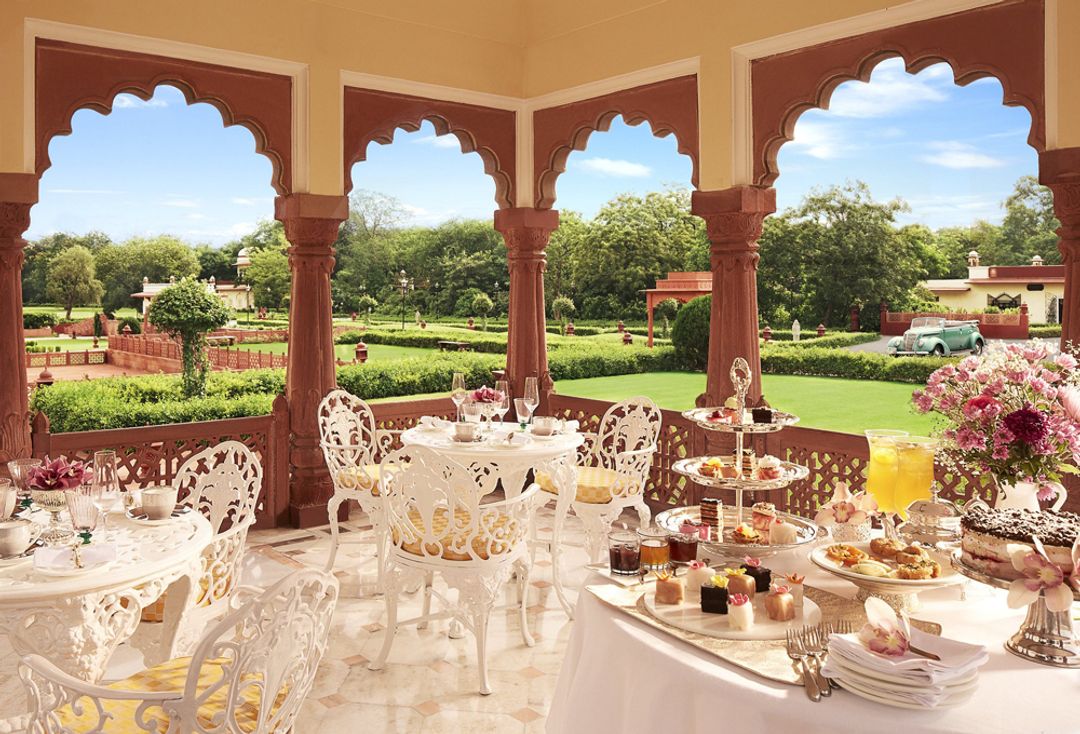
Commissioned in 1745 as the private residence of the Prime Minister of Jaipur, the palace that became Jai Mahal Palace carries three centuries of Rajput and Mughal architectural conversation in its sandstone-and-lime bones. The property was transformed into a Taj Hotels property in the 1970s, and its 100 rooms spread across low-rise wings arranged around a series of formal Mughal gardens — some of the most expansive of any city hotel in Rajasthan, their geometry of clipped hedges, sandstone pathways, and reflective water features visible from the arched verandas where afternoon tea is served on cast-iron garden furniture beneath trefoil arcades of deep terracotta red. The interiors move between two registers. Heritage rooms favour marble floors, carved wooden four-poster beds with turned posts, latticed jali panels filtering garden light, and oil portraits of former maharajas lending each space the atmosphere of a princely guesthouse rather than a hotel room. Contemporary wing rooms shift to lacquered crimson ceilings with painted scrollwork borders, dark wood headboards with geometric panelling, and parquet flooring in warm amber tones — a bolder palette that acknowledges Jaipur's reputation as the Pink City without resorting to literal imitation. The pool, one of the largest in the Civil Lines area, sits within a landscape of date palms and bougainvillea, its white-painted chattri-topped pillars marking the boundary between manicured lawn and water.

Book with PB and get cash back
Devi Ratn, Jaipur - Image 1
Devi Ratn, Jaipur - Image 2
Devi Ratn, Jaipur - Image 3
Devi Ratn, Jaipur - Image 4
Devi Ratn, Jaipur - Image 5

Devi Ratn, Jaipur

Jaipur • Sumel • OPTIMIZE

avg. $184 / night

Includes $10 / night in cash back

Cash back is redeemable via Virtual Visa, Venmo, or bank transfer starting 24-48 hours after check-out

Devi Ratn, Jaipur Design Editorial

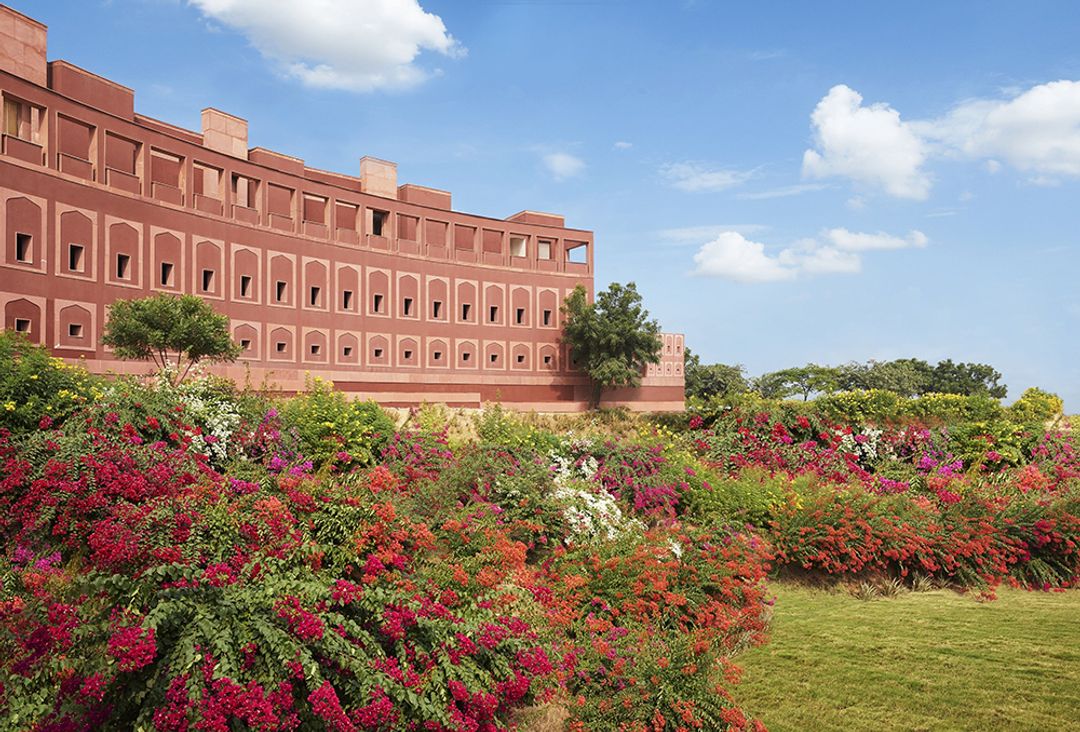
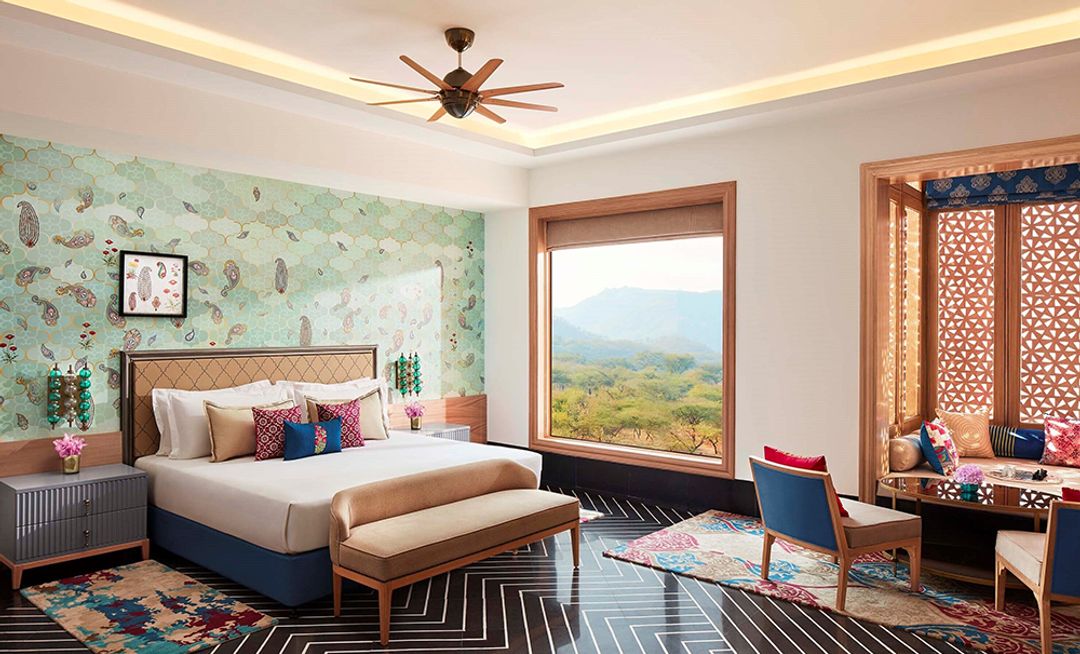
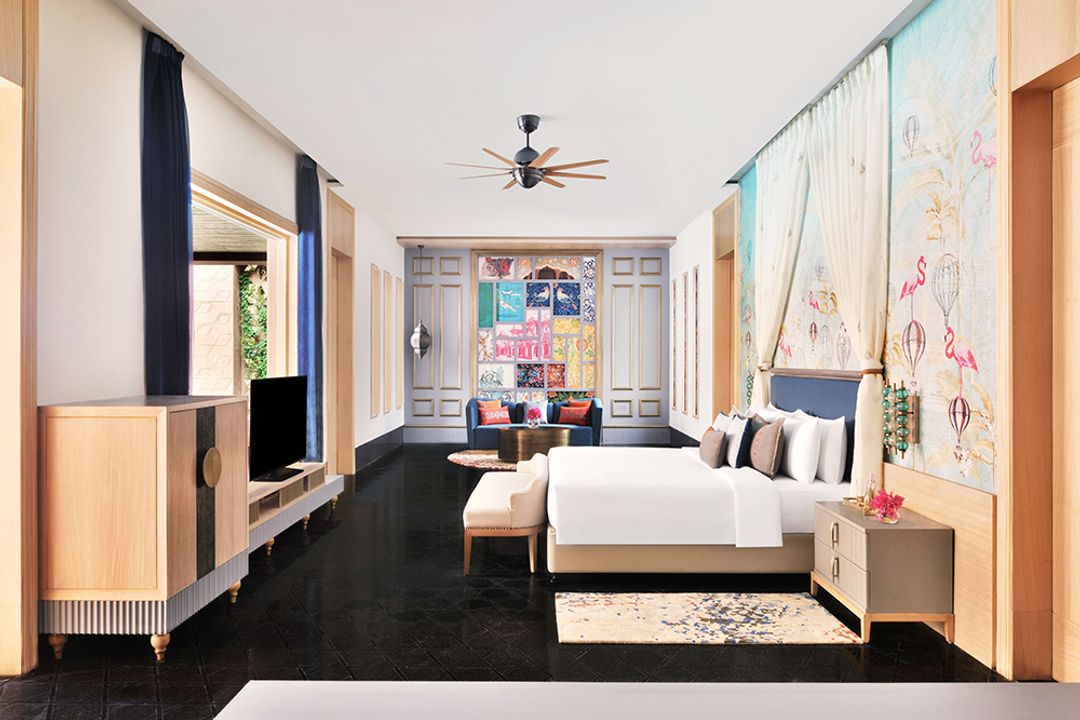
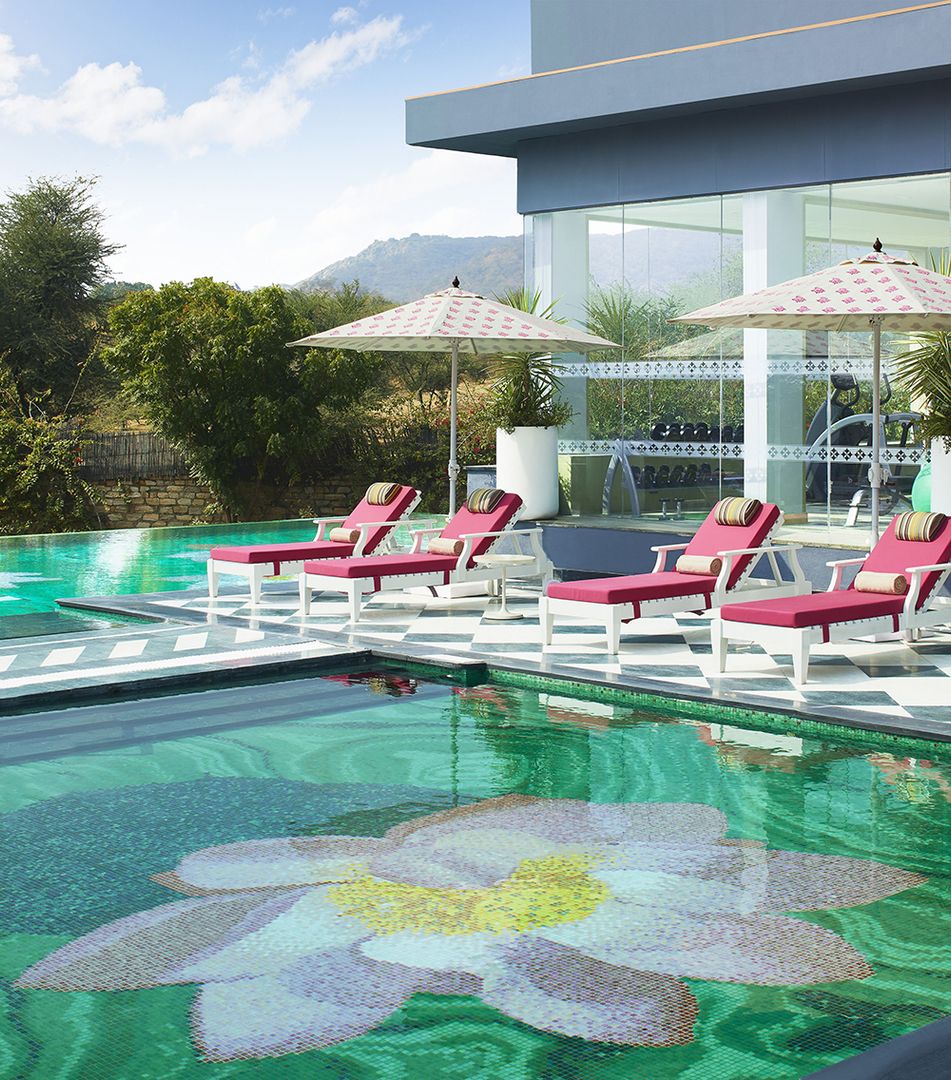
Pressed against the Aravalli foothills on Jaipur's northern fringe, where the city's famous pink sandstone palette meets scrubland and open sky, Devi Ratn Jaipur was conceived by the designers at Studio Wrap as a contemporary reimagining of Rajput fortified architecture. The exterior reads as something between a haveli and a garrison — deep terracotta render, arched recesses in rhythmic grid formation, and stepped massing that follows the contours of the hill rather than asserting itself against them. Bougainvillea in crimson and white cascades across the lower gardens, softening the building's severe geometry into something warmer and more inviting. Inside, the property's 98 rooms are where the design argument becomes most animated. Each category takes a distinct decorative approach — one room deploys a mint-ground paisley wallcovering with tourmaline pendant lamps and a herringbone dark stone floor; another gives over an entire wall to a large-scale flamingo-and-hot-air-balloon mural framed in panelled joinery, the palette running between sky blue and warm ash timber. The dining pavilion is perhaps the most architecturally resolved space: pointed Mughal arches, glazed from floor to springing, frame the Aravalli ridge beyond in a sequence that gives the room the quality of a belvedere. At the pool, a mosaic floor with oversized floral motifs in jade and white tile turns the water itself into an ornamental surface — an exuberant note fully in keeping with the hotel's refusal to treat regional tradition as a reason for restraint.
Book with PB and get cash back
Rambagh Palace, A Taj Hotel - Image 1
Rambagh Palace, A Taj Hotel - Image 2
Rambagh Palace, A Taj Hotel - Image 3
Rambagh Palace, A Taj Hotel - Image 4
Rambagh Palace, A Taj Hotel - Image 5

Rambagh Palace, A Taj Hotel

Jaipur • Rambagh • SPLURGE

avg. $456 / night

Includes $24 / night in cash back

Cash back is redeemable via Virtual Visa, Venmo, or bank transfer starting 24-48 hours after check-out

Rambagh Palace, A Taj Hotel Design Editorial

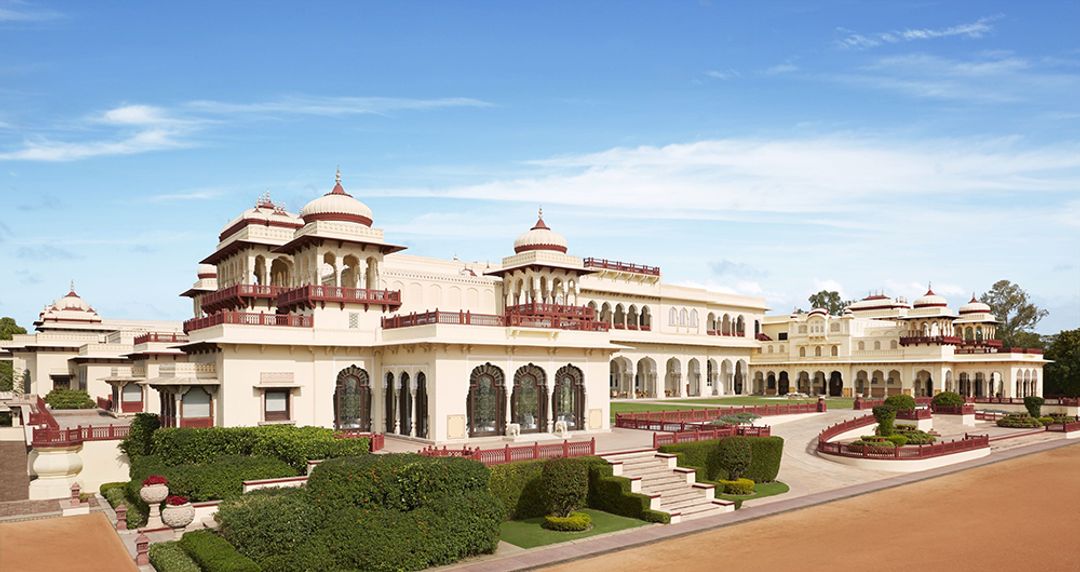
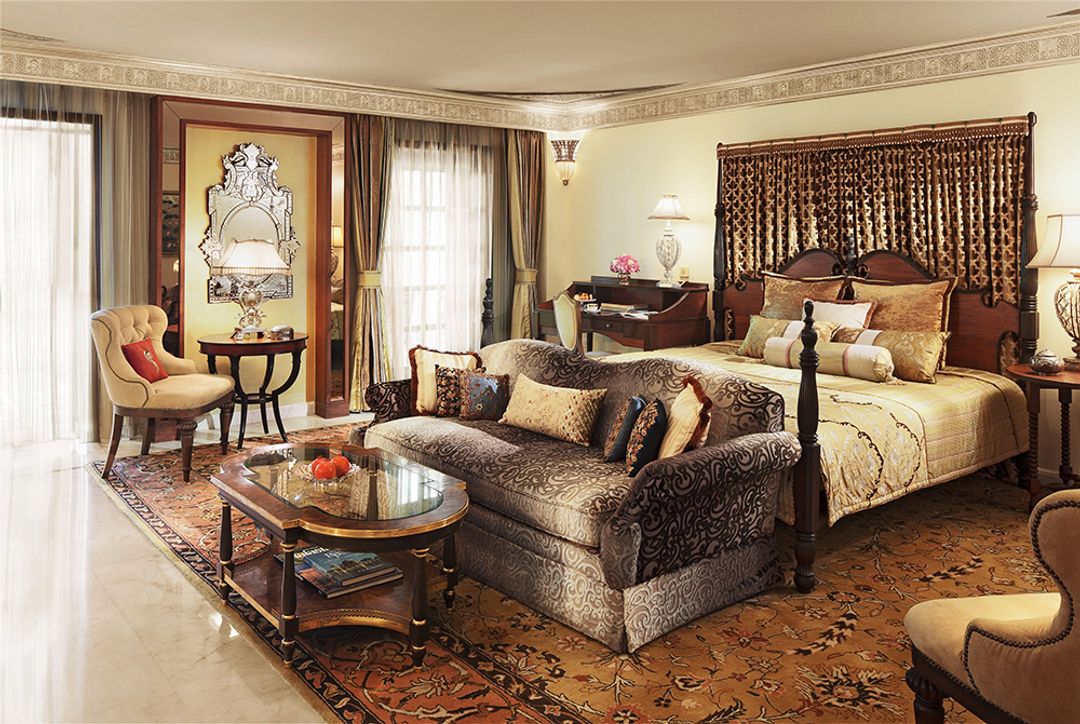
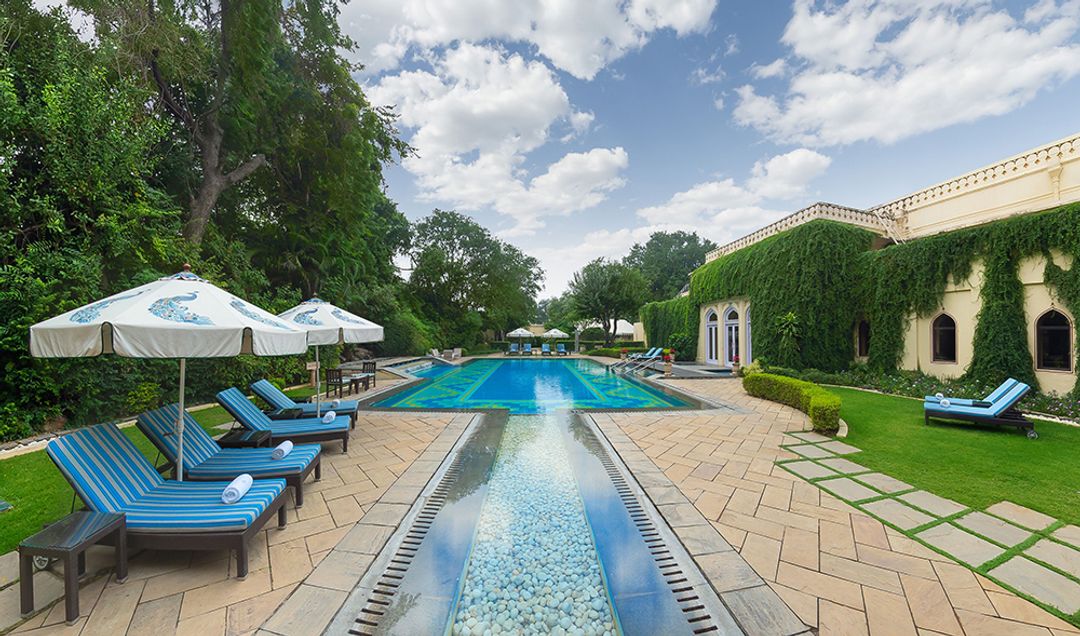
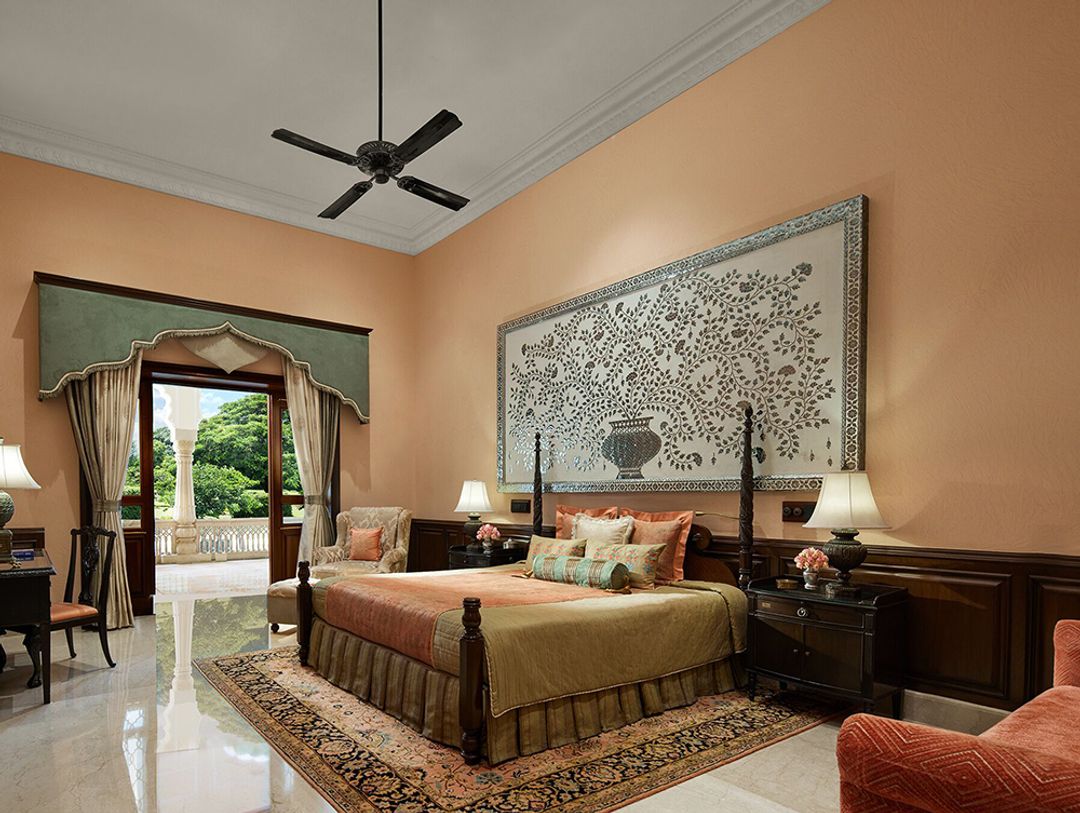
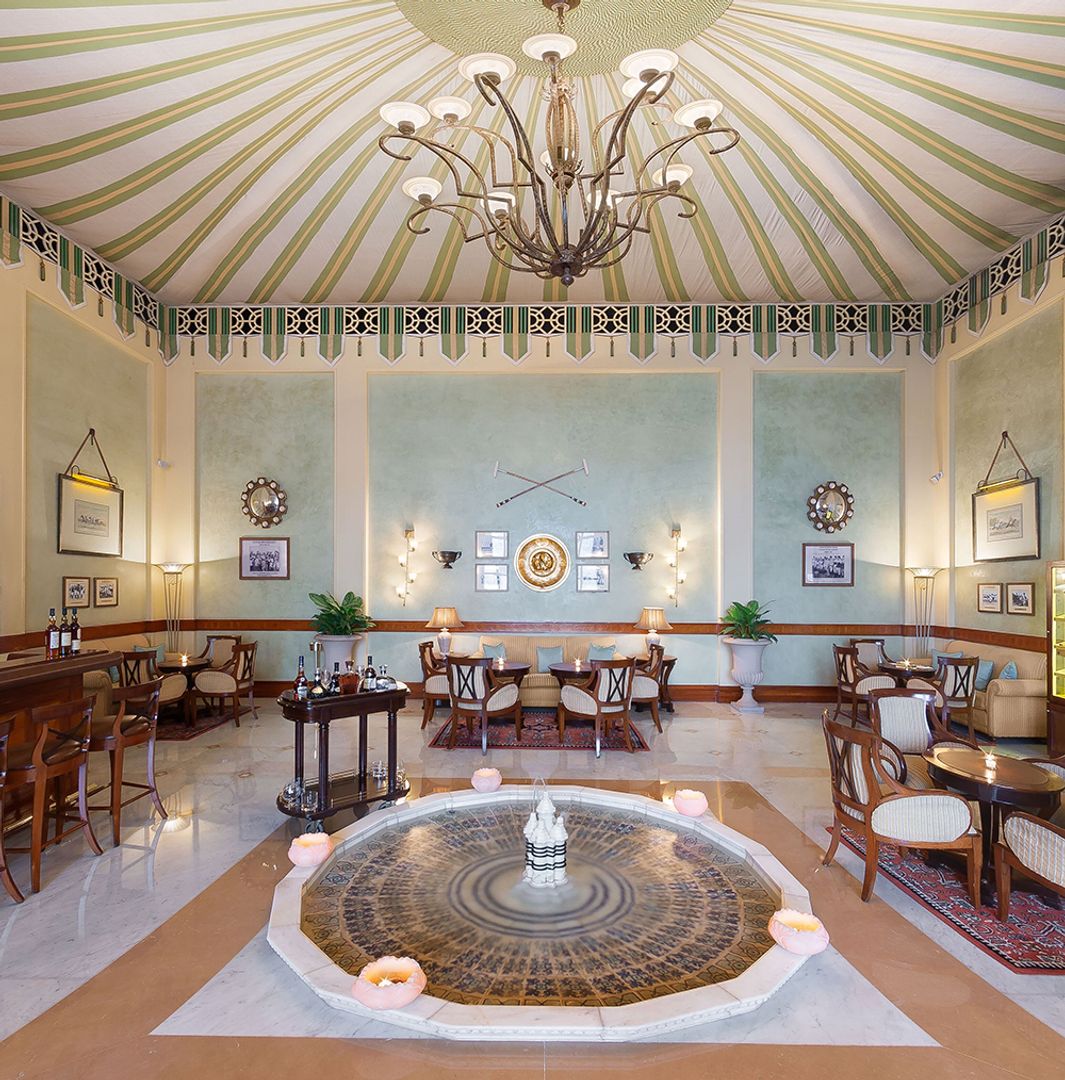
Once a hunting lodge built for the Maharaja of Jaipur in 1835, then a royal residence, then a guest house for visiting dignitaries, the building that became Rambagh Palace carried three distinct lives before the Taj Hotels group converted it into a hotel in 1957. That layered history is precisely what gives the property its atmosphere — the pale sandstone facades, arched colonnades, and chattri-topped pavilions visible across its fourteen acres were not designed for hospitality but for ceremonial grandeur, and that distinction still registers in every proportion. The interiors sustain the register established outside. Guest rooms are dressed in dark teak four-poster beds with carved headboards, hand-knotted Rajasthani carpets, and large-format marble floors that keep the rooms cool and luminous simultaneously. Walls carry friezes of fine plasterwork, and in the higher-category suites a bead-curtained headboard panel evokes the craftsmanship traditions of the Jaipur court. The pool terrace introduces a more relaxed rhythm — a long swimming pool fed by a ripple channel paved in pale stone, ringed by clipped hedges and mature trees with peacock-printed umbrellas threading in the Rajput vocabulary. The polo bar, its ceiling painted in green and ivory tent stripes above a mosaic floor fountain, draws directly on the Jaipur royal family's well-documented equestrian traditions. Across its 78 rooms and suites, Rambagh Palace holds its palatial origins without apology.

Best hotels in Jaipur | A Curated Visual Guide to Top Stays