Best hotels in Prague, Czech Republic | Visually Compare Top Stays Side-by-Side
Welcome to PressBeyond - a curated visual guide to design-driven hotels and the fastest way to compare them.
An Overview of the Boutique & Luxury Hotel Landscape in Prague, Czech Republic
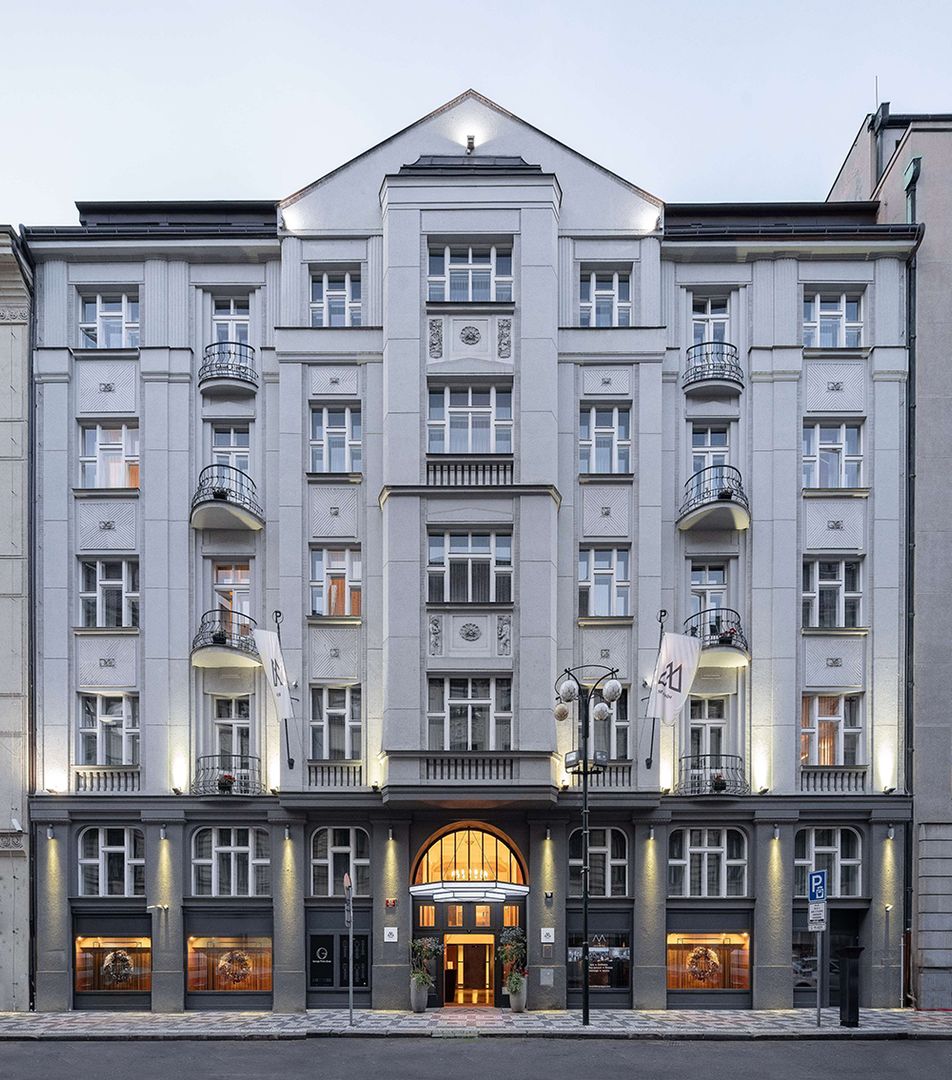
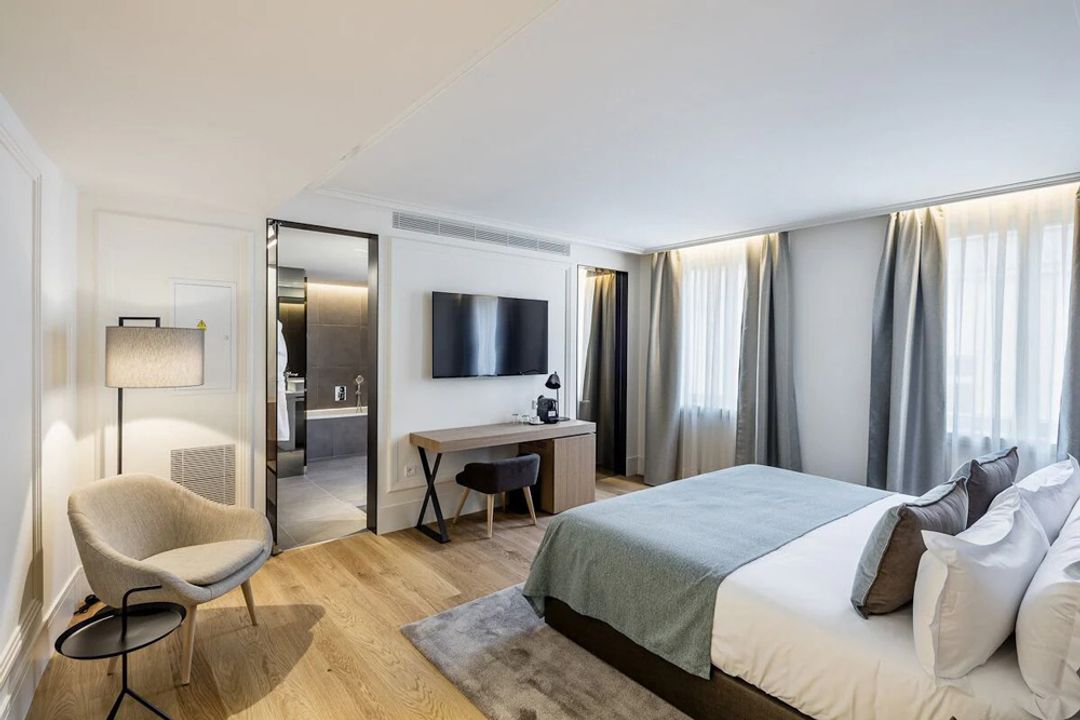
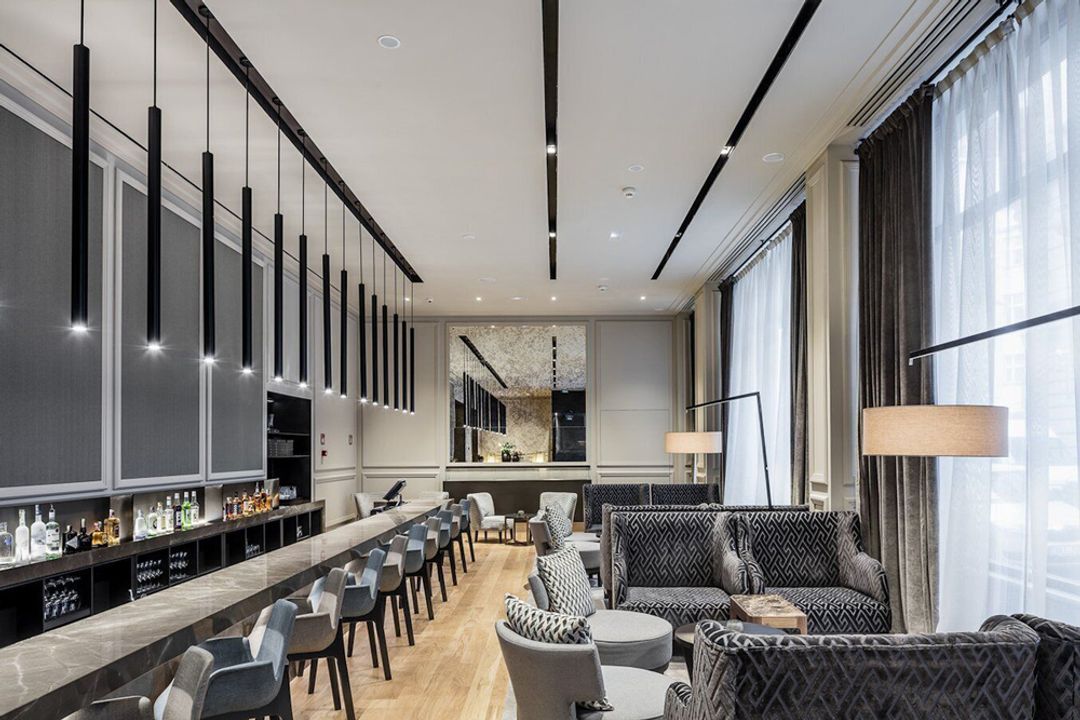
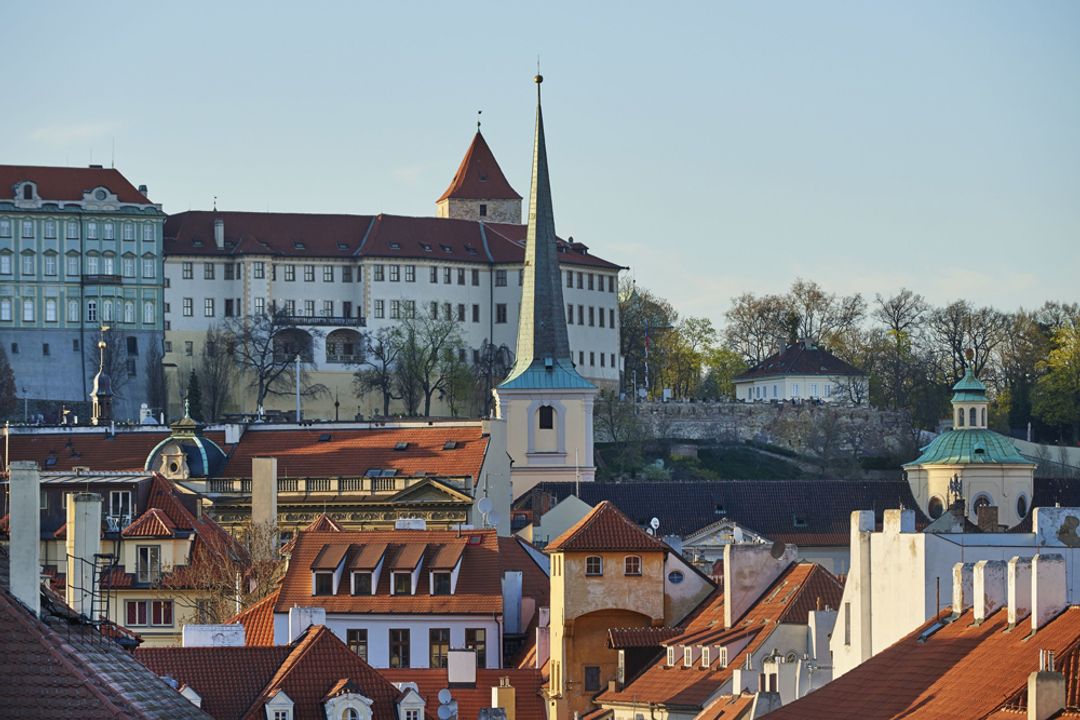
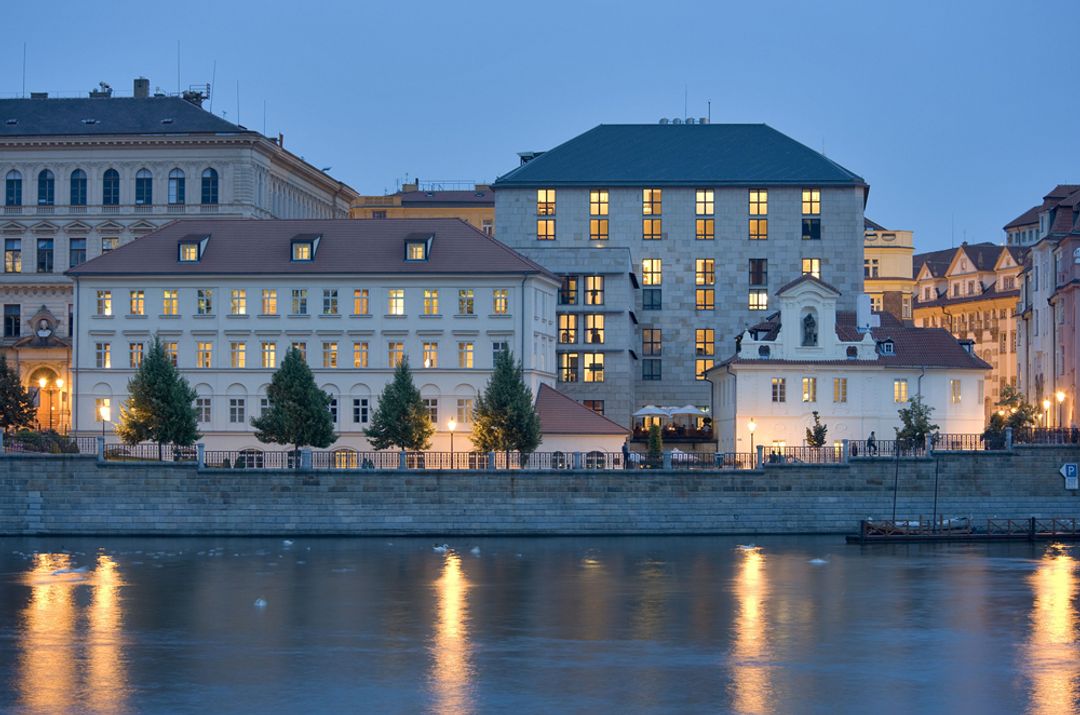
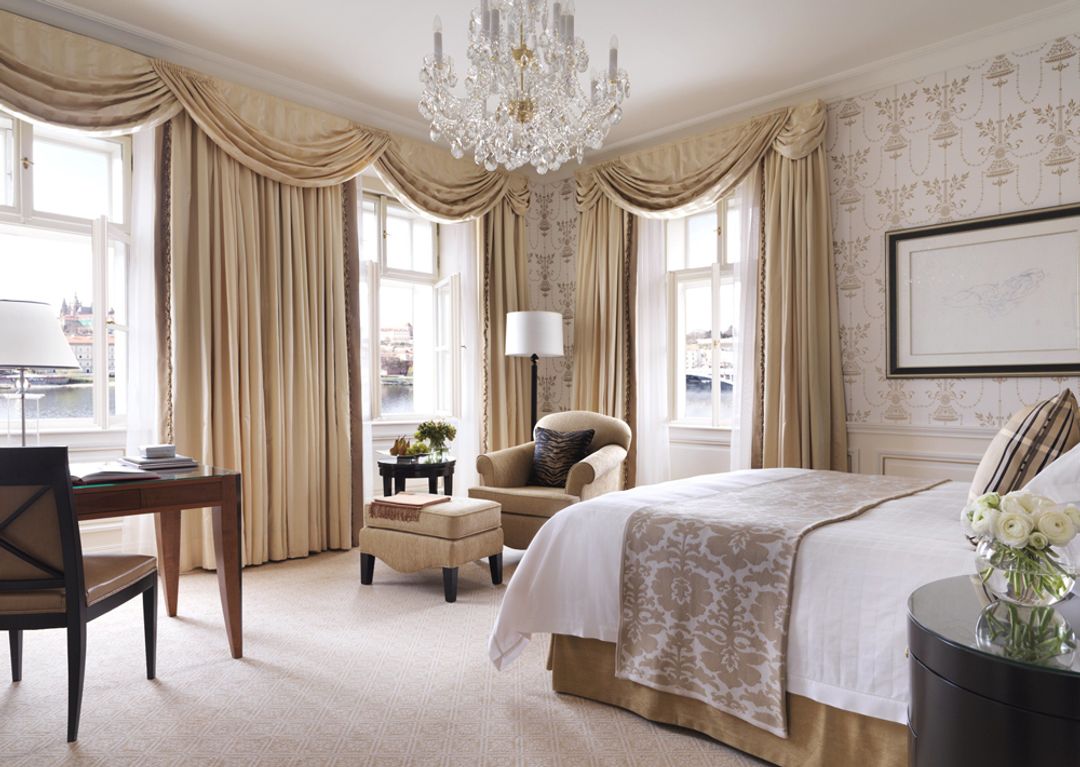
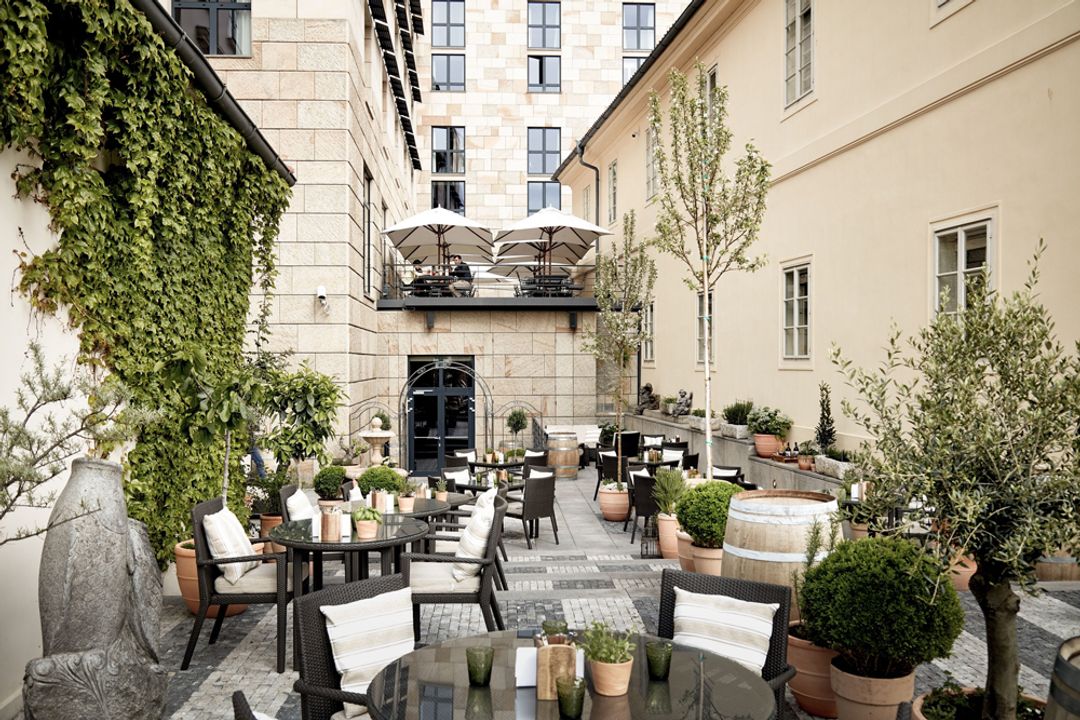
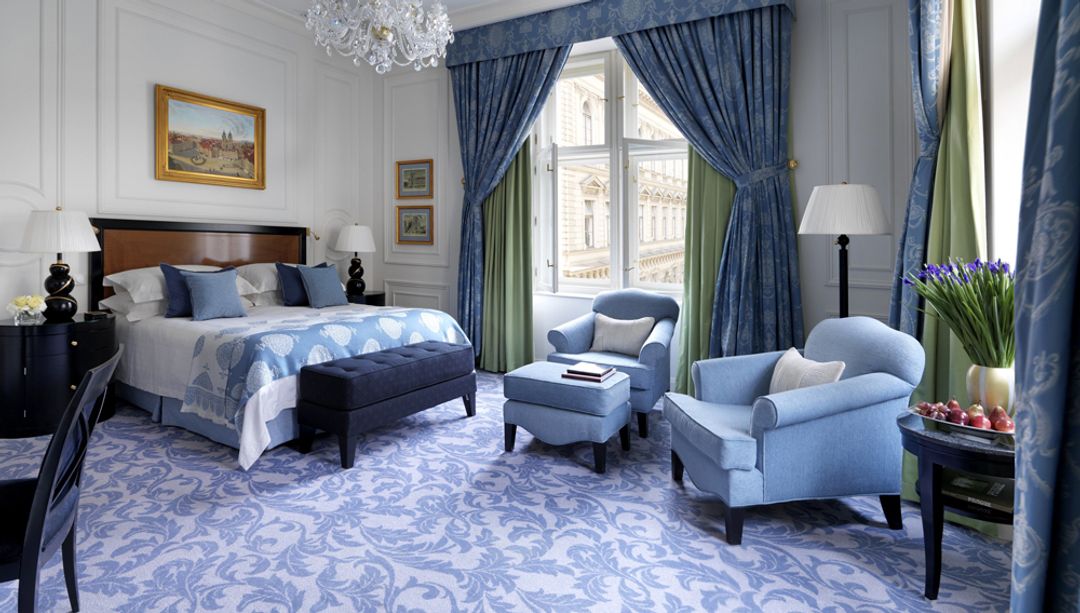
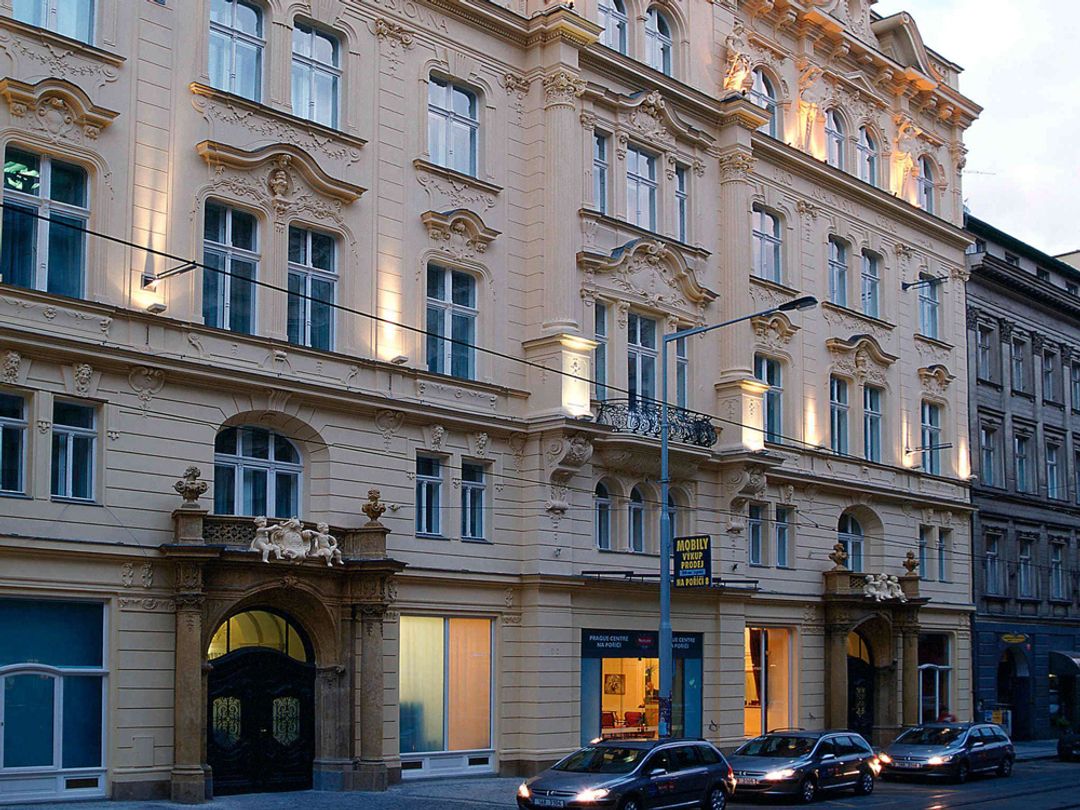
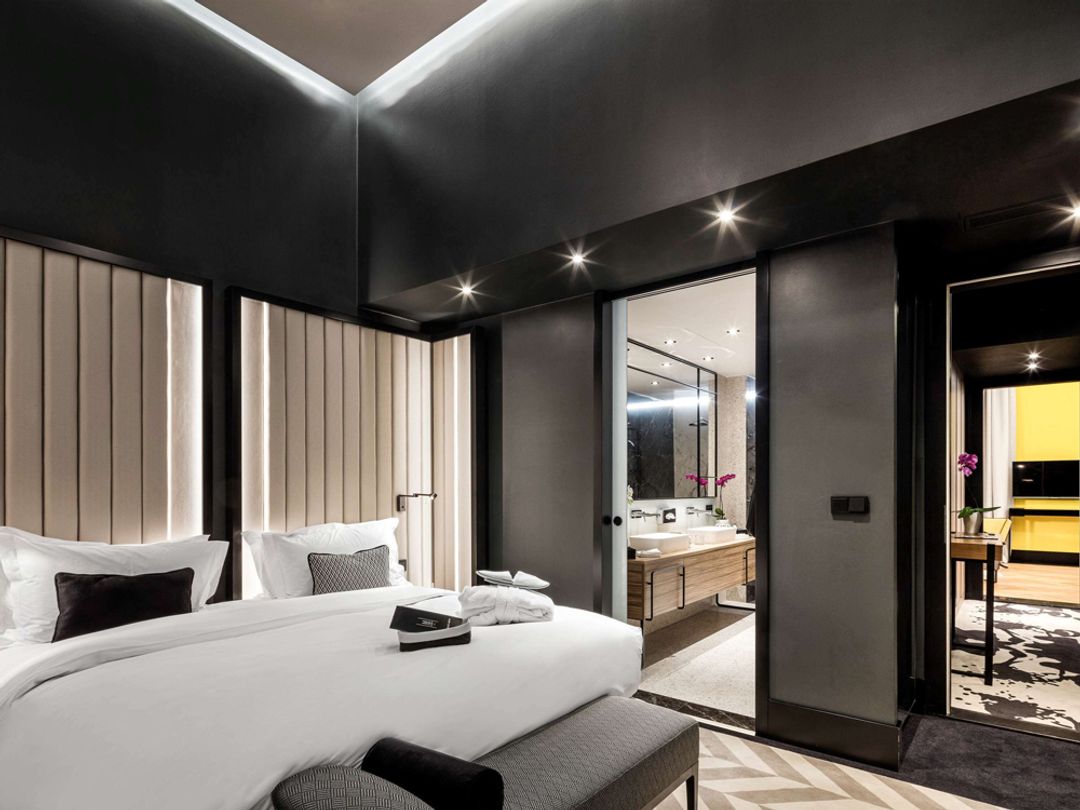
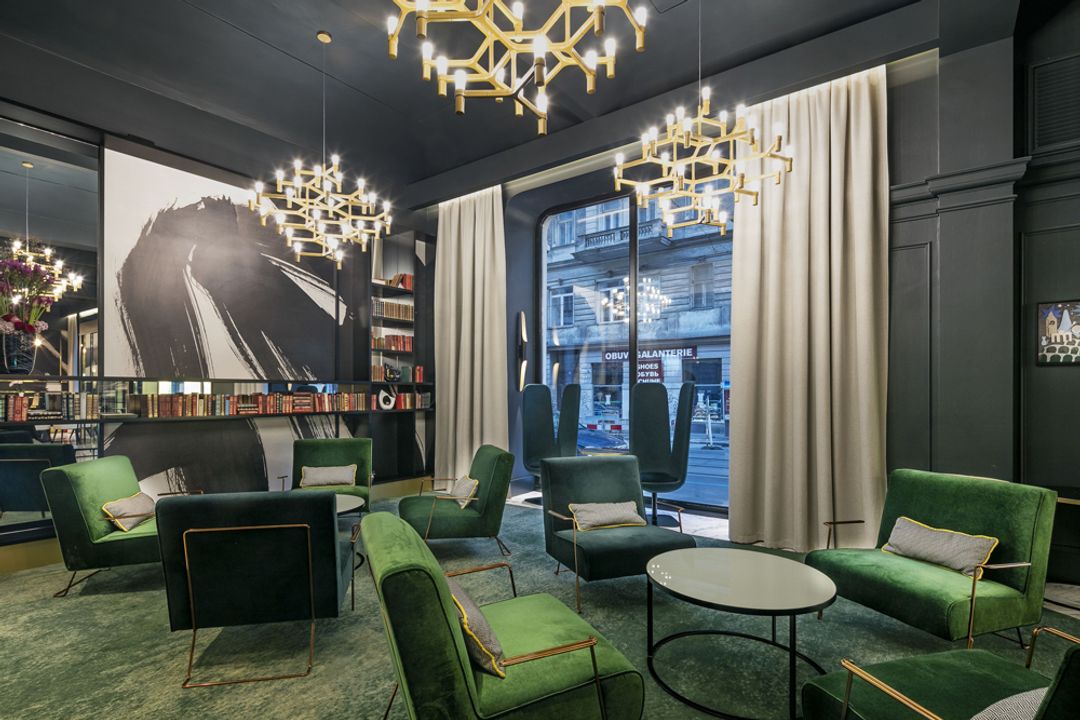
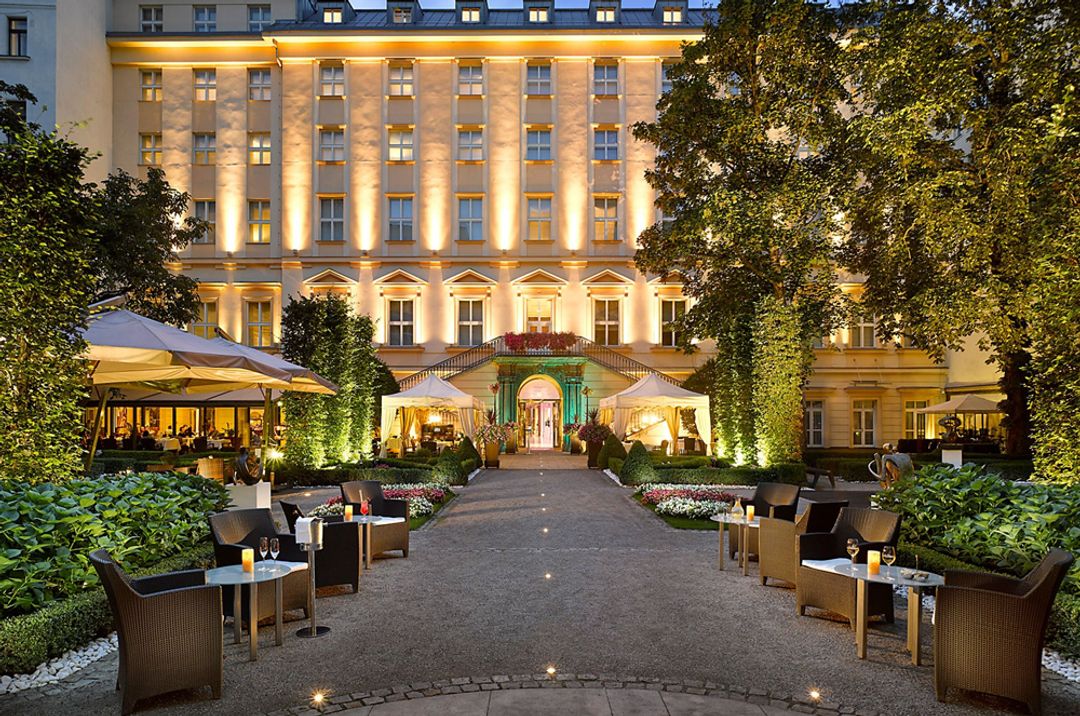
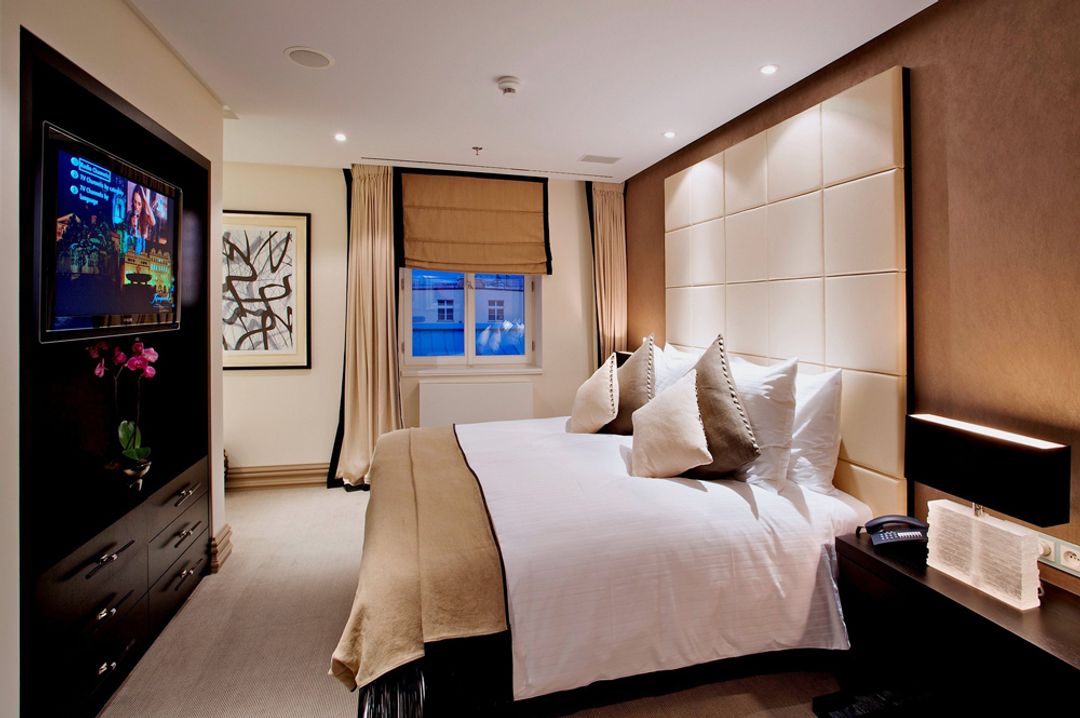
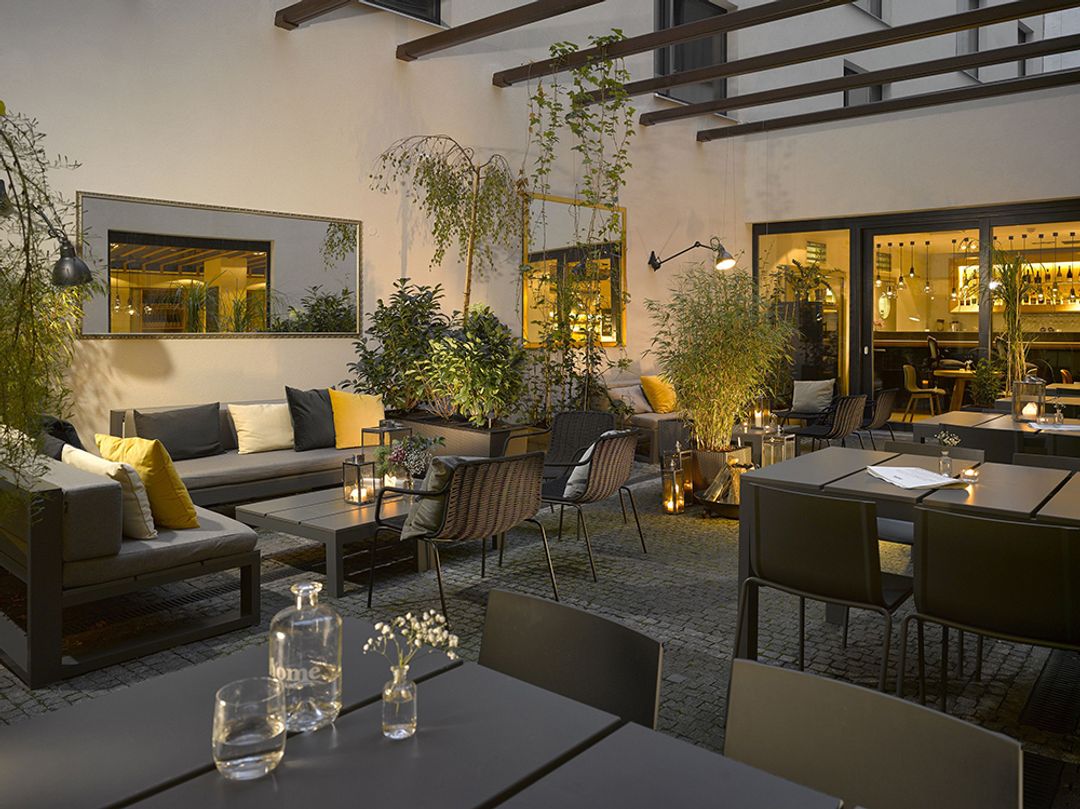
Prague's hotel geography is, at its core, a story about what you do with a city that survived the twentieth century largely intact. The baroque facades, Gothic spires, and art nouveau flourishes were never bombed into rubble, never cleared for Soviet-scale redevelopment with quite the same ruthlessness as Warsaw or Dresden, and the result is a city where almost every serious hotel occupies a building that matters. Old Town concentrates the highest density of this inherited fabric, and it is here that most of the portfolio clusters. The Four Seasons sits where the Staré Město meets the Vltava, its configuration threading together a Renaissance house, a baroque palazzo, and a neoclassical wing with a contemporary riverside addition — a sequence that only makes sense once you have walked through it. The Emblem, smaller and more self-possessed, works a neo-baroque townhouse on Platnéřská with a restrained interior sensibility that favors warm materials over period theatrics. The Grand Mark occupies a baroque palace on Hybernská, its courtyard the kind of proportioned outdoor space that Prague does better than almost any other European capital.
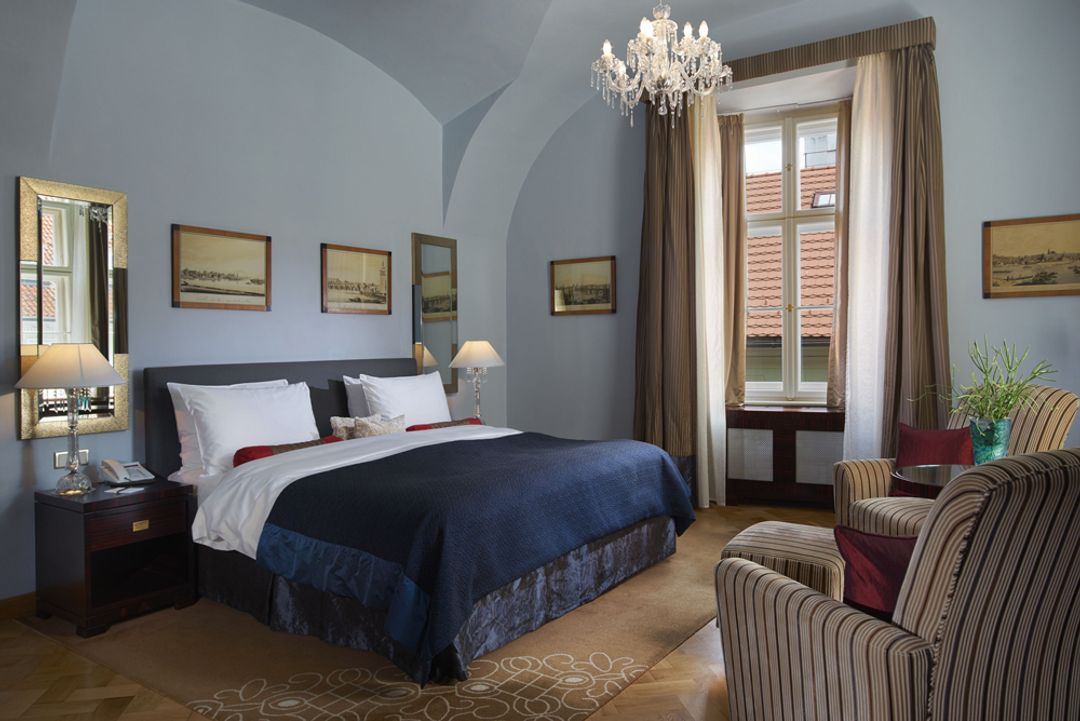
Across the river in Malá Strana, the Mandarin Oriental takes a converted sixteenth-century Dominican monastery on Nebovidská as its premise, a setting that enforces a particular quietness — thick walls, vaulted ceilings, a chapel that has been turned into a spa with the kind of atmosphere no amount of new construction could manufacture. This is the part of Prague that operates at a slower register than Old Town, closer to the castle, insulated from the main tourist pressure by the river crossing, and the Mandarin rewards travelers who want proximity to Kampa and the Malostranské náměstí over quick access to the Astronomical Clock.
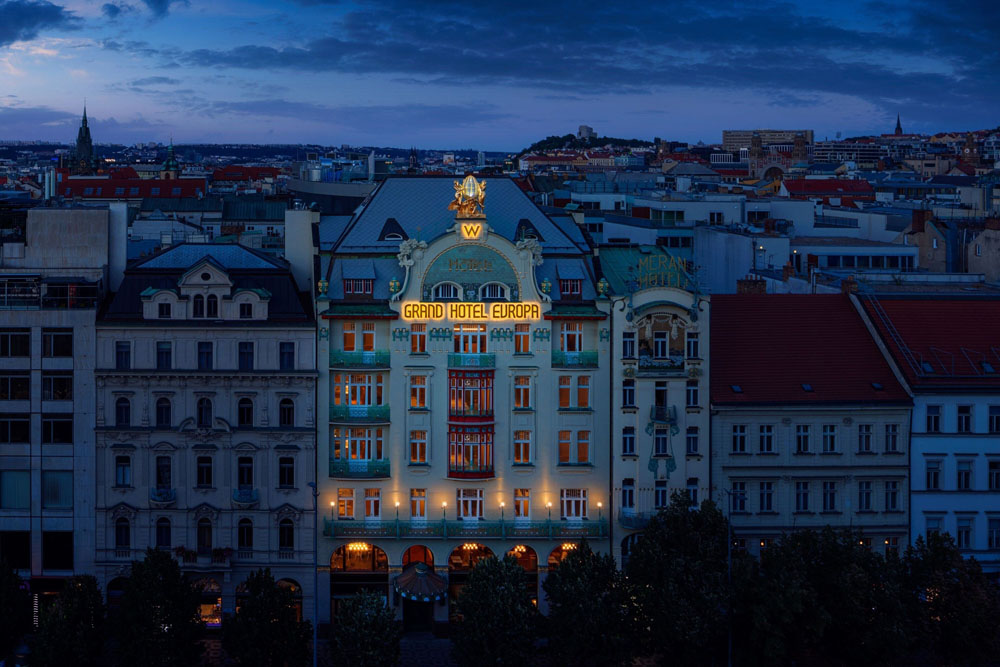
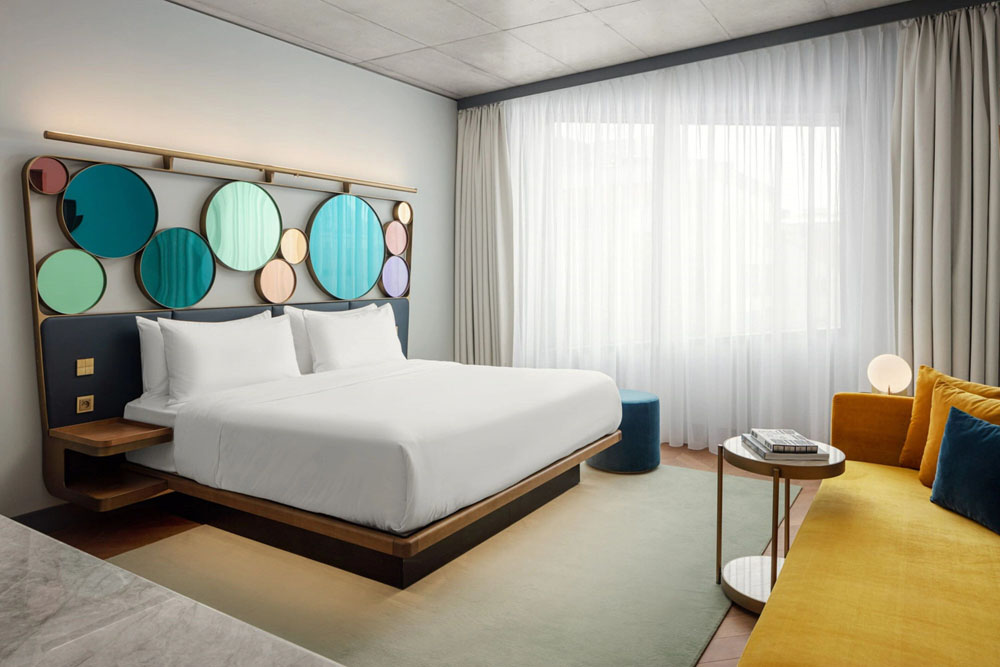
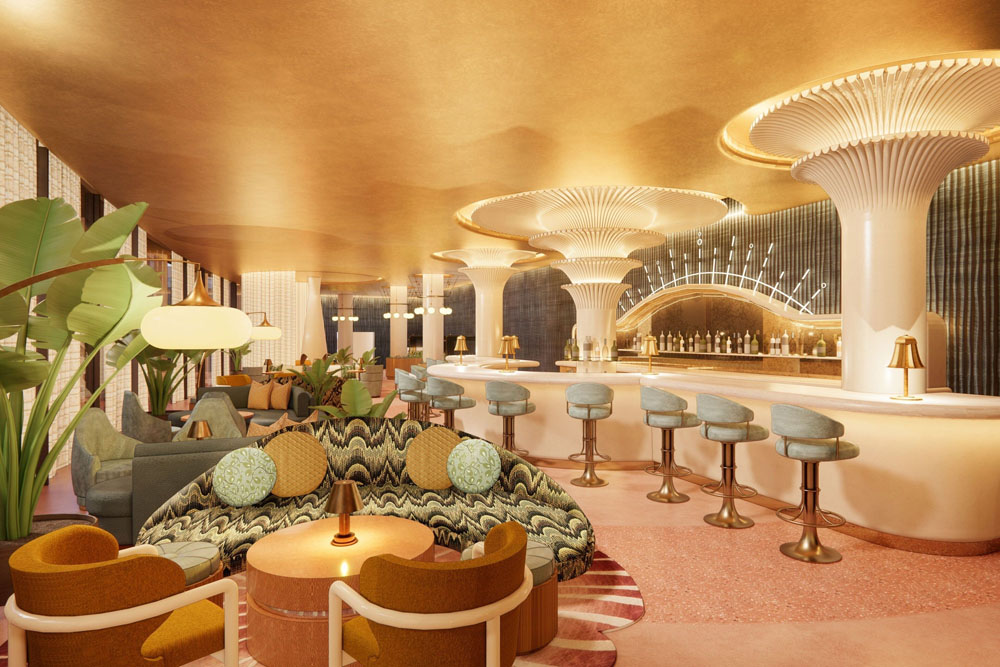
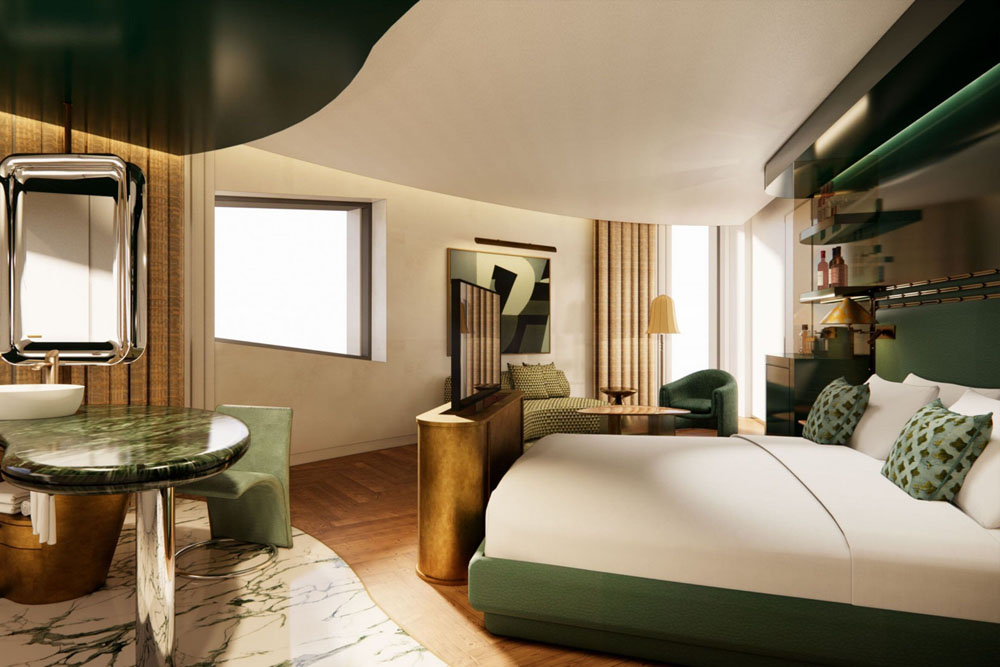
Wenceslas Square, which most visitors pass through rather than stay in, receives a more compelling case from the W Prague, installed in a pair of early twentieth-century buildings including the former Adria Palace. Gwathmey Siegel Kaufman led the conversion, and the interiors work a high-contrast modernist vocabulary against the art deco bones of the building. It is the most explicitly contemporary hotel in the portfolio, and the one most willing to treat Prague as a living city rather than a preserved one — a useful corrective for anyone who finds the relentless historicism of Old Town, however beautiful, a little airless after a few days.