Best hotels in Abu Dhabi, United Arab Emirates | Visually Compare Top Stays Side-by-Side
Welcome to PressBeyond - a curated visual guide to design-driven hotels and the fastest way to compare them.
An Overview of the Boutique & Luxury Hotel Landscape in Abu Dhabi, United Arab Emirates
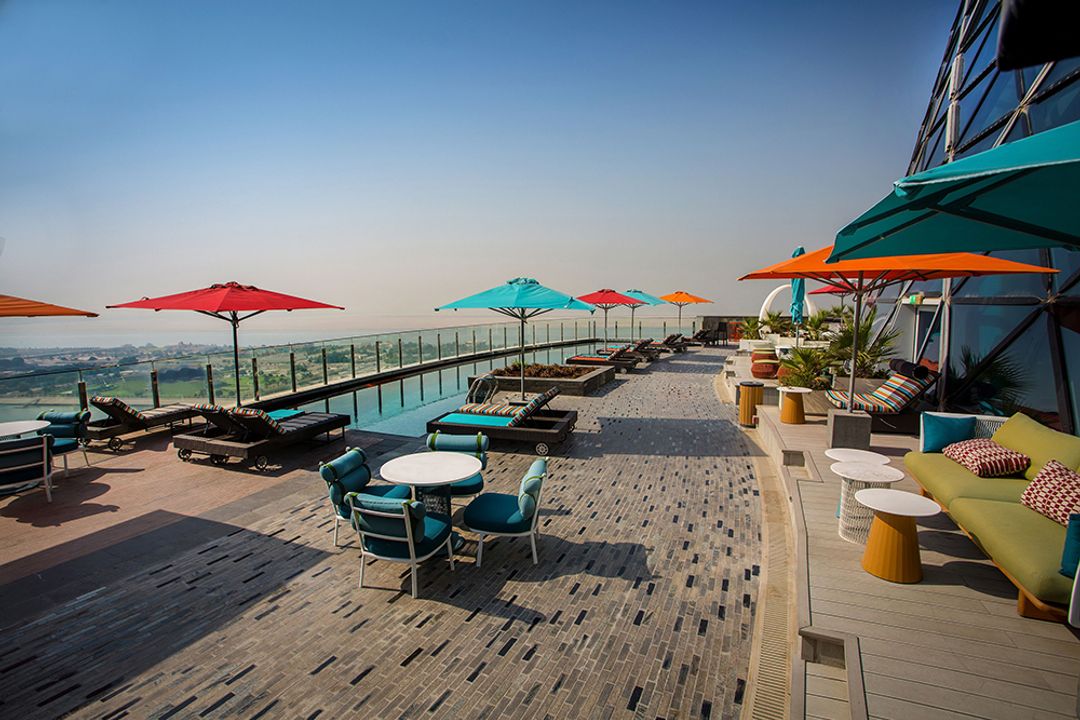
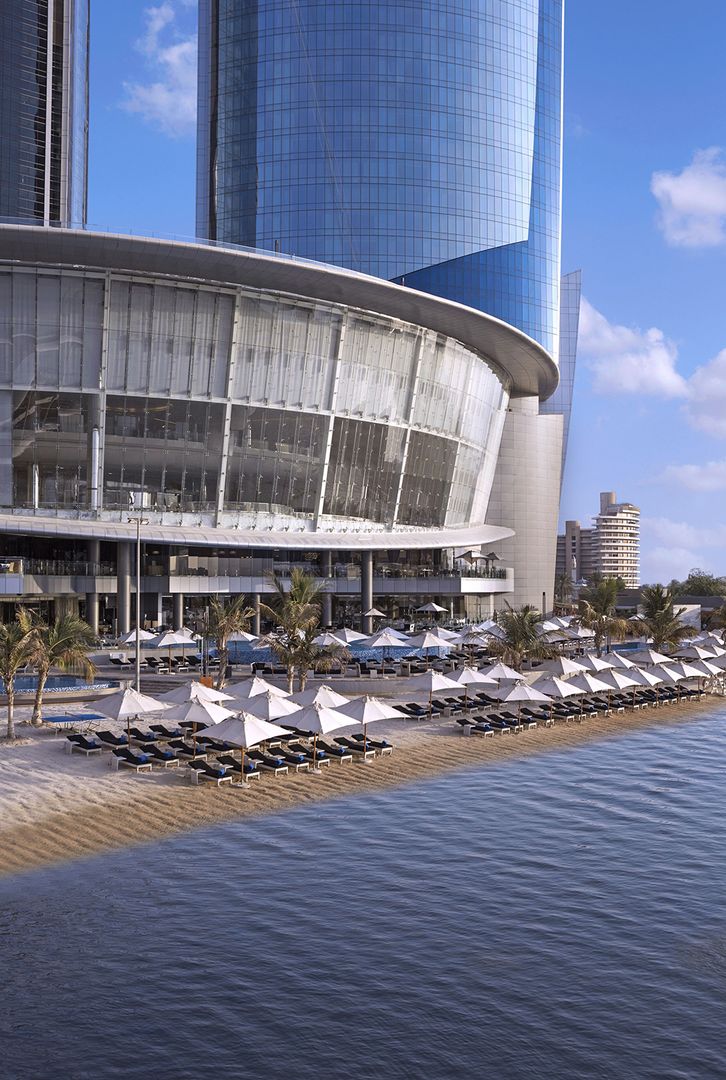
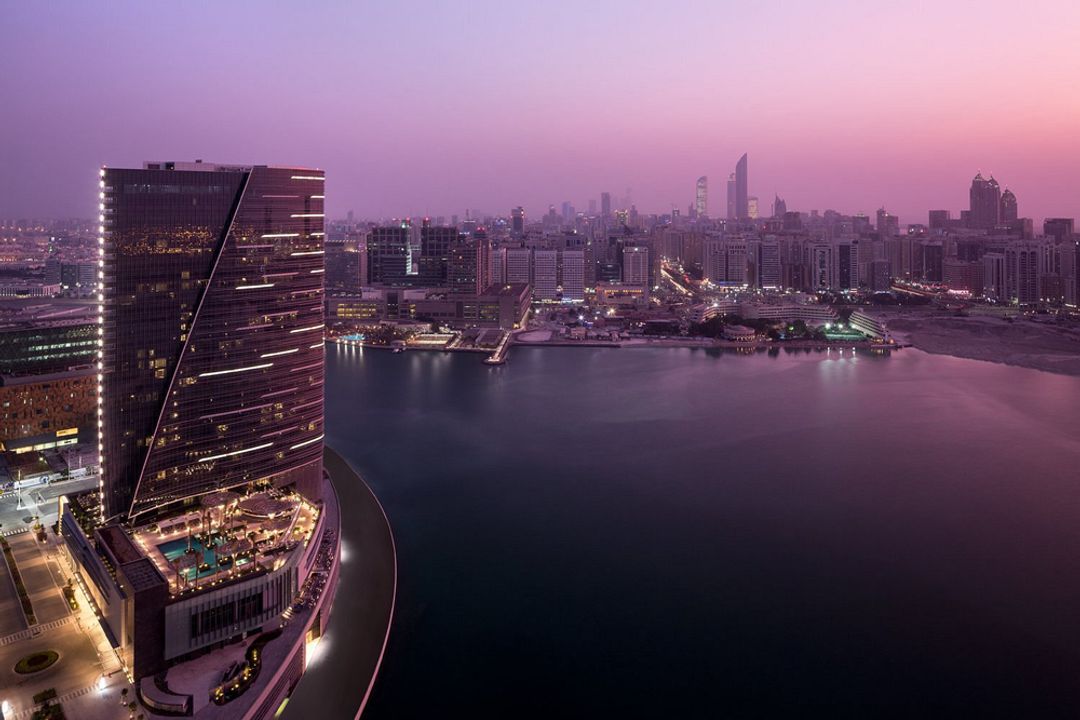
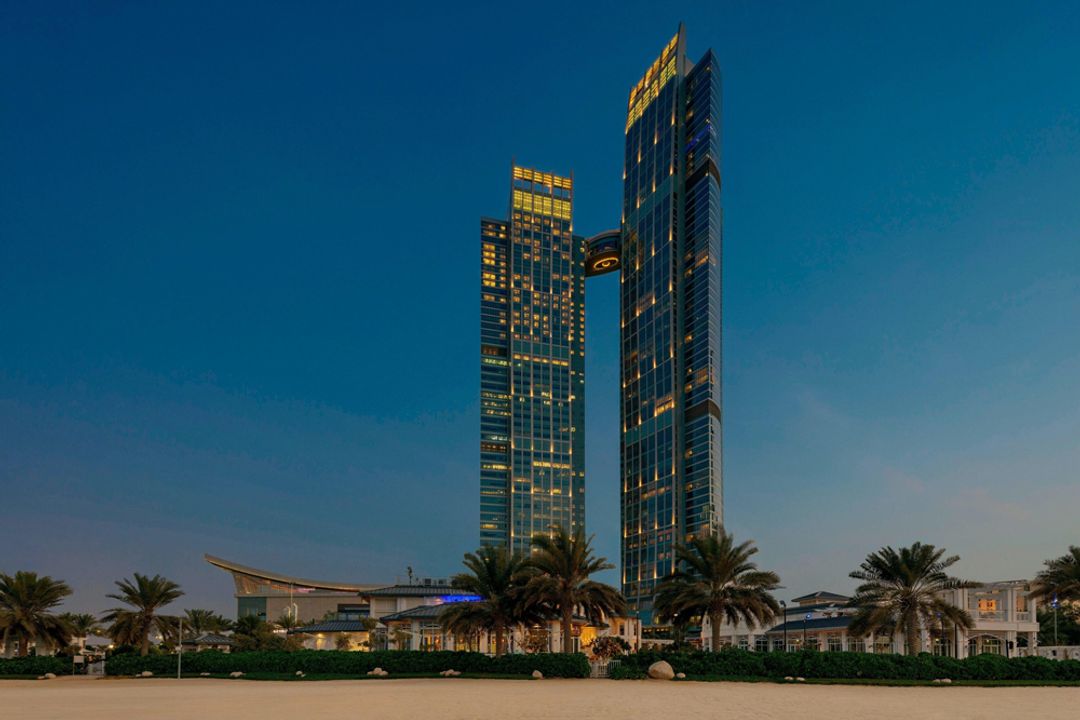
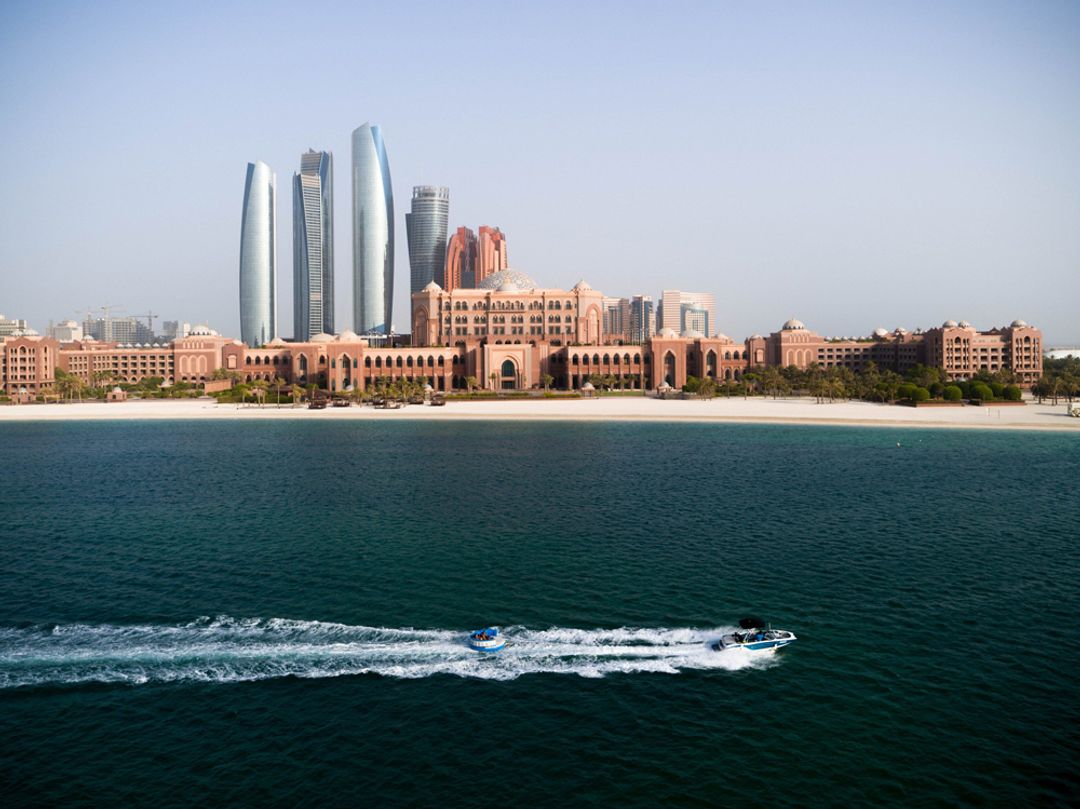
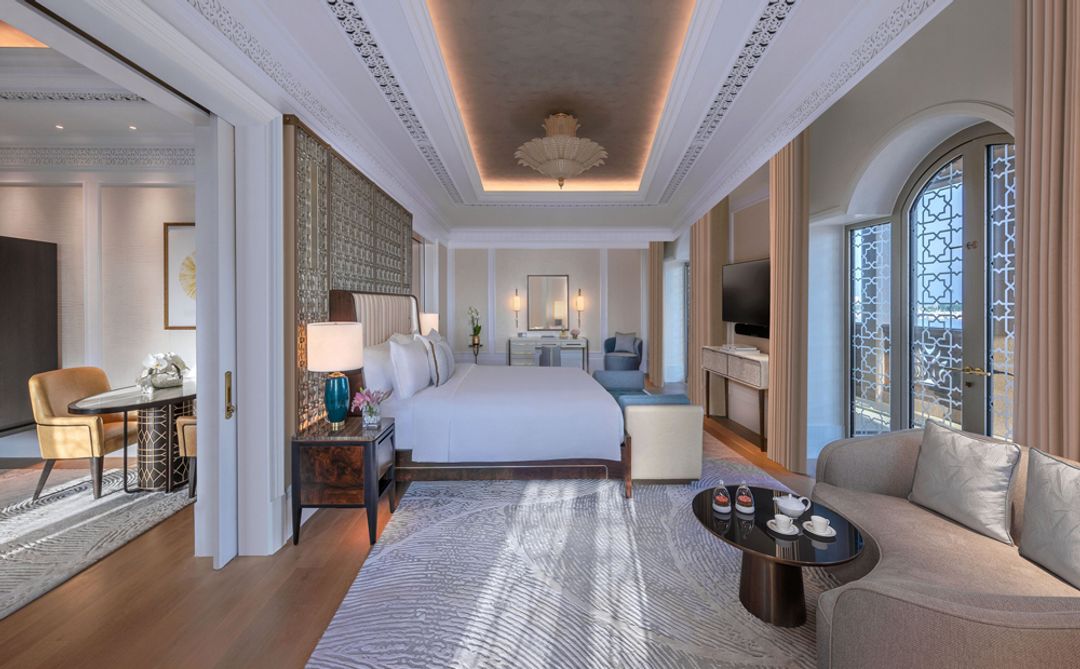
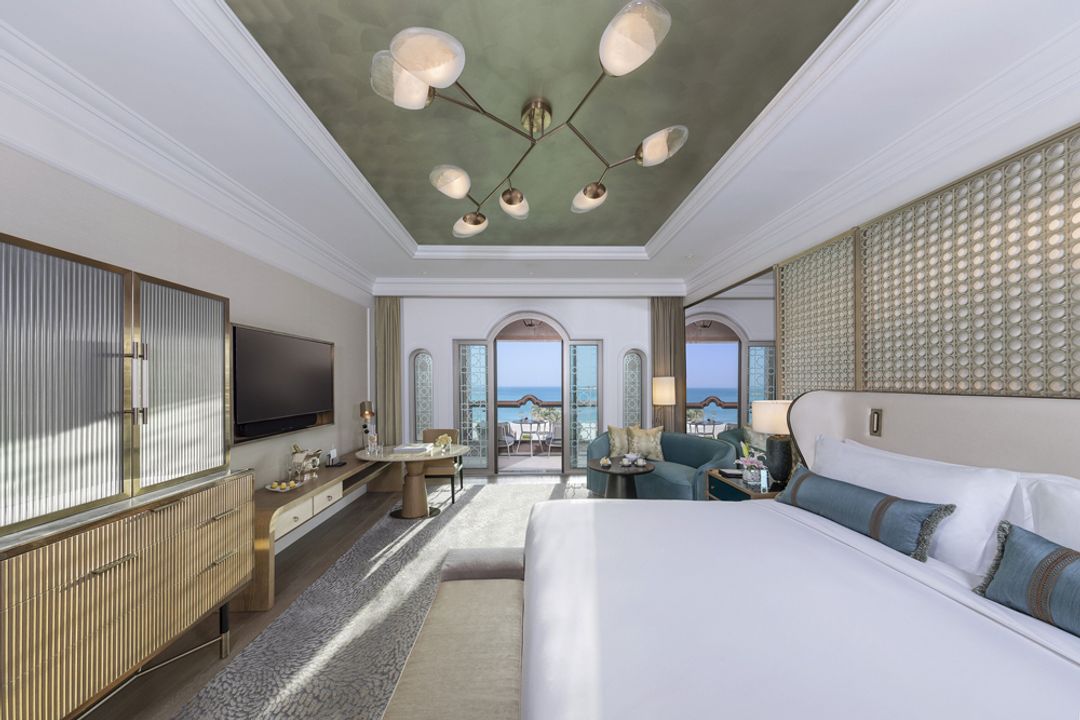
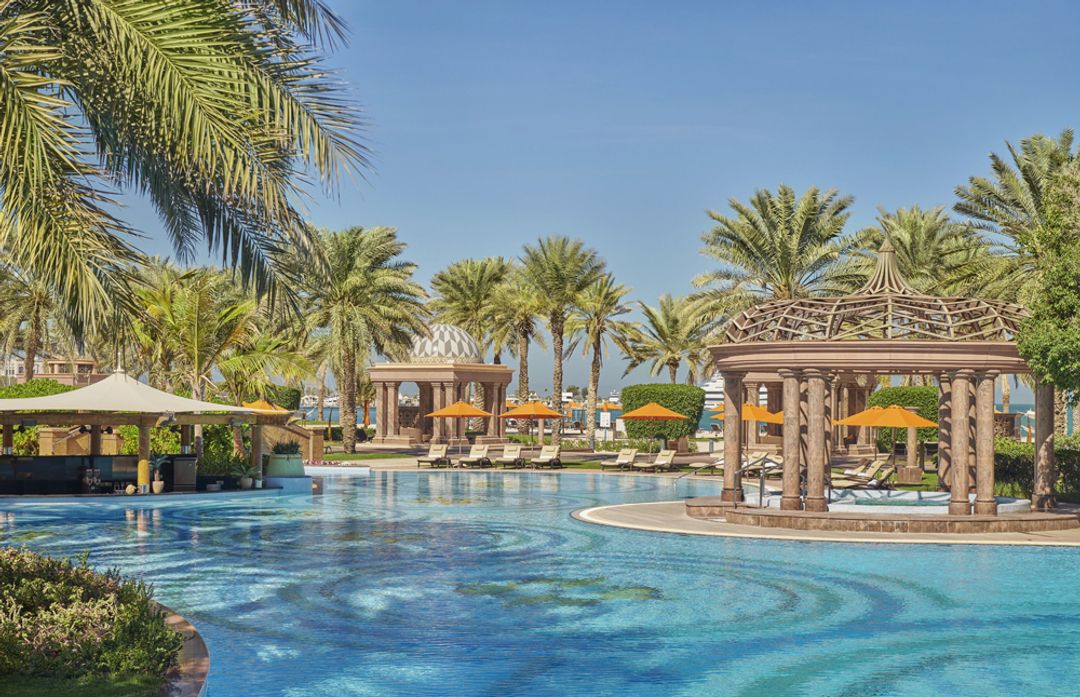
Abu Dhabi builds outward into the Gulf, and understanding where its hotels sit means understanding that the city is essentially an archipelago of ambitions: a historic core, a financial island, a cultural district, and a string of purpose-built destinations, each at a different stage of becoming. The Corniche and Ras Al Akhdar concentrate the grandest gestures. Emirates Palace Mandarin Oriental, completed in 2005 to designs by HOK and spread across 1.3 kilometers of private beach, remains the city's most theatrical piece of hospitality architecture, a sprawling exercise in Moorish-inflected classicism that no subsequent project has quite tried to match. Nearby on Ras Al Akhdar, the Conrad Abu Dhabi Etihad Towers occupies one of five towers designed by Aedas and completed in 2011, a complex that changed the city's skyline and still reads as one of the more considered attempts to build something genuinely tall without losing interior coherence.
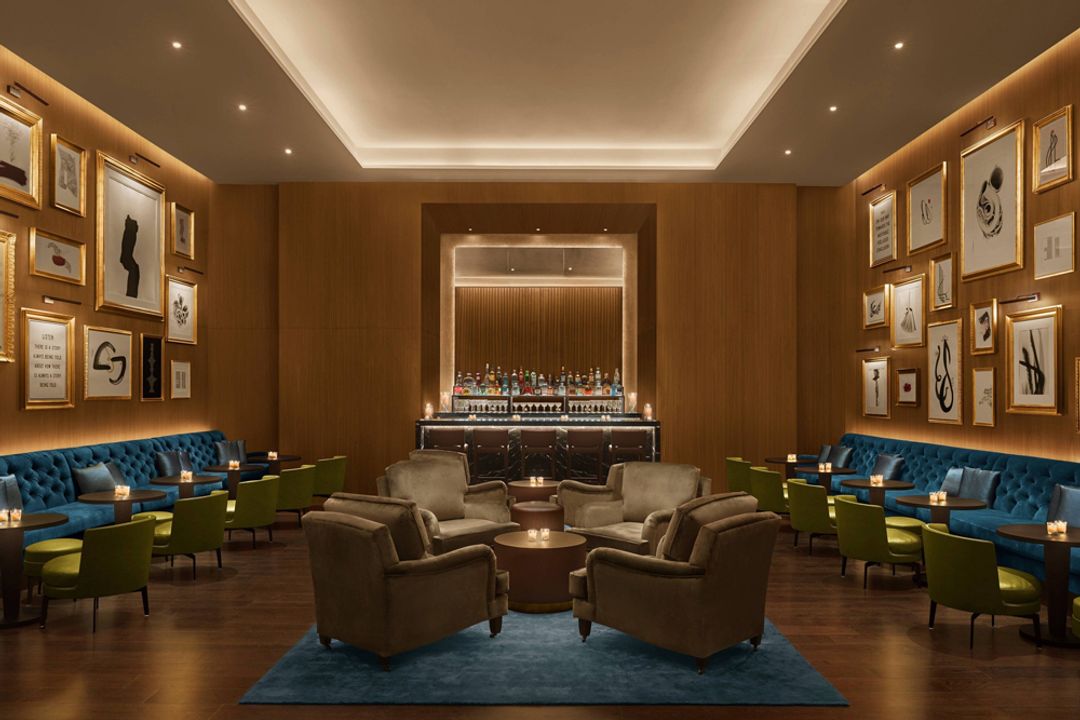
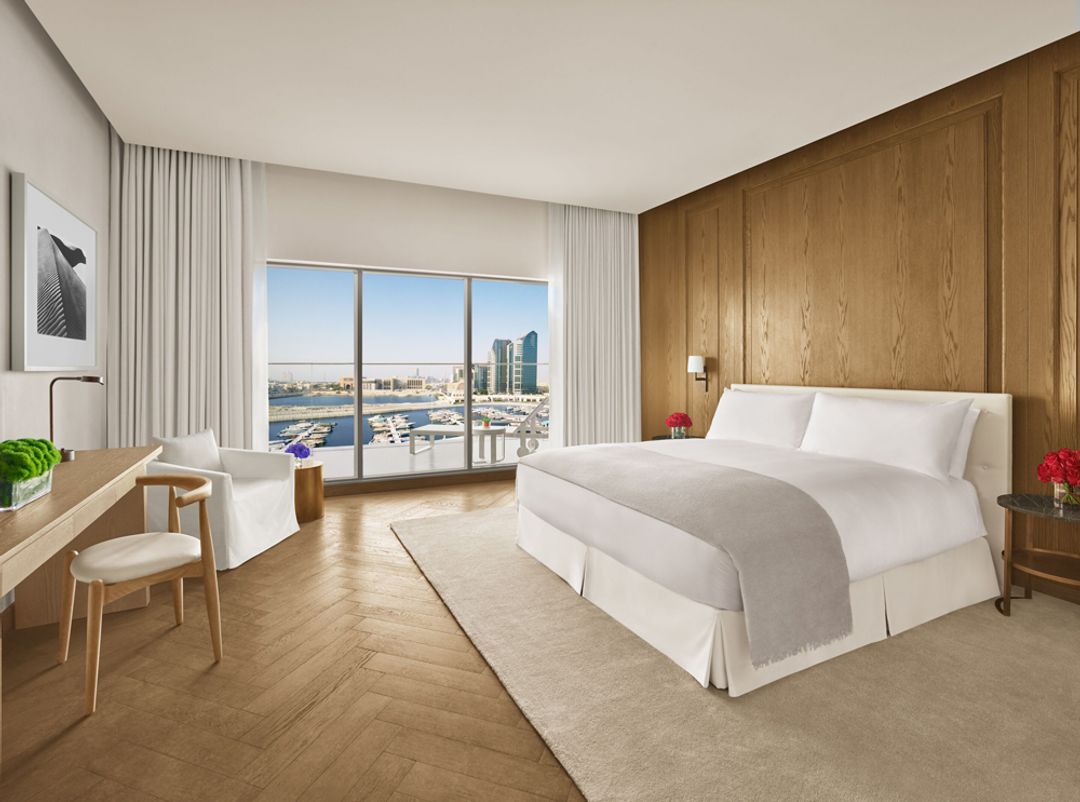
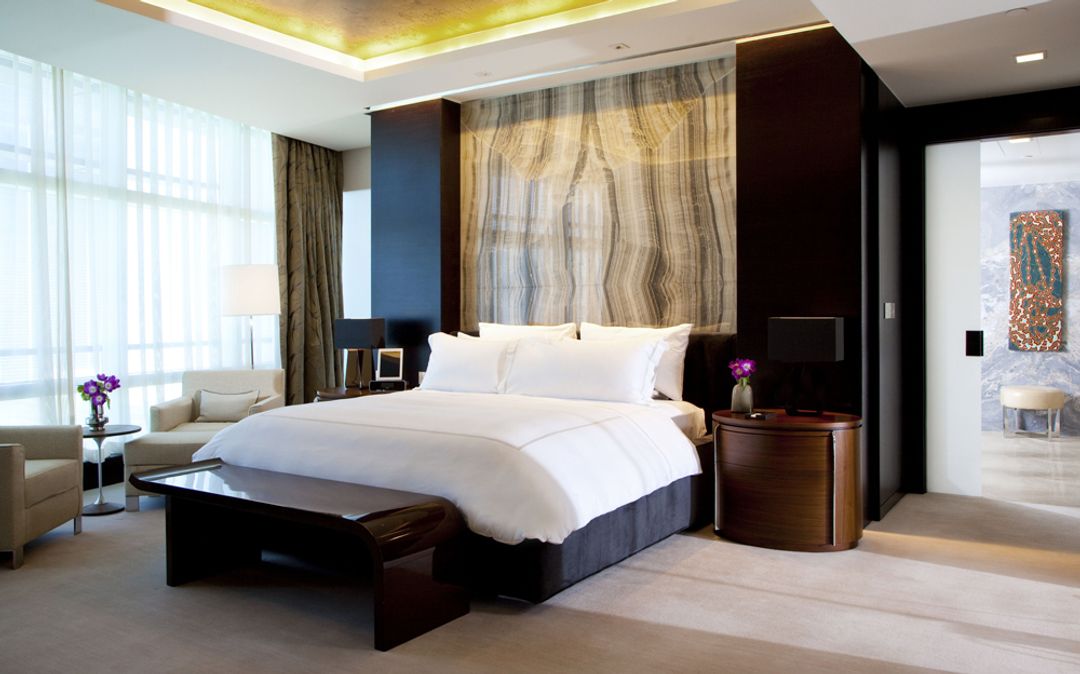
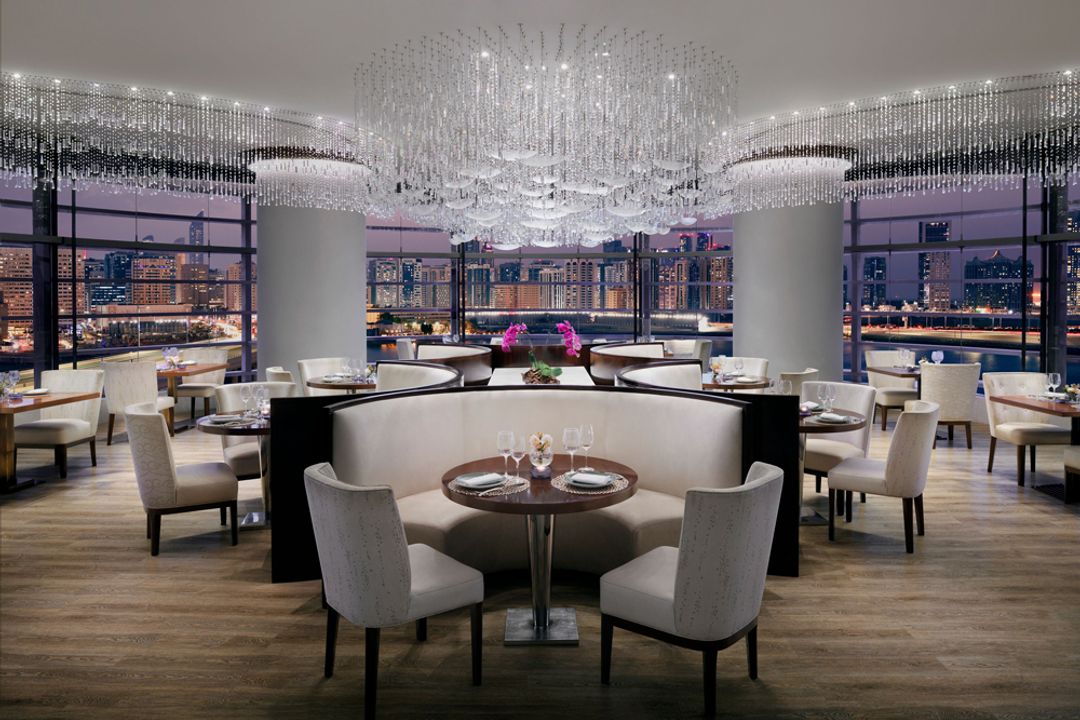
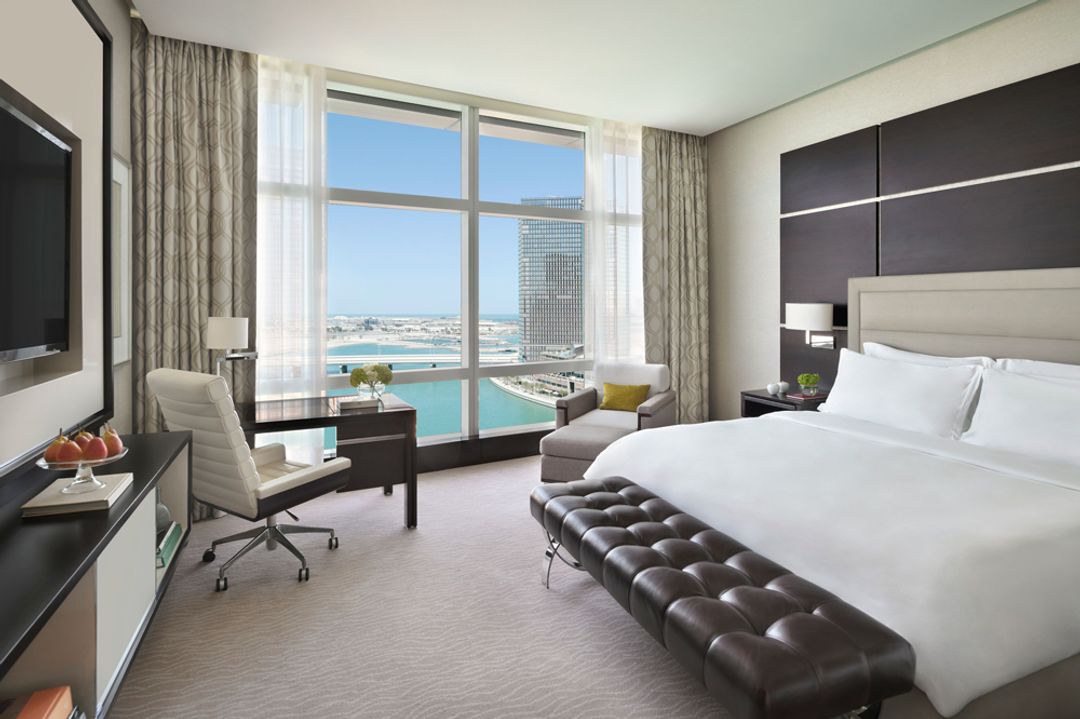
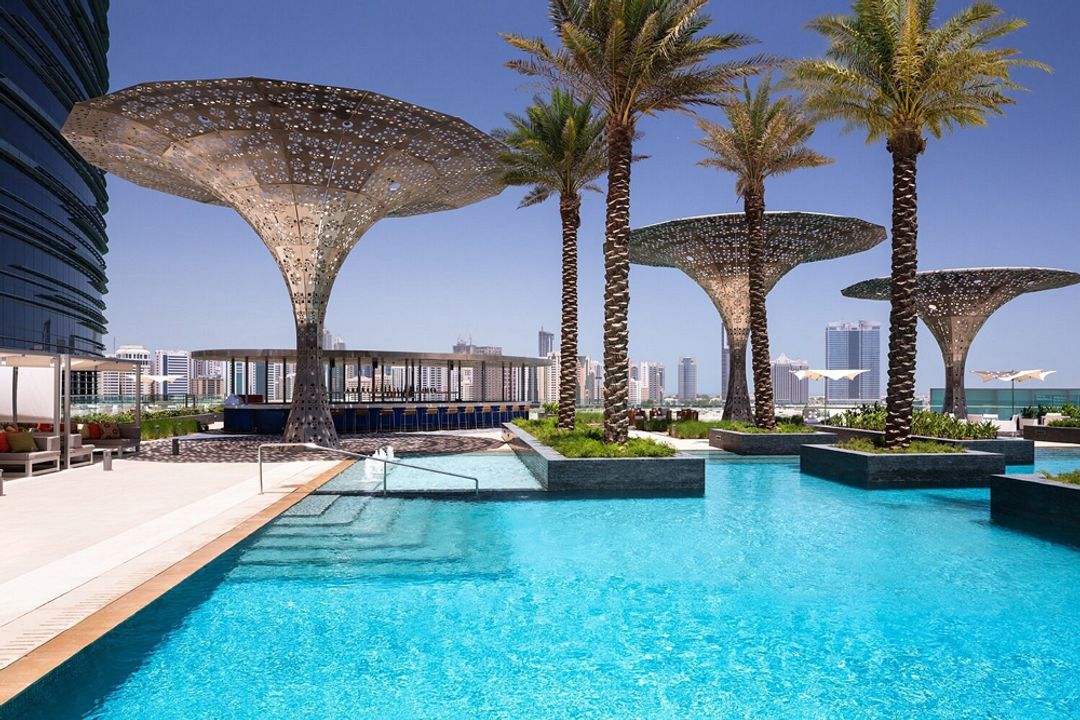
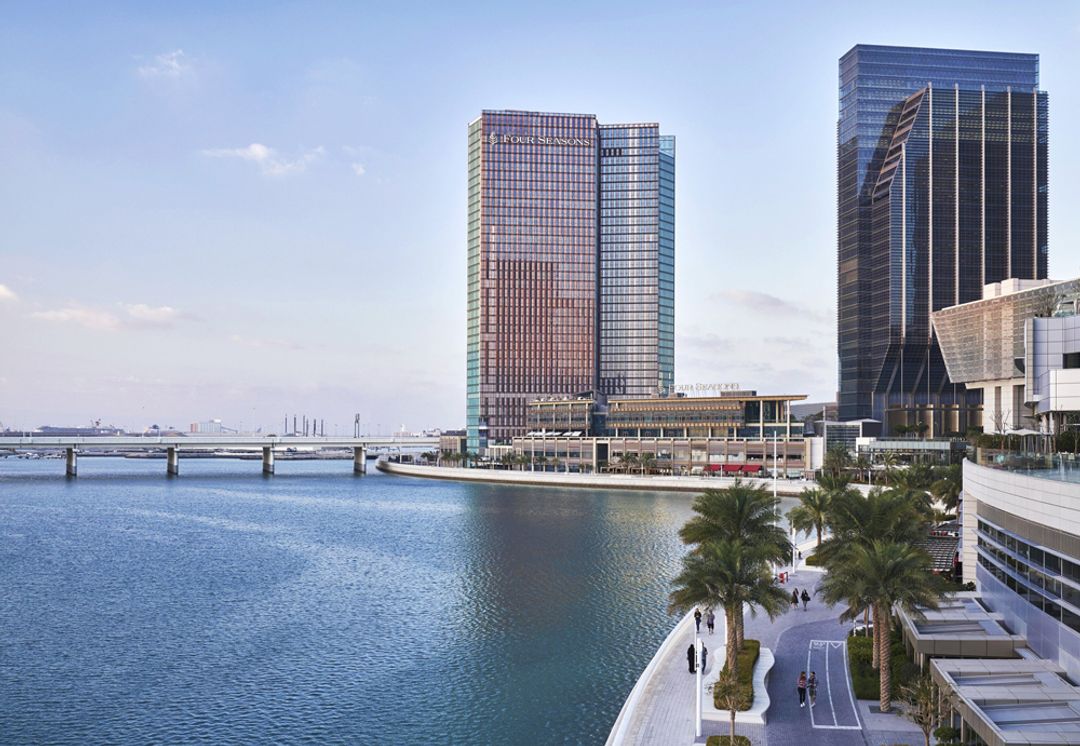
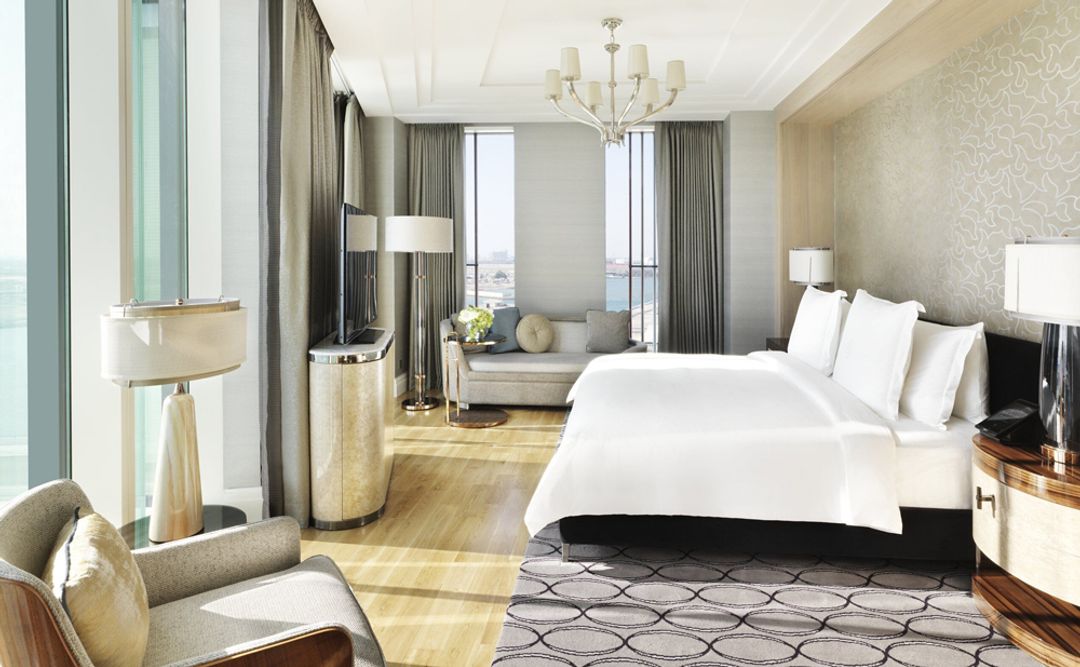
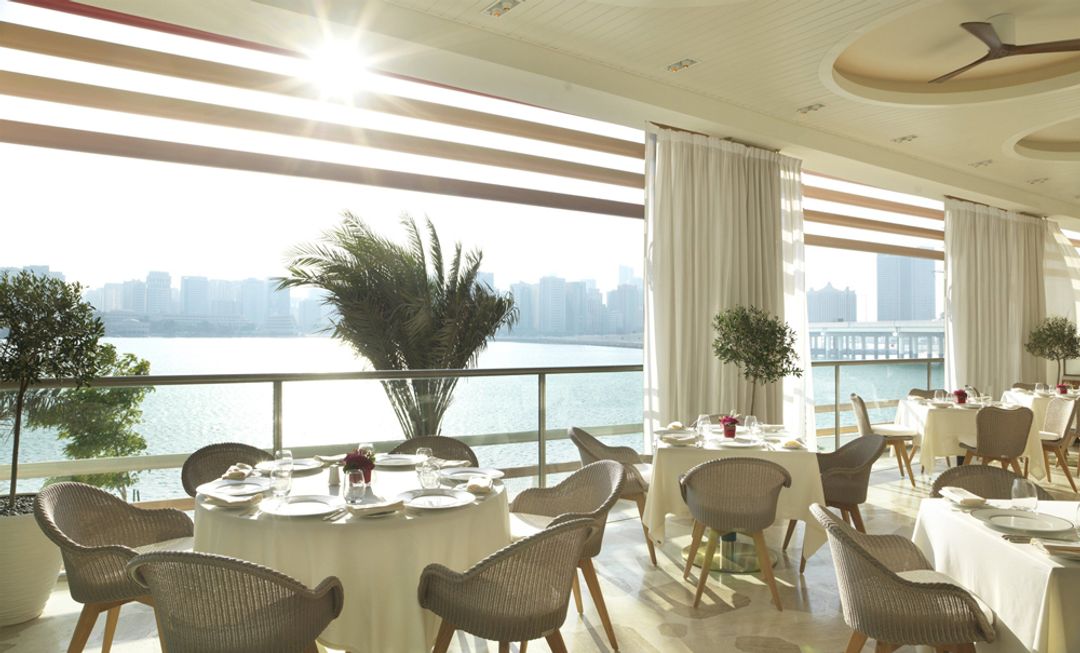
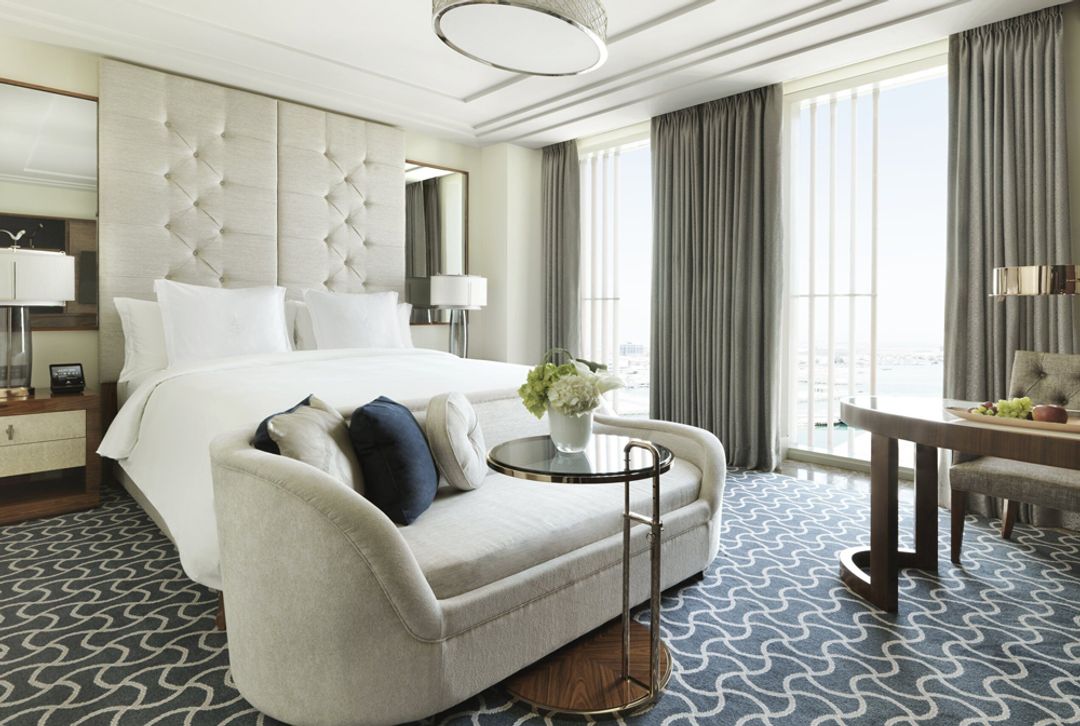
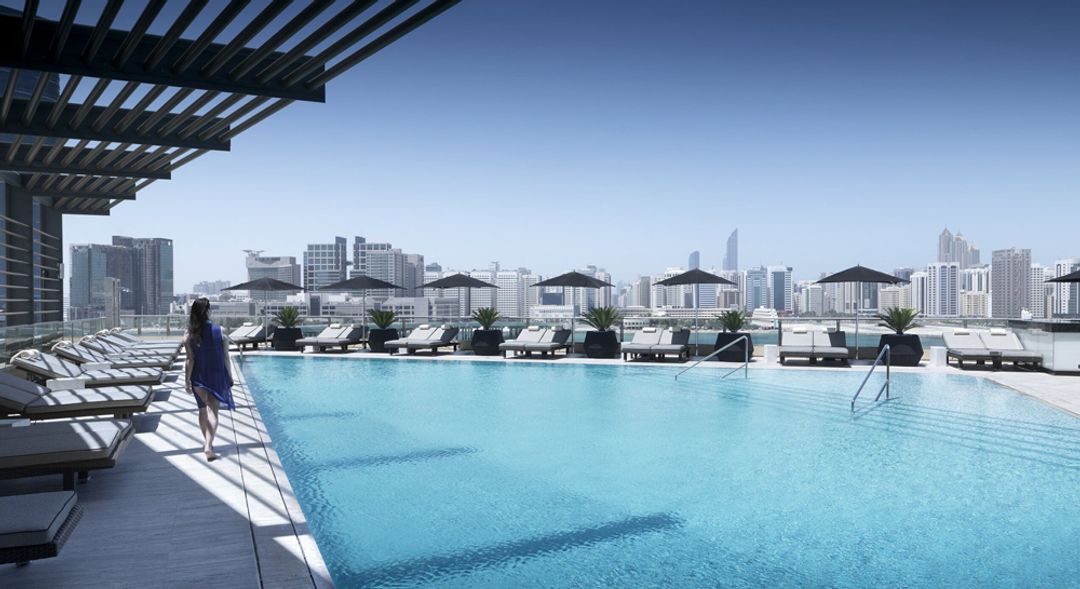
Al Maryah Island and its neighbors carry a quieter, more corporate confidence. The Four Seasons Abu Dhabi at Al Maryah Island, opened in 2016 to interiors by HBA, is probably the most resolved hotel in the city for anyone whose instinct is to notice materials and proportion: the waterfront position is used honestly, with the building oriented to maximize the view across the channel rather than inward toward its own amenities. The Rosewood, also on Al Maryah, takes a warmer approach, its interiors calibrated toward a local palette of brass and sand tones. Across the water at Al Bateen Marina, the EDITION brings Ian Schrager's characteristic compression of scale, activating a comparatively modest footprint with a sophistication that suits the neighborhood's quieter energy.
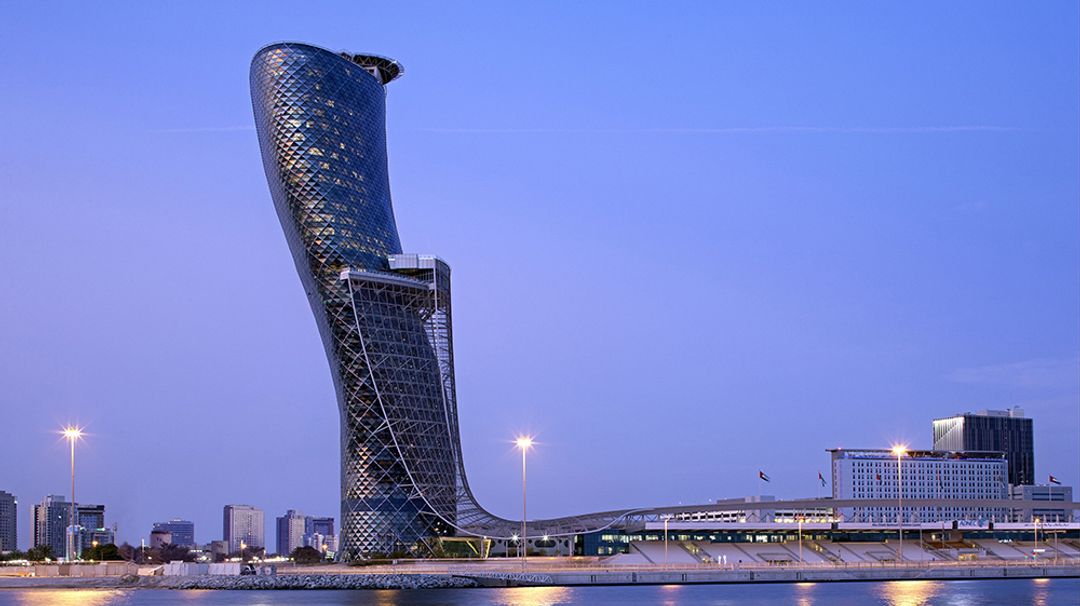
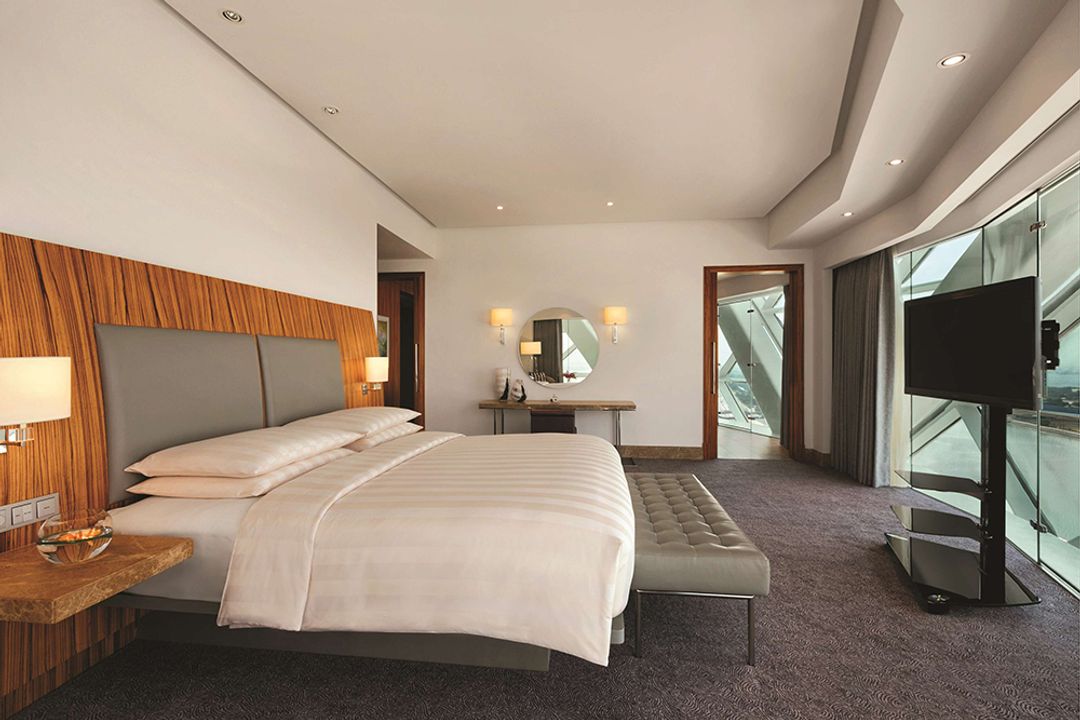
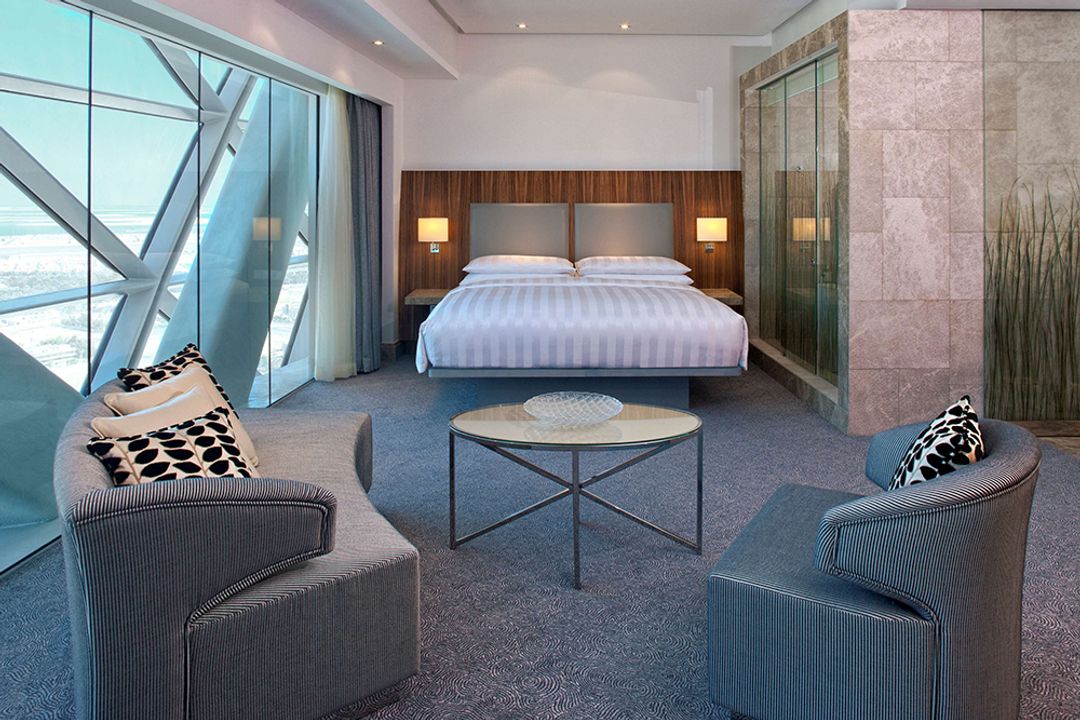
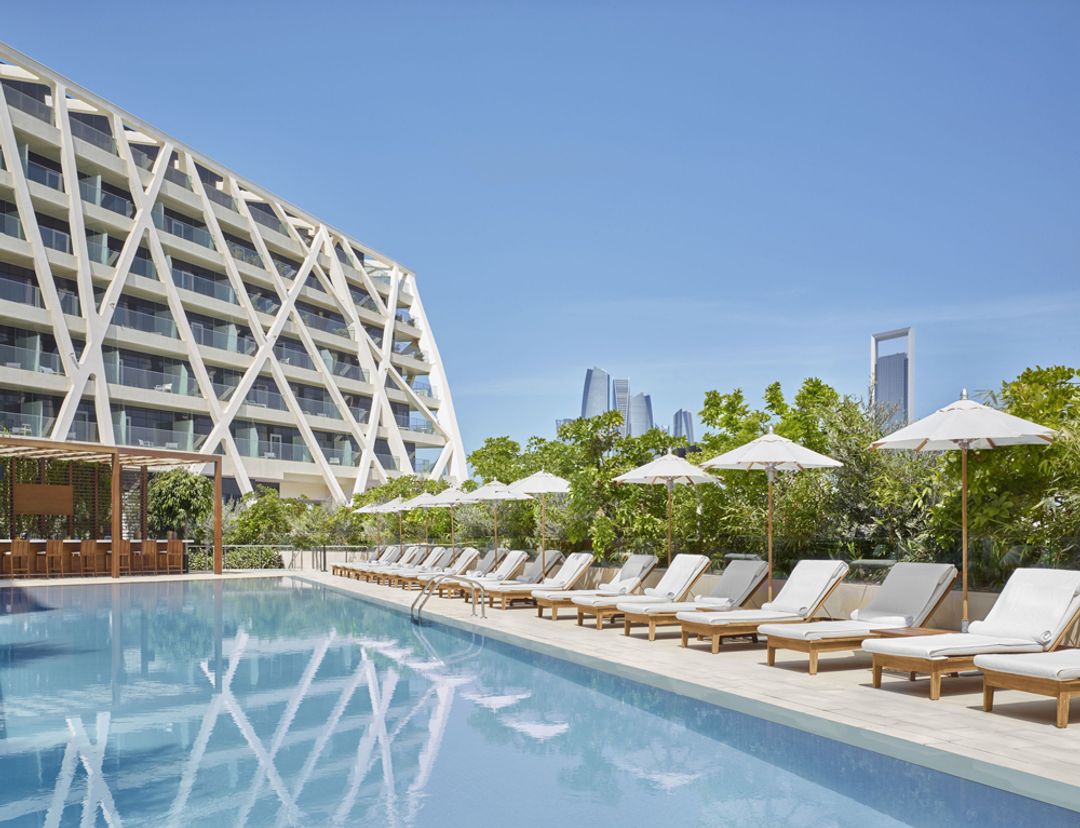
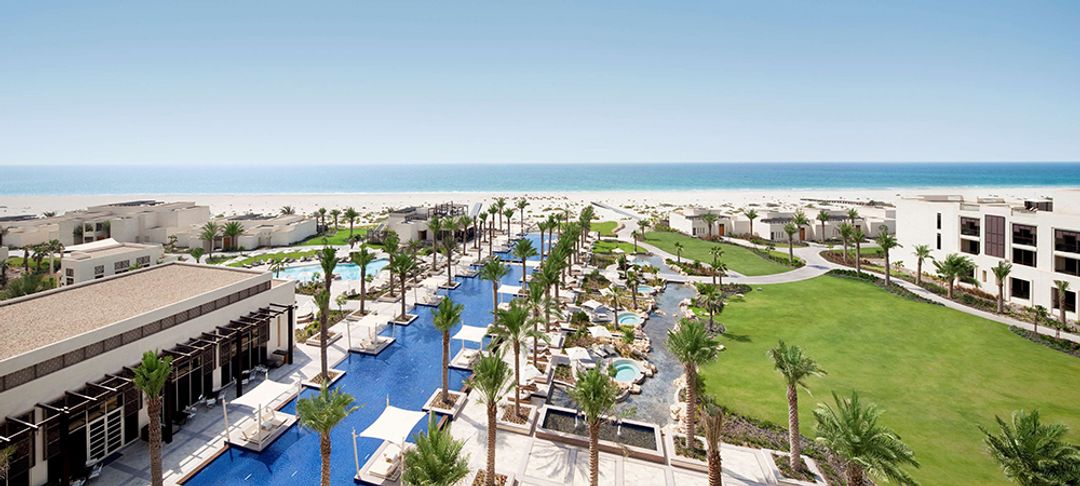
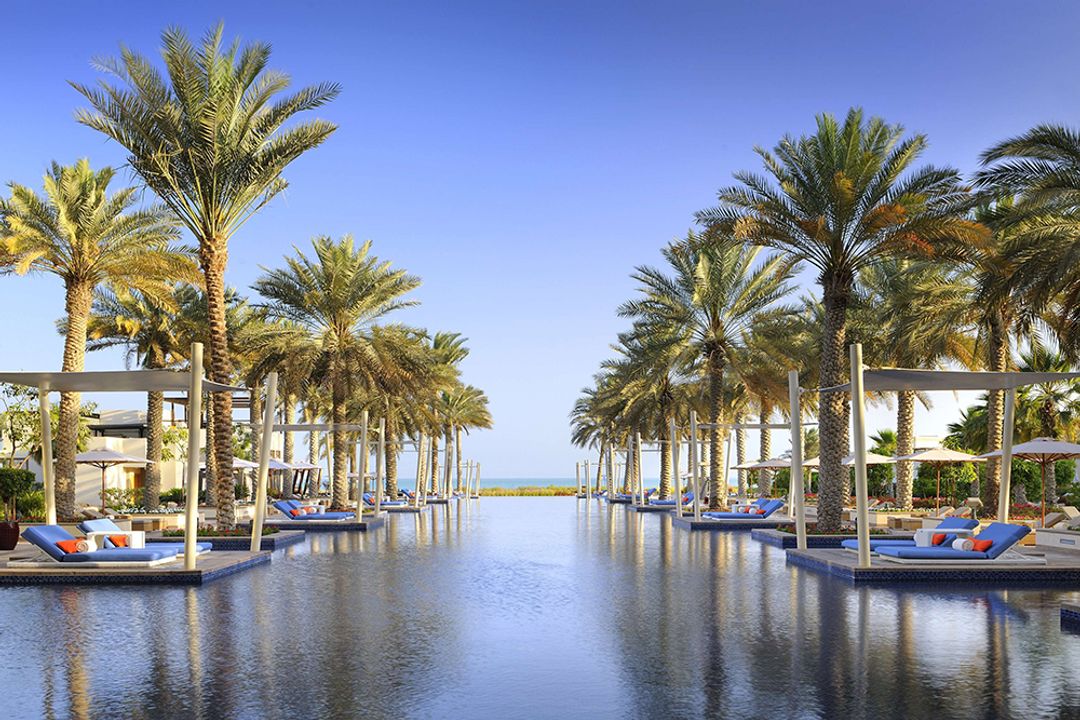
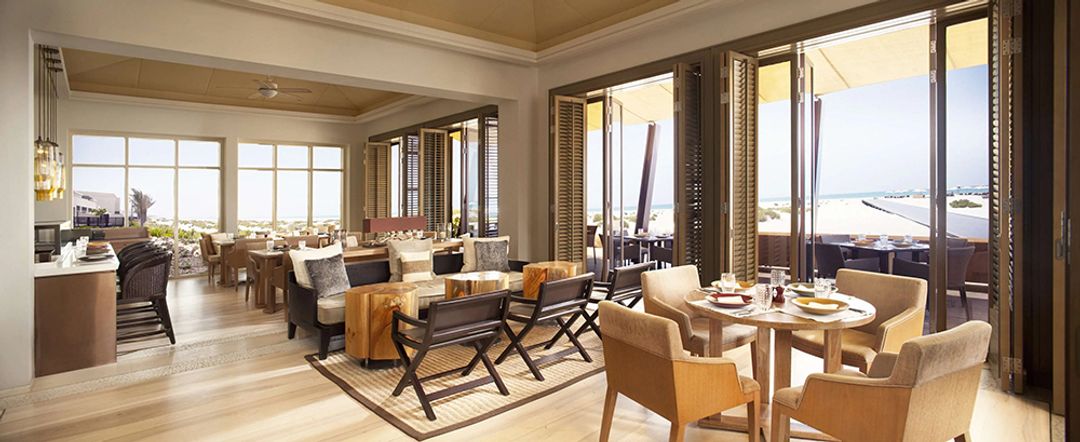
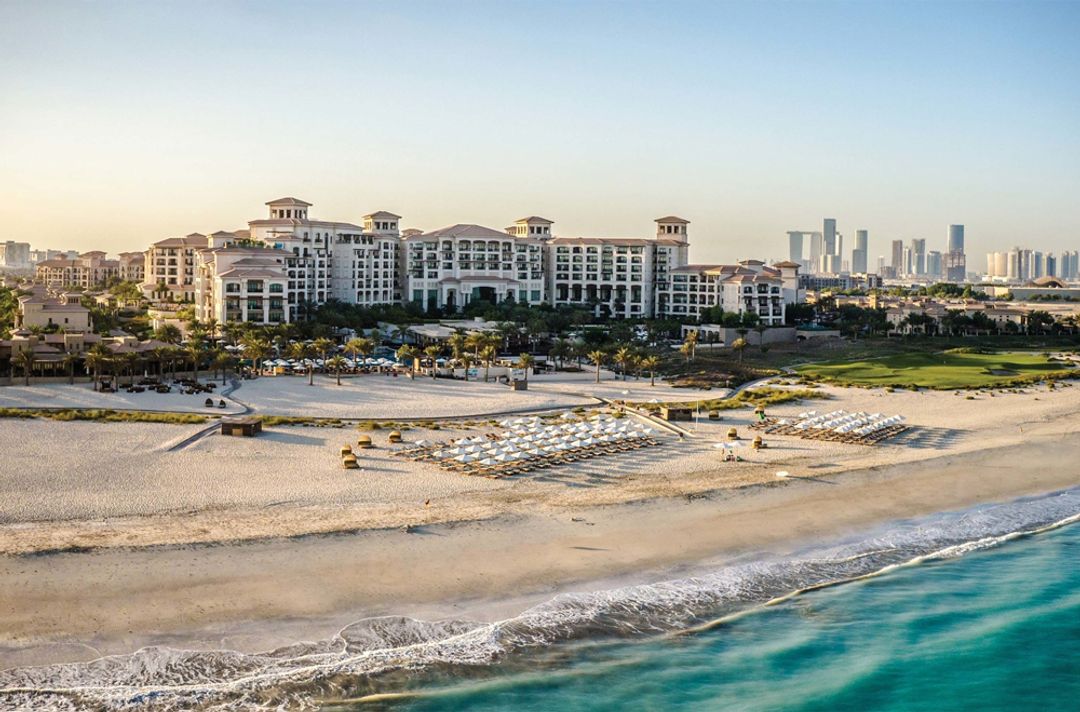
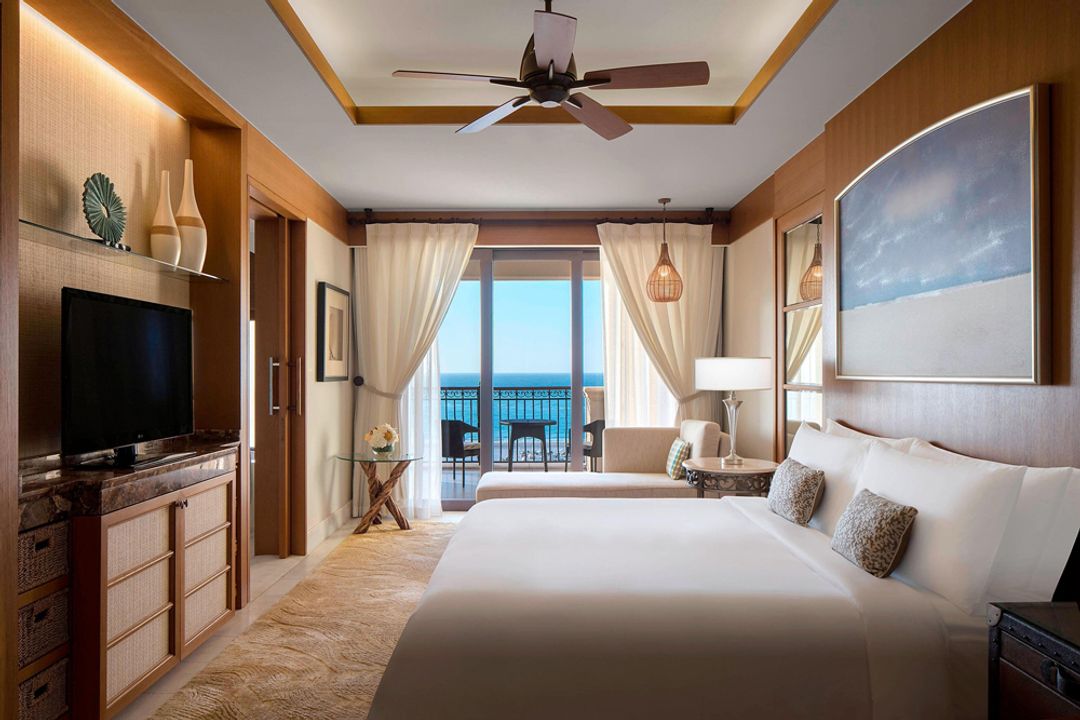
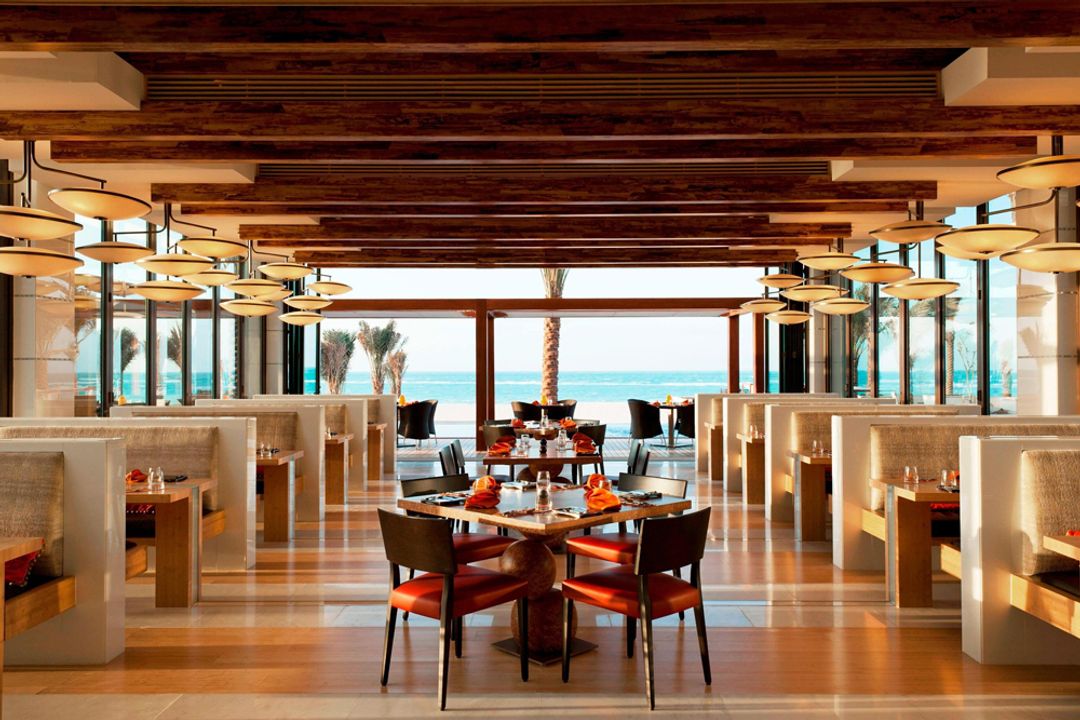
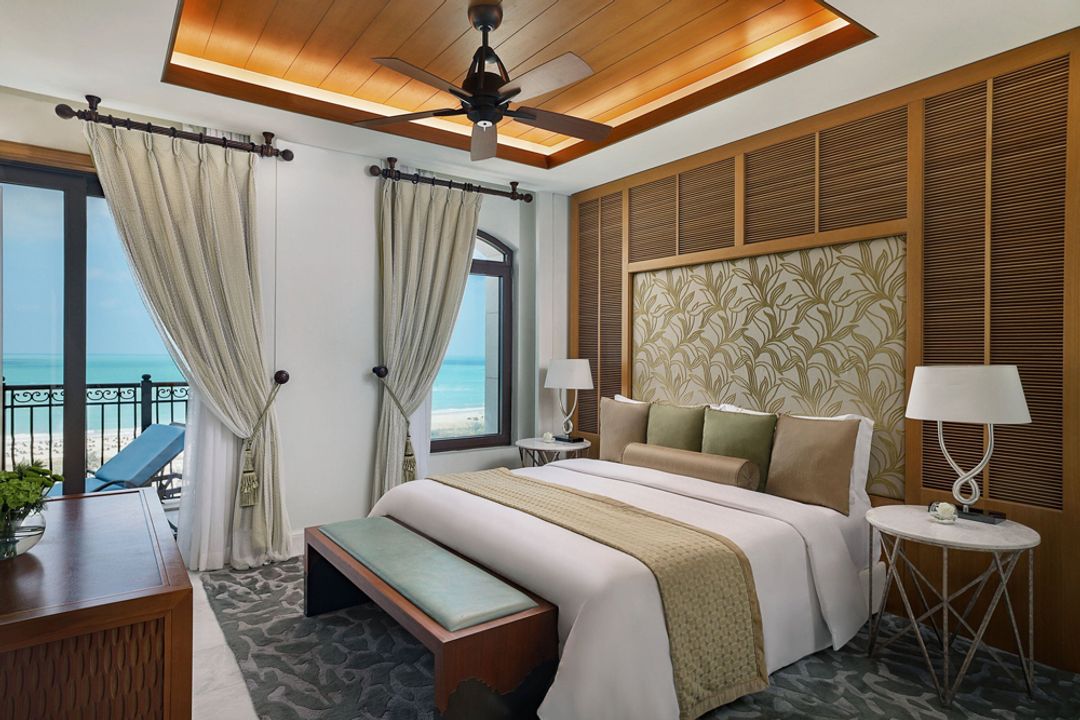
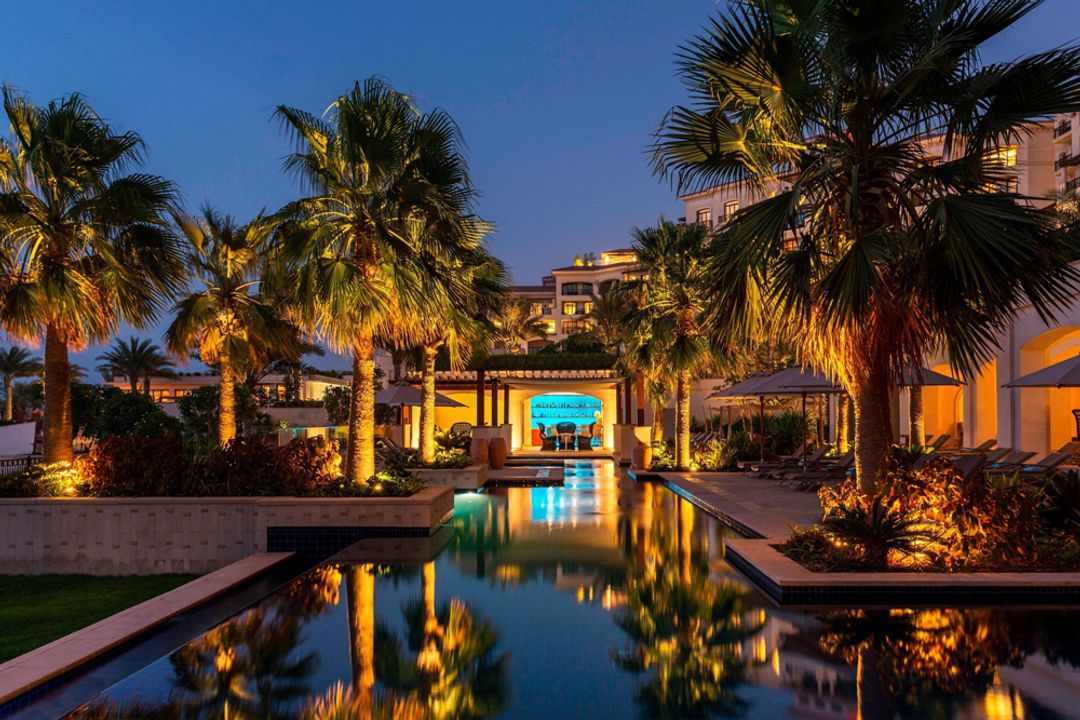
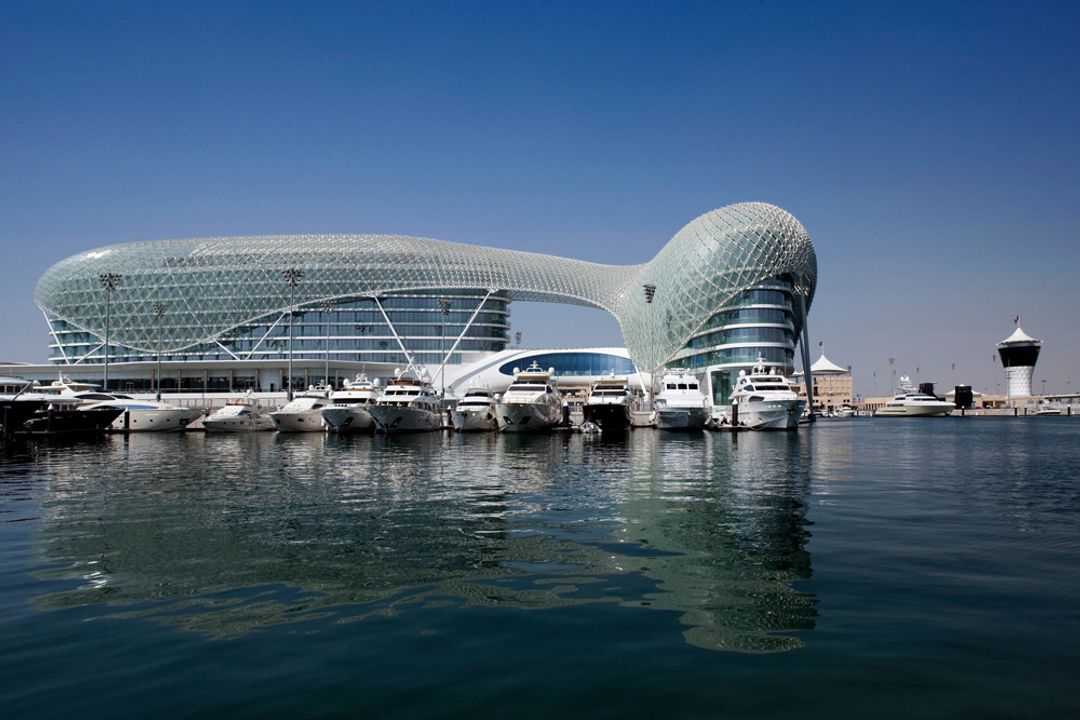
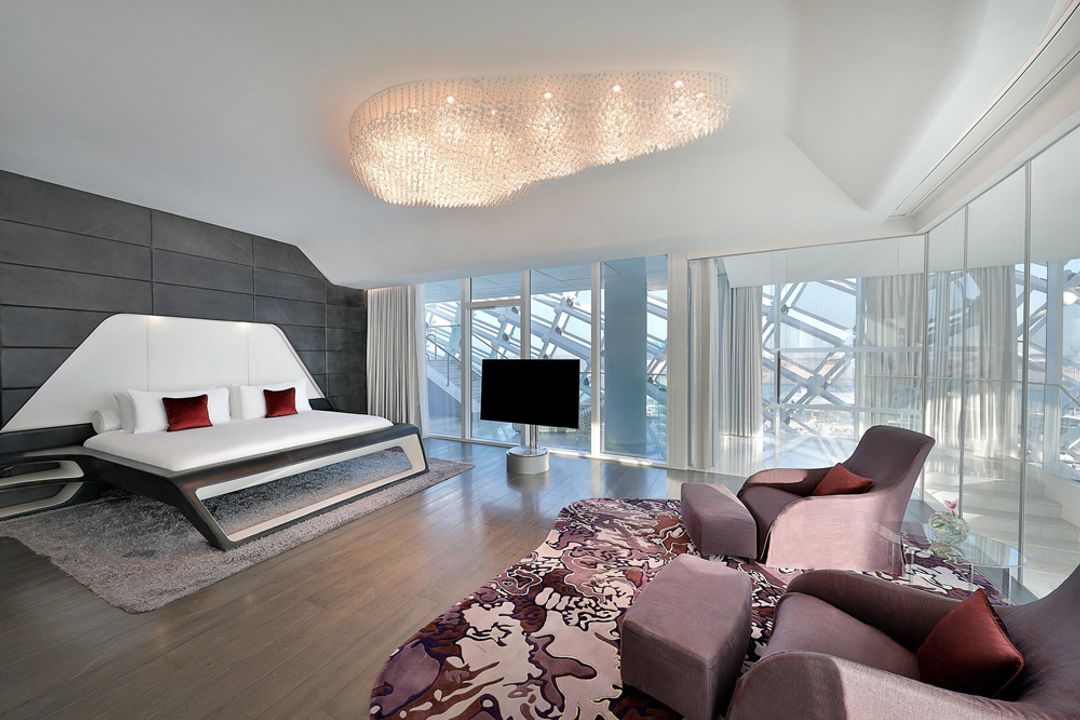
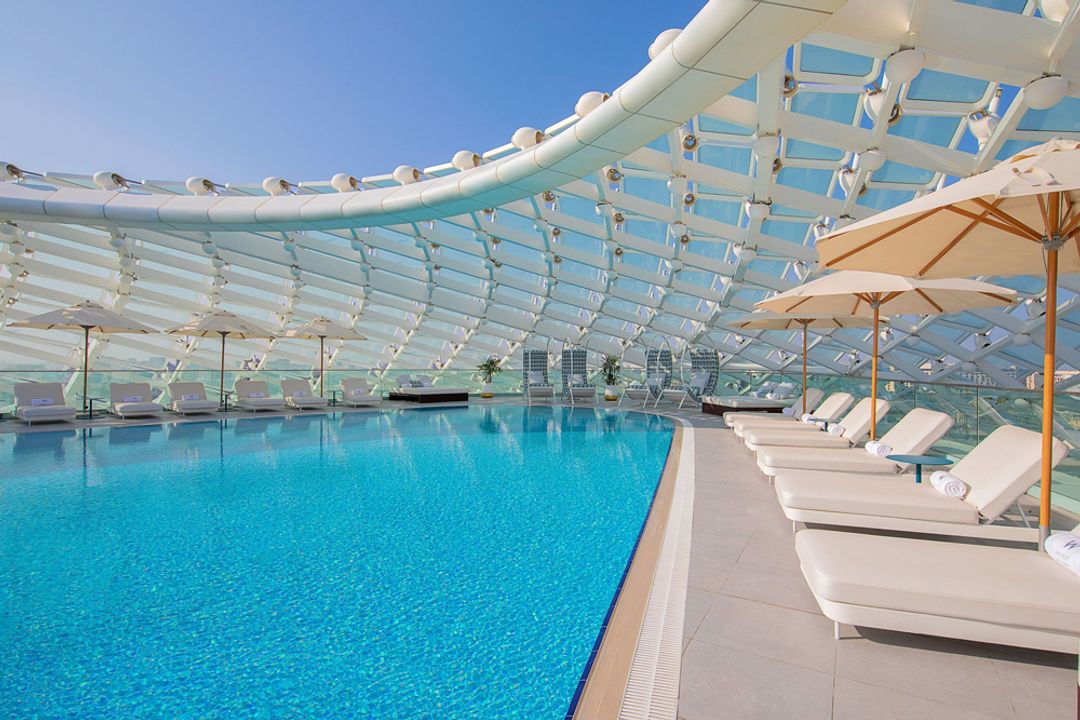
Saadiyat Island is where the city has placed its cultural wager, and the St. Regis Saadiyat Island Resort sits close to the coastline that will eventually anchor the Louvre Abu Dhabi and the Zayed National Museum. The Park Hyatt on the same island takes a lower, more horizontal profile, designed to defer to the landscape rather than compete with it. Out on Yas Island, the W Abu Dhabi sits beneath the Yas Viceroy's steel canopy, which bridges the Formula One circuit in a piece of infrastructure theater that belongs entirely to its setting. The Andaz Capital Gate, meanwhile, earns its place for a single reason: the tower it occupies leans at an 18-degree incline, certified by Guinness as the world's furthest deliberately inclined building, and WATG's interior conversion manages not to let that fact overwhelm the experience of actually staying there.