Best hotels in Marrakech, Morocco | Visually Compare Top Stays Side-by-Side
Welcome to PressBeyond - a curated visual guide to design-driven hotels and the fastest way to compare them.
An Overview of the Boutique & Luxury Hotel Landscape in Marrakech, Morocco
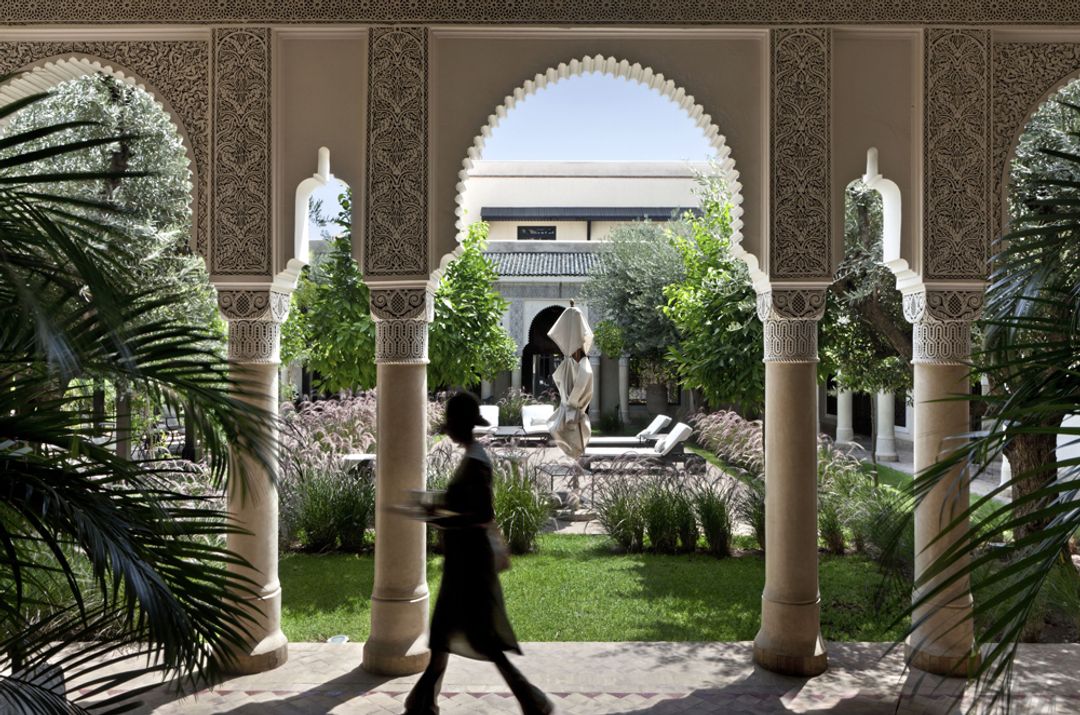
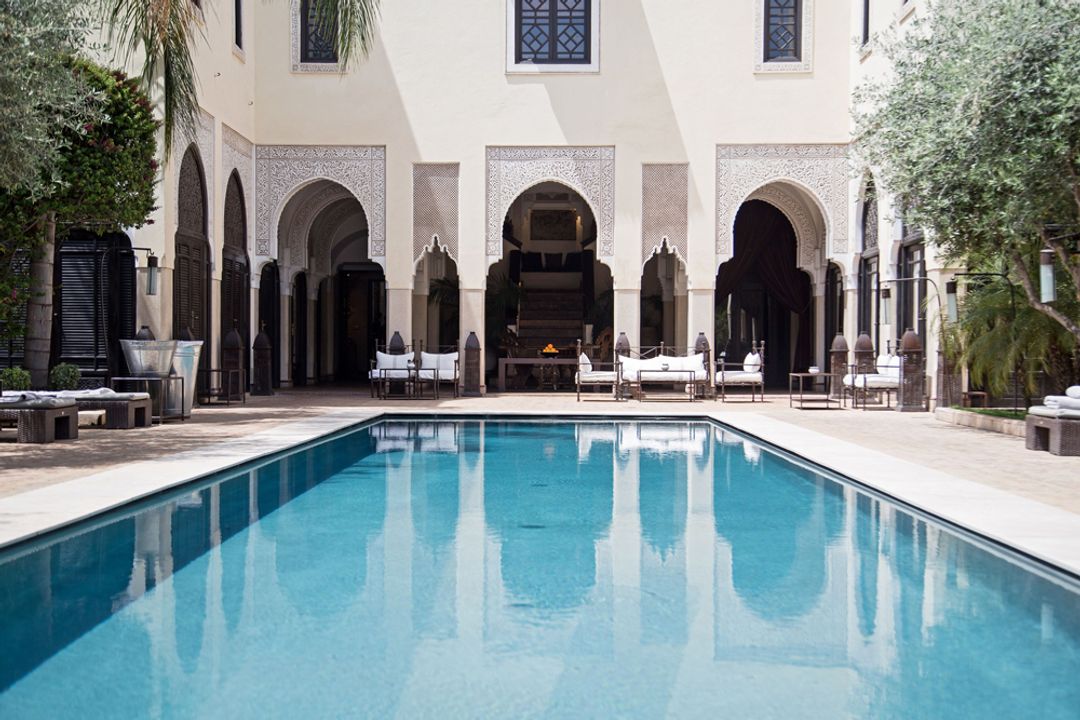
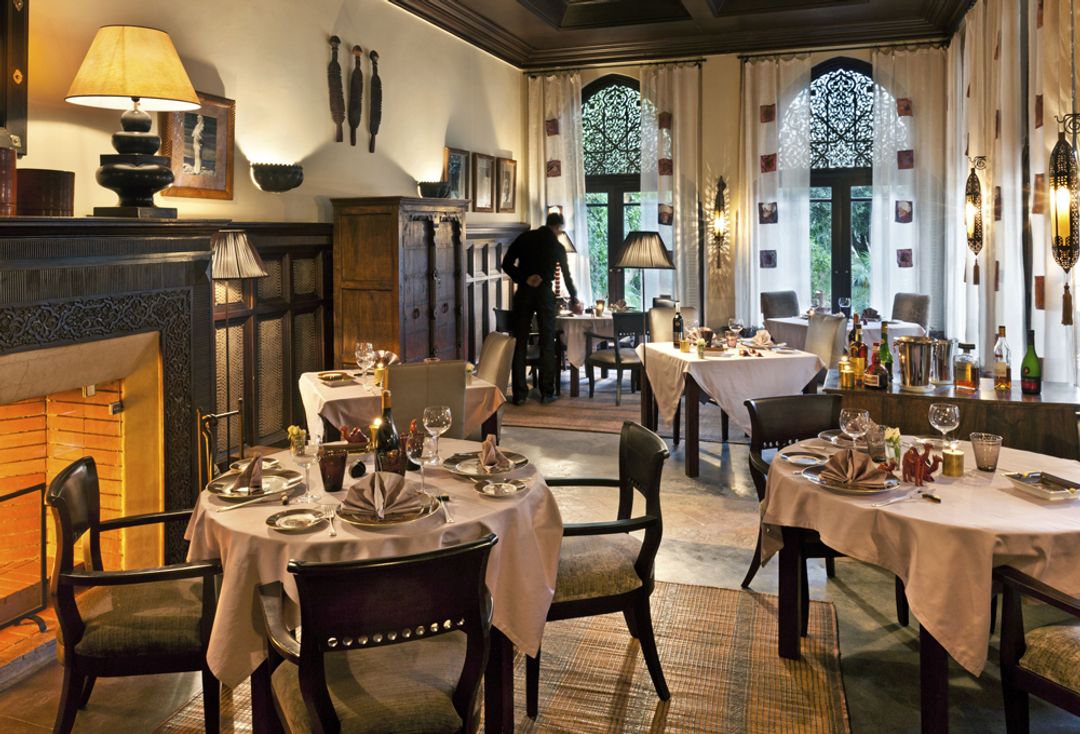
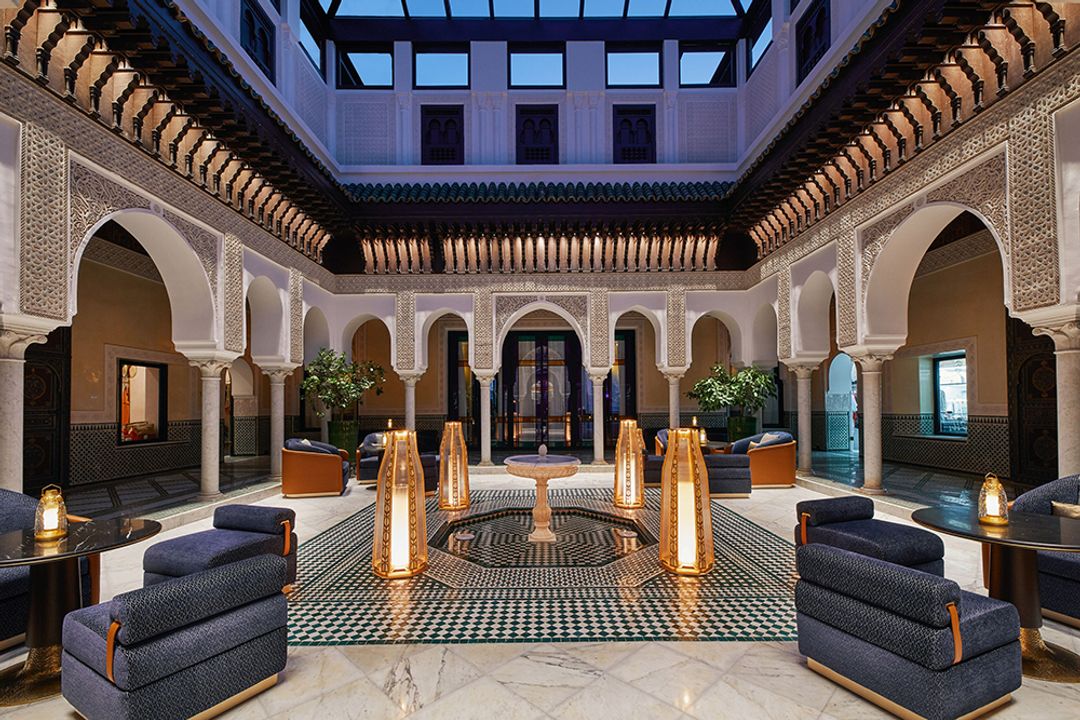
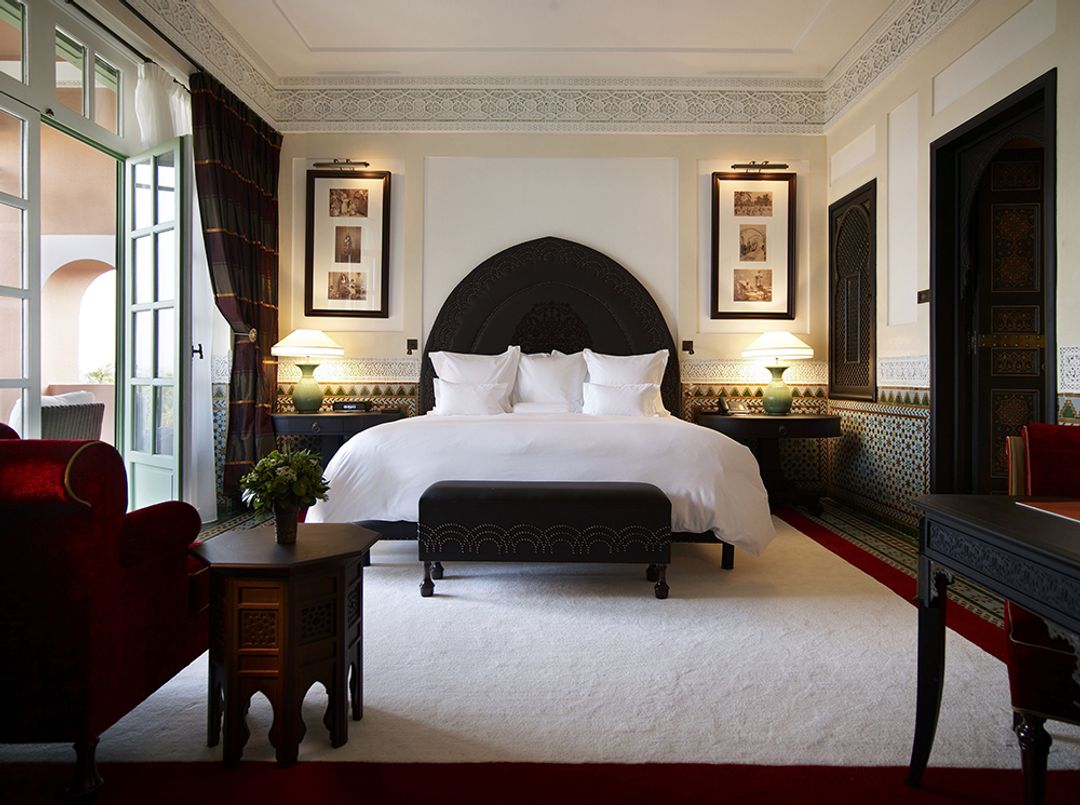
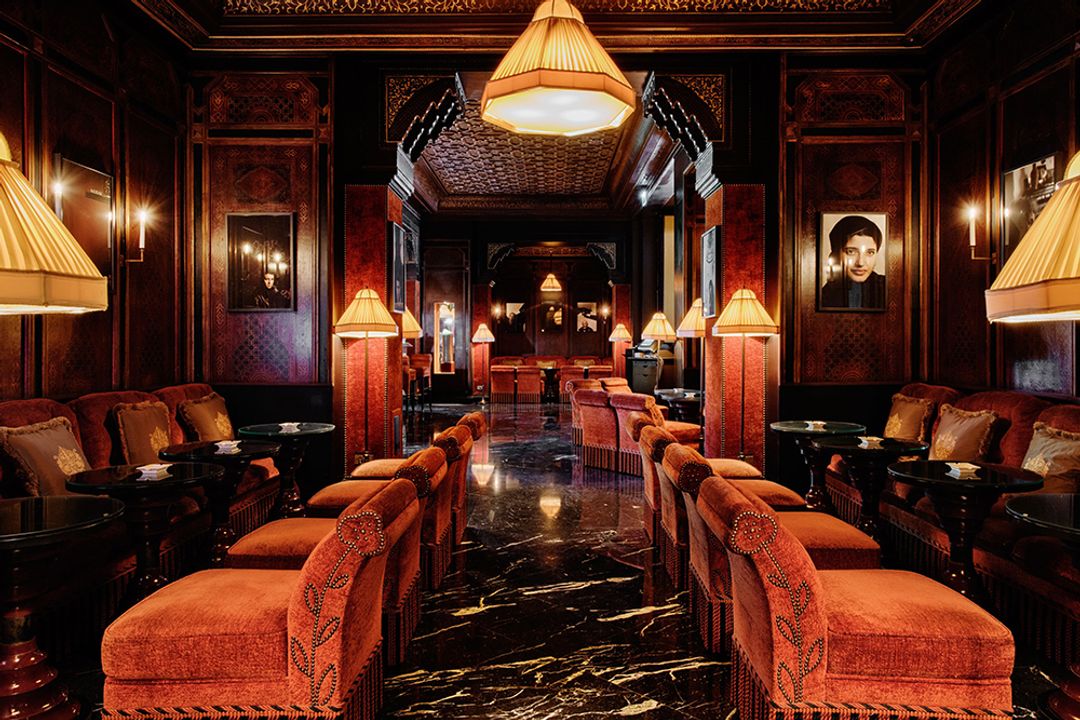
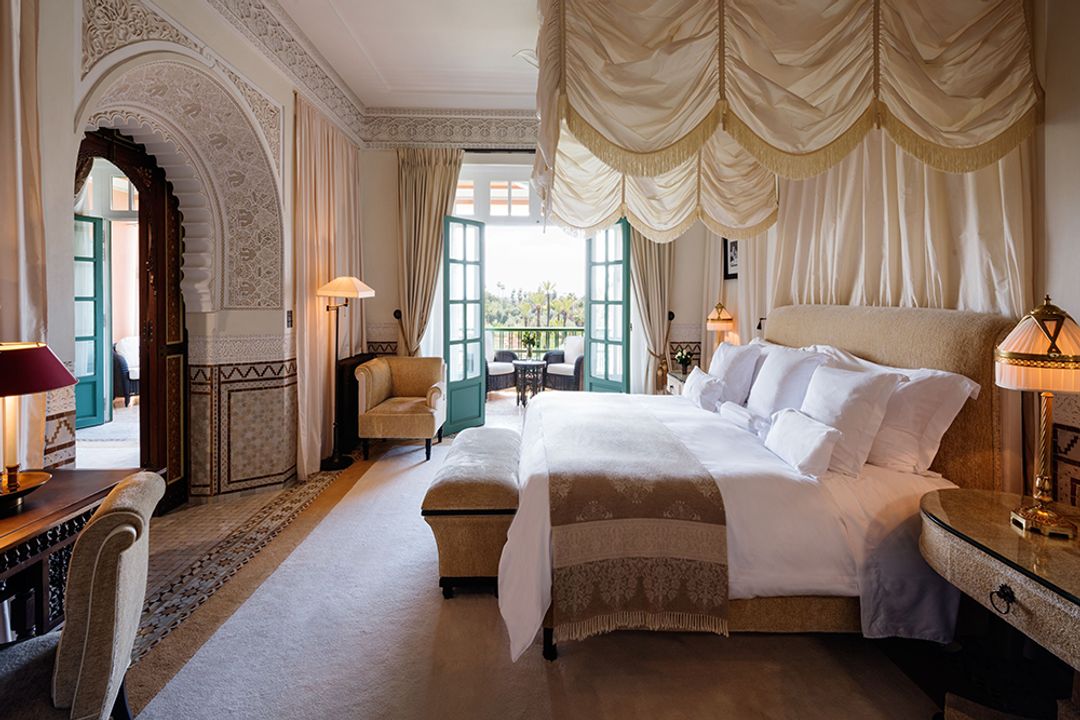
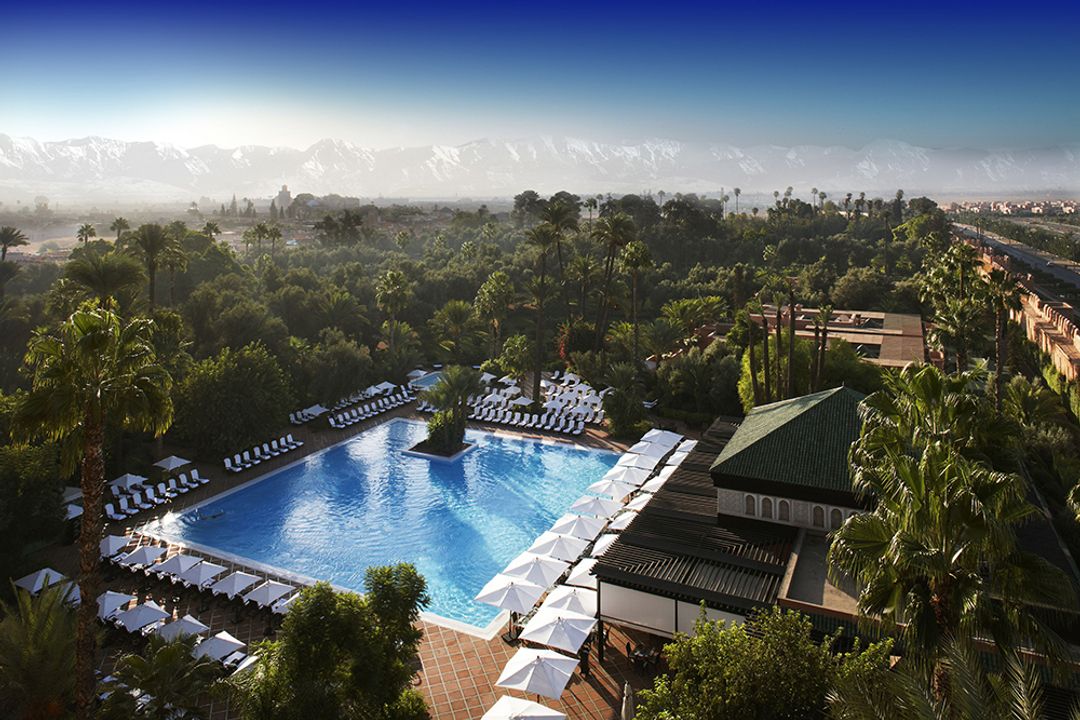
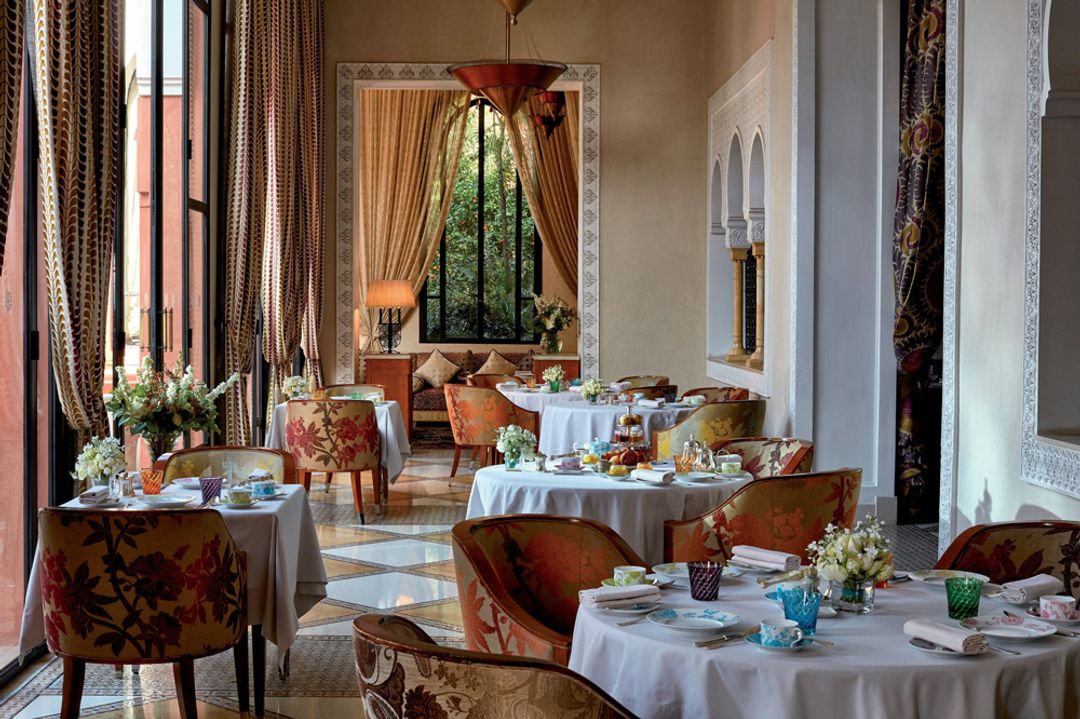
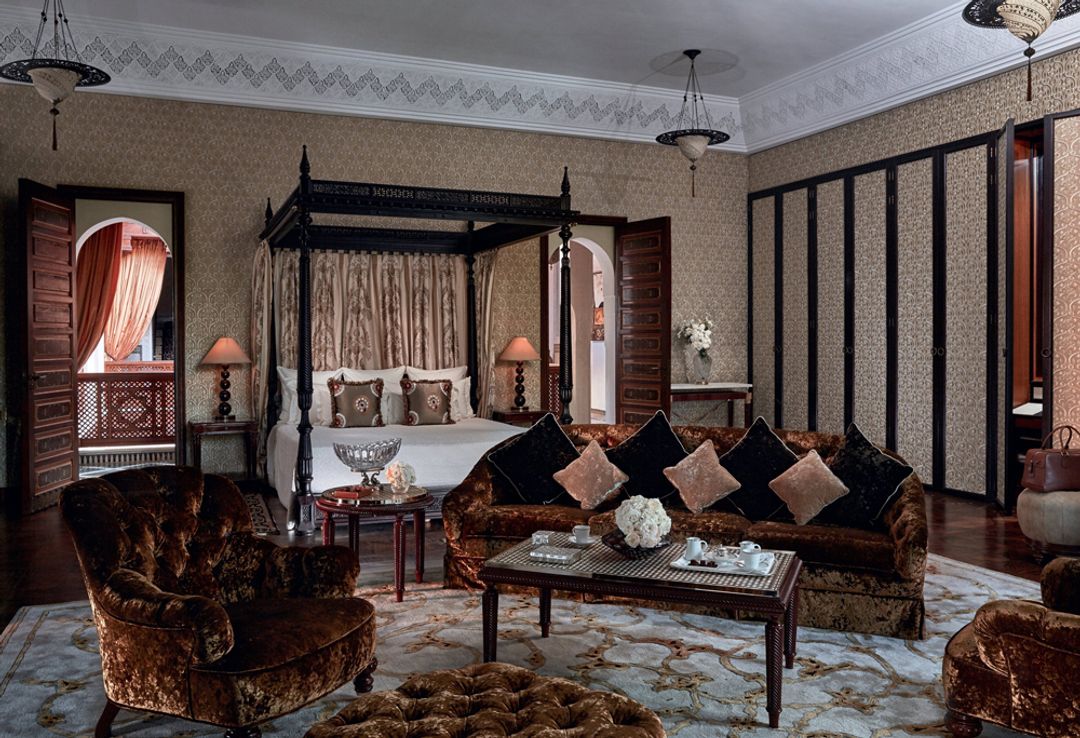
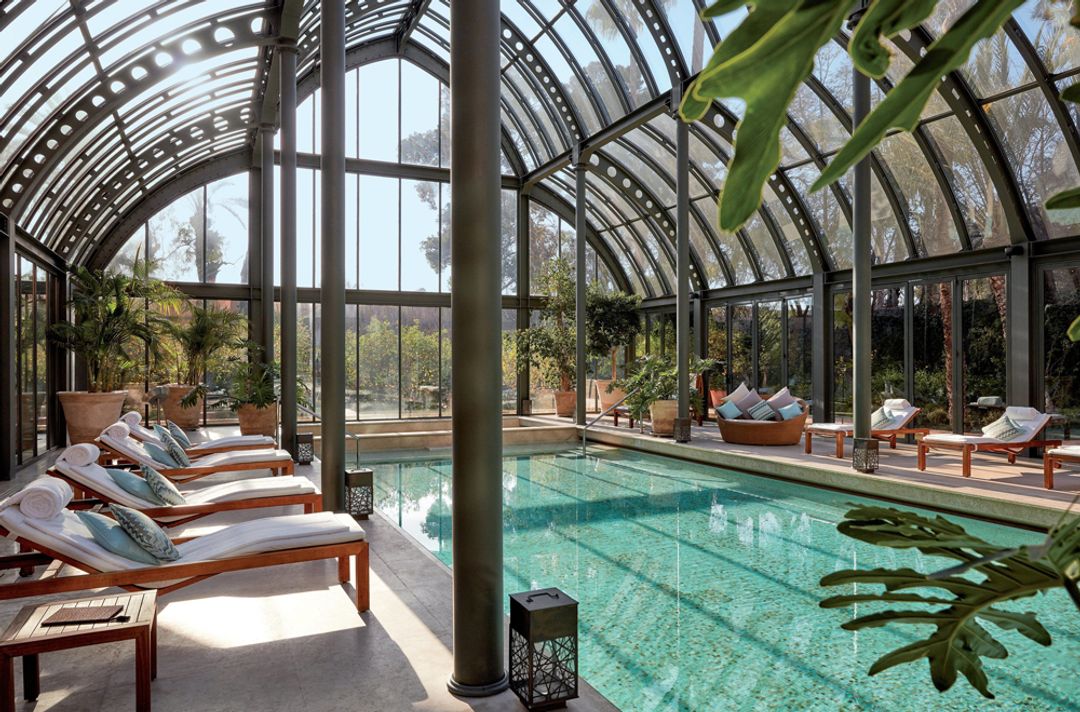
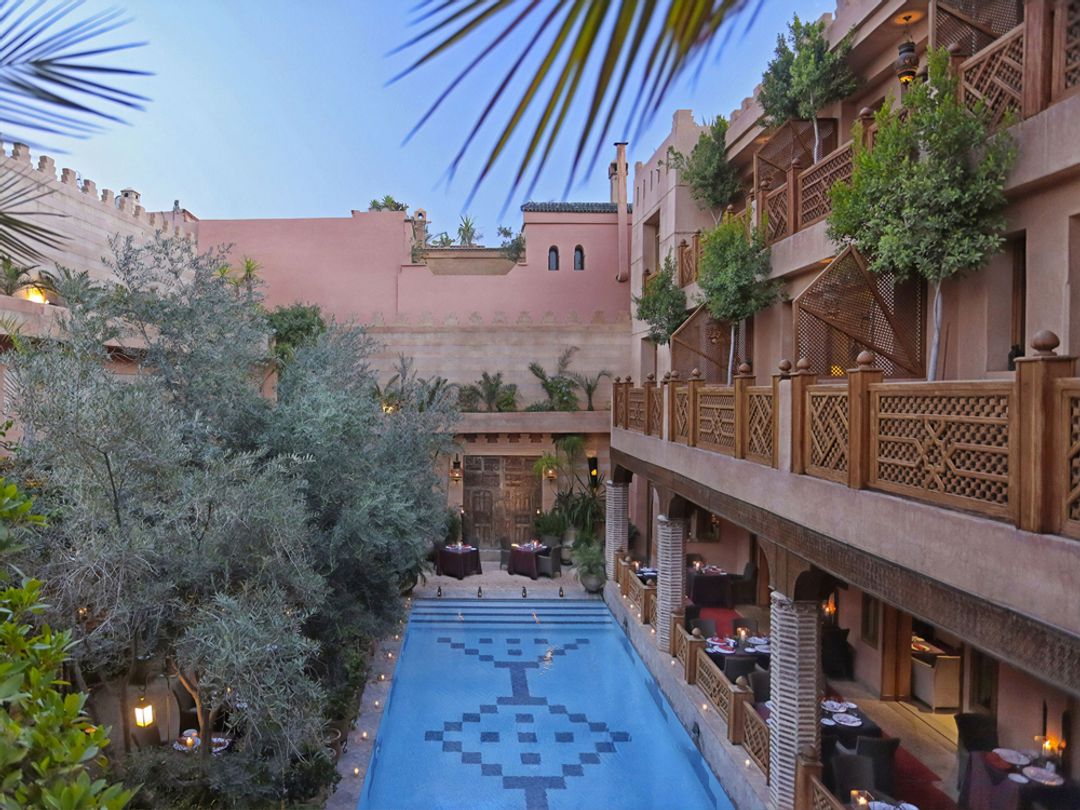
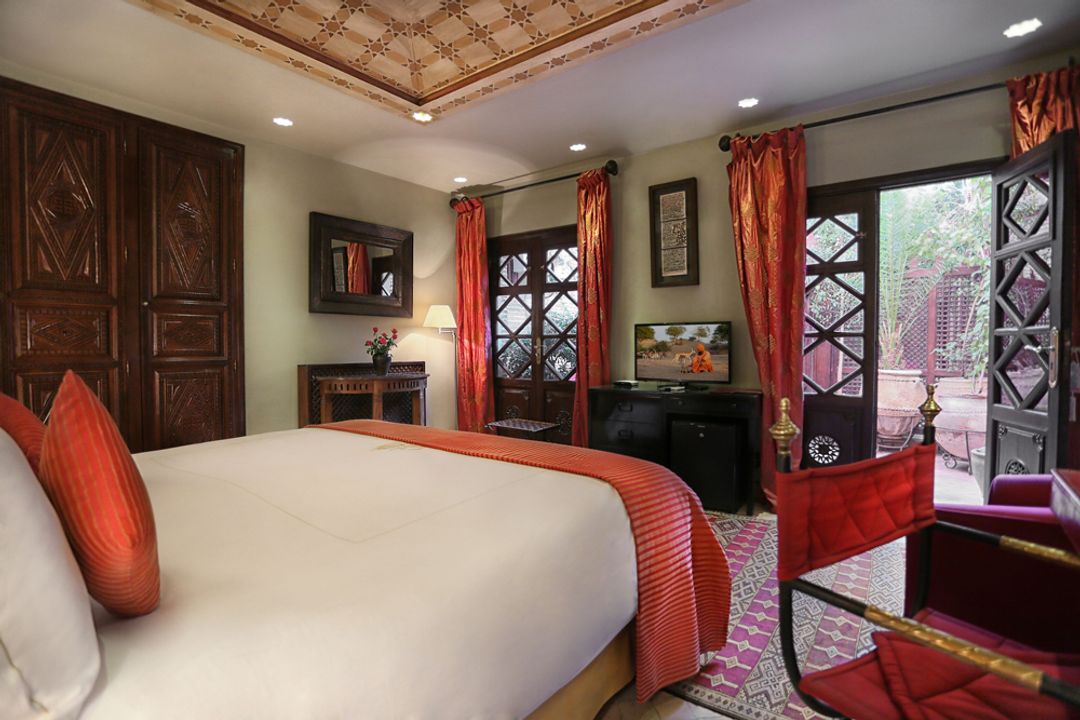
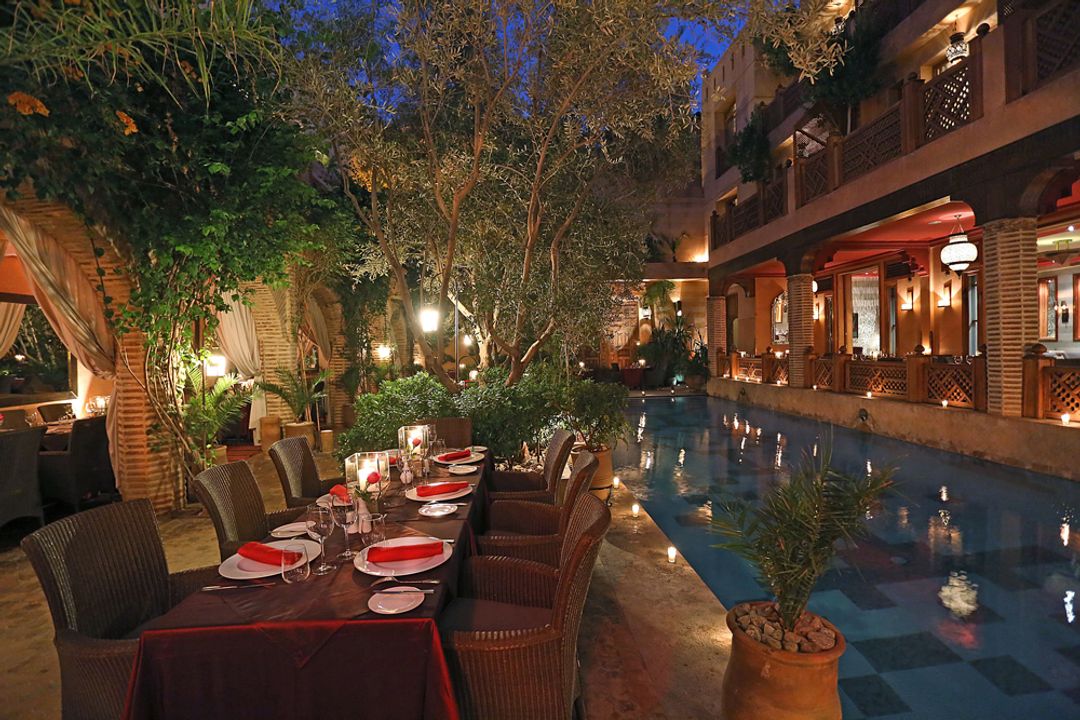
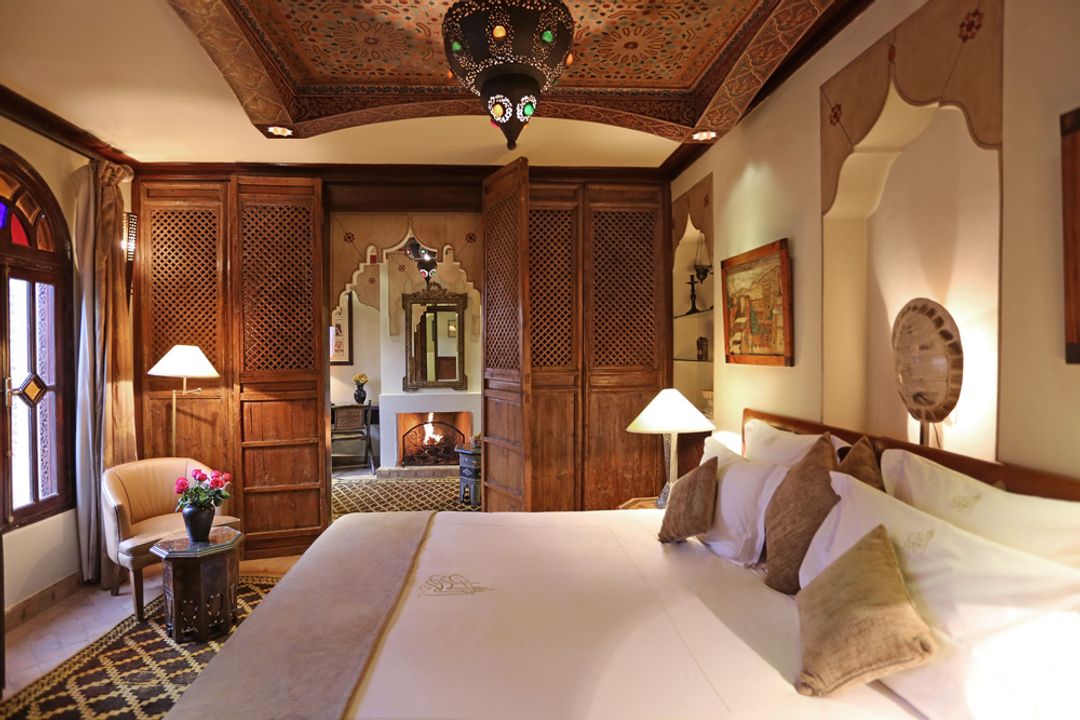
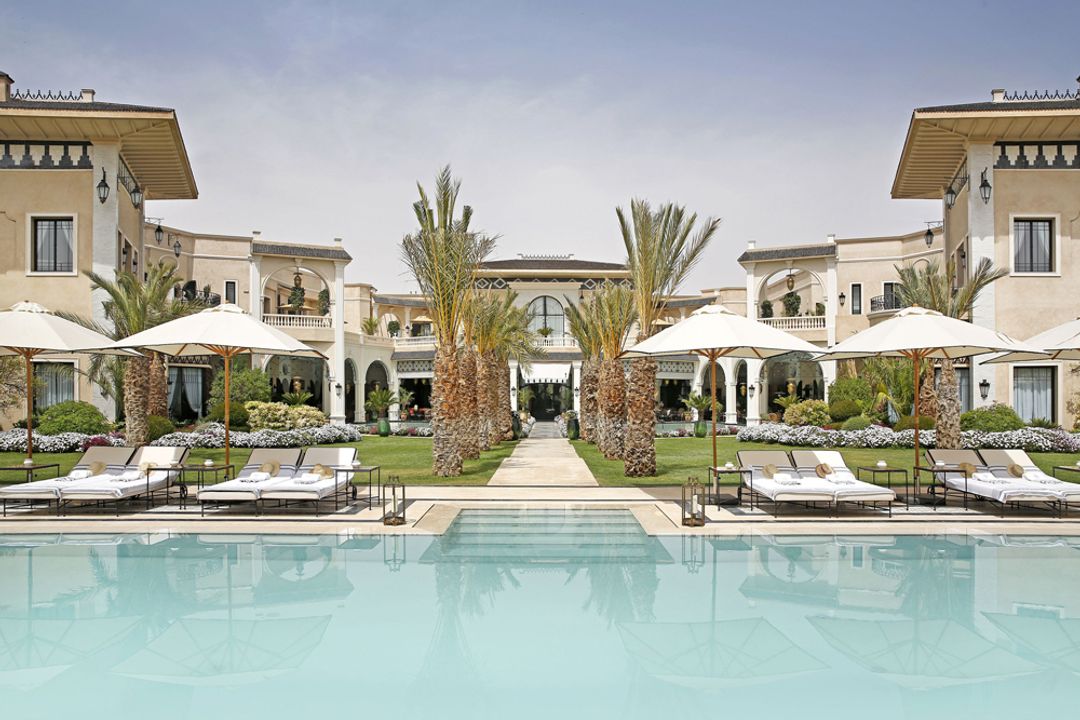
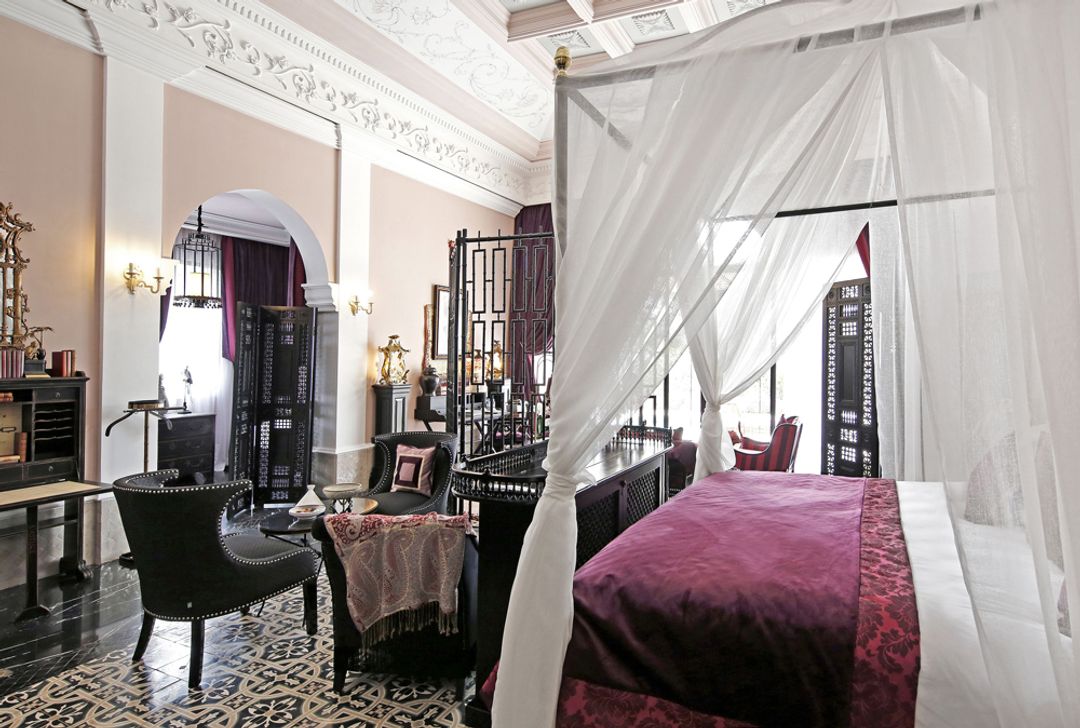
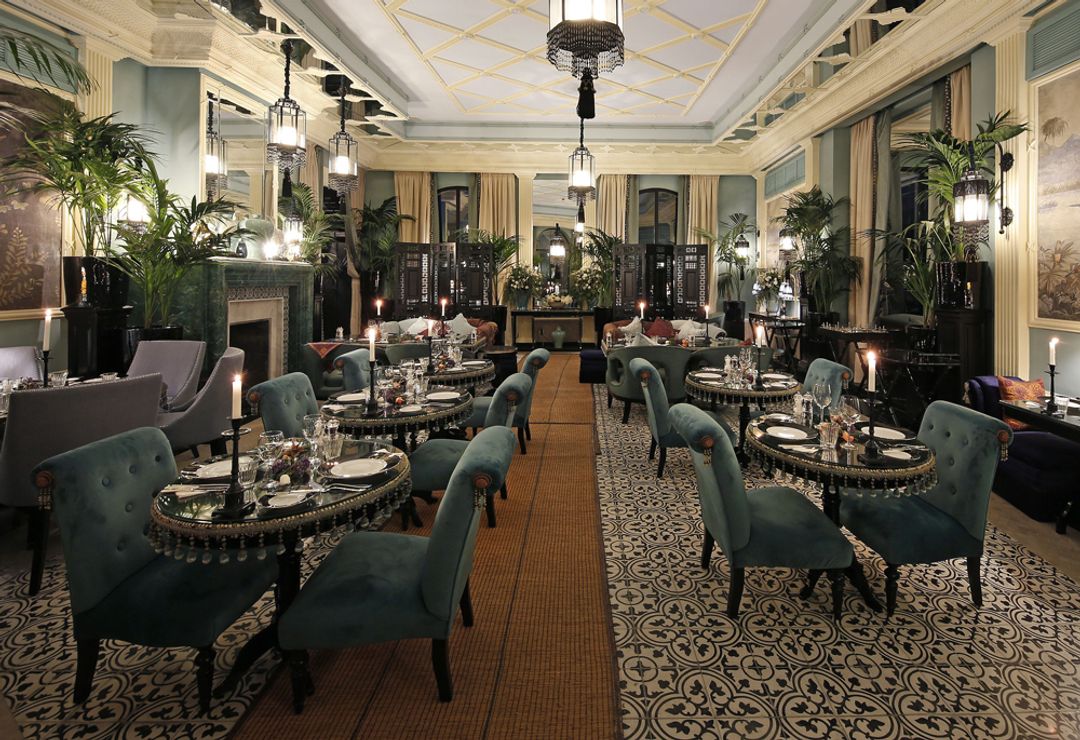
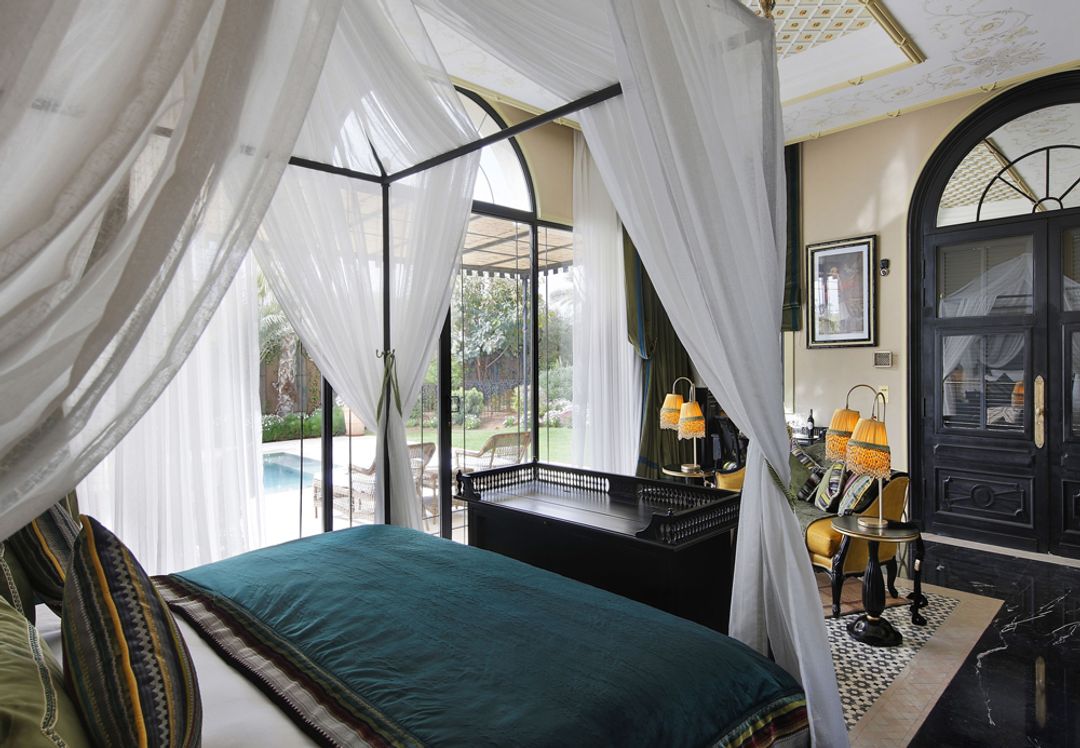
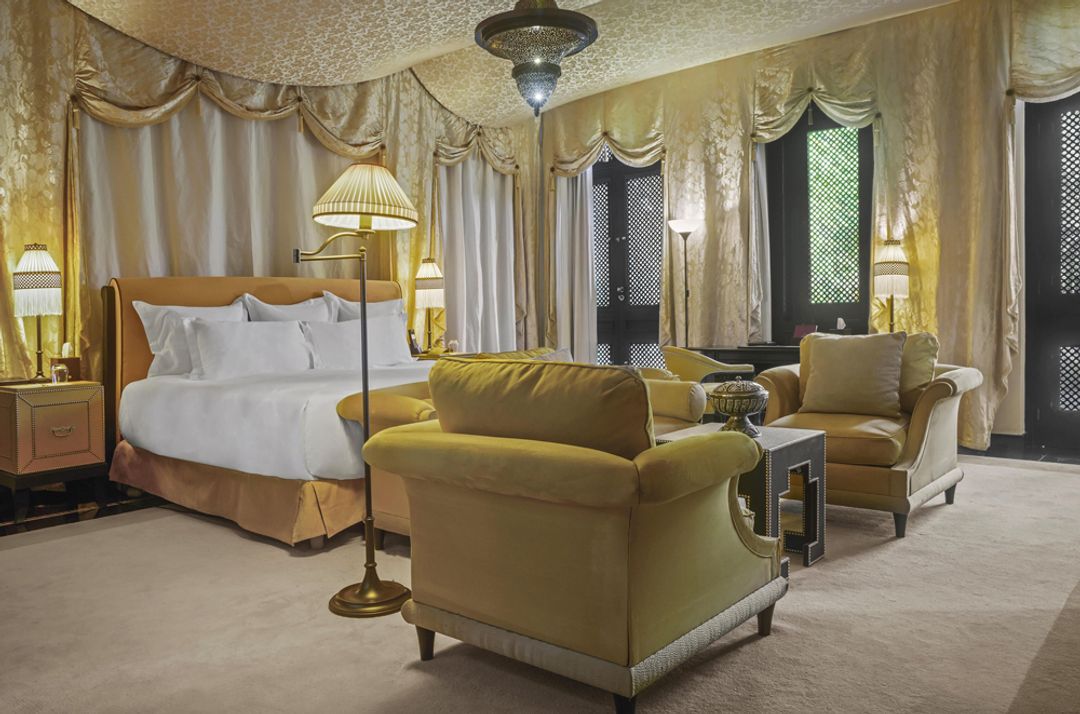
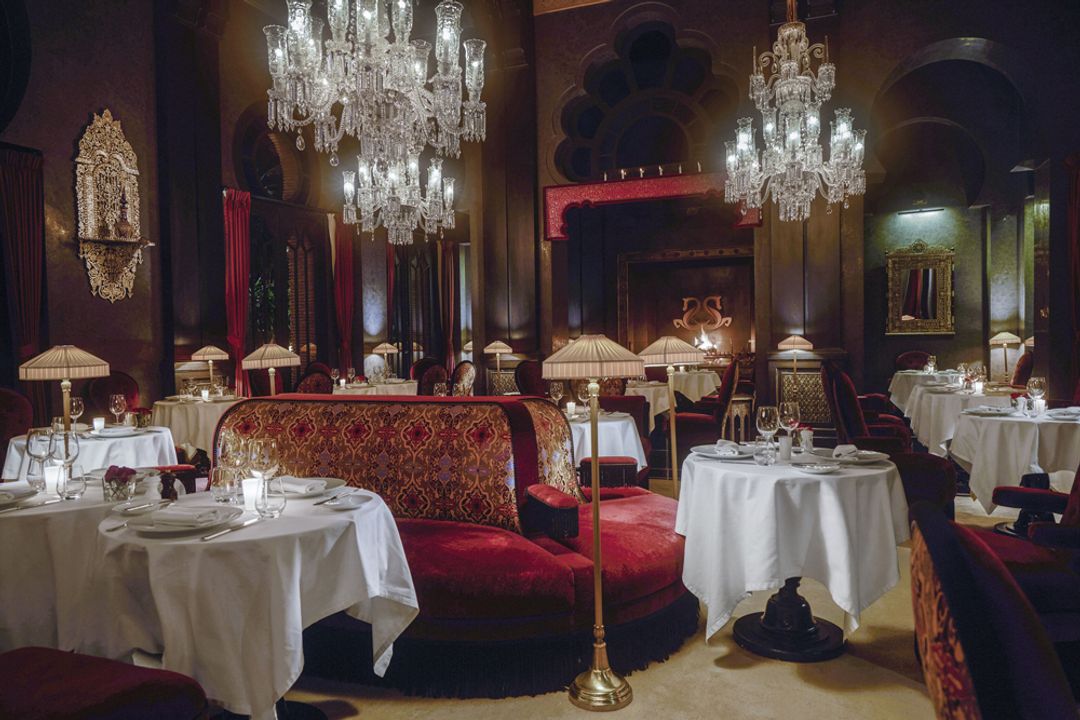
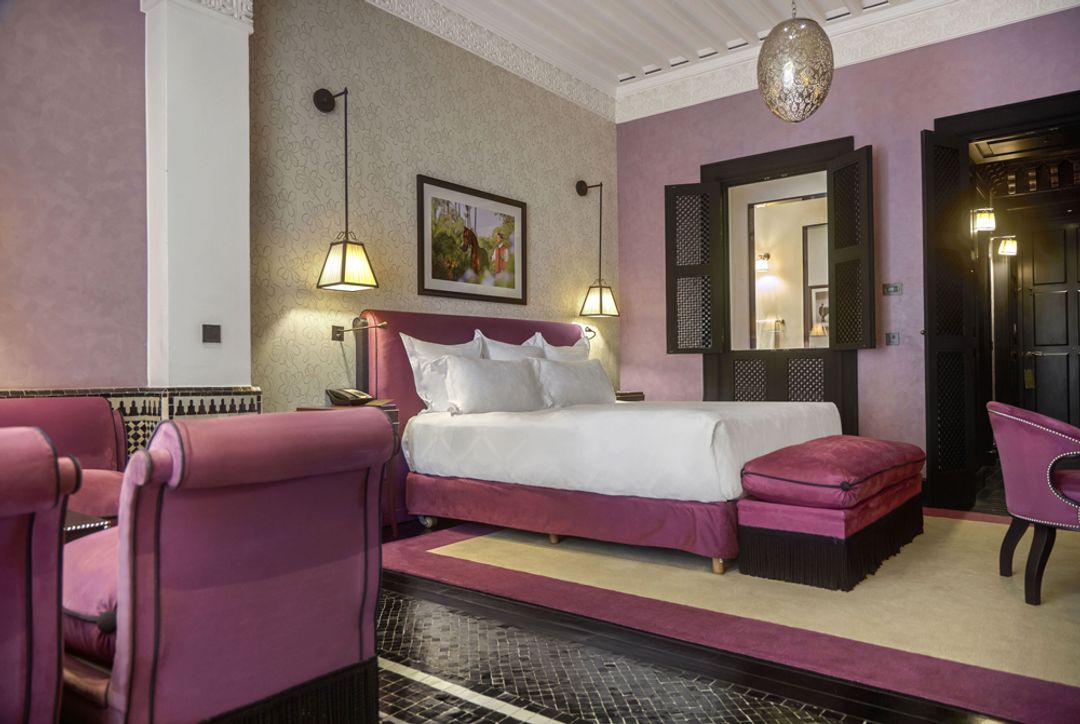
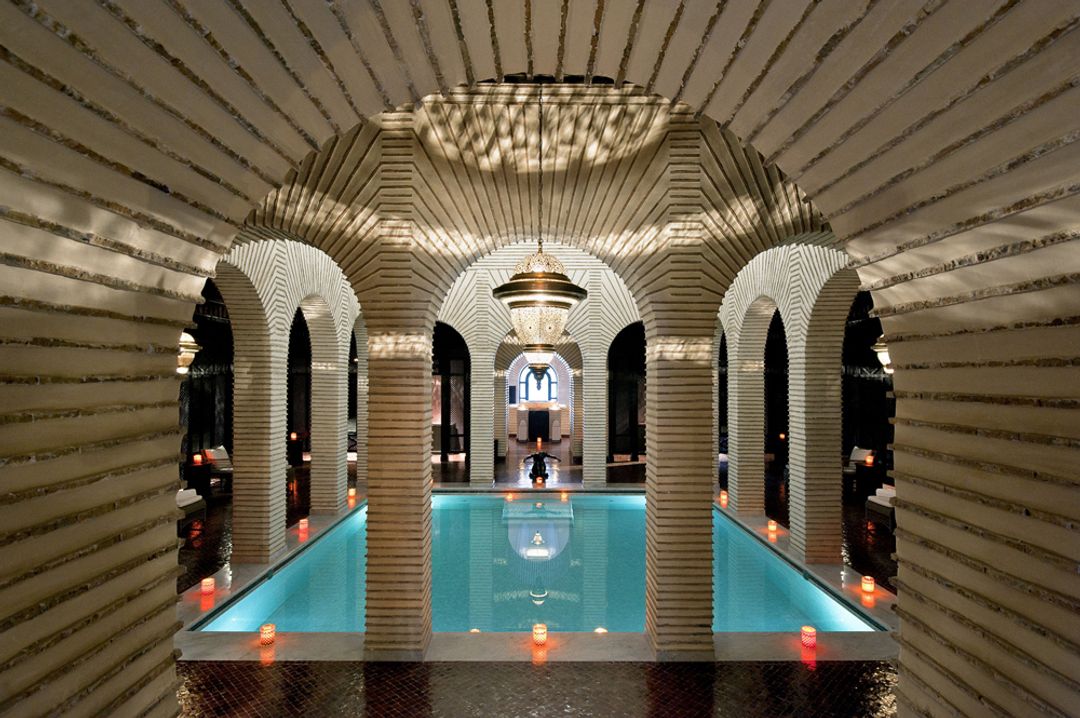
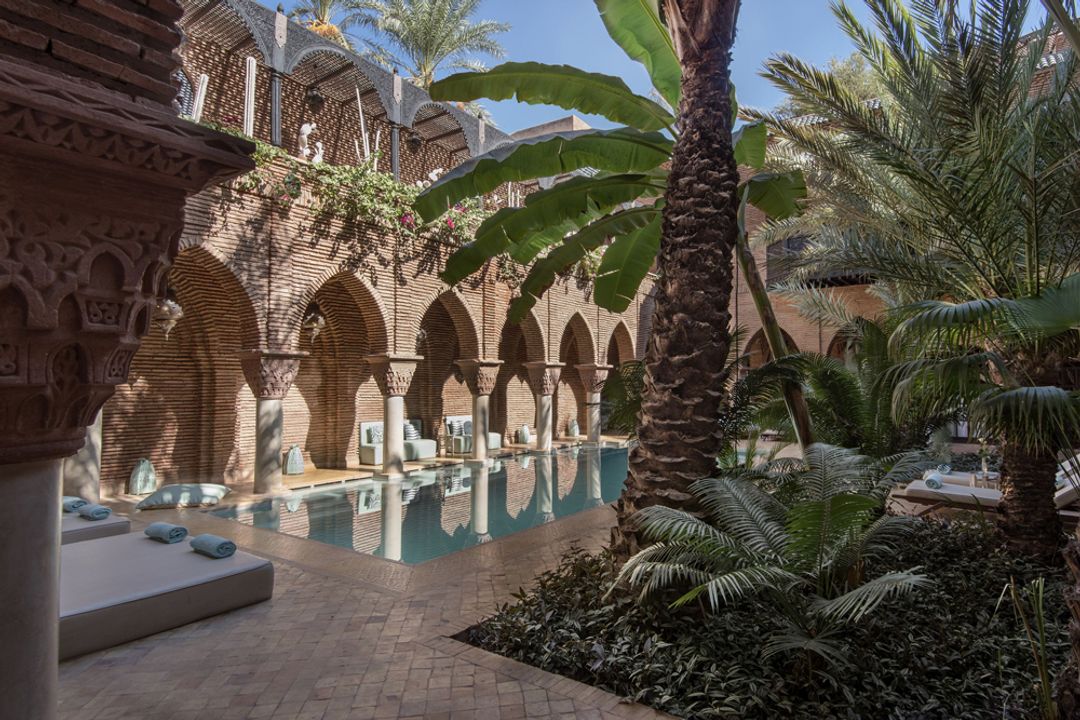
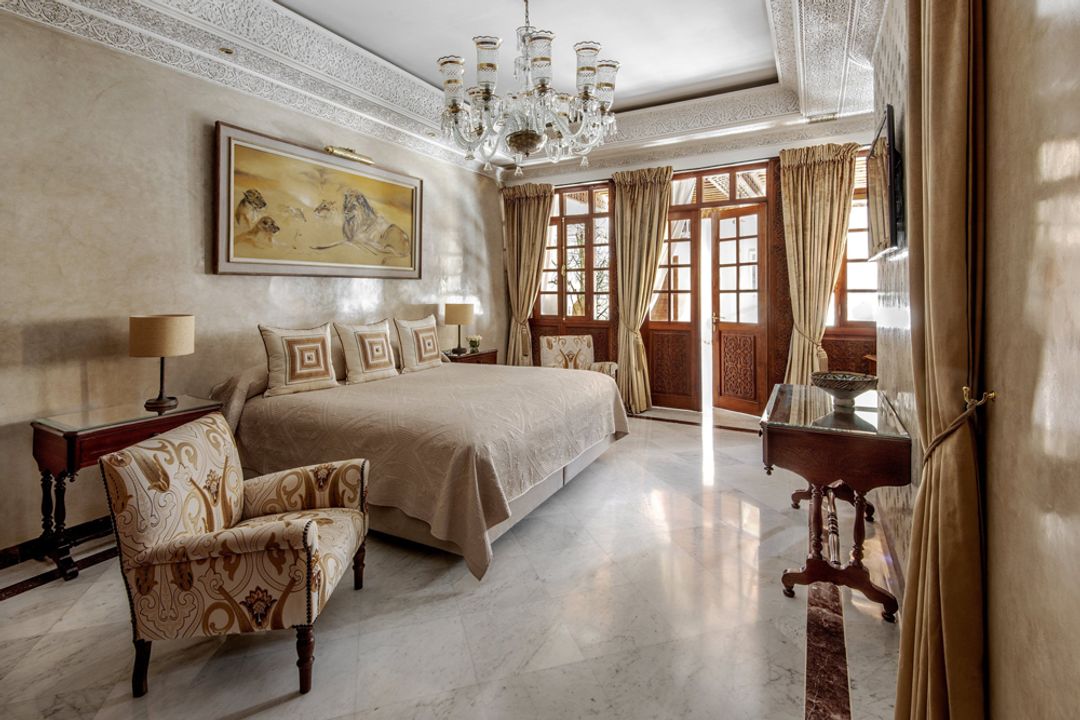
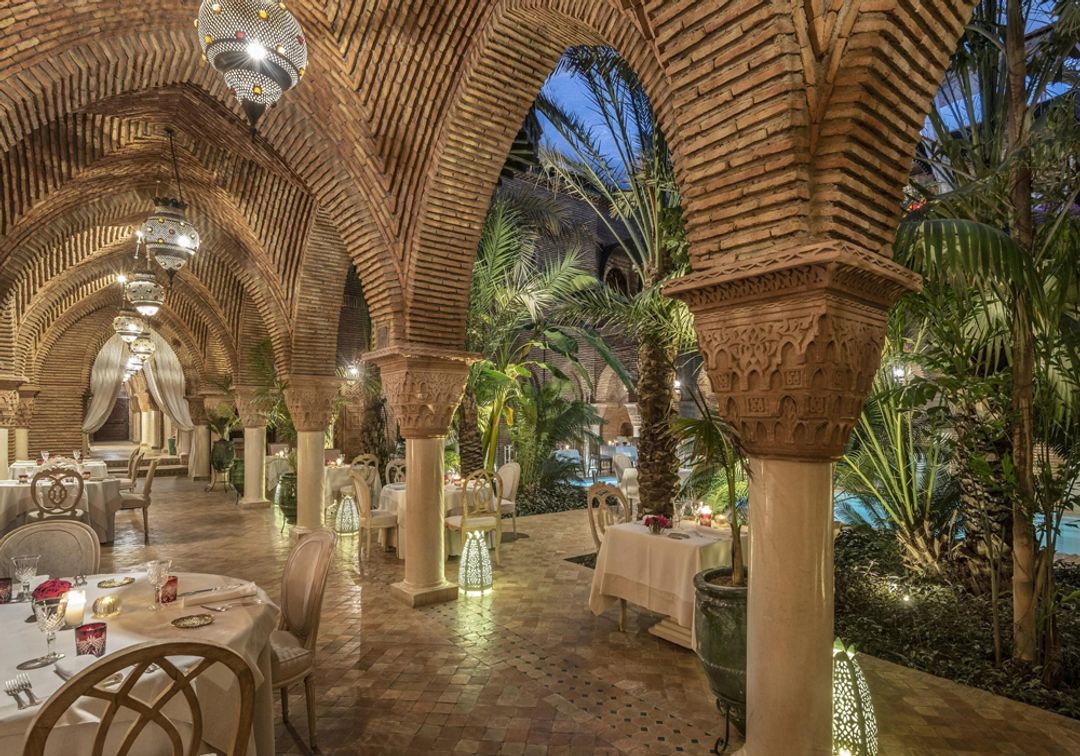
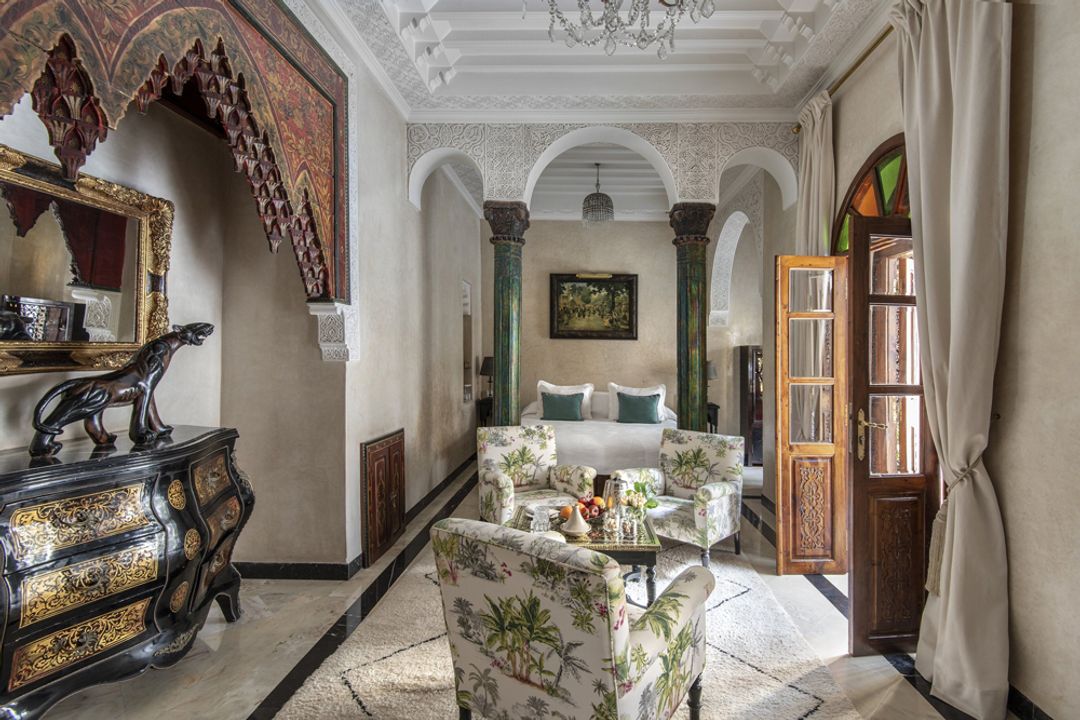
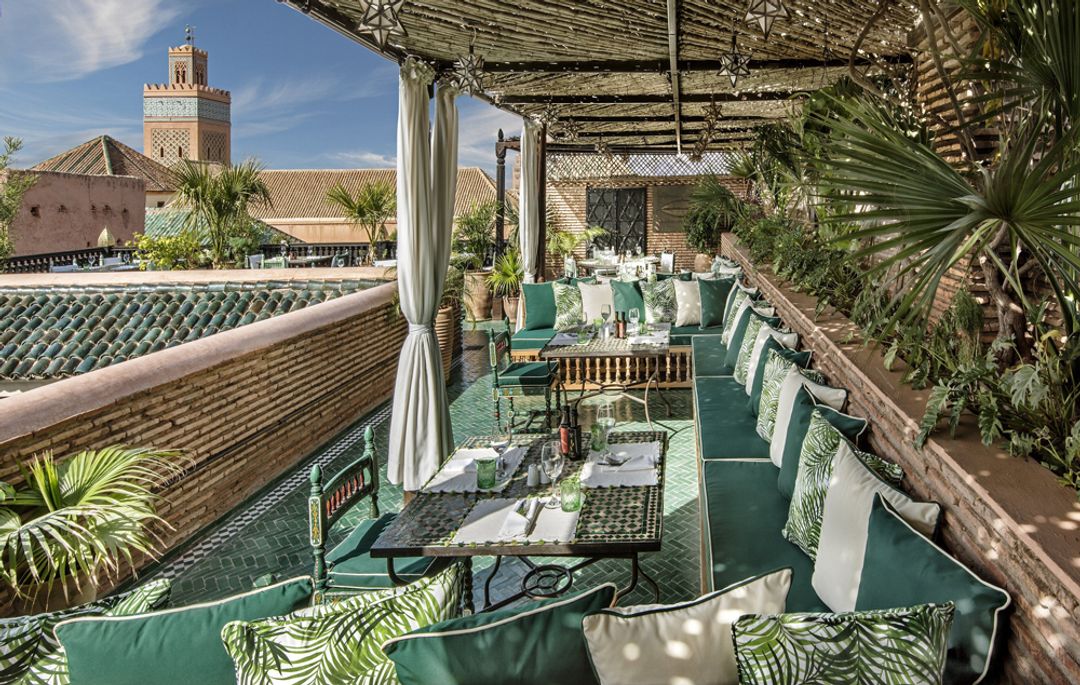
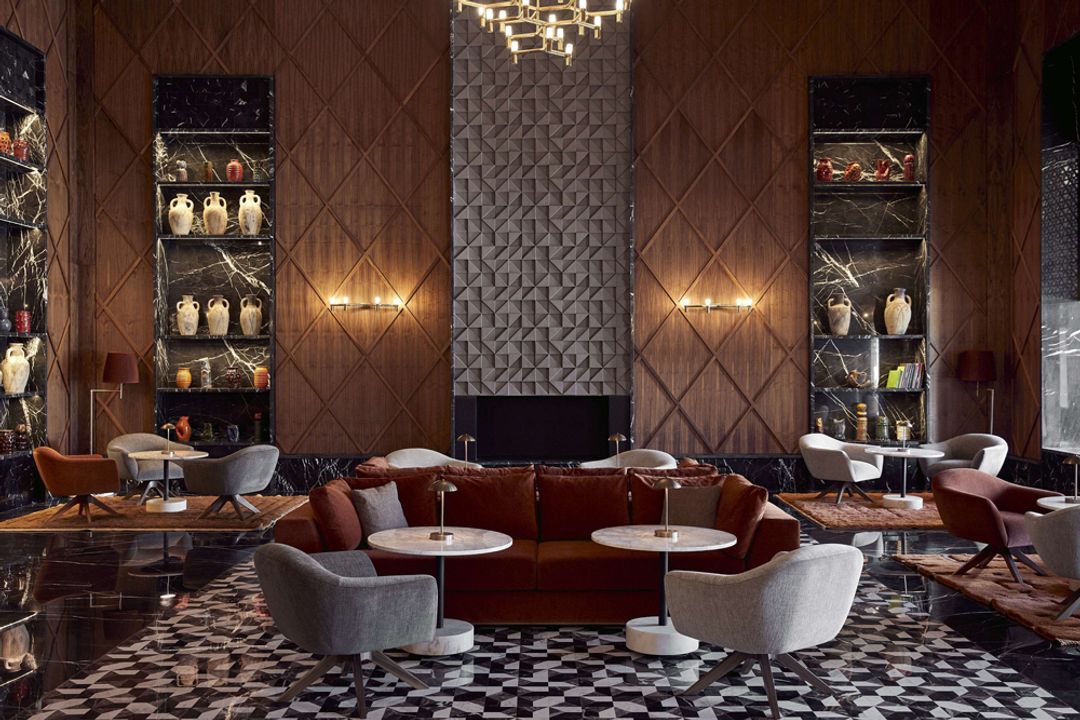
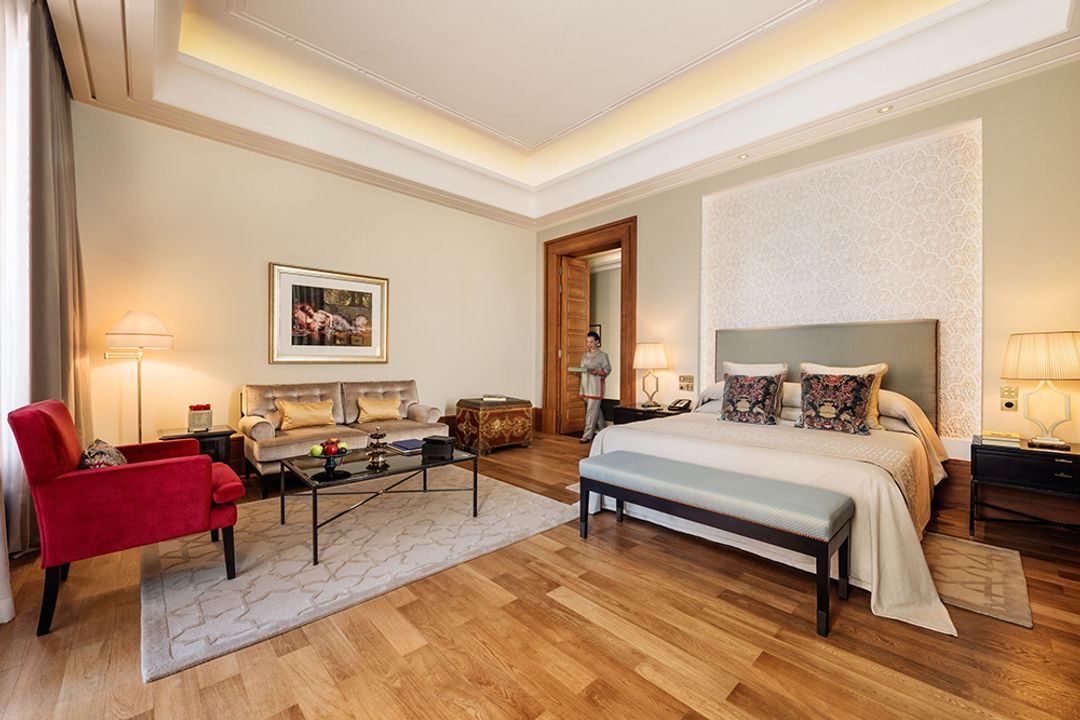
The medina comes first. Centuries of compressed courtyard architecture, where light enters from above and the street is kept deliberately at a distance, established a spatial vocabulary that every serious hotel in Marrakech has since been forced to reckon with. Villa des Orangers in Sidi Mimoun distills this to its essence: a pair of riads absorbed into a single property, orange and olive trees overhead, the noise of the Mellah quarter filtered away. La Sultana, further south in the Kasbah district, takes a more theatrical approach, layering zellij tilework and carved cedar across five interconnected riads with the density of a private palace. Then there is La Mamounia, which occupies a category of its own. Opened in 1923 within gardens that date to the eighteenth century, redesigned most recently under Jacques Garcia in 2009, it is simultaneously a monument and a functioning hotel, its Moorish and Art Deco interiors carrying the accumulated weight of nearly a century of international visitors.
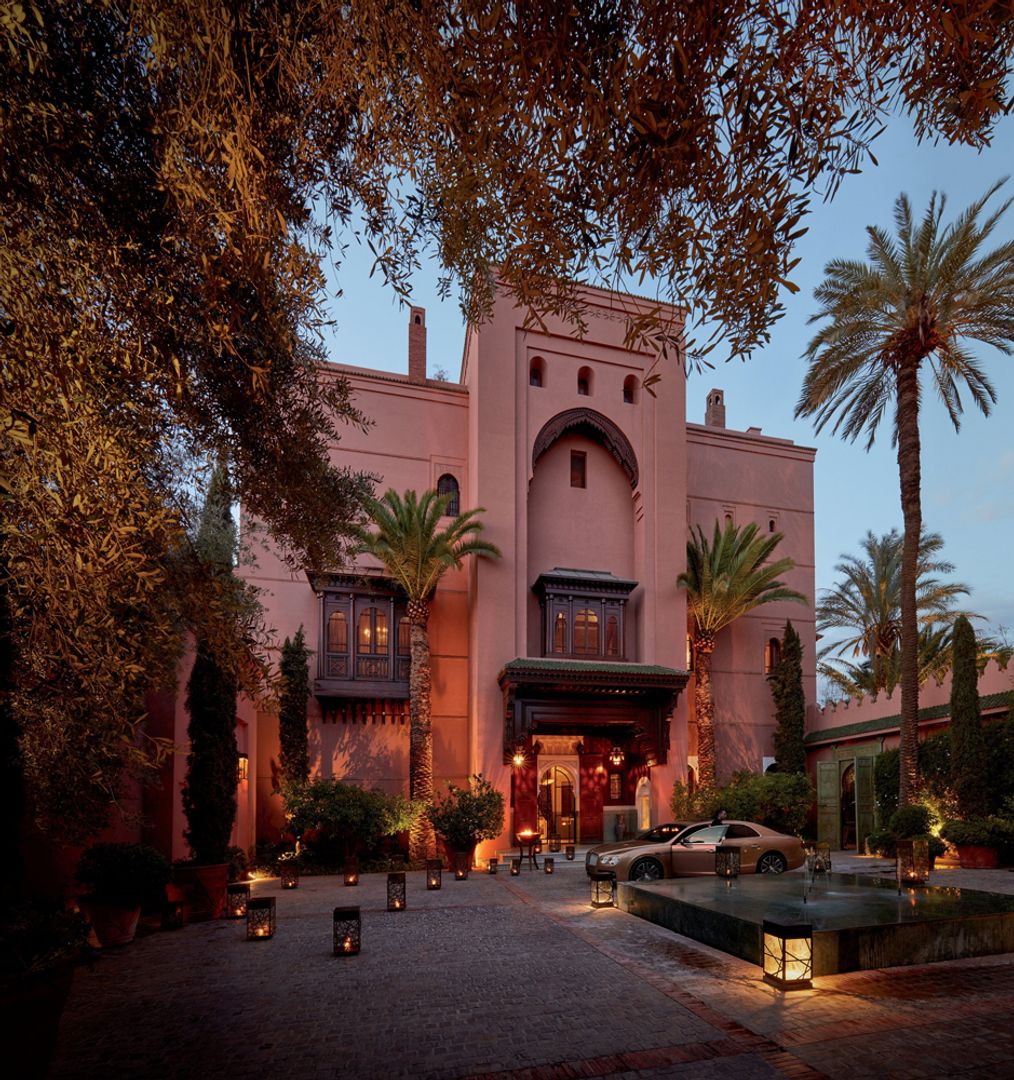
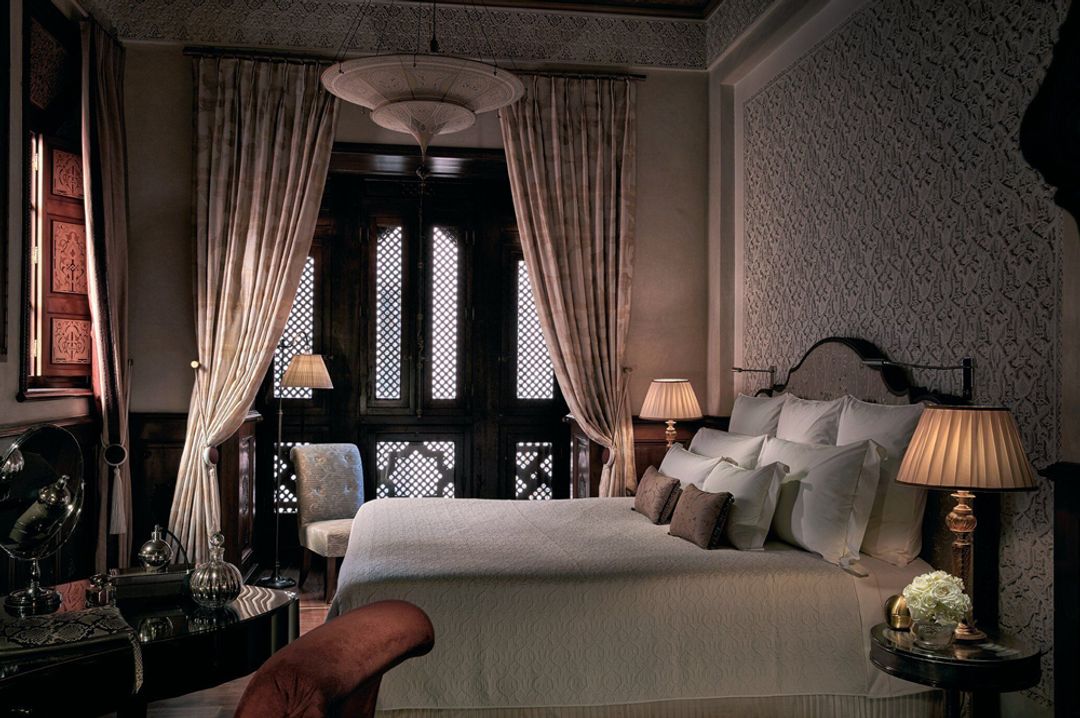
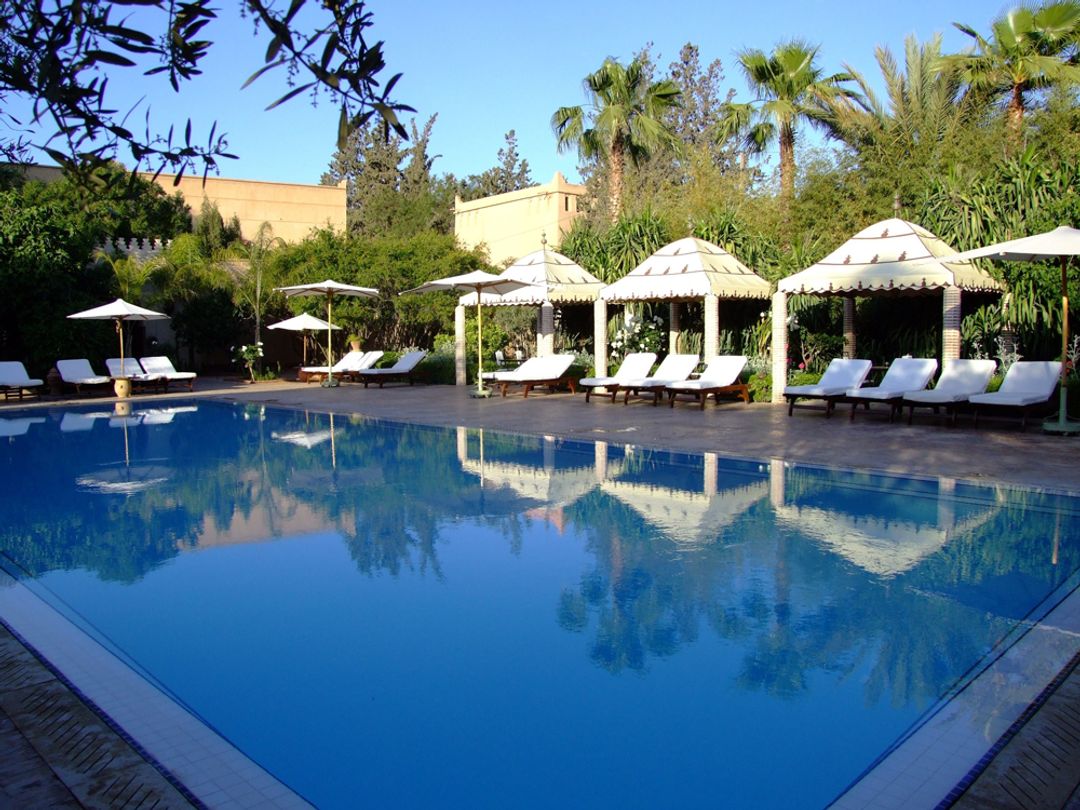
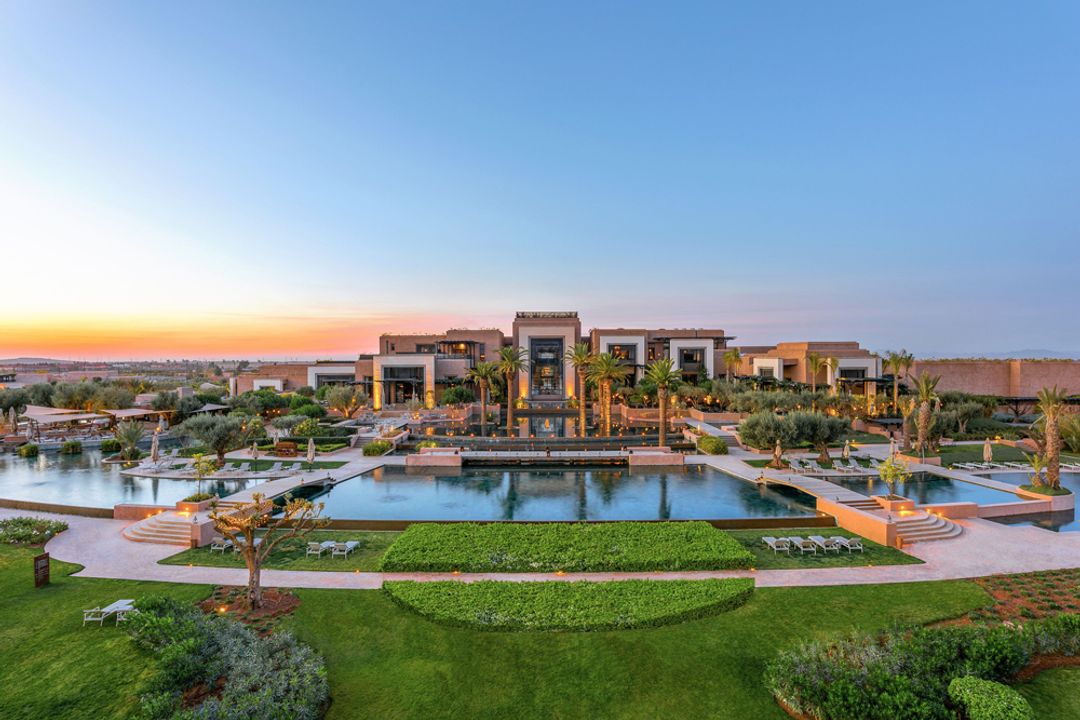
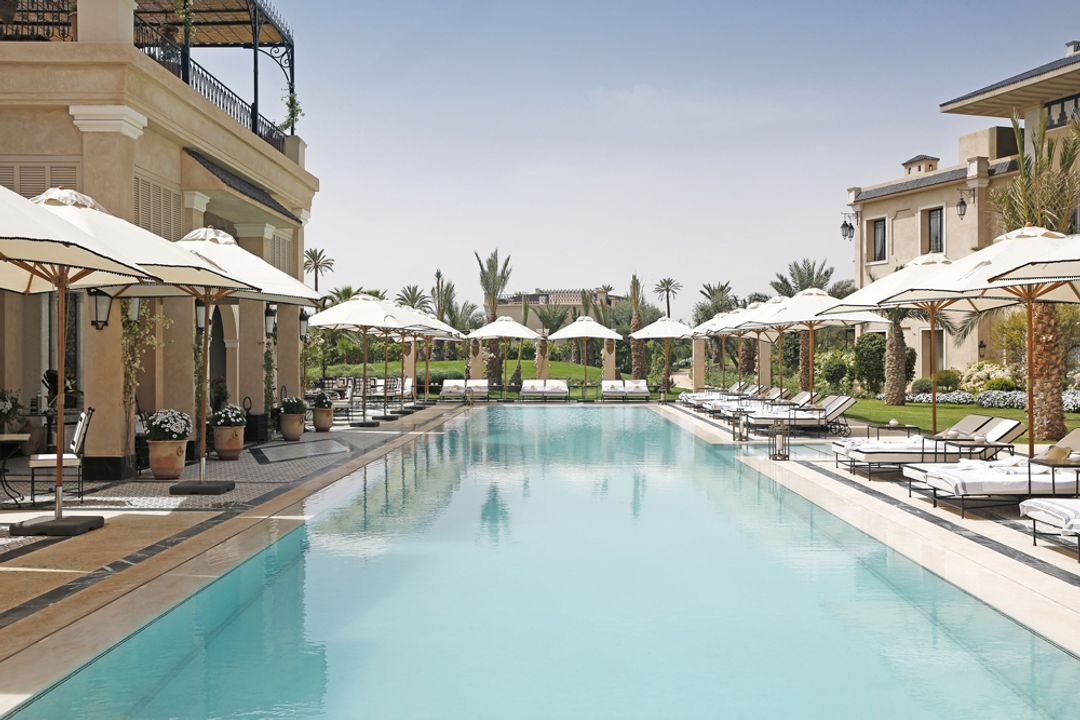
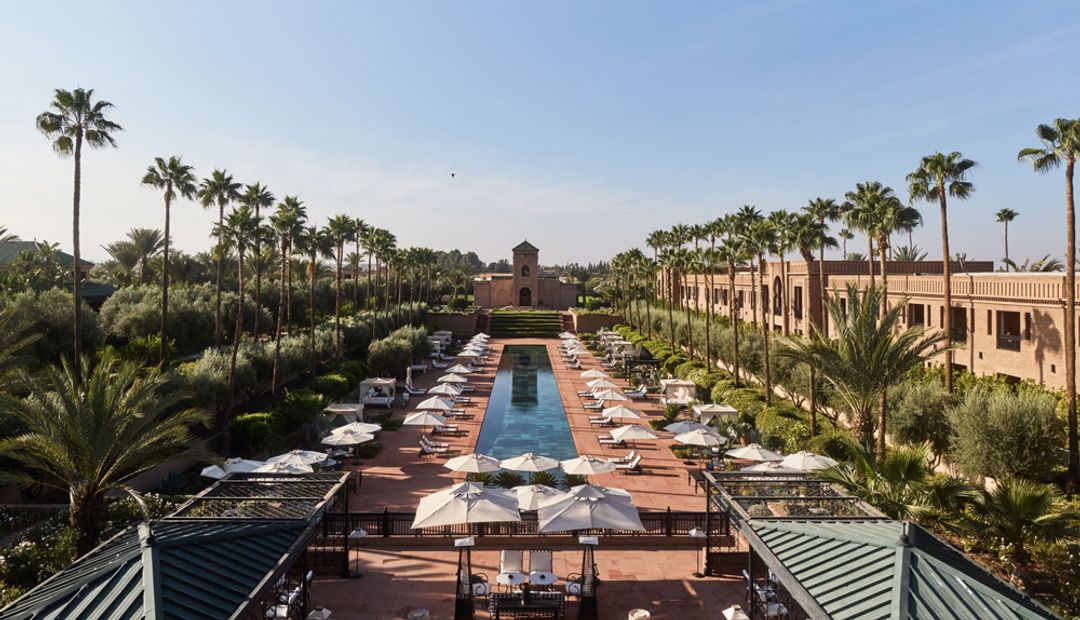
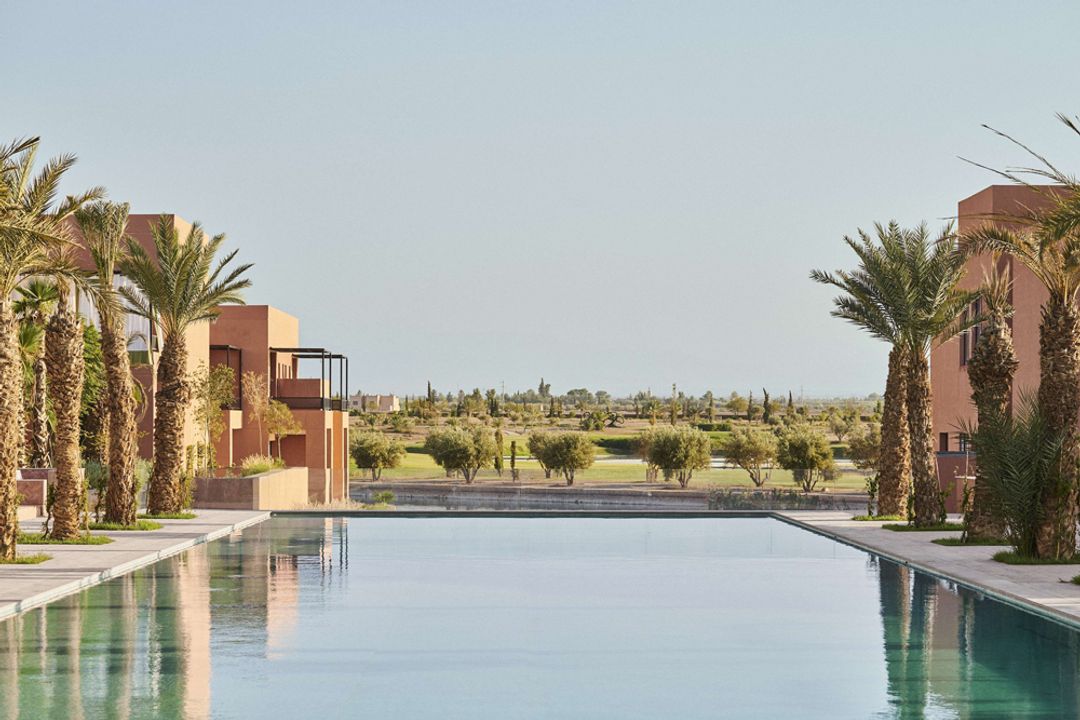
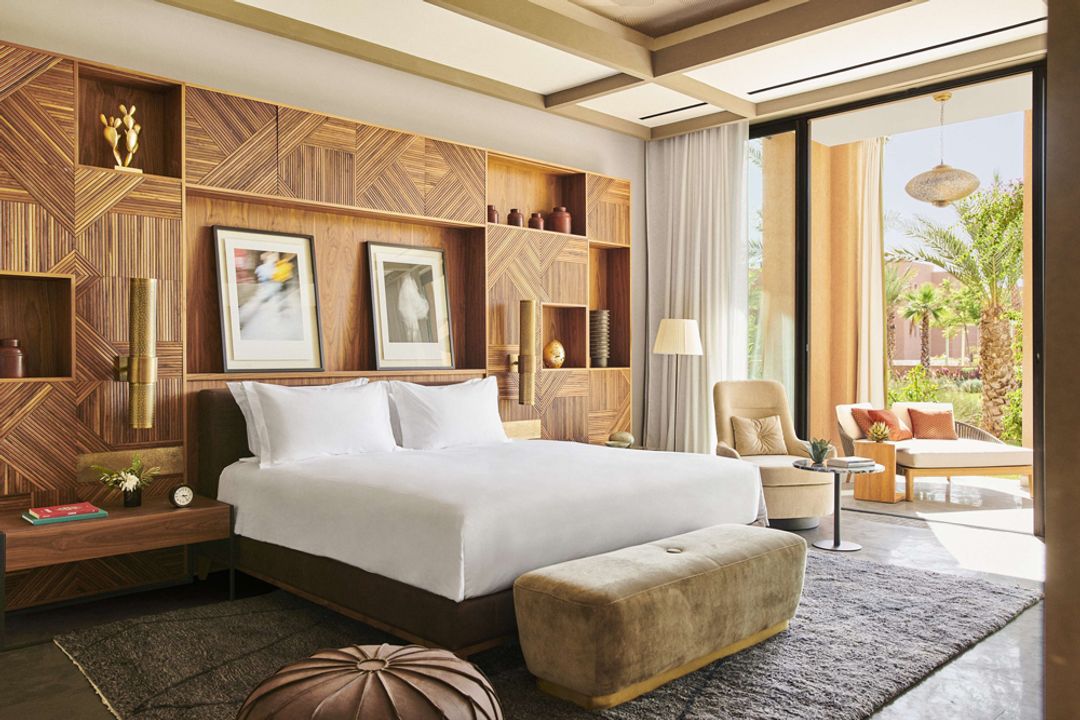
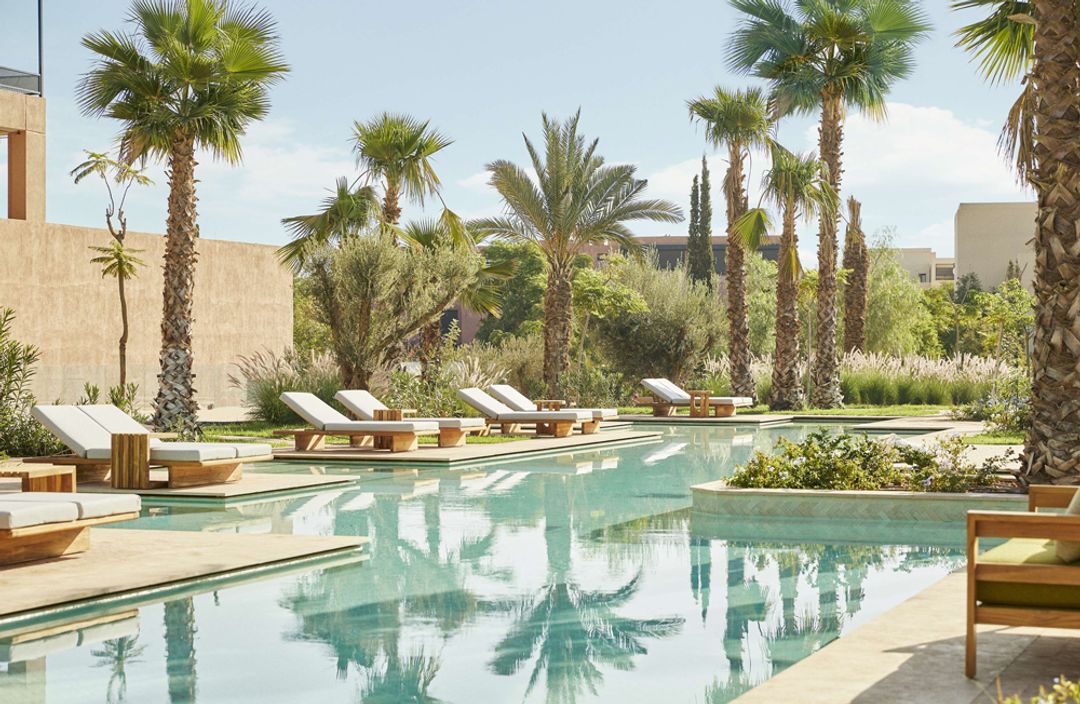
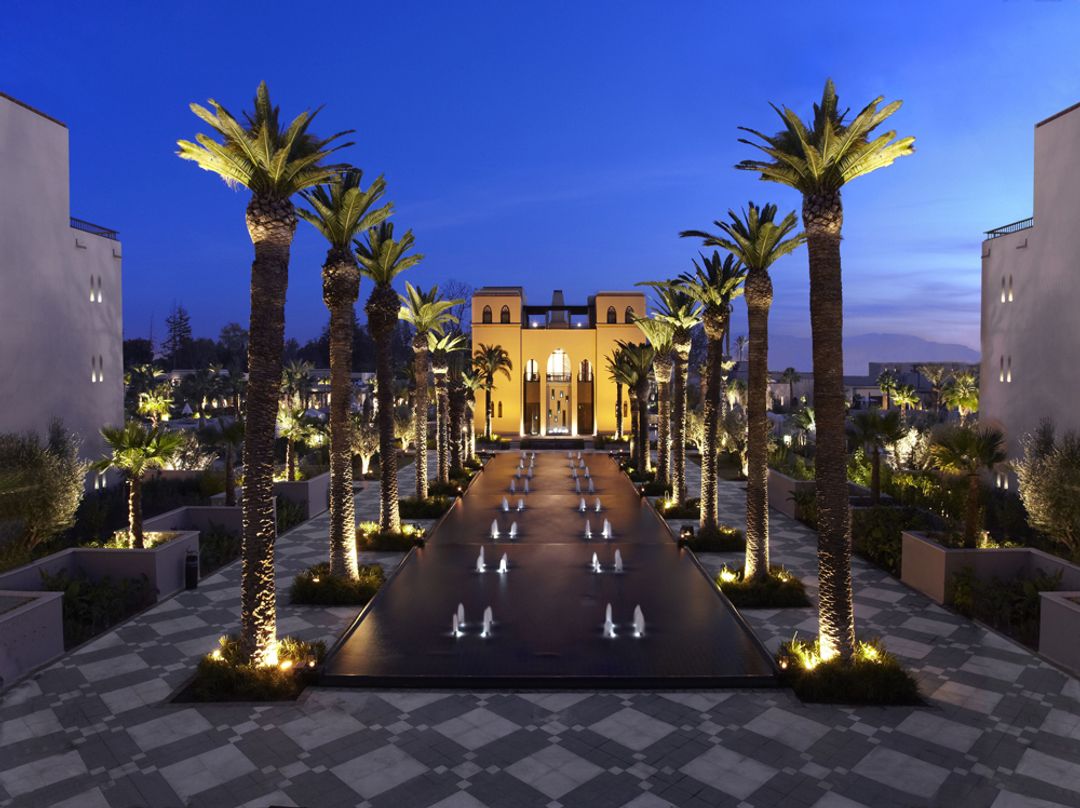
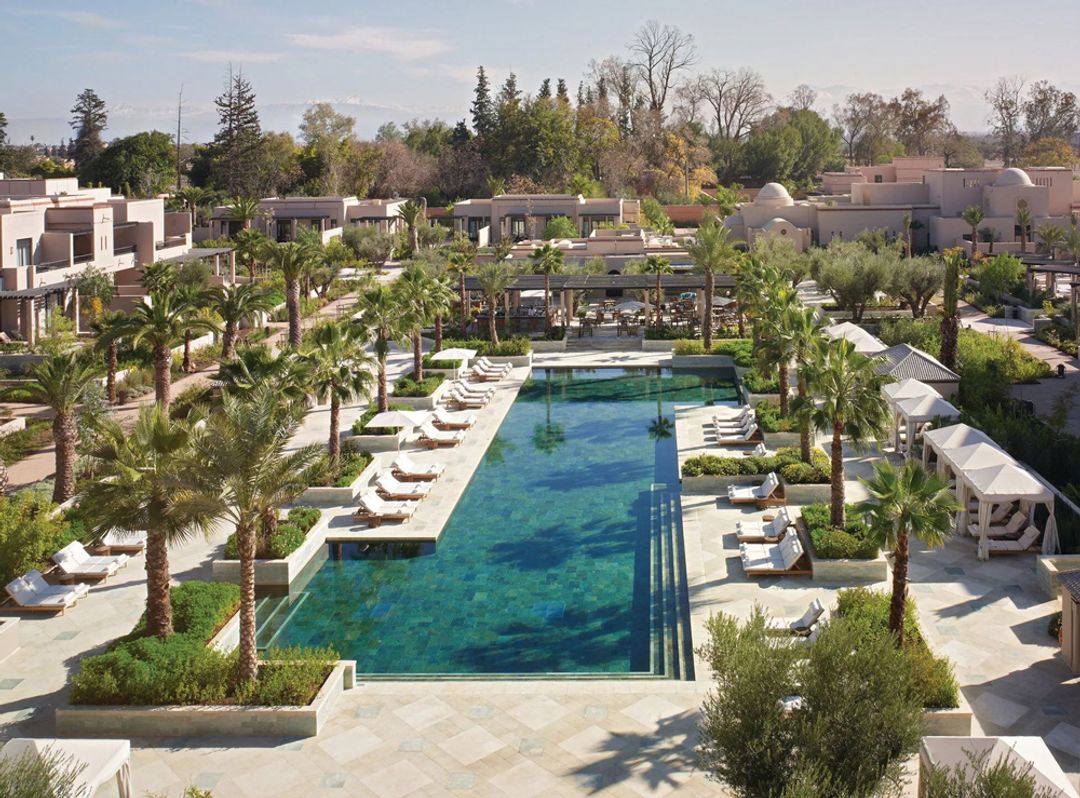
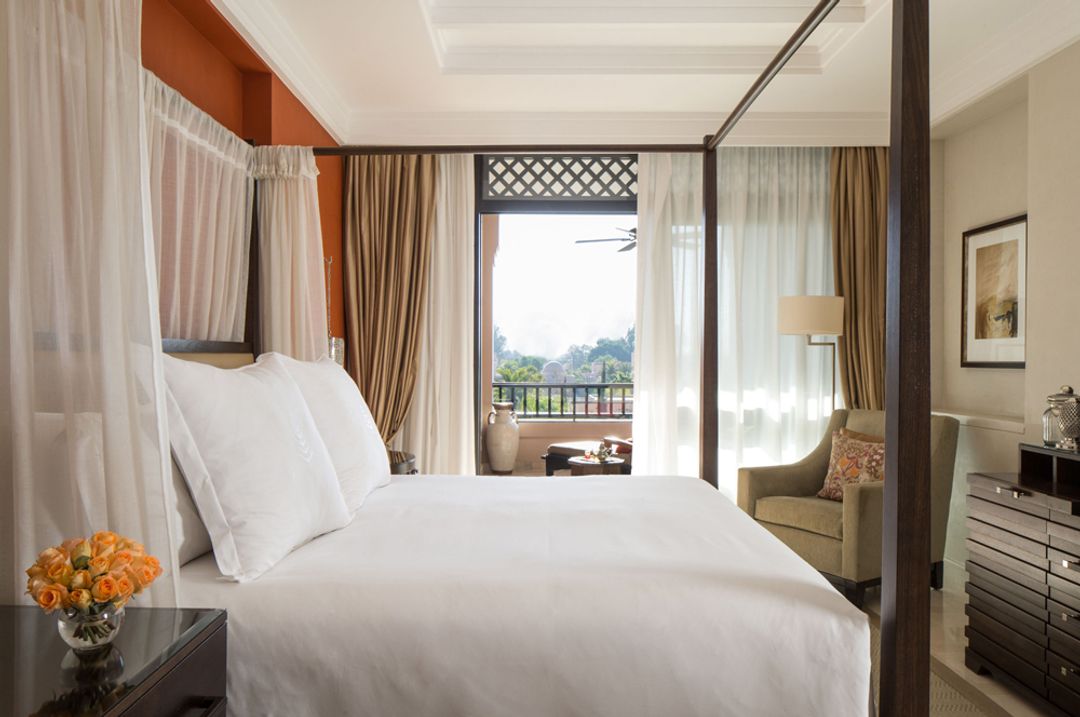
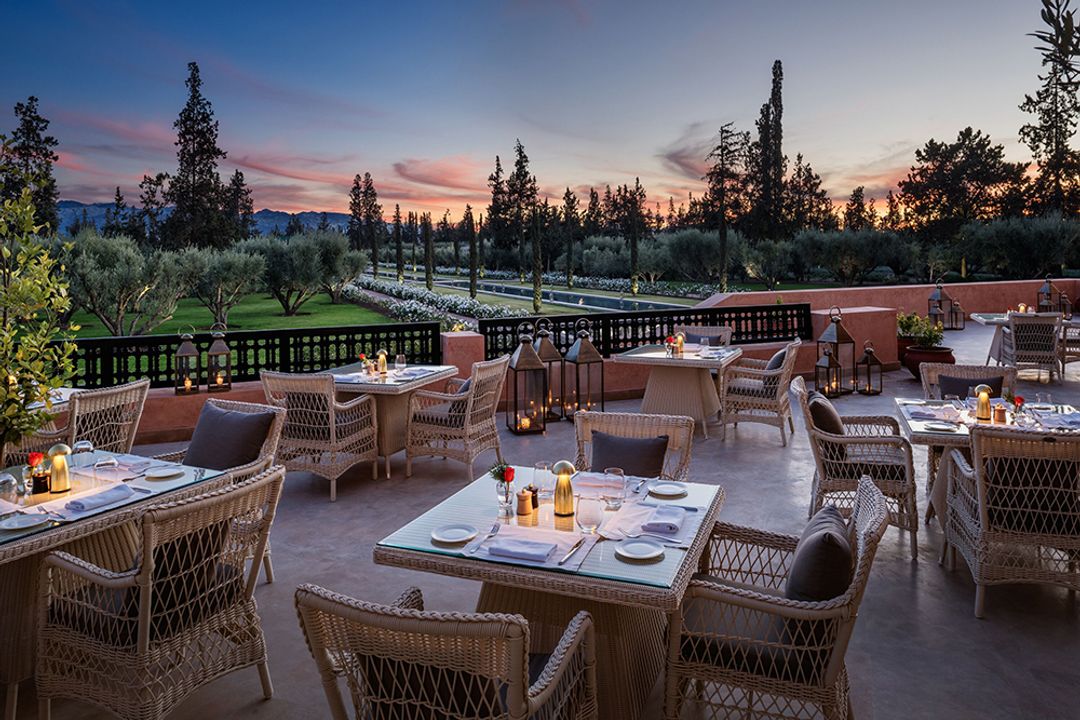
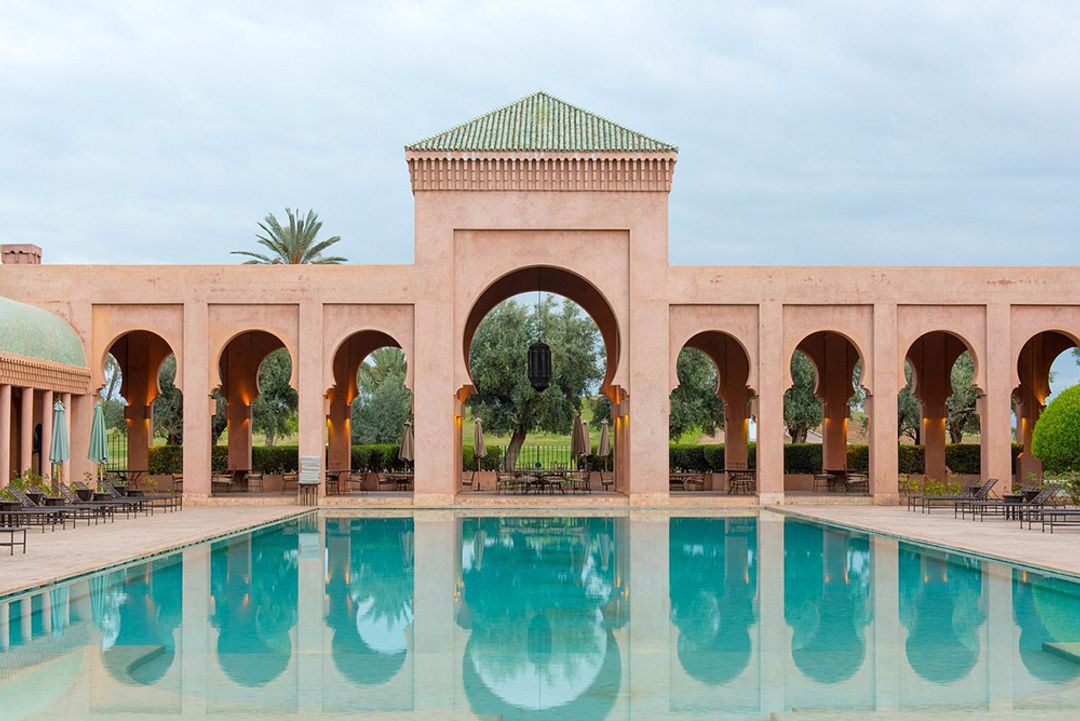
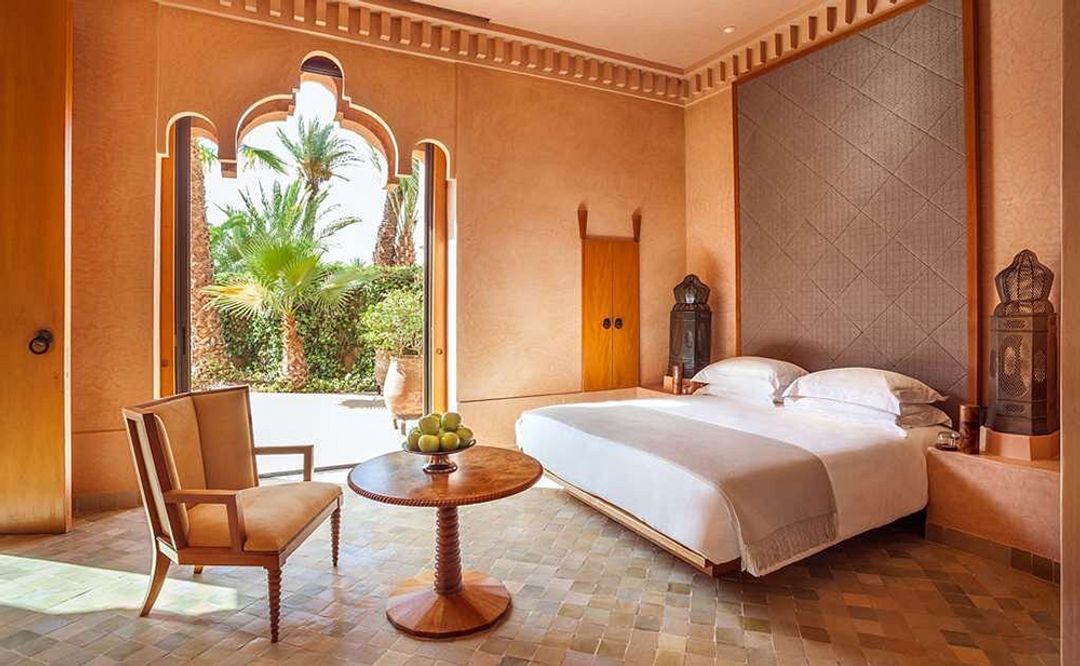
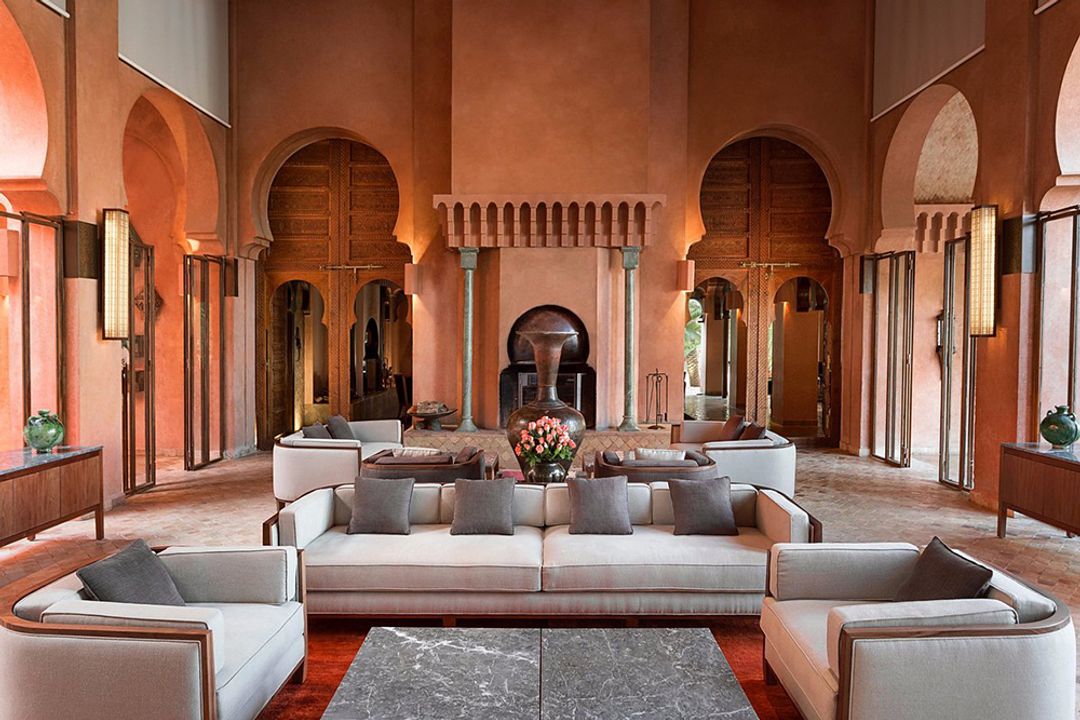
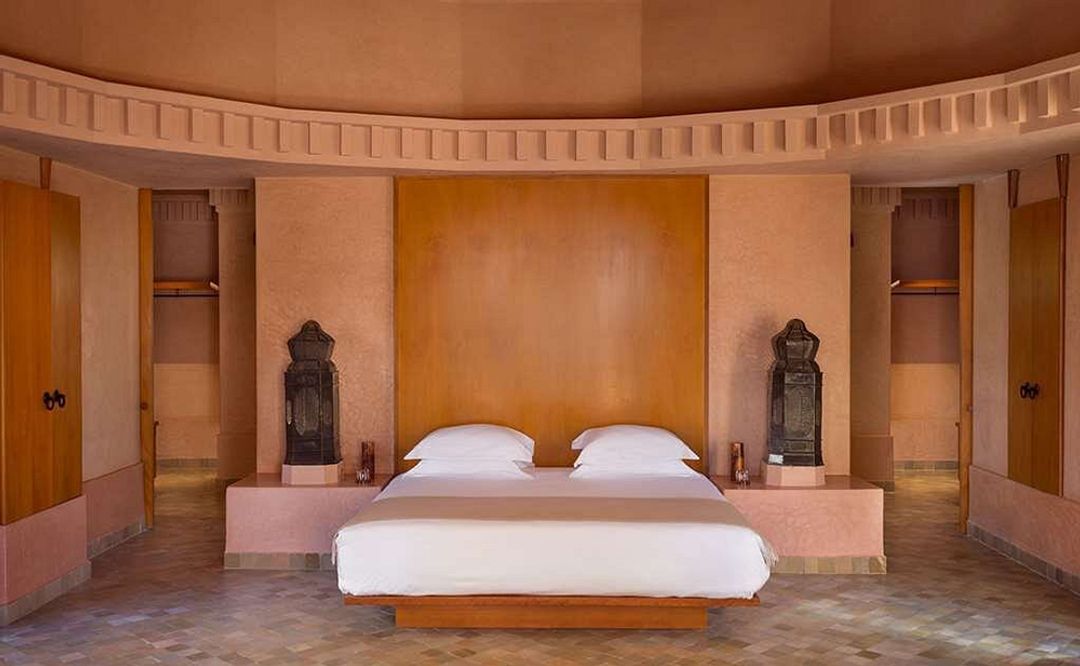
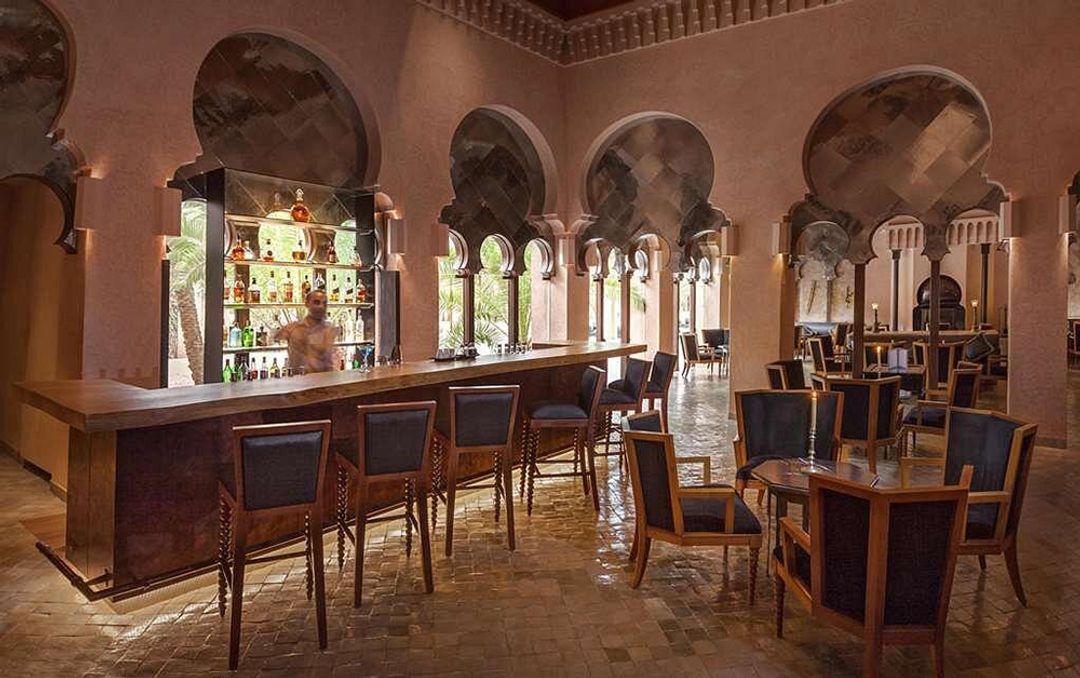
Outside the medina walls, the Hivernage and Palmeraie have drawn the larger international operators. The Royal Mansour in Hivernage, commissioned by King Mohammed VI and opened in 2010, is the most ambitious exercise in contemporary Moroccan craft anywhere in the city: each of its fifty-three riads is a freestanding structure served by a subterranean network of passages, the interiors executed by artisans sourced from across the country. The Four Seasons occupies a more conventional resort footprint nearby. In the Palmeraie, Amanjena, designed by Ed Tuttle and opened in 1999, remains the foundational reference for pavilion-scale resort architecture in North Africa, its salmon-pink pisé forms and central basin reflecting a very particular idea about how the desert fringe of a historic city should feel.
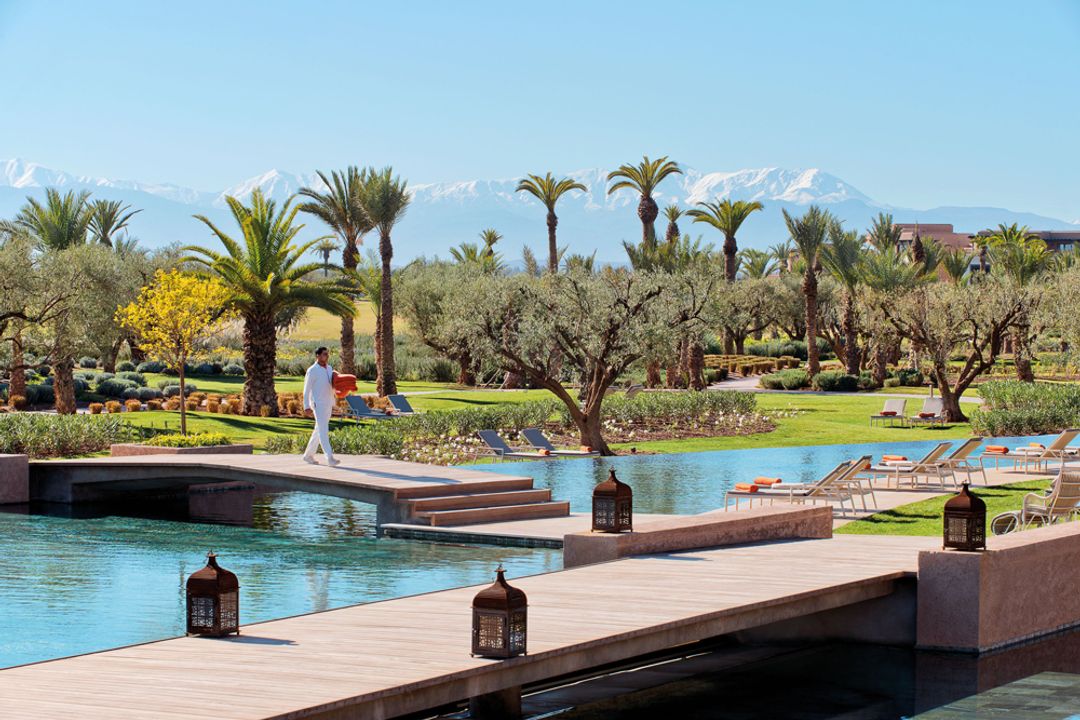
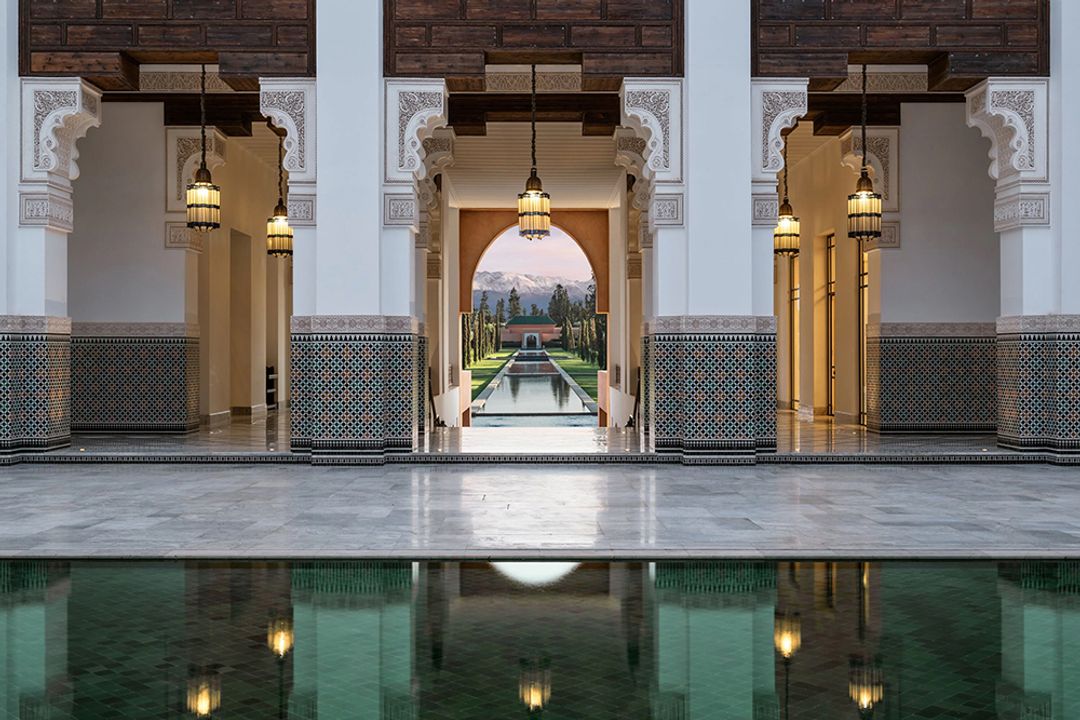
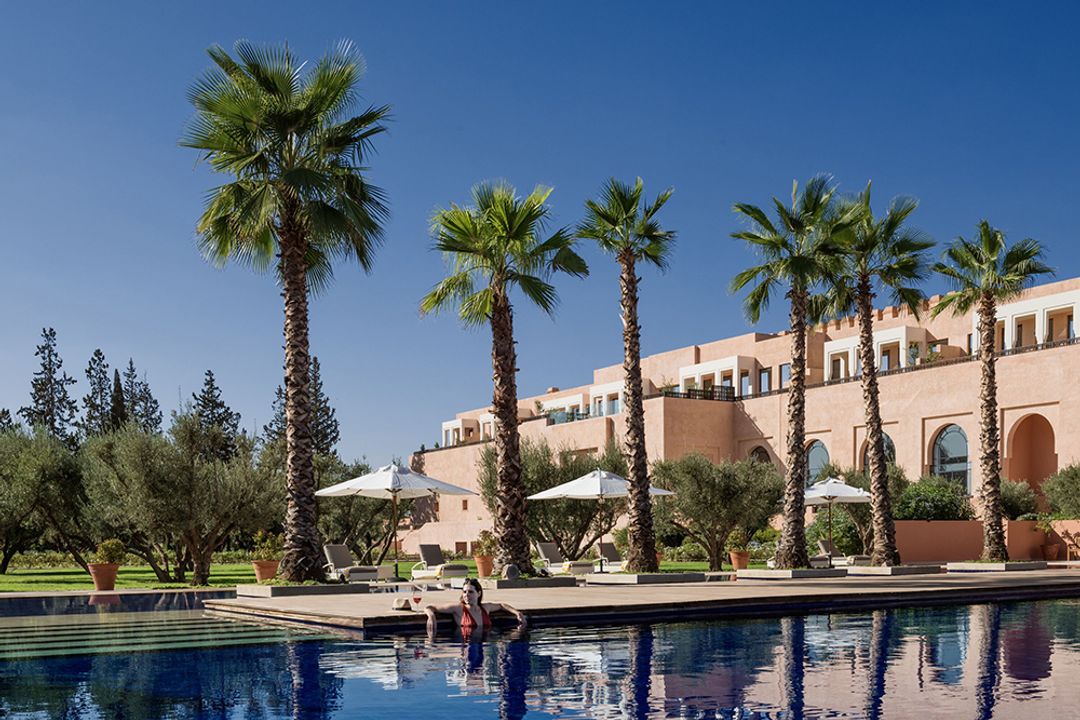
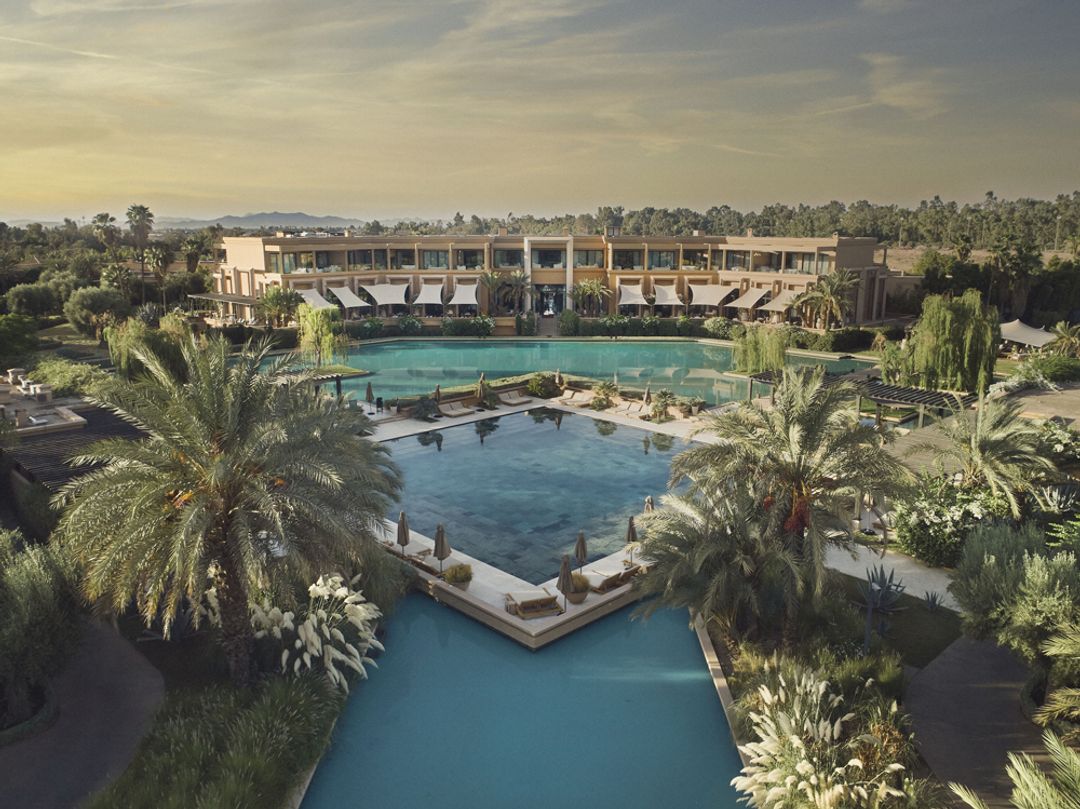
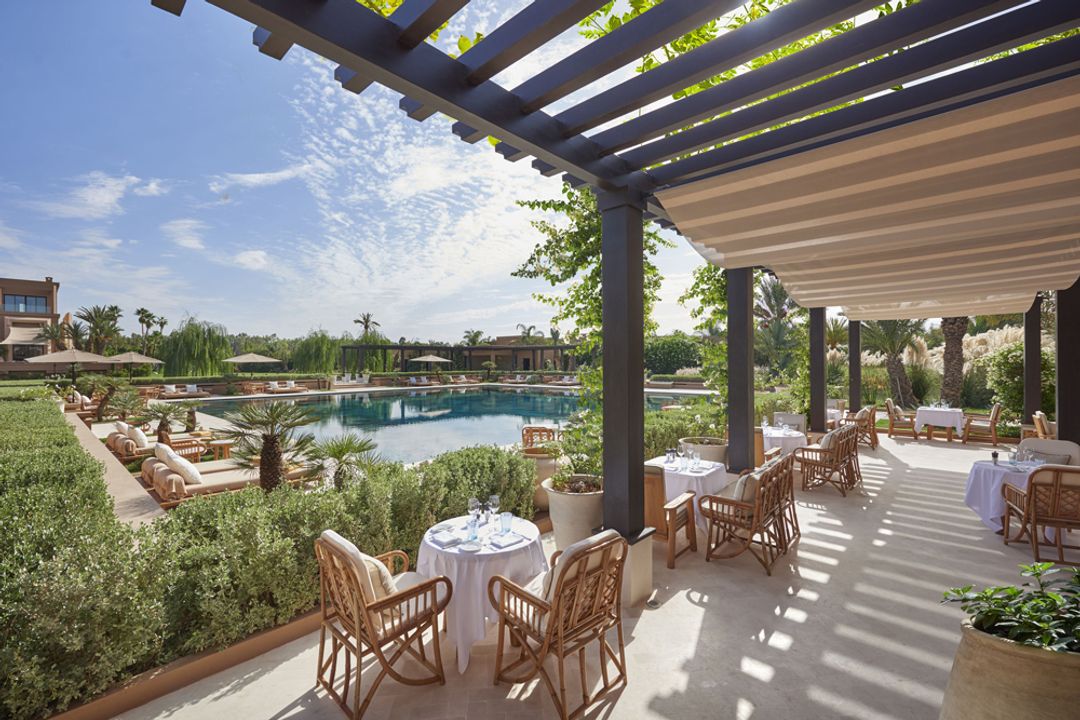
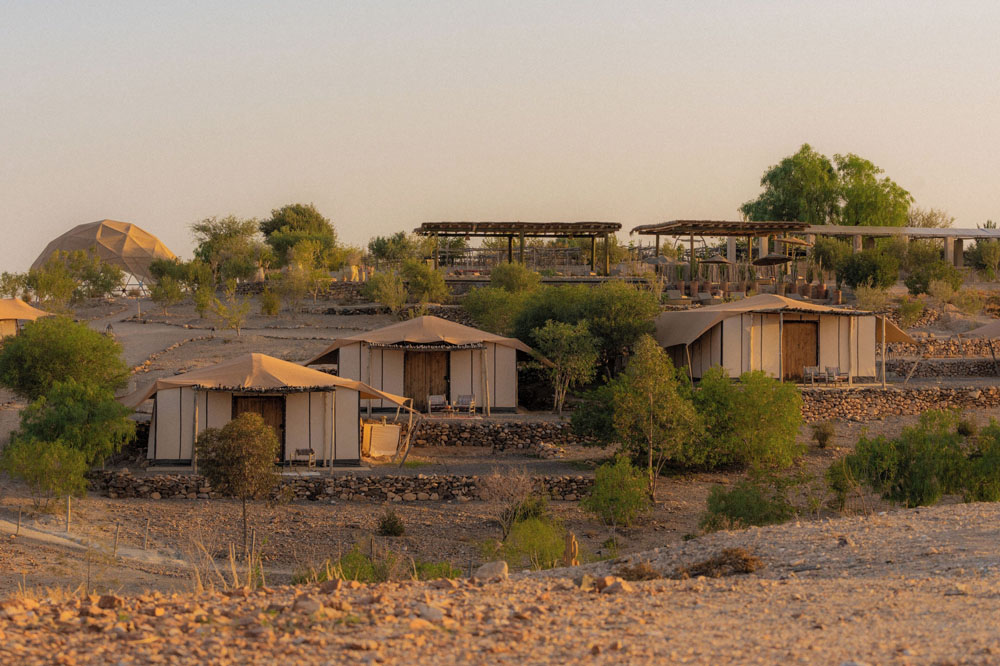
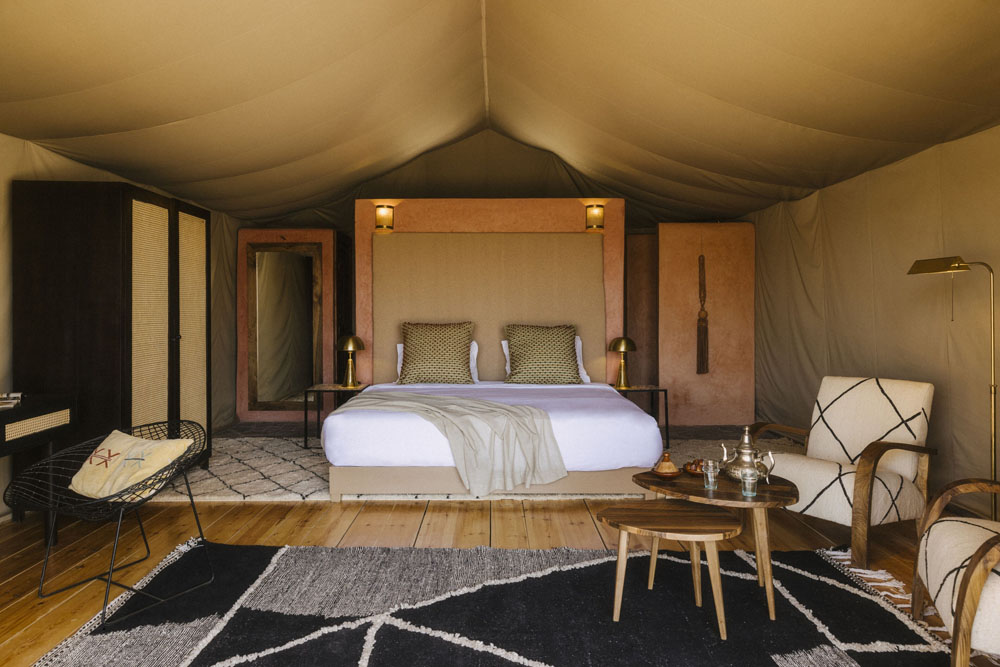
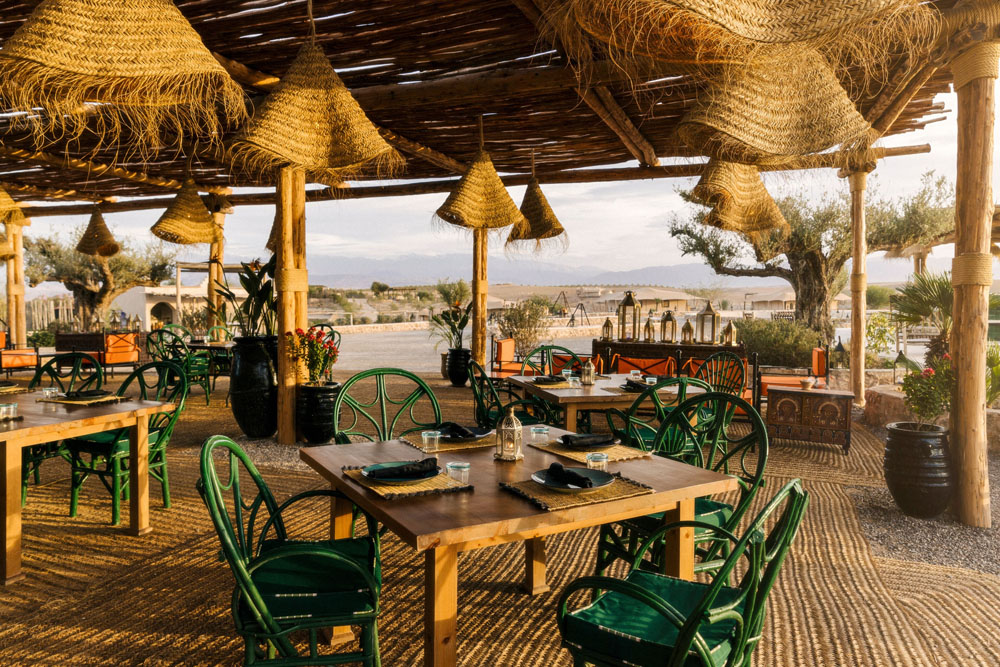
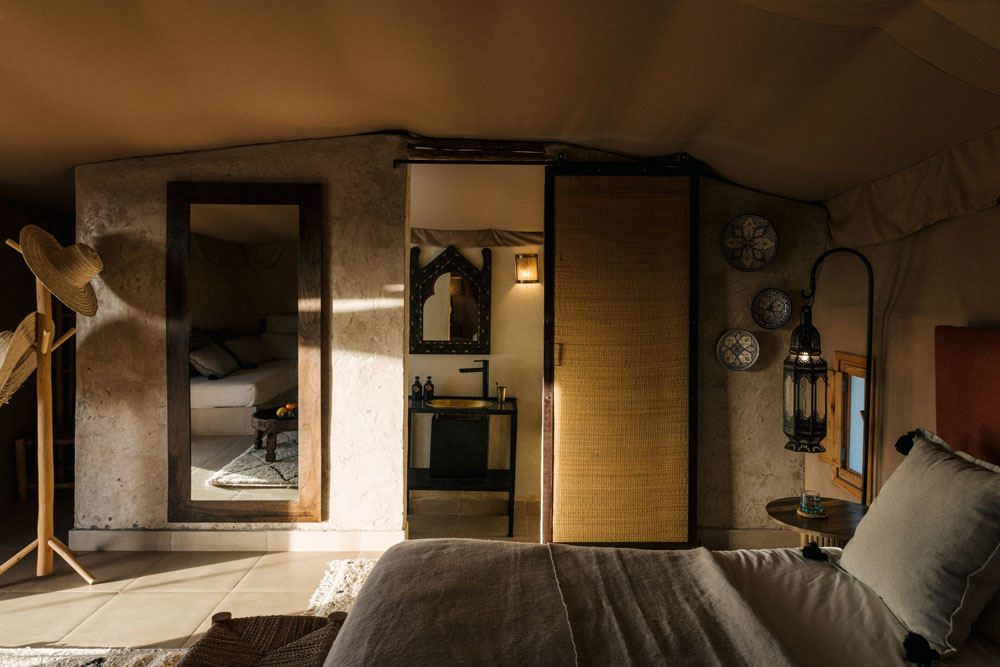
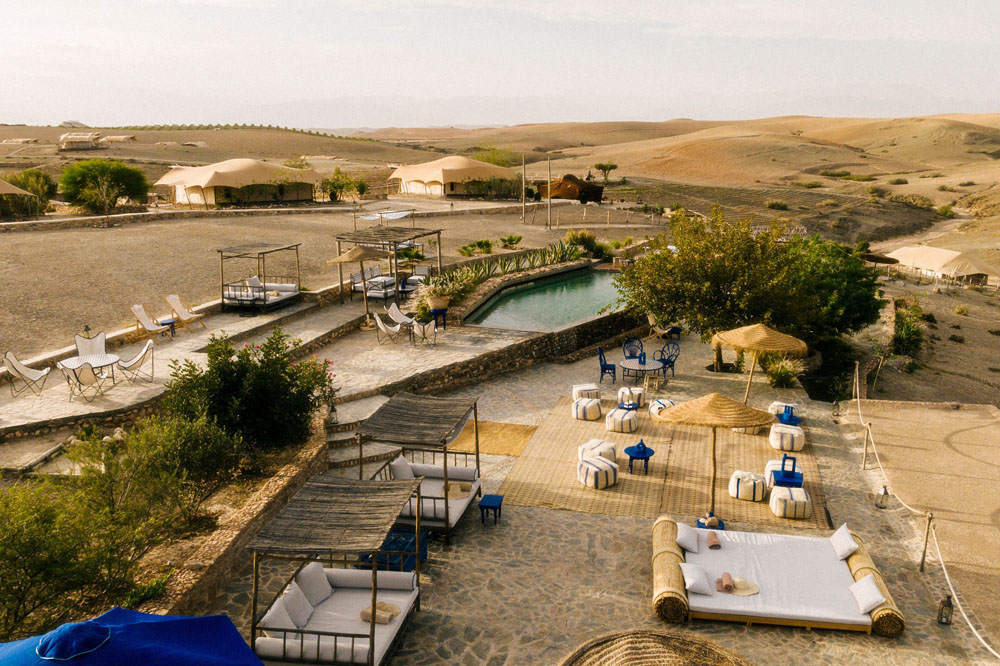
Further out, the Mandarin Oriental in Sidi Youssef Ben Ali works at the scale of a garden city, its palm-shaded villas spread across a substantial plot, while the Oberoi arrives in Gzoula Sidi Mbarek with the brand's characteristic emphasis on material restraint and spatial calm. For travelers willing to leave the city entirely, Caravan by Habitas in the Agafay Desert offers a deliberately stripped register: tented accommodation against a lunar plateau some thirty kilometers from the medina, where the absence of the city is itself the point.