Where

PressBeyond Logo

Best hotels in Beijing | A Curated Visual Guide to Top Stays

Welcome to PressBeyond, the ultimate curated visual guide for design-driven hotels! My name is Will Miller and these are my recommendations for the best boutique and luxury hotels in Beijing.

I am the founder of PressBeyond and I am an ultra-meticulous hotel curator who loves clean visuals. I have individually analyzed and tiered each hotel included in this guide based on a variety of criteria (architecture & design, location, brand & brand affiliation, existing reviews, and my own personal experiences), and importantly, I have hand-selected the leading imagery for each hotel to provide you with easily-digestible, yet detailed and complete, like-for-like, high-level visual profiles. I felt this summarization step was a critical missing piece across existing guides, blogs, and booking platforms. My aim is to make it easier for people to identify hotel environments that resonate with them, along with enabling them to visualize the types of social experiences that those environments help foster. My brain doesn't work when exposed to cluttered content, so my goal was to create the opposite.

Underneath this, we are also a full booking engine offering 5% Venmo cash back along with other exclusive perks. For all of you design-obsessed hotel enthusiasts out there, I hope this guide helps get you to where you see yourself!

An Overview of the Boutique & Luxury Hotel Landscape in Beijing

The most telling thing about staying in Beijing is that your choice of neighborhood is also, inescapably, a choice about which city you're prepared to inhabit. Wangfujing sits closest to the Forbidden City's gravitational pull, and the hotels there reflect that proximity in different ways. The Peninsula Beijing, operating from a position of long-established authority in this part of the capital, reads as a statement of continuity — polished, ceremonial, and confident in its own formality. The Mandarin Oriental Wangfujing takes a sharper design position, with interiors that engage contemporary Chinese craft traditions without retreating into pastiche. The Waldorf Astoria Beijing, occupying a mixed-use tower development nearby, pursues a different register entirely — more international in idiom, but well-positioned for travelers who want Forbidden City adjacency and a certain corporate grandeur. The PuXuan Hotel and Spa rounds out the neighborhood as the quieter option, its restrained interiors drawing on ink-wash palettes and layered textile work. Chaoyang — the district that contains everything from the Central Business District fringe to the Embassy quarter — holds the largest concentration of properties on this list, and the range is genuine. The Rosewood Beijing, designed with particular attention to material weight and spatial sequence, is among the more considered luxury addresses the district offers. The Park Hyatt occupies the upper floors of the CCTV-adjacent China World Summit Wing tower, giving it the kind of unobstructed aerial perspective over the city that no ground-level property can replicate. The Bulgari Hotel Beijing, sitting in the Embassy District at the edge of Chaoyang, brings Antonio Citterio Patricia Viel's characteristic restraint to a city that doesn't always reward understatement — dark stone, precise joinery, a refusal to over-explain itself. The outlier that rewards the most deliberate choice is the Aman Summer Palace, positioned at the East Gate of the imperial gardens and physically integrated with the Qing-dynasty pavilion architecture surrounding it. Staying there requires a commitment to distance from the city's commercial core, but the return is a sense of spatial and historical remove that no downtown address can approximate. Back in Sanlitun, CHAO operates in the opposite register — rooted in the district's art gallery and embassy-bar energy, its design leaning contemporary and its clientele skewing younger and more creatively restless. For a city of this scale and historical density, that spread — from imperial precinct to contemporary urban village — is exactly the range a thoughtful traveler should be navigating.

Book with PB and get cash back
The Ritz-Carlton Beijing, Financial Street - Image 1
The Ritz-Carlton Beijing, Financial Street - Image 2
The Ritz-Carlton Beijing, Financial Street - Image 3
The Ritz-Carlton Beijing, Financial Street - Image 4
The Ritz-Carlton Beijing, Financial Street - Image 5

The Ritz-Carlton Beijing, Financial Street

Beijing • Xicheng District • OPTIMIZE

avg. $158 / night

Includes $8 / night in cash back

Cash back is redeemable via Virtual Visa, Venmo, or bank transfer starting 24-48 hours after check-out

Marriott Bonvoy® property

The Ritz-Carlton Beijing, Financial Street Design Editorial

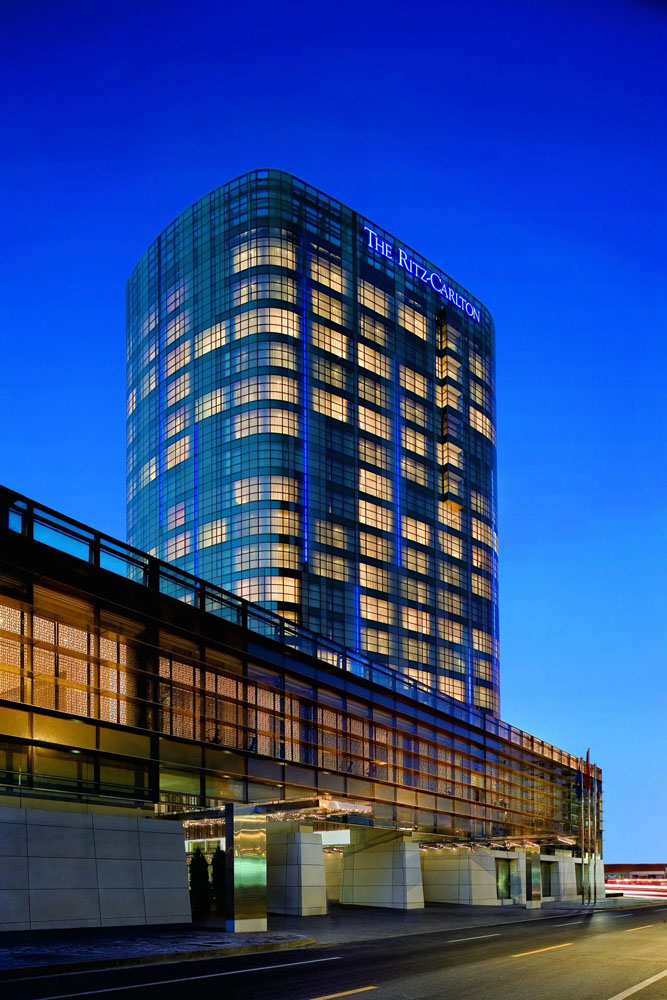
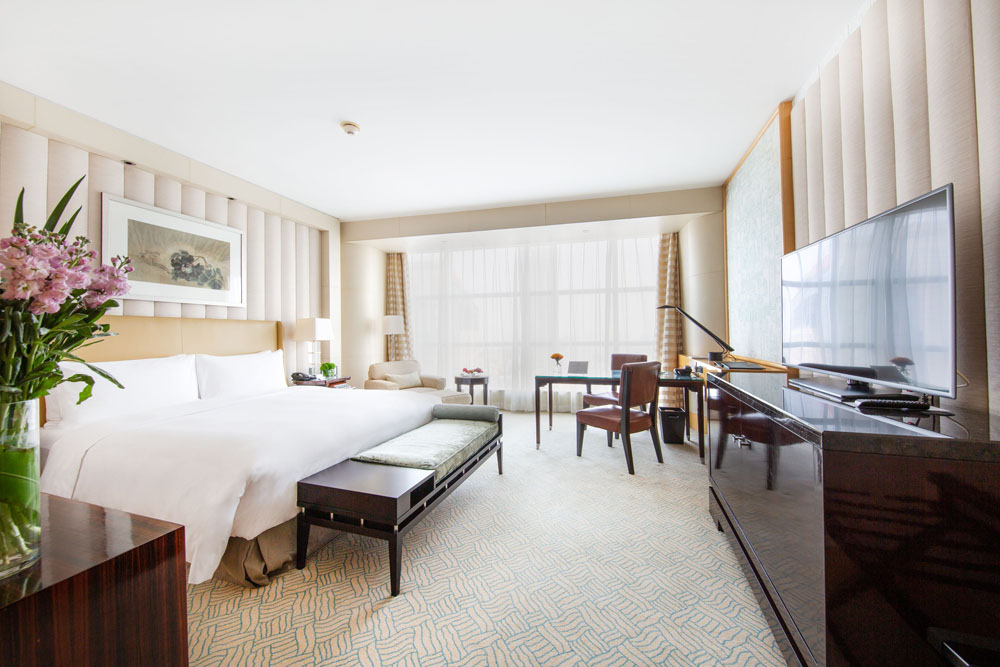
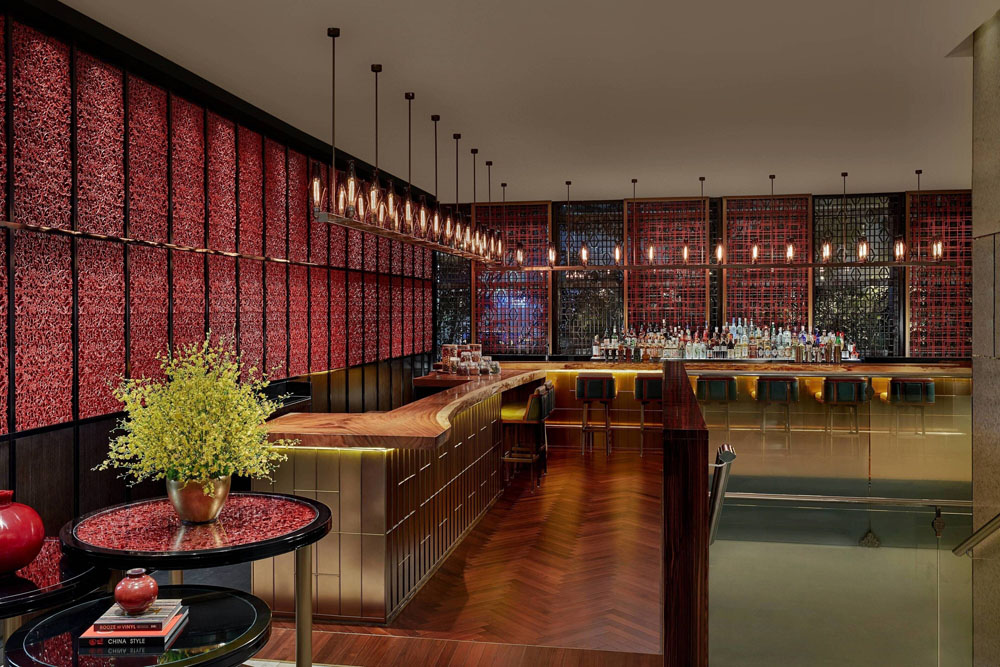
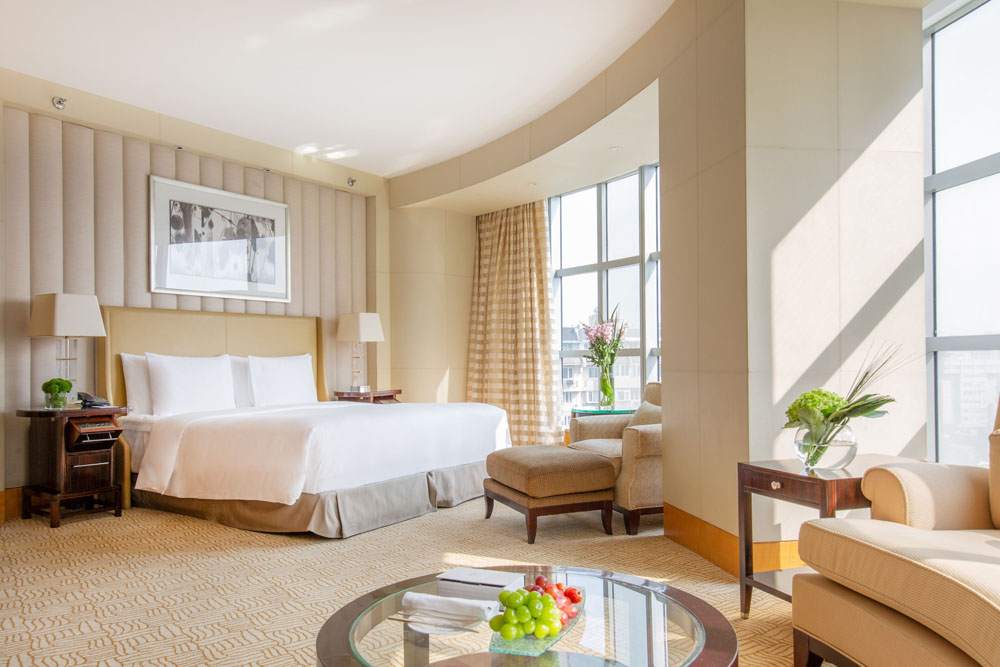
Financial Street in Beijing's Xicheng district is China's answer to Wall Street — a purpose-built corridor of regulatory power and banking headquarters where the Ritz-Carlton Beijing Financial Street has held its position since opening in 2006. The tower's cylindrical glass form, rising roughly twenty storeys above a lower podium clad in warm metallic screening panels, gives the building an unusual profile for this part of the city — curved rather than angular, its curtain wall glowing amber against the Beijing dusk in a way that softens the district's otherwise severe corporate geometry. Inside, the 253 rooms and suites work through a palette of champagne-toned upholstered headboards, dark macassar ebony furniture, and patterned wool carpet that references Chinese calligraphic line-work without resorting to literal ornament. Corner suites turn the cylindrical plan to advantage, their curved window bays flooding the seating areas with daylight at angles impossible in a rectangular room. The bar takes a more emphatic cultural position — lacquered red screens modeled on traditional Chinese lattice fretwork line every wall, framing a live-edge timber bar counter and brass-paneled base beneath a ceiling of pendant Edison bulbs, the effect closer to a contemporary Shanghai drinking den than anything in the international luxury playbook. The indoor pool, lined entirely in deep green Bisazza mosaic tile and anchored at one end by a projection screen playing black-and-white cinema, completes a spa level that is more atmospheric than most hotels at this address would dare attempt.

Book with PB and get cash back
CHAO Sanlitun Beijing - Image 1
CHAO Sanlitun Beijing - Image 2
CHAO Sanlitun Beijing - Image 3
CHAO Sanlitun Beijing - Image 4
CHAO Sanlitun Beijing - Image 5

CHAO Sanlitun Beijing

Beijing • Sanlitun District • OPTIMIZE

avg. $228 / night

Includes $12 / night in cash back

Cash back is redeemable via Virtual Visa, Venmo, or bank transfer starting 24-48 hours after check-out

CHAO Sanlitun Beijing Design Editorial

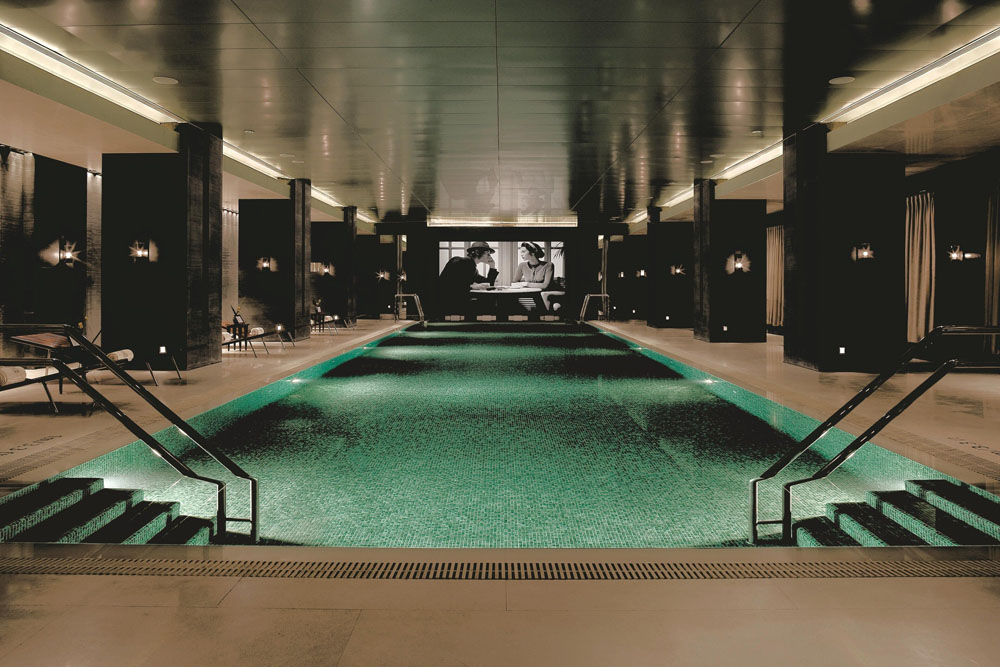
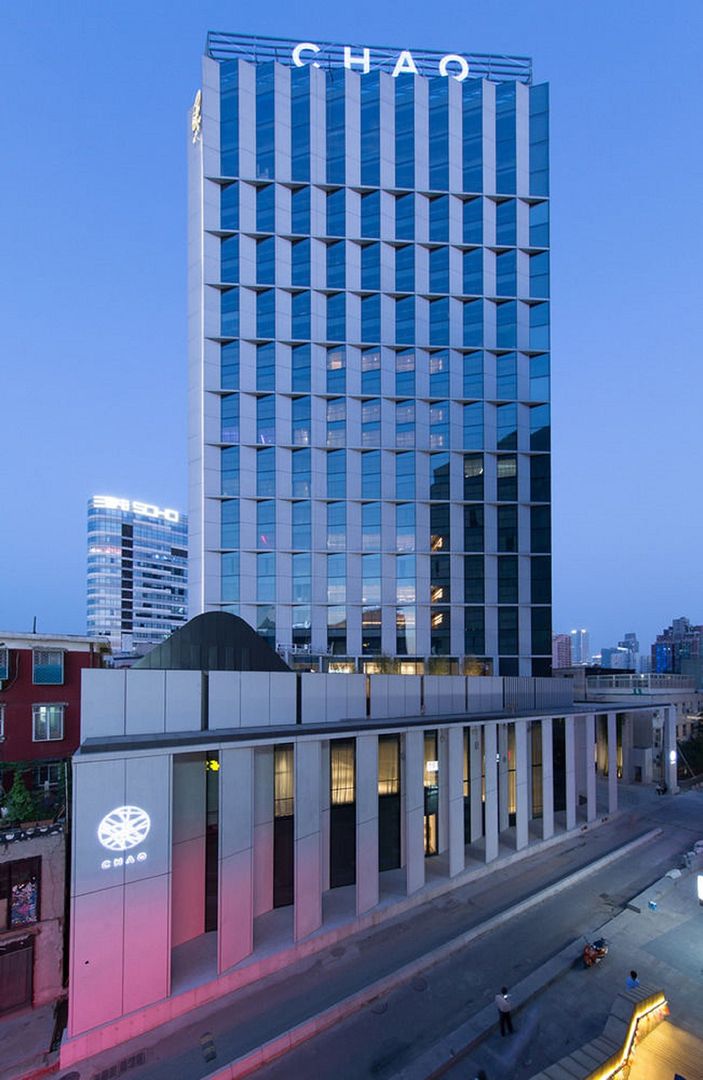
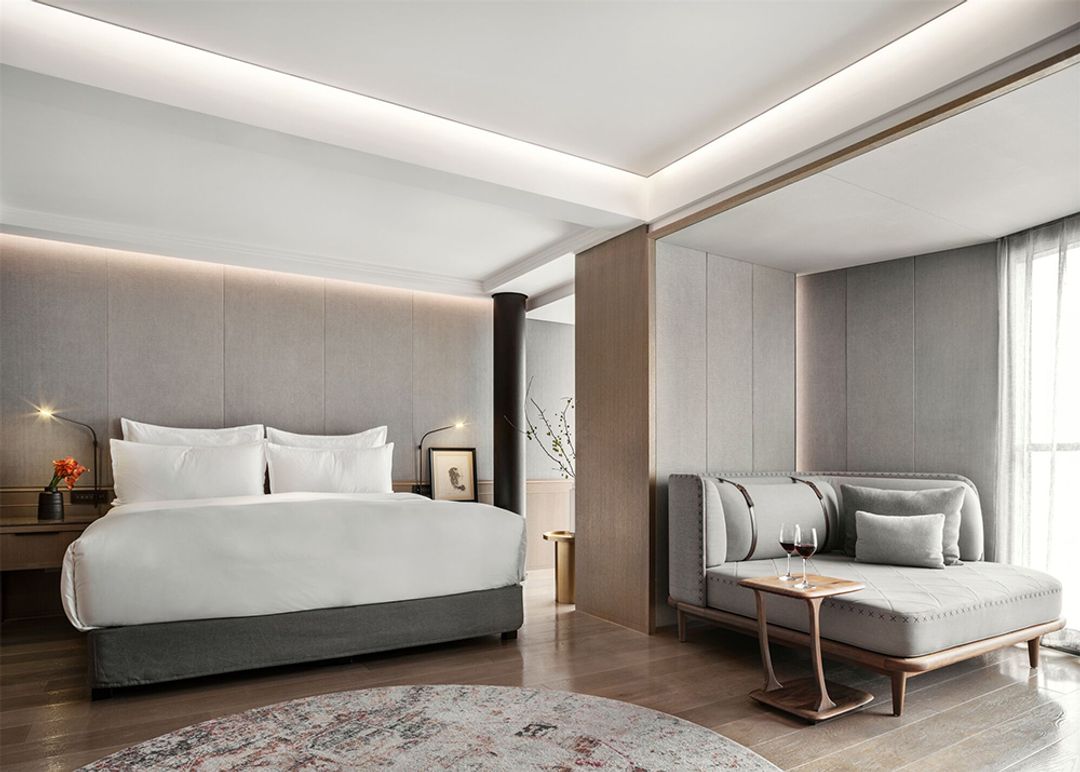
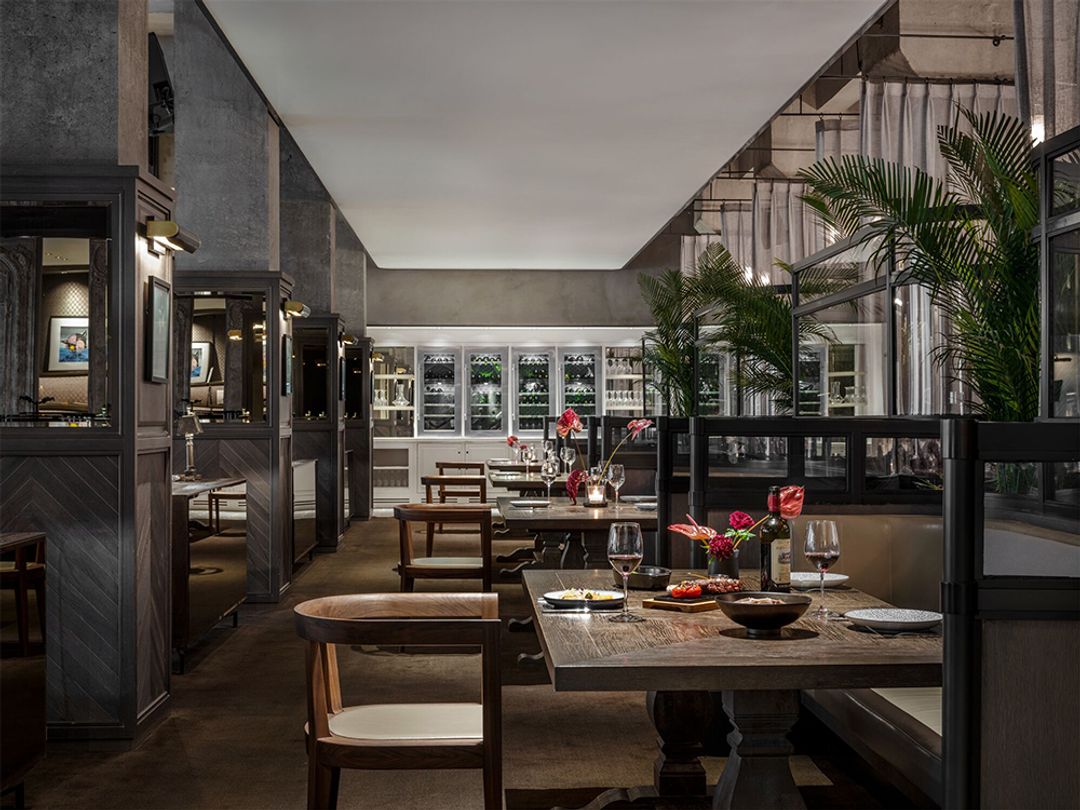
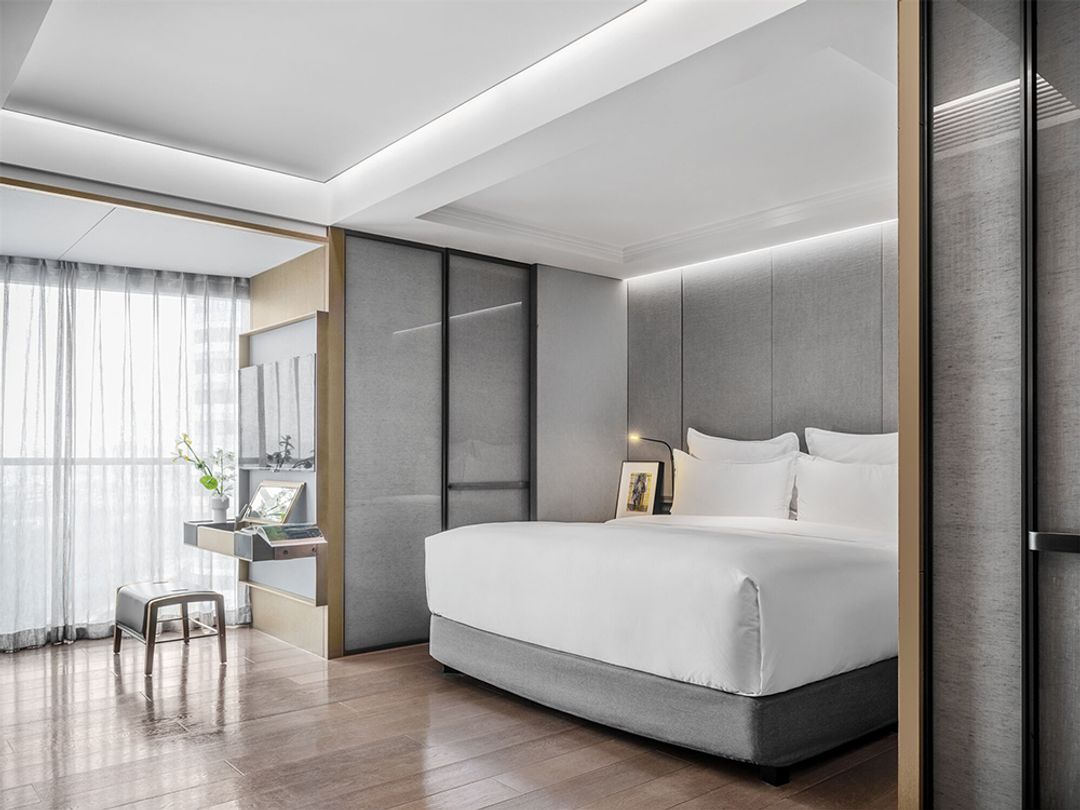
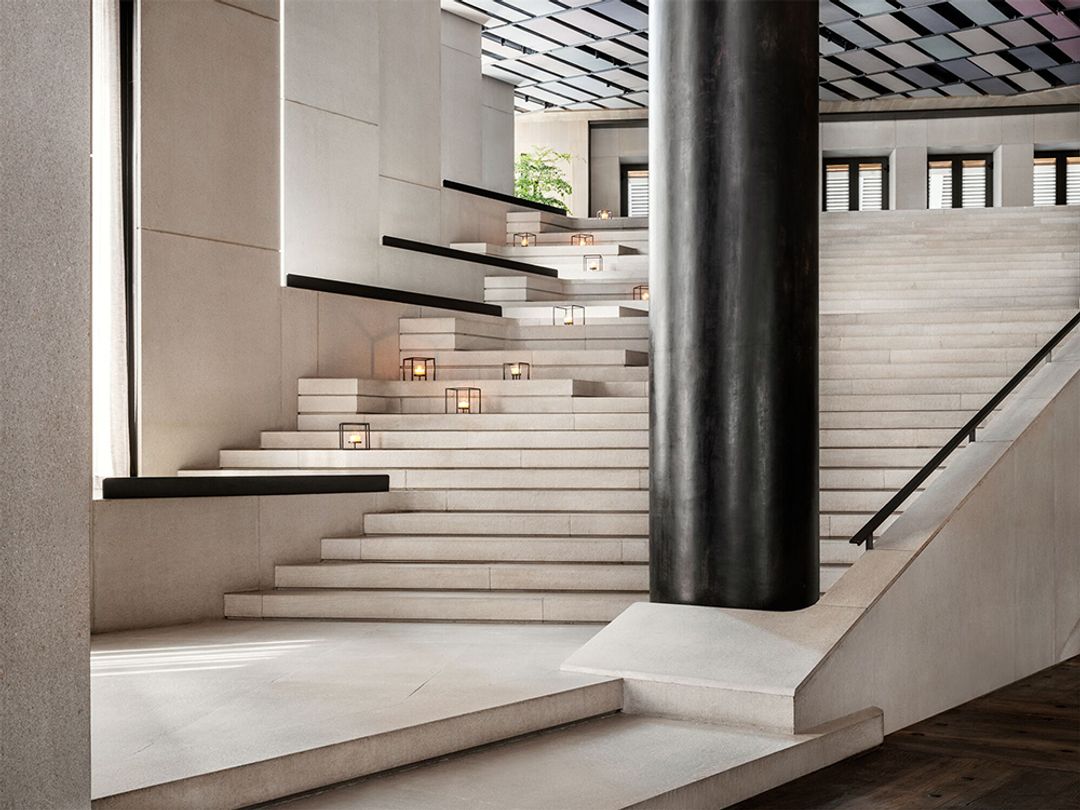
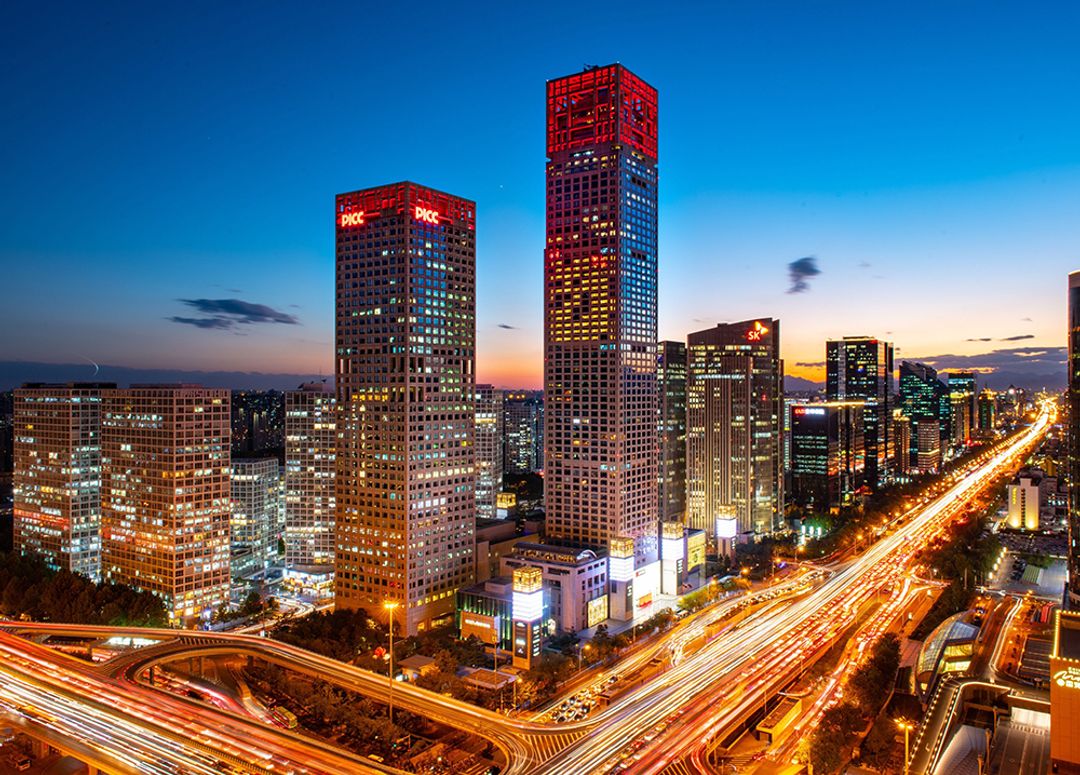
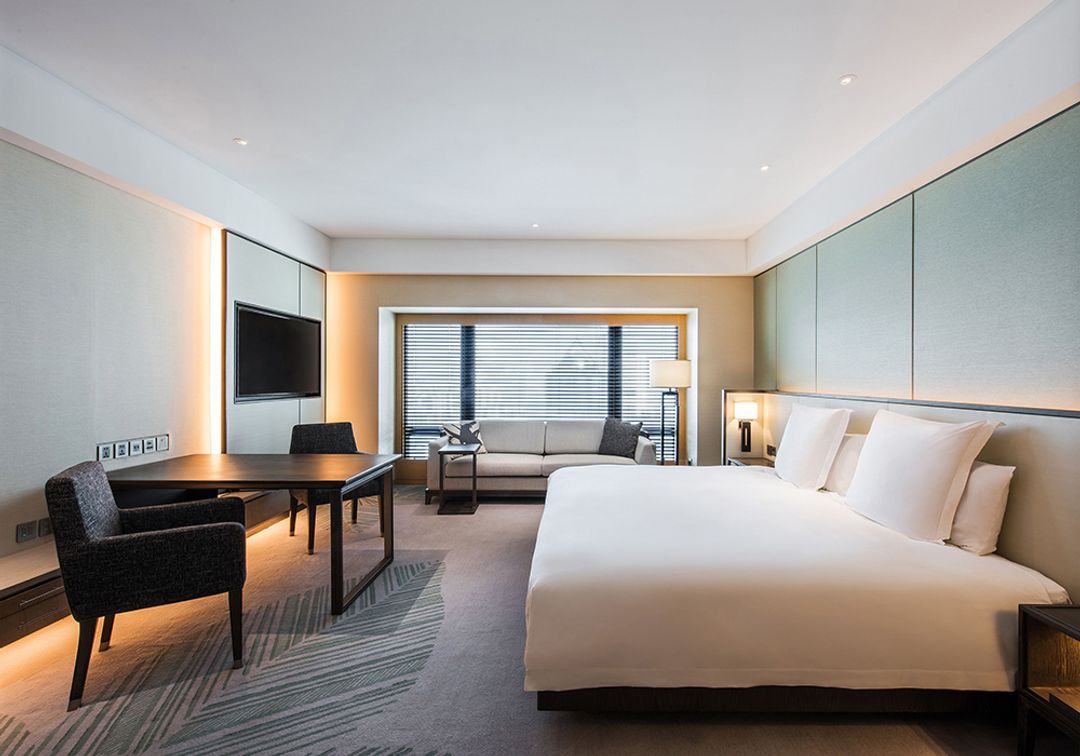
Bridging the gap between Beijing's diplomatic quarter and its most restless consumer district, the 26-storey tower that houses CHAO Sanlitun rises above one of the capital's most culturally charged neighbourhoods with a curtain-wall facade articulated by deep vertical fins — a grid that gives the building a crisp, almost textile quality at dusk when the glass shifts between reflection and transparency. The podium below, clad in pale stone panels with tall rhythmic openings, establishes a more civic register, anchoring the tower to street level with a colonnade-like composure visible in the images. The lobby staircase is the property's most arresting architectural statement: broad limestone treads cascade upward in a monumental terraced formation, flanked by dark patinated steel columns and lit by small lantern-like fixtures set into the risers — closer in feeling to a ceremonial landscape than a hotel threshold. Interiors across the 119 rooms and suites work within a disciplined palette of warm timber flooring, floor-to-ceiling fabric-panelled headboards in dove grey, and brass-detailed joinery that recalls the precision of Japanese residential design without the austerity. Sliding screens partition sleeping from working zones in a spatial move that gives the rooms a domestic flexibility rarely achieved at this scale. The ground-floor restaurant shifts register entirely — raw concrete walls, herringbone-panelled wainscoting, industrial steel glazing, and dark walnut furniture pile up layers of texture that feel more Parisian brasserie than Beijing hotel, an intentional friction that has made CHAO a neighbourhood destination as much as a place to sleep.

Book with PB and get cash back
Park Hyatt Beijing - Image 1
Park Hyatt Beijing - Image 2
Park Hyatt Beijing - Image 3
Park Hyatt Beijing - Image 4
Park Hyatt Beijing - Image 5

Park Hyatt Beijing

Beijing • Chaoyang District • OPTIMIZE

avg. $262 / night

Includes $14 / night in cash back

Cash back is redeemable via Virtual Visa, Venmo, or bank transfer starting 24-48 hours after check-out

World of Hyatt property

Park Hyatt Beijing Design Editorial

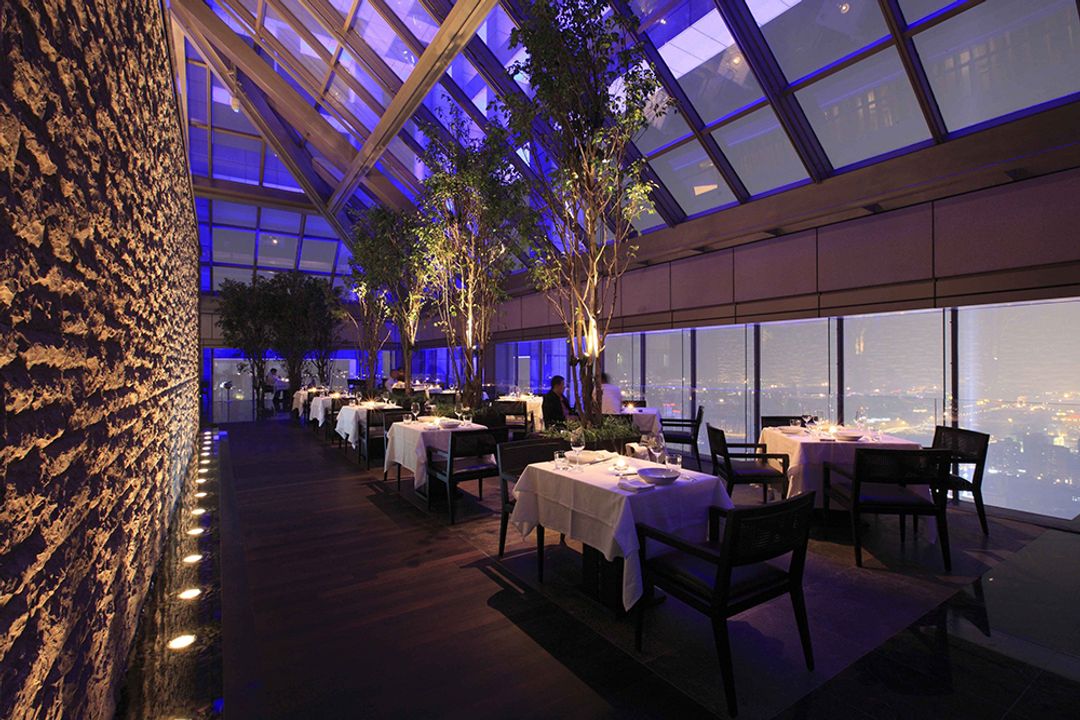
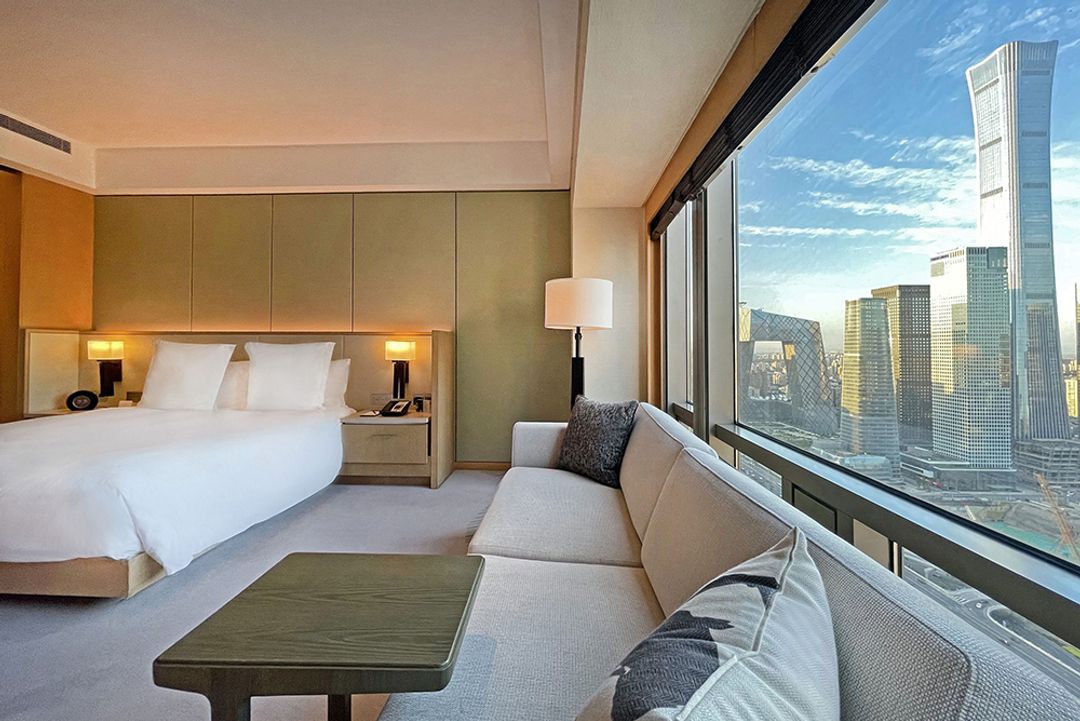
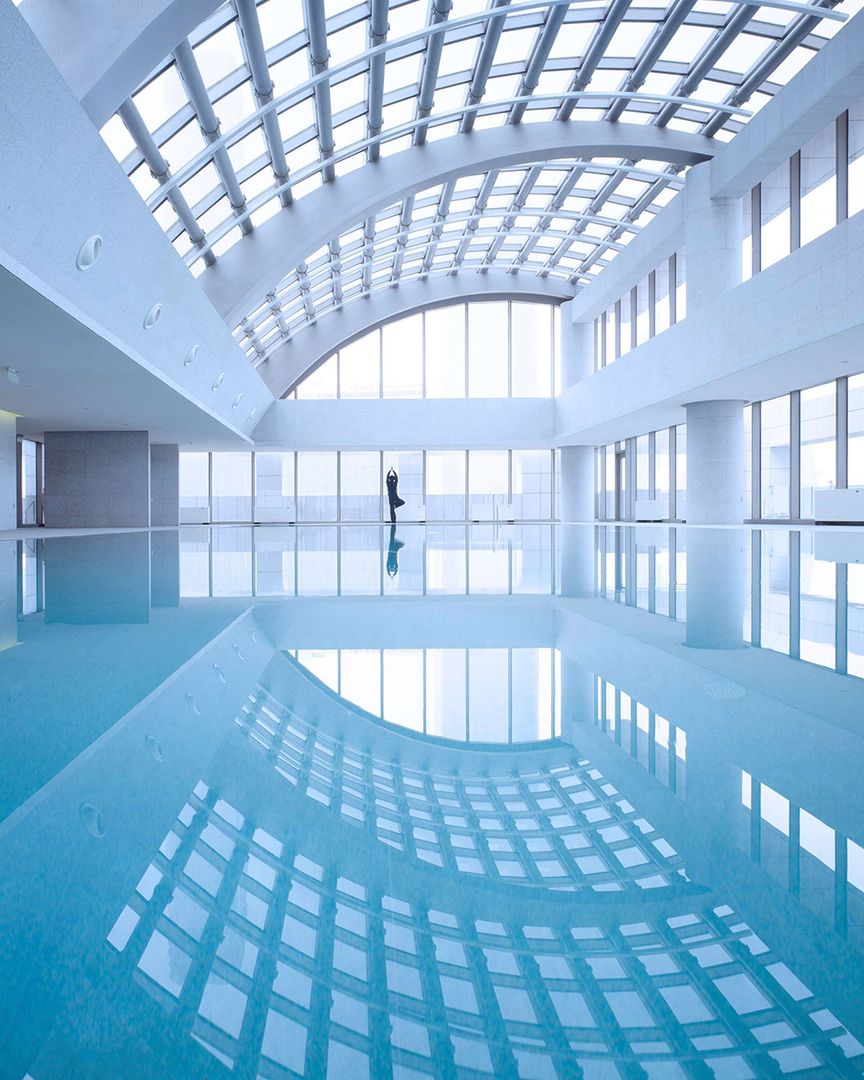
At the crown of the China World Trade Center Tower III — a 330-metre curtain-wall tower that dominated Beijing's CBD skyline when it completed in 2009 — Park Hyatt Beijing was fitted into the upper floors of one of the tallest buildings in the capital, with interiors by Remedios Simon Design that translate the tower's corporate ambition into something considerably more considered. The rooms carry a palette of warm celadon greens, pale oak, and brushed brass, the headboard panels upholstered in panels that echo traditional Chinese lacquerwork without resorting to ornament. Floor-to-ceiling glazing turns the CBD's nightly theatre of illuminated towers — Rem Koolhaas's CCTV headquarters visible on the middle distance — into something close to a living installation. The sky-level pool, sheltered beneath a vaulted glazed barrel vault of white-painted steel, sits high enough above the city that the water's surface reflects only sky and structure, creating an atmosphere closer to a contemplative bath house than a hotel fitness facility. The restaurant above deploys a greenhouse logic — full-height glass ceiling, slender birch trees planted between tables, raw volcanic stone cladding one wall — that manages to feel genuinely sylvan despite sitting some two hundred metres above Chang'an Avenue. With 237 rooms spread across 20 floors of the tower, the hotel maintains a density low enough to keep the corridors quiet, which in Beijing's Chaoyang District counts as a minor architectural achievement in itself.

Book with PB and get cash back
Waldorf Astoria Beijing - Image 1
Waldorf Astoria Beijing - Image 2
Waldorf Astoria Beijing - Image 3
Waldorf Astoria Beijing - Image 4
Waldorf Astoria Beijing - Image 5

Waldorf Astoria Beijing

Beijing • Wangfujing District • SPLURGE

avg. $288 / night

Includes $15 / night in cash back

Cash back is redeemable via Virtual Visa, Venmo, or bank transfer starting 24-48 hours after check-out

Hilton Honors™ property

Waldorf Astoria Beijing Design Editorial

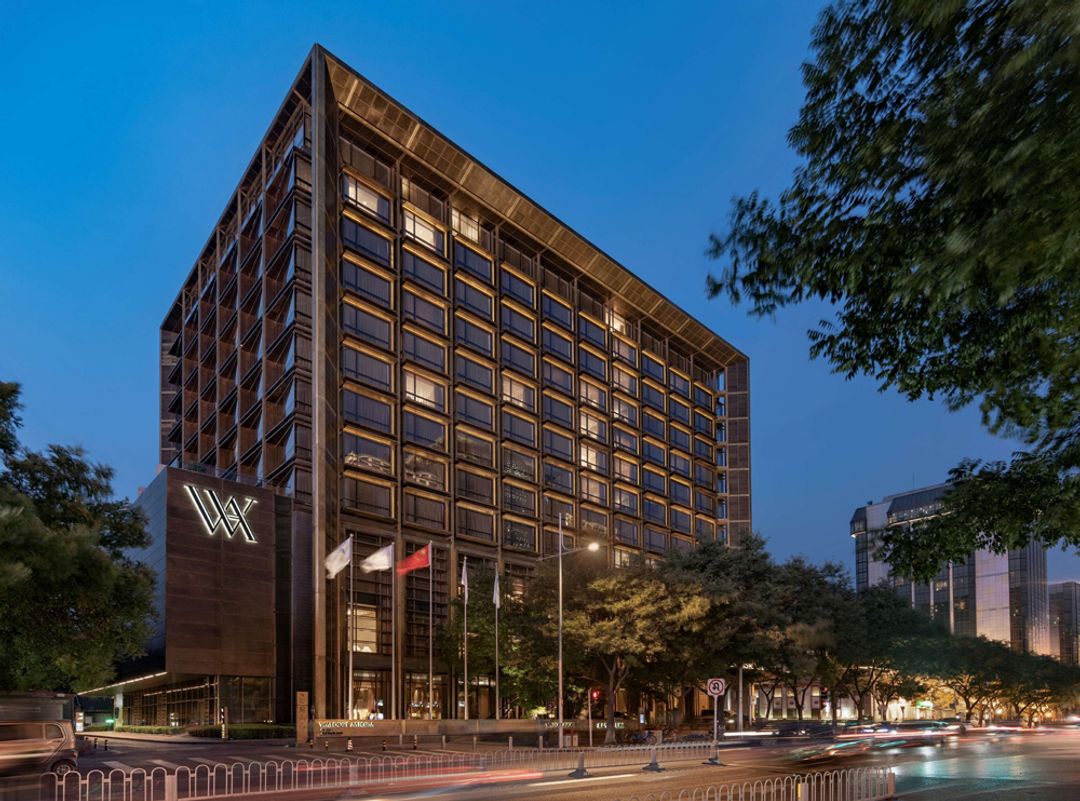
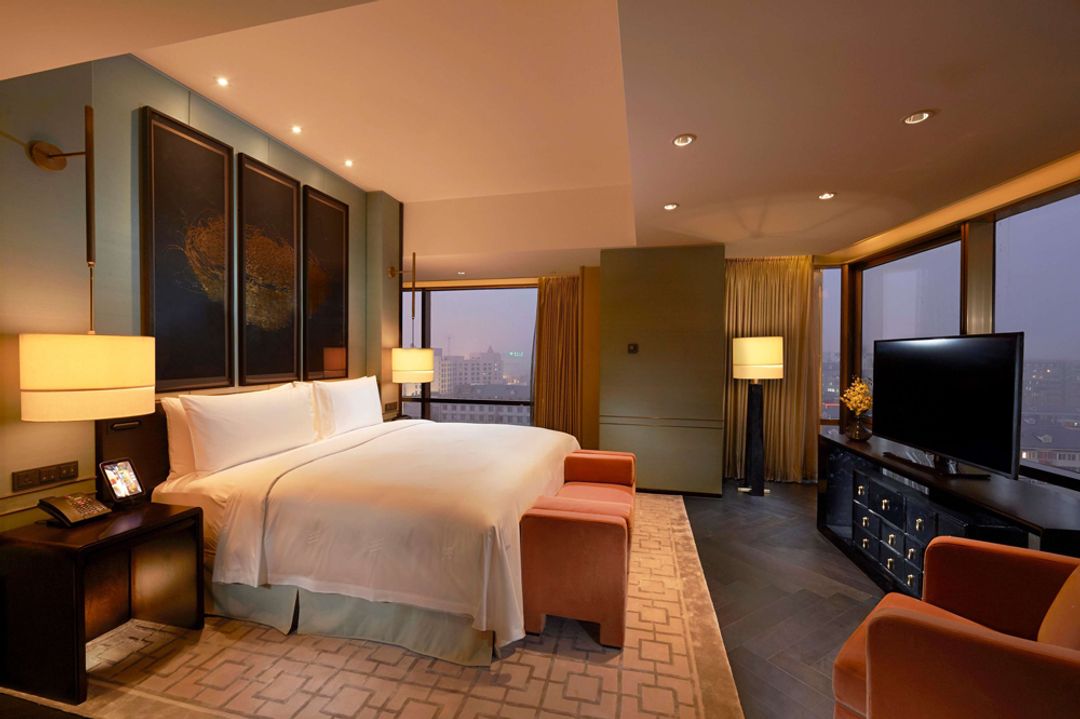
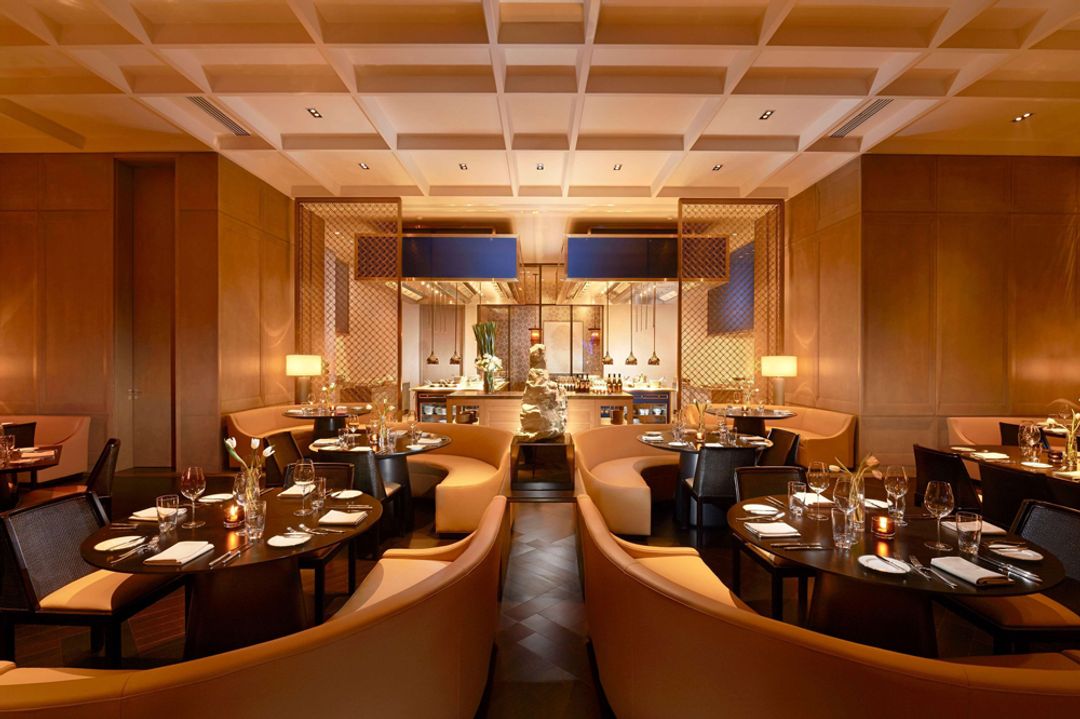
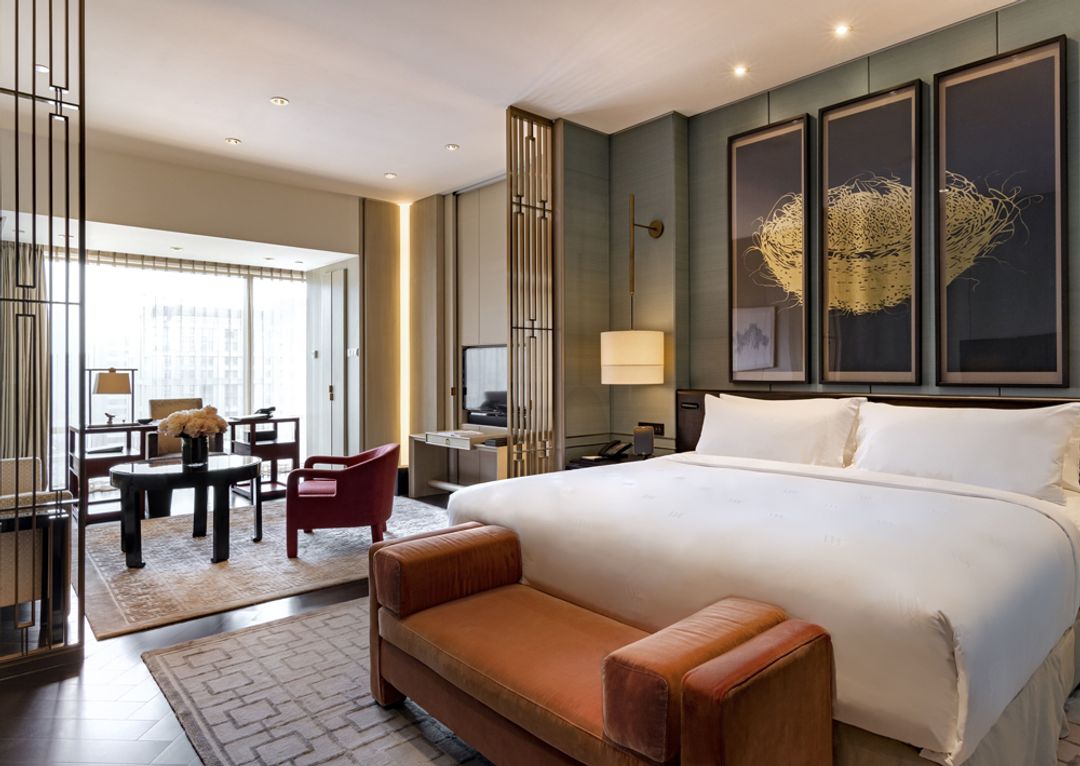
Sitting on Wangfujing, Beijing's most storied commercial avenue, within a ten-floor bronze-clad tower whose gridded facade draws on the proportional logic of traditional Chinese lattice screens, the Waldorf Astoria Beijing takes an unlikely approach for a brand built on Gilded Age Manhattan grandeur: it argues that restraint is a form of luxury. The building's exterior, visible at dusk in the images, presents a warm oxidised bronze curtain wall — each bay articulated by deep reveals that catch the light and give the massing a weight and texture unusual for contemporary Beijing hotel architecture. Inside, the interiors work a careful dialogue between Art Deco heritage and Chinese material culture. Guest rooms are dressed in sage-green panelled walls, dark lacquered furniture with brass hardware that echoes the form of traditional apothecary cabinets, and triptych artworks in gold and indigo mounted above upholstered bed benches in cognac velvet — a palette that feels considered rather than assembled. The dining room deploys a coffered ceiling in white geometric relief above walls of warm figured timber and curvaceous banquette seating in caramel leather, with a carved stone scholar's rock anchoring the central axis. Below ground, the pool is lined in deep-veined brown marble with backlit niches and blue glass mosaic, the atmosphere closer to a Roman frigidarium than a hotel amenity floor. The property holds 171 rooms and suites across its ten floors.

Book with PB and get cash back
The Peninsula Beijing - Image 1
The Peninsula Beijing - Image 2
The Peninsula Beijing - Image 3
The Peninsula Beijing - Image 4
The Peninsula Beijing - Image 5

The Peninsula Beijing

Beijing • Wangfujing District • SPLURGE

avg. $341 / night

Includes $18 / night in cash back

Cash back is redeemable via Virtual Visa, Venmo, or bank transfer starting 24-48 hours after check-out

The Peninsula Beijing Design Editorial

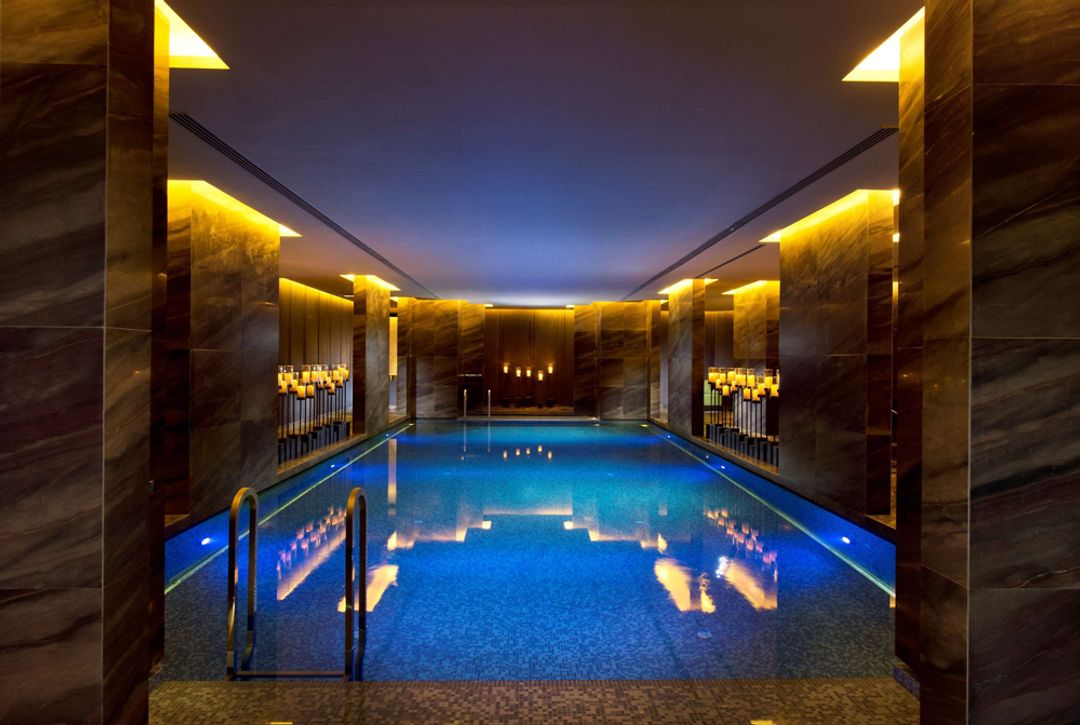
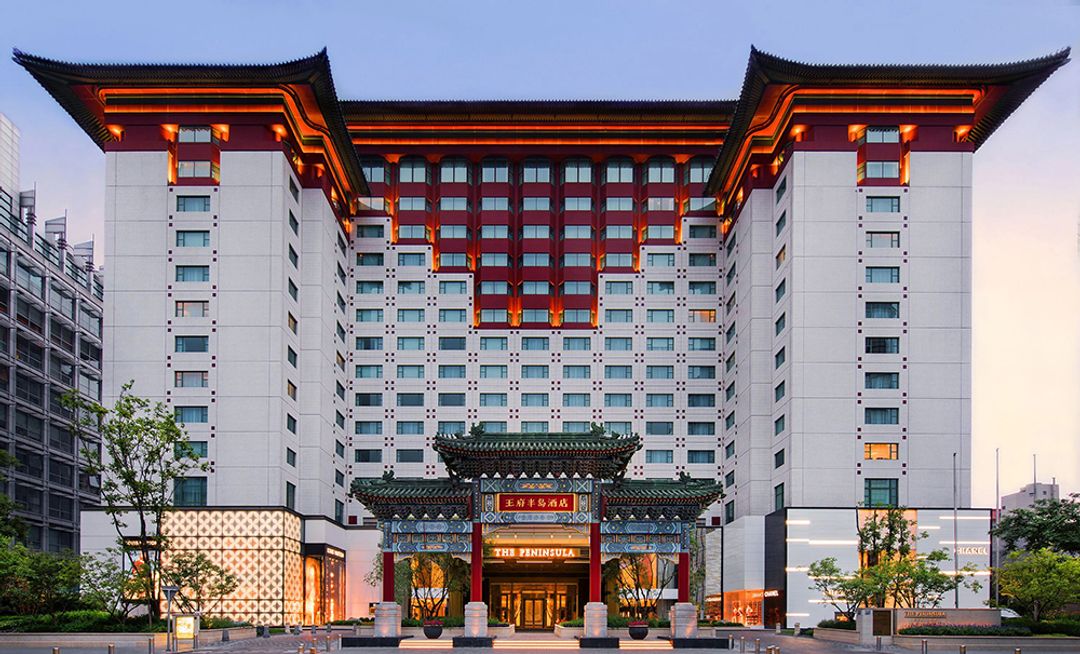
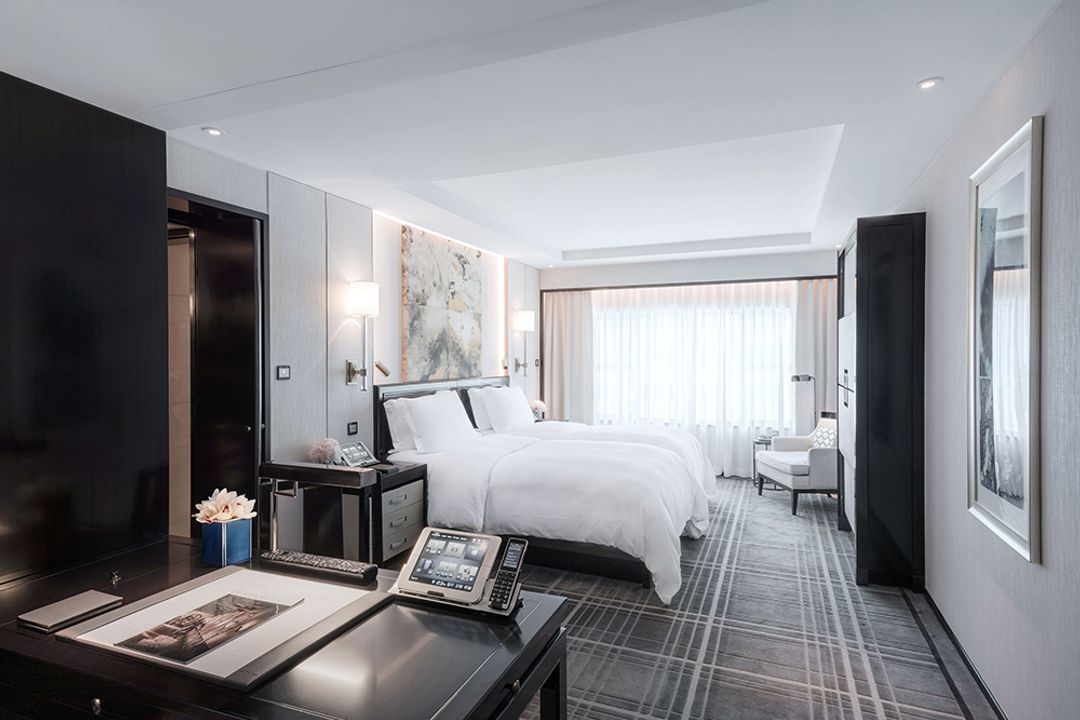
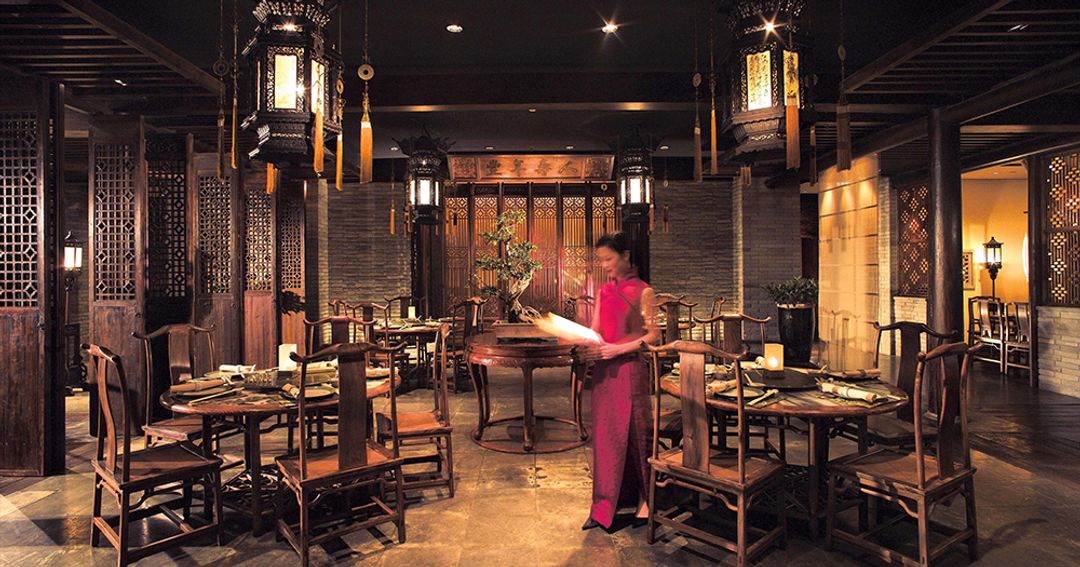
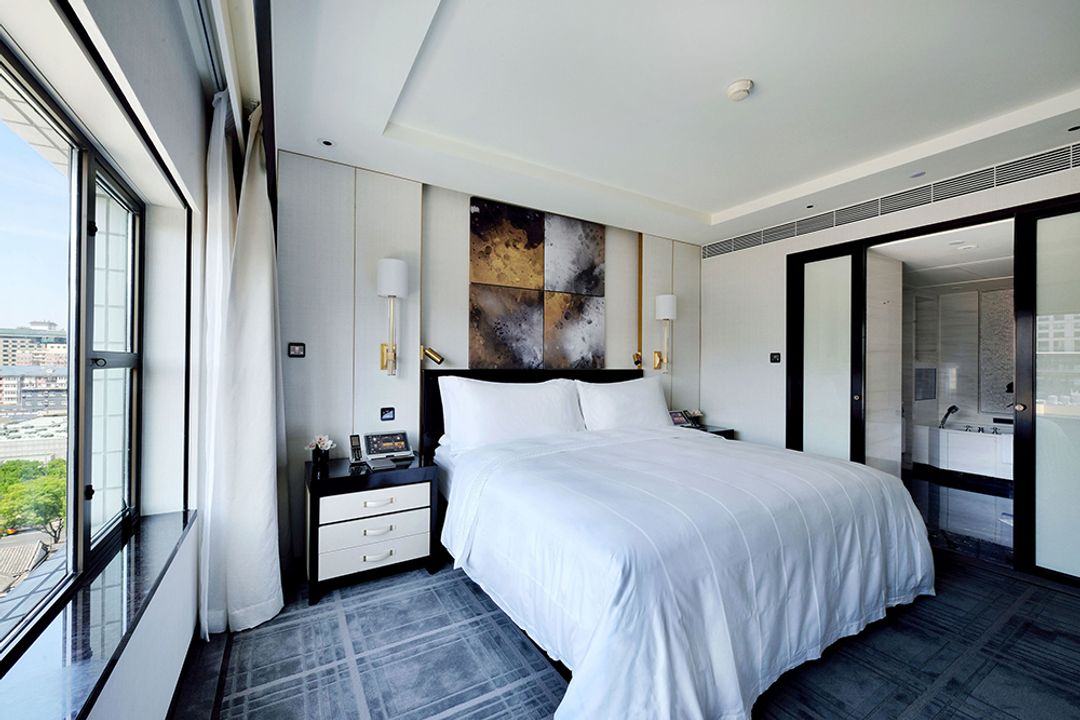
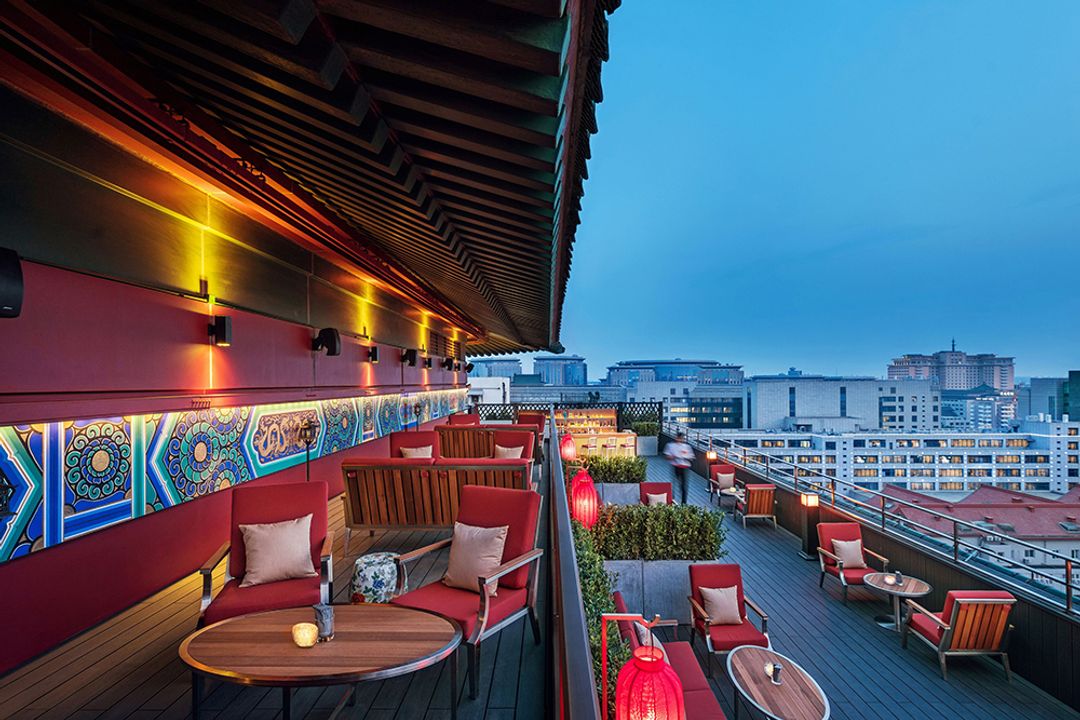
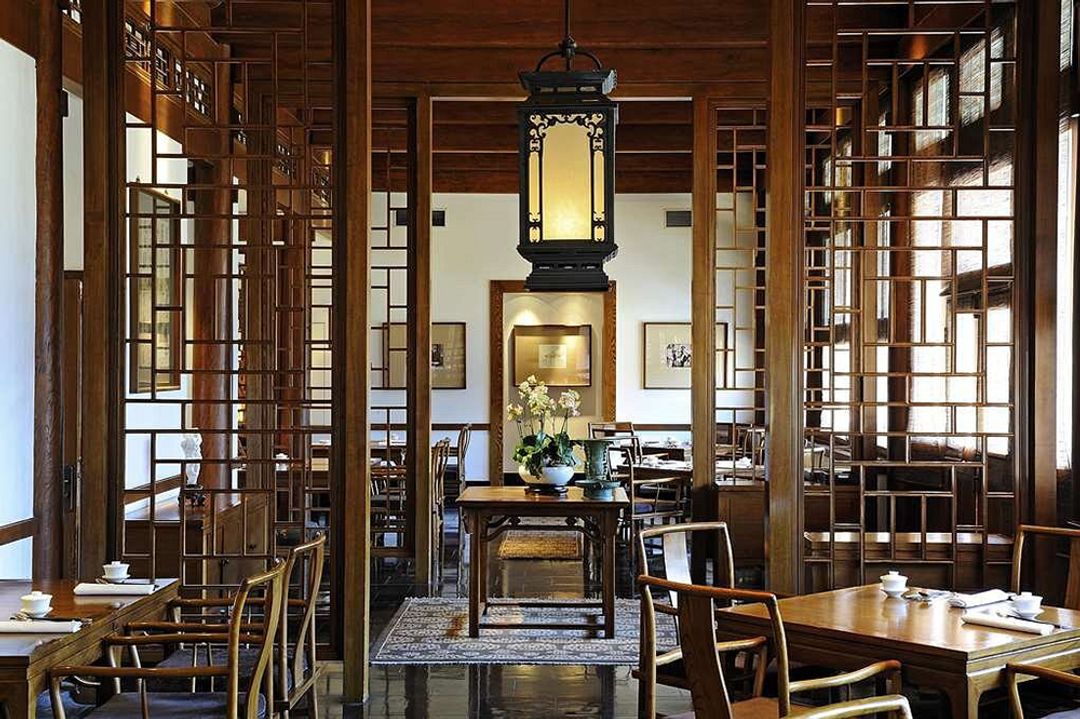
Straddling the line between imperial Beijing and the commercial energy of Wangfujing, the building that houses The Peninsula Beijing makes its allegiances clear from the street: a traditional pailou gateway in lacquered red and green leads the eye upward to a facade where classical Chinese rooflines — broad, upswept, finished in vermilion and dark timber — crown an otherwise contemporary tower of fourteen floors and 230 rooms. Opened in 1989 and subsequently renovated, the property was designed to negotiate the particular tension of its site, positioned two kilometers east of the Forbidden City in a district where dynastic Beijing and modern commerce have pressed against each other for decades. Inside, that negotiation continues on different terms. Guest rooms carry the Peninsula group's characteristic monochrome precision — dark lacquered furniture, marble headboard panels veined in grey and gold, plaid carpets in charcoal and silver — while the in-room technology tablets and control panels signal the brand's long preoccupation with gadgetry. The Chinese restaurant moves in an entirely different register, its interior furnished with huanghuali-style chairs, carved lattice screens, and hanging palace lanterns that establish an atmosphere closer to a Qing-era scholar's pavilion than a hotel dining room. Above it all, the rooftop bar shelters beneath the building's signature eaves, painted ceiling timbers overhead and hand-painted ceramic tile panels lining the parapet wall, red lanterns glowing against the Beijing dusk.

Book with PB and get cash back
Rosewood Beijing - Image 1
Rosewood Beijing - Image 2
Rosewood Beijing - Image 3
Rosewood Beijing - Image 4
Rosewood Beijing - Image 5

Rosewood Beijing

Beijing • Chaoyang District • SPLURGE

avg. $348 / night

Includes $18 / night in cash back

Cash back is redeemable via Virtual Visa, Venmo, or bank transfer starting 24-48 hours after check-out

Rosewood Beijing Design Editorial

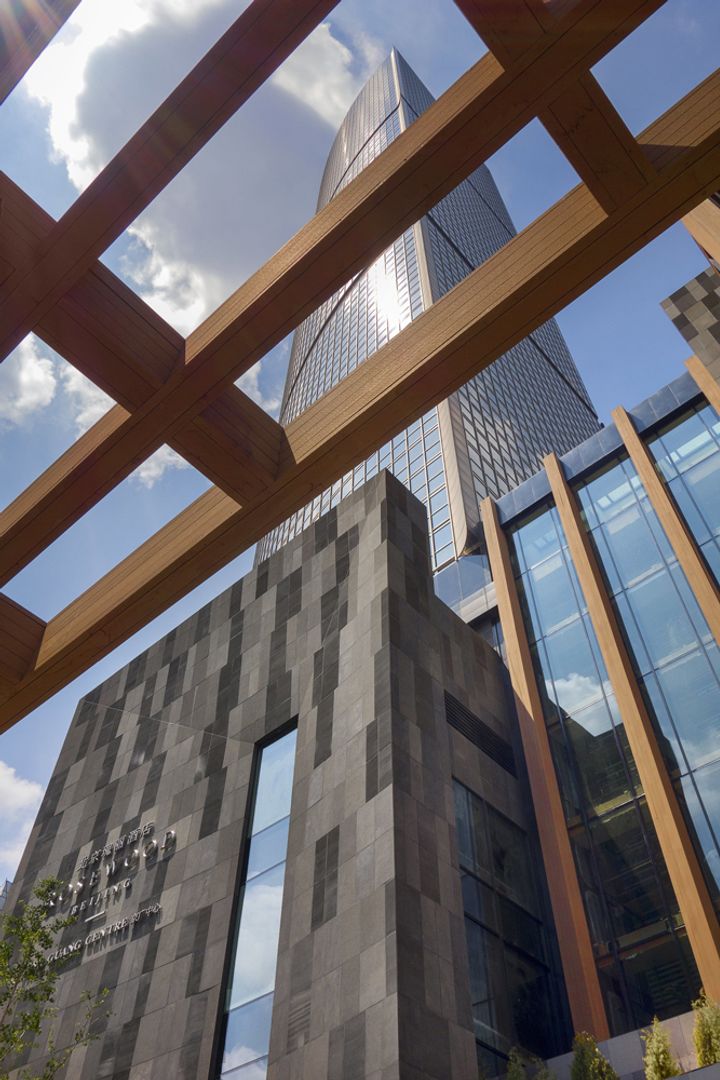
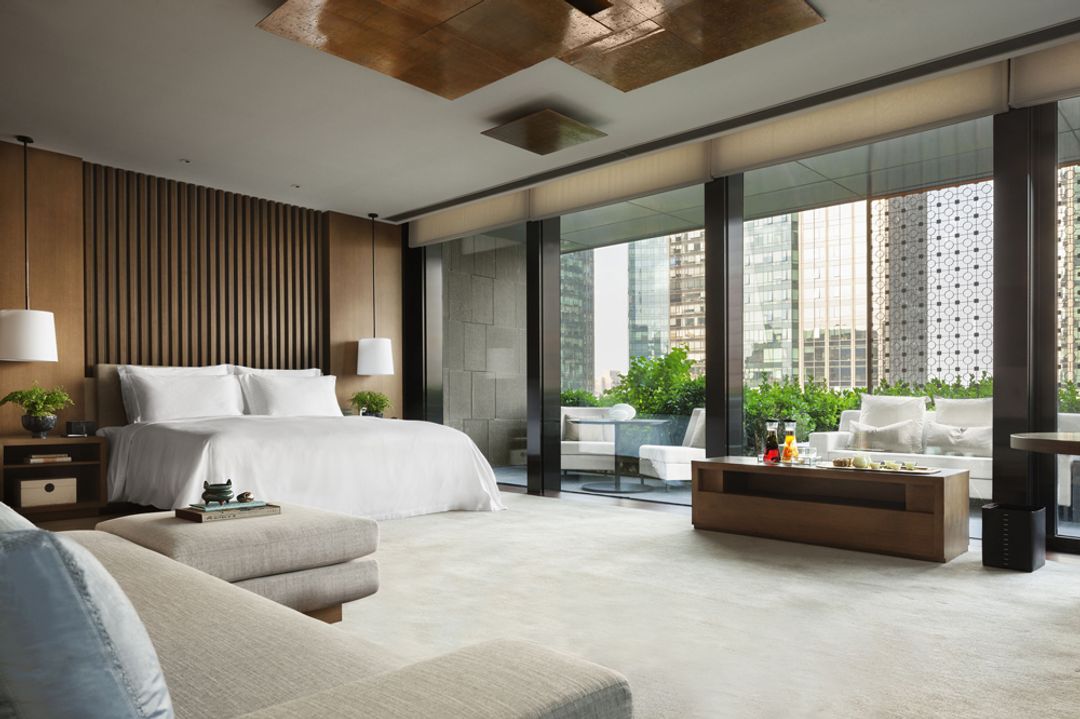
Soaring above Beijing's Chaoyang district from within the mixed-use Jing Guang Centre Otto development, a tapered glass tower designed by Kohn Pedersen Fox provides the vertical address for Rosewood Beijing, which opened in 2014 across 372 rooms and suites spread over the lower floors of the complex. The exterior sequence visible from the arrival courtyard sets the hotel's tonal argument immediately: dark textured stone cladding laid in an irregular, almost pixelated pattern gives way to warm timber pergola structures overhead, the two materials establishing a dialogue between Beijing's classical material culture and a contemporary commercial ambition. That same conversation continues inside. The interiors, developed in collaboration with HBA/Hirsch Bedner Associates alongside contributions from other design teams across the property's various spaces, move between registers with considerable range. Guest rooms in the standard category deploy dark-stained wood paneling, tufted tan leather day beds, and amber-framed mirror apertures to achieve a compressed but considered residential warmth. The suites, by contrast, open onto planted terraces through floor-to-ceiling glazing, their ceilings finished in patinated bronze geometric panels above pale stone floors — more contemplative, more spare. The restaurant draws its atmosphere from lacquered dark timber screens inset with gold-leaf panels and oversized drum pendants in wrapped rattan, while the indoor pool, sheltered beneath an exposed steel and glass roof structure, centers on a circular stone sculpture rising from green-tiled water, the surrounding planting dense enough to suggest a garden rather than a hotel amenity floor.

Book with PB and get cash back
Mandarin Oriental Wangfujing - Image 1
Mandarin Oriental Wangfujing - Image 2
Mandarin Oriental Wangfujing - Image 3
Mandarin Oriental Wangfujing - Image 4
Mandarin Oriental Wangfujing - Image 5

Mandarin Oriental Wangfujing

Beijing • Wangfujing District • SPLURGE

avg. $572 / night

Includes $30 / night in cash back

Cash back is redeemable via Virtual Visa, Venmo, or bank transfer starting 24-48 hours after check-out

Mandarin Oriental Wangfujing Design Editorial

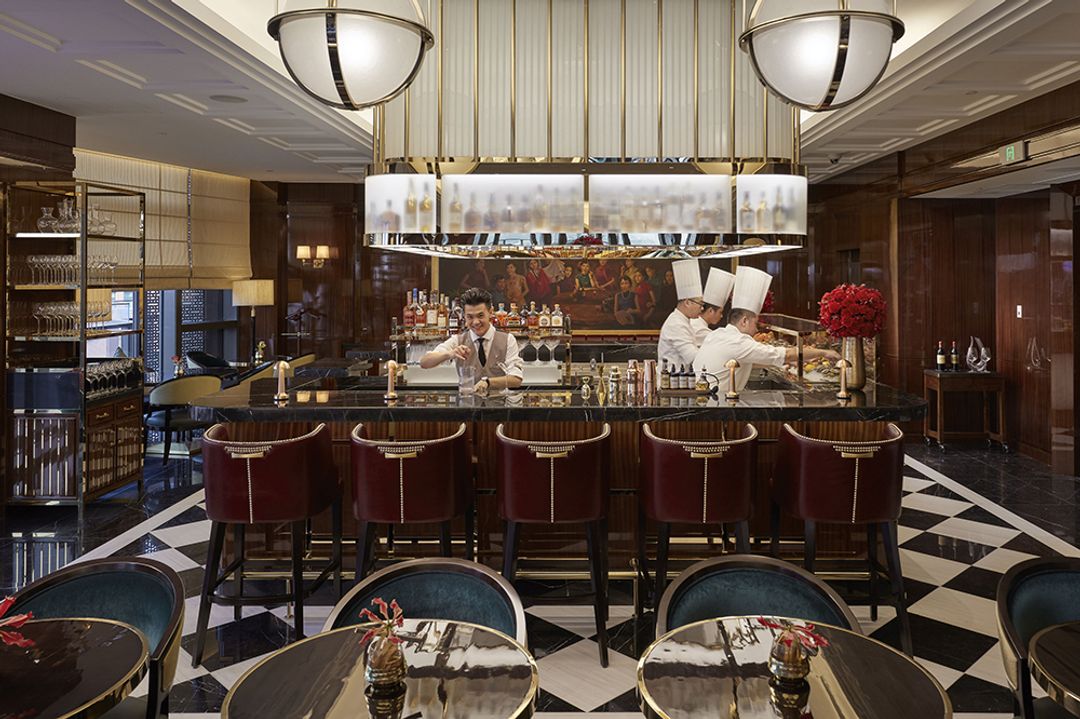
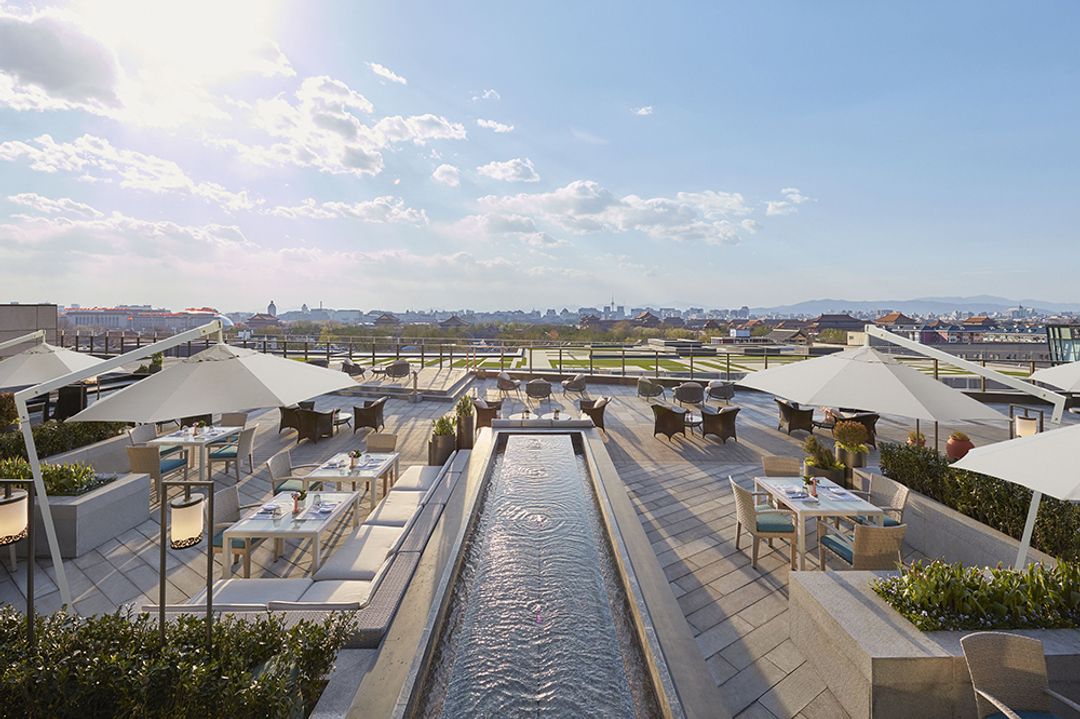
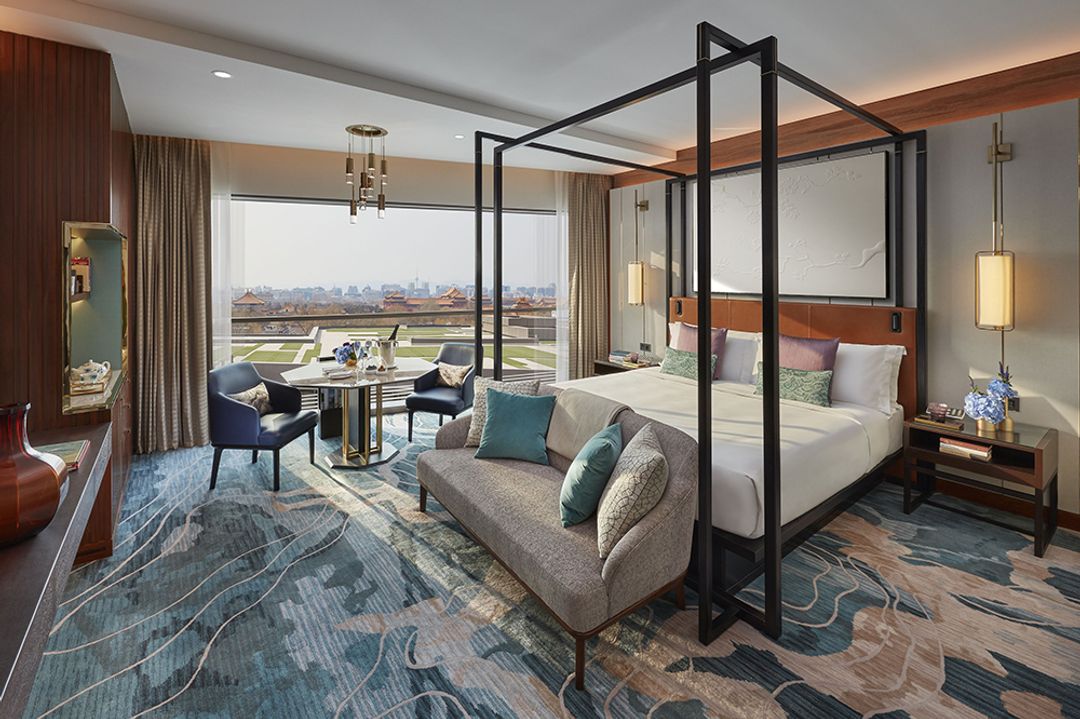
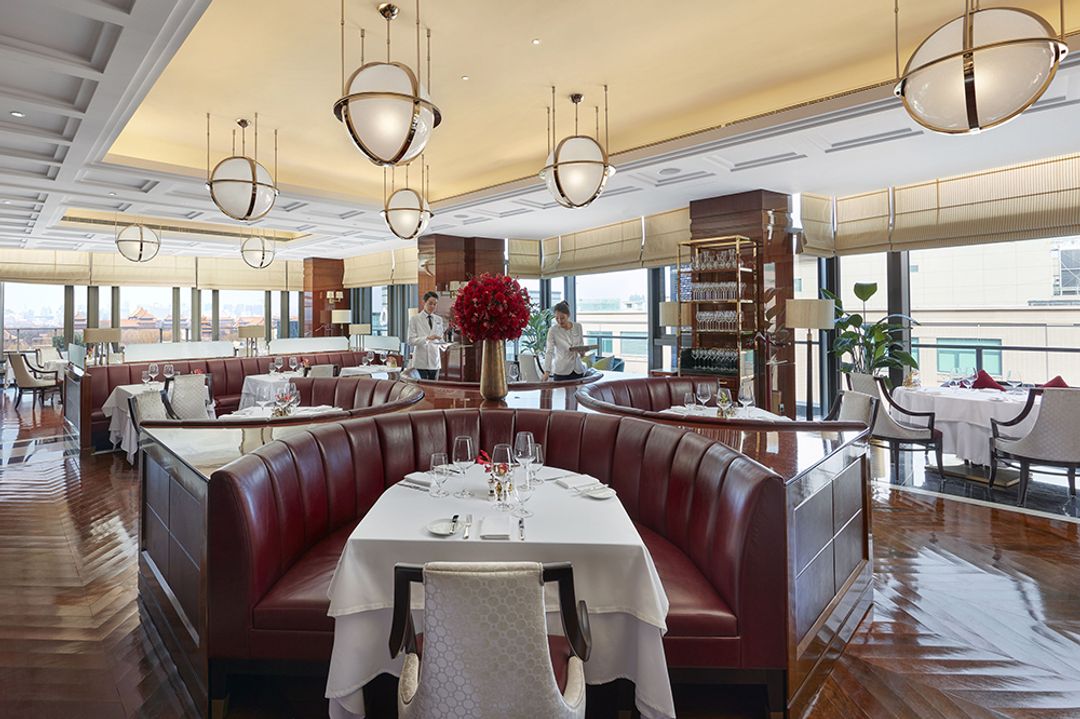
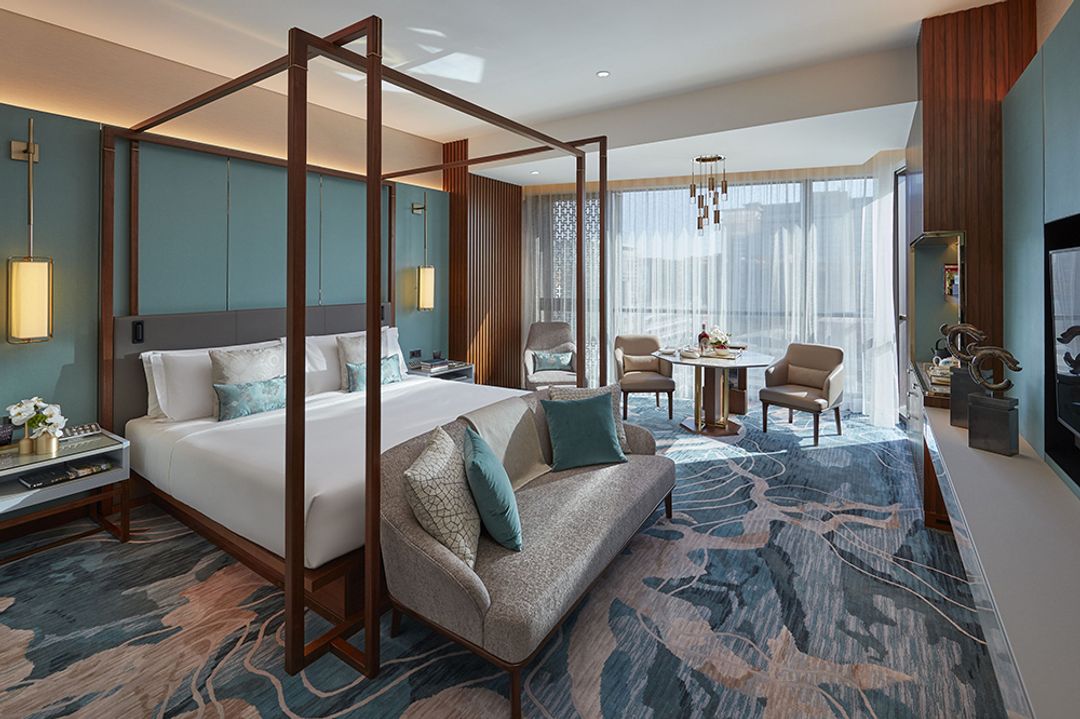
Directly across from the moat walls of the Forbidden City, on a site where every building decision carries the weight of adjacency to one of the world's most scrutinized imperial complexes, the Mandarin Oriental Wangfujing opened in 2018 with a quietly confident brief: to be contemporary Beijing without competing with the thing outside the window. The nine-storey property, designed with interiors conceived to weave Ming and Qing dynasty motifs into a modern luxury register, holds 73 rooms and suites, the majority angled toward the ochre rooflines of the Palace Museum. Four-poster beds in dark-stained timber with slender black-steel canopy frames anchor the rooms, set above hand-tufted carpets whose flowing botanical patterns — teal, blush, and sand — carry the feeling of classical Chinese ink painting translated into wool pile. Teal-lacquered walls in some categories introduce a depth that reads closer to a scholar's study than a standard hotel room. The upper floors give the interiors their strongest argument. The rooftop terrace deploys a long rill of still water as its central axis — a gesture borrowed from classical garden design — flanked by woven rattan seating and large parasols in cream canvas, the entire plateau commanding an unobstructed panorama over the palace precinct to the mountains beyond. The upper restaurant, wrapped in dark herringbone parquet and deep burgundy leather banquettes beneath brass orbital pendants, carries a clubbish mid-century glamour. Downstairs, the bar counter in black-veined marble set against dark timber panelling and a monochrome chequerboard floor establishes a different register entirely — more Shanghai jazz age than imperial capital, and deliberately so.

Book with PB and get cash back
Aman Summer Palace - Image 1
Aman Summer Palace - Image 2
Aman Summer Palace - Image 3
Aman Summer Palace - Image 4
Aman Summer Palace - Image 5

Aman Summer Palace

Beijing • East Gate • SPLURGE

avg. $591 / night

Includes $31 / night in cash back

Cash back is redeemable via Virtual Visa, Venmo, or bank transfer starting 24-48 hours after check-out

Aman Summer Palace Design Editorial

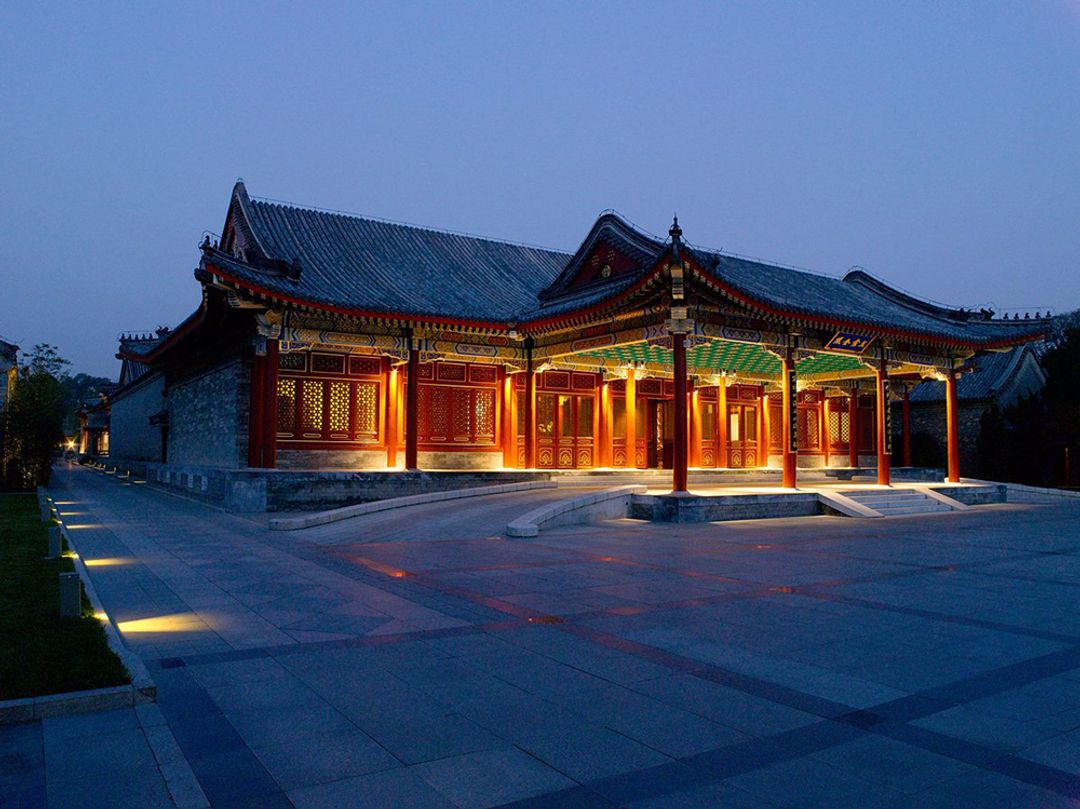
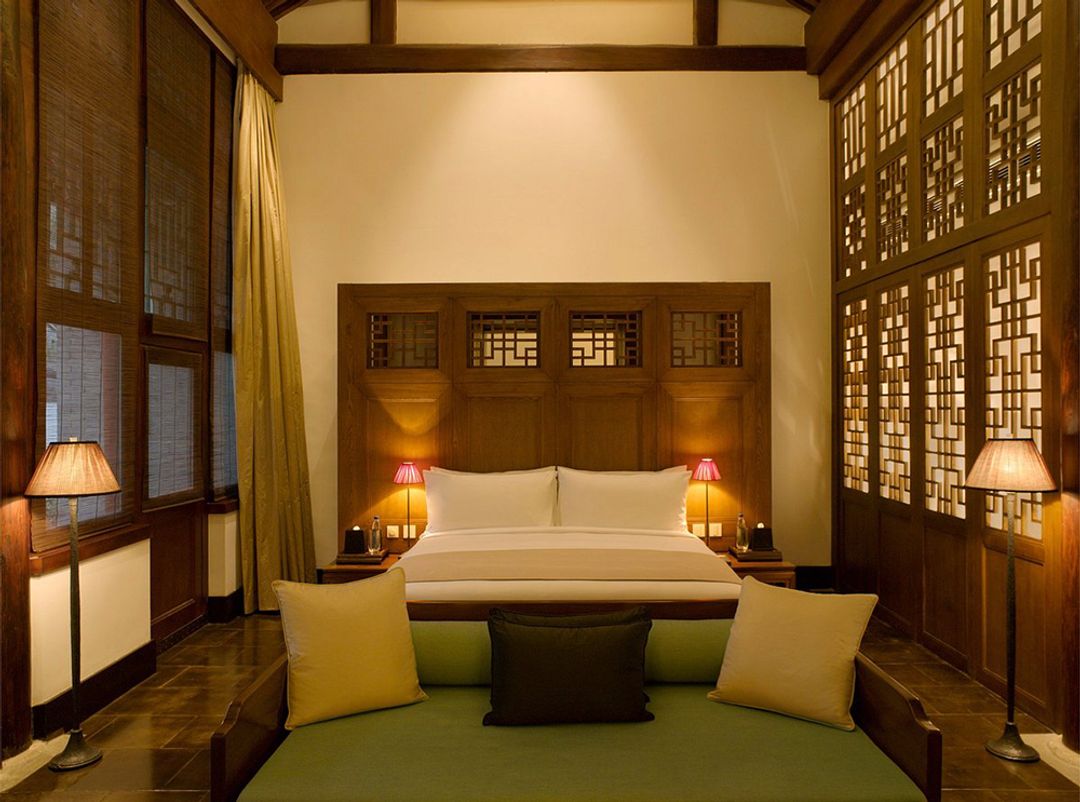
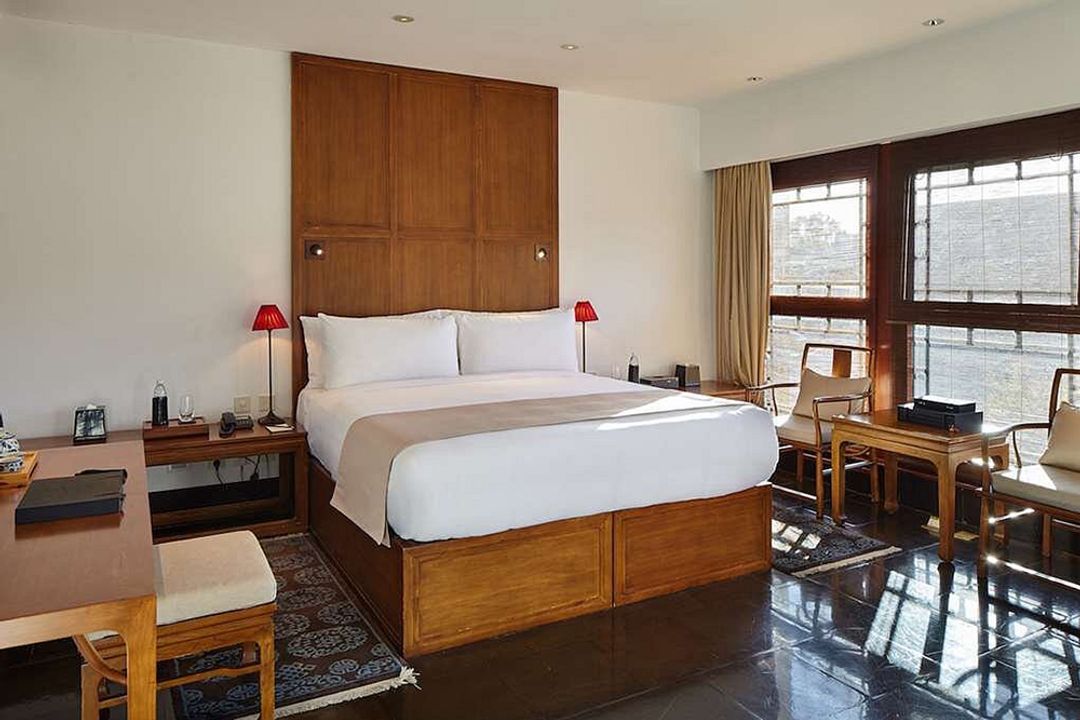
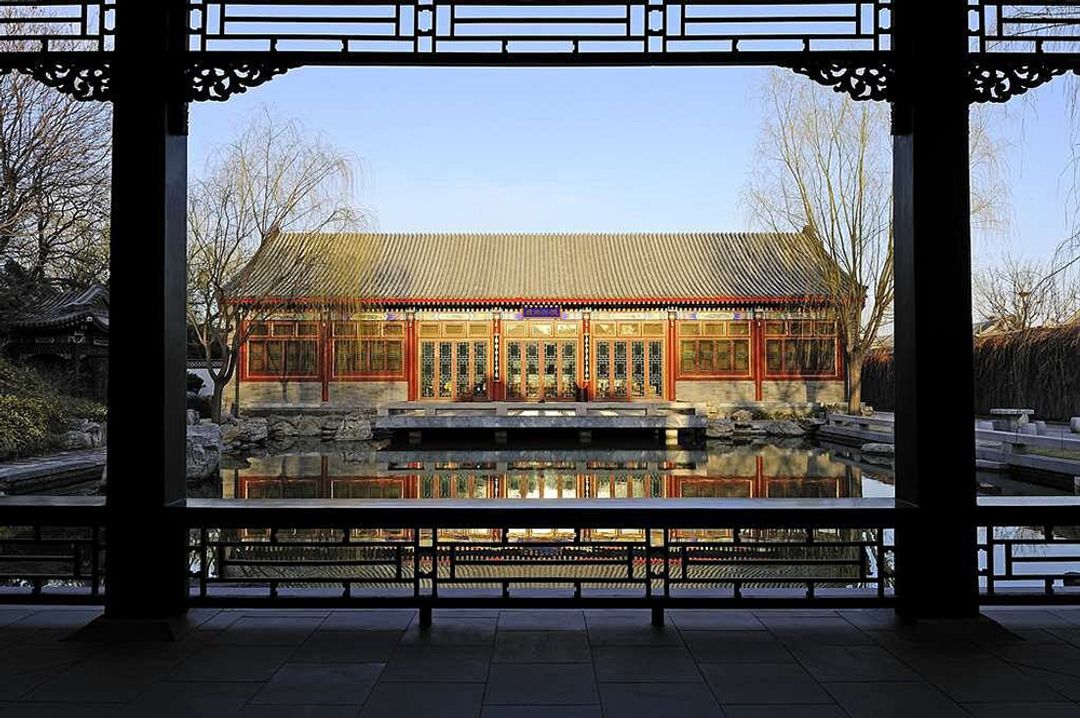
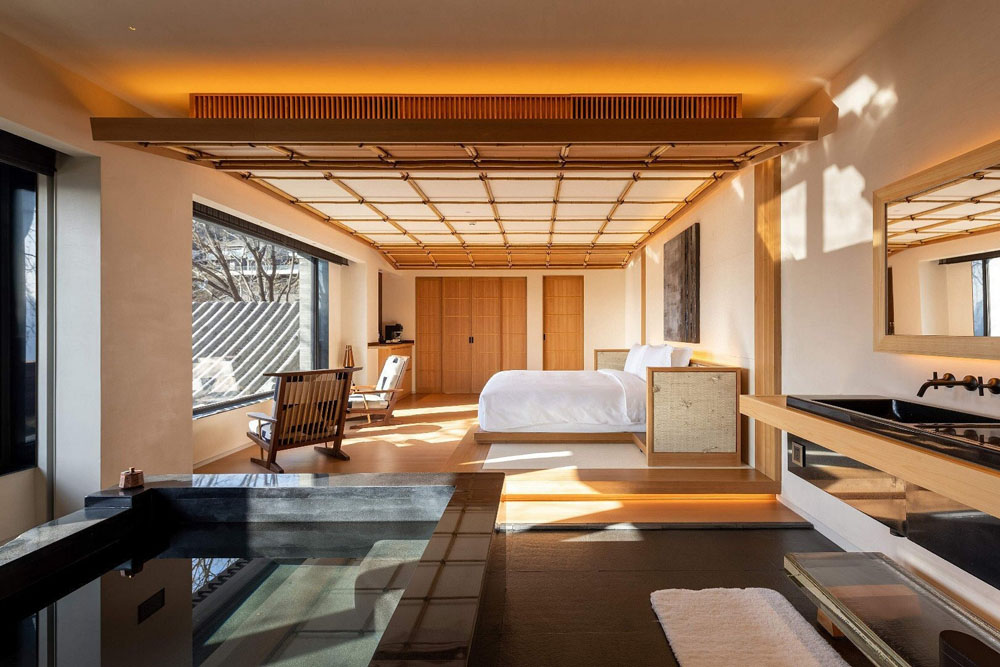
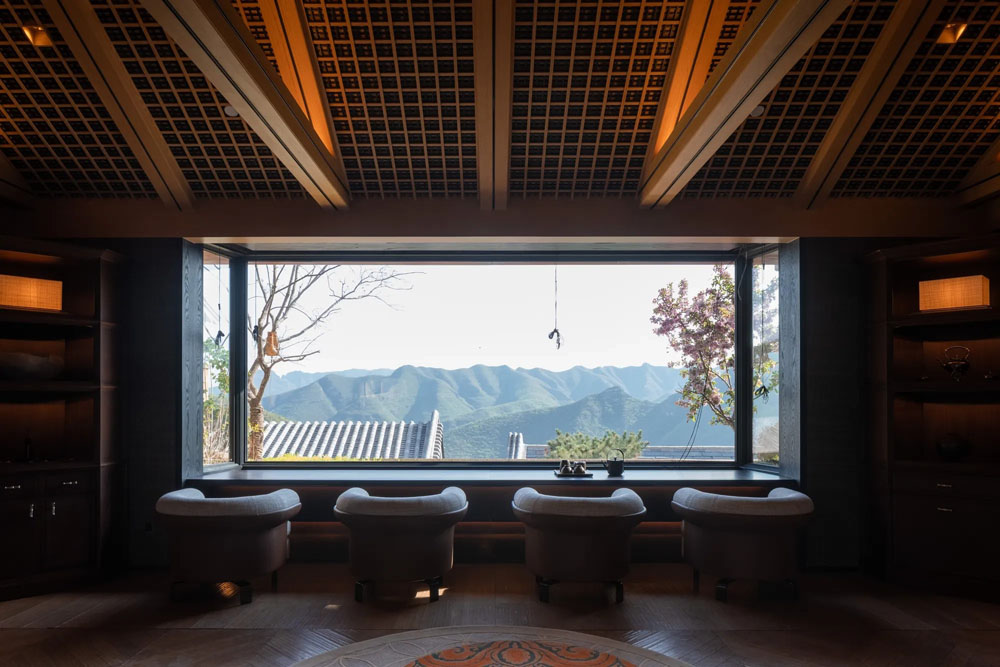
At the eastern gate of the Summer Palace, where imperial Beijing pressed against one of the Qing dynasty's most elaborate garden complexes, a cluster of pavilions that once served as a guest reception compound for the imperial court was converted into Aman Summer Palace — arguably the most historically freighted address in the Aman portfolio. The structures themselves date to the reign of the Guangxu Emperor, their grey-tile roofs, vermillion columns, and bracketed eaves executed in the same northern palatial grammar as the buildings visible across Kunming Lake. What the conversion required was not architectural invention but an act of restraint: Ed Tuttle, Aman's longtime design collaborator, allowed the ceremonial architecture to carry the spatial argument while pulling the interiors toward something quieter and more habitable. Inside the 51 rooms and suites, Tuttle translated the vocabulary of classical Chinese joinery into a register that functions as contemporary living rather than museum recreation. Latticed timber screens — the same fretwork geometry visible across the eaves and window surrounds of the pavilions outside — recur as headboards, room dividers, and wall panels, rendered in warm walnut-toned wood against cream plaster. Polished dark stone floors ground the rooms, Ming-influenced armchairs and low daybeds providing the furniture lineage, while red-shaded bedside lamps offer the one deliberate note of color against an otherwise restrained palette. The dining spaces carry the same logic: lacquered hanging lanterns and scholar's-table consoles arranged beneath exposed beam ceilings, the lattice screens filtering borrowed garden light throughout.
Book with PB and get cash back
Bulgari Hotel Beijing - Image 1
Bulgari Hotel Beijing - Image 2
Bulgari Hotel Beijing - Image 3
Bulgari Hotel Beijing - Image 4
Bulgari Hotel Beijing - Image 5

Bulgari Hotel Beijing

Beijing • Embassy District • SPLURGE

avg. $637 / night

Includes $34 / night in cash back

Cash back is redeemable via Virtual Visa, Venmo, or bank transfer starting 24-48 hours after check-out

Bulgari Hotel Beijing Design Editorial

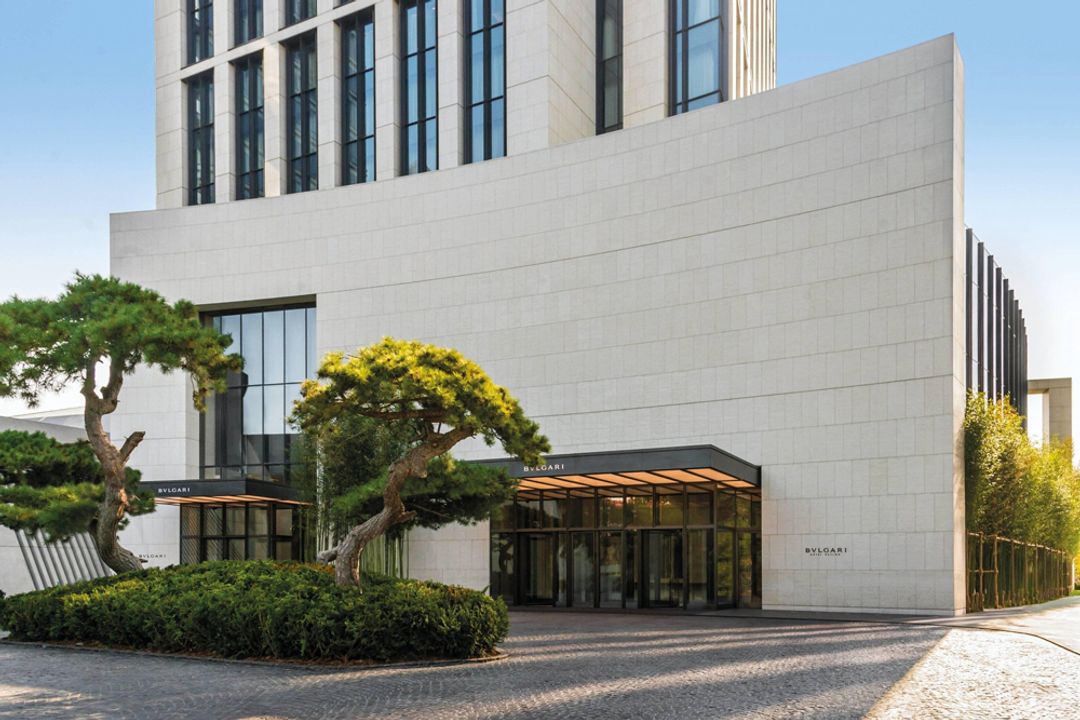
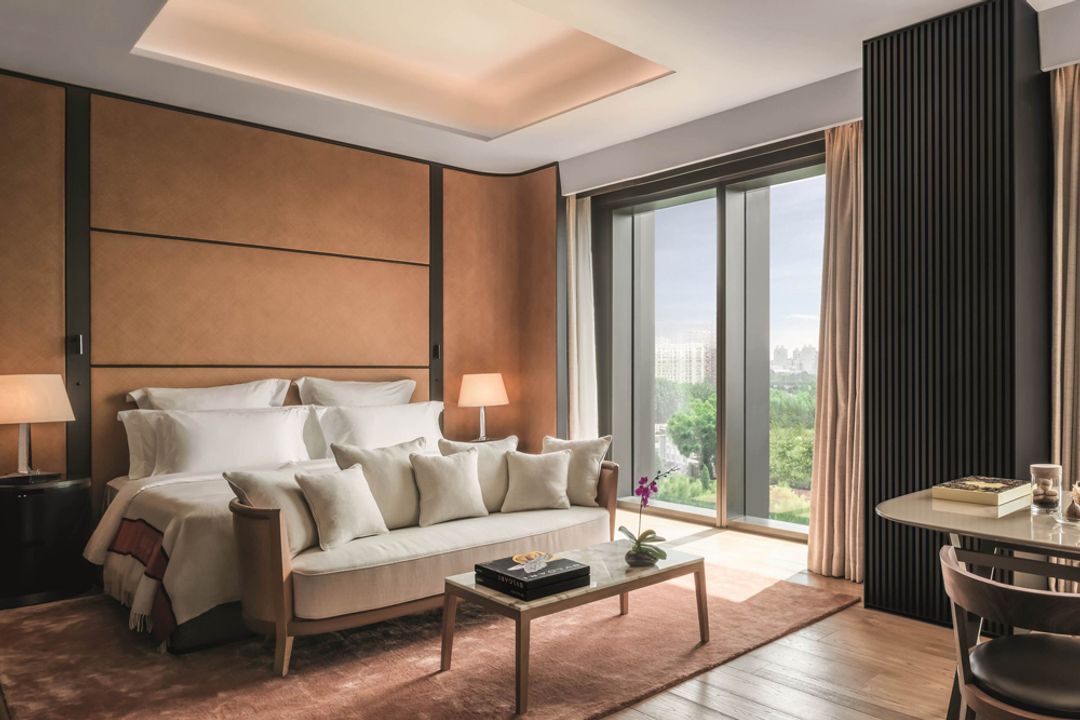
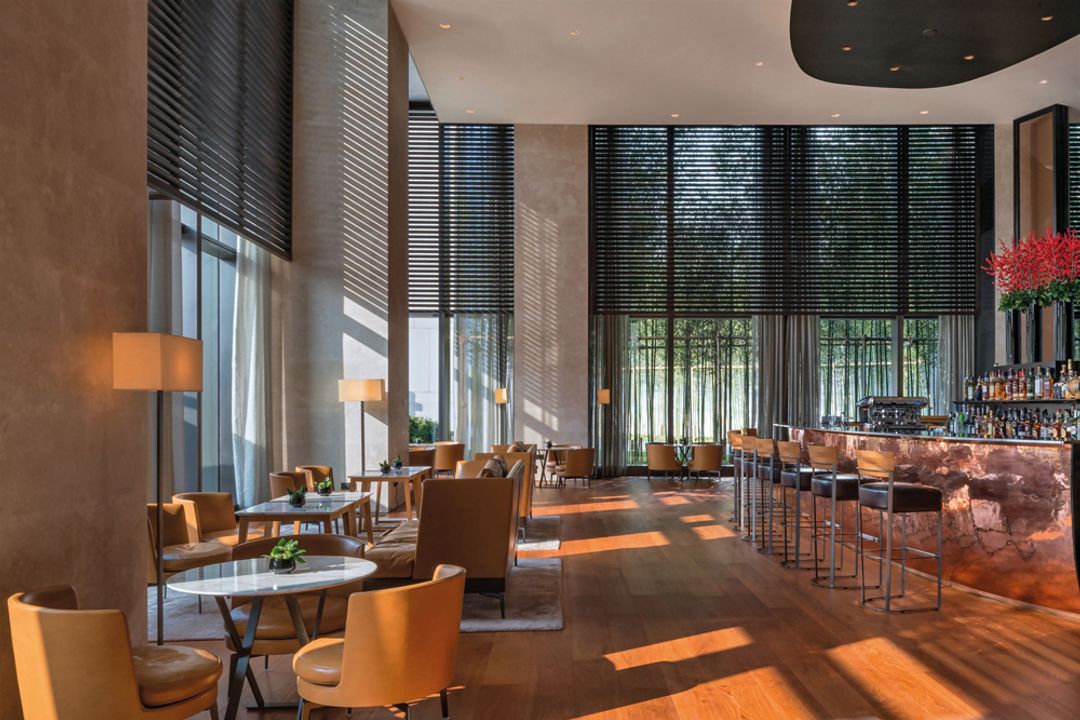
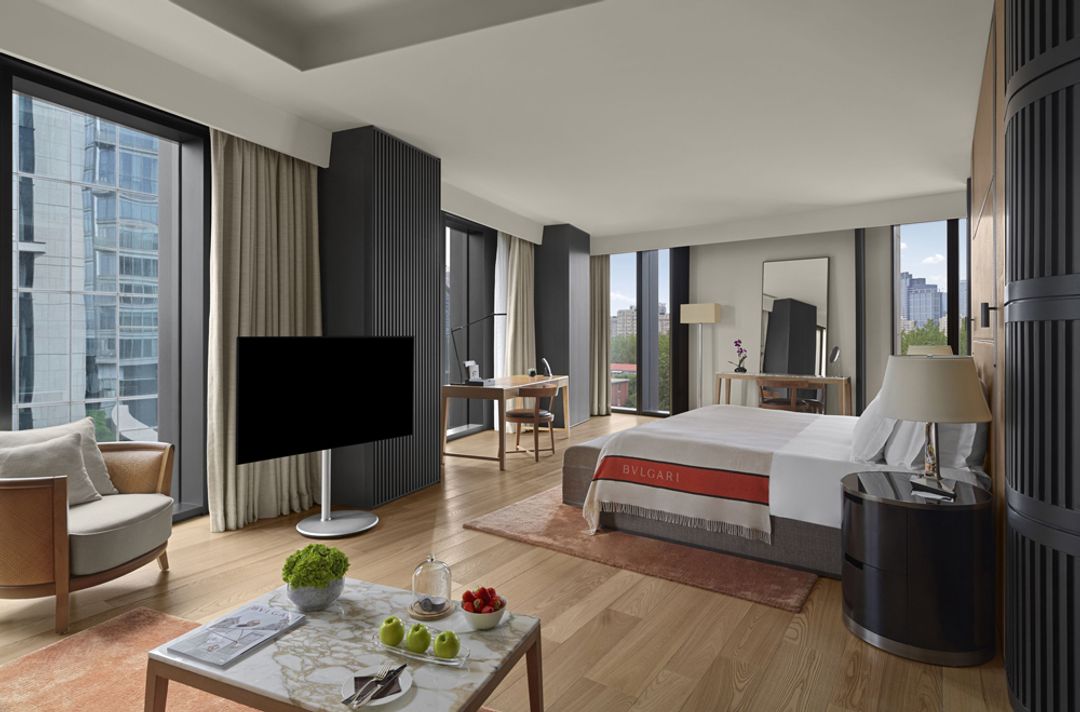
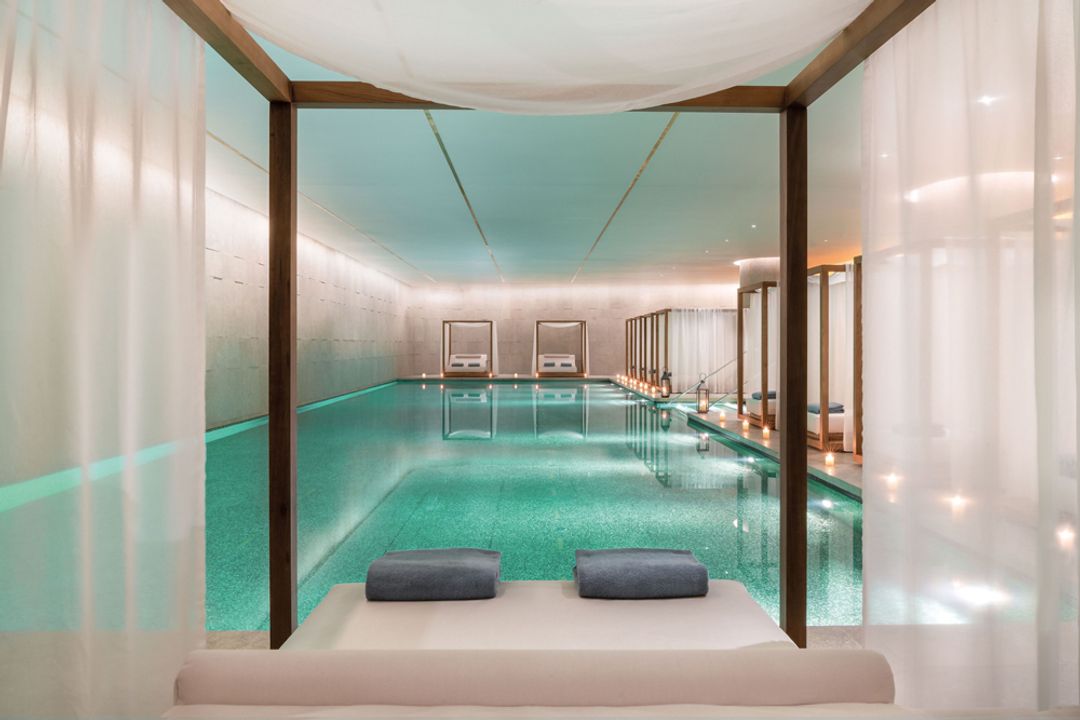
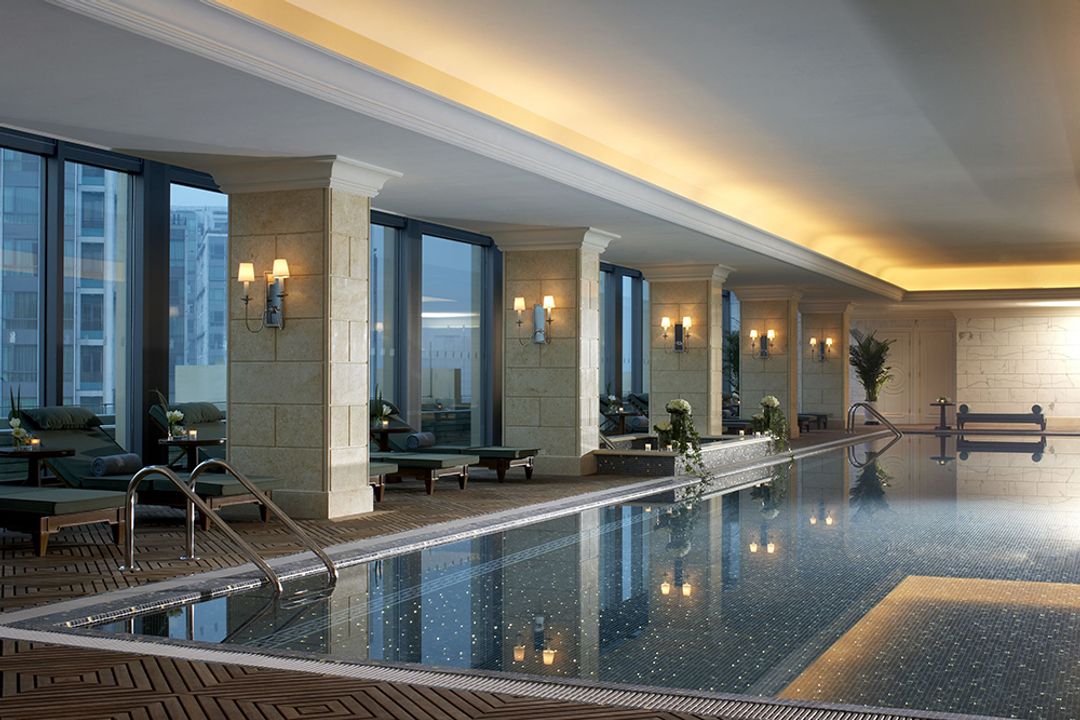
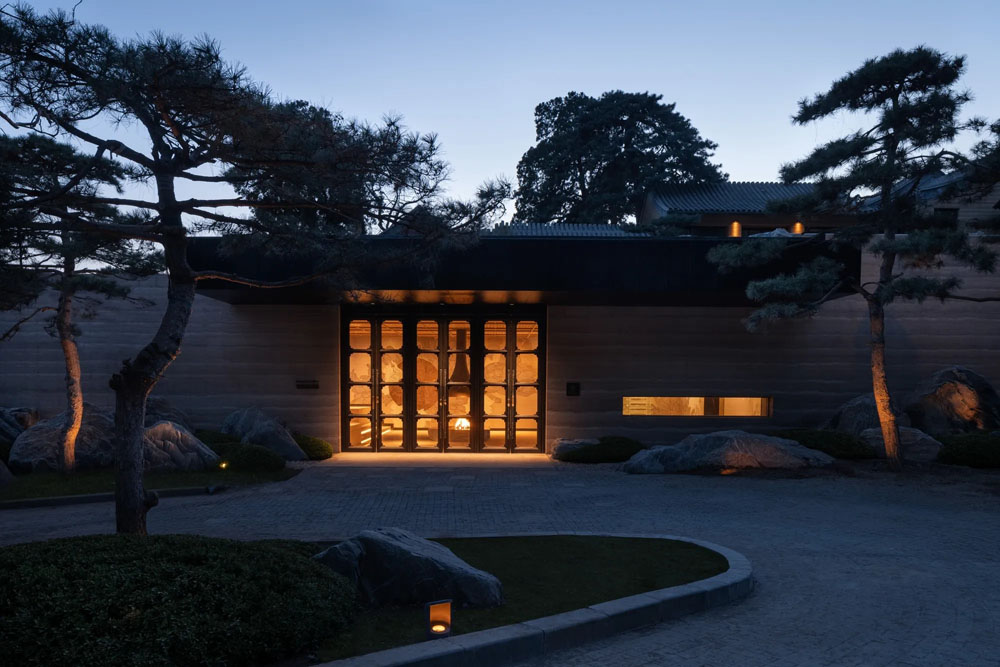
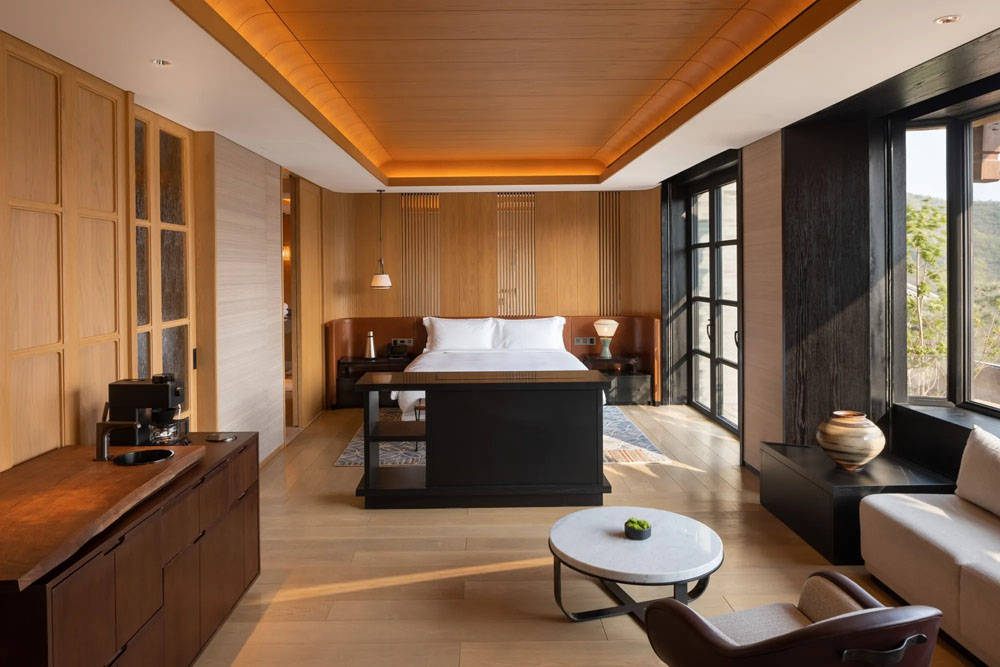
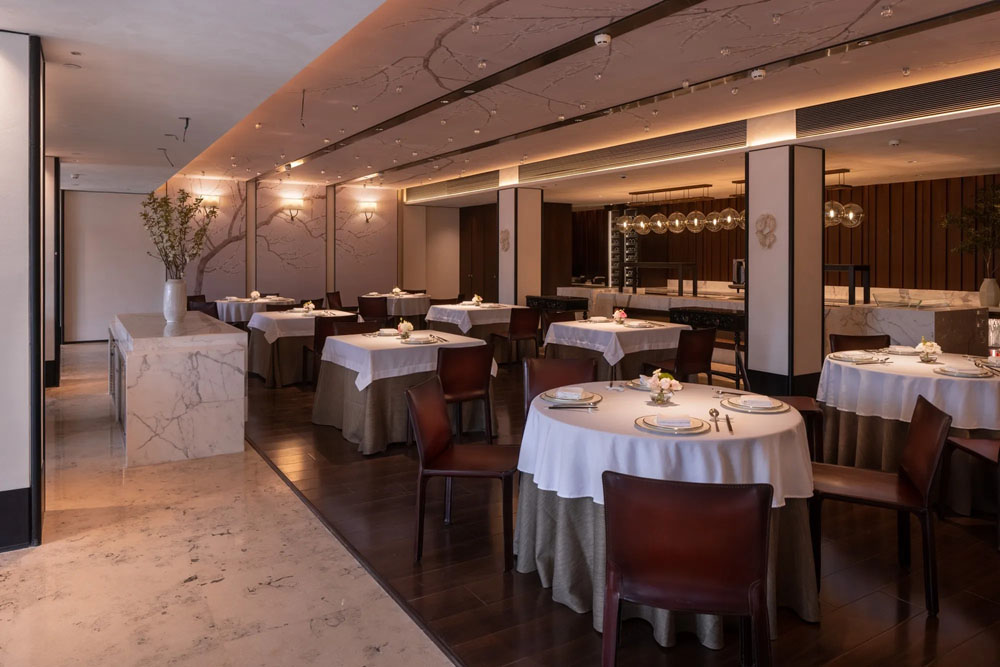
Translating the Roman jeweller's design grammar into the language of a Chinese capital required Antonio Citterio Patricia Viel to find a middle register — neither the Mediterranean warmth of the Milan original nor a superficial nod to local tradition, but something genuinely bilateral. The Bulgari Hotel Beijing, which opened in 2017 within the city's Embassy District, is set within a crisp limestone-clad podium and tower whose facades carry the cool, planar restraint that has become the studio's signature across the brand's portfolio. Mature sculpted pines flanking the entrance canopies introduce an immediately legible reference to classical Chinese garden composition, their twisted forms a deliberate counterpoint to the building's rectilinear geometry. Inside, the 119 rooms and suites are finished in warm tawny leather wall panels, pale oak flooring, and dark slatted screens — a palette that runs closer to amber and chalk than to the harder jewel tones the brand deploys elsewhere. The lobby bar, framed by floor-to-ceiling glazing behind which a dense bamboo grove filters afternoon light into raking horizontals, gives the ground-floor spaces a contemplative quality unusual in Beijing's hotel landscape. The spa pool, lined in mosaic tile and framed by draped four-poster daybeds with candlelit surrounds, maintains the intimate scale that distinguishes Bulgari from larger-footprint competitors. Throughout, Citterio's instinct for furniture with slender tapered legs and marble-topped occasional tables keeps the interiors anchored in a recognisably Italian design lineage without ever forgetting where they are.

Book with PB and get cash back
The St. Regis Beijing - Image 1
The St. Regis Beijing - Image 2
The St. Regis Beijing - Image 3
The St. Regis Beijing - Image 4
The St. Regis Beijing - Image 5

The St. Regis Beijing

Beijing • Diplomatic Compound • OPTIMIZE

avg. $145 / night

Includes $8 / night in cash back

Cash back is redeemable via Virtual Visa, Venmo, or bank transfer starting 24-48 hours after check-out

Marriott Bonvoy® property

The St. Regis Beijing Design Editorial

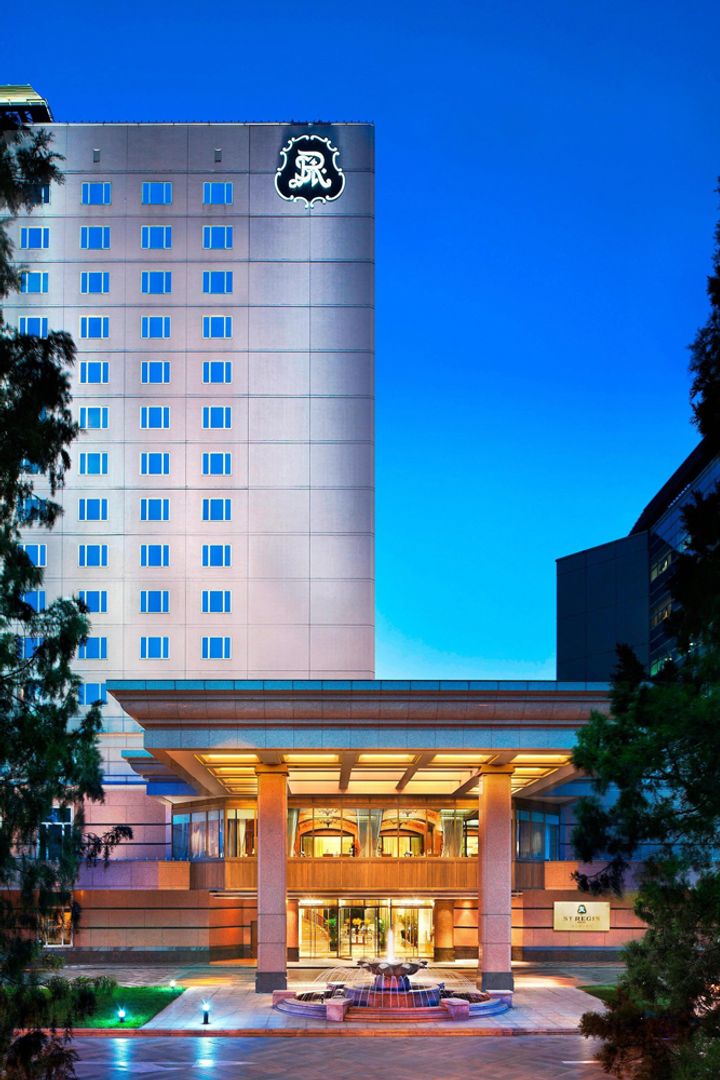
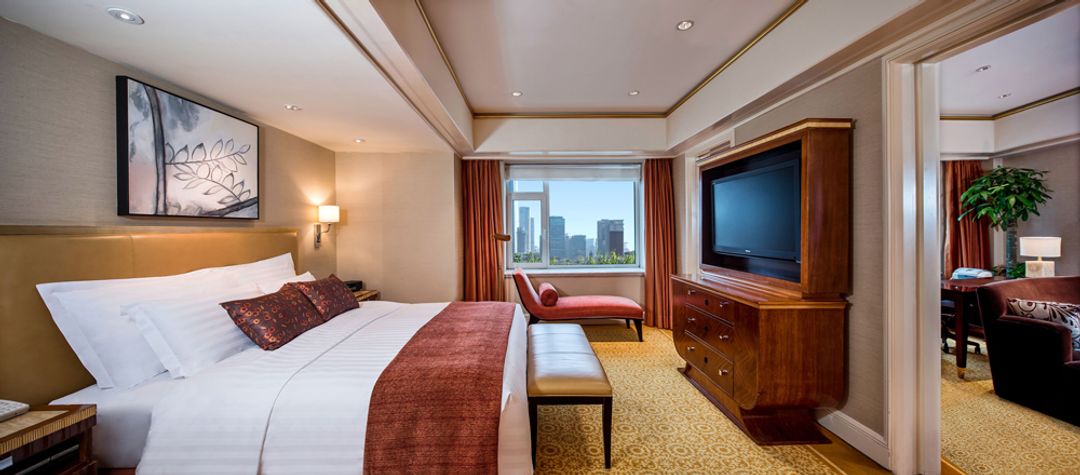
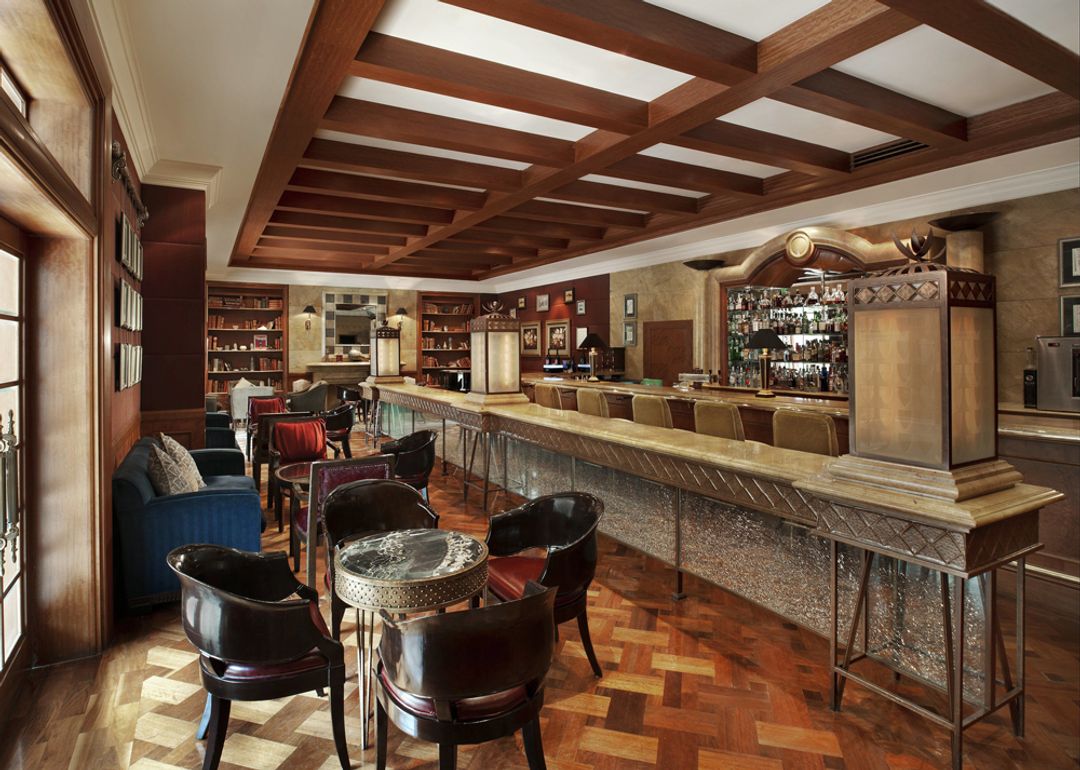
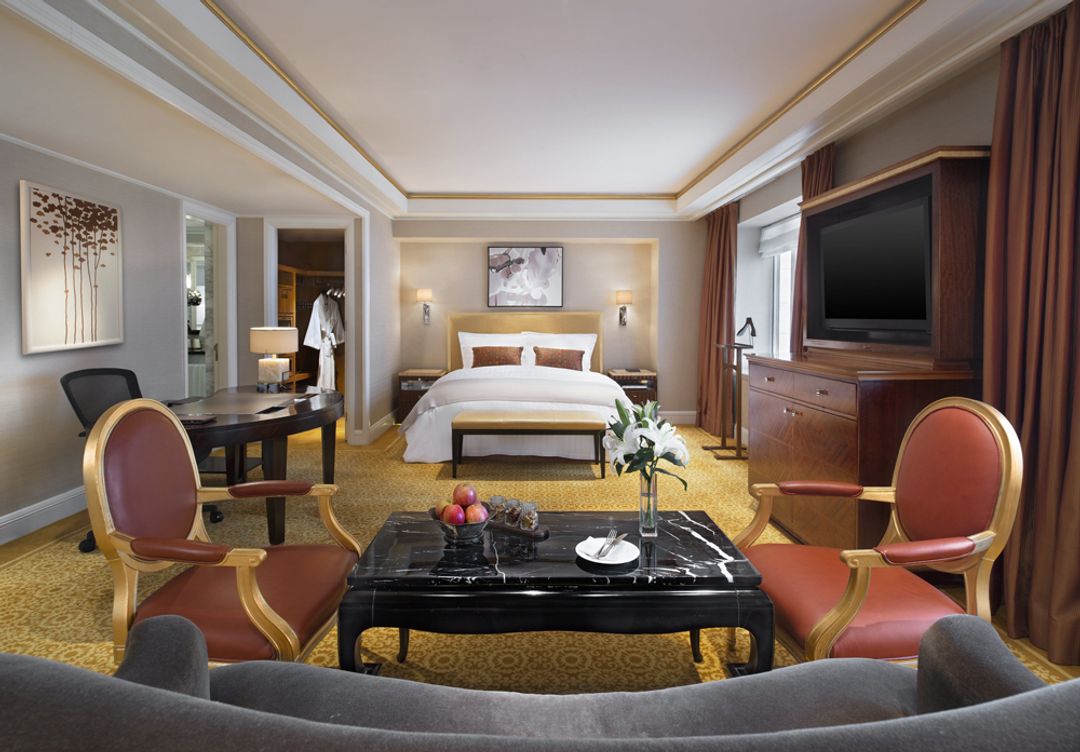
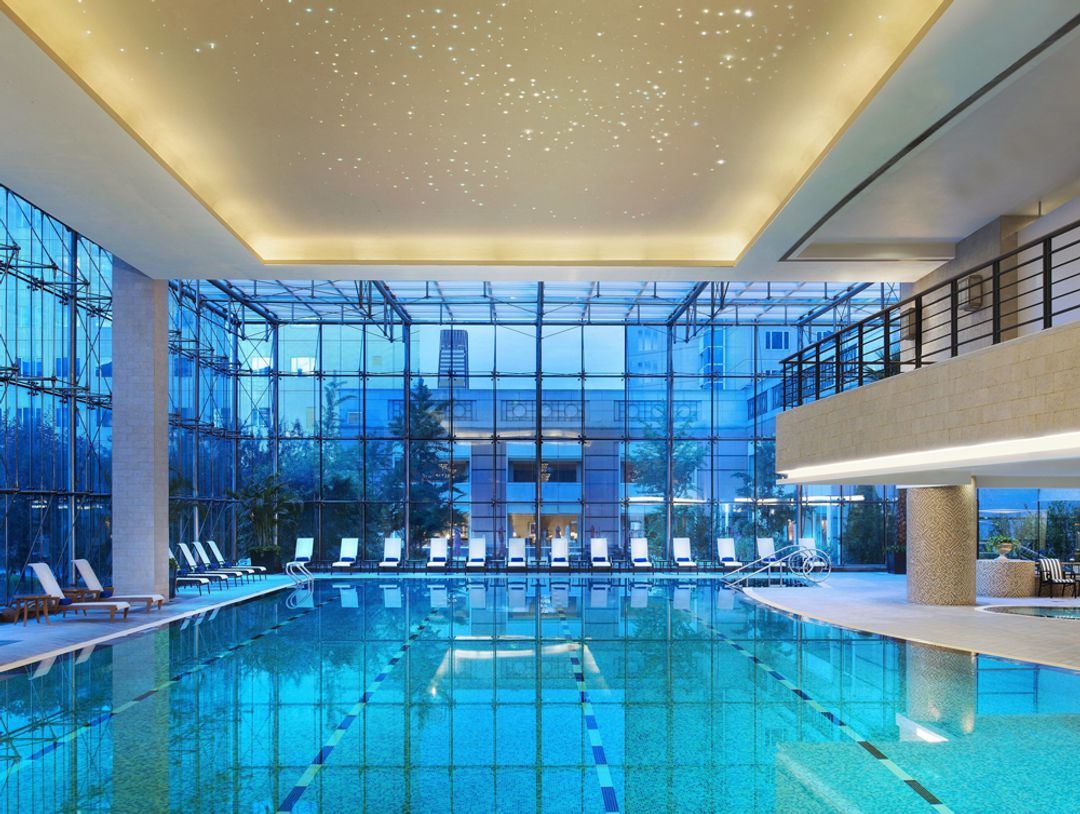
Planted in Beijing's Jianguomenwai diplomatic quarter, where embassies and international offices have defined the city's most formally composed streetscape since the 1970s, the St. Regis Beijing opened in 1997 as one of the first luxury hotels to establish itself within this charged institutional corridor. The 273-room tower, rising twenty-four floors above a low-slung granite podium, carries the measured classicism that Starwood and its design partners brought to the brand's Asian expansion — a curtain wall punctuated by regular fenestration, the whole assembly crowned by the interlocked SR crest that signals the brand's New York lineage from considerable distance. Inside, the hotel deploys the vocabulary of Gilded Age American club culture with considerable conviction. Guest rooms are furnished in warm mahogany cabinetry, their amber-toned carpets and terracotta silk drapery giving the interiors the atmosphere of a well-appointed Manhattan residential tower from the early twentieth century. Gold-leaf ceiling reveals run throughout the suites, while the sitting rooms arrange Louis XVI-inspired gilt armchairs around nero marquina marble coffee tables — a combination that telegraphs a particular kind of conservative luxury. The bar is the property's most atmospheric space: a coffered mahogany ceiling, herringbone parquet floor, and a long marble-topped counter lined with leather barrel chairs summon something close to a 1930s gentlemen's club. The indoor pool, by contrast, reaches for something more theatrical — a full-height steel-and-glass curtain wall flooding the natatorium with city light beneath a fiber-optic ceiling constellation.

Book with PB and get cash back
Kerry Hotel, Beijing - Image 1
Kerry Hotel, Beijing - Image 2
Kerry Hotel, Beijing - Image 3
Kerry Hotel, Beijing - Image 4
Kerry Hotel, Beijing - Image 5

Kerry Hotel, Beijing

Beijing • Central Business District • OPTIMIZE

avg. $154 / night

Includes $8 / night in cash back

Cash back is redeemable via Virtual Visa, Venmo, or bank transfer starting 24-48 hours after check-out

Kerry Hotel, Beijing Design Editorial

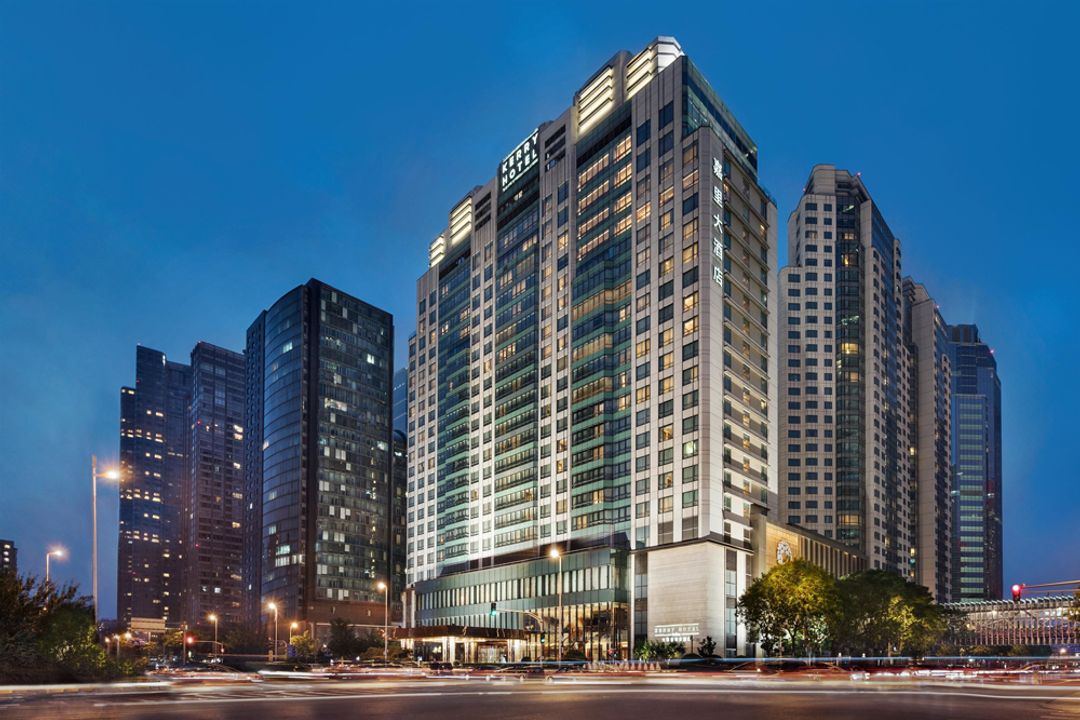
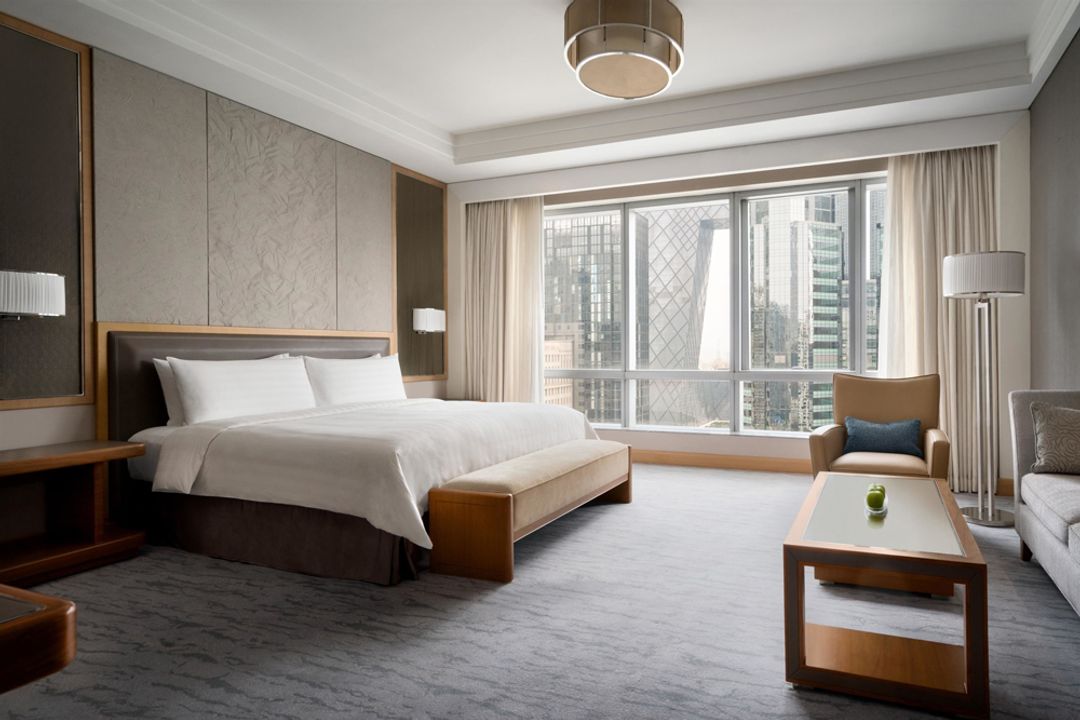
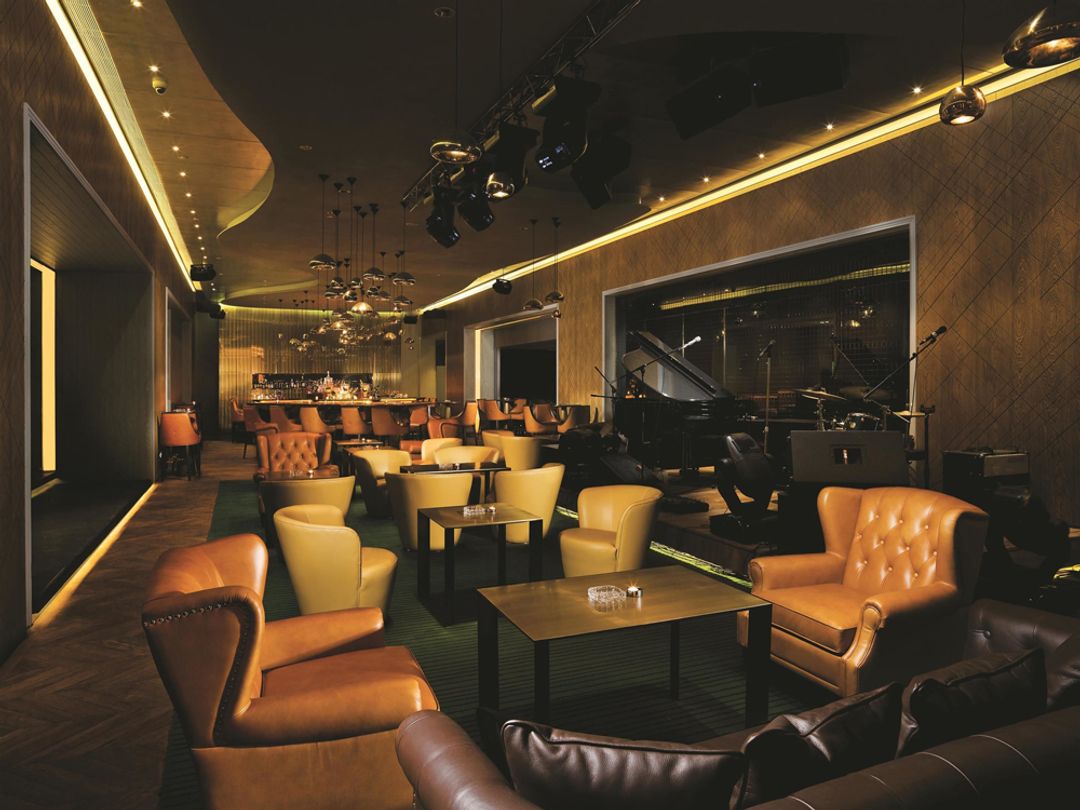
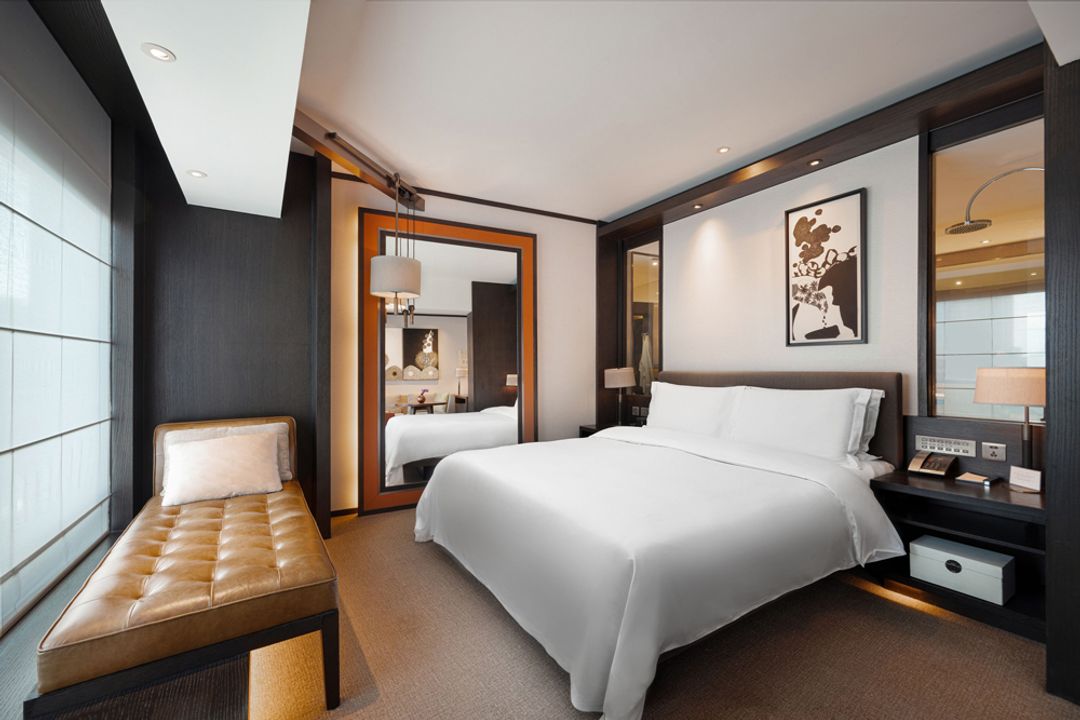
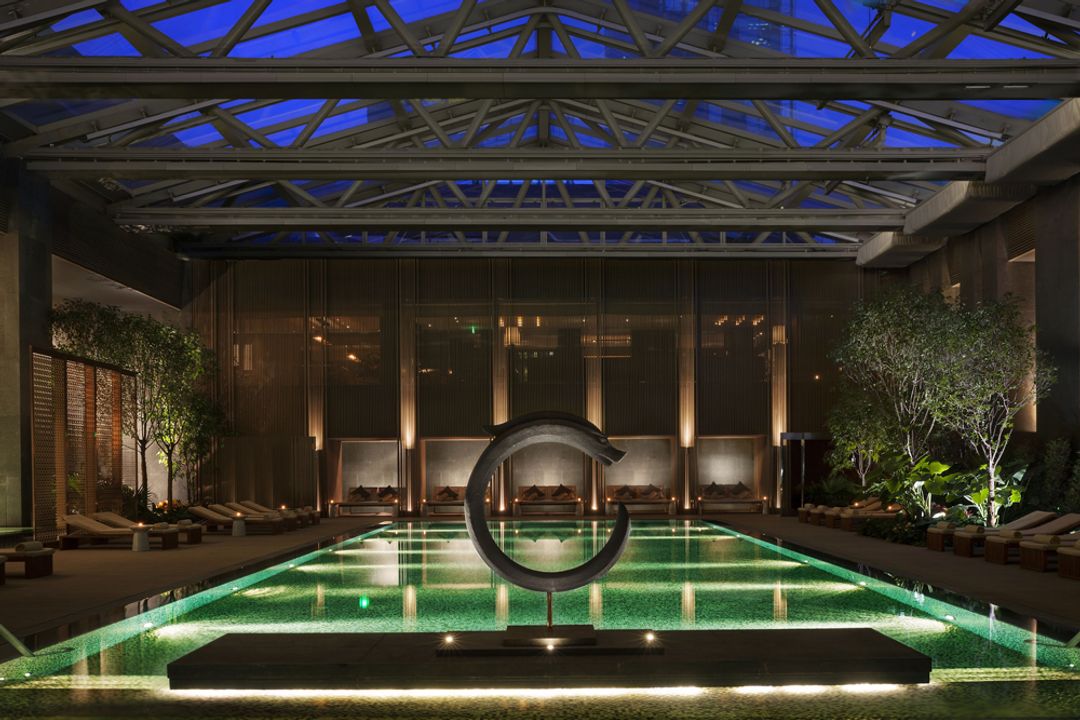
At the edge of Beijing's Central Business District, where the ring roads converge and the skyline thickens with towers competing for altitude, a 26-storey curtain-walled block rising from a low stone podium has served the district's deal-making class since Kerry Hotel Beijing opened in 2012. The facade's horizontal banding — pale stone spandrels alternating with floor-to-ceiling glazing — gives the exterior a measured cadence against its more aggressive neighbours, the building presenting as deliberate and corporate rather than showy, which suits its brief precisely. Inside, the interiors strike a balance familiar to Shangri-La's Kerry tier: warm walnut millwork and tray ceilings in the guestrooms, headboards set into textured panel surrounds, floors dressed in patterned carpet that absorbs the scale of rooms built generously for a business clientele. Traditional ink-wash paintings appear as framed artwork against the pale gold wall panels, threading a Chinese cultural reference through what is otherwise a comfortable international idiom. The jazz bar carries a different mood entirely — deep amber leather club chairs, tufted wingbacks, brass pendant clusters above a performance stage with a grand piano, the whole room shifting register toward a 1950s supper-club atmosphere. The indoor lap pool, set beneath a vaulted ceiling of curved aluminium panels and travertine columns, gives the leisure floor an almost civic scale, its arched geometry softening what could have been purely functional. With 487 rooms across its tower floors, the hotel functions as a self-contained quarter within the district's relentless vertical grid.
Book with PB and get cash back
Conrad Beijing - Image 1
Conrad Beijing - Image 2
Conrad Beijing - Image 3
Conrad Beijing - Image 4
Conrad Beijing - Image 5

Conrad Beijing

Beijing • Chaoyang District • OPTIMIZE

avg. $180 / night

Includes $9 / night in cash back

Cash back is redeemable via Virtual Visa, Venmo, or bank transfer starting 24-48 hours after check-out

Hilton Honors™ property

Conrad Beijing Design Editorial

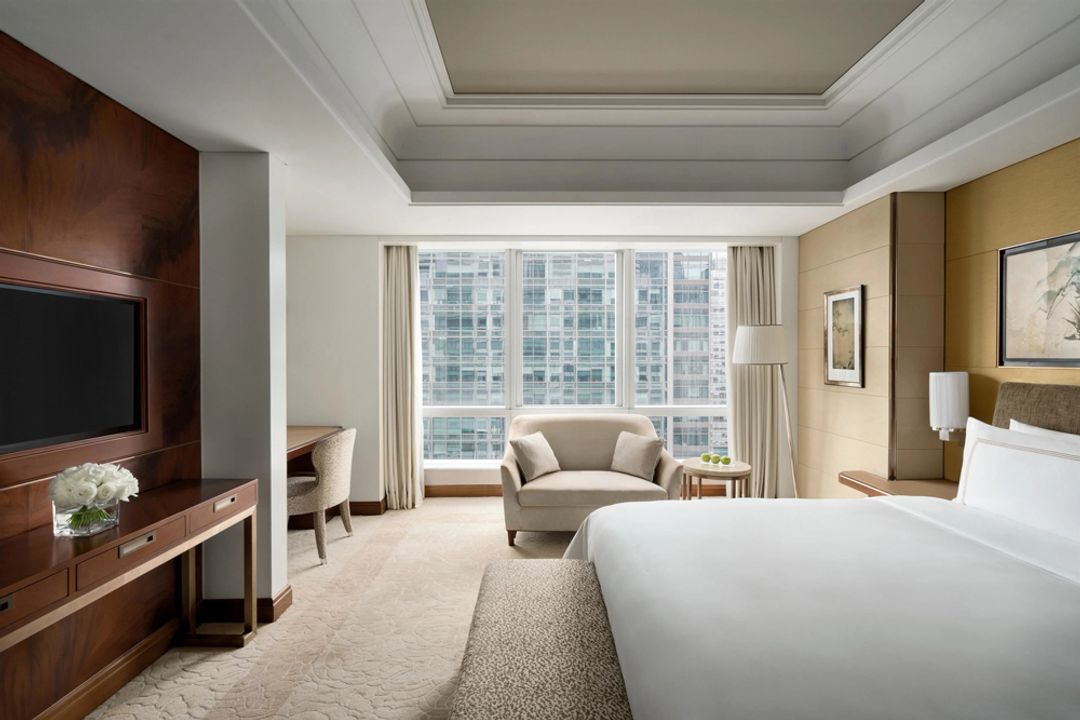
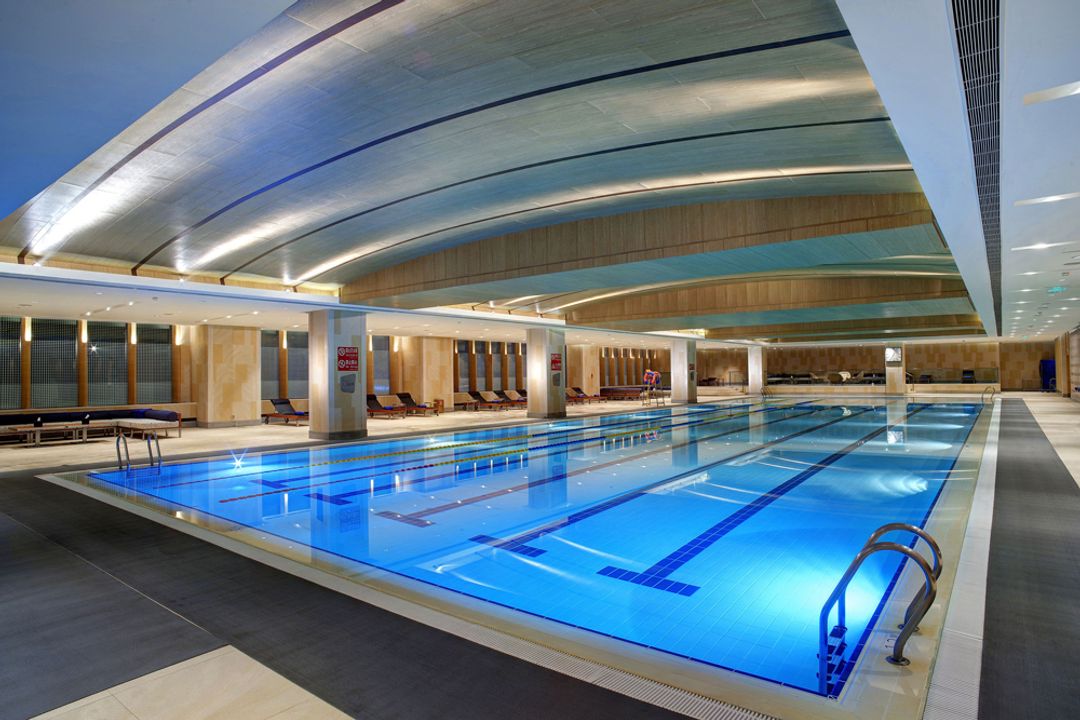
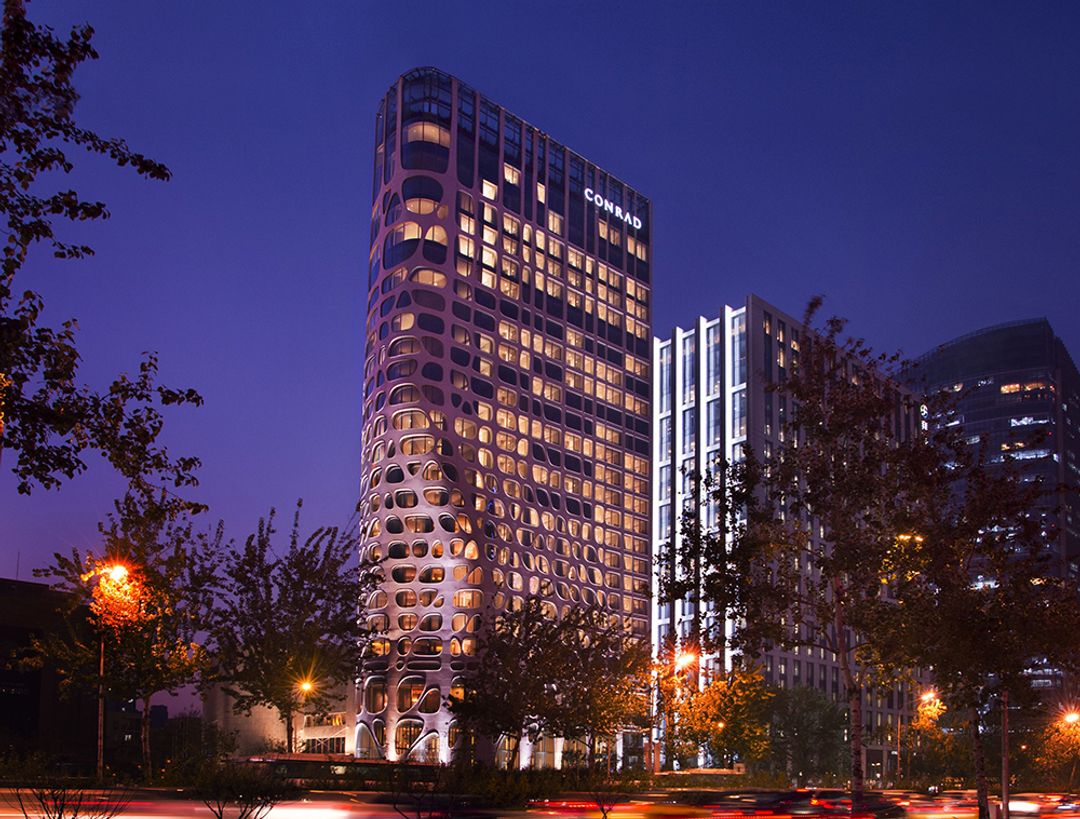
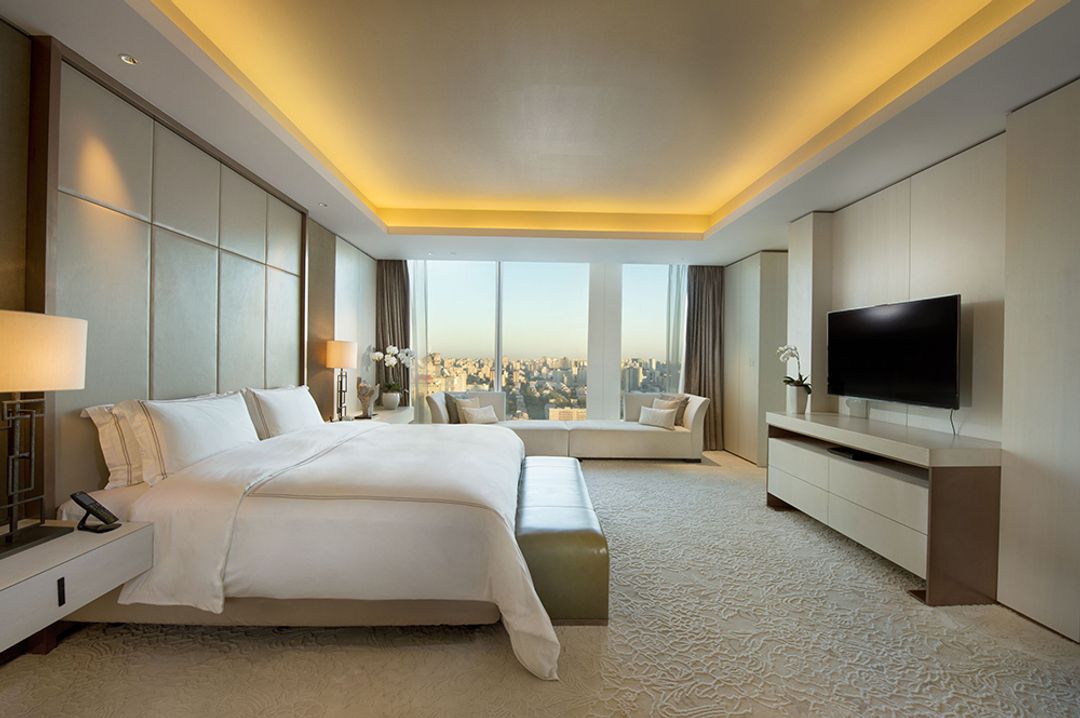
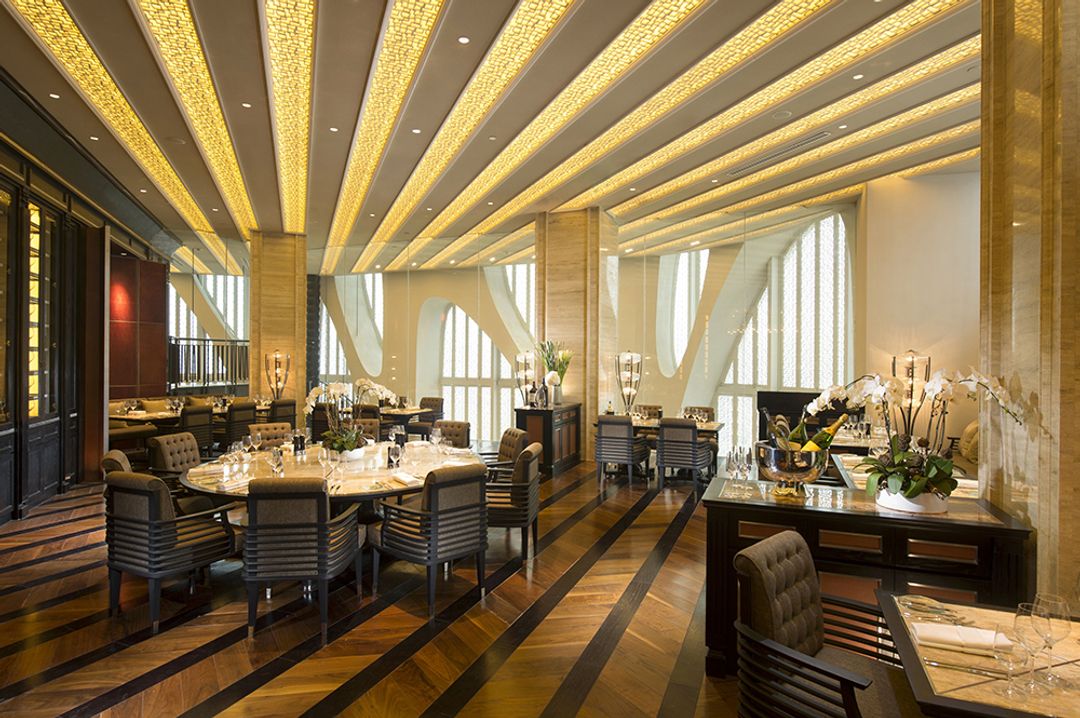
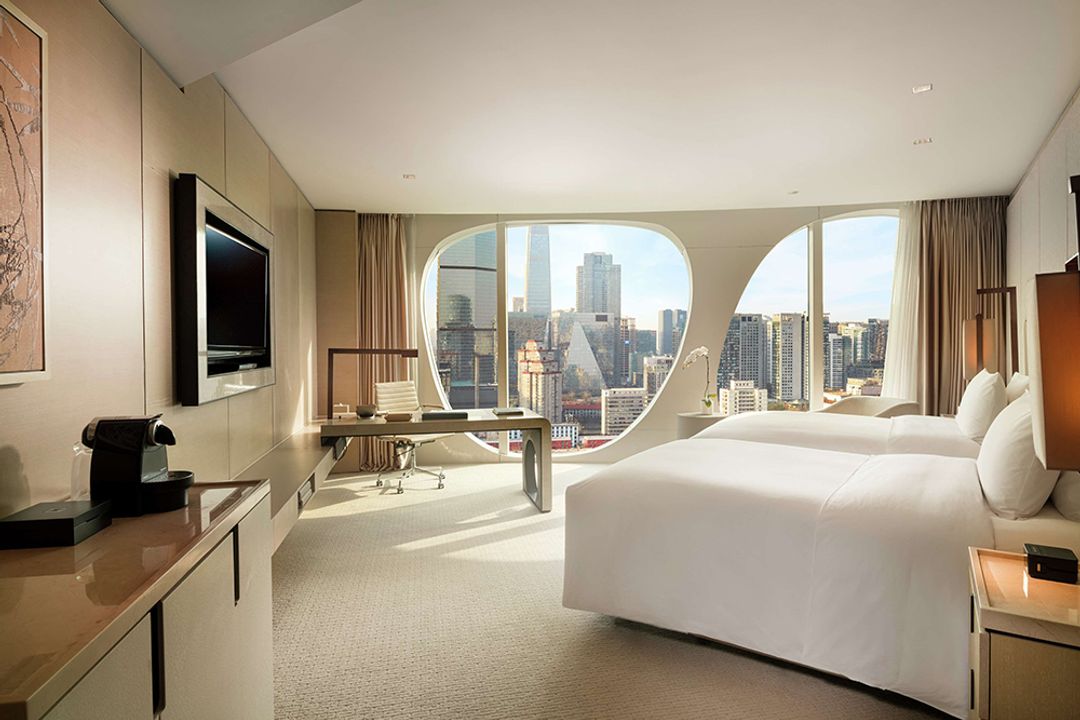
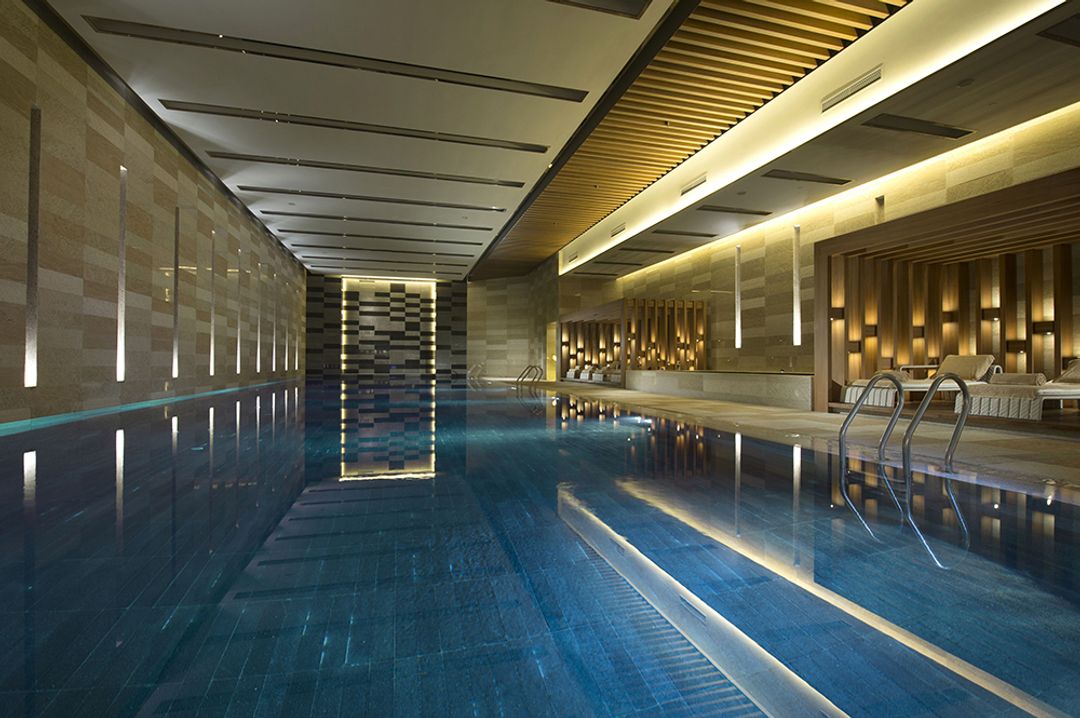
That cellular facade — a tower wrapped in a continuous pattern of rounded, softly squared apertures that press against the curtain wall like cells under a microscope — makes the building housing Conrad Beijing one of the more architecturally distinctive hotel exteriors in Chaoyang's otherwise predictable skyline. Designed by Skidmore, Owings & Merrill and completed in 2013, the 34-floor tower delivers 281 rooms and suites across the upper floors, the biomorphic window geometry of the lower podium levels giving way to a more conventional glass curtain wall above, a transition visible clearly in the night exterior images. The interiors were handled by Hirsch Bedner Associates, whose Beijing office calibrated the rooms toward a restrained continental palette — warm taupe carpeting with low-relief floral patterning, leather-panelled headboards, cream lacquered millwork, and cove lighting that softens the considerable ceiling heights. The signature room category makes the building's architectural conceit interior: those rounded apertures appear as floor-to-ceiling oval windows framing direct views toward the CCTV Tower and the CBD cluster, turning the structural skin into a picture frame. The restaurant deploys a different register entirely — parquet laid in bold dark-inlaid stripes, button-tufted dining chairs in tobacco tweed, and a coffered ceiling of backlit gold mosaic running in dramatic parallel bands across the room. The indoor pool extends the material language of striated travertine and warm-toned timber slat ceilings into a long, corridor-like volume whose uplighting doubles in the water's surface.

Book with PB and get cash back
Four Seasons Beijing - Image 1
Four Seasons Beijing - Image 2
Four Seasons Beijing - Image 3
Four Seasons Beijing - Image 4
Four Seasons Beijing - Image 5

Four Seasons Beijing

Beijing • Chaoyang District • OPTIMIZE

avg. $215 / night

Includes $11 / night in cash back

Cash back is redeemable via Virtual Visa, Venmo, or bank transfer starting 24-48 hours after check-out

Four Seasons Beijing Design Editorial

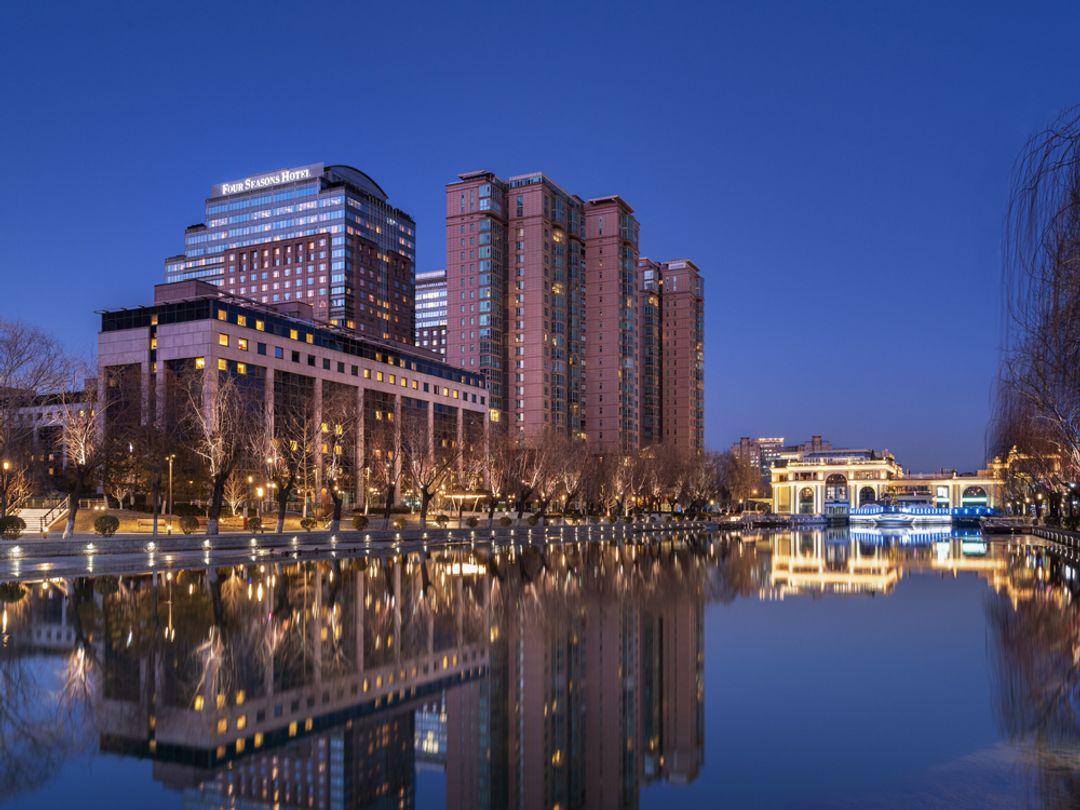
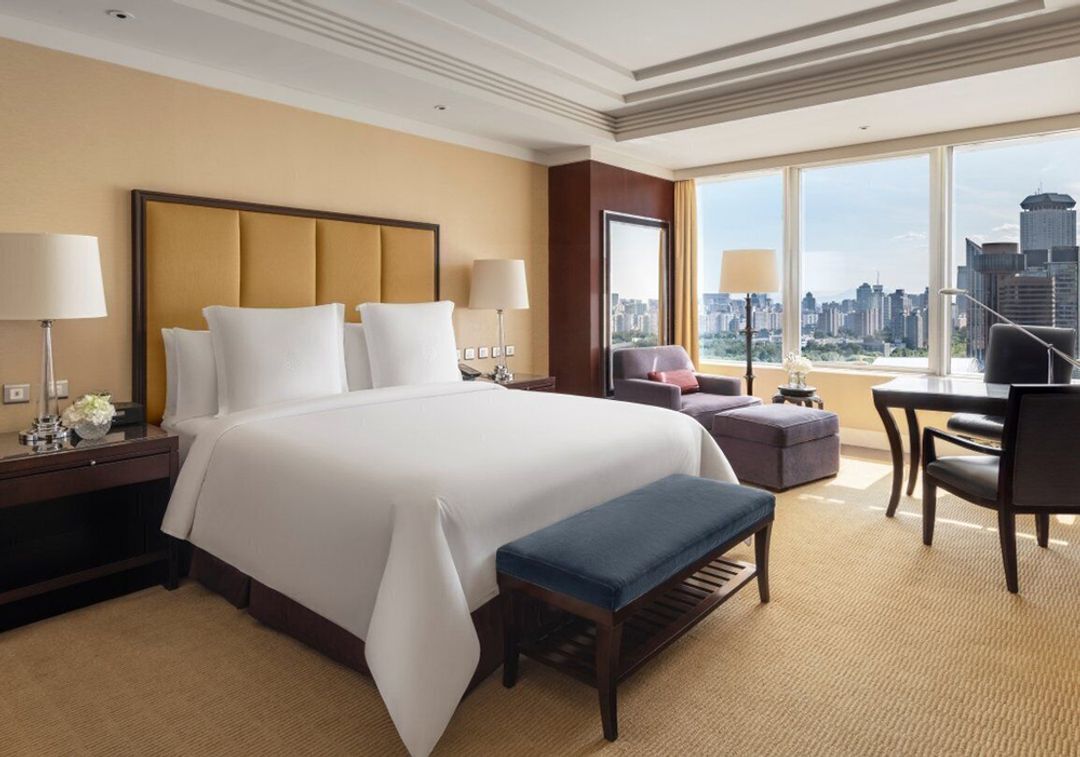
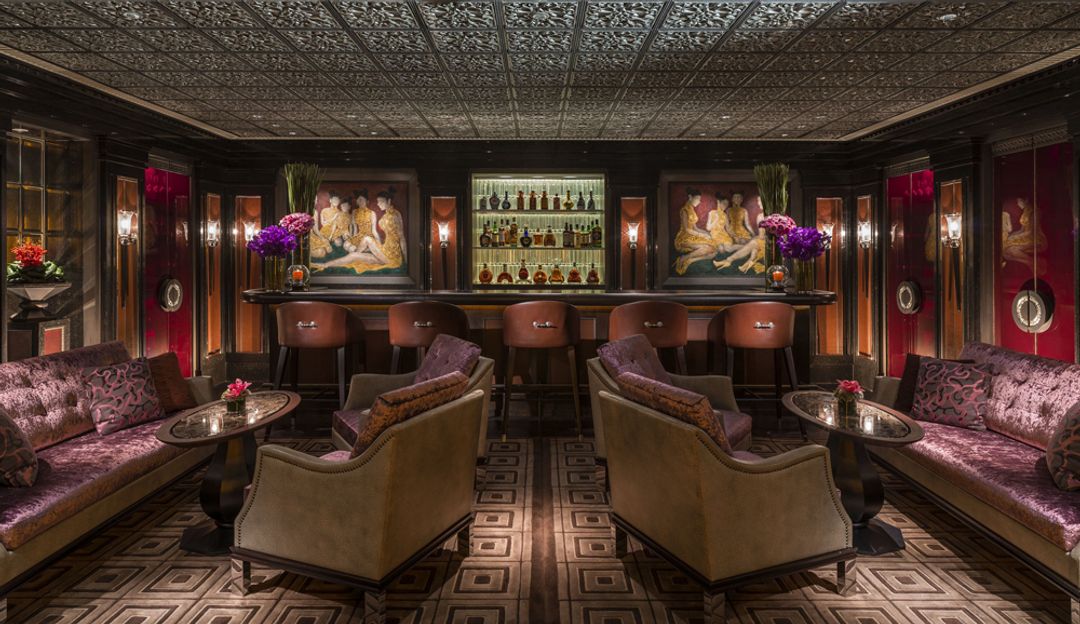
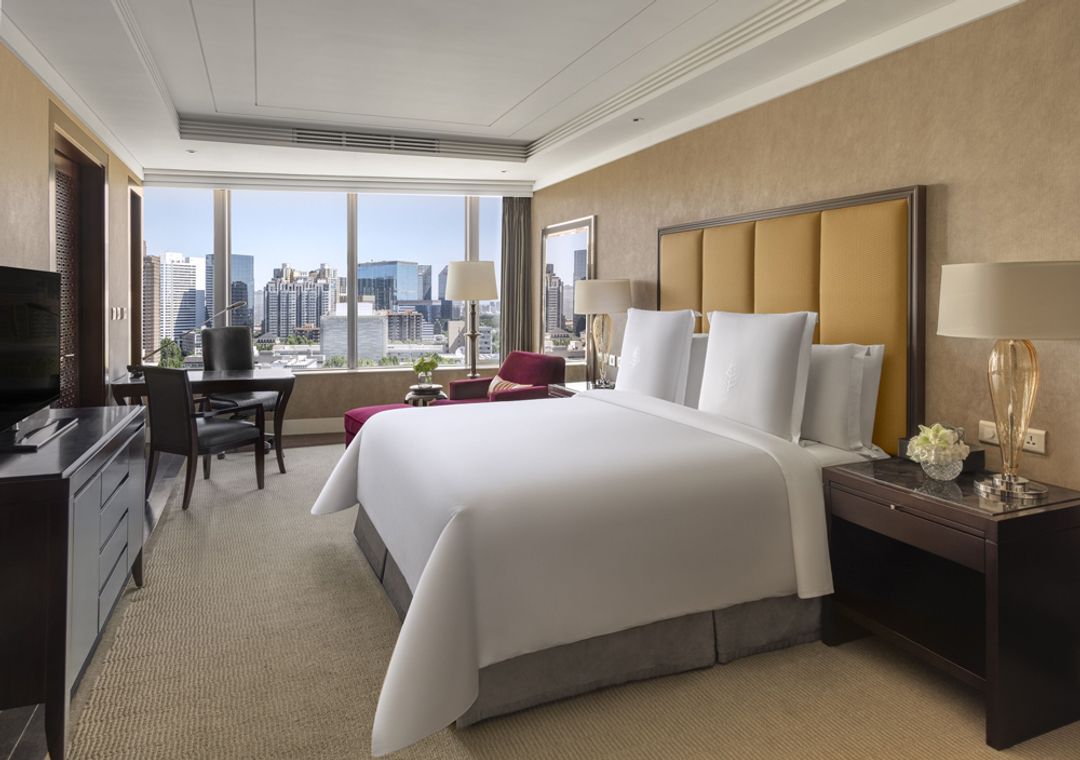
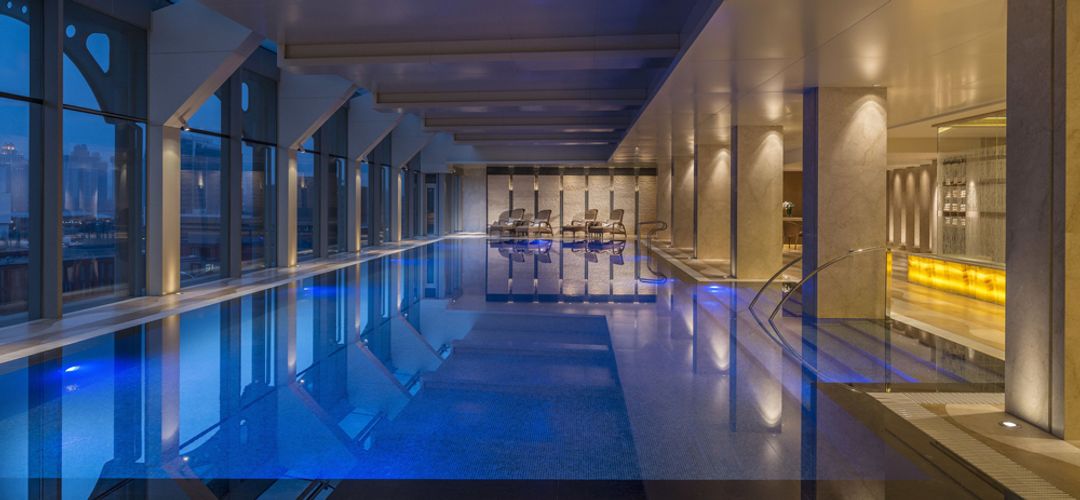
Reflected in the still waters of Liangma River at dusk, the terracotta-toned tower complex housing the Four Seasons Hotel Beijing presents one of Chaoyang's more settled pieces of millennial-era architecture — warm-hued masonry and classical massing that references Beijing's institutional grandeur without reaching for the glass-curtain-wall vocabulary that defines most of its neighbours along the diplomatic quarter's northern edge. The hotel, which opened in 2012 within the mixed-use Liangmaqiao development, contains 313 rooms and suites across its upper floors, with views across the city's low-rise northern residential fabric toward the CBD towers on the southern horizon. Inside, the interiors navigate a familiar tension in contemporary Chinese luxury hospitality — how to signal both international polish and local cultural register simultaneously. The guestrooms shown here resolve that question conservatively: amber-upholstered headboards in sectioned panels, dark-stained walnut case goods, sisal-weave carpeting, and chrome-based table lamps establish a palette that sits closer to Four Seasons' global house standard than to any Beijing-specific design statement. The bar, by contrast, commits fully to a different register entirely — pressed-tin ceiling panels, lacquered dark walls inset with fuchsia-mirrored panels, and figurative oil paintings in a chinoiserie-adjacent Deco idiom that gives the room genuine atmosphere. The upper-floor lap pool, lined in blue mosaic tile and framed by full-height glazing overlooking the river, is among the more quietly resolved spaces in the building.
Book with PB and get cash back
The Ritz-Carlton, Beijing - Image 1
The Ritz-Carlton, Beijing - Image 2
The Ritz-Carlton, Beijing - Image 3
The Ritz-Carlton, Beijing - Image 4
The Ritz-Carlton, Beijing - Image 5

The Ritz-Carlton, Beijing

Beijing • Chaoyang District • OPTIMIZE

avg. $227 / night

Includes $12 / night in cash back

Cash back is redeemable via Virtual Visa, Venmo, or bank transfer starting 24-48 hours after check-out

Marriott Bonvoy® property

The Ritz-Carlton, Beijing Design Editorial

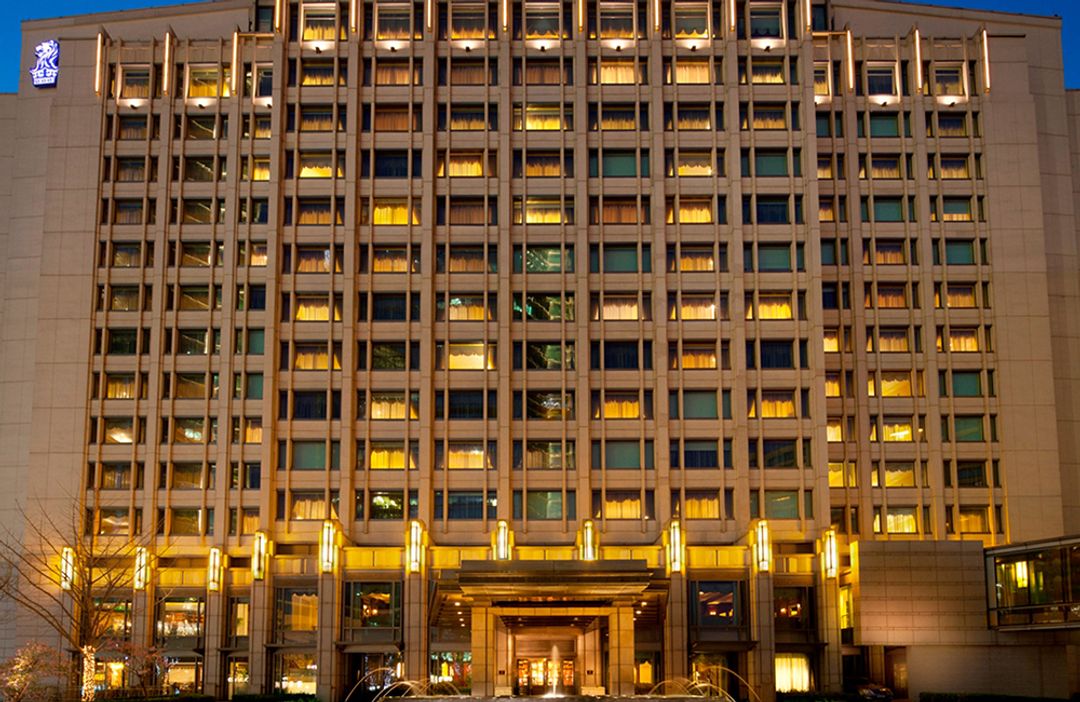
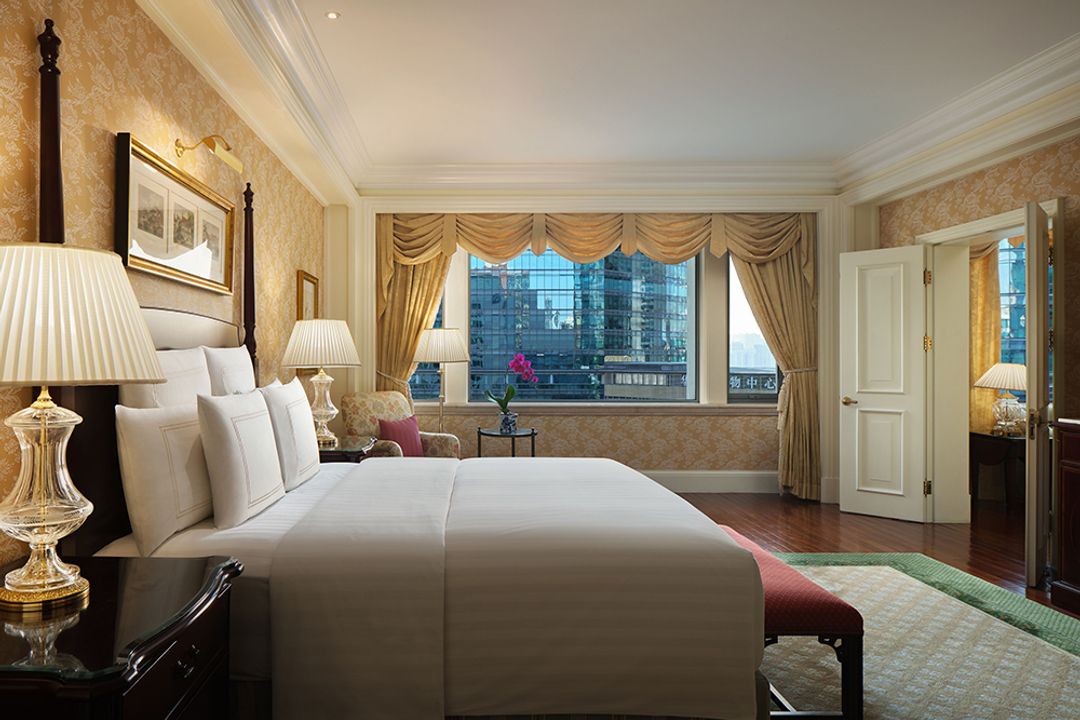
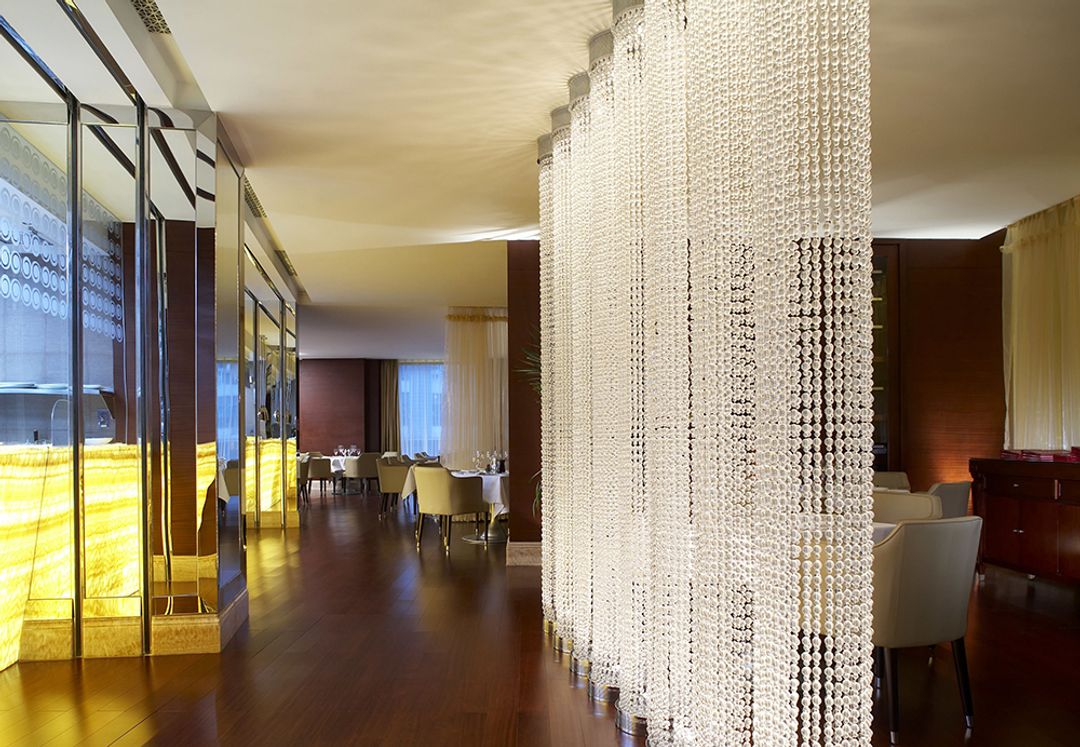
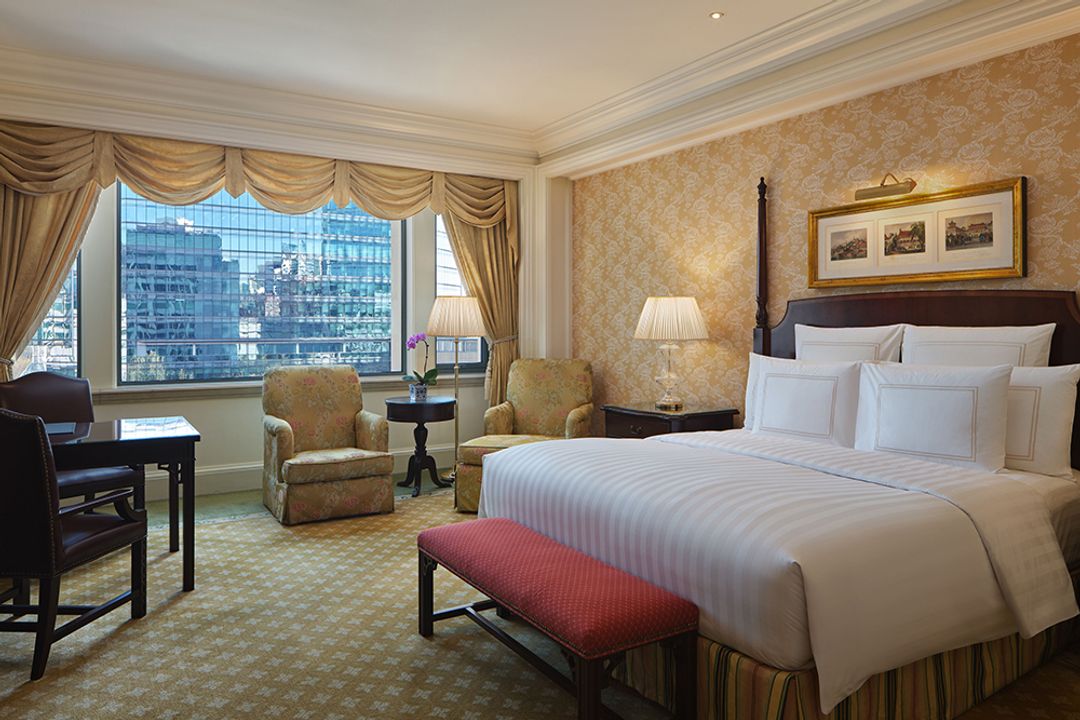
Anchoring the glassy corporate landscape of Beijing's Financial Street extension in Chaoyang, a limestone-clad tower rising seventeen floors presents the kind of classically inflected massing that the Ritz-Carlton brand deployed across its Asian openings of the mid-2000s — formal, symmetrical, warm-lit at the base, with a porte-cochère framed by vertical pilasters that signal arrival before you step through the doors. The Ritz-Carlton Beijing, Financial Street opened in 2006 across from its sister property, and this Chaoyang outpost followed, its facade grid of recessed windows and cream stone carrying an authority that feels closer to postmodern civic architecture than conventional hotel building. Inside, the interiors work a language of darkened mahogany four-poster beds, damask-patterned wallcovering in amber and ivory, pleated silk lampshades, and crystal table lamps with gilded bases — a vocabulary that draws from English country house precedent filtered through the formal expectations of Beijing's international business traveller. Draped swag valances frame views across the district's glass curtain walls, a collision of registers the rooms make no attempt to resolve. The dining spaces shift register entirely: backlit honey onyx panels glow against polished dark timber floors, and cascading crystal bead columns serve as room dividers, trading the bedroom's Georgian warmth for something considerably more contemporary. The indoor pool level, lined in limestone-clad columns with wall sconces and mosaic-tiled water, completes a property that moves between multiple design idioms with the confidence, if not always the coherence, of a major international address.
Book with PB and get cash back
The PuXuan Hotel and Spa - Image 1
The PuXuan Hotel and Spa - Image 2
The PuXuan Hotel and Spa - Image 3
The PuXuan Hotel and Spa - Image 4
The PuXuan Hotel and Spa - Image 5

The PuXuan Hotel and Spa

Beijing • Wangfujing District • OPTIMIZE

avg. $264 / night

Includes $14 / night in cash back

Cash back is redeemable via Virtual Visa, Venmo, or bank transfer starting 24-48 hours after check-out

LHW Leaders Club property

The PuXuan Hotel and Spa Design Editorial

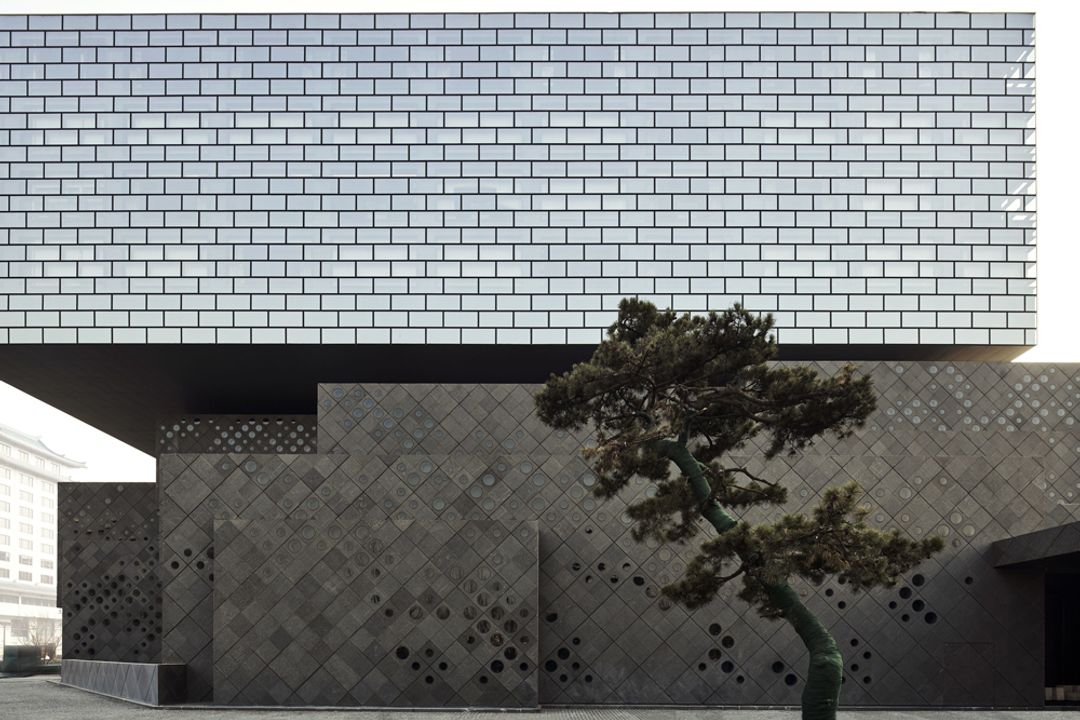
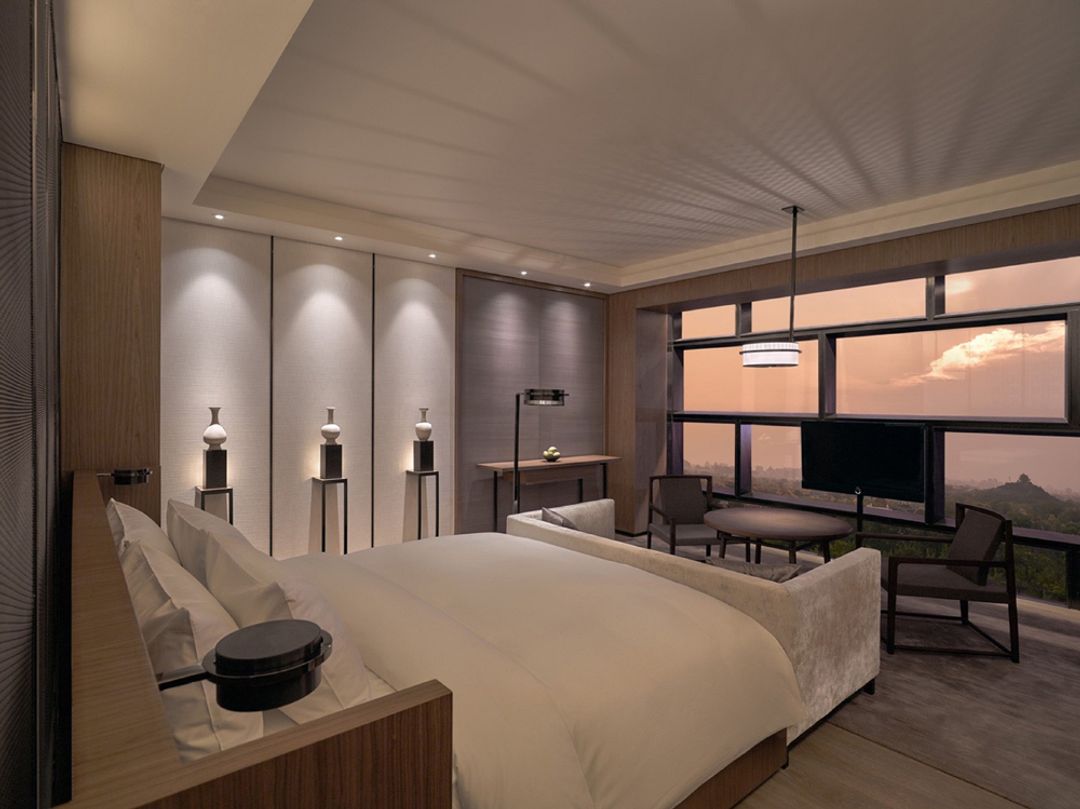
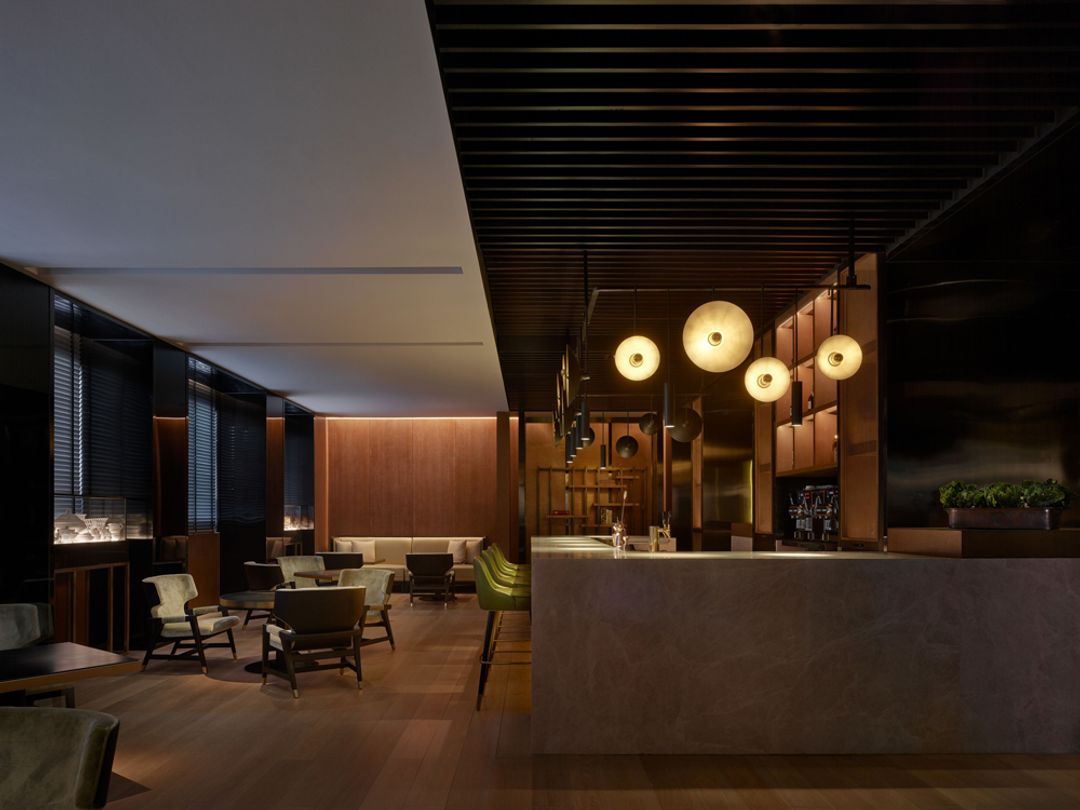
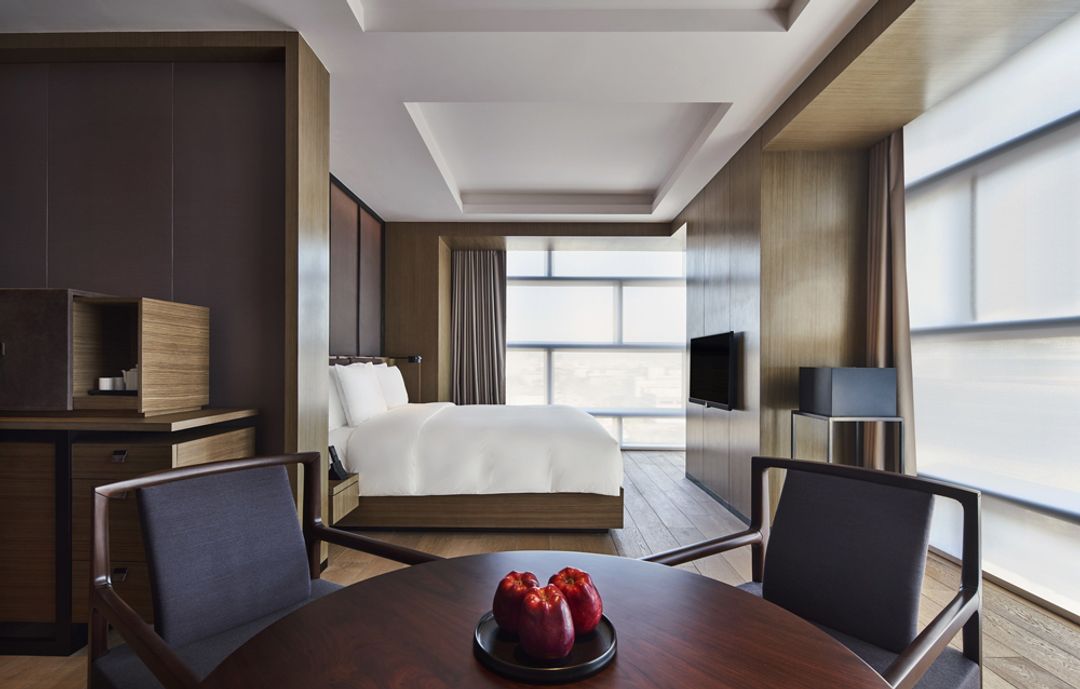
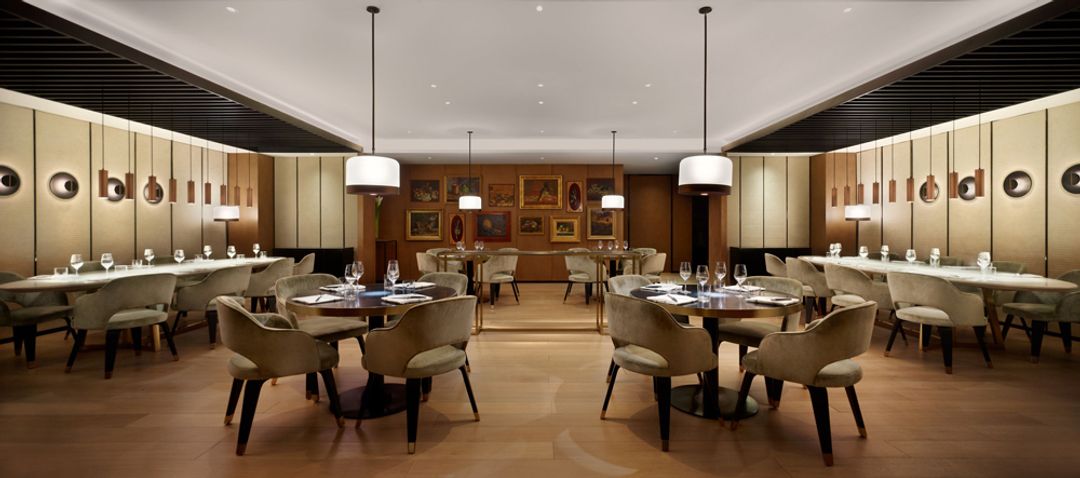
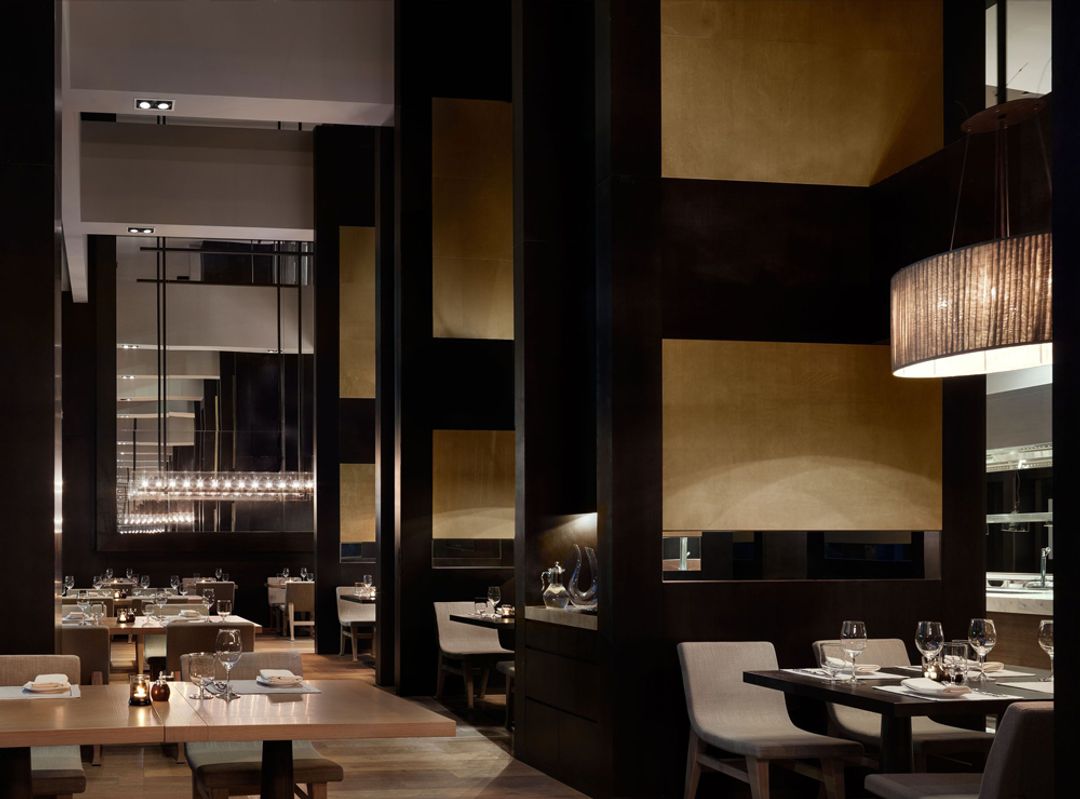
Two tectonic languages collide at the entrance to The PuXuan Hotel and Spa: a lower plinth clad in dark diamond-patterned ceramic tile, its surface punctured by circular perforations in a rhythm drawn from traditional Chinese lattice screens, topped by a cantilevered upper volume wrapped in pale rectangular ceramic panels that carry the geometry of hutong courtyard brickwork into an entirely contemporary register. The architecture, designed by Kengo Kuma and Associates, sits on Wangfujing — Beijing's most historically charged commercial thoroughfare — and manages the considerable feat of feeling rooted without resorting to pastiche. A solitary trained pine at the building's base, visible in the exterior photographs, reinforces the Japanese-influenced sensibility that runs through Kuma's practice, though the material grammar here draws more from northern Chinese craft traditions than from any imported vocabulary. Inside, the interiors — handled by CCD (Cheng Chung Design) — translate that same discipline into warm timber paneling, coffered ceilings, and rooms furnished with dark-framed chairs whose proportions echo mid-century Chinese furniture. Display niches in the guest suites hold celadon-glazed vessels against woven wall panels, while the bar area counterpoints the restraint elsewhere with copper-toned shelving, globe pendant lights in frosted glass, and dark slatted ceilings that compress the atmosphere into something closer to a private library than a hotel lounge. The dining room, with its velvet tub chairs arranged around marble-topped tables and a gallery of Chinese oil paintings anchoring the rear wall, carries the whole property's central argument: that contemporary luxury and deep cultural specificity are not competing propositions.

Best hotels in Beijing | A Curated Visual Guide to Top Stays