Best hotels in Tokyo, Japan | Visually Compare Top Stays Side-by-Side
Welcome to PressBeyond - a curated visual guide to design-driven hotels and the fastest way to compare them.
An Overview of the Boutique & Luxury Hotel Landscape in Tokyo, Japan
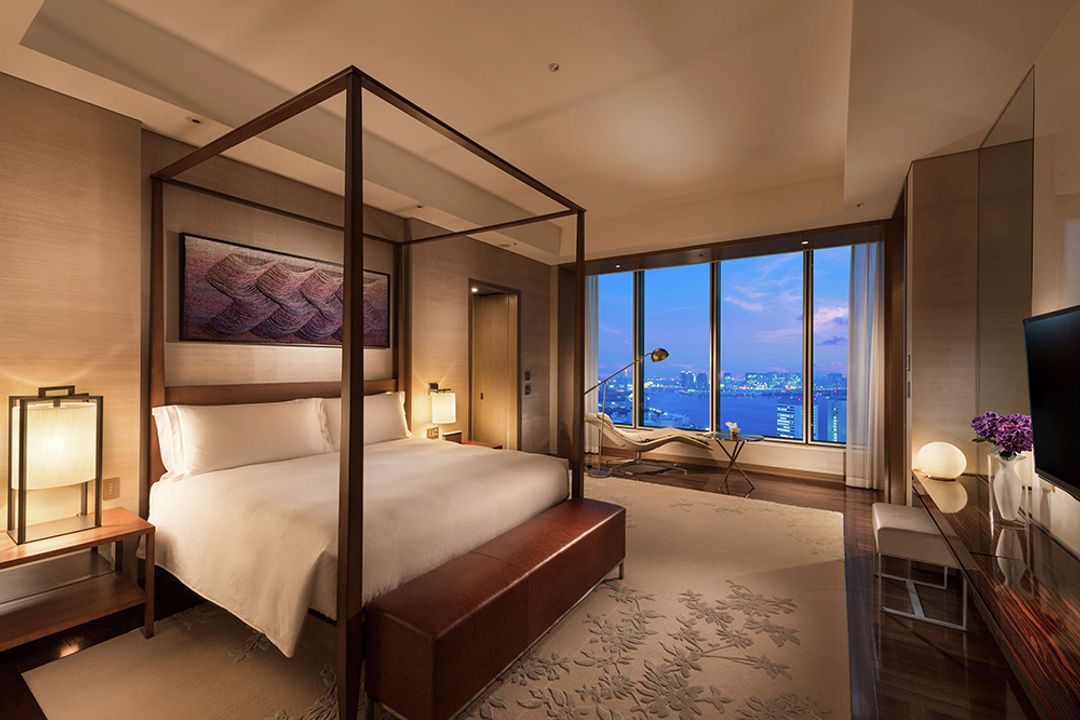
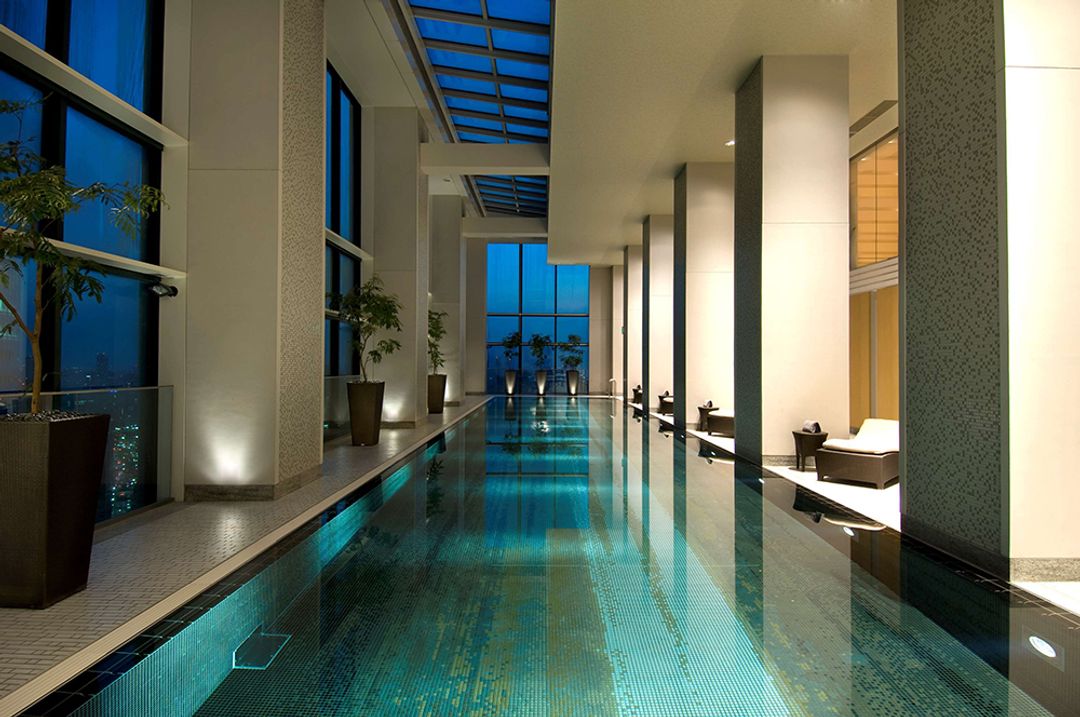
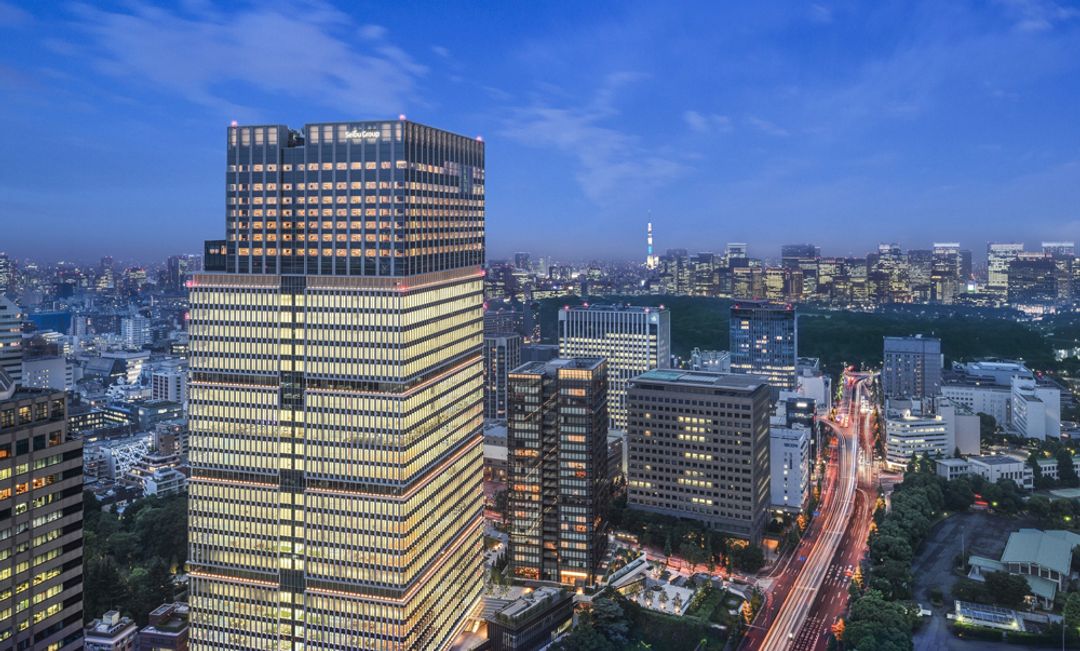
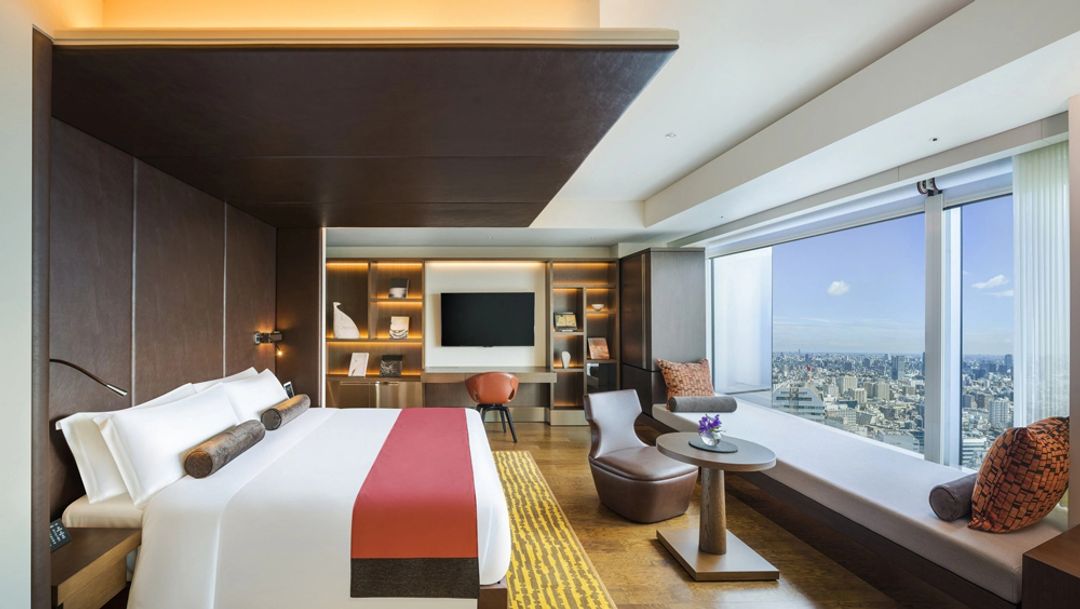
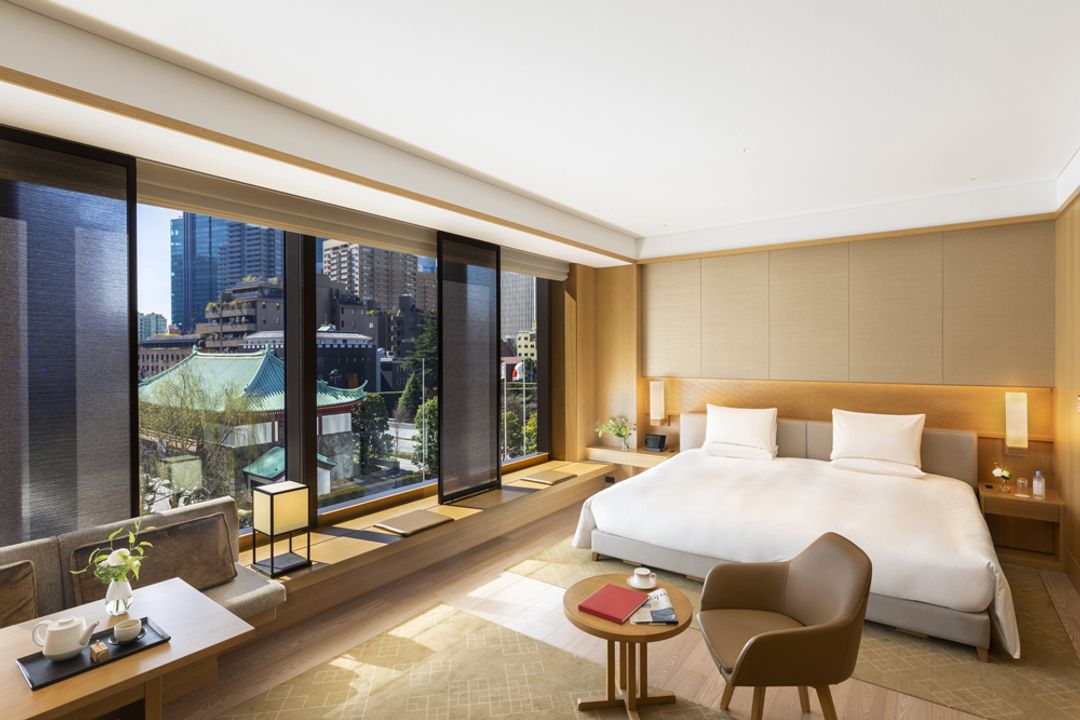
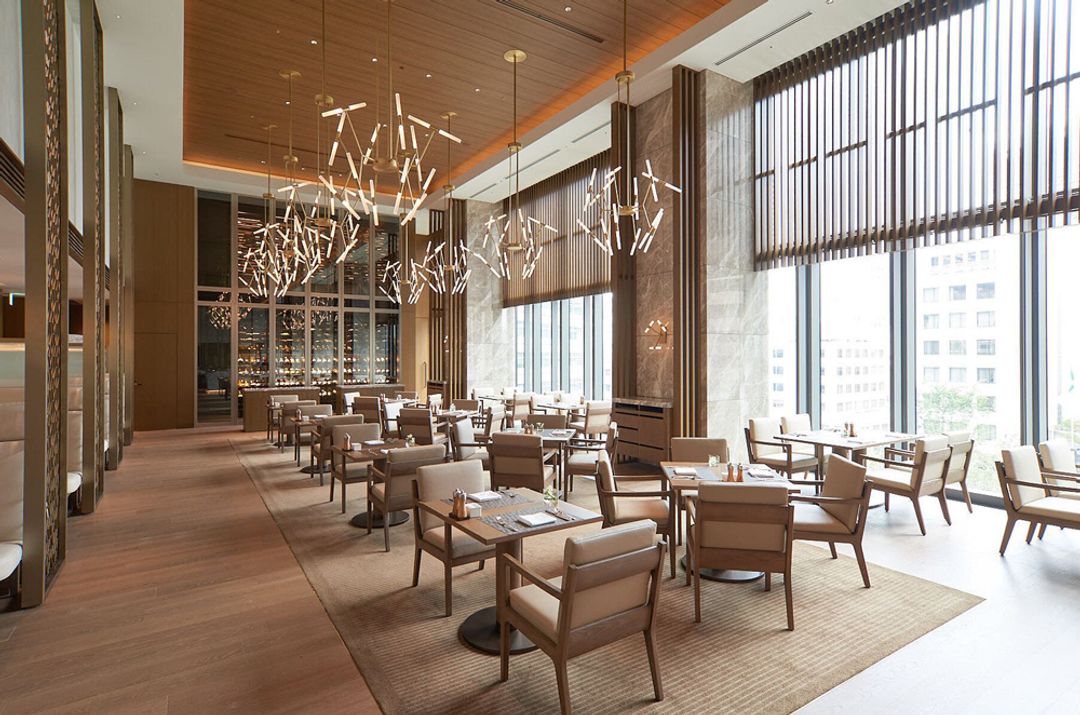
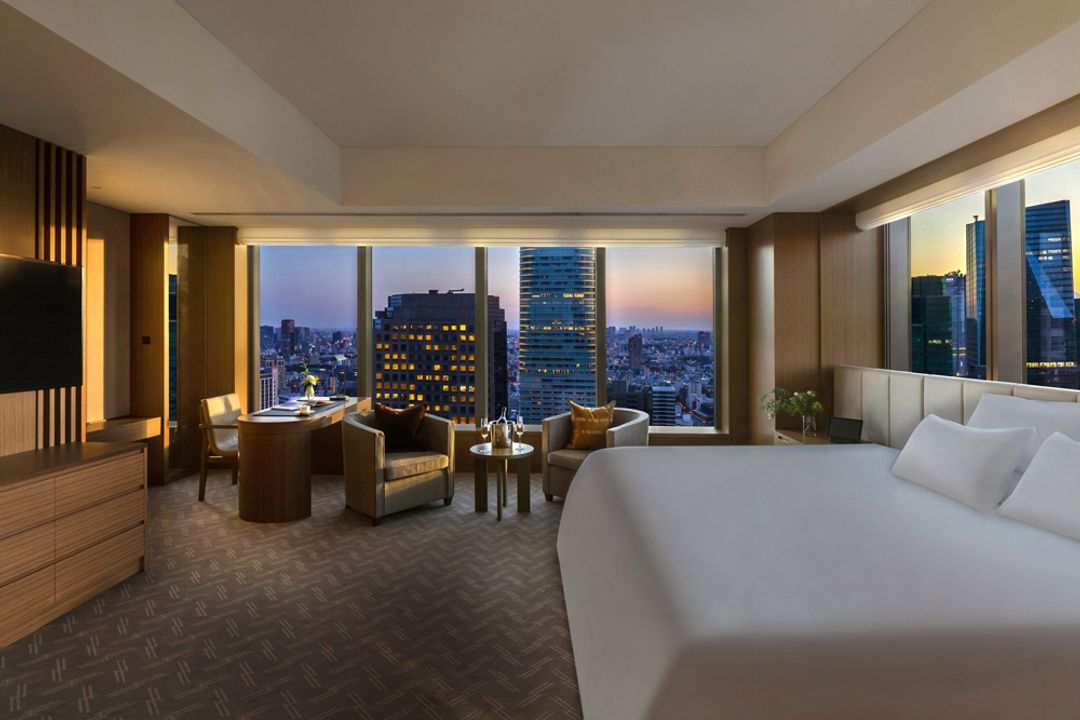
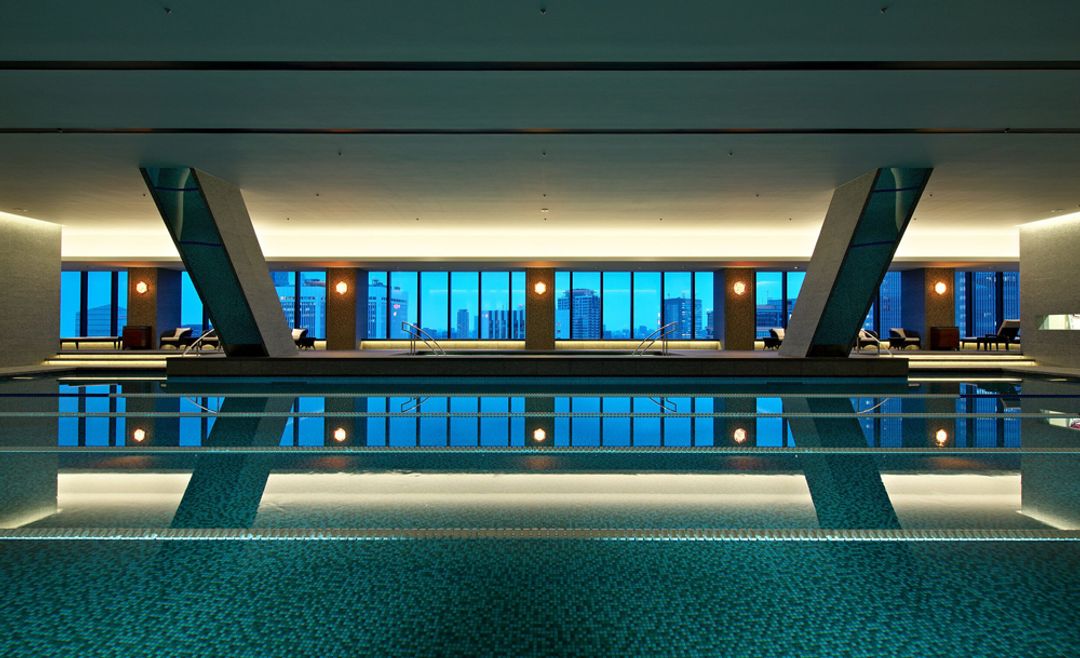
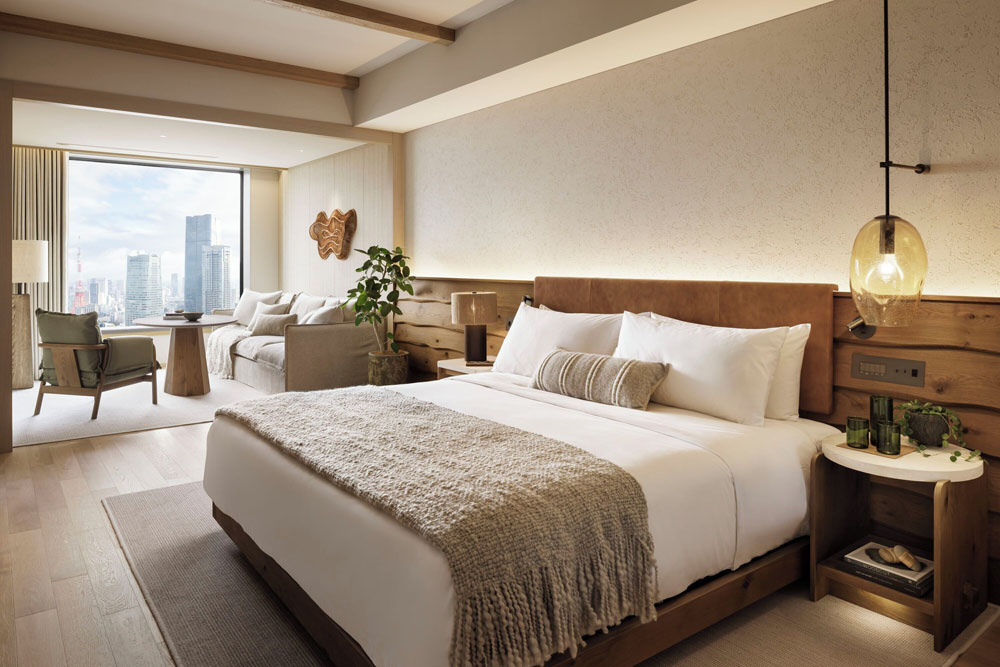
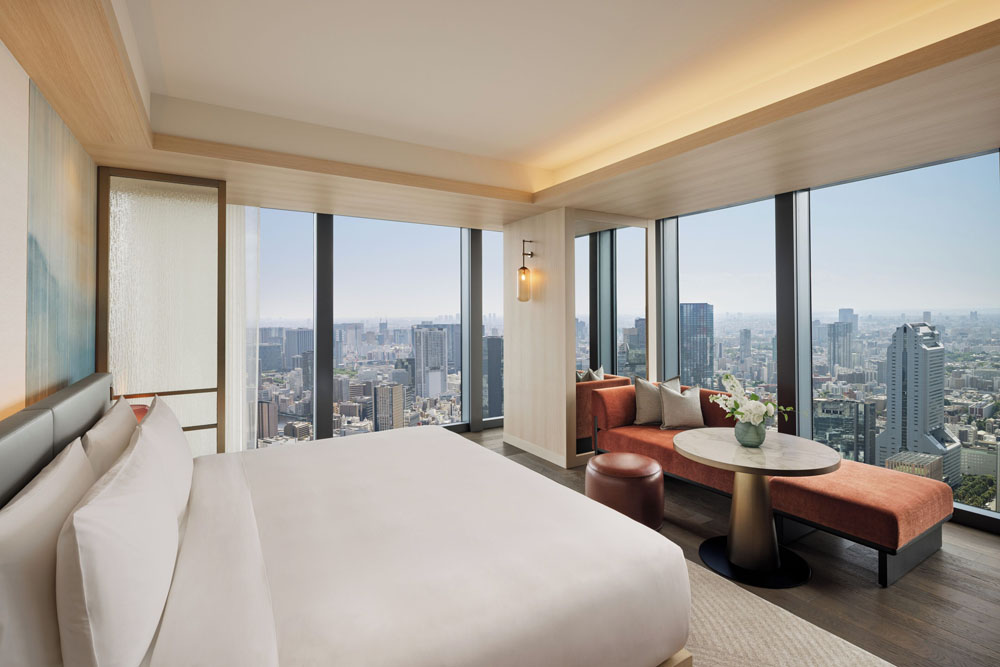
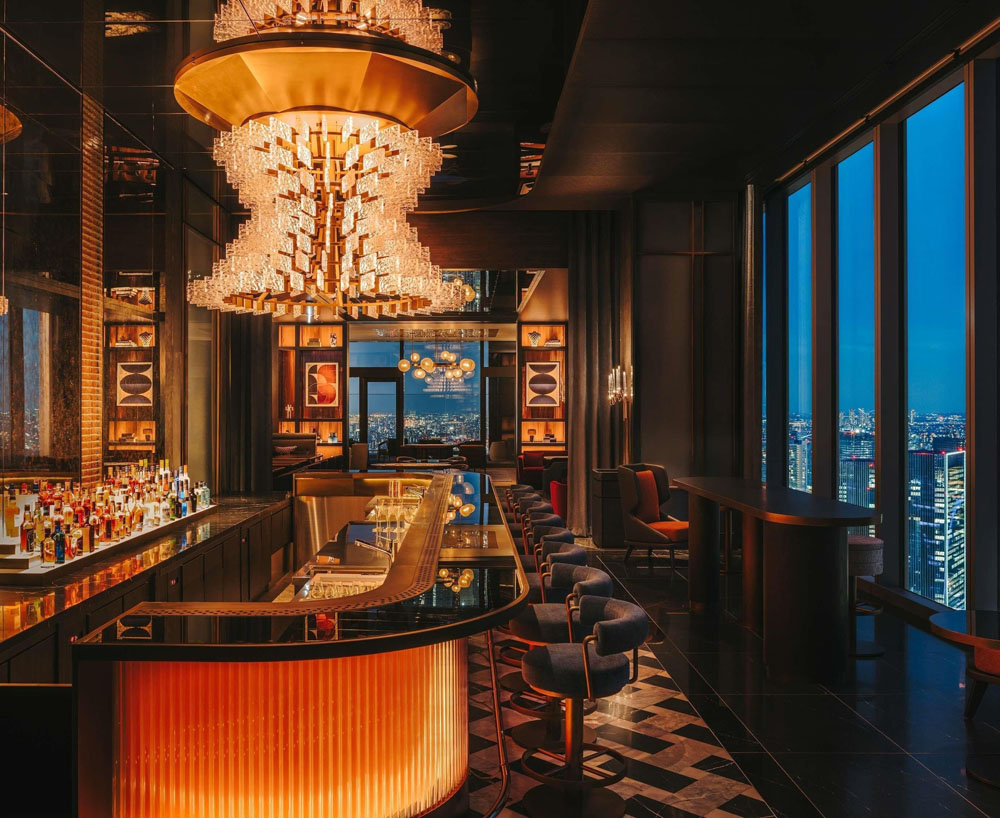
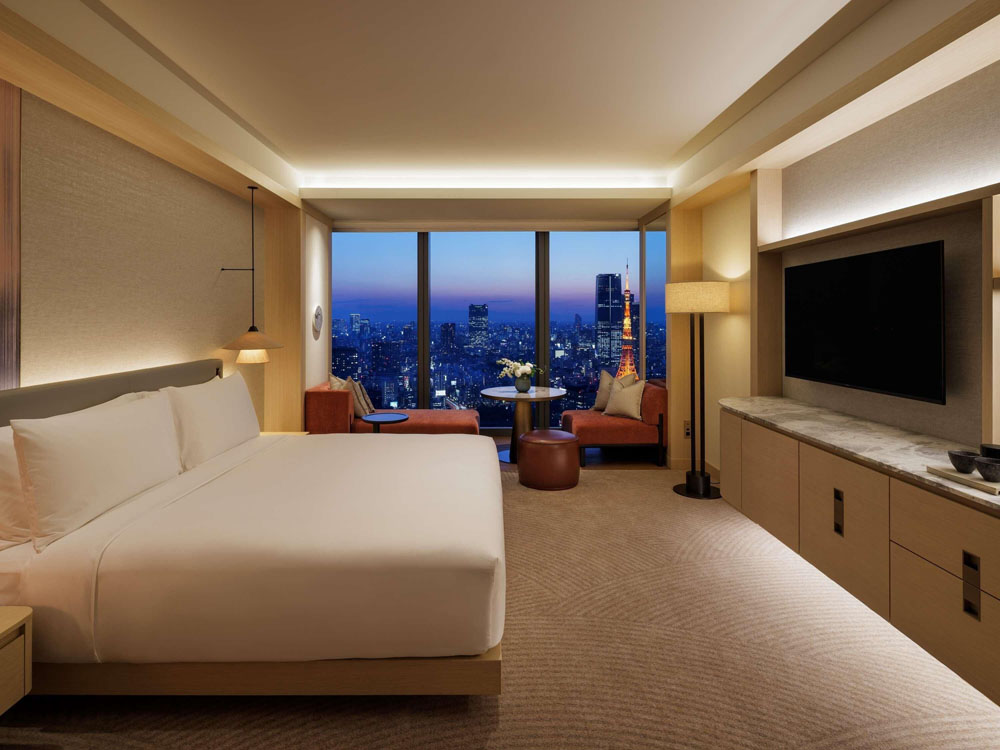
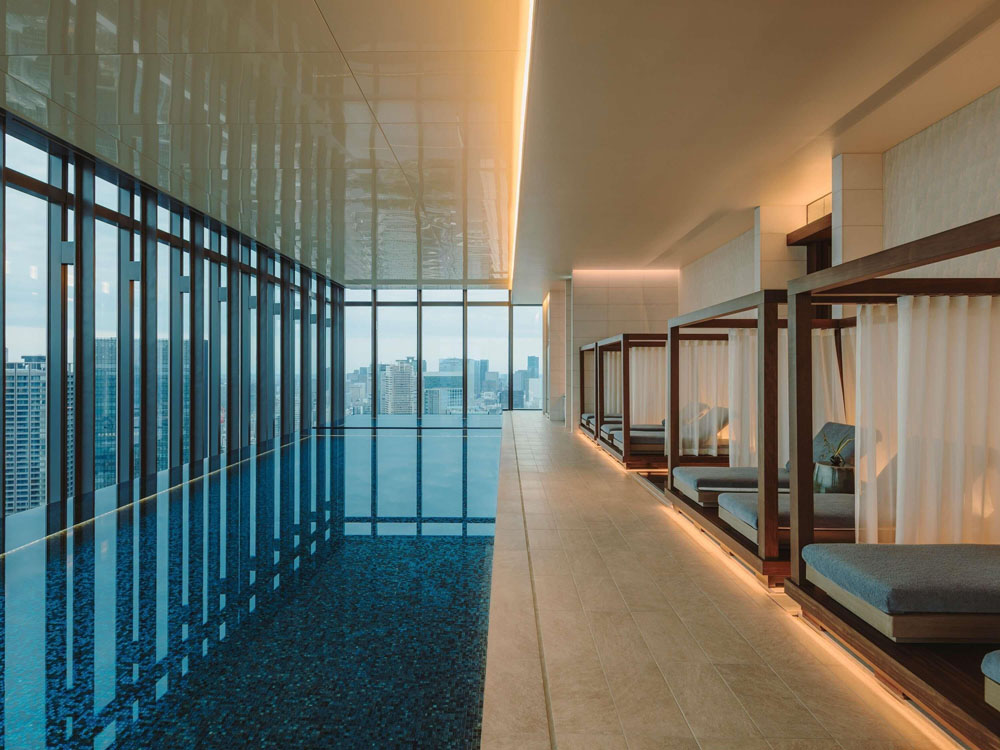
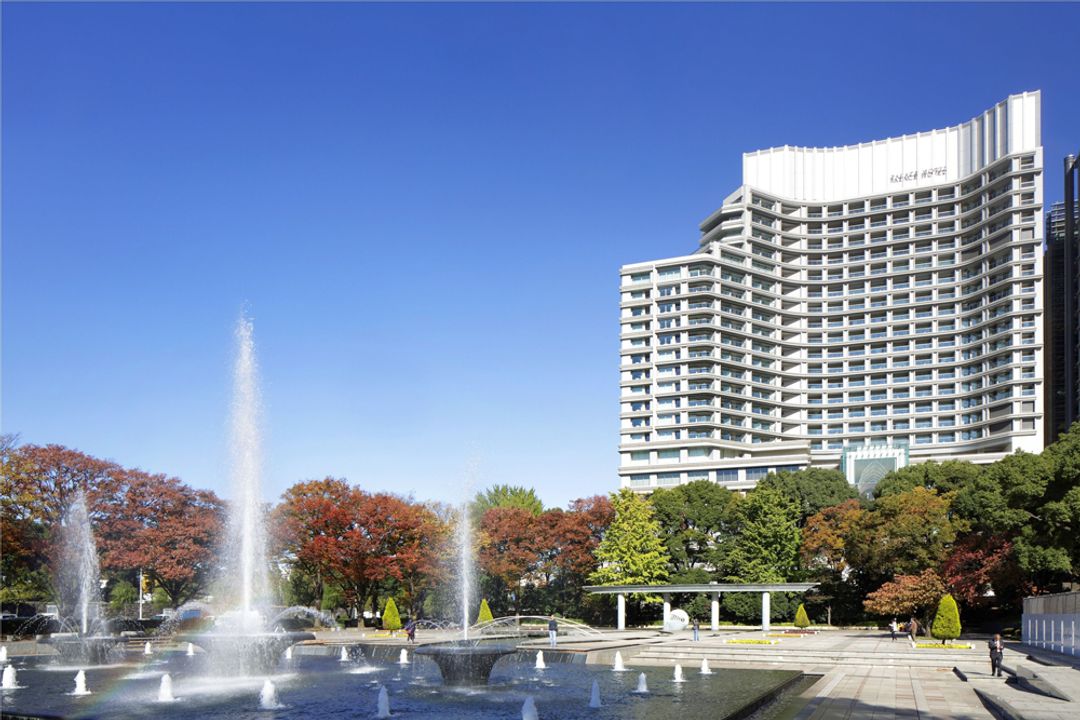
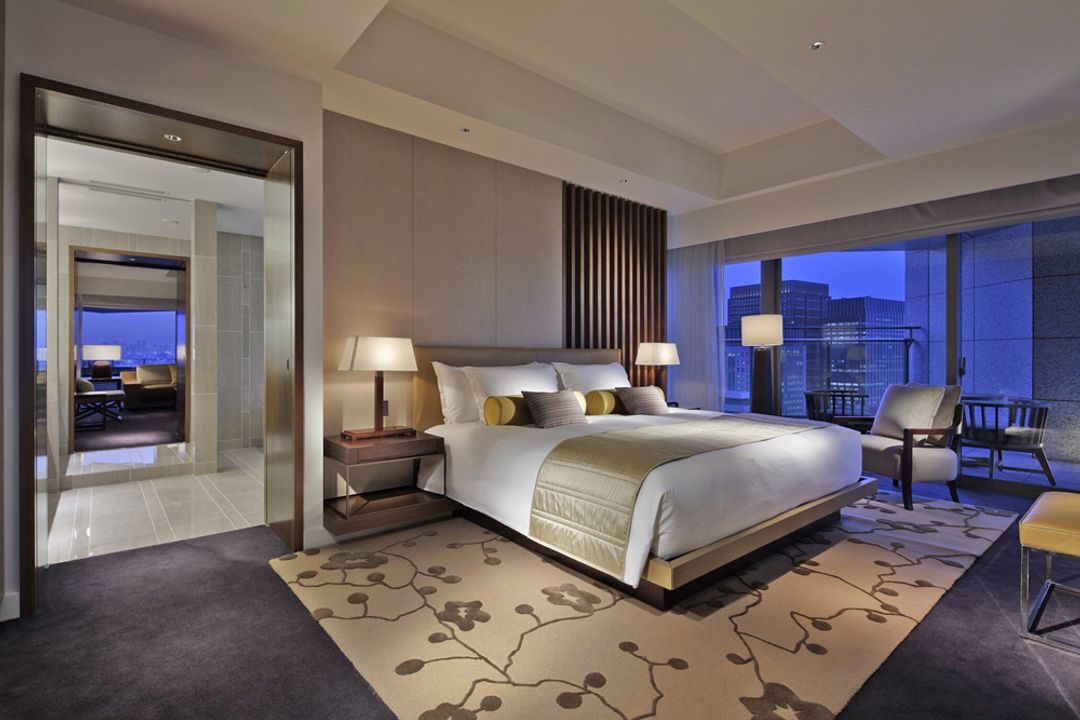
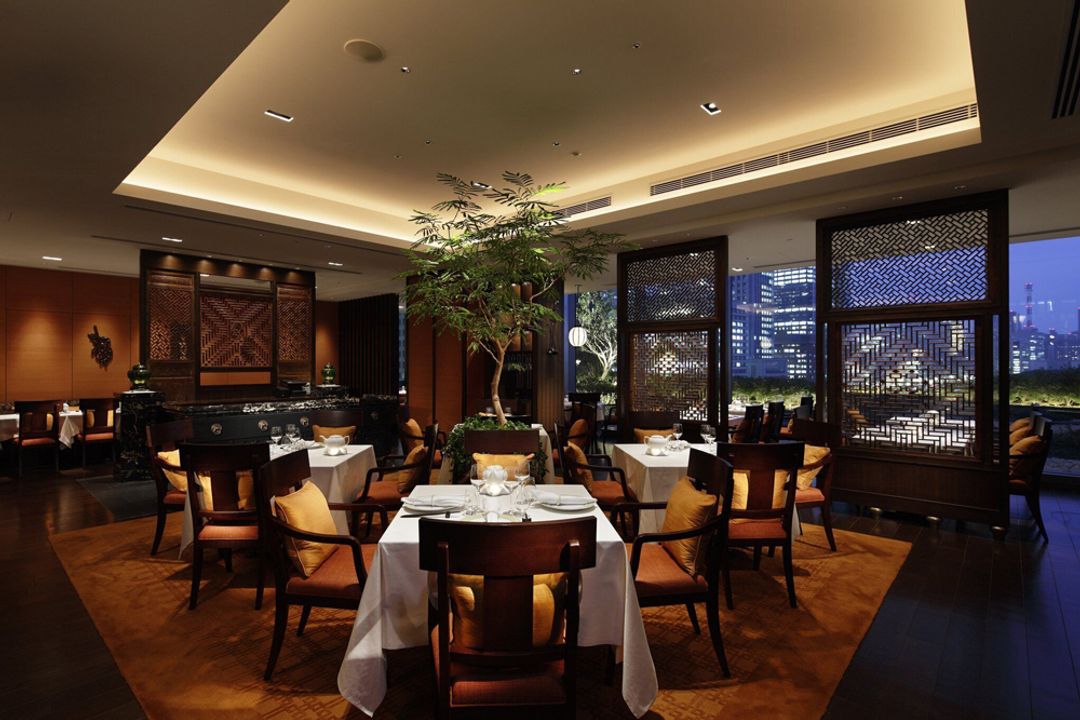
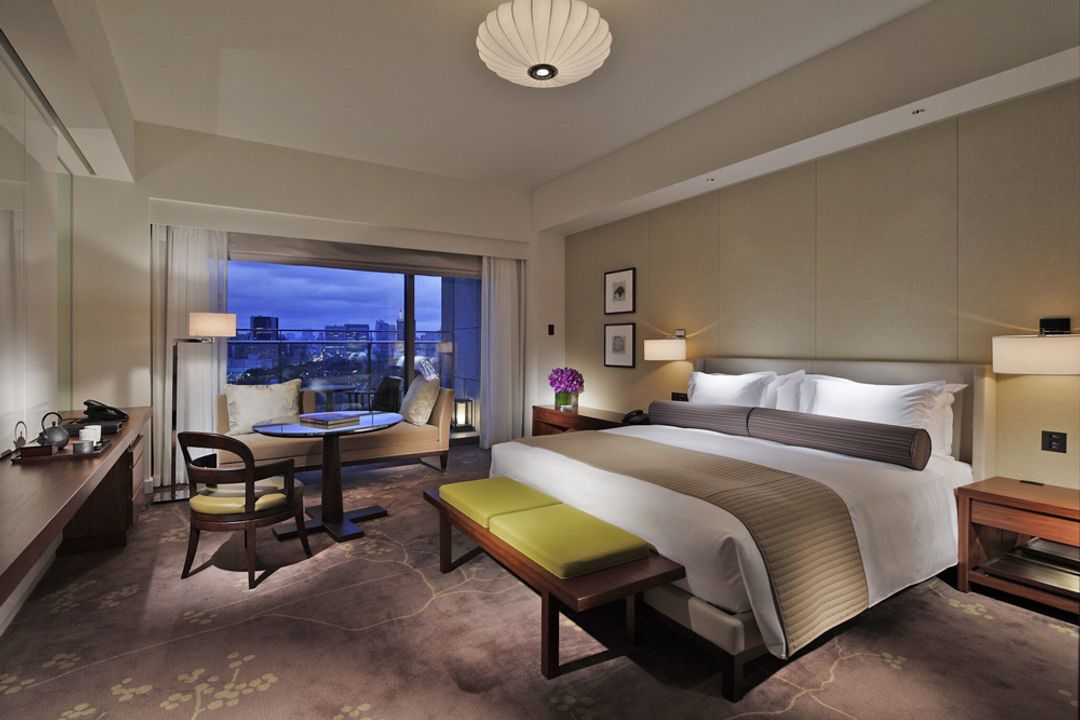
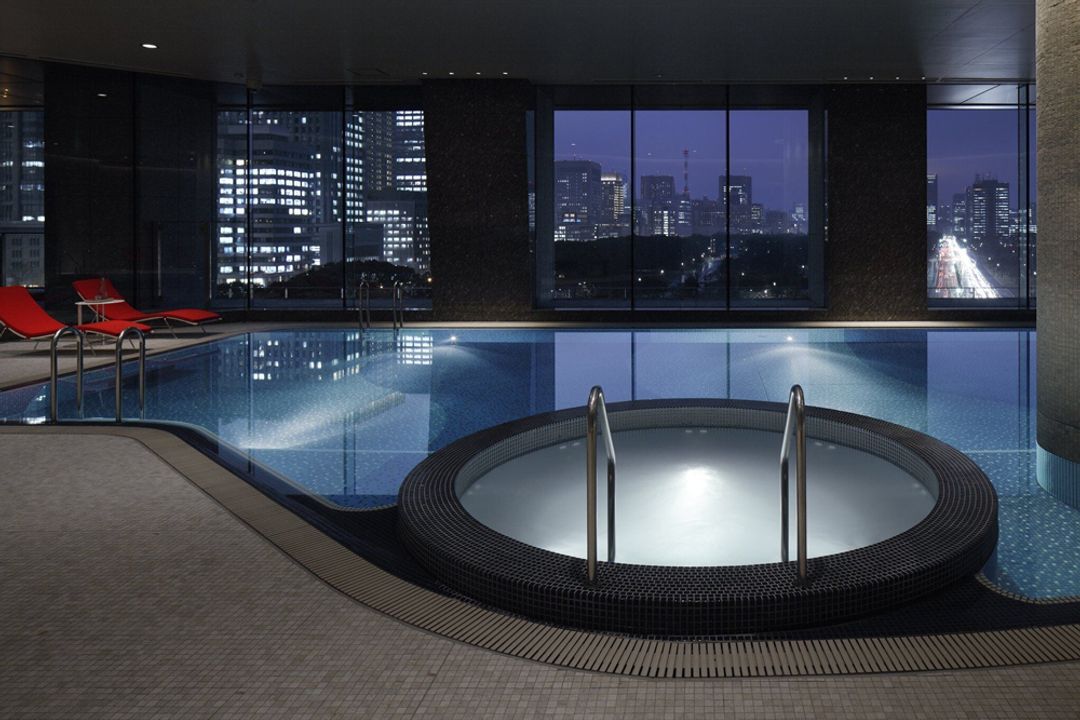
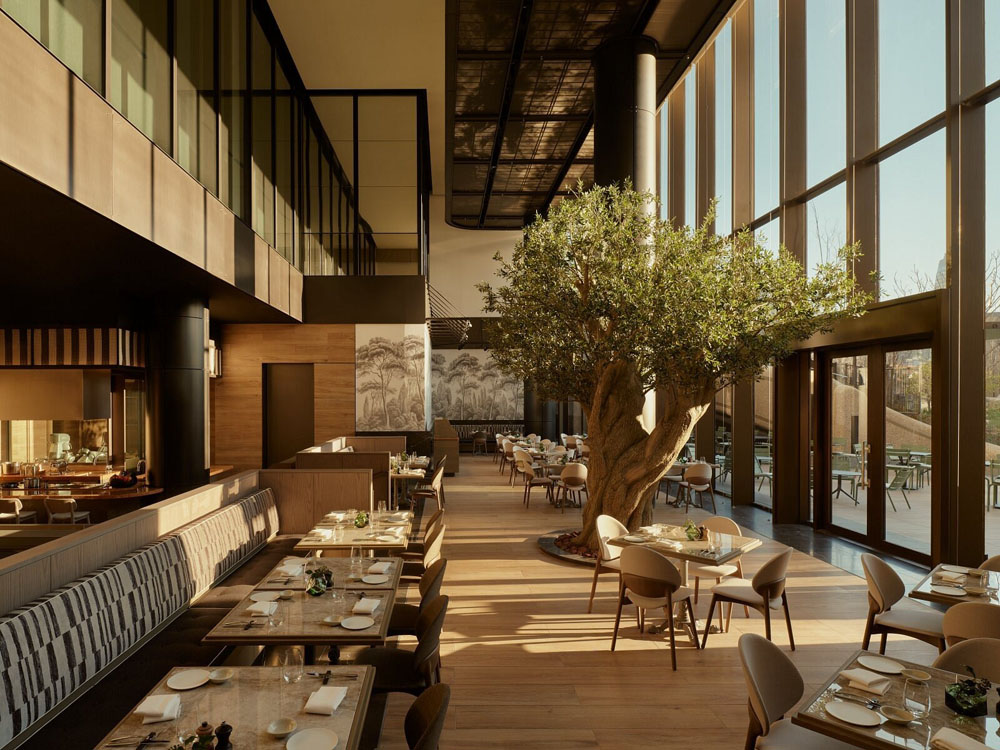
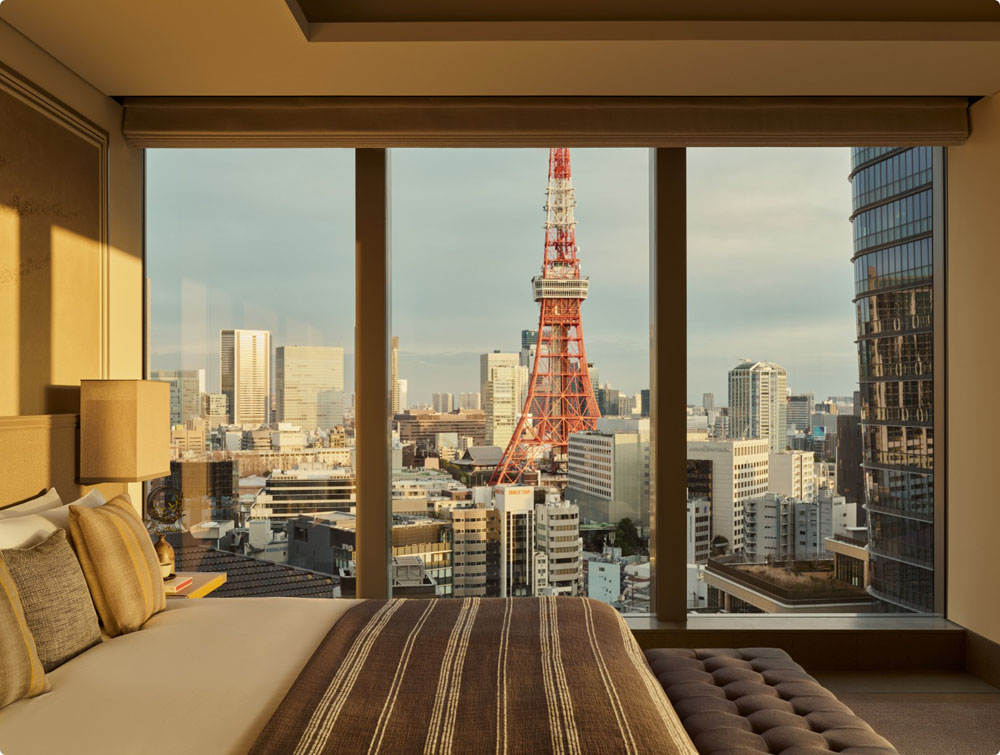
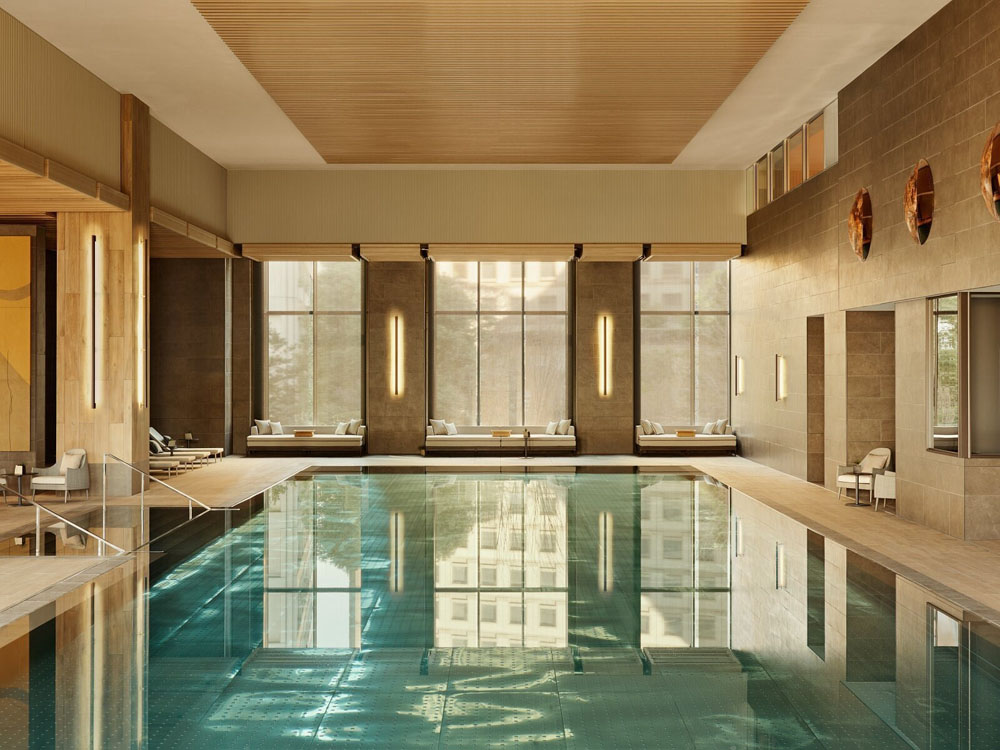
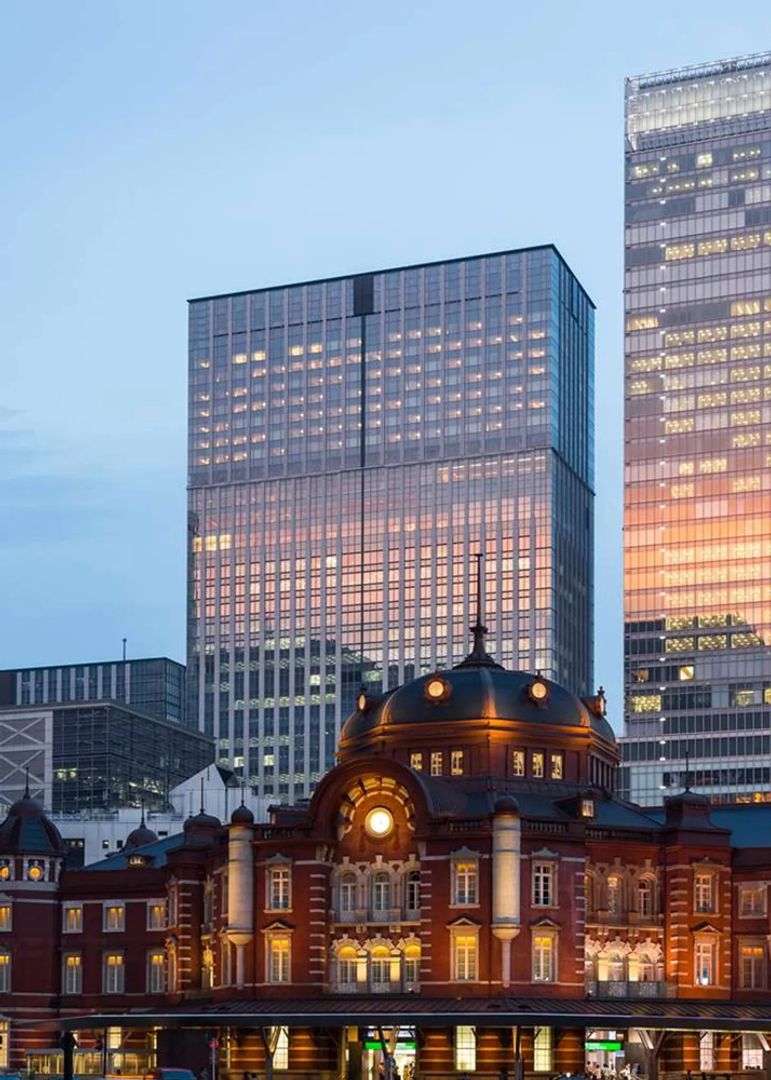
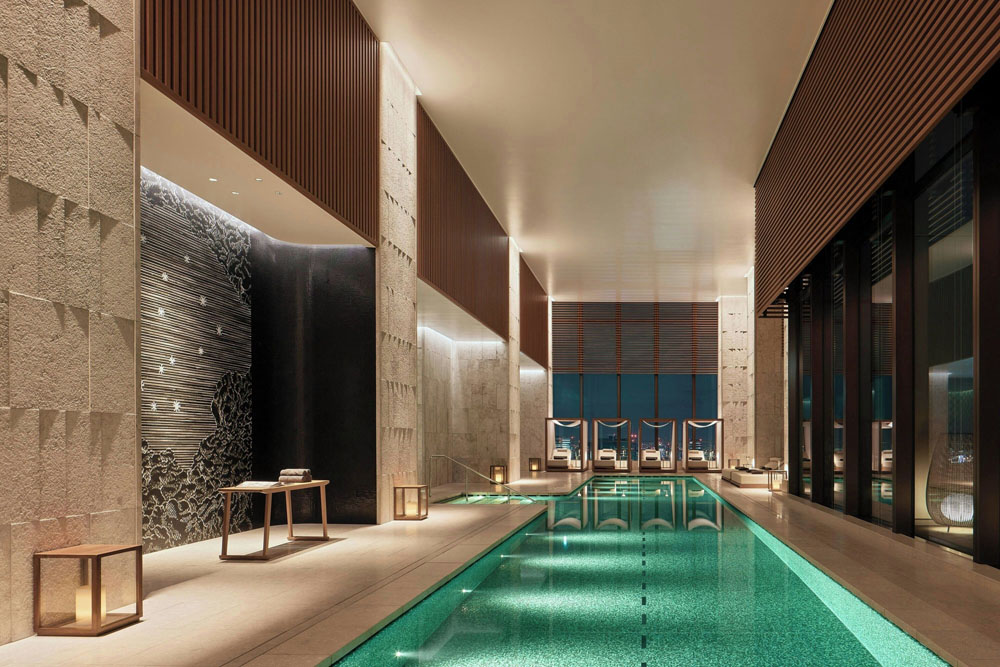
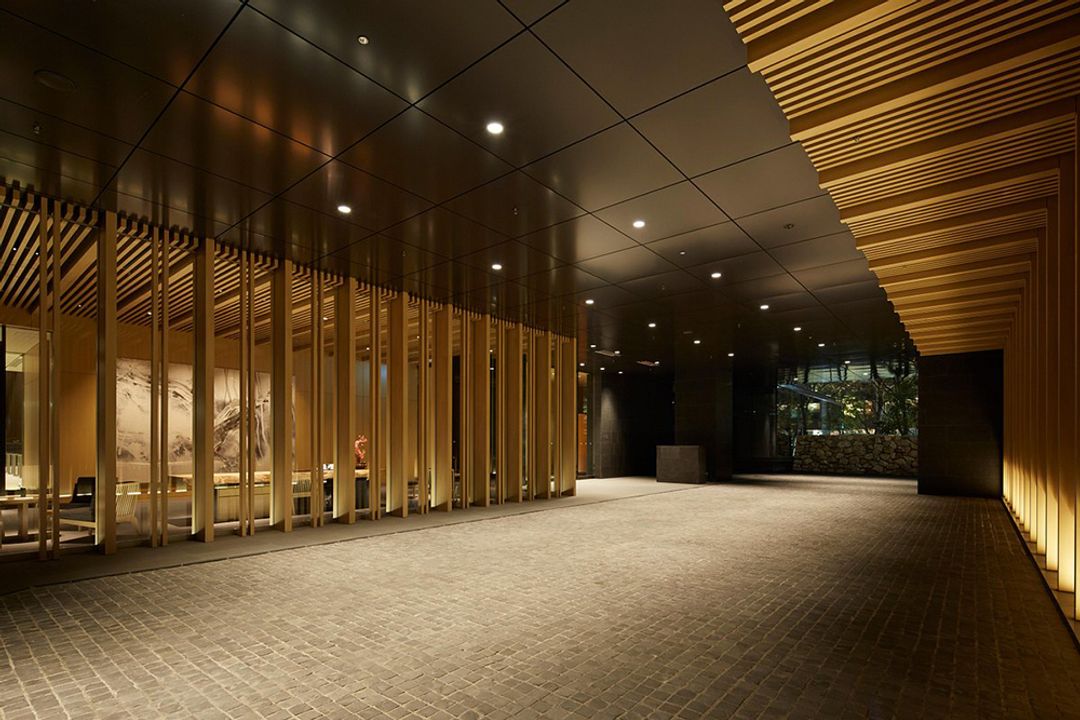
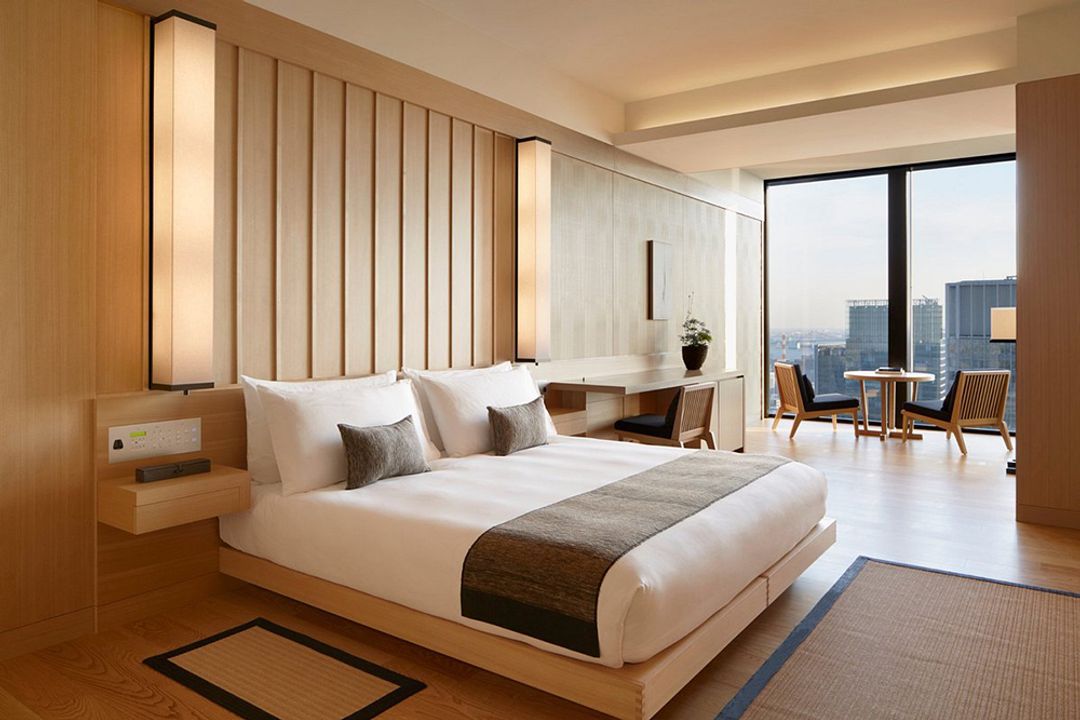
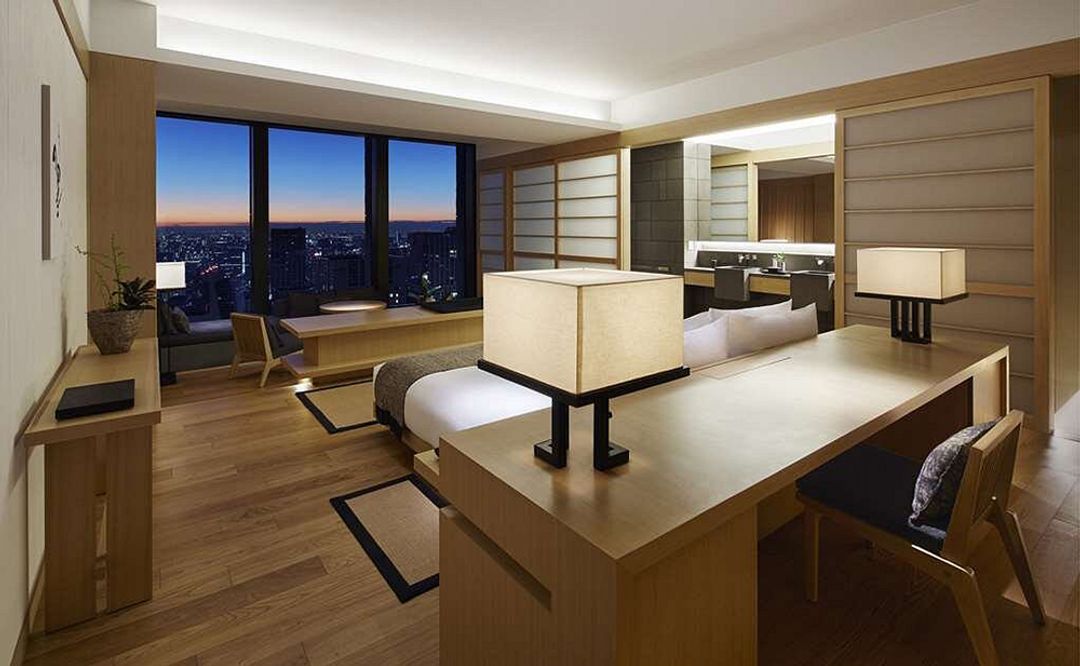
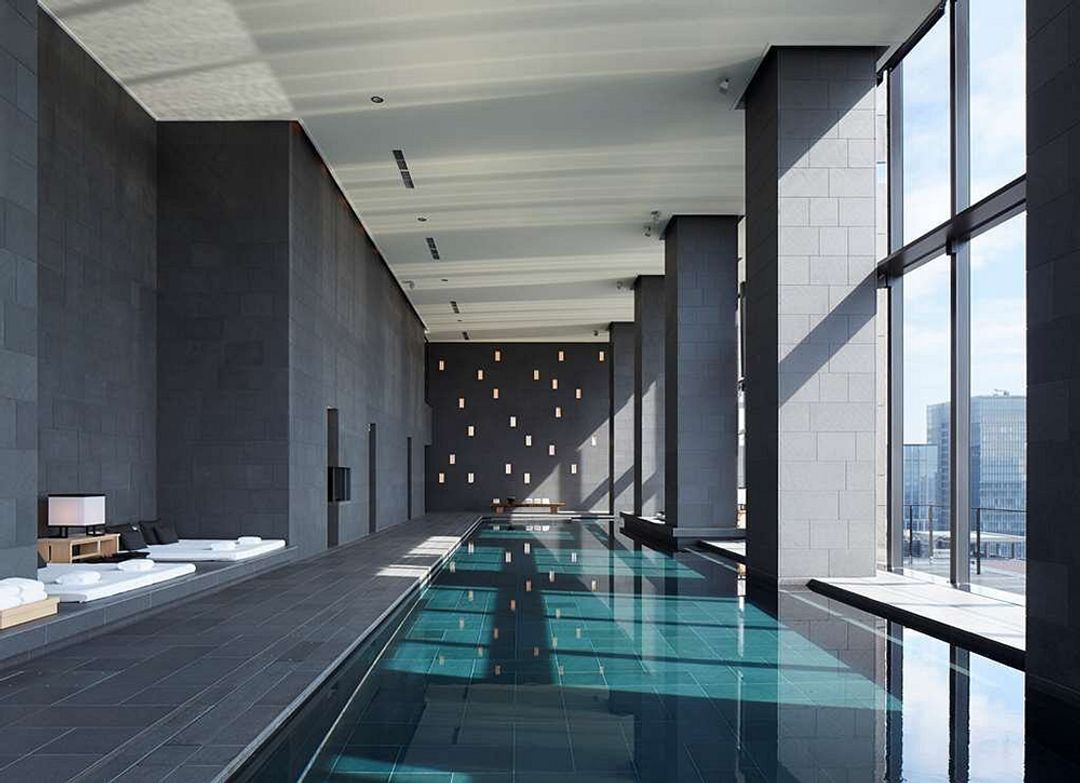
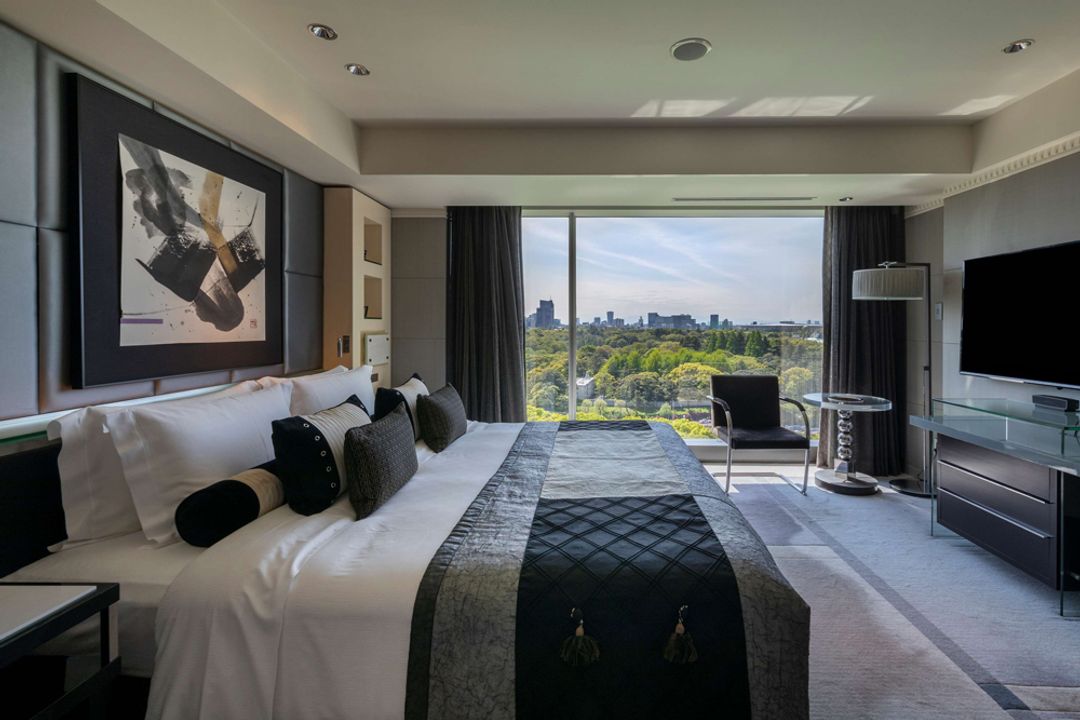
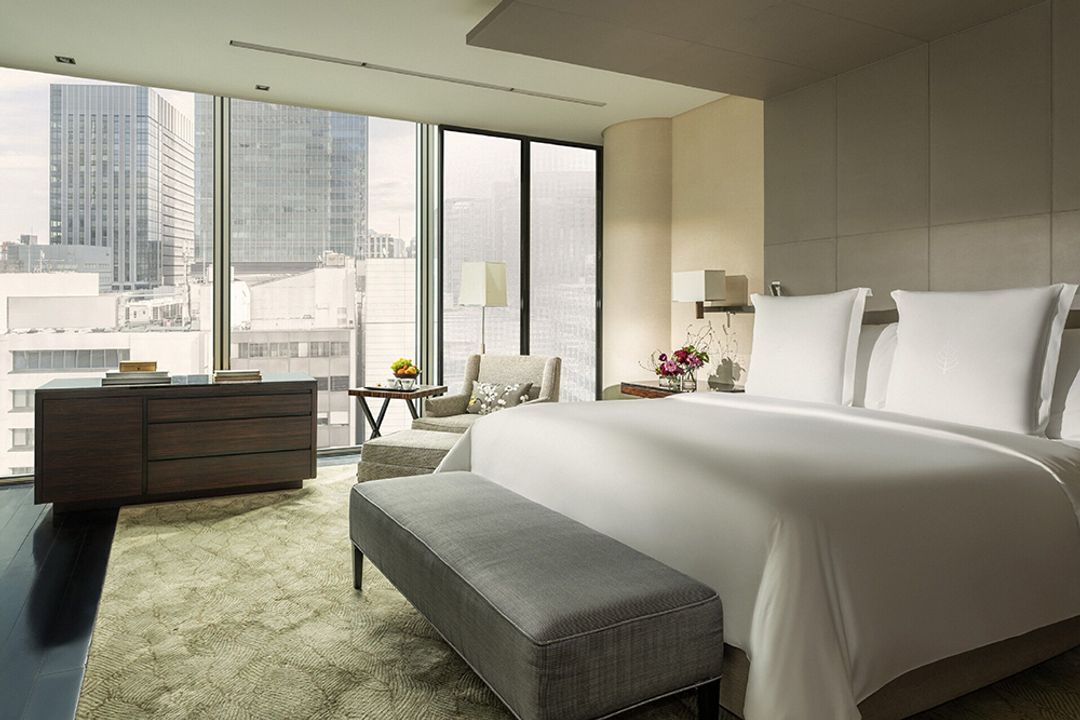
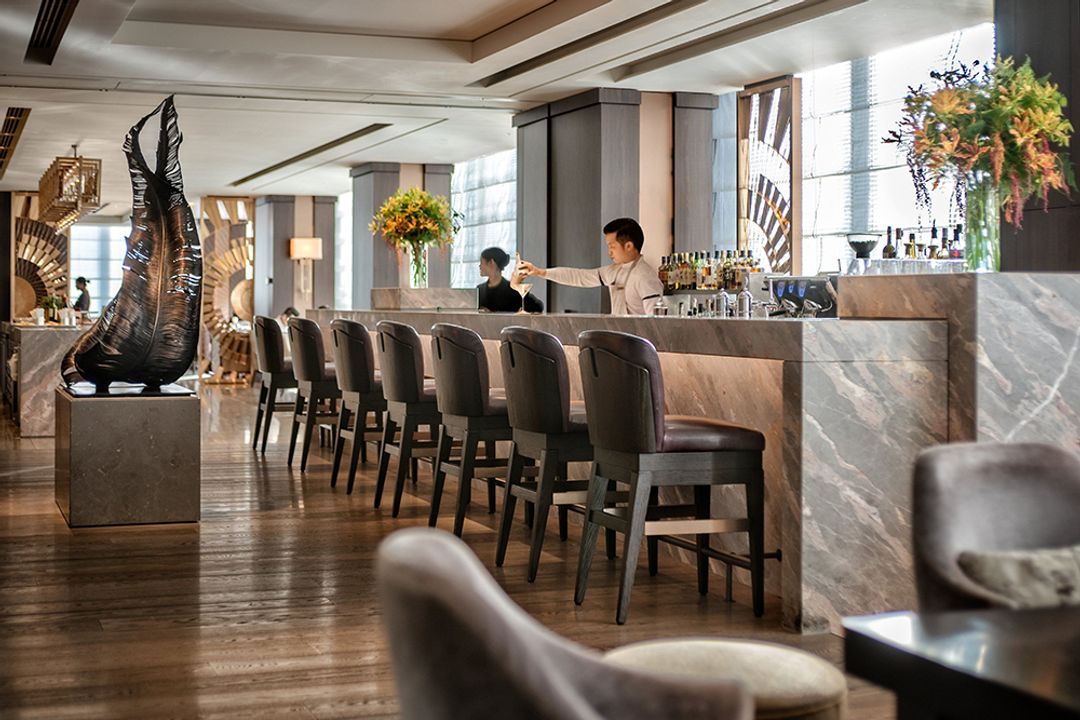
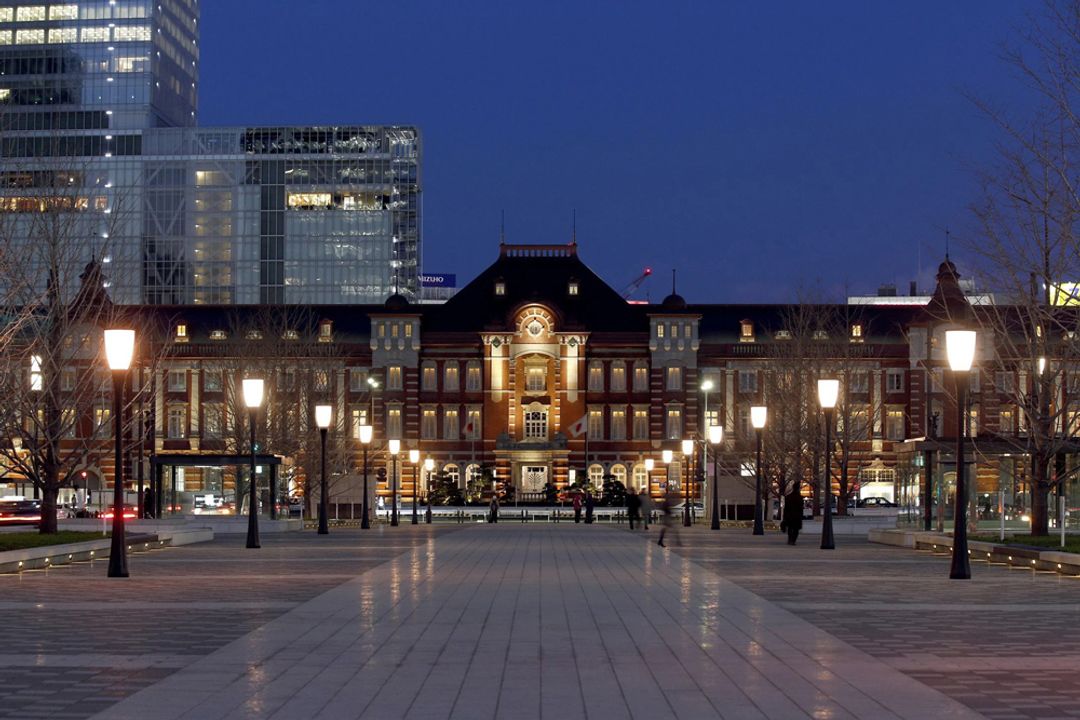
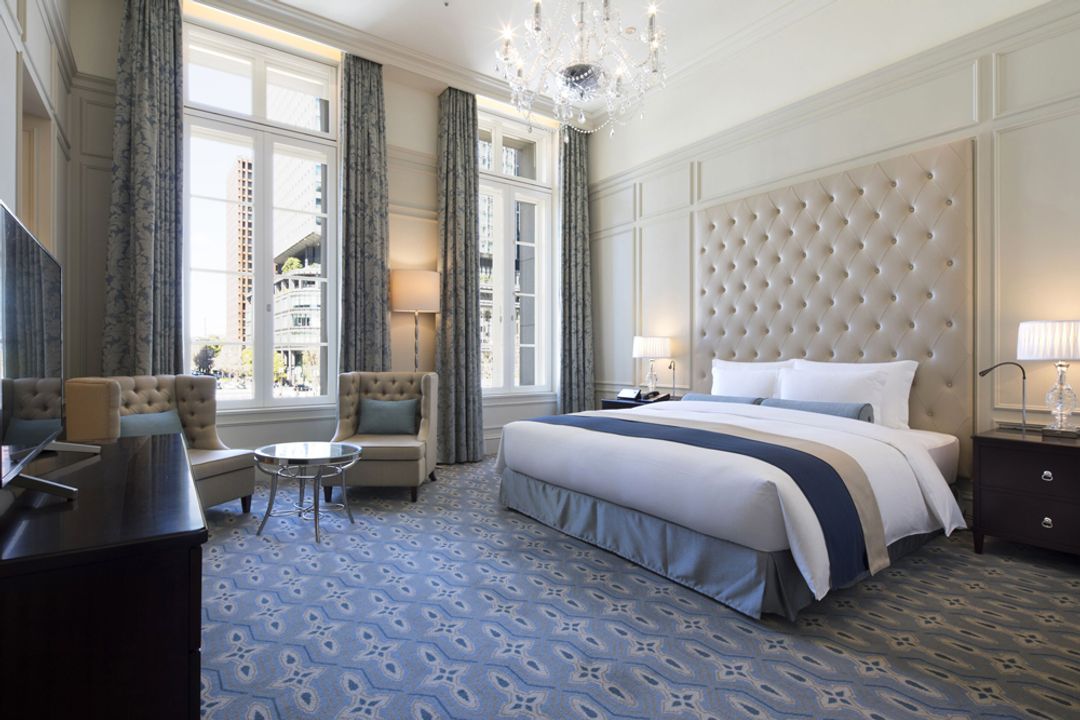
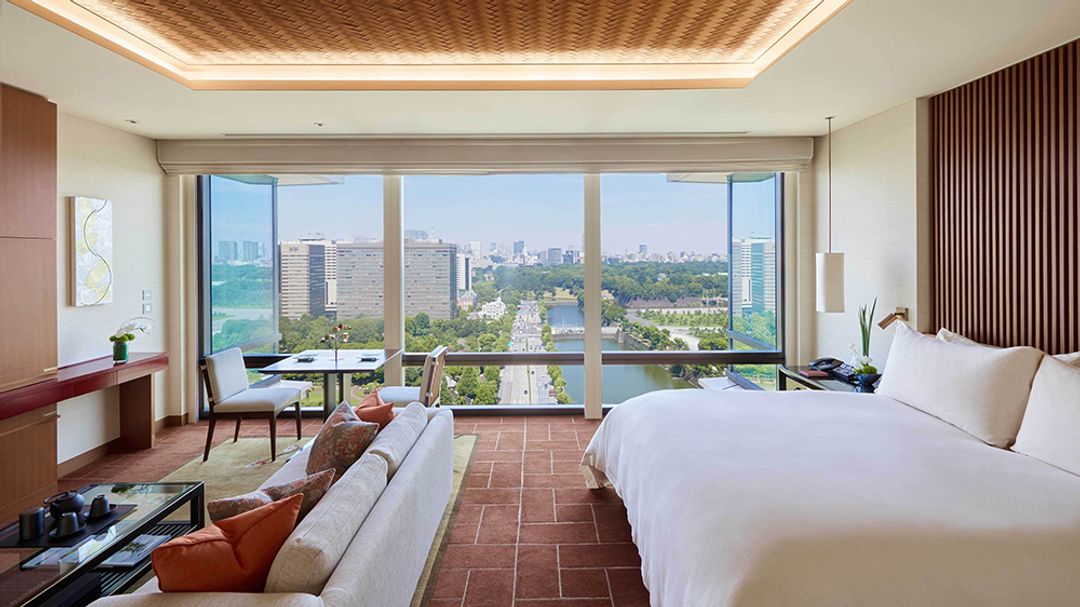
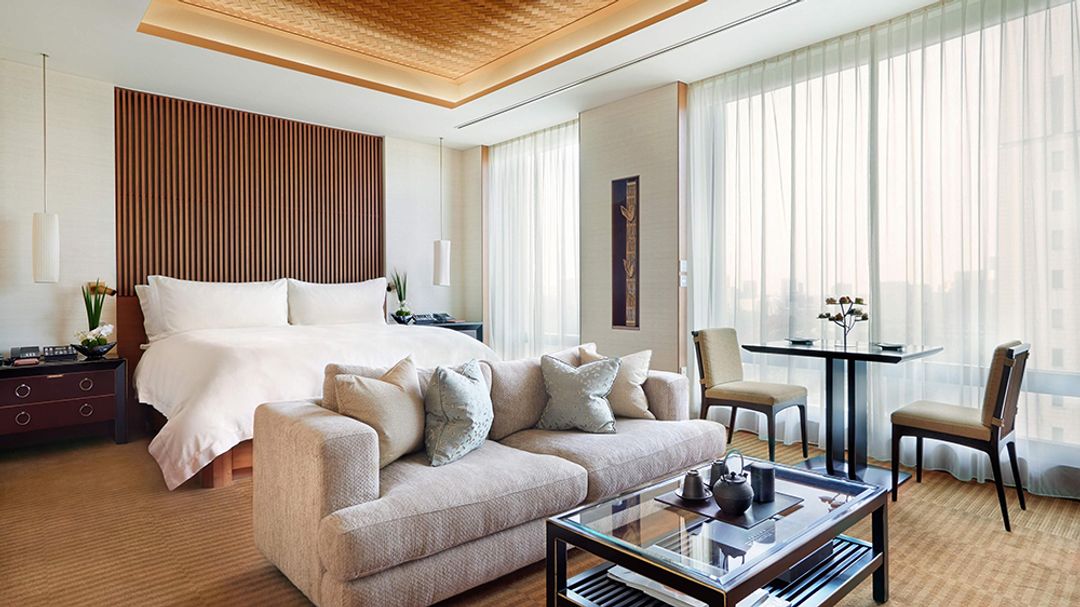
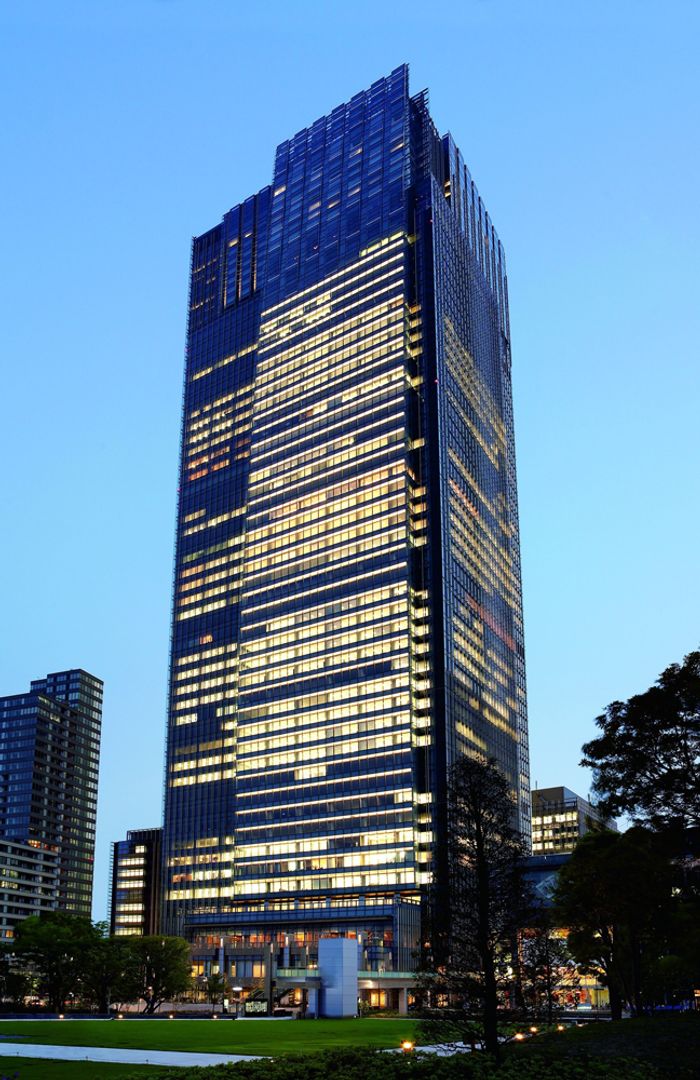
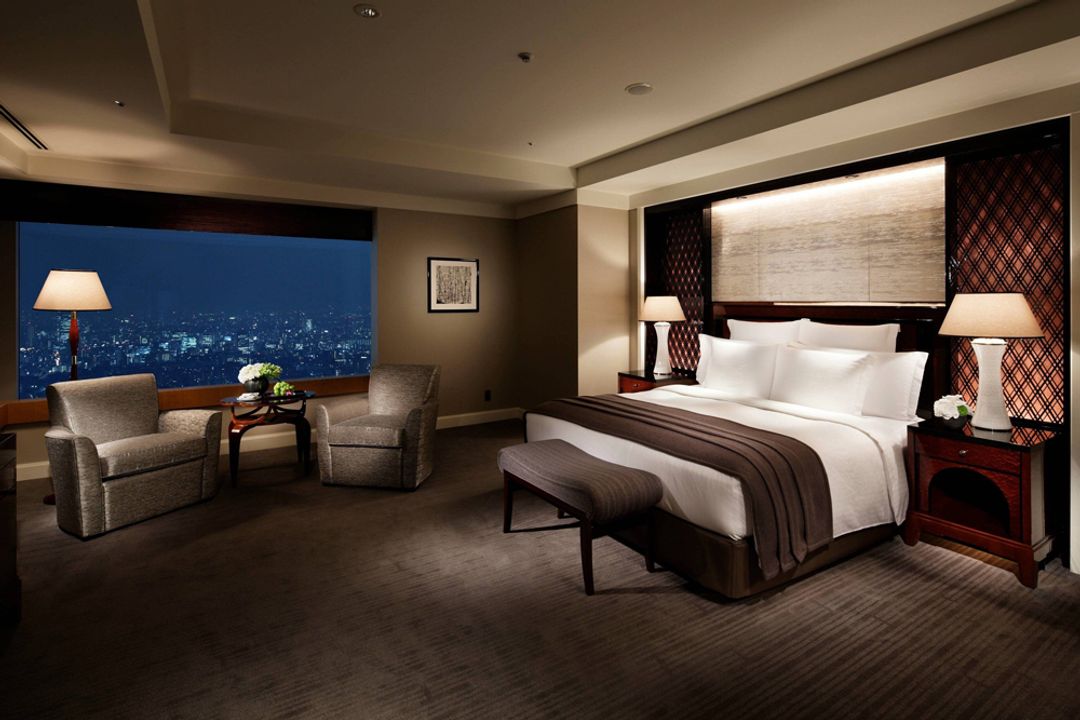
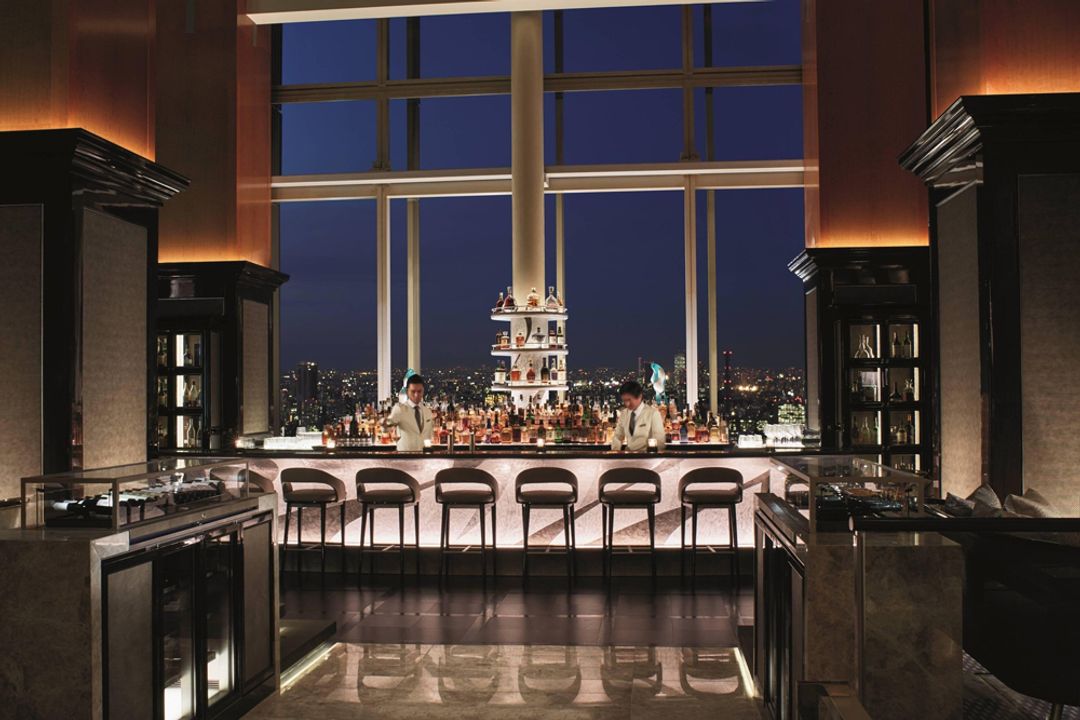
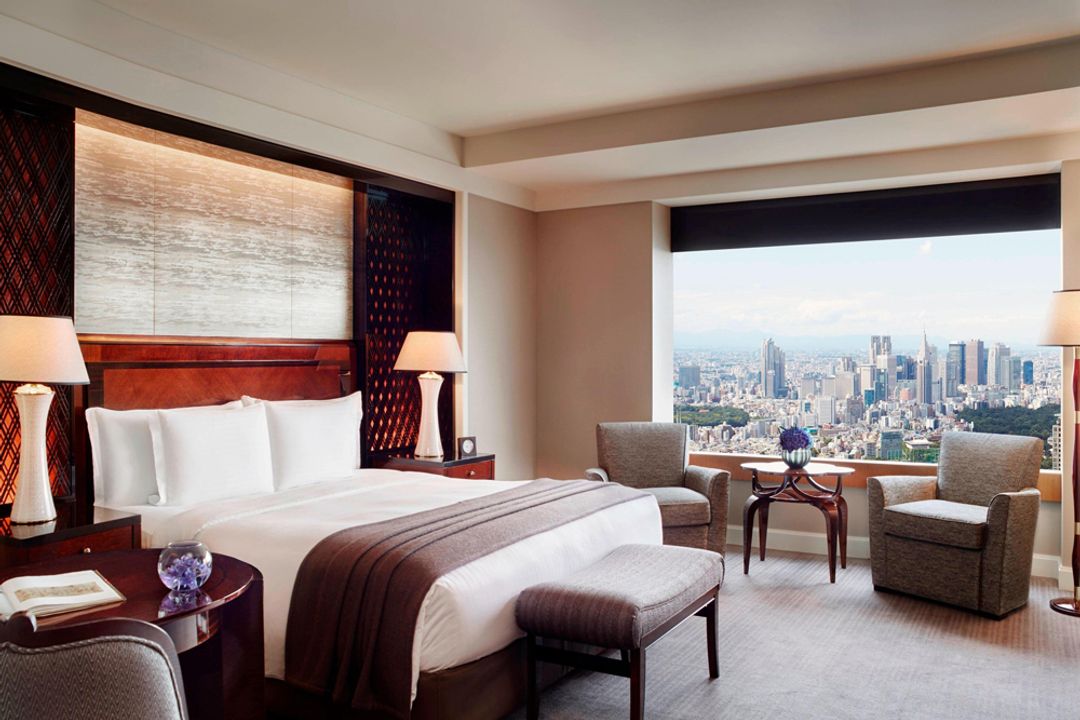
Tokyo's most revealing hospitality corridor runs from Marunouchi through Otemachi and into the Toranomon-Azabudai axis being built south and west of the Imperial Palace, and the contrast between these zones tells you something true about how the city thinks about itself. The Tokyo Station Hotel occupies the 1914 Frank Lloyd Wright-admiring brick station by Kingo Tatsuno, its rooms curved into the building's red-brick facade on the Marunouchi side, making it the rare Tokyo hotel where the architecture precedes the hospitality by a century. Nearby, the Palace Hotel Tokyo sits directly above the Imperial Palace moat, and Kerry Hill Architects brought a restraint to the interiors that reads as genuinely Japanese rather than aspirationally so. Aman Tokyo, in the upper floors of the Otemachi Tower, is where Kerry Hill's office produced perhaps its finest urban work: vast ceiling heights, washi-screened light, and a scale that refuses the compressed verticality you feel almost everywhere else in the city.
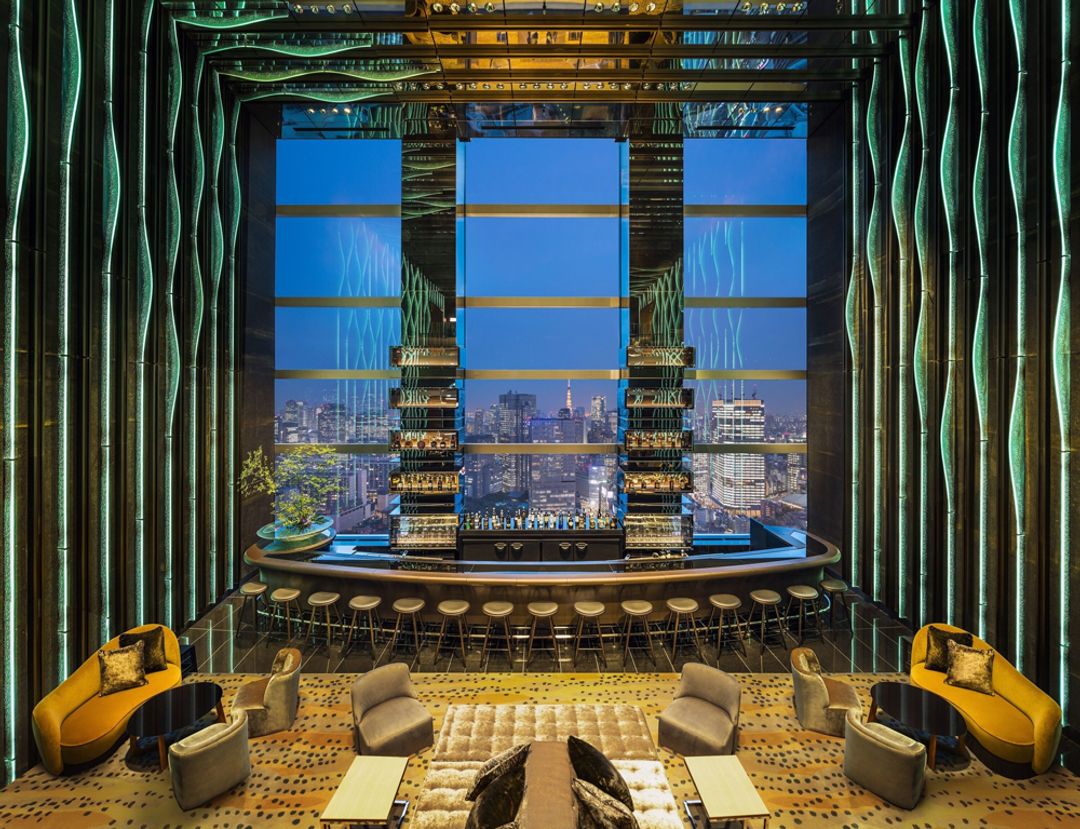
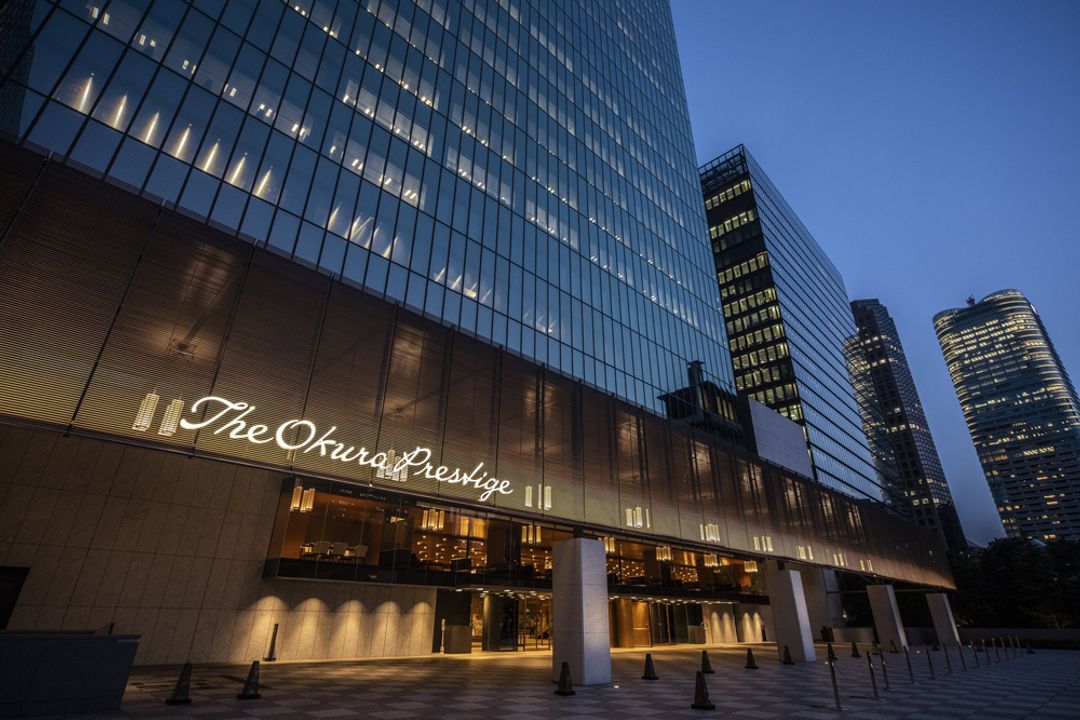
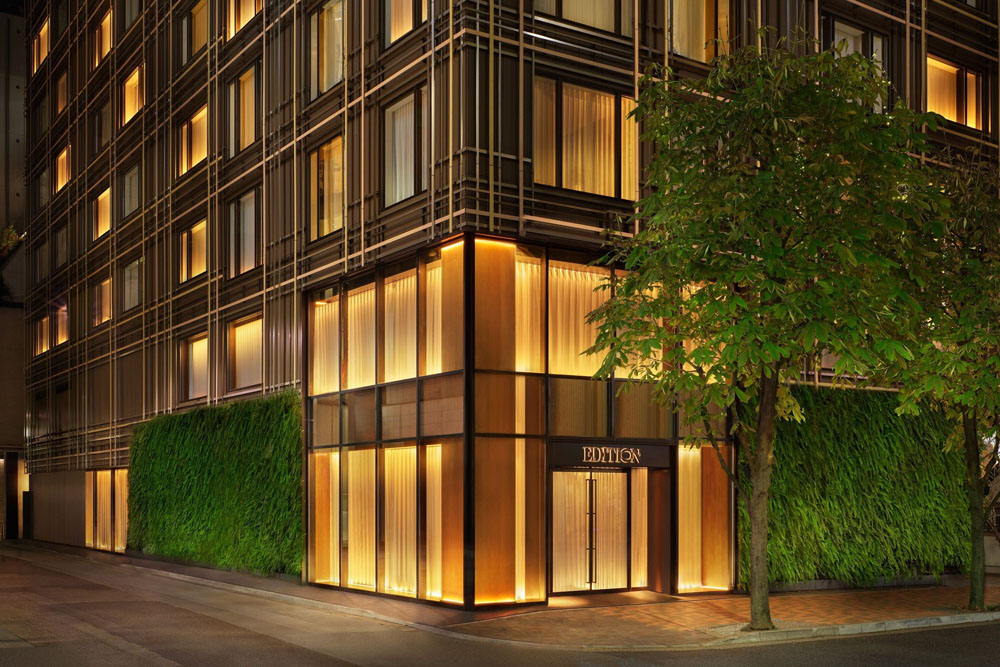
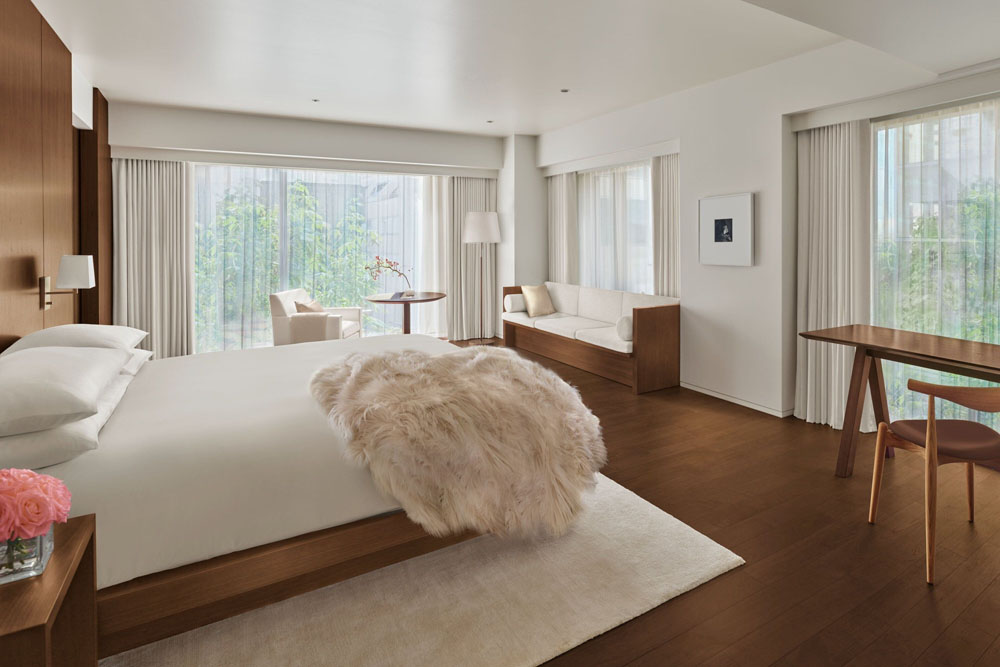
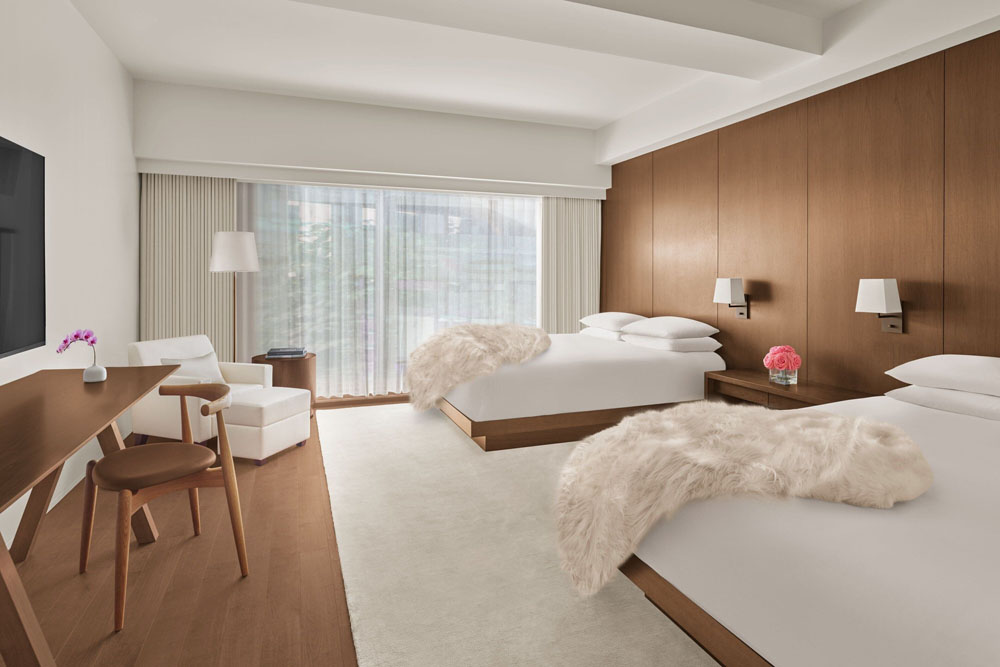
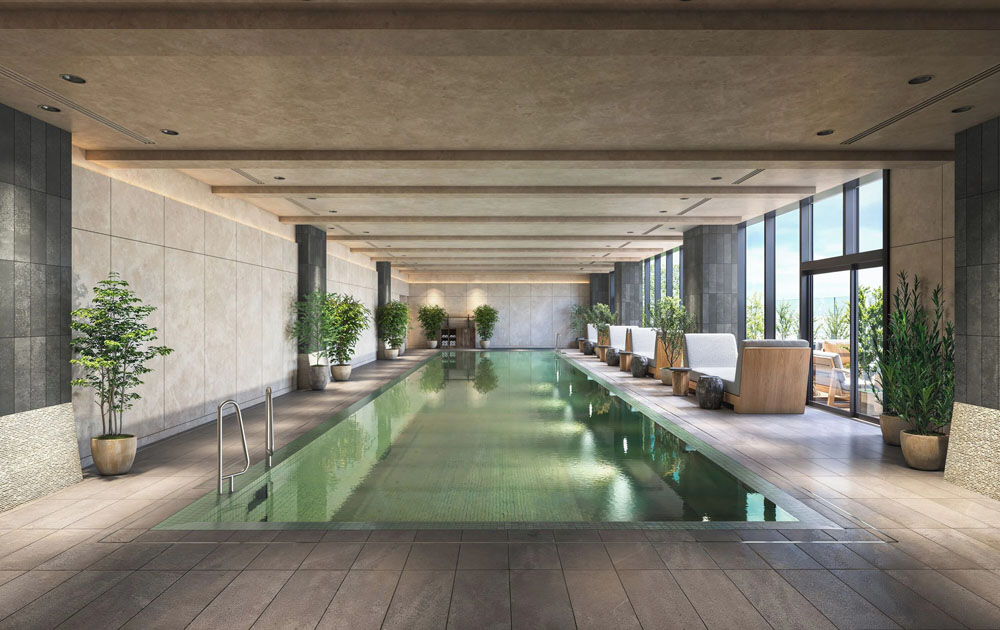
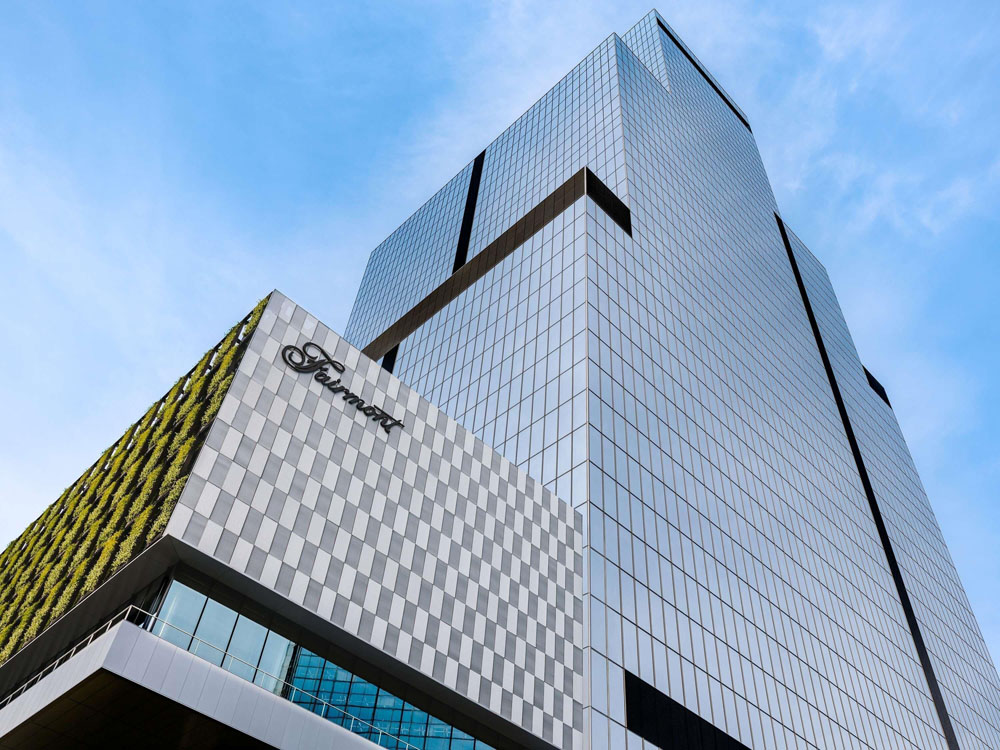
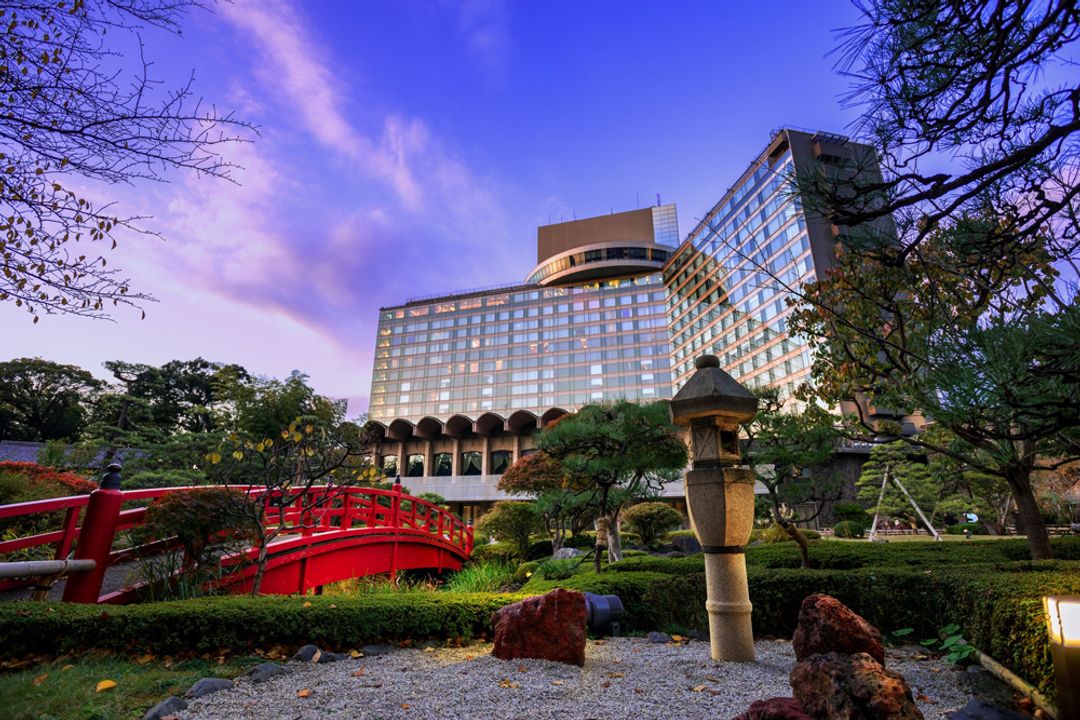
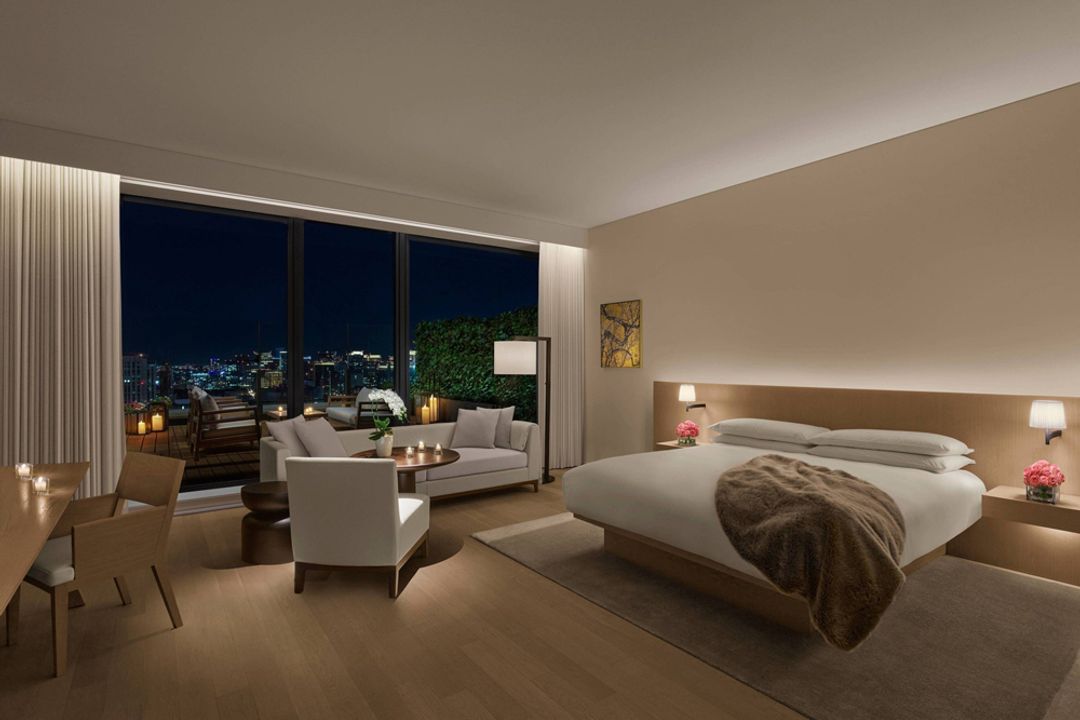
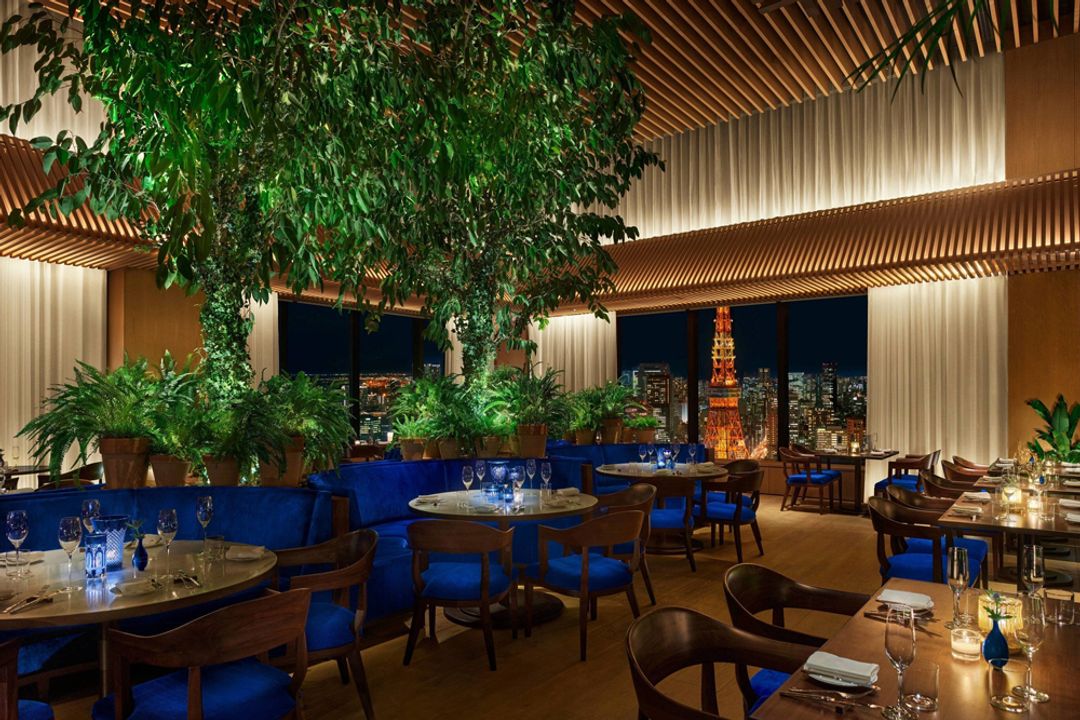
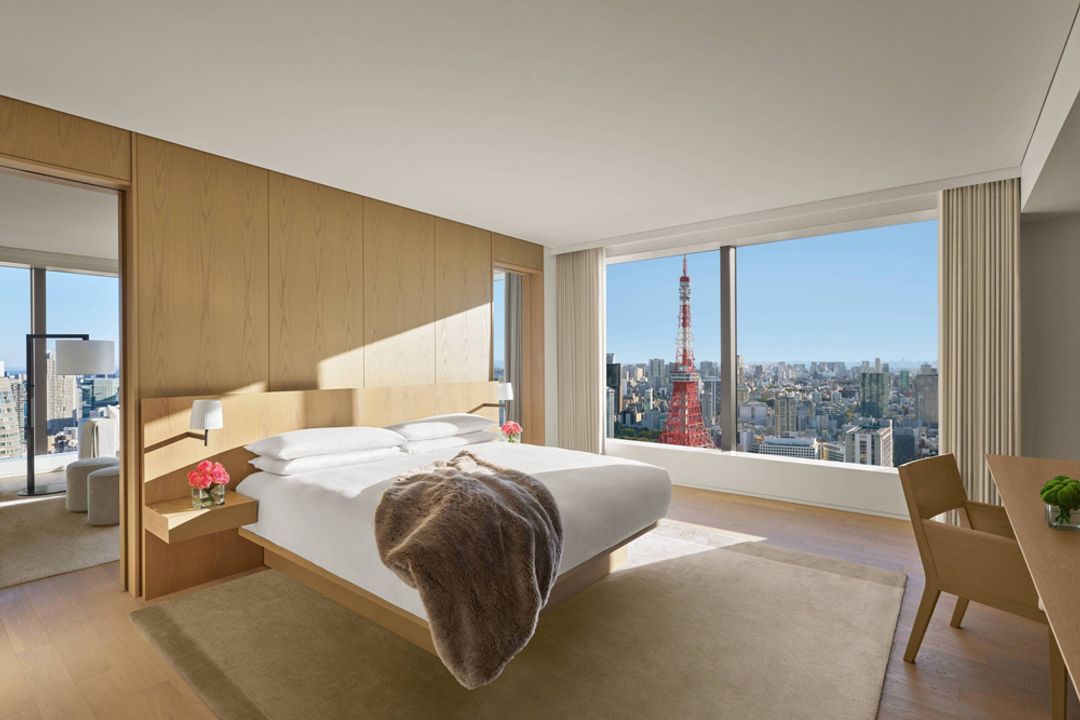
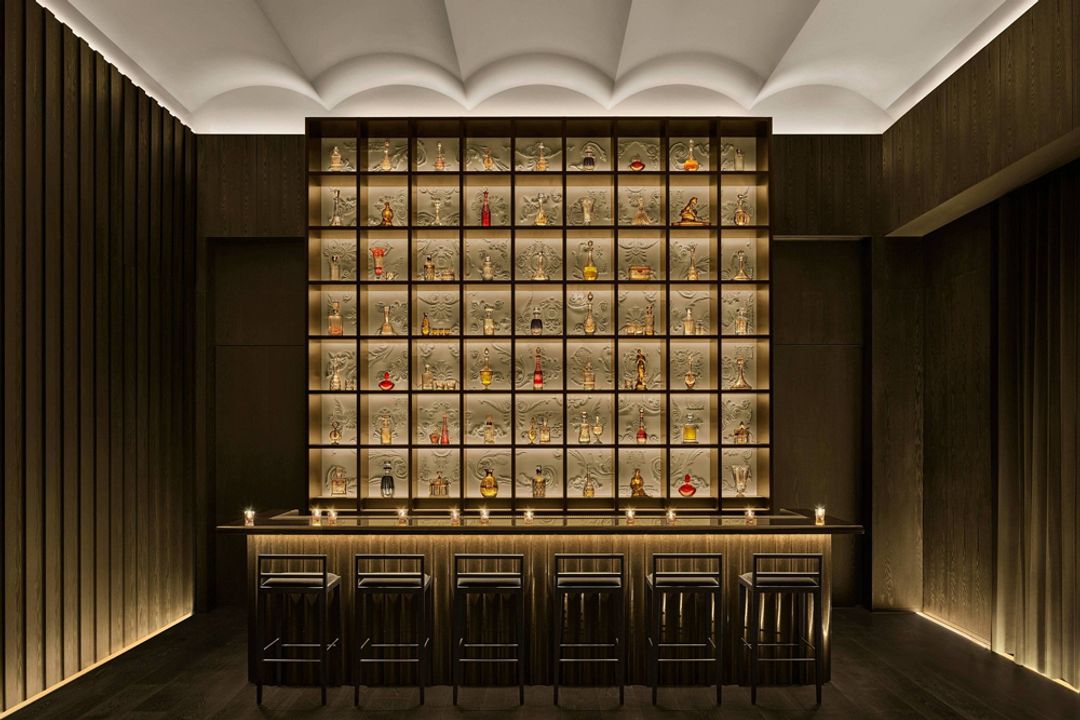
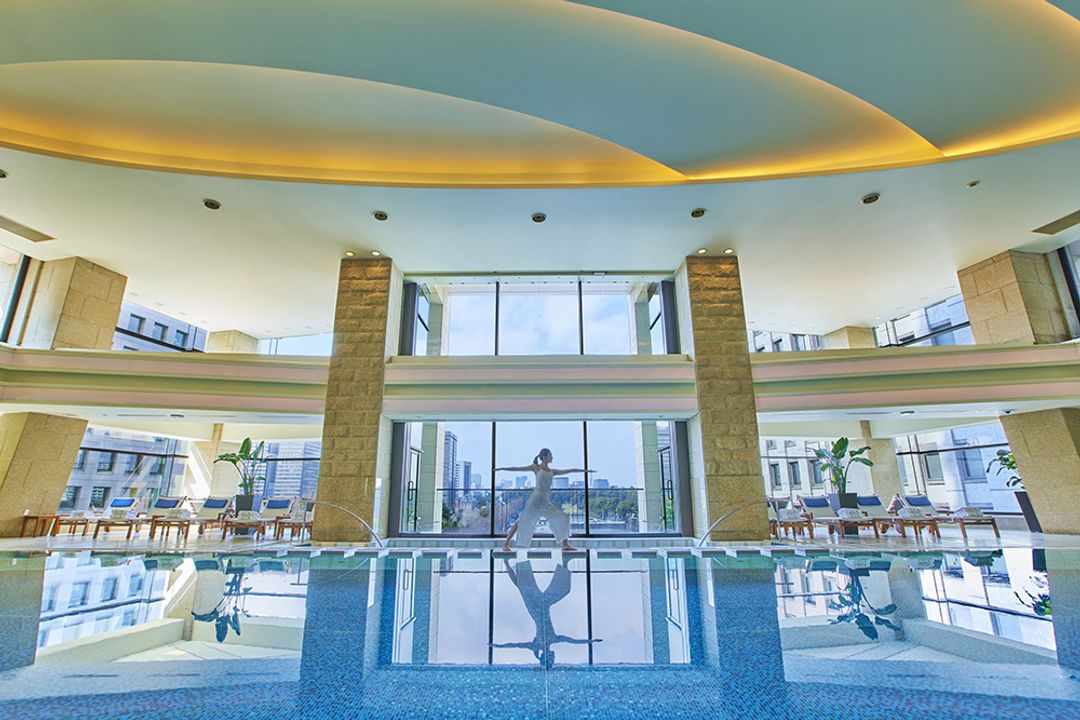
The Toranomon and Azabudai cluster has emerged as the most architecturally charged territory of the last few years. The Okura Tokyo, rebuilt in 2019, preserved the silhouette and spirit of Yoshiro Taniguchi's 1962 original while updating the famous Hie lantern detailing inside, a restoration that divided opinion but kept something irreplaceable from being erased entirely. A short distance away, Janu Tokyo opened in 2024 within Heatherwick Studio and Mori Building's Azabudai Hills development, bringing a wellness-forward sensibility into what may be the decade's most discussed mixed-use project in Asia. The Tokyo EDITION Toranomon, with interiors by Ian Schrager's team working from a Kengo Kuma building shell, offers a cooler, more nocturnal proposition at a more approachable price.
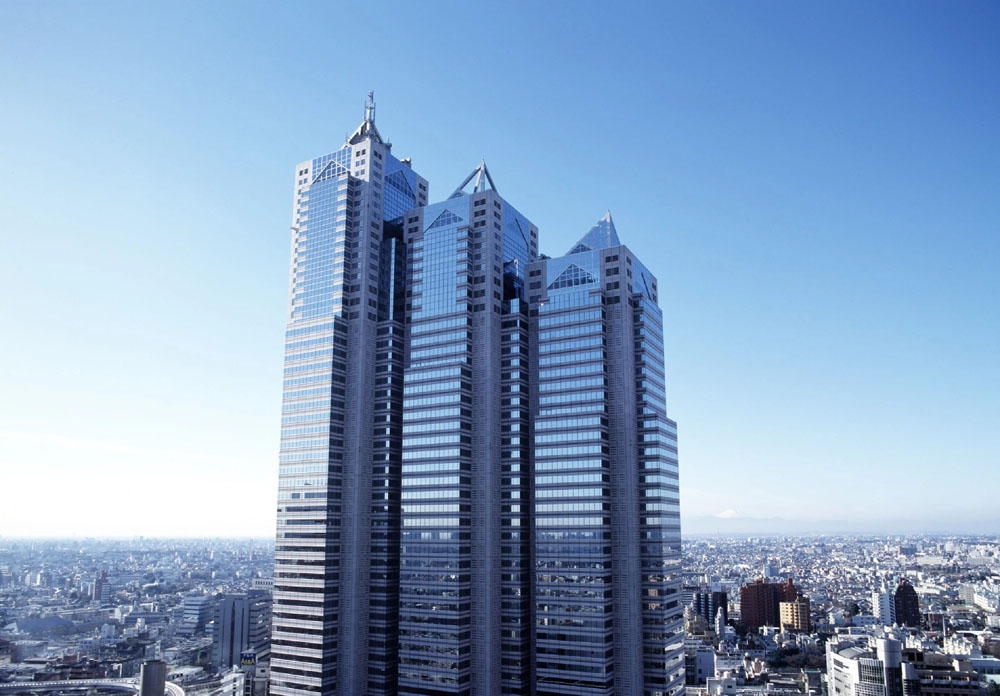
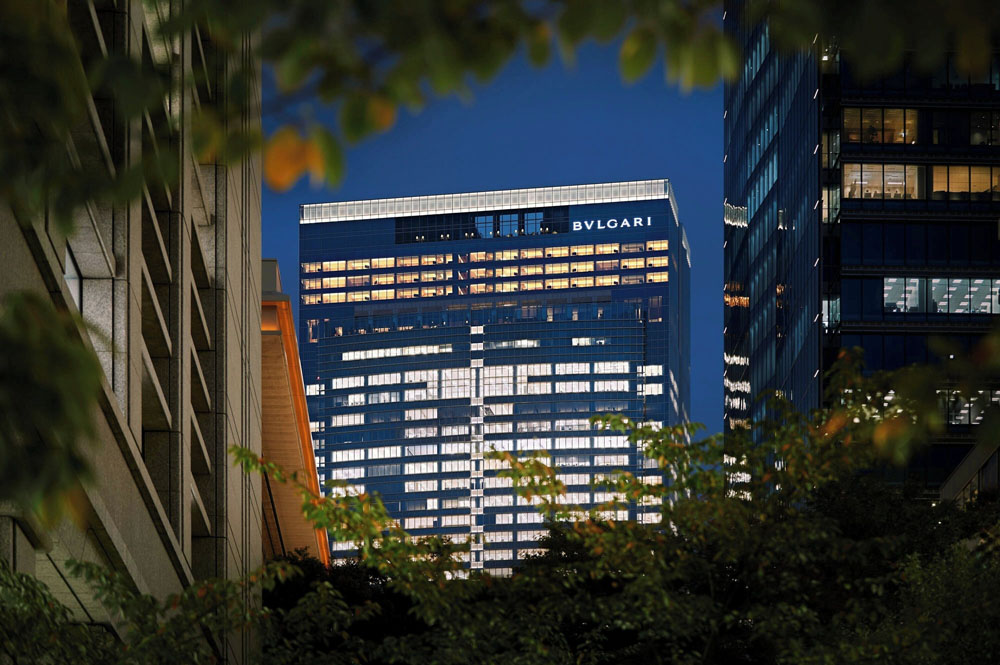
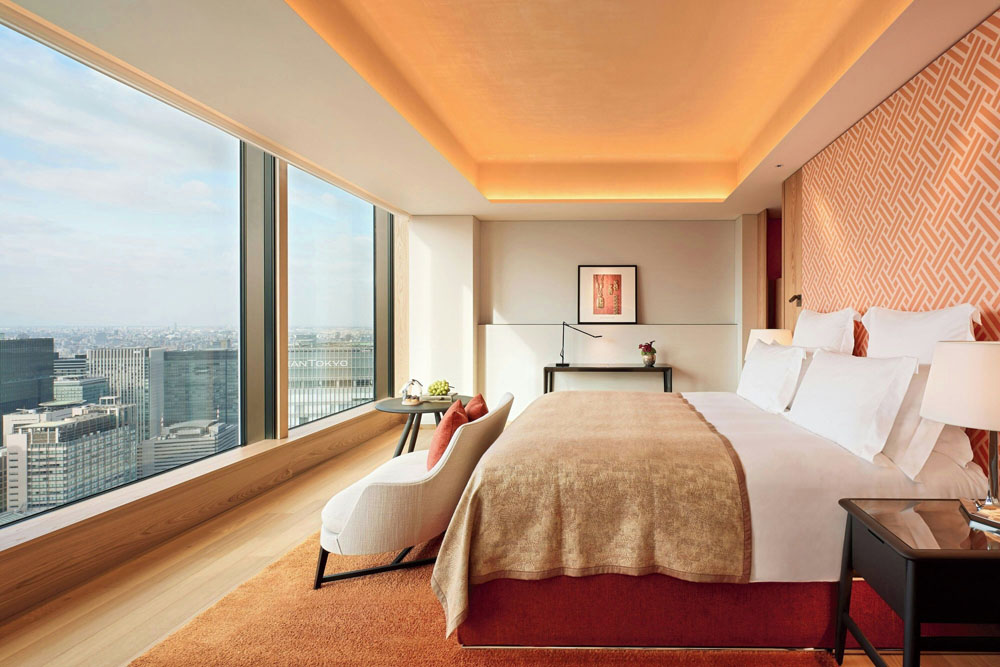
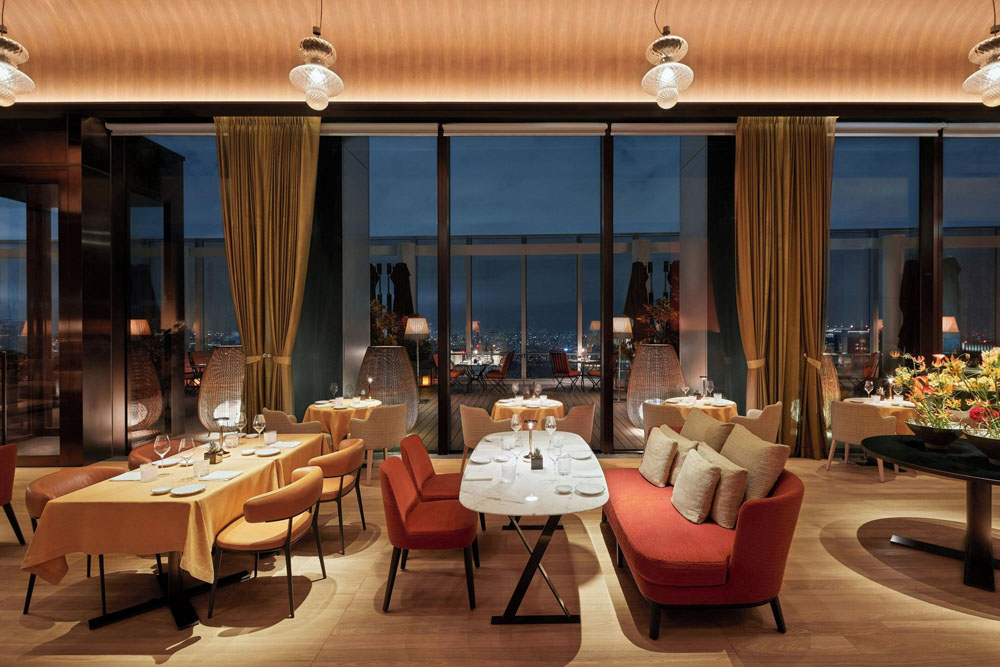
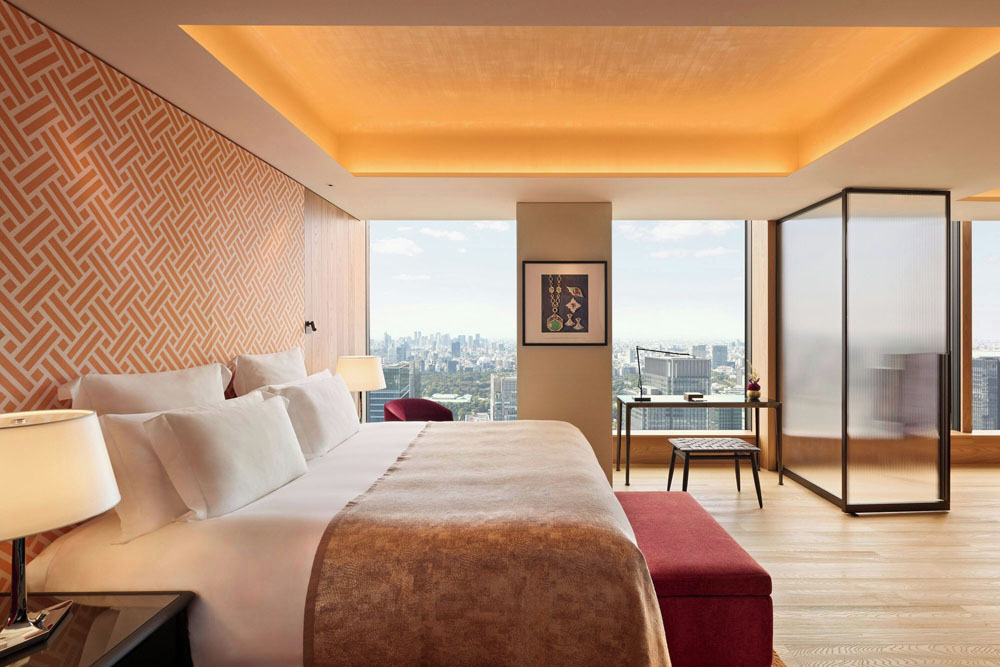
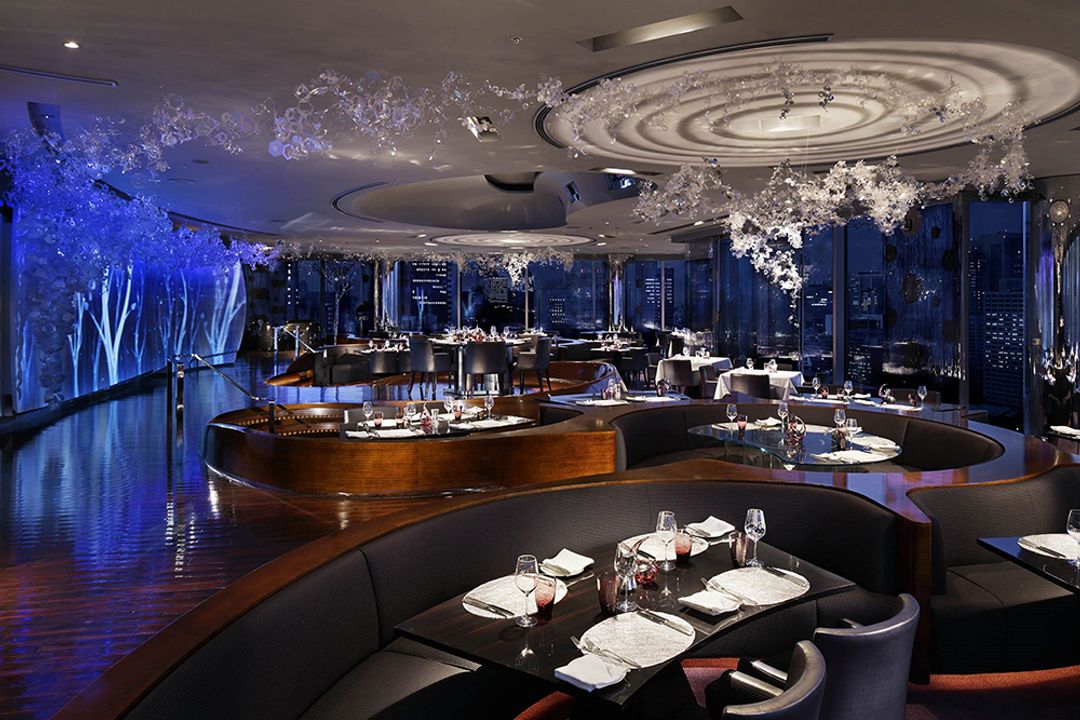
Ginza concentrates the highest concentration of per-square-meter ambition in the portfolio. Bulgari Hotel Tokyo, designed by Antonio Citterio Patricia Viel and opened in 2023 on the upper floors of the Bvlgari Ginza Tower, brings an Italian material sensibility into dialogue with a neighborhood that has always understood the grammar of expensive surfaces. The Tokyo EDITION Ginza, also in Ginza, pitches itself differently, with Rockwell Group interiors that are warmer and more theatrical. For anyone whose instinct is to notice how a building sits in its city, Park Hyatt Tokyo in Nishishinjuku remains the reference point: Kenzo Tange's Shinjuku Park Tower from 1994, and the hotel still carries that late-modernist confidence in ways that newer arrivals are still working to match.